
Search
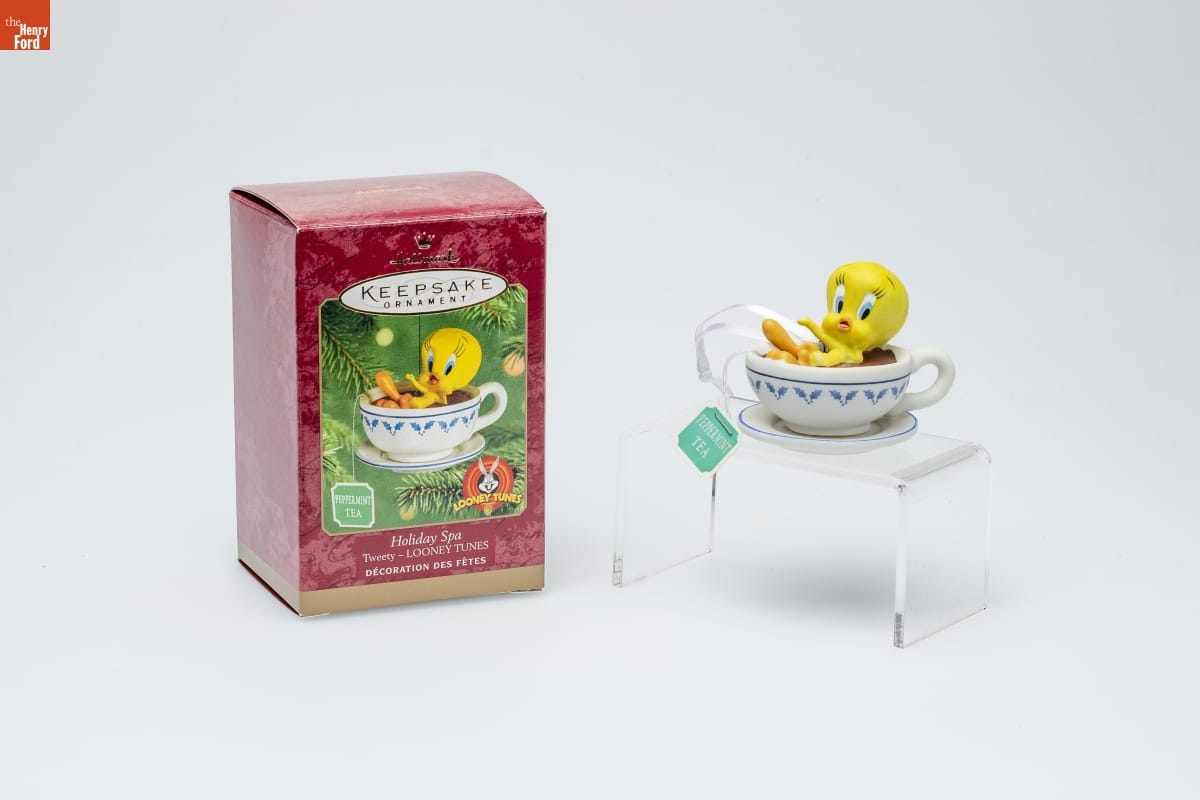
- Hallmark "LOONEY TUNES Tweety: Holiday Spa" Christmas Ornament, 2001 - Already known for greeting cards, Hallmark introduced a line of Christmas ornaments in 1973. The company's annual release of an increasing array of ornaments revolutionized Christmas decorating, appealing to customers' interest in marking memories and milestones as well as expressing one's personality and unique tastes.
- 2001
- Collections - Artifact
Hallmark "LOONEY TUNES Tweety: Holiday Spa" Christmas Ornament, 2001
Already known for greeting cards, Hallmark introduced a line of Christmas ornaments in 1973. The company's annual release of an increasing array of ornaments revolutionized Christmas decorating, appealing to customers' interest in marking memories and milestones as well as expressing one's personality and unique tastes.
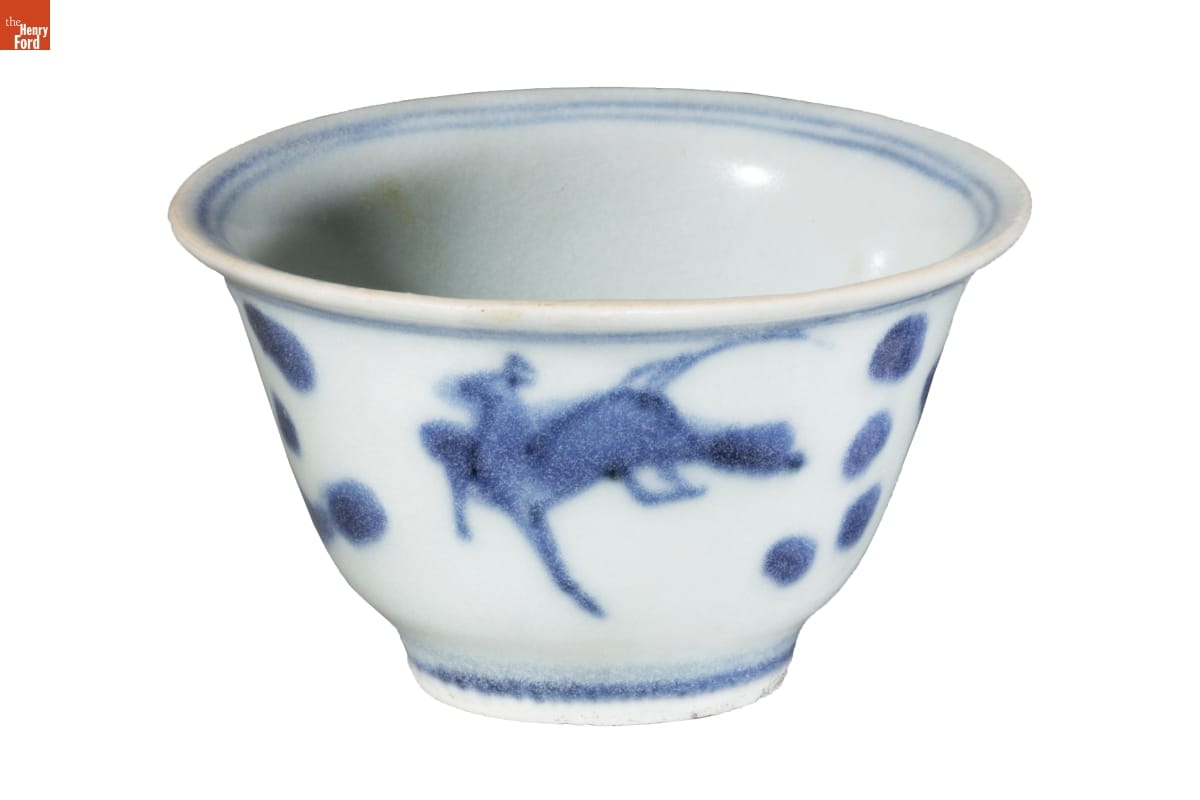
- Tea Cup from Vung Tau Shipwreck, 1675-1690 - Wealthy 17th-century Europeans craved Chinese porcelains. The clay of these export wares contains kaolin. When fired, the body of the clay and glaze fused into a glass-like form that resisted chipping and breaking--holding up to everyday use, which amazed Europeans. This teacup never made it to the table; it was found in a shipwreck on its way to Europe--a beautiful and rugged survivor.
- 1675-1690
- Collections - Artifact
Tea Cup from Vung Tau Shipwreck, 1675-1690
Wealthy 17th-century Europeans craved Chinese porcelains. The clay of these export wares contains kaolin. When fired, the body of the clay and glaze fused into a glass-like form that resisted chipping and breaking--holding up to everyday use, which amazed Europeans. This teacup never made it to the table; it was found in a shipwreck on its way to Europe--a beautiful and rugged survivor.
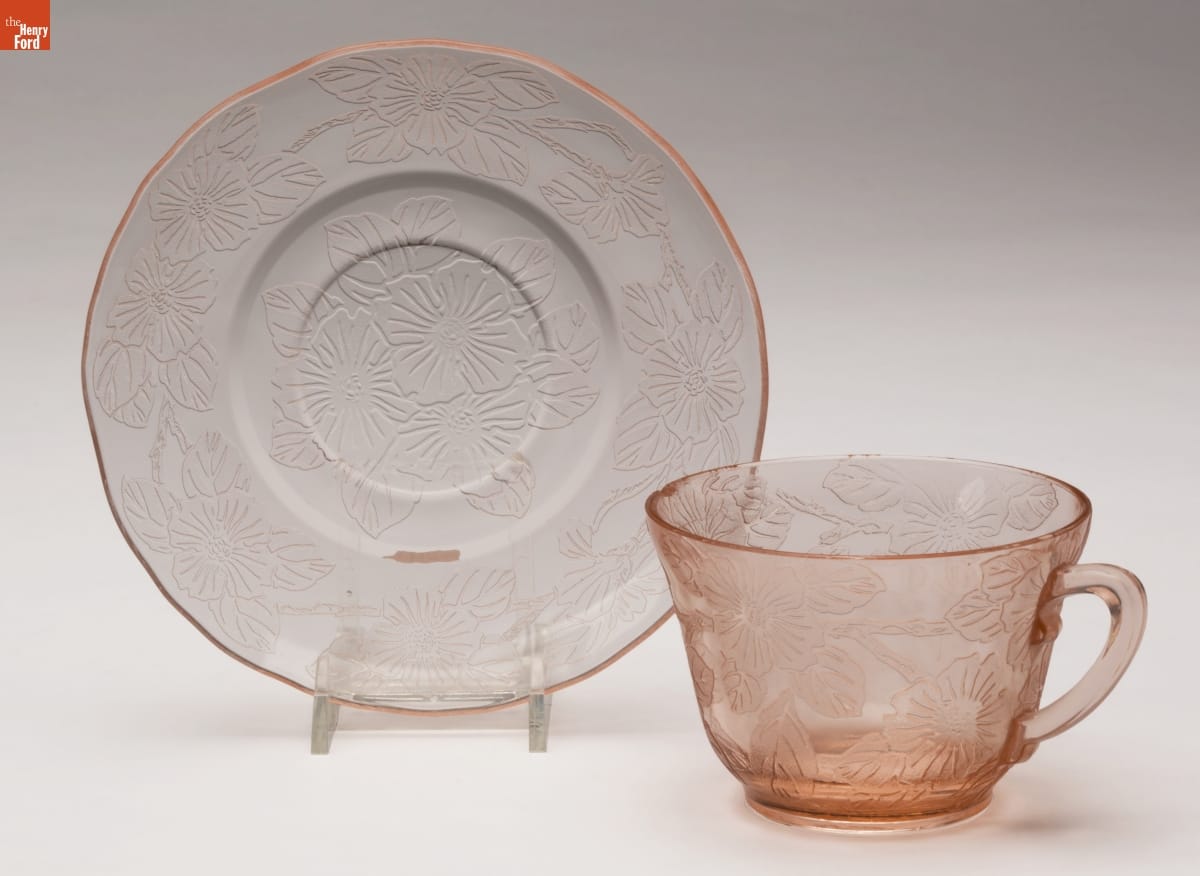
- Cup and Saucer Set 1930-1934 - During the 1930s, some American glass manufacturers produced inexpensive, pressed glass serving ware. The glassware, which came in a variety of colors and scores of distinct patterns, could be bought at many lower-end retailers as well as through catalogue merchants. Movie theaters and other businesses also gave it away -- intending to lure the cash-strapped Depression-era public inside.
- 1930-1934
- Collections - Artifact
Cup and Saucer Set 1930-1934
During the 1930s, some American glass manufacturers produced inexpensive, pressed glass serving ware. The glassware, which came in a variety of colors and scores of distinct patterns, could be bought at many lower-end retailers as well as through catalogue merchants. Movie theaters and other businesses also gave it away -- intending to lure the cash-strapped Depression-era public inside.
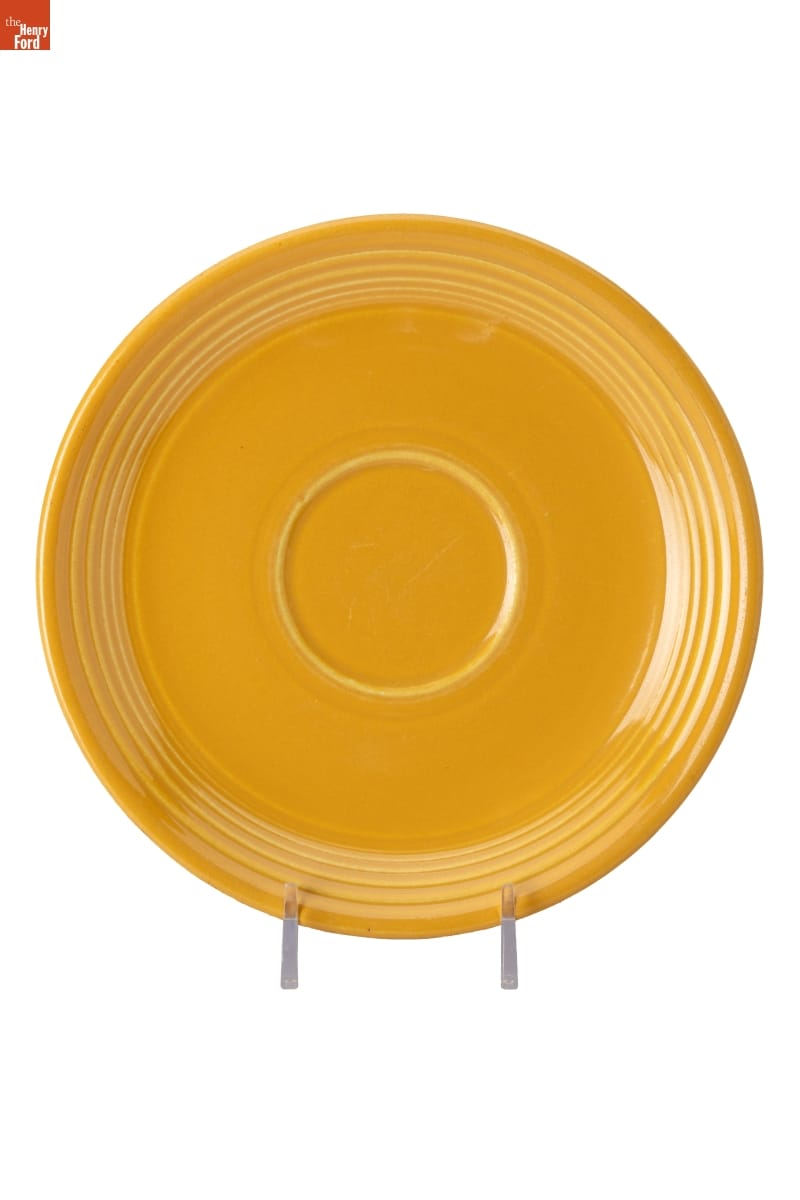
- Fiesta Ware Saucer, 1936-1955 - Colorful Fiesta ware was one of many inexpensive, yet fashionable dinnerware sets produced for the middle market during the Great Depression, sold at retailers like F.W. Woolworth's, Kresge, and department store bargain basements. Thanks to revived interest in Art Deco, the line was resurrected in 1986 by the Homer Laughlin China Company, and remains in production today.
- 1936-1955
- Collections - Artifact
Fiesta Ware Saucer, 1936-1955
Colorful Fiesta ware was one of many inexpensive, yet fashionable dinnerware sets produced for the middle market during the Great Depression, sold at retailers like F.W. Woolworth's, Kresge, and department store bargain basements. Thanks to revived interest in Art Deco, the line was resurrected in 1986 by the Homer Laughlin China Company, and remains in production today.
- Fiesta Ware Saucer, 1936-1955 - Colorful Fiesta ware was one of many inexpensive, yet fashionable dinnerware sets produced for the middle market during the Great Depression, sold at retailers like F.W. Woolworth's, Kresge, and department store bargain basements. Thanks to revived interest in Art Deco, the line was resurrected in 1986 by the Homer Laughlin China Company, and remains in production today.
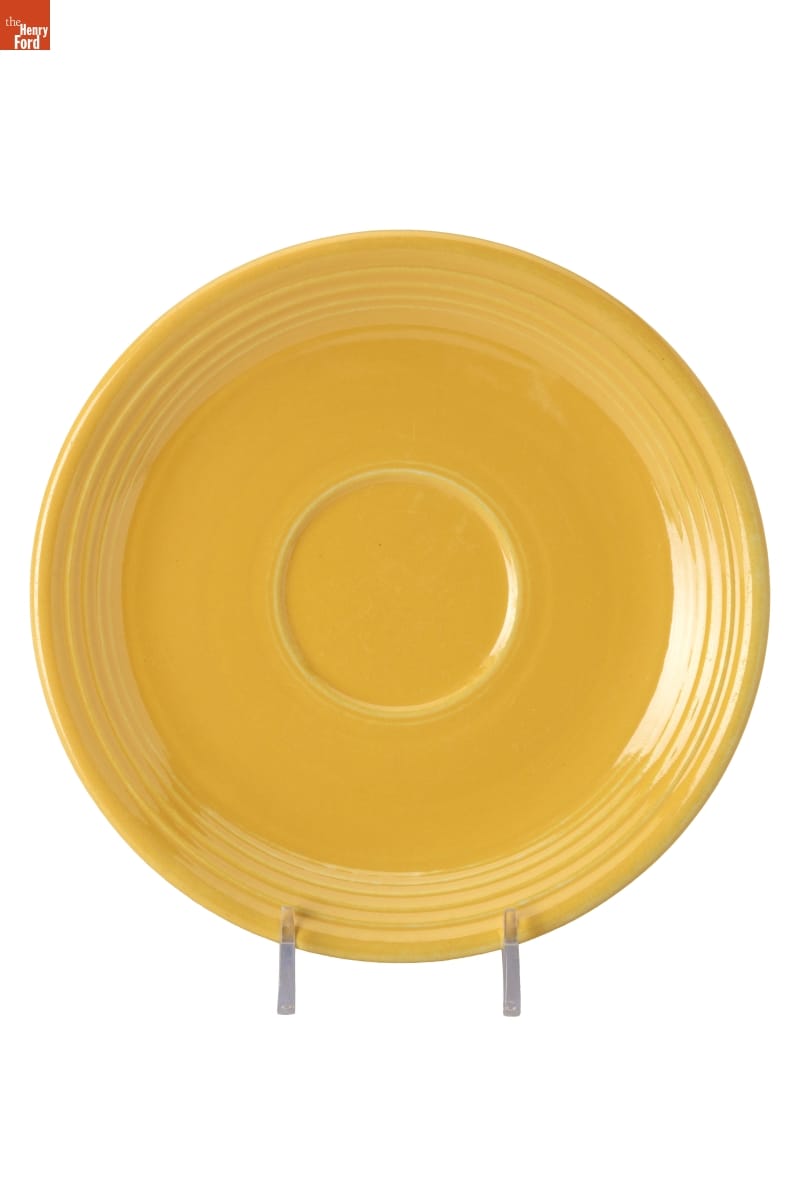
- 1936-1955
- Collections - Artifact
Fiesta Ware Saucer, 1936-1955
Colorful Fiesta ware was one of many inexpensive, yet fashionable dinnerware sets produced for the middle market during the Great Depression, sold at retailers like F.W. Woolworth's, Kresge, and department store bargain basements. Thanks to revived interest in Art Deco, the line was resurrected in 1986 by the Homer Laughlin China Company, and remains in production today.
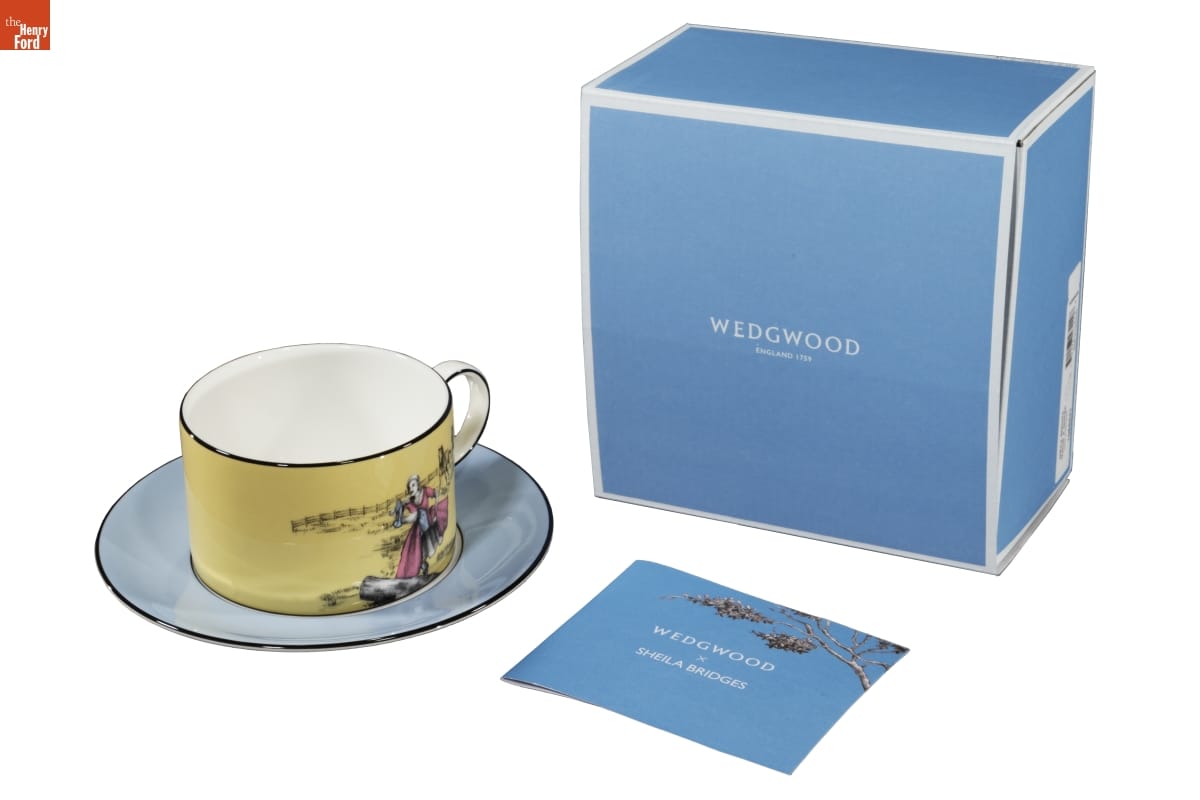
- "Harlem Toile de Jouy" Teacup and Saucer Set, 2022 - Sheila Bridges' Harlem Toile de Jouy pattern is a singular example of a historical design that has been successfully reimagined and speaks to Americans in the 21st century. Originally designed in 2007, the pattern featuring African Americans engaged in leisurely activities has morphed from a wallpaper design to appearing on a variety of objects, from clothing to dinnerware, both high style and vernacular.
- 2022
- Collections - Artifact
"Harlem Toile de Jouy" Teacup and Saucer Set, 2022
Sheila Bridges' Harlem Toile de Jouy pattern is a singular example of a historical design that has been successfully reimagined and speaks to Americans in the 21st century. Originally designed in 2007, the pattern featuring African Americans engaged in leisurely activities has morphed from a wallpaper design to appearing on a variety of objects, from clothing to dinnerware, both high style and vernacular.
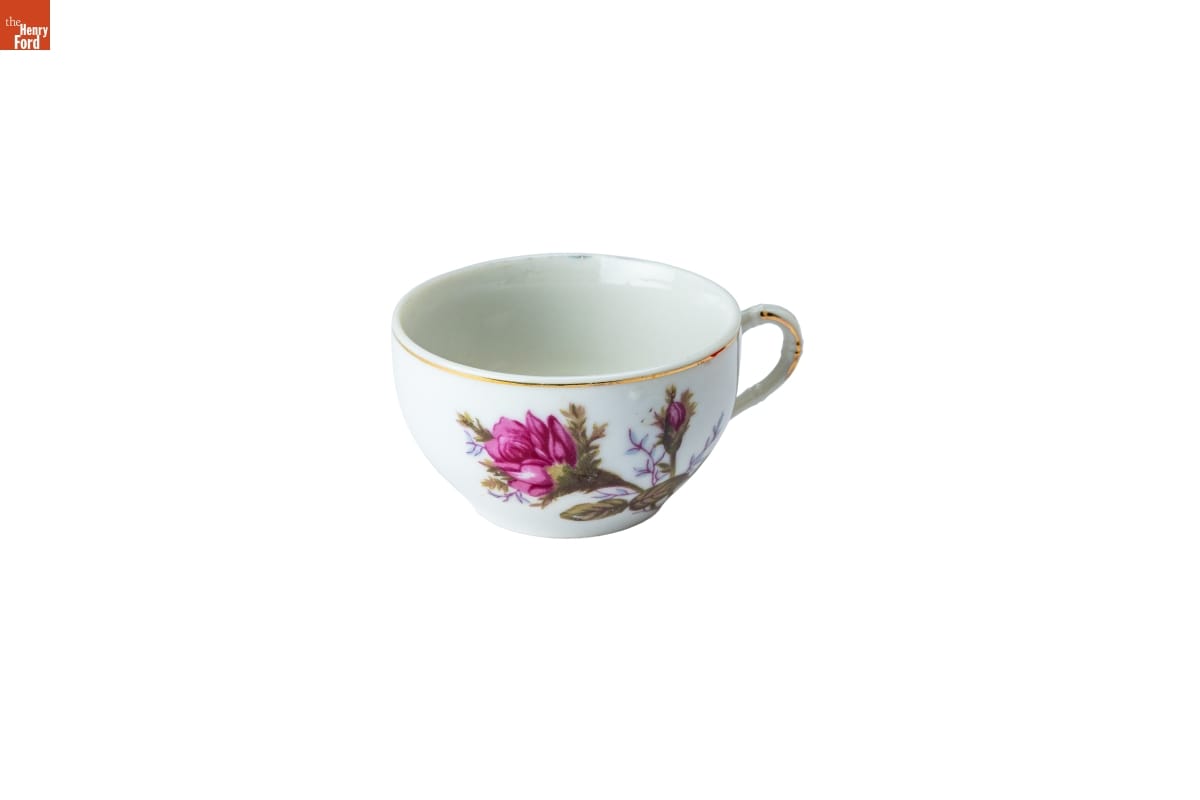
- Teacup -
- Collections - Artifact
Teacup
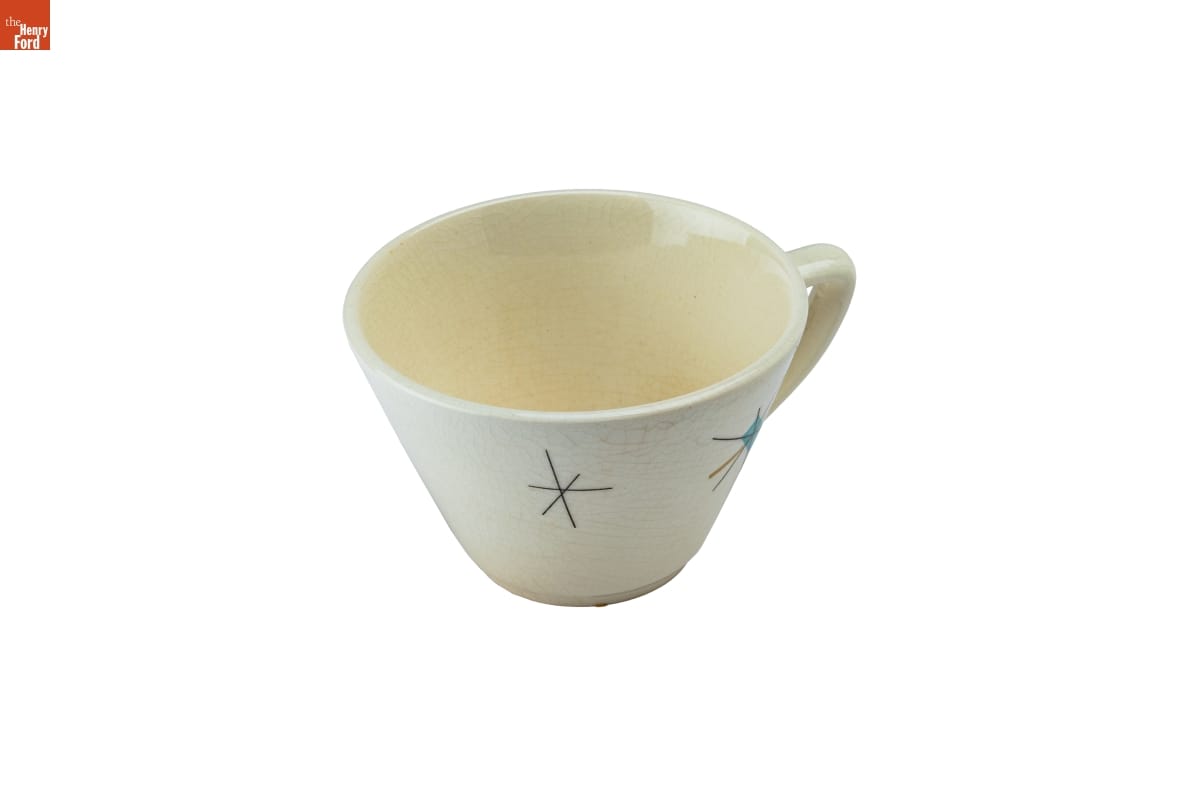
- North Star Cup, 1957-1967 - Industrial designer Victor Schreckengost created "Hopscotch" pattern dinnerware for the Salem China Company in the mid-1950s. Though fashionable, it was expensive to produce, and sales lagged. The Ohio-based company simplified the design and renamed it "North Star." Sold from 1957 to 1967 in retail stores and wholesaled to supermarket chains as a promotional item, "North Star" is emblematic of modern middle-class tastes of the time.
- 1957-1967
- Collections - Artifact
North Star Cup, 1957-1967
Industrial designer Victor Schreckengost created "Hopscotch" pattern dinnerware for the Salem China Company in the mid-1950s. Though fashionable, it was expensive to produce, and sales lagged. The Ohio-based company simplified the design and renamed it "North Star." Sold from 1957 to 1967 in retail stores and wholesaled to supermarket chains as a promotional item, "North Star" is emblematic of modern middle-class tastes of the time.
- Teacup -
- Collections - Artifact
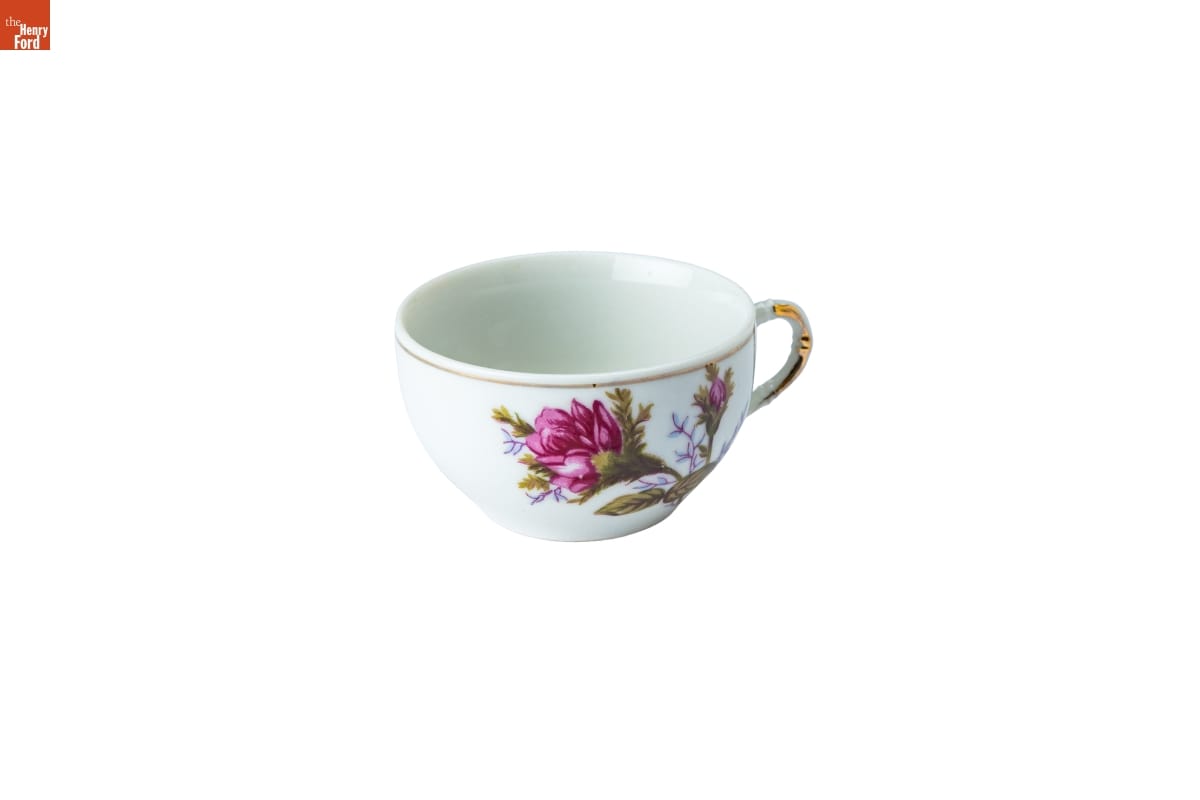
Teacup
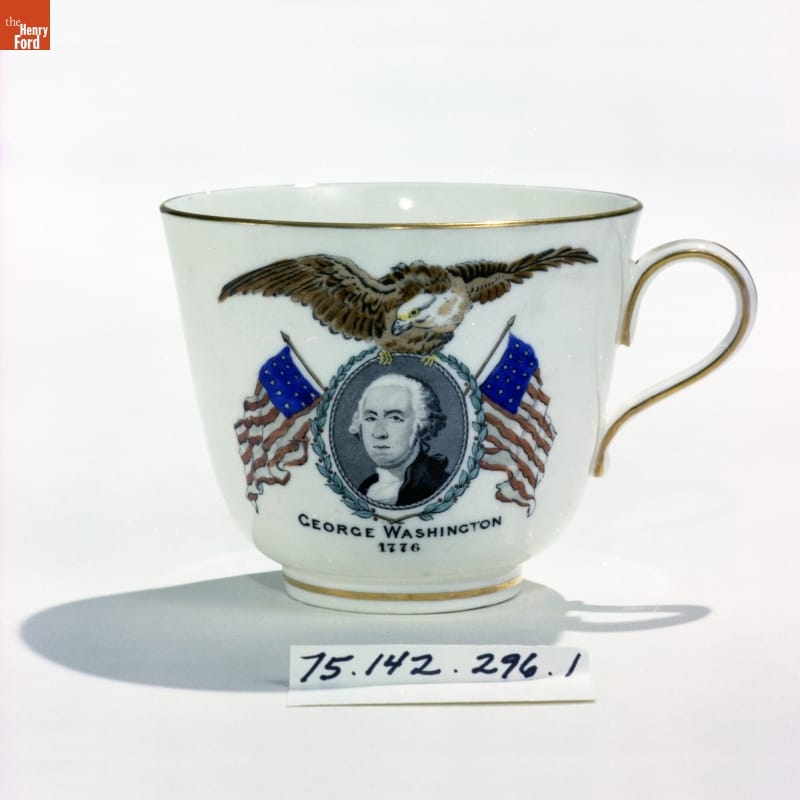
- George Washington Commemorative Cup from Centennial Exhibition, circa 1876 - The first official World's Fair held in the United States celebrated the 100th anniversary of the signing of the Declaration of Independence. Around ten million people visited Philadelphia during the Centennial International Exhibition of 1876. Many returned home with mementos of the exposition, such as this cup depicting the nation's first president among patriotic imagery.
- circa 1876
- Collections - Artifact
George Washington Commemorative Cup from Centennial Exhibition, circa 1876
The first official World's Fair held in the United States celebrated the 100th anniversary of the signing of the Declaration of Independence. Around ten million people visited Philadelphia during the Centennial International Exhibition of 1876. Many returned home with mementos of the exposition, such as this cup depicting the nation's first president among patriotic imagery.