
Search
- Baby Rattle, 1720-1730 - Eighteenth-century parents viewed teething as a potentially dangerous time for their baby -- difficulties in cutting teeth, many believed, could lead to disease or even death. Coral and bells proved a useful toy to ease parent's fears. The whistle and bells provided noisy entertainment, while the hard coral teething surface eased the child's pain and helped ward off perceived dangers.
- 1720-1730
- Collections - Artifact
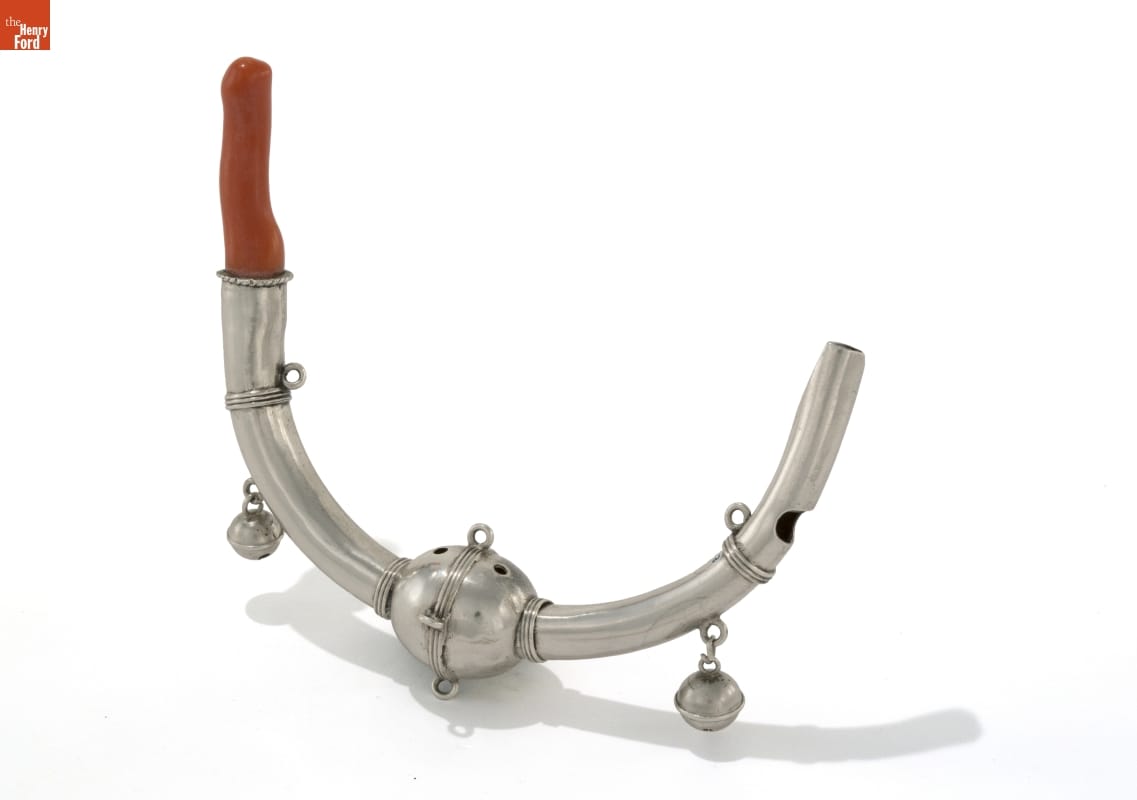
Baby Rattle, 1720-1730
Eighteenth-century parents viewed teething as a potentially dangerous time for their baby -- difficulties in cutting teeth, many believed, could lead to disease or even death. Coral and bells proved a useful toy to ease parent's fears. The whistle and bells provided noisy entertainment, while the hard coral teething surface eased the child's pain and helped ward off perceived dangers.
- Baby Rattle, 1760-1780 - Eighteenth-century parents viewed teething as a potentially dangerous time for their baby -- difficulties in cutting teeth, many believed, could lead to disease or even death. Coral and bells proved a useful toy to ease parent's fears. The whistle and bells provided noisy entertainment, while the hard coral teething surface eased the child's pain and helped ward off perceived dangers.
- 1760-1780
- Collections - Artifact
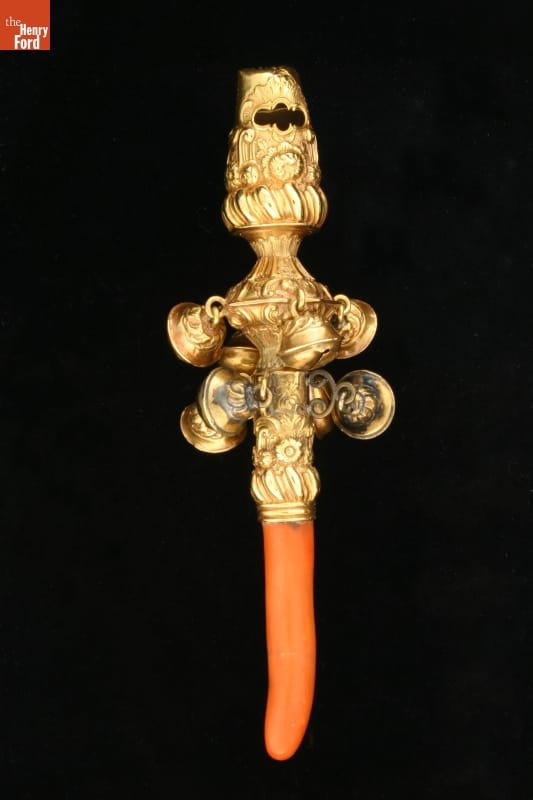
Baby Rattle, 1760-1780
Eighteenth-century parents viewed teething as a potentially dangerous time for their baby -- difficulties in cutting teeth, many believed, could lead to disease or even death. Coral and bells proved a useful toy to ease parent's fears. The whistle and bells provided noisy entertainment, while the hard coral teething surface eased the child's pain and helped ward off perceived dangers.
- Baby Rattle, circa 1785 - Eighteenth-century parents viewed teething as a potentially dangerous time for their baby -- difficulties in cutting teeth, many believed, could lead to disease or even death. Coral and bells proved a useful toy to ease parent's fears. The whistle and bells provided noisy entertainment, while the hard coral teething surface eased the child's pain and helped ward off perceived dangers.
- circa 1785
- Collections - Artifact
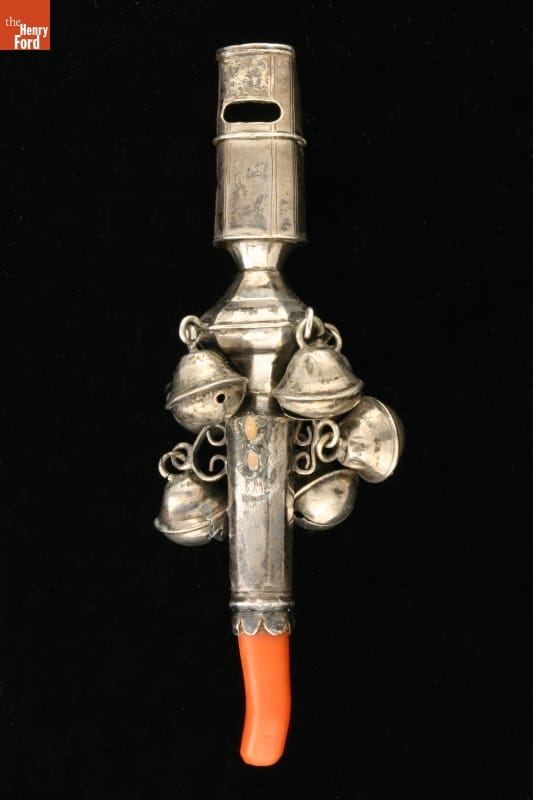
Baby Rattle, circa 1785
Eighteenth-century parents viewed teething as a potentially dangerous time for their baby -- difficulties in cutting teeth, many believed, could lead to disease or even death. Coral and bells proved a useful toy to ease parent's fears. The whistle and bells provided noisy entertainment, while the hard coral teething surface eased the child's pain and helped ward off perceived dangers.