
Search
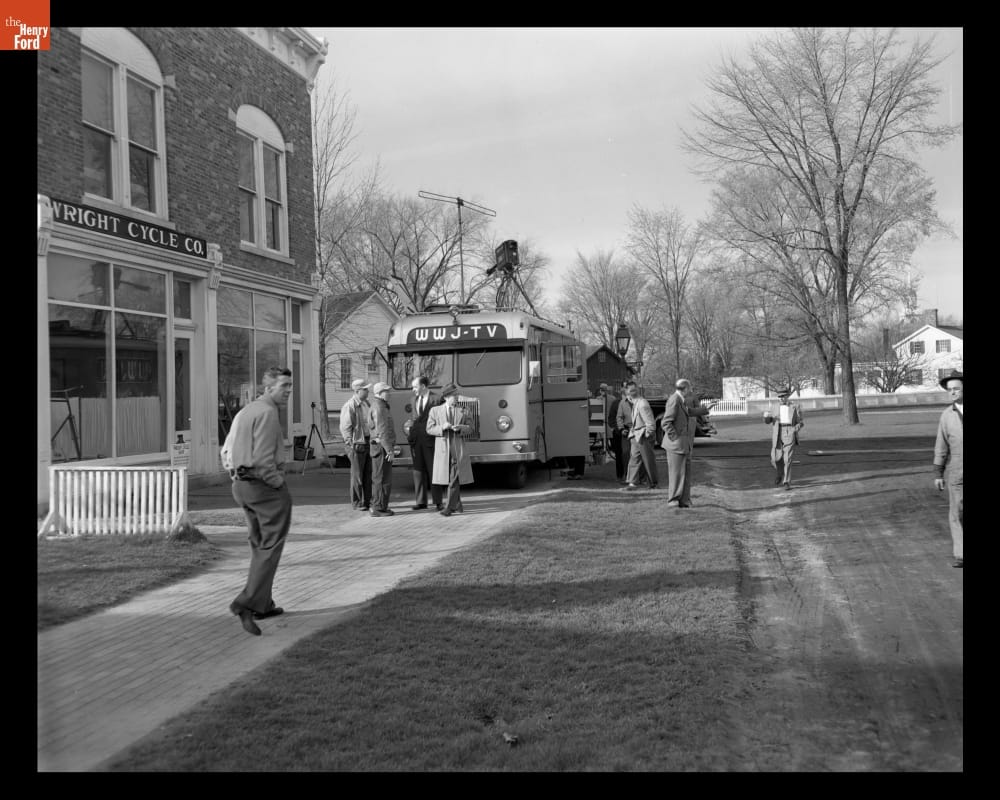
- NBC "Today" Show Broadcast from Greenfield Village, April 18, 1955 - In April 1955, NBC's <em>Today</em> show came to Detroit, Michigan, to cover the automotive industry. The morning news and entertainment show originated a remote broadcast from Greenfield Village on April 18th. Staff paraded a line of vehicles -- both horse-drawn carriages and automobiles -- past the cameras. NBC reporter Dick McCutcheon and museum curator Hayward Ablewhite provided commentary.
- April 18, 1955
- Collections - Artifact
NBC "Today" Show Broadcast from Greenfield Village, April 18, 1955
In April 1955, NBC's Today show came to Detroit, Michigan, to cover the automotive industry. The morning news and entertainment show originated a remote broadcast from Greenfield Village on April 18th. Staff paraded a line of vehicles -- both horse-drawn carriages and automobiles -- past the cameras. NBC reporter Dick McCutcheon and museum curator Hayward Ablewhite provided commentary.
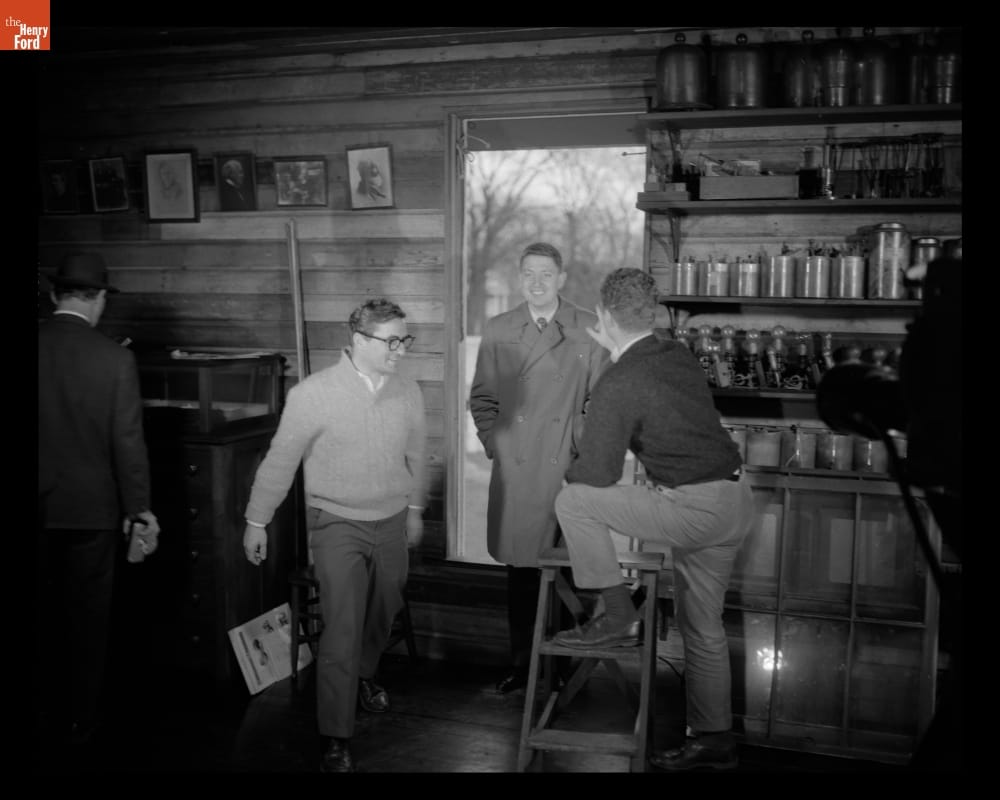
- Videotaping the ABC-TV "Discovery 64" Show in Greenfield Village, Director, Host and Producer inside Menlo Park Laboratory, November 1963 - <EM>Discovery 64</EM> was a half hour children's educational show on ABC. It explored history, science, art, current events and other subjects important in a child's world. In November 1963, the show filmed three programs at the Henry Ford Museum and Greenfield Village. Production set up in the museum's Street of Shops and at various locations in the village including Edison's Menlo Park Laboratory.
- November 01, 1963
- Collections - Artifact
Videotaping the ABC-TV "Discovery 64" Show in Greenfield Village, Director, Host and Producer inside Menlo Park Laboratory, November 1963
Discovery 64 was a half hour children's educational show on ABC. It explored history, science, art, current events and other subjects important in a child's world. In November 1963, the show filmed three programs at the Henry Ford Museum and Greenfield Village. Production set up in the museum's Street of Shops and at various locations in the village including Edison's Menlo Park Laboratory.
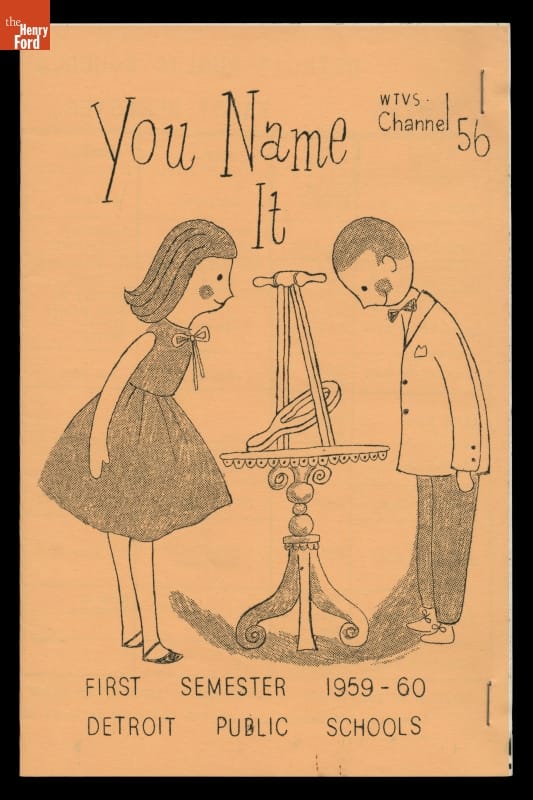
- "WTVS Channel 56 'You Name It,' 1st Semester 1959-1960, Detroit Public Schools" - Beginning in the 1950s, Henry Ford Museum and Greenfield Village partnered with WTVS, Detroit's local educational television station, to bring American history into the classroom. Marion Corwell, the museum's Manager of Educational Television, produced and hosted <EM>You Name It</EM> -- a half-hour quiz show. Students from grades 5 to 8 tried to identify and give the historical significance of objects from the museum's collection.
- 1959-1960
- Collections - Artifact
"WTVS Channel 56 'You Name It,' 1st Semester 1959-1960, Detroit Public Schools"
Beginning in the 1950s, Henry Ford Museum and Greenfield Village partnered with WTVS, Detroit's local educational television station, to bring American history into the classroom. Marion Corwell, the museum's Manager of Educational Television, produced and hosted You Name It -- a half-hour quiz show. Students from grades 5 to 8 tried to identify and give the historical significance of objects from the museum's collection.
- The Supremes in Greenfield Village during Filming of "It's What's Happening Baby" Television Show, June 1965 -
- June 01, 1965
- Collections - Artifact
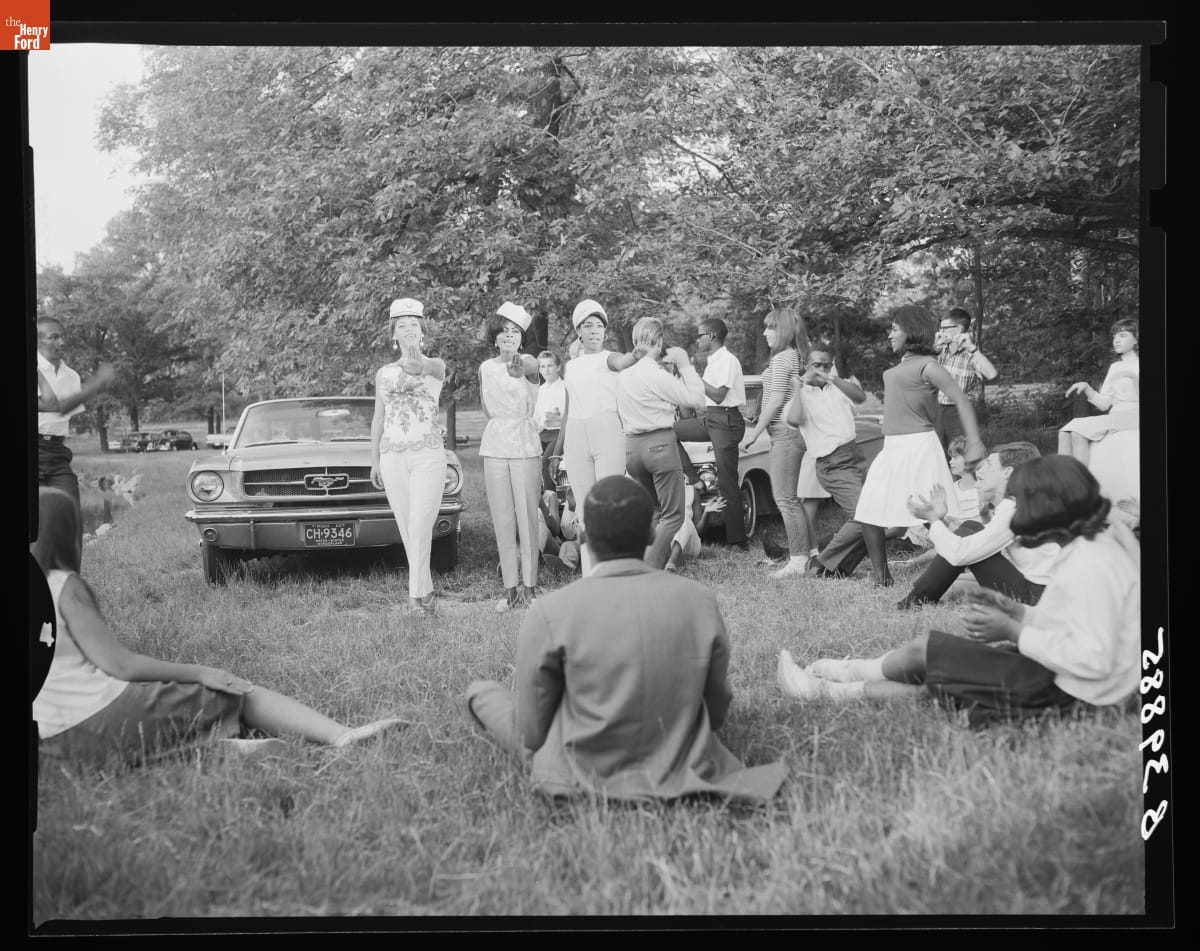
The Supremes in Greenfield Village during Filming of "It's What's Happening Baby" Television Show, June 1965
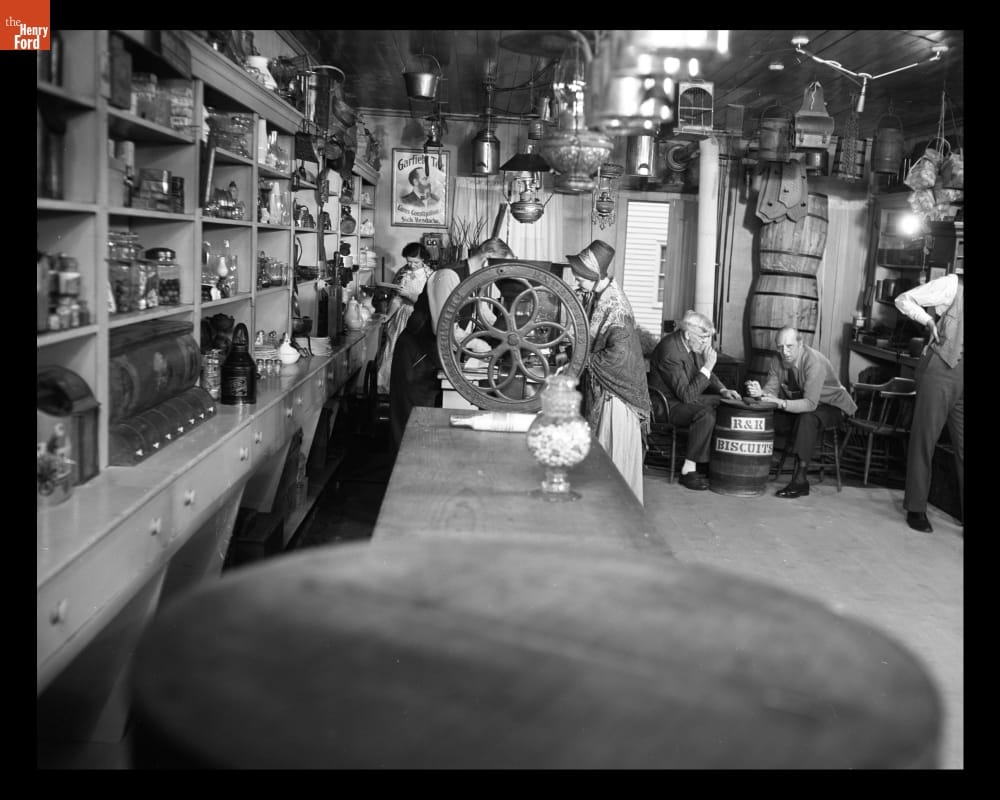
- NBC "Home" Show Broadcast from Waterford General Store in Greenfield Village, October 25, 1955 - On October 25, 1955, NBC broadcast three television programs -- <em>Today</em>, <em>Home,</em> and <em>Howdy Doody</em> -- live and in color from Greenfield Village. NBC's <em>Home</em> was an hour-long informational show hosted by Arlene Francis. The show focused on issues that might be important to its female daytime viewers. For this day's filming, <em>Home</em> depicted a typical day in a mid-19th-century American village.
- October 25, 1955
- Collections - Artifact
NBC "Home" Show Broadcast from Waterford General Store in Greenfield Village, October 25, 1955
On October 25, 1955, NBC broadcast three television programs -- Today, Home, and Howdy Doody -- live and in color from Greenfield Village. NBC's Home was an hour-long informational show hosted by Arlene Francis. The show focused on issues that might be important to its female daytime viewers. For this day's filming, Home depicted a typical day in a mid-19th-century American village.
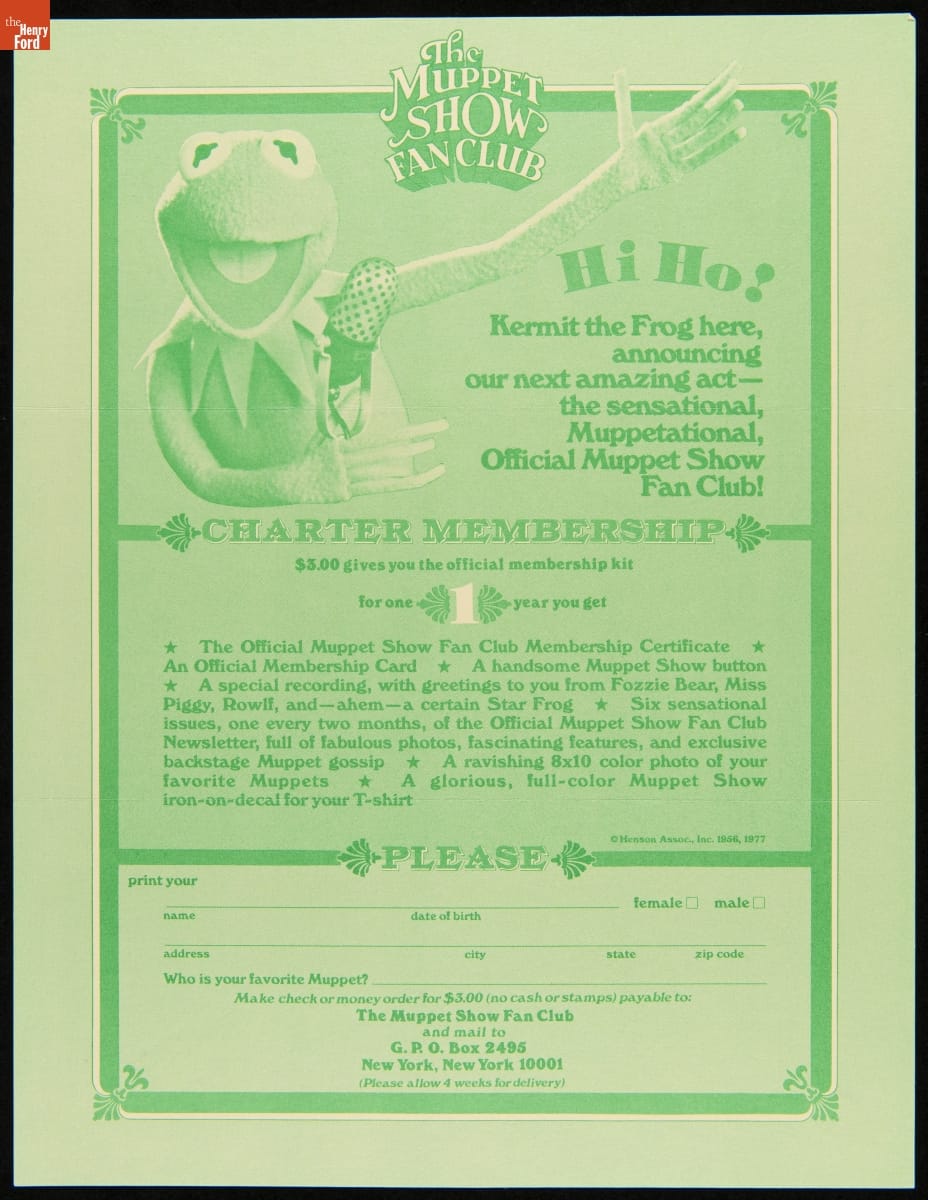
- Application Form for Charter Membership in The Muppet Show Fan Club, circa 1977 - Jim Henson's Muppets experienced their greatest fame on TV, with <em>The Muppet Show</em> (1976 to 1981). The show introduced millions to Henson's unique blend of humor and imagination. When the second season started, viewers could join a fan club for the popular TV show and receive an official membership kit through the mail, which included this application form.
- circa 1977
- Collections - Artifact
Application Form for Charter Membership in The Muppet Show Fan Club, circa 1977
Jim Henson's Muppets experienced their greatest fame on TV, with The Muppet Show (1976 to 1981). The show introduced millions to Henson's unique blend of humor and imagination. When the second season started, viewers could join a fan club for the popular TV show and receive an official membership kit through the mail, which included this application form.
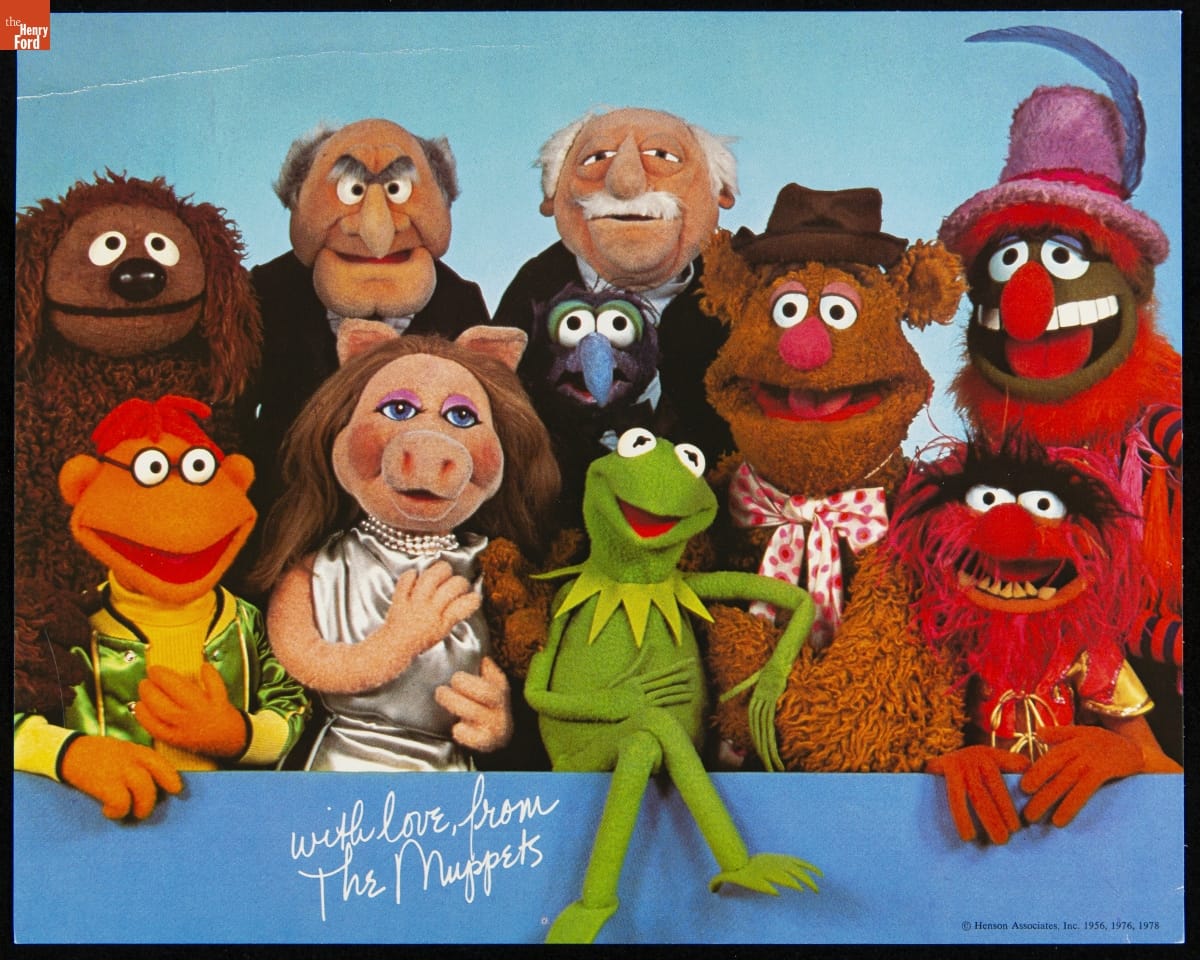
- "With Love From The Muppets," circa 1978 - Jim Henson's Muppets experienced their greatest fame on TV, with <em>The Muppet Show</em> (1976 to 1981). The show introduced millions to Henson's unique blend of humor and imagination. When the second season started, viewers could join a fan club for the popular TV show and receive an official membership kit through the mail, which included this photographic print.
- circa 1978
- Collections - Artifact
"With Love From The Muppets," circa 1978
Jim Henson's Muppets experienced their greatest fame on TV, with The Muppet Show (1976 to 1981). The show introduced millions to Henson's unique blend of humor and imagination. When the second season started, viewers could join a fan club for the popular TV show and receive an official membership kit through the mail, which included this photographic print.
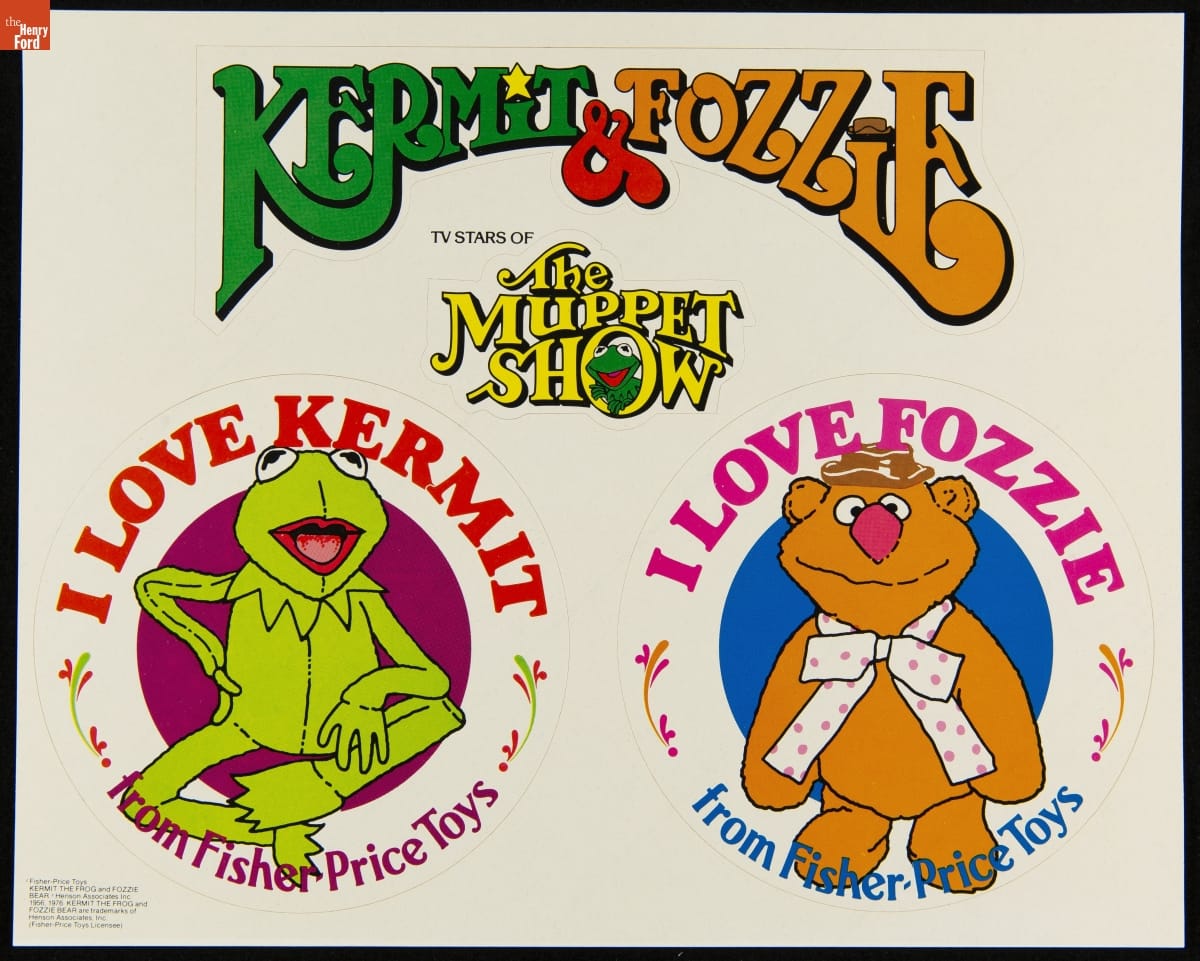
- Stickers, "Kermit & Fozzie, TV Stars of The Muppet Show," 1976 - Jim Henson's Muppets experienced their greatest fame on TV, with <em>The Muppet Show</em> (1976 to 1981). The show introduced millions to Henson's unique blend of humor and imagination. In 1976, Fisher-Price, which produced an early line of Muppet-show related toys, seems to have mailed out a packet that included this item as an incentive to join the official fan club.
- 1976
- Collections - Artifact
Stickers, "Kermit & Fozzie, TV Stars of The Muppet Show," 1976
Jim Henson's Muppets experienced their greatest fame on TV, with The Muppet Show (1976 to 1981). The show introduced millions to Henson's unique blend of humor and imagination. In 1976, Fisher-Price, which produced an early line of Muppet-show related toys, seems to have mailed out a packet that included this item as an incentive to join the official fan club.
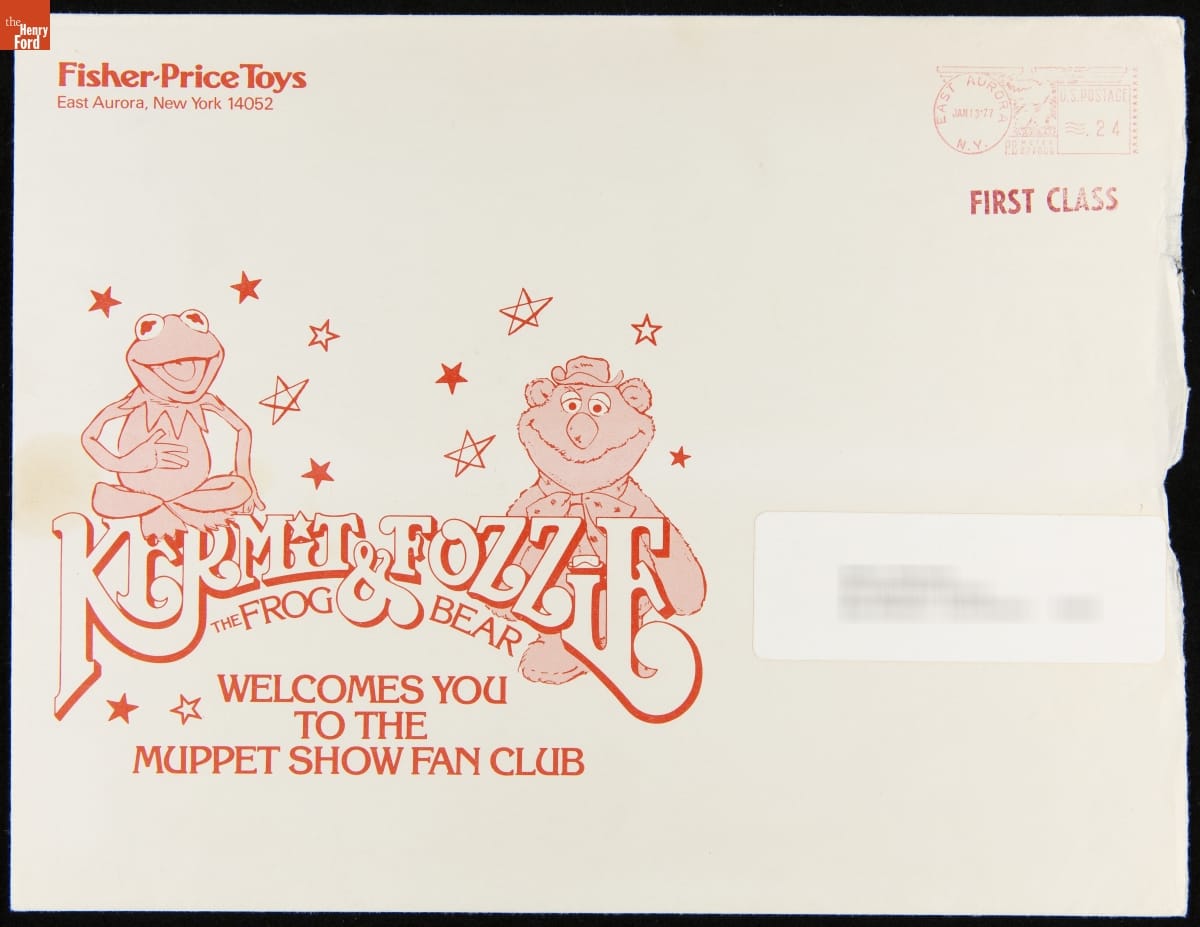
- "Kermit the Frog and Fozzie Bear Welcome You to The Muppet Show Fan Club," 1976 - Jim Henson's Muppets experienced their greatest fame on TV, with <em>The Muppet Show</em> (1976 to 1981). The show introduced millions to Henson's unique blend of humor and imagination. In 1976, Fisher-Price, which produced an early line of Muppet-show related toys, seems to have mailed out a packet that included this item as an incentive to join the official fan club.
- 1976
- Collections - Artifact
"Kermit the Frog and Fozzie Bear Welcome You to The Muppet Show Fan Club," 1976
Jim Henson's Muppets experienced their greatest fame on TV, with The Muppet Show (1976 to 1981). The show introduced millions to Henson's unique blend of humor and imagination. In 1976, Fisher-Price, which produced an early line of Muppet-show related toys, seems to have mailed out a packet that included this item as an incentive to join the official fan club.
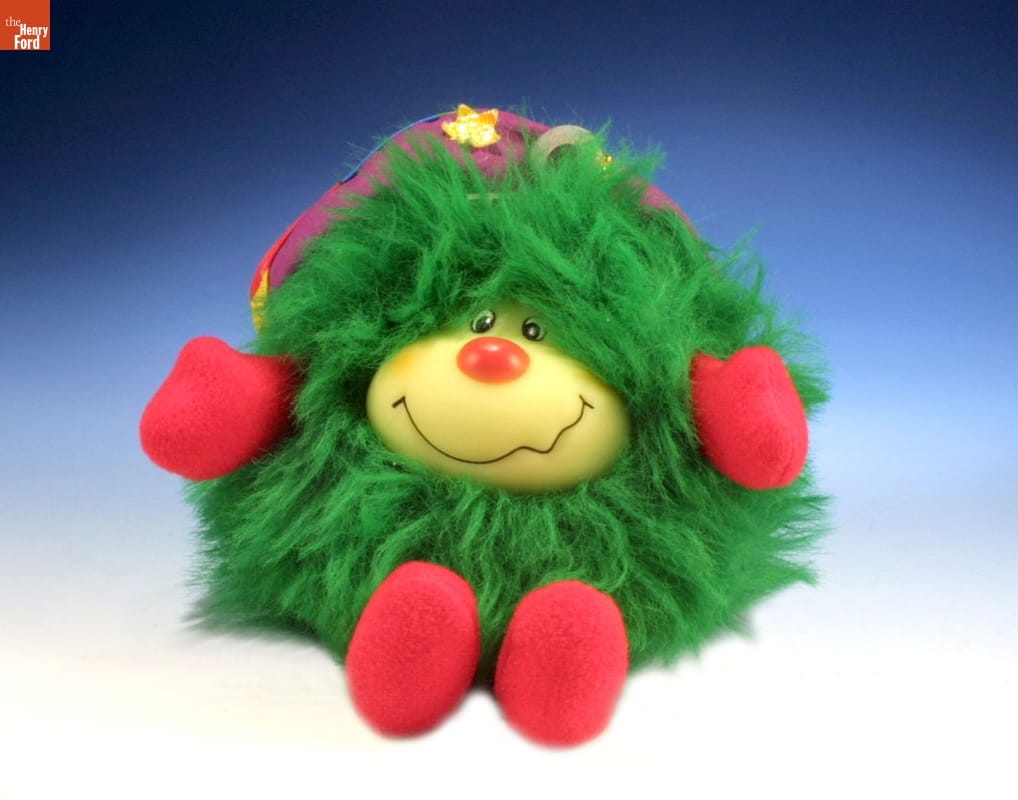
- Toy, Lucky Sprite, 1984-1986 - In the 1980s, toy companies began producing commercial television programs to market dolls and other toys to children. Hallmark sponsored the Rainbow Brite series which debuted in 1984. The company sold a colorful range of program-based plush toys, such as this green furry Sprite named Lucky. Sprites mine color crystals and help Rainbow Brite return color to her world.
- 1984-1986
- Collections - Artifact
Toy, Lucky Sprite, 1984-1986
In the 1980s, toy companies began producing commercial television programs to market dolls and other toys to children. Hallmark sponsored the Rainbow Brite series which debuted in 1984. The company sold a colorful range of program-based plush toys, such as this green furry Sprite named Lucky. Sprites mine color crystals and help Rainbow Brite return color to her world.