
Search
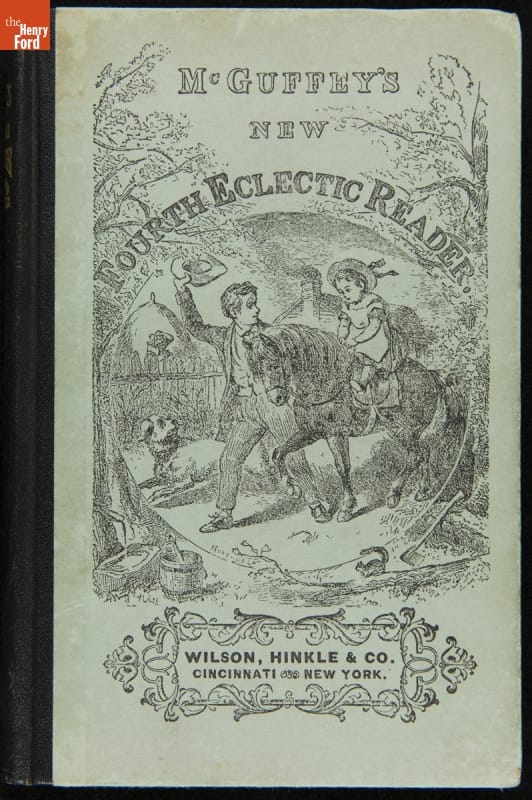
- "McGuffey's New Fourth Eclectic Reader," Originally Published 1885, Reprinted by Henry Ford, 1930 - Henry Ford remembered fondly the McGuffey Readers he studied in the one-room schools of his youth. He even had them reprinted in 1930, so that students in his Edison Institute Schools could learn from them as well. Ford -- having looked up some of his childhood classmates -- gave this reprinted Reader to Olive Burdeno, who had attended school with Ford in the 1870s.
- 1930
- Collections - Artifact
"McGuffey's New Fourth Eclectic Reader," Originally Published 1885, Reprinted by Henry Ford, 1930
Henry Ford remembered fondly the McGuffey Readers he studied in the one-room schools of his youth. He even had them reprinted in 1930, so that students in his Edison Institute Schools could learn from them as well. Ford -- having looked up some of his childhood classmates -- gave this reprinted Reader to Olive Burdeno, who had attended school with Ford in the 1870s.
- Textbook, "McGuffey's New Fifth Eclectic Reader," 1866 -
- 1866
- Collections - Artifact
Textbook, "McGuffey's New Fifth Eclectic Reader," 1866
- Textbook Used by Orville Wright, "Intermediate Arithmetic," 1876 - Milton and Susan Wright encouraged an interest in learning in their children Reuchlin, Lorin, Wilbur, Orville, and Katharine -- though not necessarily in formal education. Katharine was the only Wright child to finish college, graduating from Oberlin in 1898. Neither Wilbur nor Orville finished high school, but they learned much from their father's extensive home library.
- 1876
- Collections - Artifact
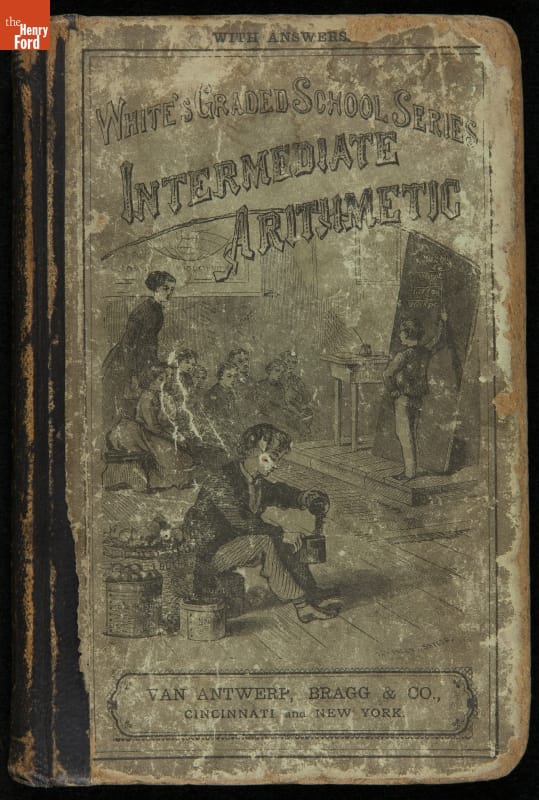
Textbook Used by Orville Wright, "Intermediate Arithmetic," 1876
Milton and Susan Wright encouraged an interest in learning in their children Reuchlin, Lorin, Wilbur, Orville, and Katharine -- though not necessarily in formal education. Katharine was the only Wright child to finish college, graduating from Oberlin in 1898. Neither Wilbur nor Orville finished high school, but they learned much from their father's extensive home library.
- Book Used by Wilbur Wright, "DeWolf's Instructive Speller" - Milton and Susan Wright encouraged an interest in learning in their children Reuchlin, Lorin, Wilbur, Orville, and Katharine -- though not necessarily in formal education. Katharine was the only Wright child to finish college, graduating from Oberlin in 1898. Neither Wilbur nor Orville finished high school, but they learned much from their father's extensive home library.
- 1862
- Collections - Artifact
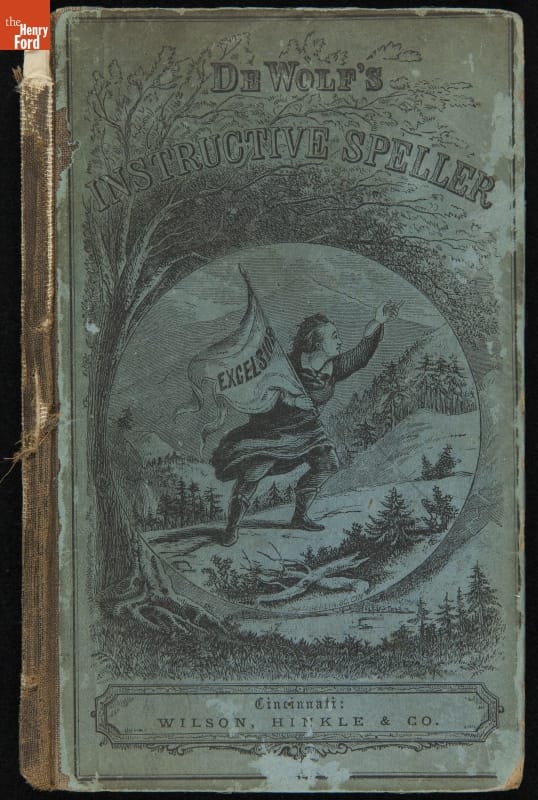
Book Used by Wilbur Wright, "DeWolf's Instructive Speller"
Milton and Susan Wright encouraged an interest in learning in their children Reuchlin, Lorin, Wilbur, Orville, and Katharine -- though not necessarily in formal education. Katharine was the only Wright child to finish college, graduating from Oberlin in 1898. Neither Wilbur nor Orville finished high school, but they learned much from their father's extensive home library.
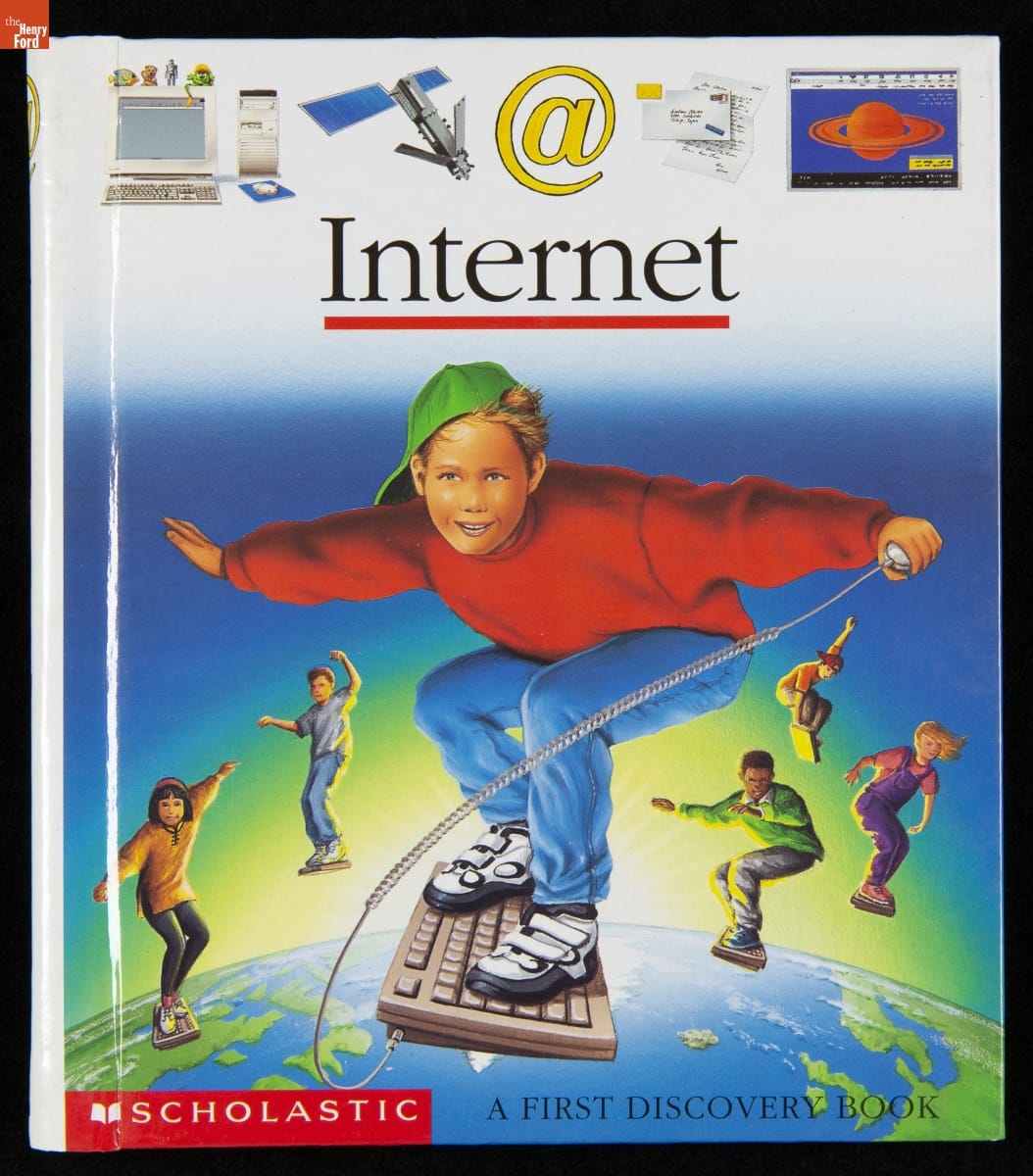
- Internet: A First Discovery Book, 2000 - Librarian Jean Armour Polly coined the slang idiom "surf the net" in the early 1990s. Believing the Internet--in addition to books and other printed matter--could be a resource for learning, Polly advocated for free Internet access in public libraries. She used surfing as a metaphor when she authored a guide titled "Surfing the Internet: An introduction." The phrase quickly caught on.
- 2000
- Collections - Artifact
Internet: A First Discovery Book, 2000
Librarian Jean Armour Polly coined the slang idiom "surf the net" in the early 1990s. Believing the Internet--in addition to books and other printed matter--could be a resource for learning, Polly advocated for free Internet access in public libraries. She used surfing as a metaphor when she authored a guide titled "Surfing the Internet: An introduction." The phrase quickly caught on.
- "First Book in Physiology and Hygiene," 1888 -
- 1888
- Collections - Artifact
"First Book in Physiology and Hygiene," 1888
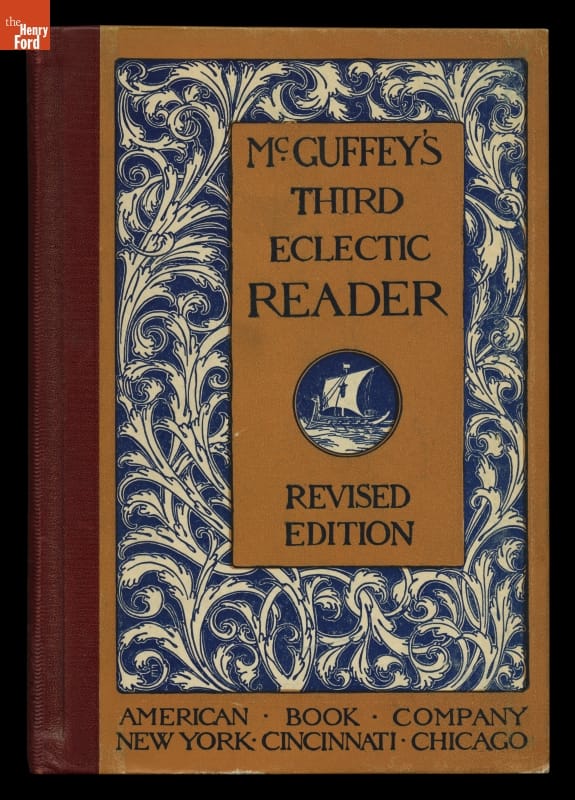
- Textbook, "McGuffey's Third Eclectic Reader," Revised Edition 1879, Published 1920 - The McGuffey Readers textbook series was used in American schools during the nineteenth and early twentieth centuries. The Readers emphasized the fundamental skills of reading and writing but included stories on a wide range of subjects from many sources (hence, "eclectic"). The books were also intended to develop proper character in children, and had a religious overtone.
- 1920
- Collections - Artifact
Textbook, "McGuffey's Third Eclectic Reader," Revised Edition 1879, Published 1920
The McGuffey Readers textbook series was used in American schools during the nineteenth and early twentieth centuries. The Readers emphasized the fundamental skills of reading and writing but included stories on a wide range of subjects from many sources (hence, "eclectic"). The books were also intended to develop proper character in children, and had a religious overtone.
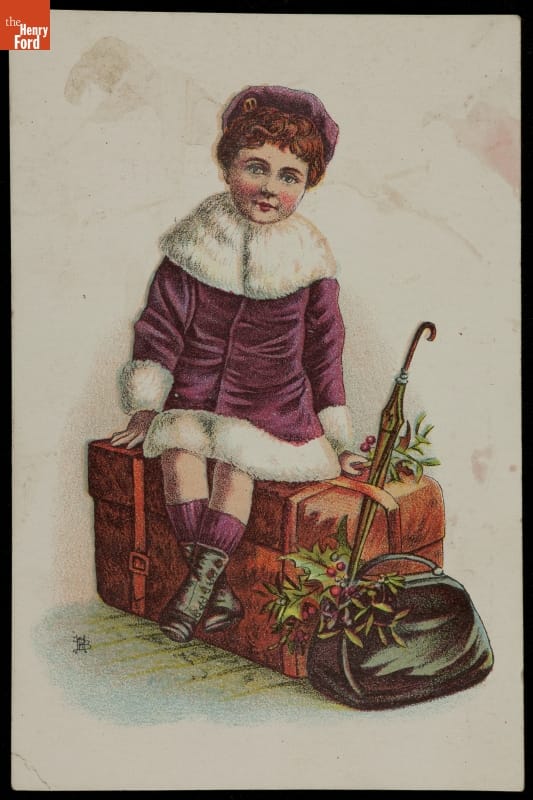
- Trade Card for Lee's Drug Store, Detroit, Michigan, circa 1885 - Trade cards were advertisements found in product packages or distributed by local merchants. This card advertises textbooks and other school supplies at Lee's Drug Store. Textbooks were not provided by schools, even in large cities like Detroit. Books were passed down as students advanced and students often shared books. Note that these prices are in cents, not dollars.
- circa 1885
- Collections - Artifact
Trade Card for Lee's Drug Store, Detroit, Michigan, circa 1885
Trade cards were advertisements found in product packages or distributed by local merchants. This card advertises textbooks and other school supplies at Lee's Drug Store. Textbooks were not provided by schools, even in large cities like Detroit. Books were passed down as students advanced and students often shared books. Note that these prices are in cents, not dollars.
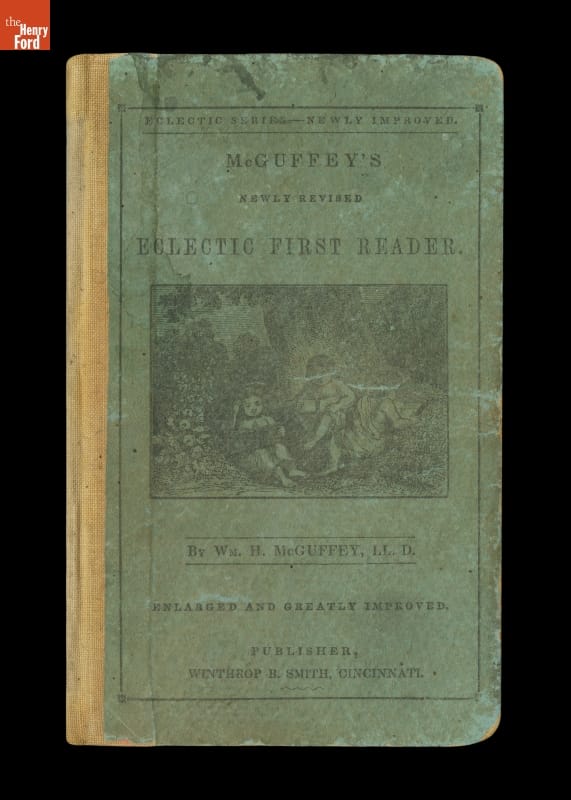
- Textbook, "McGuffey's Newly Revised First Reader," circa 1844 - The McGuffey Readers textbook series was used in American schools during the nineteenth and early twentieth centuries. The Readers emphasized the fundamental skills of reading and writing but included stories on a wide range of subjects from many sources (hence, "eclectic"). The books were also intended to develop proper character in children, and had a religious overtone.
- circa 1844
- Collections - Artifact
Textbook, "McGuffey's Newly Revised First Reader," circa 1844
The McGuffey Readers textbook series was used in American schools during the nineteenth and early twentieth centuries. The Readers emphasized the fundamental skills of reading and writing but included stories on a wide range of subjects from many sources (hence, "eclectic"). The books were also intended to develop proper character in children, and had a religious overtone.
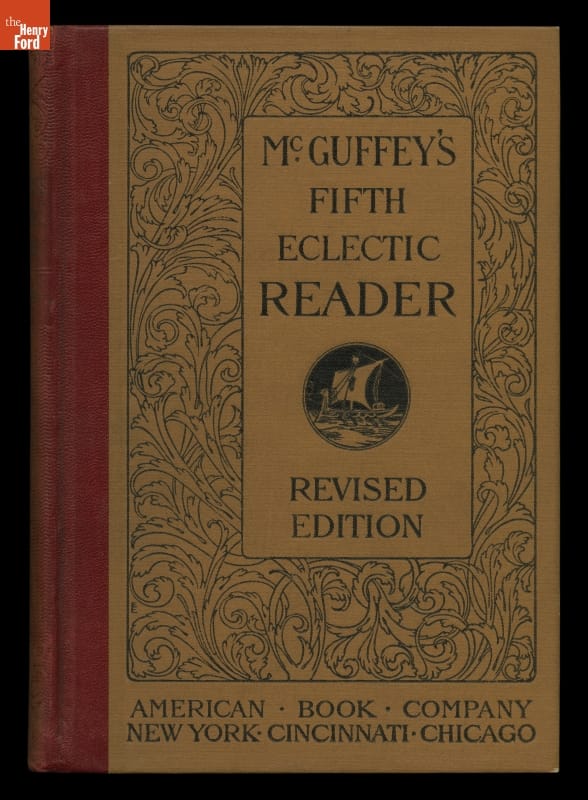
- Textbook, "McGuffey's Fifth Eclectic Reader," Revised Edition 1879, Published 1907 - The McGuffey Readers textbook series was used in American schools during the nineteenth and early twentieth centuries. The Readers emphasized the fundamental skills of reading and writing but included stories on a wide range of subjects from many sources (hence, "eclectic"). The books were also intended to develop proper character in children, and had a religious overtone.
- 1907
- Collections - Artifact
Textbook, "McGuffey's Fifth Eclectic Reader," Revised Edition 1879, Published 1907
The McGuffey Readers textbook series was used in American schools during the nineteenth and early twentieth centuries. The Readers emphasized the fundamental skills of reading and writing but included stories on a wide range of subjects from many sources (hence, "eclectic"). The books were also intended to develop proper character in children, and had a religious overtone.