
Search
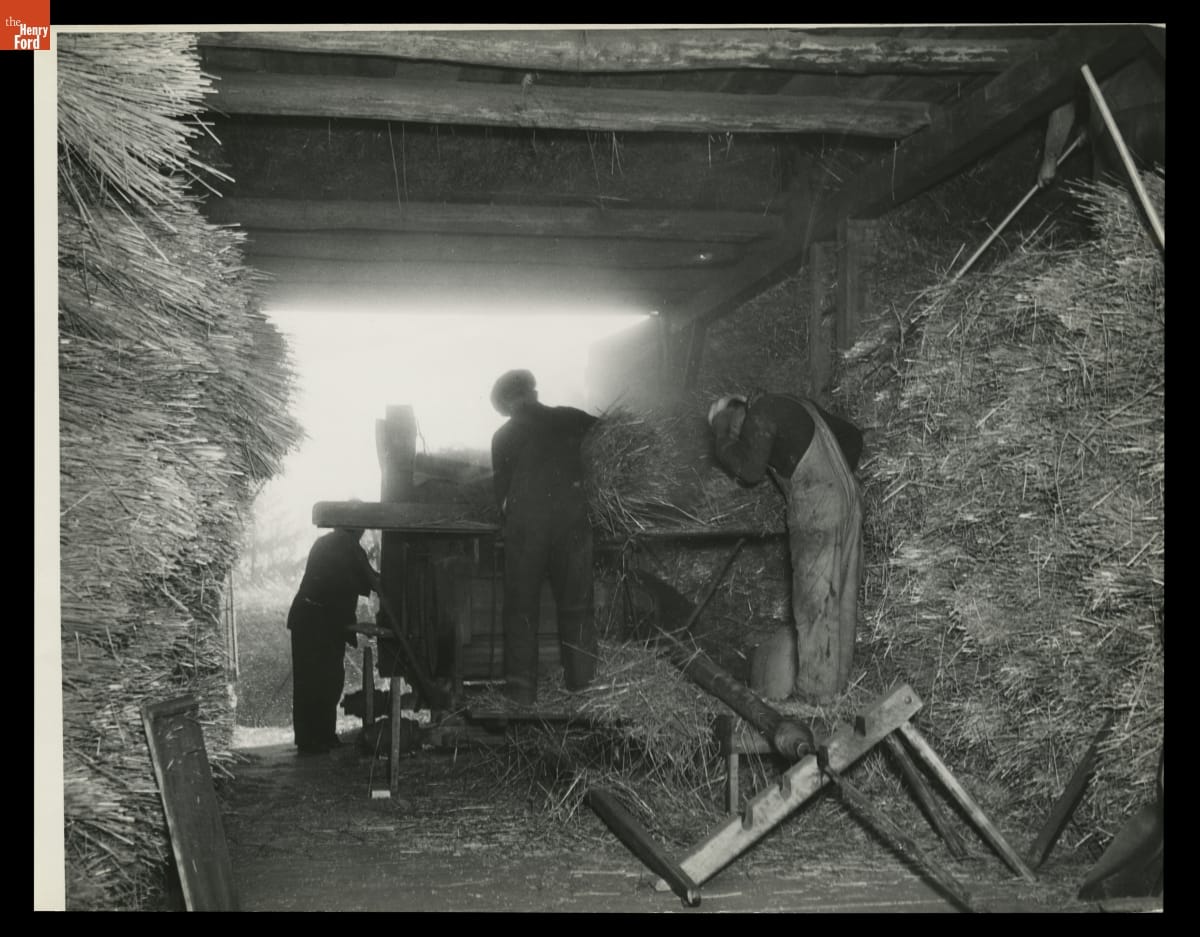
- Threshing at the Ford Homestead, Dearborn, Michigan, November 1936 -
- November 13, 1936
- Collections - Artifact
Threshing at the Ford Homestead, Dearborn, Michigan, November 1936
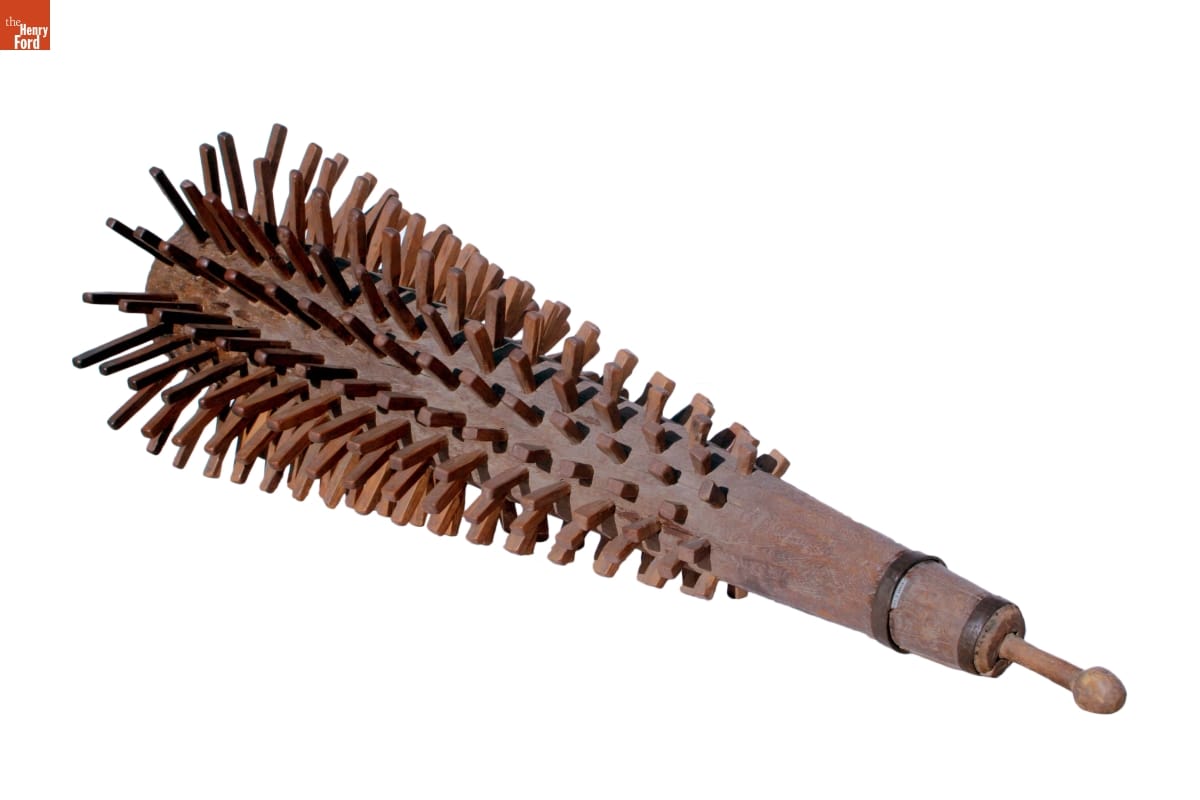
- Porcupine Thresher, circa 1820 - This conical "porcupine" thresher beat the grain with the blunt wooden pegs as it was pulled around in a circle on a barn's threshing floor. The small end of the thresher was attached to a pivot, and the horse pulled the large end. It was used by Dutch and German farmers in the Mohawk Valley west of Albany, New York.
- circa 1820
- Collections - Artifact
Porcupine Thresher, circa 1820
This conical "porcupine" thresher beat the grain with the blunt wooden pegs as it was pulled around in a circle on a barn's threshing floor. The small end of the thresher was attached to a pivot, and the horse pulled the large end. It was used by Dutch and German farmers in the Mohawk Valley west of Albany, New York.
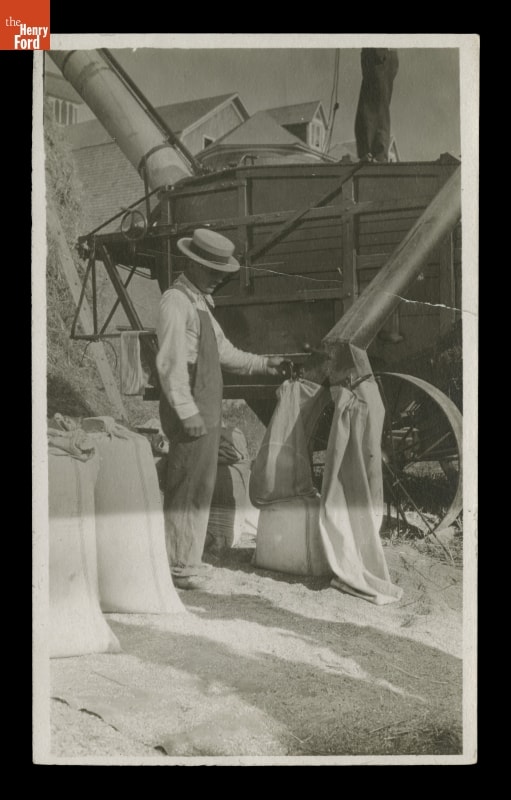
- Grain Harvest at Ford Farms, Southeastern Michigan, circa 1923 -
- circa 1923
- Collections - Artifact
Grain Harvest at Ford Farms, Southeastern Michigan, circa 1923
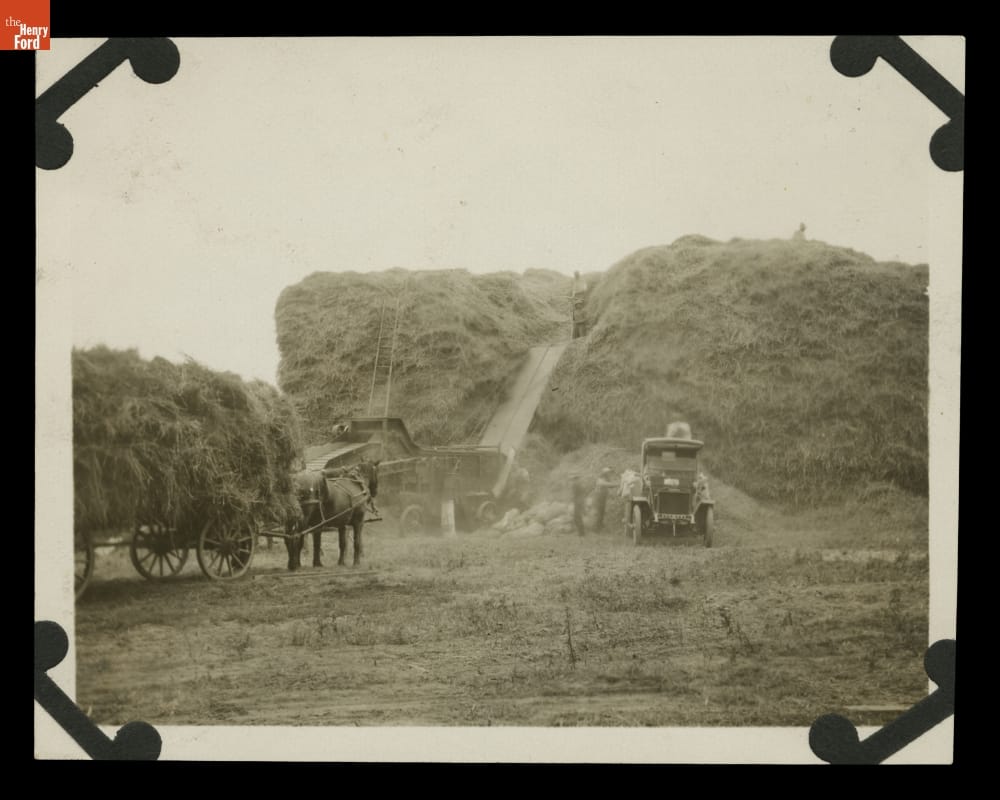
- Grain Harvest at Ford Farms, Southeastern Michigan, circa 1925 -
- circa 1925
- Collections - Artifact
Grain Harvest at Ford Farms, Southeastern Michigan, circa 1925
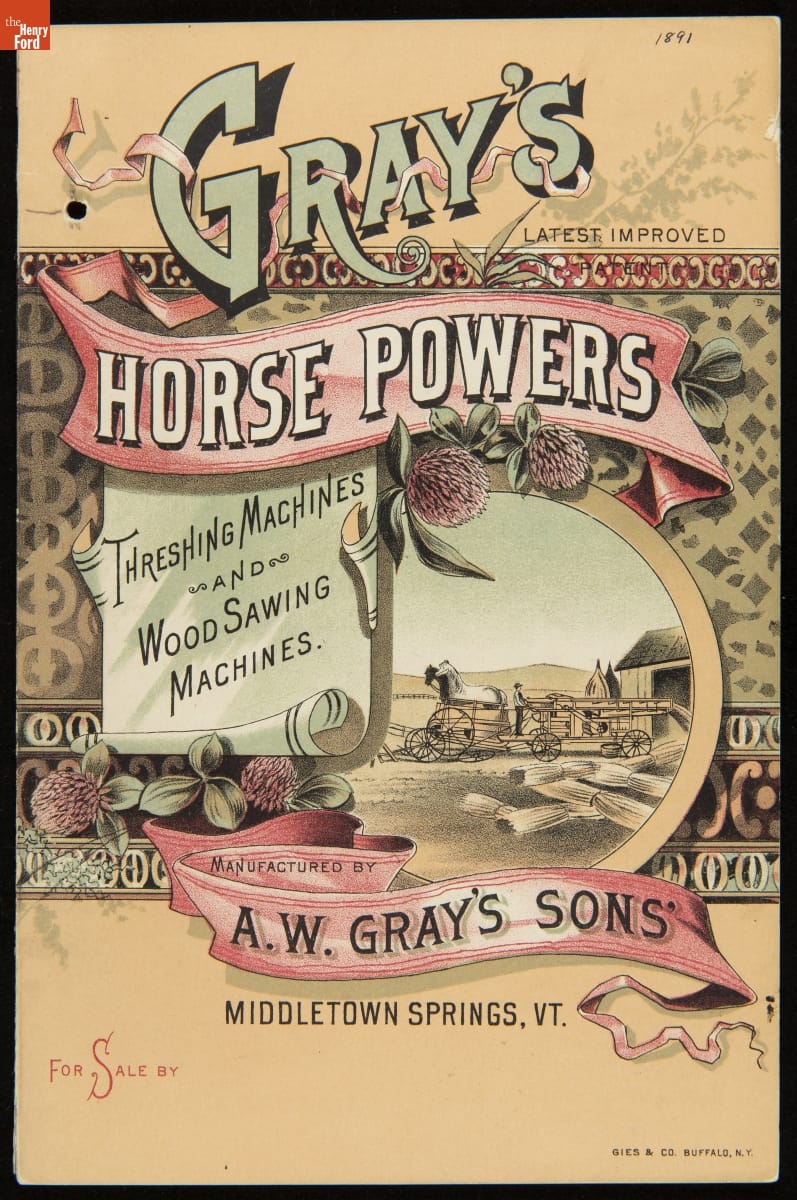
- Gray's Latest Improved Horse Powers Threshing Machines and Wood Sawing Machines, 1891 - As farmers mechanized barn and farmyard work in the nineteenth century, they began to use stationary power sources. These included devices such as treadmills that converted the movement of animals to drive a variety of agricultural machines. Enterprising manufacturers, like Vermont-based A.W. Gray's Sons, specialized in producing and selling these devices and the machines they were designed to power.
- 1891
- Collections - Artifact
Gray's Latest Improved Horse Powers Threshing Machines and Wood Sawing Machines, 1891
As farmers mechanized barn and farmyard work in the nineteenth century, they began to use stationary power sources. These included devices such as treadmills that converted the movement of animals to drive a variety of agricultural machines. Enterprising manufacturers, like Vermont-based A.W. Gray's Sons, specialized in producing and selling these devices and the machines they were designed to power.
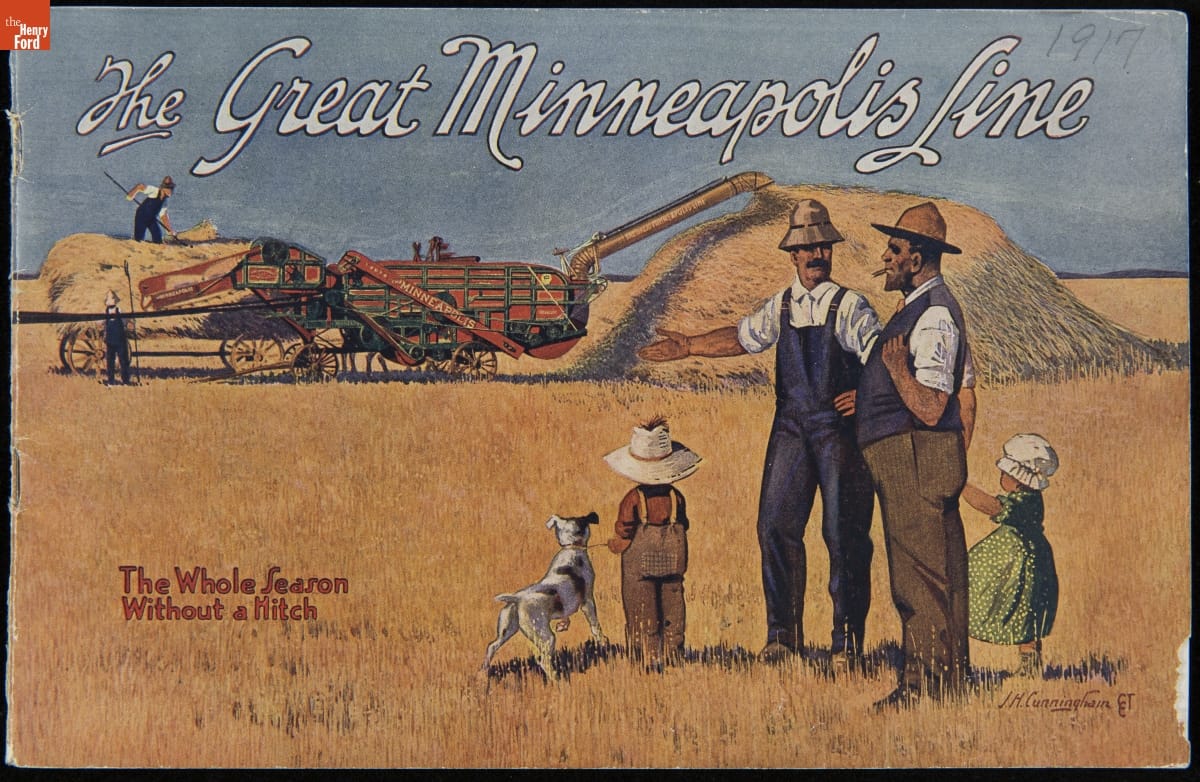
- "The Great Minneapolis Line: The Whole Season without a Hitch," 1917 -
- 1917
- Collections - Artifact
"The Great Minneapolis Line: The Whole Season without a Hitch," 1917
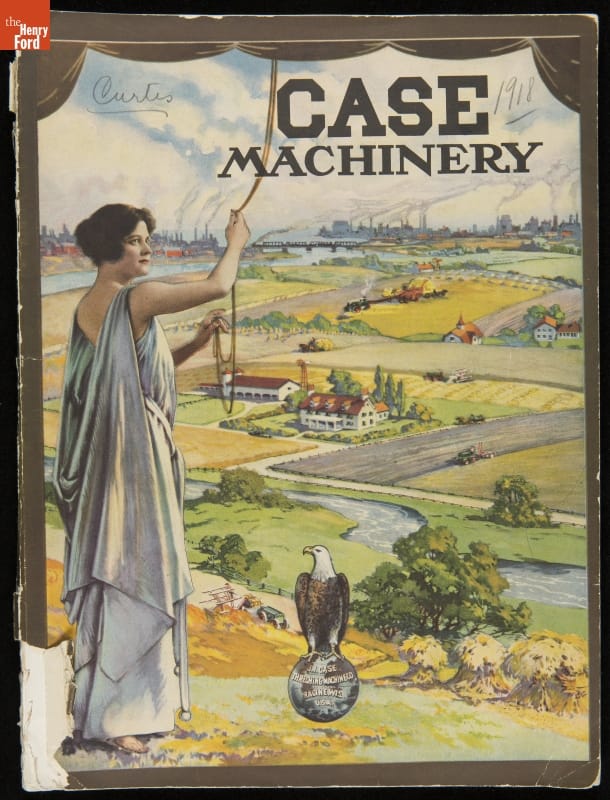
- "Case Machinery," 1918 -
- 1918
- Collections - Artifact
"Case Machinery," 1918
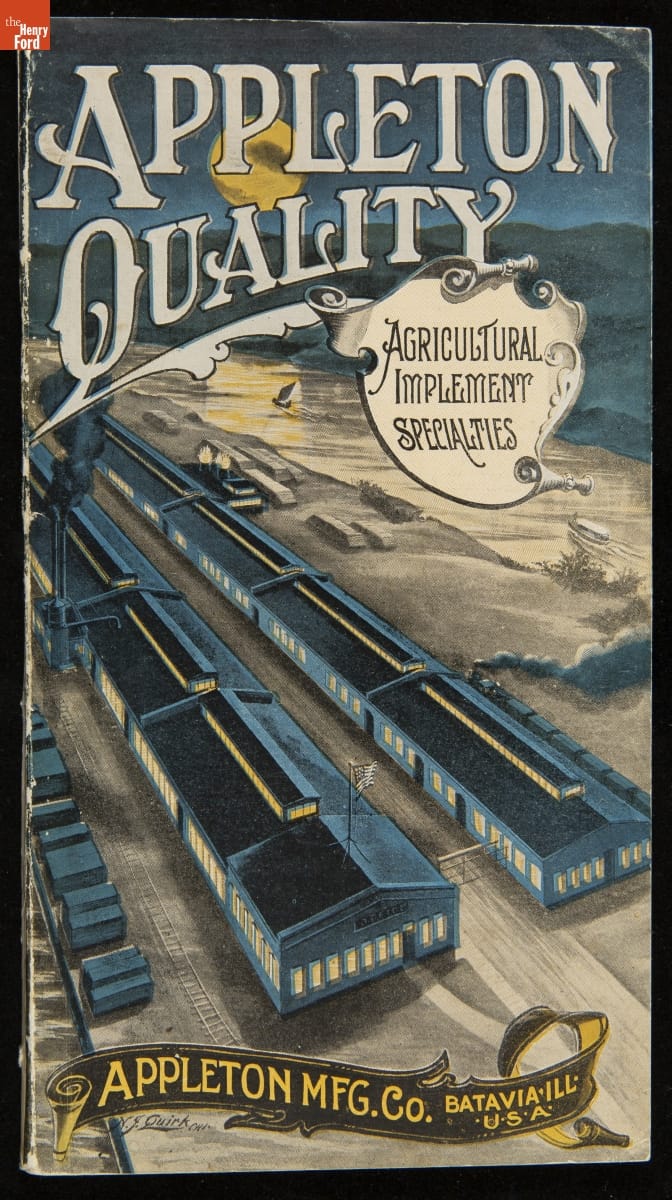
- Appleton Manufacturing Company Illustrated Catalogue of Farm Implements, 1905 -
- 1905
- Collections - Artifact
Appleton Manufacturing Company Illustrated Catalogue of Farm Implements, 1905
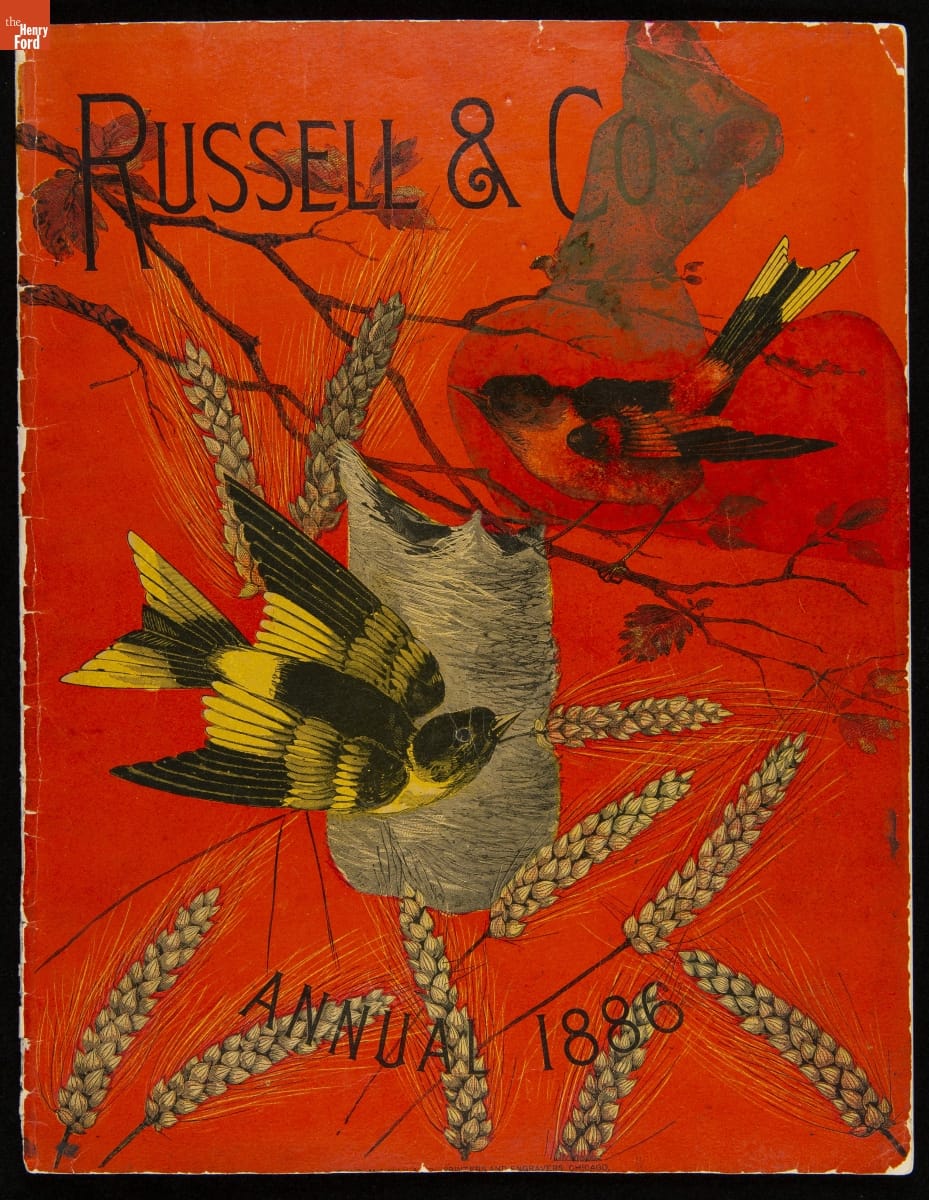
- Russell & Co. Trade Catalog, 1886 - As farmers mechanized barn and farmyard work in the nineteenth century, they began to use stationary power sources. These included portable steam engines and devices that converted animals' movement to drive a variety of agricultural machines. Enterprising manufacturers, like Ohio-based Russell & Co., specialized in producing and selling both power sources and the machines they were designed to run.
- 1886
- Collections - Artifact
Russell & Co. Trade Catalog, 1886
As farmers mechanized barn and farmyard work in the nineteenth century, they began to use stationary power sources. These included portable steam engines and devices that converted animals' movement to drive a variety of agricultural machines. Enterprising manufacturers, like Ohio-based Russell & Co., specialized in producing and selling both power sources and the machines they were designed to run.
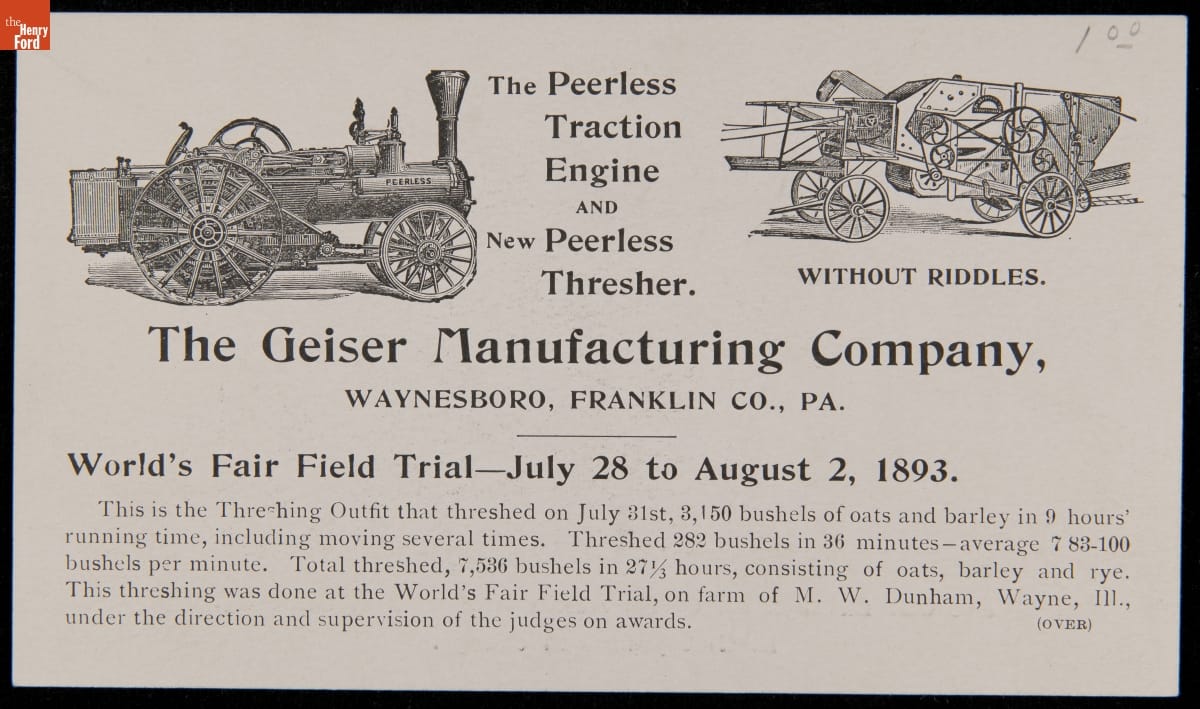
- Trade Card for Peerless Traction Engine and Thresher, Geiser Manufacturing Company, July 28 to August 2, 1893 - In the last third of the nineteenth century, an unprecedented variety of consumer goods and services flooded the American market. Advertisers bombarded potential customers with trade cards. Americans enjoyed and saved the often illustrated little advertisements found in product packages or distributed by local merchants. Many survive as historical records of commercialism in the United States.
- 1893
- Collections - Artifact
Trade Card for Peerless Traction Engine and Thresher, Geiser Manufacturing Company, July 28 to August 2, 1893
In the last third of the nineteenth century, an unprecedented variety of consumer goods and services flooded the American market. Advertisers bombarded potential customers with trade cards. Americans enjoyed and saved the often illustrated little advertisements found in product packages or distributed by local merchants. Many survive as historical records of commercialism in the United States.