
Search
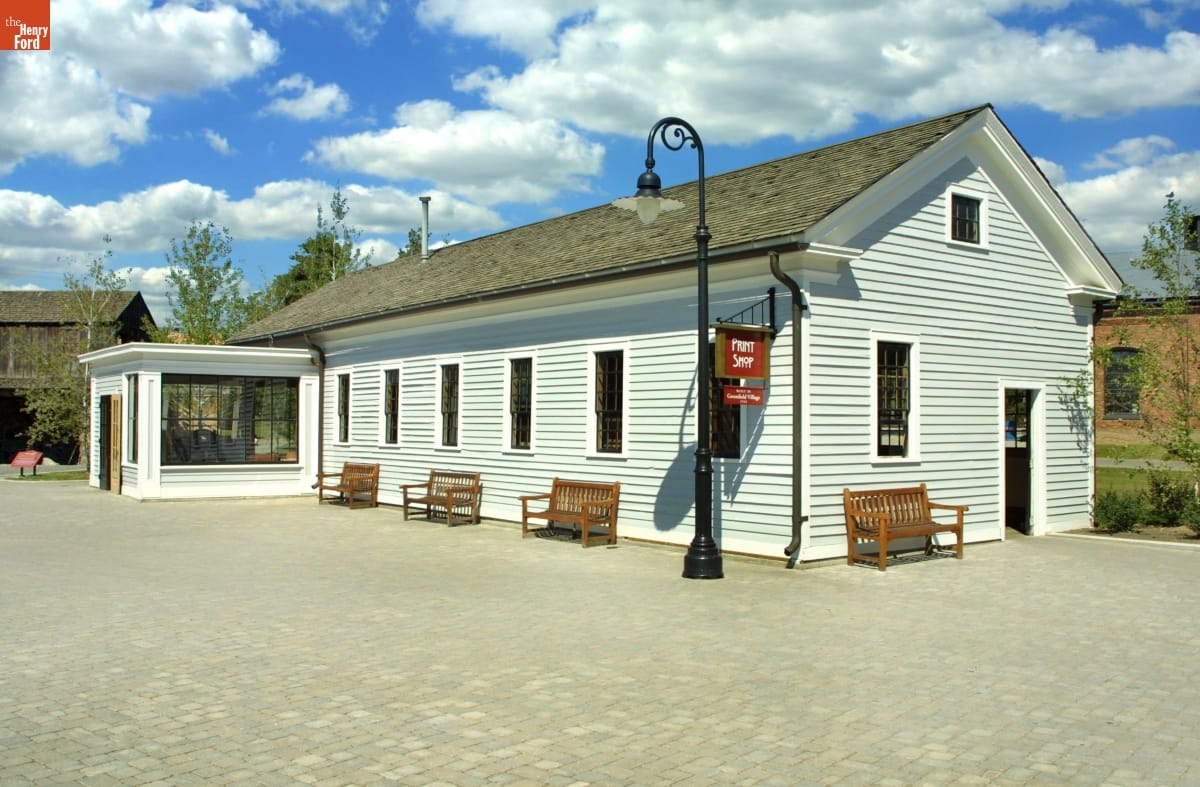
- Printing Office & Tin Shop - The Printing Office was built in Greenfield Village in 1933. For decades, the building served as a utilitarian print shop for Greenfield Village. At one time, the building housed a recreated 19th-century small town newspaper print shop and tinsmithing studio. Now, only the print shop remains.
- 1933
- Collections - Artifact
Printing Office & Tin Shop
The Printing Office was built in Greenfield Village in 1933. For decades, the building served as a utilitarian print shop for Greenfield Village. At one time, the building housed a recreated 19th-century small town newspaper print shop and tinsmithing studio. Now, only the print shop remains.
- Shaw, Clark & Burton Trade Literature, "Burton's Double Seamer," September 1, 1859 -
- September 01, 1859
- Collections - Artifact
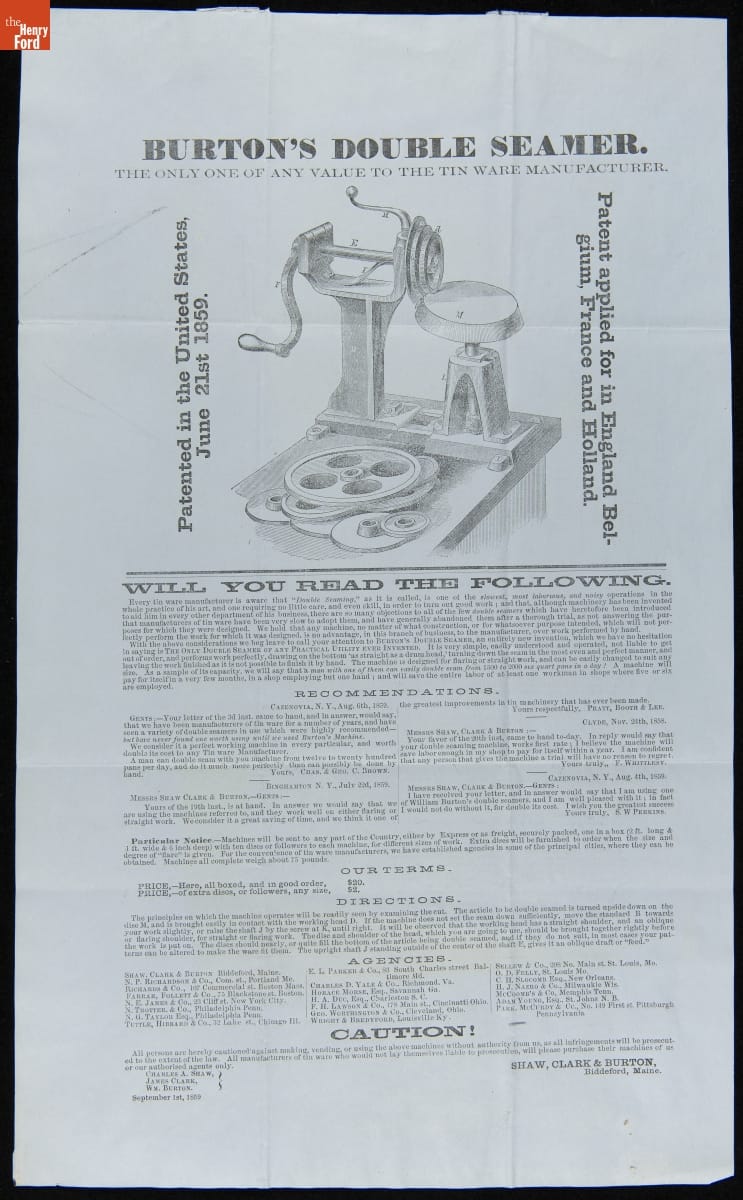
Shaw, Clark & Burton Trade Literature, "Burton's Double Seamer," September 1, 1859
- Tinsmiths with Their Work Tools, circa 1875 -
- circa 1875
- Collections - Artifact
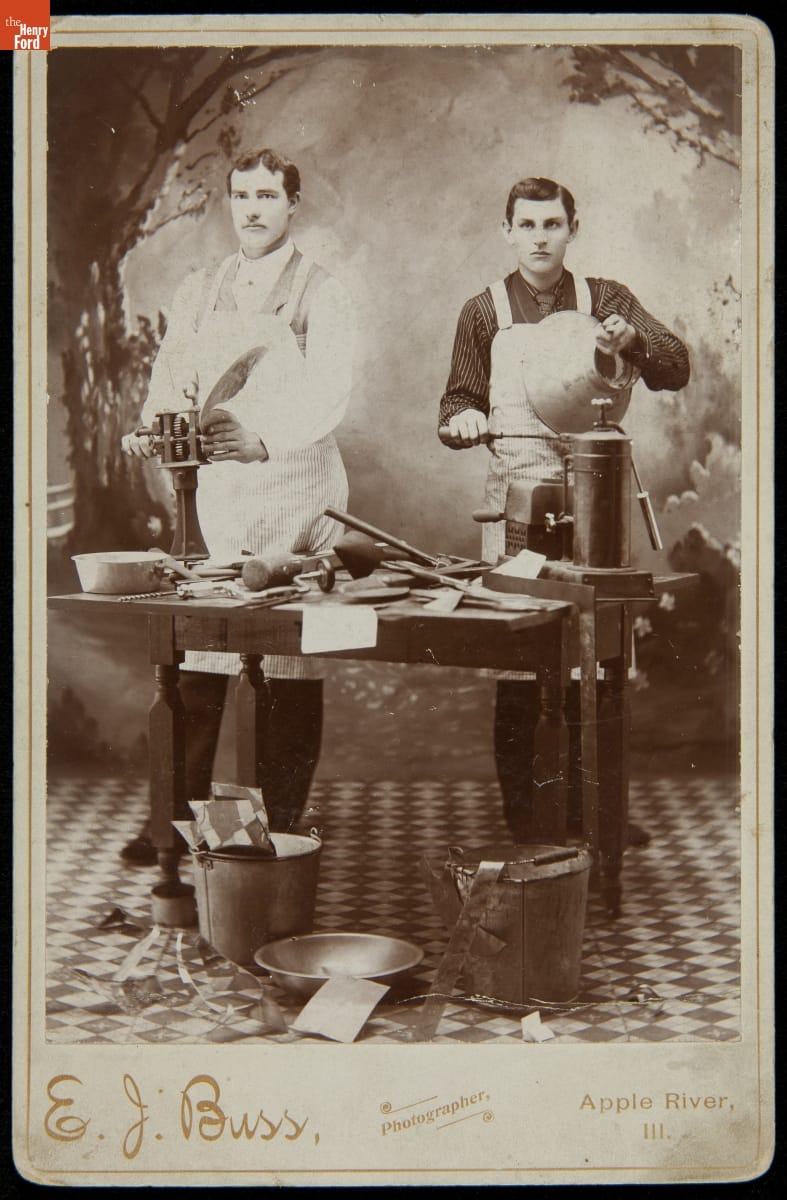
Tinsmiths with Their Work Tools, circa 1875
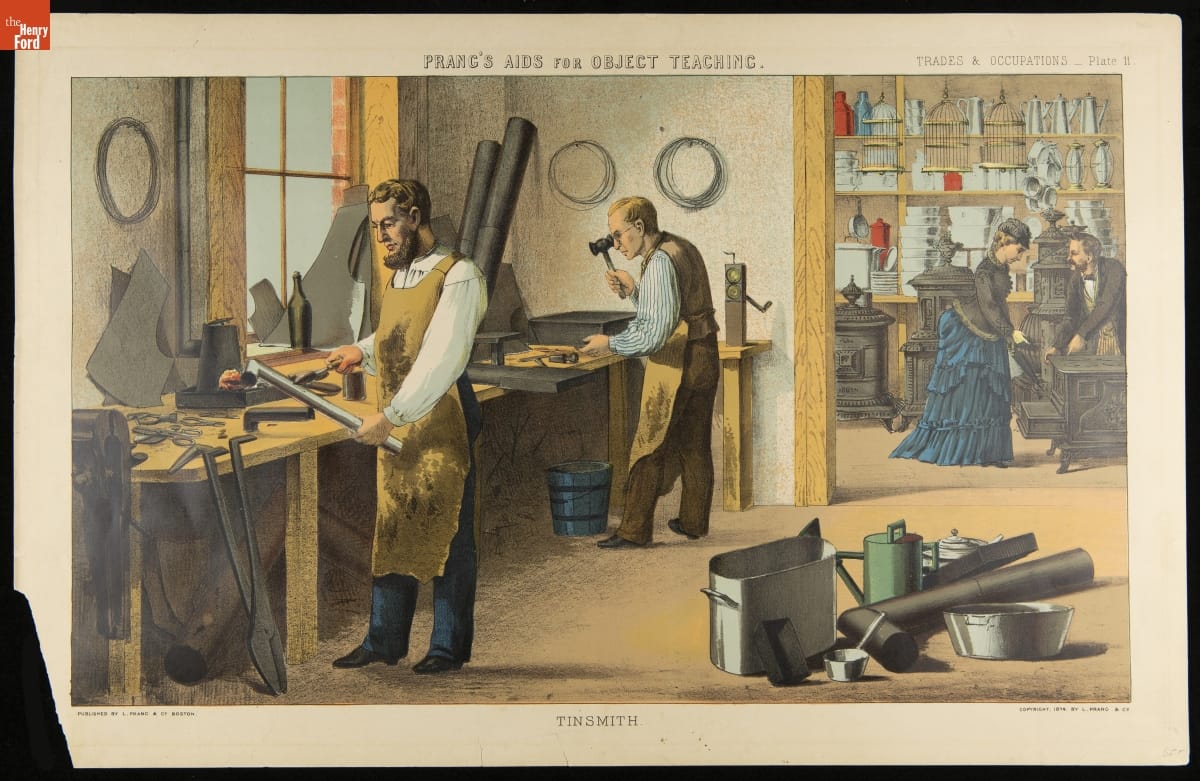
- Chromolithograph, "Prang's Aids for Object Teaching, Trades & Occupations-Plate 11, Tinsmith," 1874 - Louis Prang (1824–1909), the son of a textile manufacturer, learned engraving, calico dyeing, and printing as a young boy. He emigrated to the United States in 1850 and would produce colorful chromolithographs. Prang also worked to improve the artistic tastes of 19th-century Americans and created valuable teaching aids. His company's Educational Department produced prints like this for the instruction of occupational trades.
- 1874
- Collections - Artifact
Chromolithograph, "Prang's Aids for Object Teaching, Trades & Occupations-Plate 11, Tinsmith," 1874
Louis Prang (1824–1909), the son of a textile manufacturer, learned engraving, calico dyeing, and printing as a young boy. He emigrated to the United States in 1850 and would produce colorful chromolithographs. Prang also worked to improve the artistic tastes of 19th-century Americans and created valuable teaching aids. His company's Educational Department produced prints like this for the instruction of occupational trades.
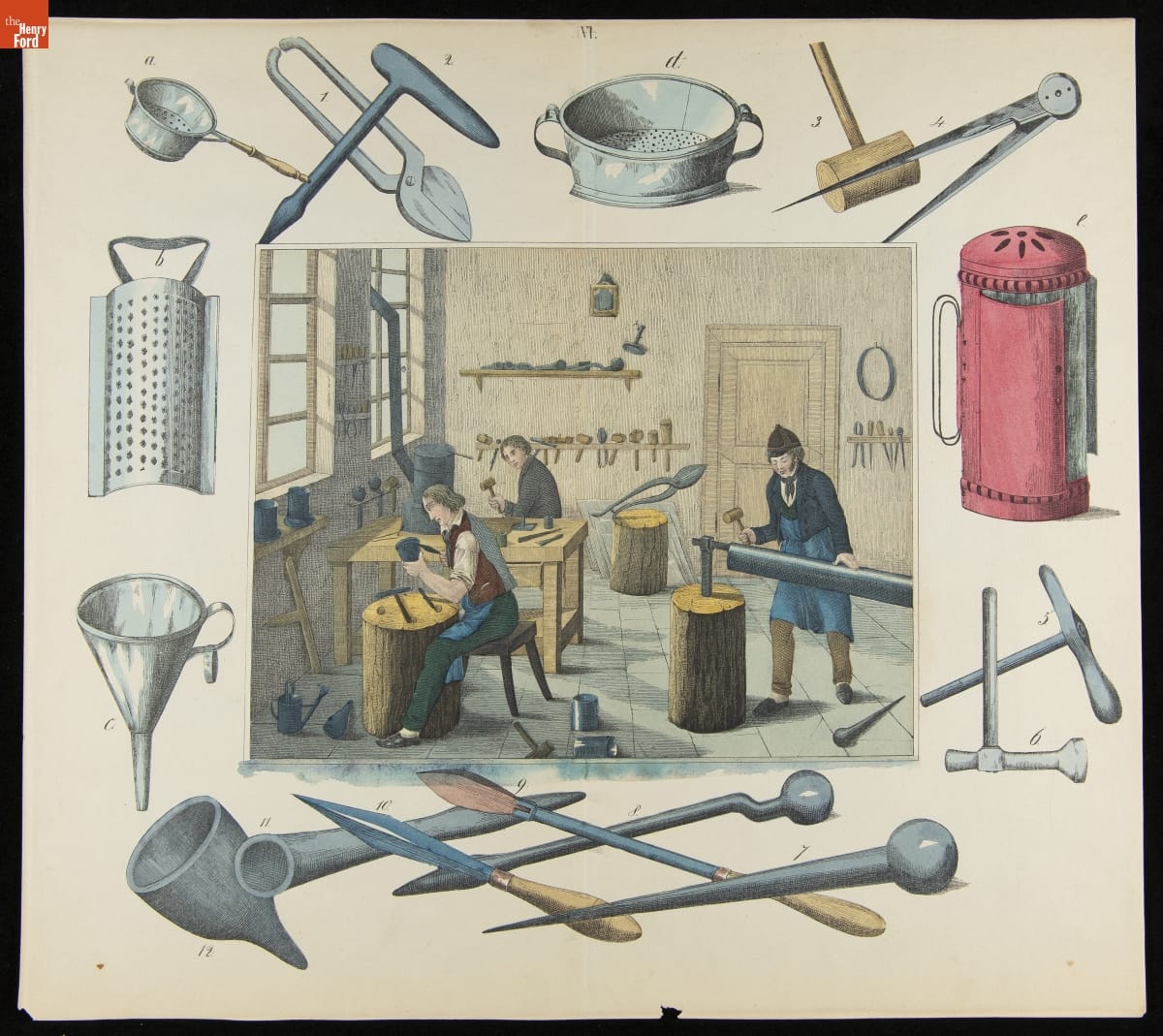
- Lithograph, "Tinsmiths," circa 1840 -
- circa 1840
- Collections - Artifact
Lithograph, "Tinsmiths," circa 1840
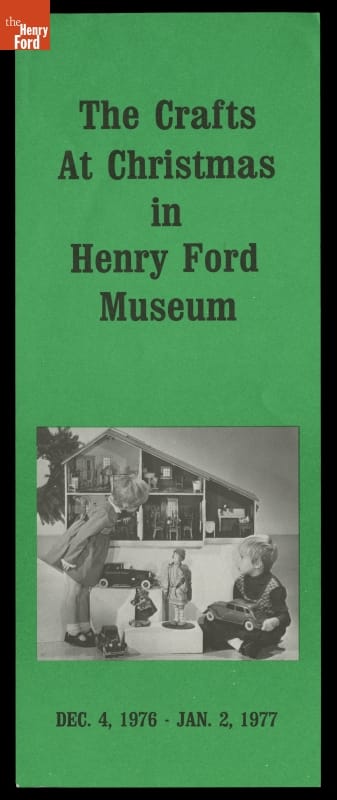
- Informational Leaflet, "The Crafts at Christmas in Henry Ford Museum," 1976 - The Henry Ford introduced Christmas programs in the 1960s to broaden audience appeal. In the 1970s, holiday visitors could stroll along the museum's Street of Shops and watch craftspeople demonstrate traditional crafts. In addition to these demonstrations, visitors enjoyed the museum decorated for the holidays.
- 04 December 1976 - 02 January 1977
- Collections - Artifact
Informational Leaflet, "The Crafts at Christmas in Henry Ford Museum," 1976
The Henry Ford introduced Christmas programs in the 1960s to broaden audience appeal. In the 1970s, holiday visitors could stroll along the museum's Street of Shops and watch craftspeople demonstrate traditional crafts. In addition to these demonstrations, visitors enjoyed the museum decorated for the holidays.
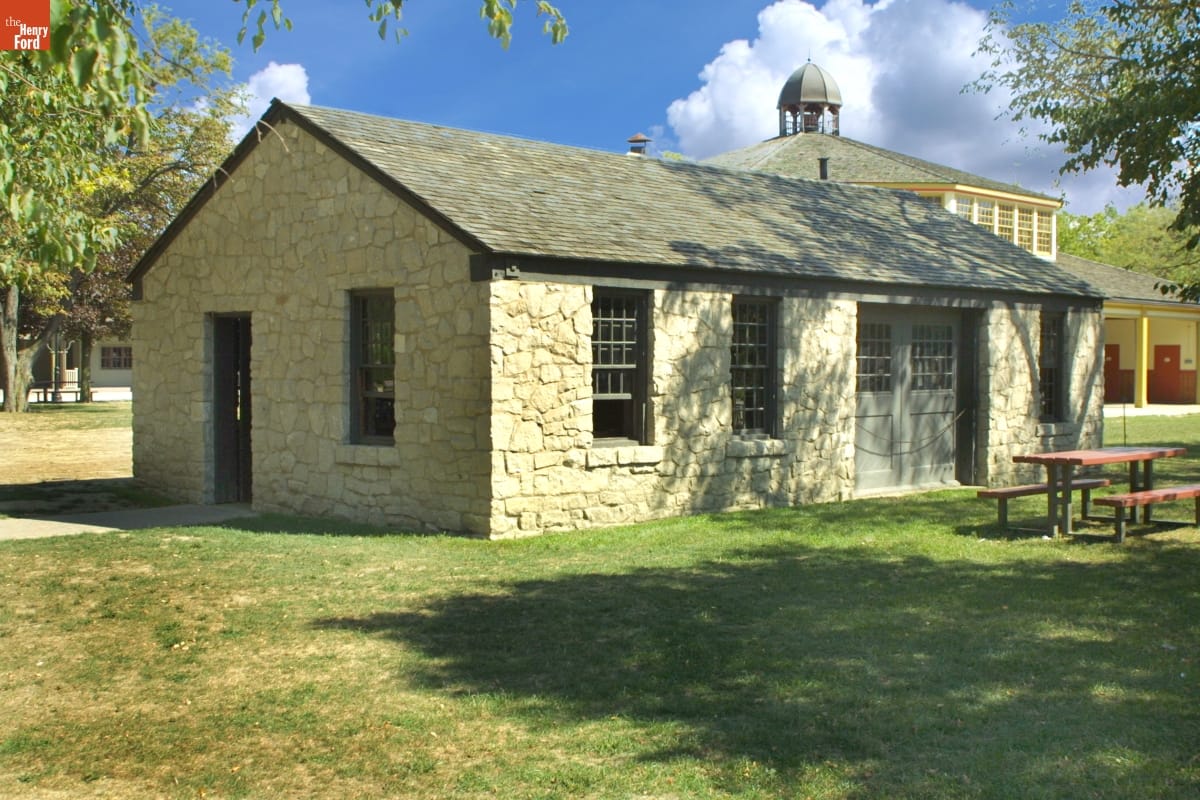
- Blacksmith Shop (Village Playground Entrance Building) -
- 1929
- Collections - Artifact
Blacksmith Shop (Village Playground Entrance Building)
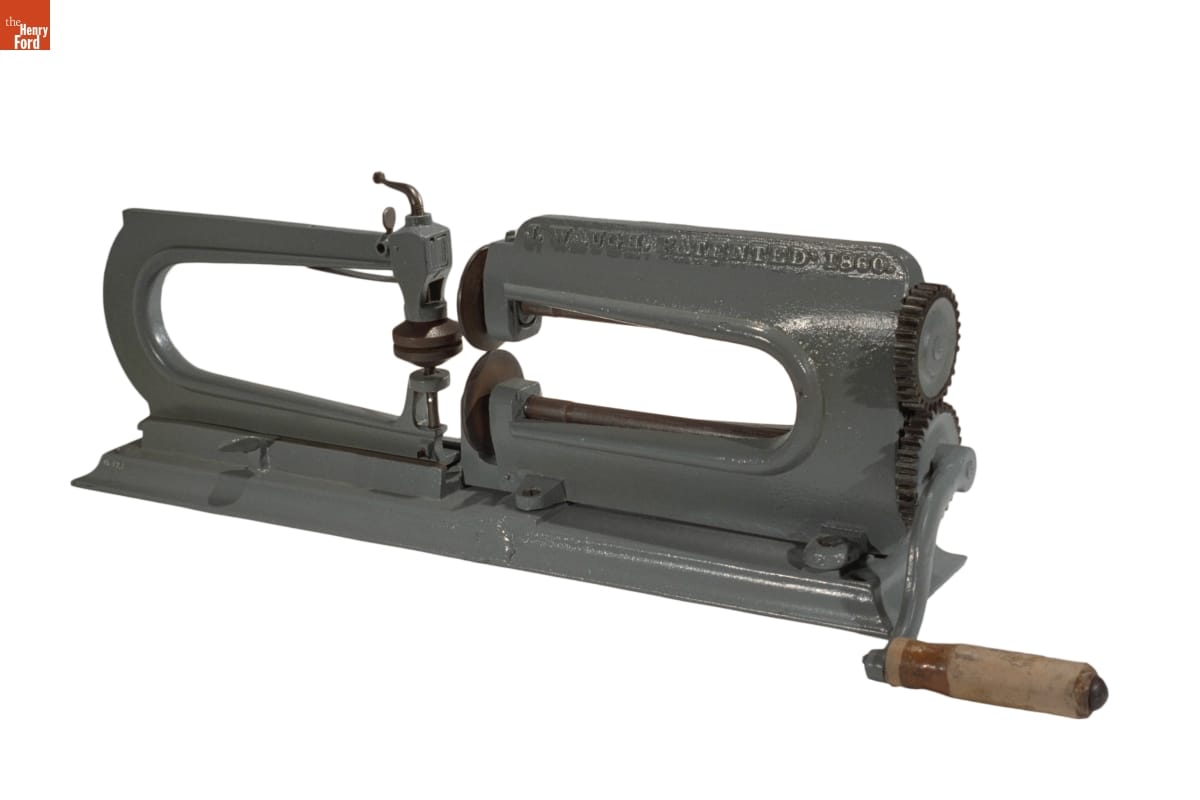
- Circle Shear - Tinplate, or tin, was the dominant material for utilitarian items in 19th-century America. To help meet demand, tinsmiths added new machines to their more traditional set of hand tools. Using such machines, tinsmiths could produce large numbers of uniform pieces quickly and cheaply. This hand-cranked circle shear, patented in 1860, cut circles of tin up to 20 inches in diameter.
- Collections - Artifact
Circle Shear
Tinplate, or tin, was the dominant material for utilitarian items in 19th-century America. To help meet demand, tinsmiths added new machines to their more traditional set of hand tools. Using such machines, tinsmiths could produce large numbers of uniform pieces quickly and cheaply. This hand-cranked circle shear, patented in 1860, cut circles of tin up to 20 inches in diameter.
- Elementary School Student Learning from a Tinsmith in Greenfield Village, March 9, 1990 -
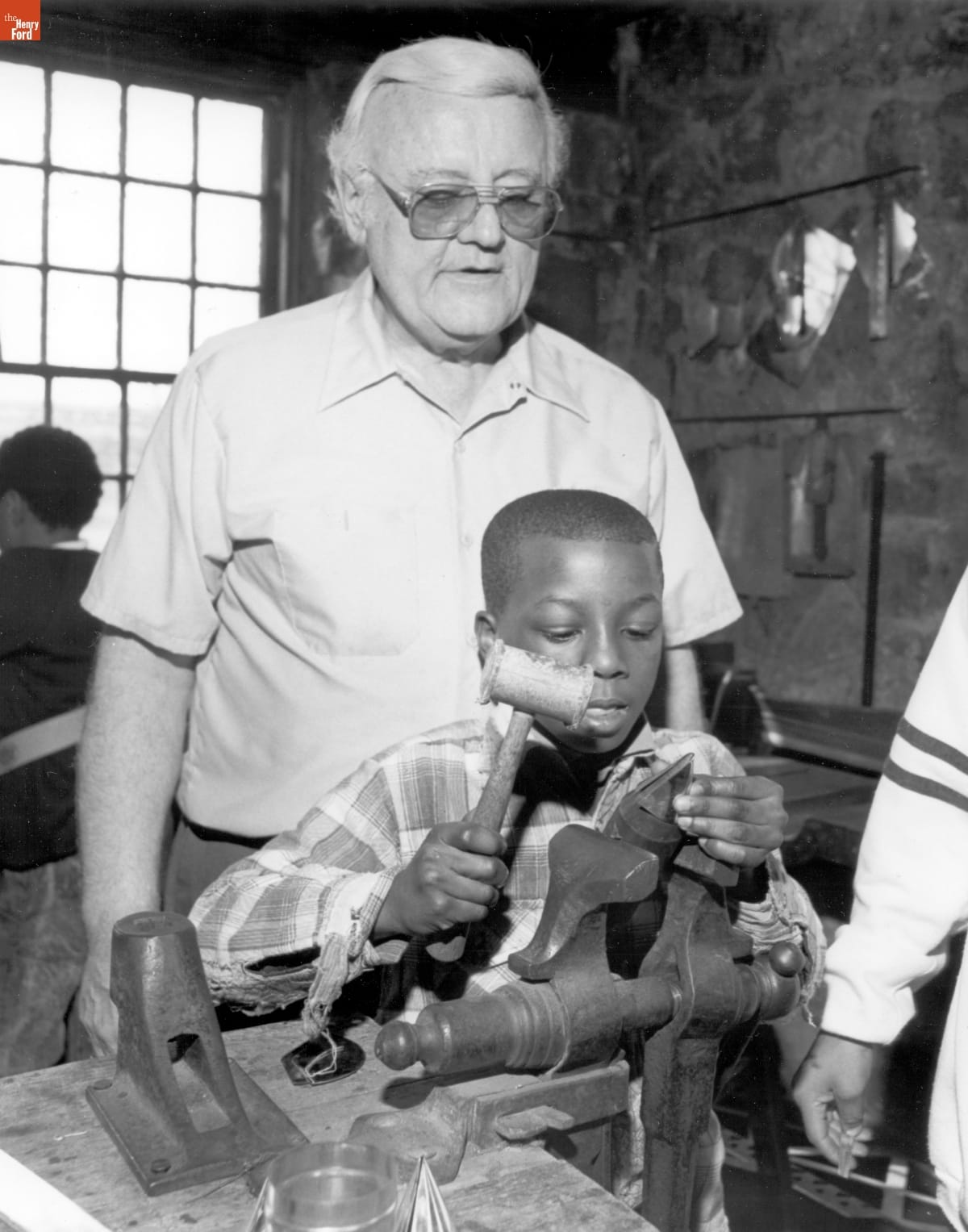
- March 09, 1990
- Collections - Artifact
Elementary School Student Learning from a Tinsmith in Greenfield Village, March 9, 1990
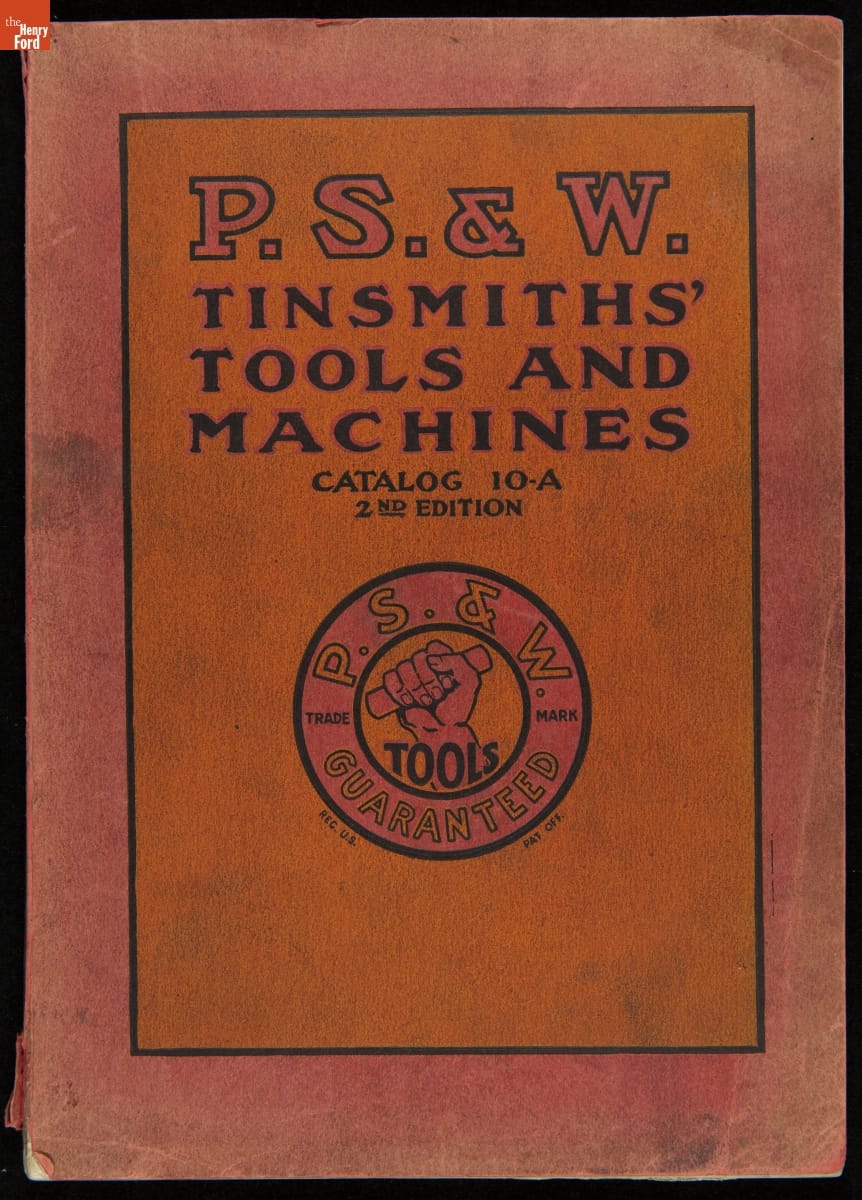
- Peck, Stow & Wilcox Co. Trade Catalog, "P.S. & W. Tinsmiths' Tools and Machines," circa 1895 - Until the first decade of the 19th century, tinsmiths in both Europe and the United States manufactured virtually all tinware by hand using a variety of specialized tools. But as tinware became more popular, American tinsmiths added new machines to their more traditional set of equipment. This catalog advertised the wide range of tools and machines used to produce tinware in late 19th-century America.
- circa 1895
- Collections - Artifact
Peck, Stow & Wilcox Co. Trade Catalog, "P.S. & W. Tinsmiths' Tools and Machines," circa 1895
Until the first decade of the 19th century, tinsmiths in both Europe and the United States manufactured virtually all tinware by hand using a variety of specialized tools. But as tinware became more popular, American tinsmiths added new machines to their more traditional set of equipment. This catalog advertised the wide range of tools and machines used to produce tinware in late 19th-century America.