
Search
- Weed Tire Chains Sign, circa 1925 - This circa 1925 sign has a dual purpose -- to alert potential customers to the price of gas, and to advertise the necessity of "Weed Tire Chains." In 1904, Harry D. Weed was issued a patent for his "Grip-Tread for Pneumatic Tires," a non-skid tire chain used to increase traction on roads slick with mud, snow, or ice.
- circa 1925
- Collections - Artifact
Weed Tire Chains Sign, circa 1925
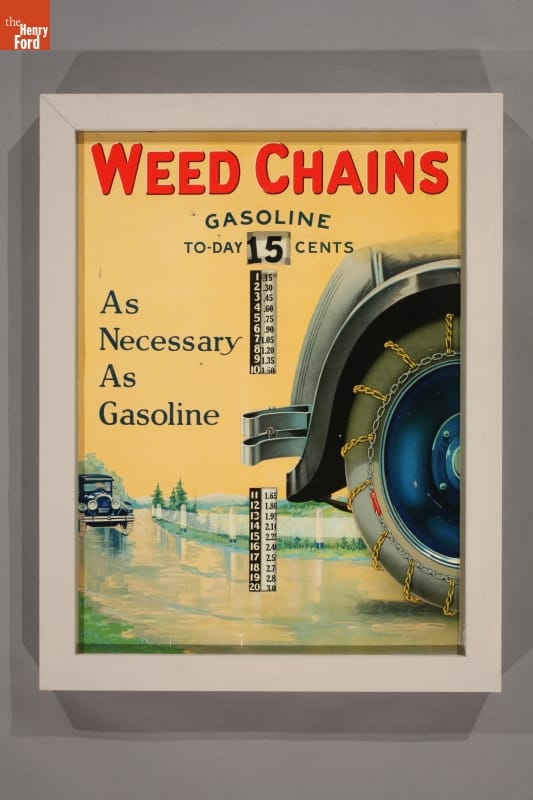
This circa 1925 sign has a dual purpose -- to alert potential customers to the price of gas, and to advertise the necessity of "Weed Tire Chains." In 1904, Harry D. Weed was issued a patent for his "Grip-Tread for Pneumatic Tires," a non-skid tire chain used to increase traction on roads slick with mud, snow, or ice.
- Putting Snow Chains On a Tire during the New York to Paris Race, 1908 - In 1908, six automobiles raced around the globe from New York City to Paris, France. The contest took 169 days, covered 22,000 miles and spanned three continents. The cars and their racing teams had to endure cold, snow, mud, poor roads and other hardships. The race began in mid-February. Tire chains helped contestants traverse the snow-covered U. S. roads.
- 1908
- Collections - Artifact
Putting Snow Chains On a Tire during the New York to Paris Race, 1908
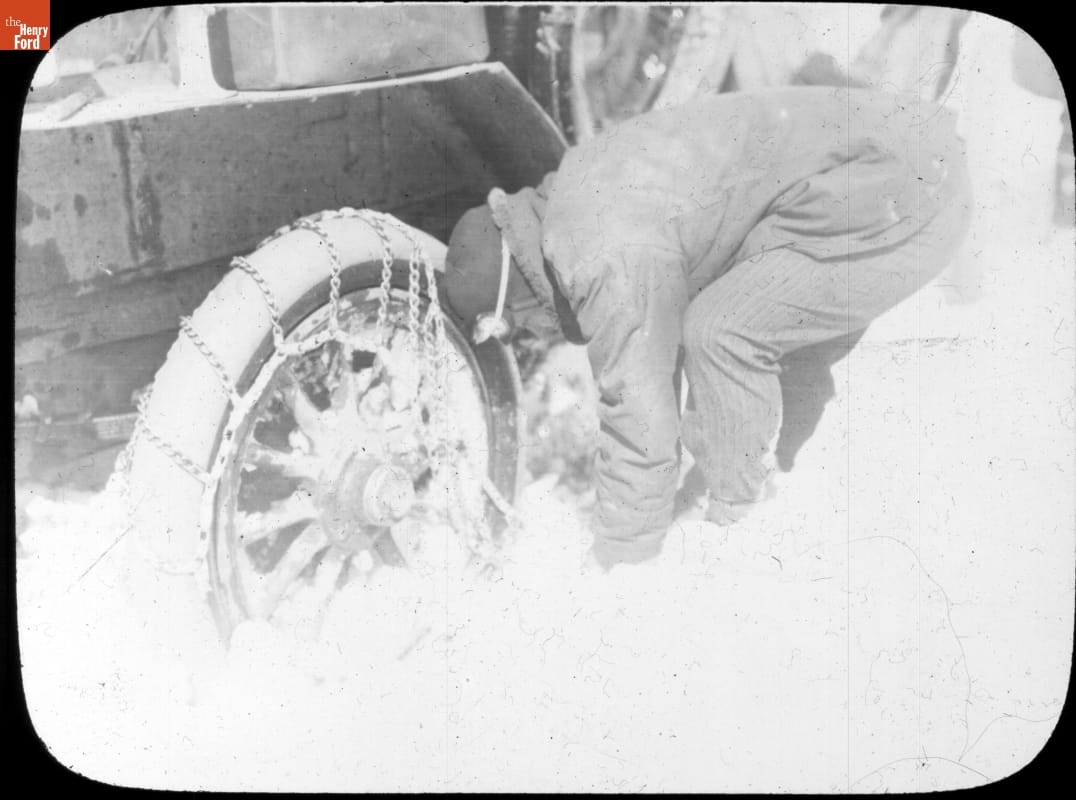
In 1908, six automobiles raced around the globe from New York City to Paris, France. The contest took 169 days, covered 22,000 miles and spanned three continents. The cars and their racing teams had to endure cold, snow, mud, poor roads and other hardships. The race began in mid-February. Tire chains helped contestants traverse the snow-covered U. S. roads.
- The Weed Chain Tire Grip Company, circa 1909 -
- circa 1909
- Collections - Artifact
The Weed Chain Tire Grip Company, circa 1909
- Driving on Winter Roads, circa 1915 - Early motorists tended to avoid wintertime driving, especially in rural areas where roads were poor even in warm weather. But some adventurous drivers refused to be intimidated by cold and snow. Chains on the tires improved a car's traction in icy conditions, but using an open automobile in winter still required warm clothing and steely determination.
- circa 1915
- Collections - Artifact
Driving on Winter Roads, circa 1915
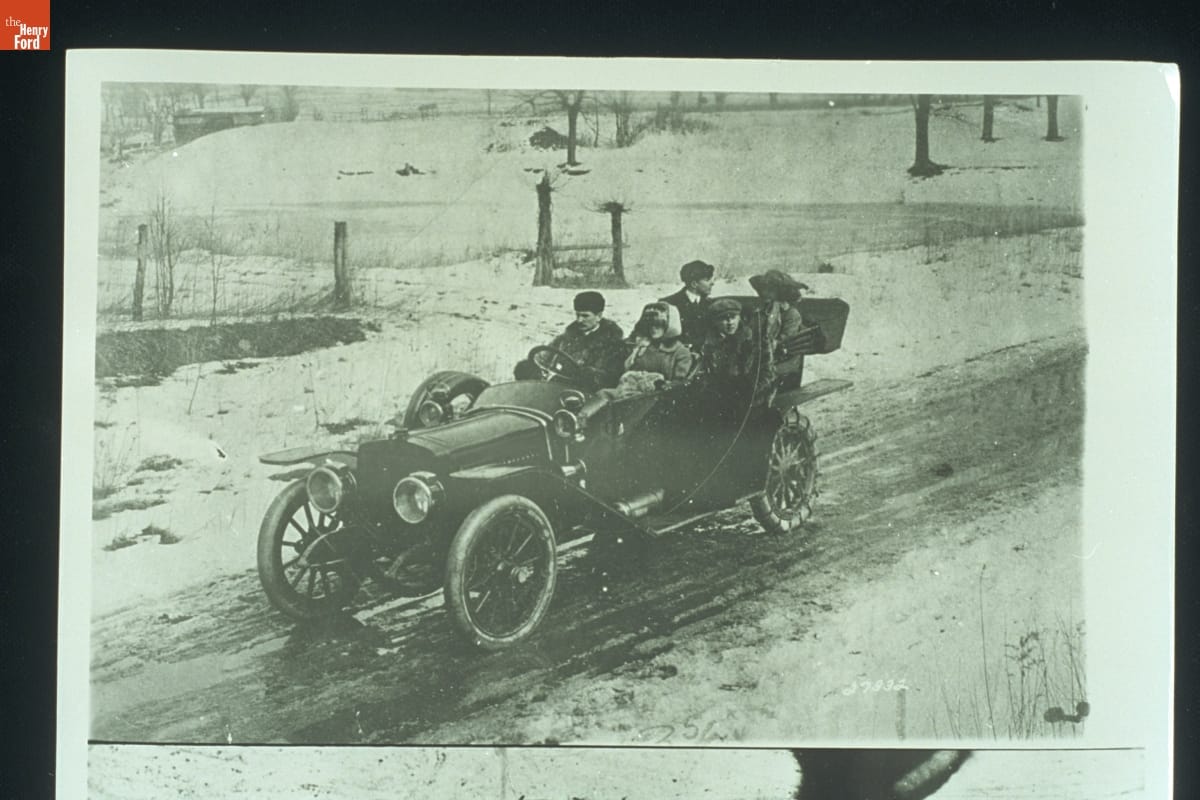
Early motorists tended to avoid wintertime driving, especially in rural areas where roads were poor even in warm weather. But some adventurous drivers refused to be intimidated by cold and snow. Chains on the tires improved a car's traction in icy conditions, but using an open automobile in winter still required warm clothing and steely determination.
- Tire Chain, 1940-1980 - Tire chains, also known as snow chains, are wrapped around a vehicle's driving wheels to provide greater traction on snow and ice. Though effective in slippery conditions, chains have their drawbacks. They should only be used at low speeds, they cause excessive wear on road surfaces, and they can cause significant damage to the vehicle if they break during use.
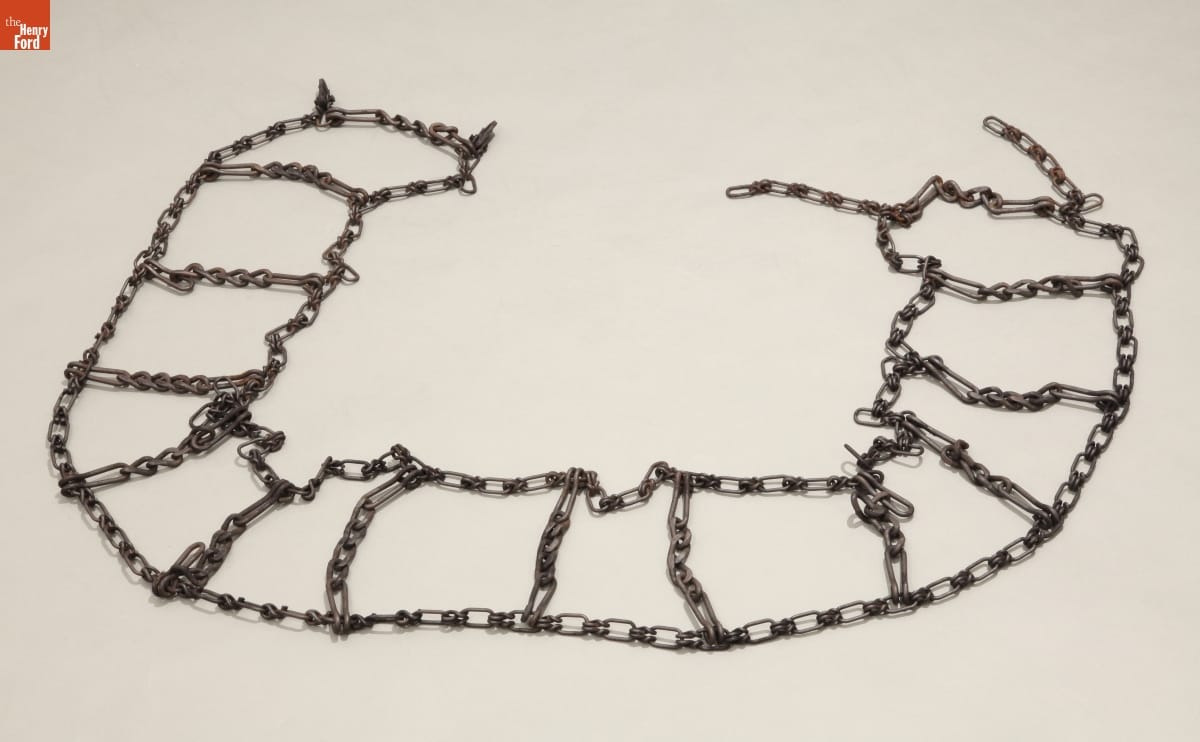
- 1940-1980
- Collections - Artifact
Tire Chain, 1940-1980
Tire chains, also known as snow chains, are wrapped around a vehicle's driving wheels to provide greater traction on snow and ice. Though effective in slippery conditions, chains have their drawbacks. They should only be used at low speeds, they cause excessive wear on road surfaces, and they can cause significant damage to the vehicle if they break during use.
- Tire Chain, 1940-1980 - Tire chains, also known as snow chains, are wrapped around a vehicle's driving wheels to provide greater traction on snow and ice. Though effective in slippery conditions, chains have their drawbacks. They should only be used at low speeds, they cause excessive wear on road surfaces, and they can cause significant damage to the vehicle if they break during use.
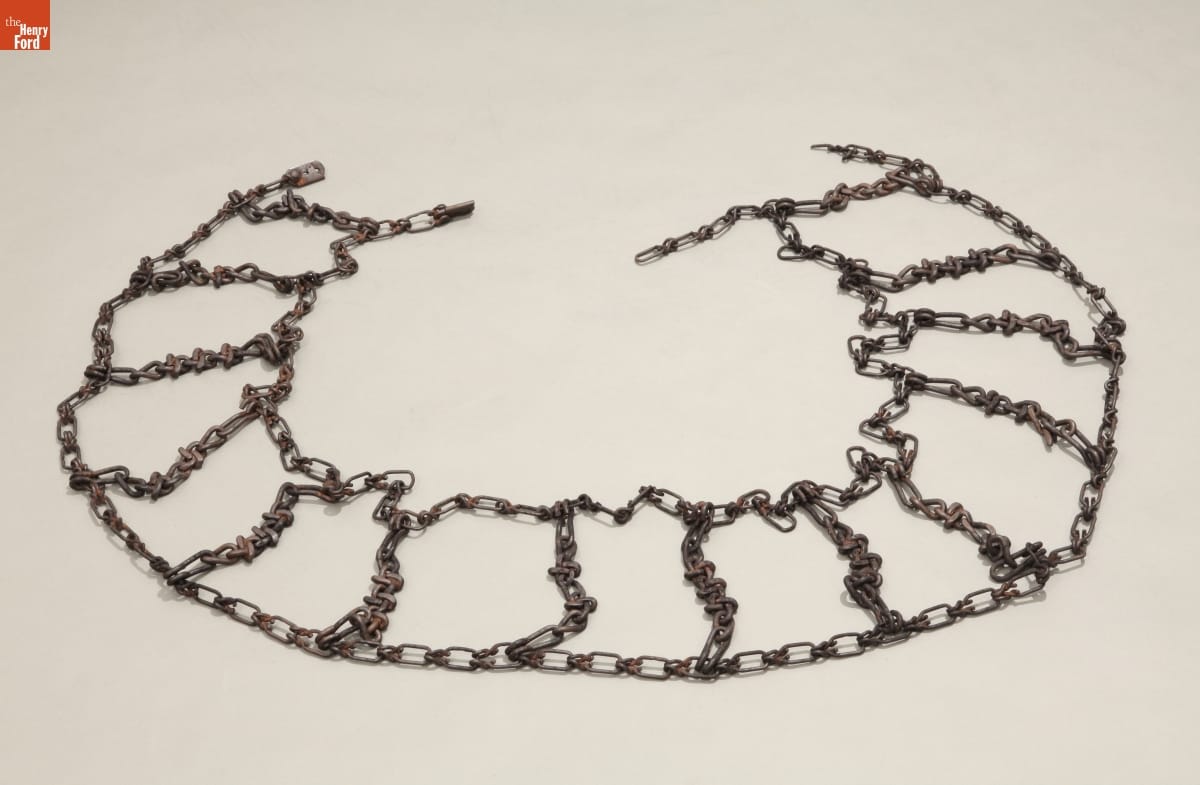
- 1940-1980
- Collections - Artifact
Tire Chain, 1940-1980
Tire chains, also known as snow chains, are wrapped around a vehicle's driving wheels to provide greater traction on snow and ice. Though effective in slippery conditions, chains have their drawbacks. They should only be used at low speeds, they cause excessive wear on road surfaces, and they can cause significant damage to the vehicle if they break during use.