
Search
- On a Kentucky Tobacco Farm -
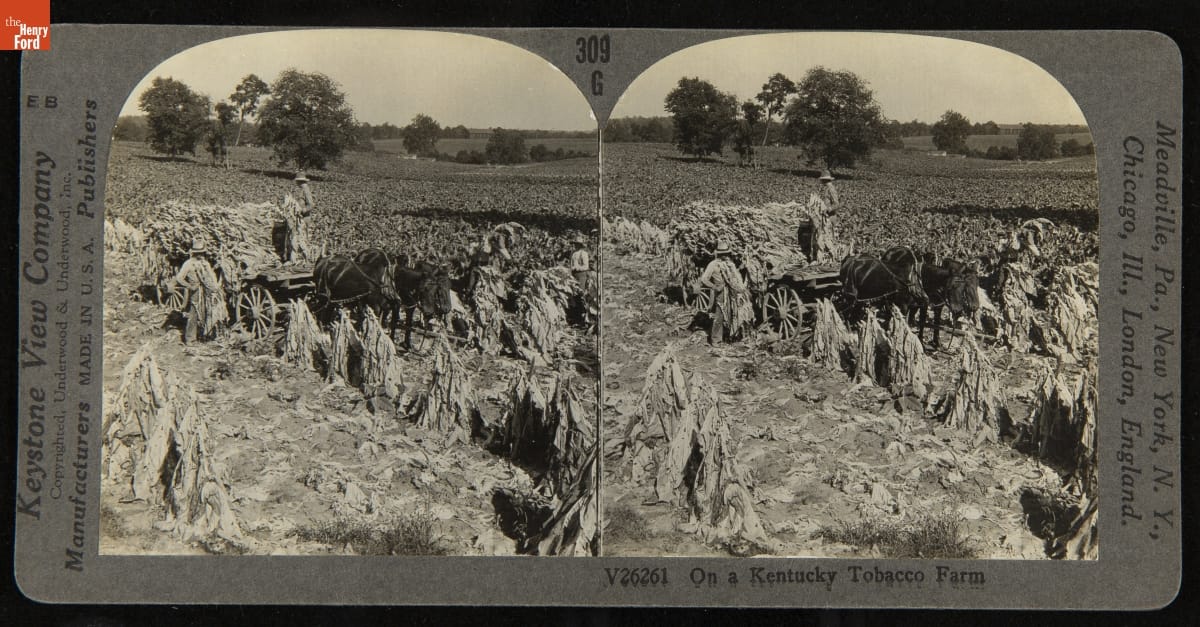
- 1920-1929
- Collections - Artifact
On a Kentucky Tobacco Farm
- Trade Card for "No-To-Bac" Tobacco, Sterling Products Co., circa 1894 - In the last third of the nineteenth century, an unprecedented variety of consumer goods and services flooded the American market. Advertisers, armed with new methods of color printing, bombarded potential customers with trade cards. Americans enjoyed and often saved the vibrant little advertisements found in product packages or distributed by local merchants. Many survive as historical records of commercialism in the United States.
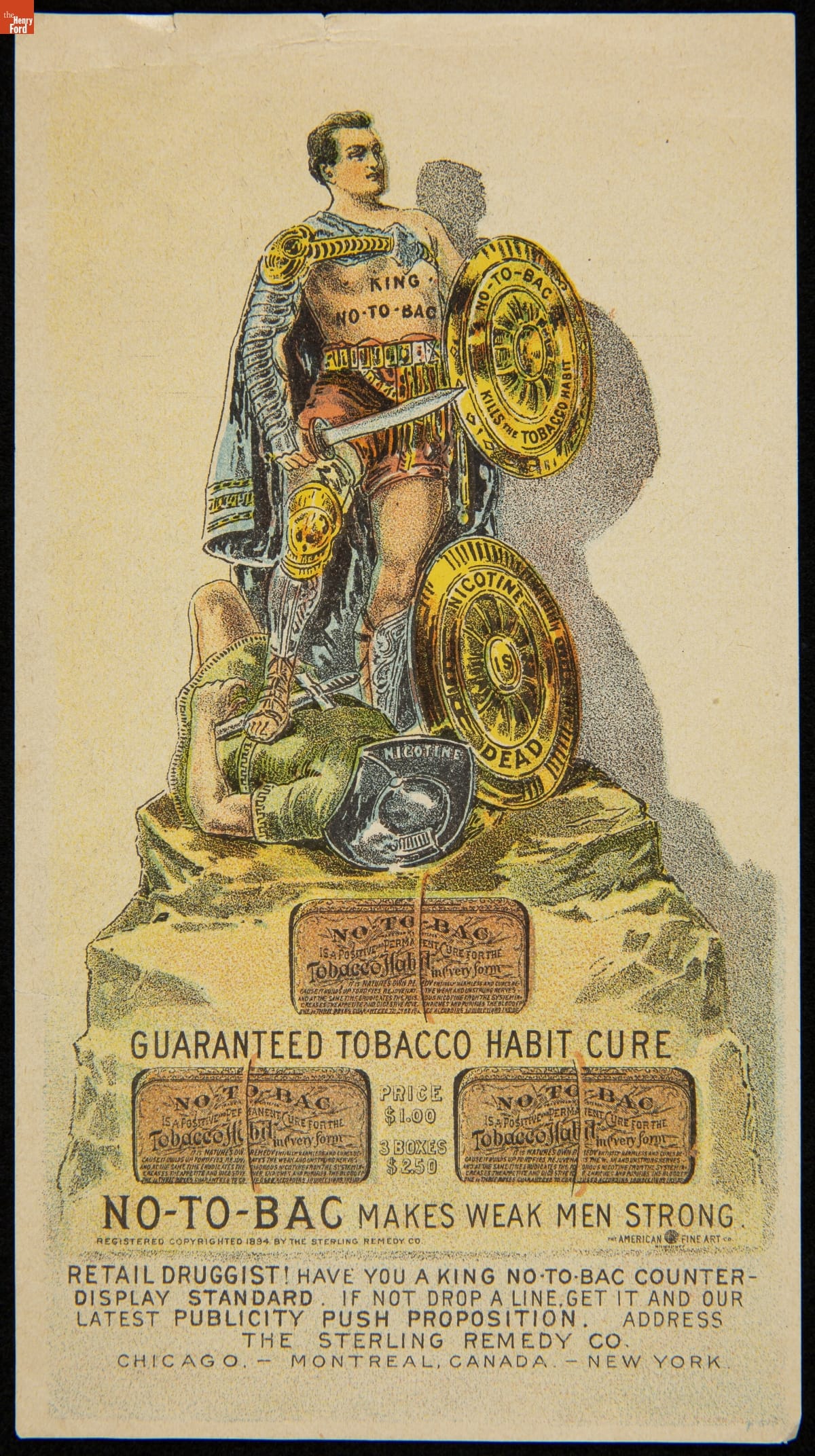
- circa 1894
- Collections - Artifact
Trade Card for "No-To-Bac" Tobacco, Sterling Products Co., circa 1894
In the last third of the nineteenth century, an unprecedented variety of consumer goods and services flooded the American market. Advertisers, armed with new methods of color printing, bombarded potential customers with trade cards. Americans enjoyed and often saved the vibrant little advertisements found in product packages or distributed by local merchants. Many survive as historical records of commercialism in the United States.
- Tobacco Spear, circa 1960 - Raising tobacco required significant human labor before mechanization. At harvest time, workers cut the leaves from Burley tobacco plants using special knives. They pierced the leaves with this conical-shaped metal spear affixed to the end of a stick. Then, after the leaves dried in the field, they moved the full sticks to tobacco barns to finish the curing process.

- circa 1960
- Collections - Artifact
Tobacco Spear, circa 1960
Raising tobacco required significant human labor before mechanization. At harvest time, workers cut the leaves from Burley tobacco plants using special knives. They pierced the leaves with this conical-shaped metal spear affixed to the end of a stick. Then, after the leaves dried in the field, they moved the full sticks to tobacco barns to finish the curing process.
- Trade Card for Horse Head Chewing Tobacco, Dausmen Tobacco Co., circa 1884 - In the last third of the nineteenth century, an unprecedented variety of consumer goods and services flooded the American market. Advertisers, armed with new methods of color printing, bombarded potential customers with trade cards. Americans enjoyed and often saved the vibrant little advertisements found in product packages or distributed by local merchants. Many survive as historical records of commercialism in the United States.
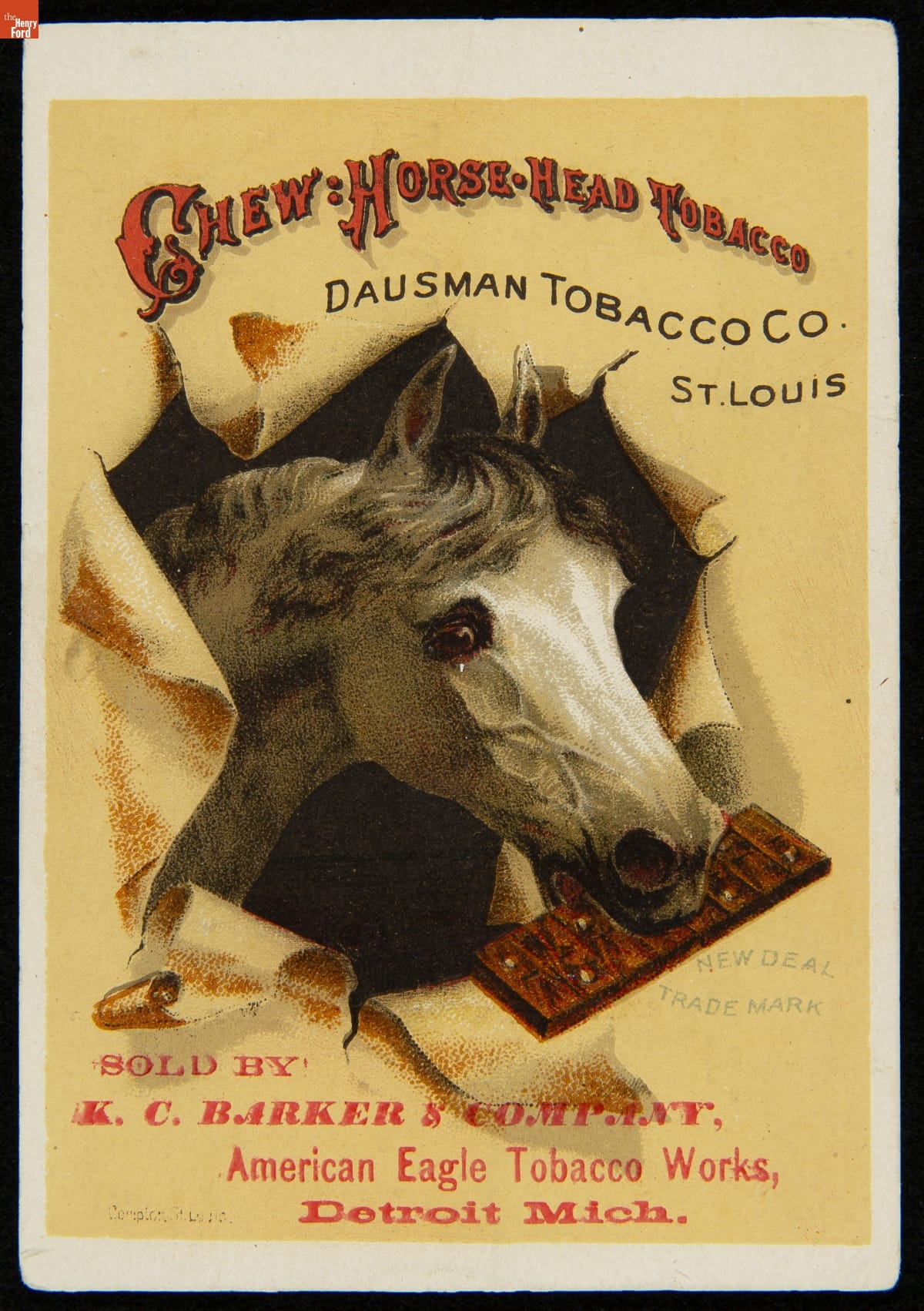
- circa 1884
- Collections - Artifact
Trade Card for Horse Head Chewing Tobacco, Dausmen Tobacco Co., circa 1884
In the last third of the nineteenth century, an unprecedented variety of consumer goods and services flooded the American market. Advertisers, armed with new methods of color printing, bombarded potential customers with trade cards. Americans enjoyed and often saved the vibrant little advertisements found in product packages or distributed by local merchants. Many survive as historical records of commercialism in the United States.
- Trade Card for Lone Fisherman Cigarettes, Marburg Bros., 1865-1891 - In the last third of the nineteenth century, an unprecedented variety of consumer goods and services flooded the American market. Advertisers, armed with new methods of color printing, bombarded potential customers with trade cards. Americans enjoyed and often saved the vibrant little advertisements found in product packages or distributed by local merchants. Many survive as historical records of commercialism in the United States.
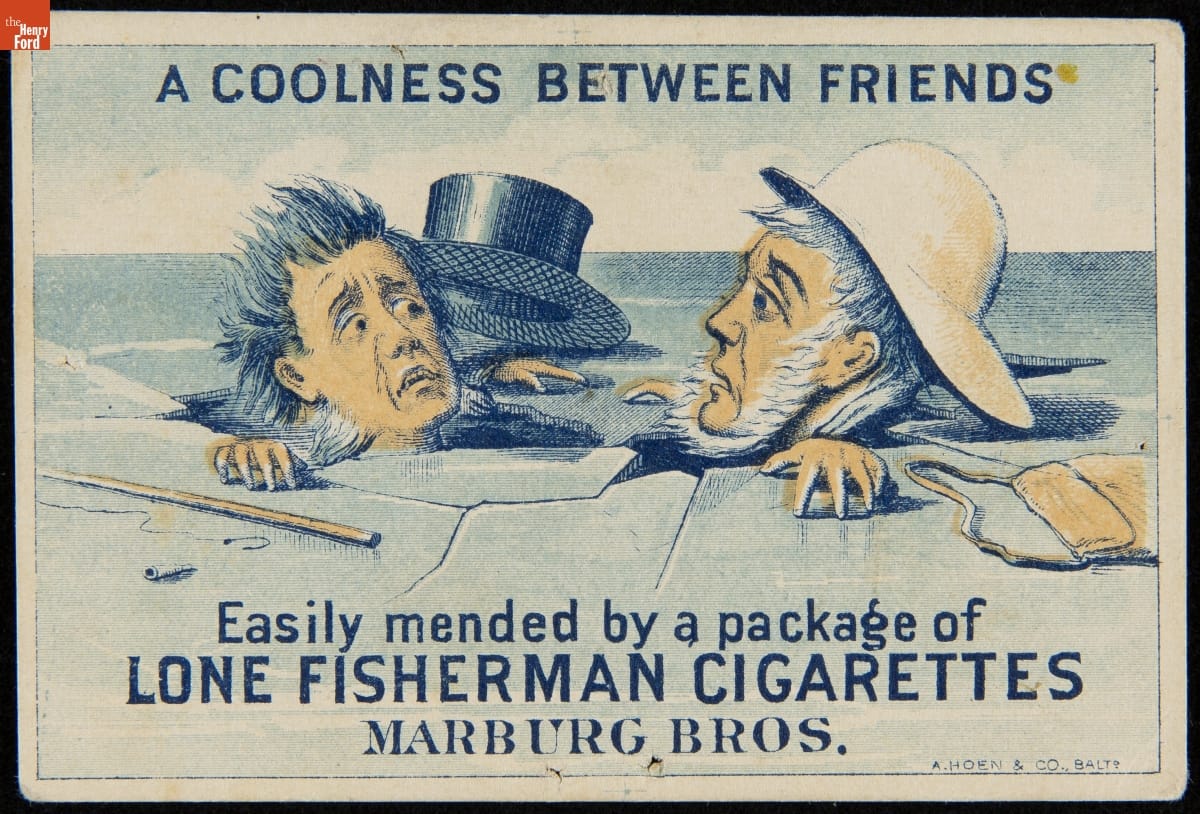
- 1865-1891
- Collections - Artifact
Trade Card for Lone Fisherman Cigarettes, Marburg Bros., 1865-1891
In the last third of the nineteenth century, an unprecedented variety of consumer goods and services flooded the American market. Advertisers, armed with new methods of color printing, bombarded potential customers with trade cards. Americans enjoyed and often saved the vibrant little advertisements found in product packages or distributed by local merchants. Many survive as historical records of commercialism in the United States.
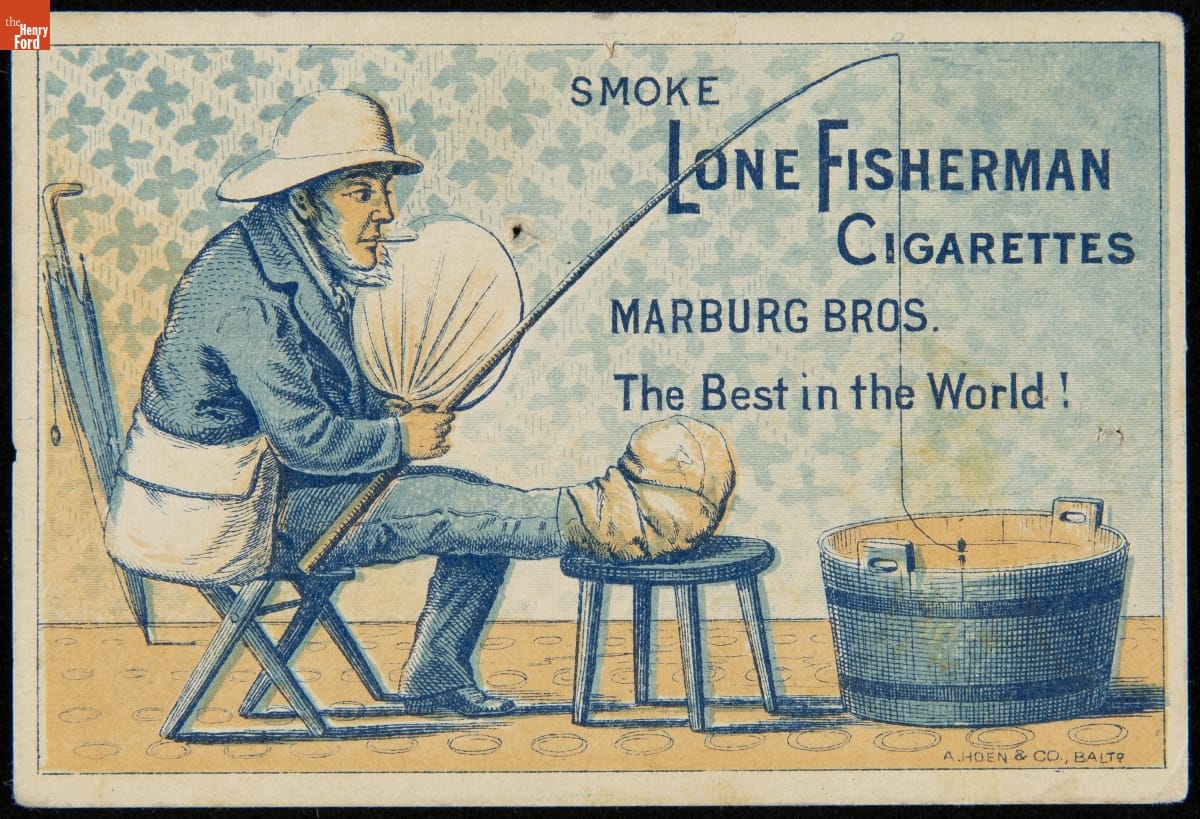
- Trade Card for Lone Fisherman Cigarettes, Marburg Bros., 1865-1891 - In the last third of the nineteenth century, an unprecedented variety of consumer goods and services flooded the American market. Advertisers, armed with new methods of color printing, bombarded potential customers with trade cards. Americans enjoyed and often saved the vibrant little advertisements found in product packages or distributed by local merchants. Many survive as historical records of commercialism in the United States.
- 1865-1891
- Collections - Artifact
Trade Card for Lone Fisherman Cigarettes, Marburg Bros., 1865-1891
In the last third of the nineteenth century, an unprecedented variety of consumer goods and services flooded the American market. Advertisers, armed with new methods of color printing, bombarded potential customers with trade cards. Americans enjoyed and often saved the vibrant little advertisements found in product packages or distributed by local merchants. Many survive as historical records of commercialism in the United States.
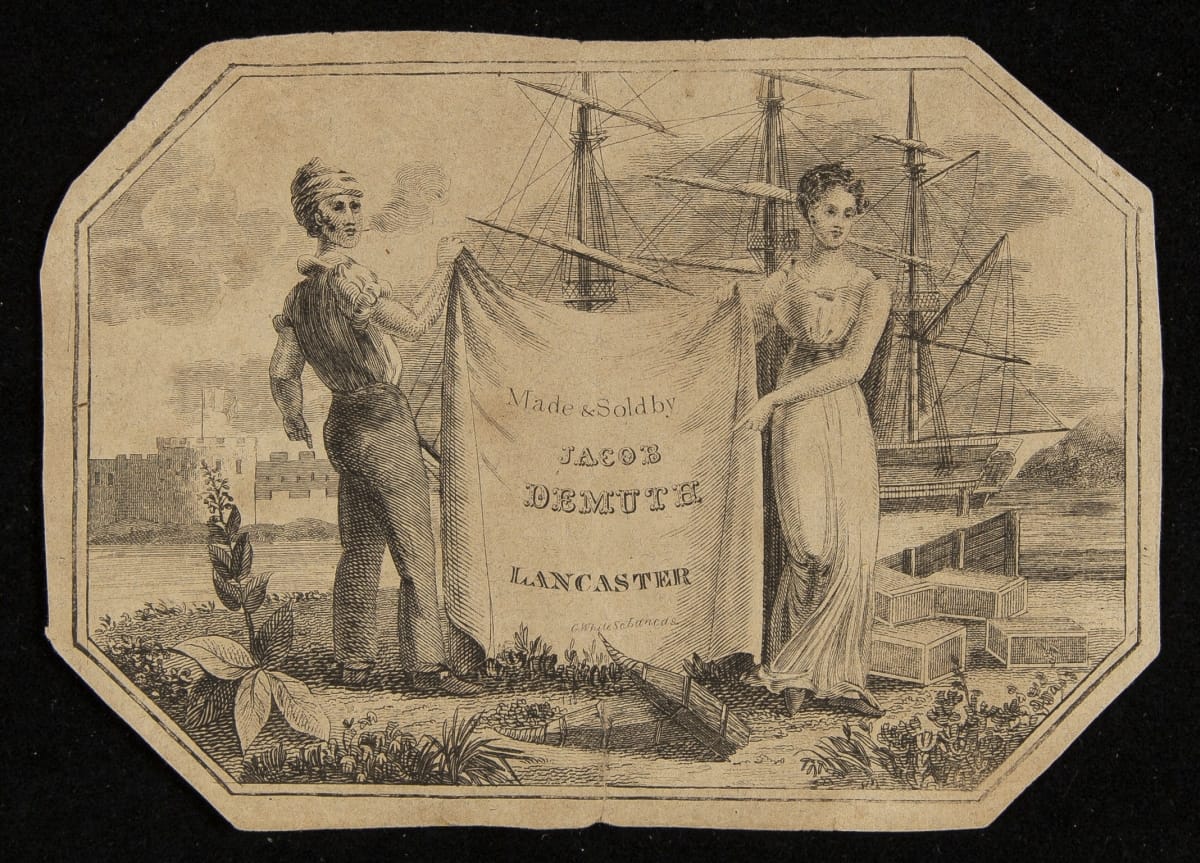
- Label for a Jacob Demuth Tobacco Product, 1779-1842 -
- 1779-1842
- Collections - Artifact
Label for a Jacob Demuth Tobacco Product, 1779-1842
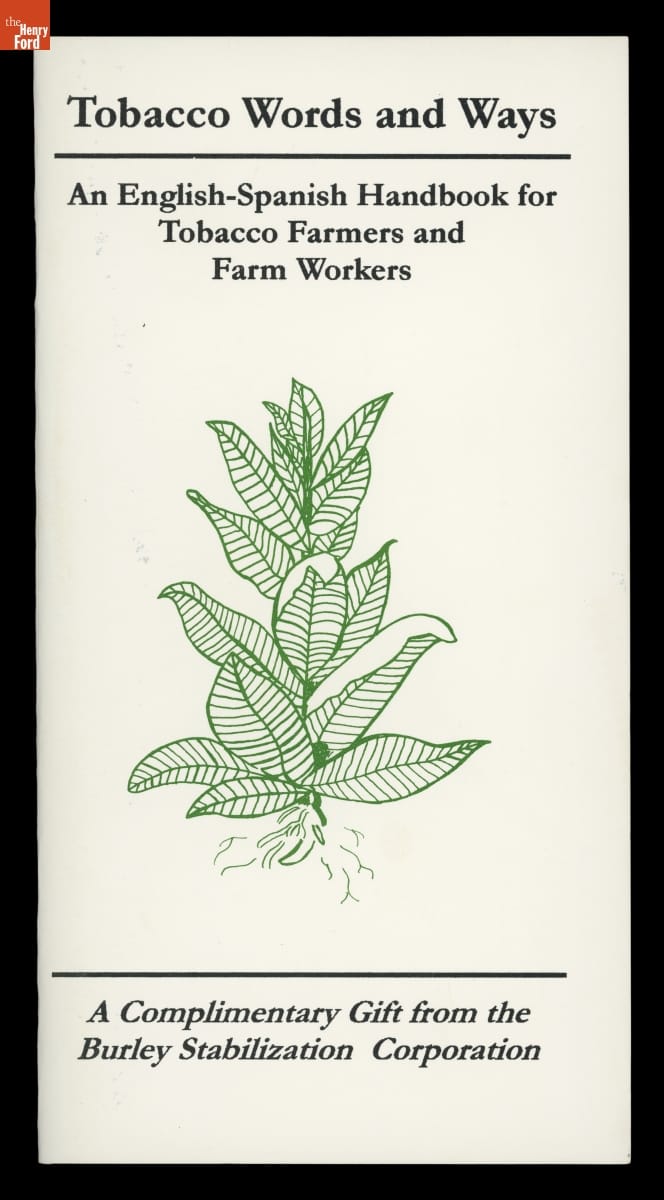
- "Tobacco Words and Ways: An English-Spanish Handbook for Tobacco Farmers and Farm Workers," 2000 -
- 2000
- Collections - Artifact
"Tobacco Words and Ways: An English-Spanish Handbook for Tobacco Farmers and Farm Workers," 2000
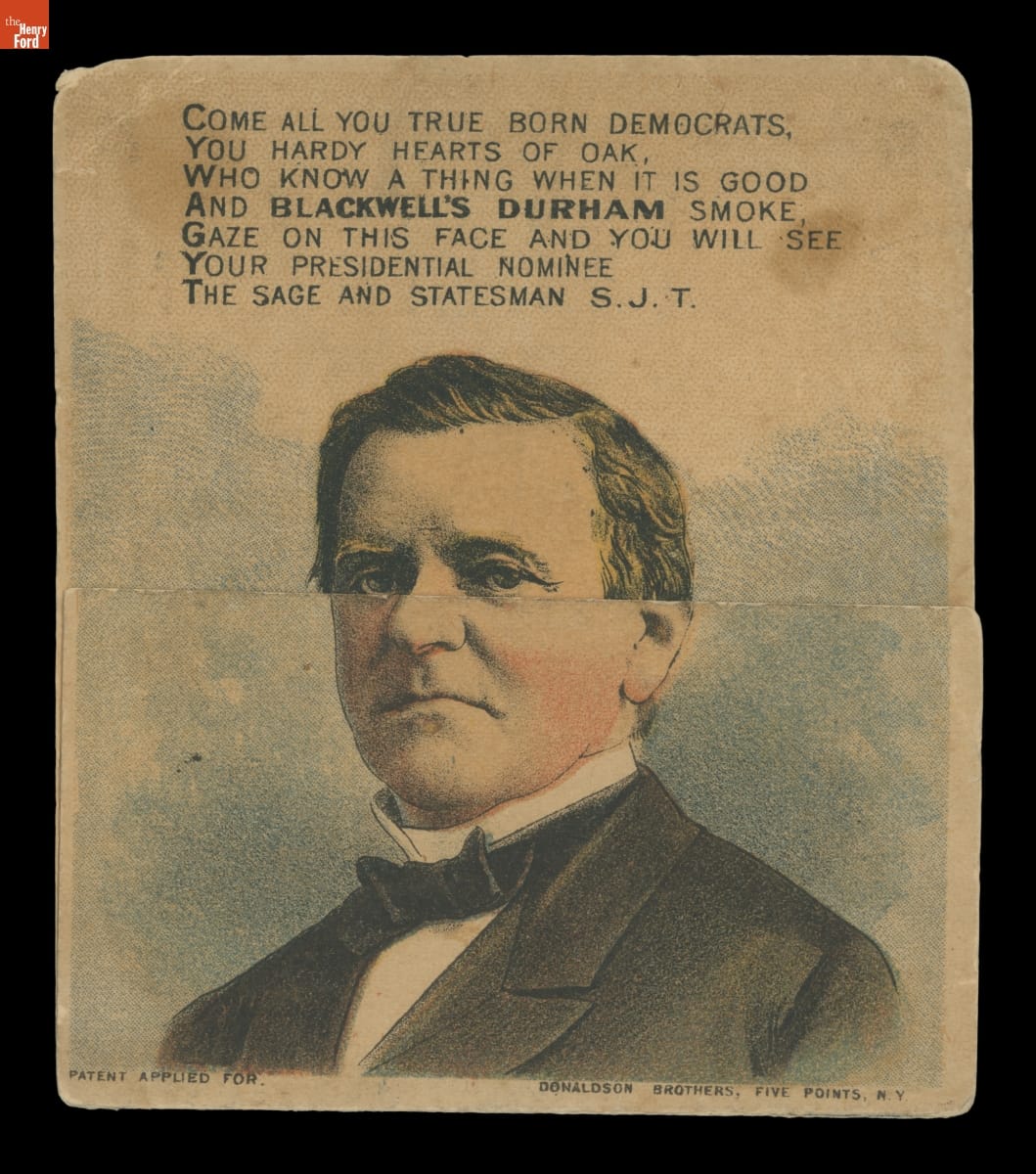
- "Come All You True Born Democrats... And All You Good Republicans," 1880 - This 1880 political advertisement catered to both Democratic and Republican voters. With the flap turned up, the front displays an image of Samuel J. Tilden, who failed to secure the Democratic Party's nomination for President. Turn the flap down, and the image of Ulysses Grant, the unsuccessful candidate for the Republican Party's nomination, appears. Either way, the Blackwell's Durham Tobacco Company wins.
- 1880
- Collections - Artifact
"Come All You True Born Democrats... And All You Good Republicans," 1880
This 1880 political advertisement catered to both Democratic and Republican voters. With the flap turned up, the front displays an image of Samuel J. Tilden, who failed to secure the Democratic Party's nomination for President. Turn the flap down, and the image of Ulysses Grant, the unsuccessful candidate for the Republican Party's nomination, appears. Either way, the Blackwell's Durham Tobacco Company wins.
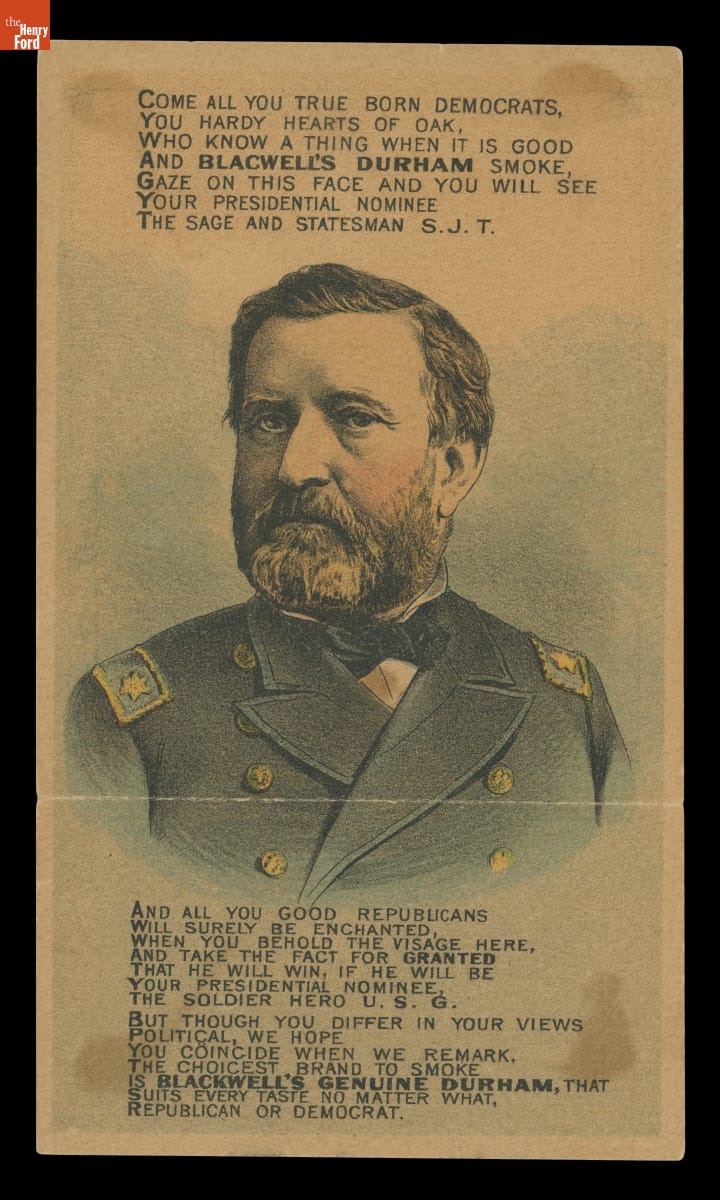
- "Come All You True Born Democrats... And All You Good Republicans," 1880 - This 1880 political advertisement catered to both Democratic and Republican voters. With the flap turned up, the front displays an image of Samuel J. Tilden, who failed to secure the Democratic Party's nomination for President. Turn the flap down, and the image of Ulysses Grant, the unsuccessful candidate for the Republican Party's nomination, appears. Either way, the Blackwell's Durham Tobacco Company wins.
- 1880
- Collections - Artifact
"Come All You True Born Democrats... And All You Good Republicans," 1880
This 1880 political advertisement catered to both Democratic and Republican voters. With the flap turned up, the front displays an image of Samuel J. Tilden, who failed to secure the Democratic Party's nomination for President. Turn the flap down, and the image of Ulysses Grant, the unsuccessful candidate for the Republican Party's nomination, appears. Either way, the Blackwell's Durham Tobacco Company wins.