
Search
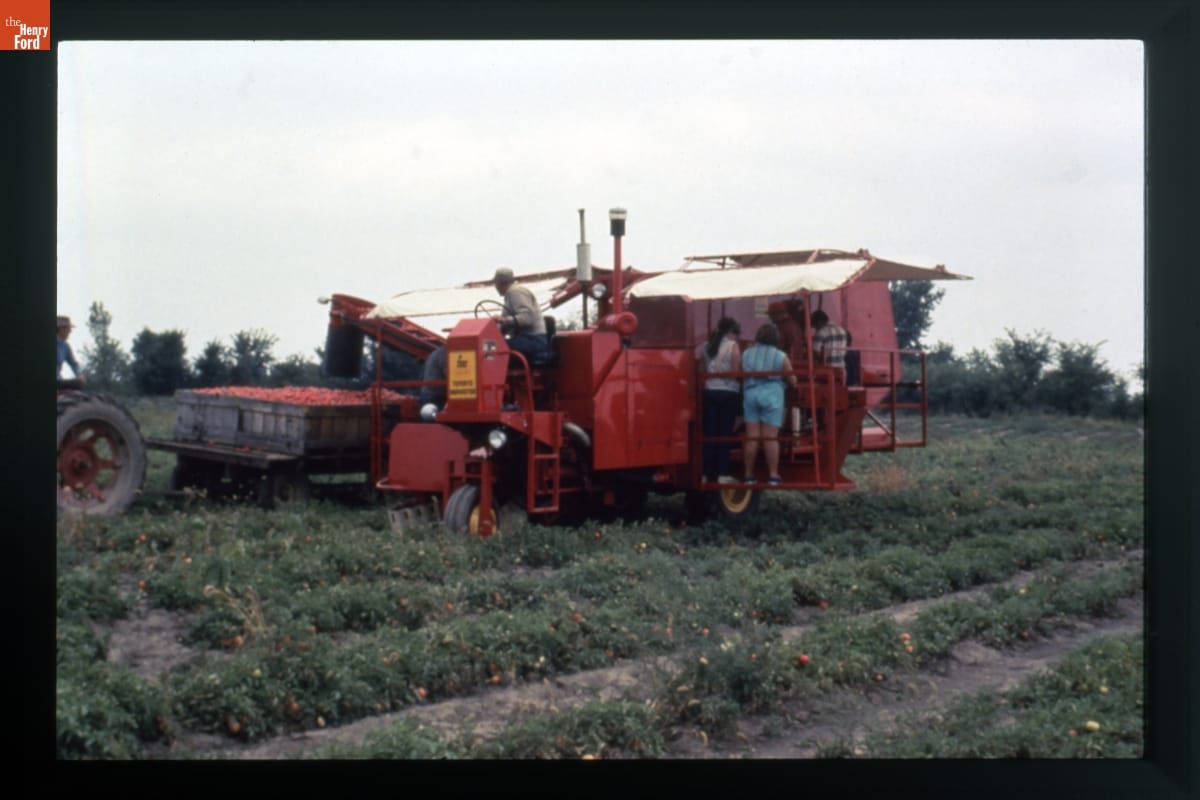
- FMC Cascade Tomato Harvester in Use, circa 1985 -
- circa 1985
- Collections - Artifact
FMC Cascade Tomato Harvester in Use, circa 1985
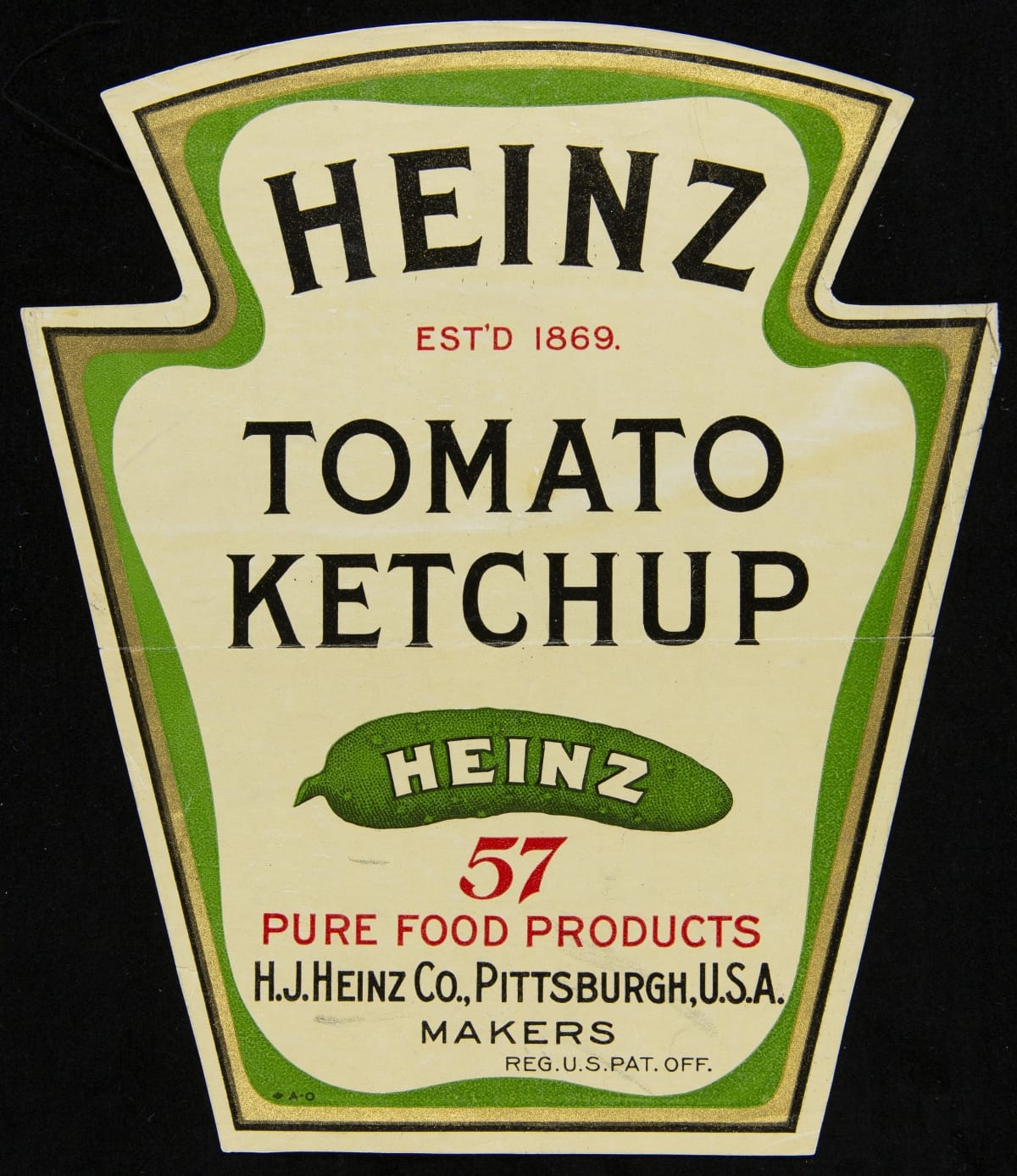
- Label, "H. J. Heinz Brand Tomato Ketchup," circa 1900 - Manufacturers of similar products sought ways to make their companies' goods stand out on store shelves. Some companies established a uniform label design for their multi-product offerings -- a strategy which helped customers distinguish one brand over another. H.J. Heinz products were identified by the famous Heinz pickle and signature "keystone" logo. These design features are still found on Heinz products today.
- circa 1900
- Collections - Artifact
Label, "H. J. Heinz Brand Tomato Ketchup," circa 1900
Manufacturers of similar products sought ways to make their companies' goods stand out on store shelves. Some companies established a uniform label design for their multi-product offerings -- a strategy which helped customers distinguish one brand over another. H.J. Heinz products were identified by the famous Heinz pickle and signature "keystone" logo. These design features are still found on Heinz products today.
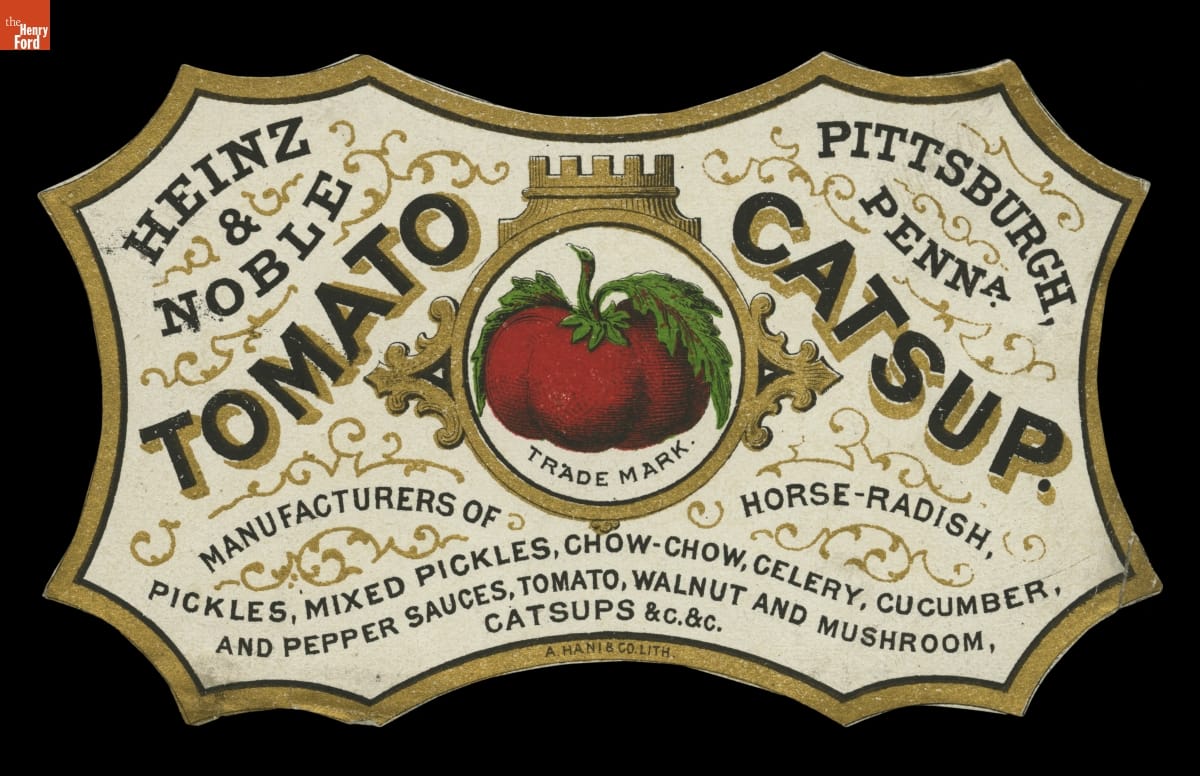
- Product Label for Bottled Tomato Catsup by Heinz, Noble & Company, circa 1873 - Henry J. Heinz introduced tomato ketchup as one of his first bottled condiments in the 1870s. To ensure his success among competing ketchup manufacturers, Heinz employed innovative product packaging. Eye-catching labels attracted customers, and clear glass bottles revealed a high-quality product. By about 1905, the H.J. Heinz Company had become the largest ketchup producer in the nation.
- circa 1873
- Collections - Artifact
Product Label for Bottled Tomato Catsup by Heinz, Noble & Company, circa 1873
Henry J. Heinz introduced tomato ketchup as one of his first bottled condiments in the 1870s. To ensure his success among competing ketchup manufacturers, Heinz employed innovative product packaging. Eye-catching labels attracted customers, and clear glass bottles revealed a high-quality product. By about 1905, the H.J. Heinz Company had become the largest ketchup producer in the nation.
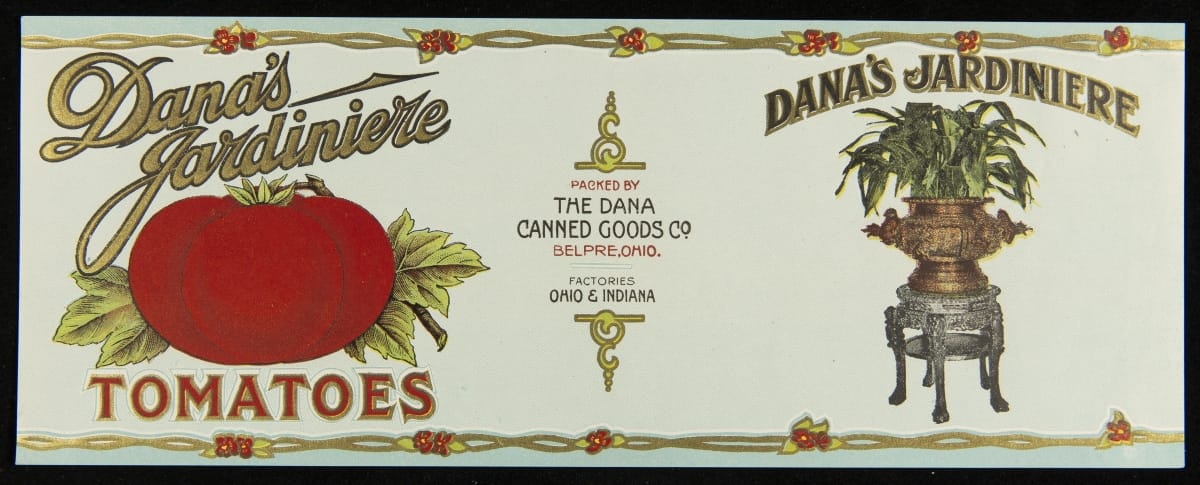
- Can Label, "Dana's Jardiniere Brand Tomatoes," 1912-1920 - Manufacturers of similar products sought ways to make their company's goods stand out on store shelves. Attractive labels, like this design for Dana's Jardiniere Brand Tomatoes, helped catch the attention of potential customers -- hopefully encouraging them to purchase the company's product rather than that of a competitor.
- 1912-1920
- Collections - Artifact
Can Label, "Dana's Jardiniere Brand Tomatoes," 1912-1920
Manufacturers of similar products sought ways to make their company's goods stand out on store shelves. Attractive labels, like this design for Dana's Jardiniere Brand Tomatoes, helped catch the attention of potential customers -- hopefully encouraging them to purchase the company's product rather than that of a competitor.
- Can Label, "Columbus Brand Tomatoes with Puree," circa 1930 - Manufacturers of similar products sought ways to make their company's goods stand out on store shelves. Attractive labels, like this design for Columbus Brand Tomatoes with Puree, helped catch the attention of potential customers -- hopefully encouraging them to purchase the company's product rather than that of a competitor.
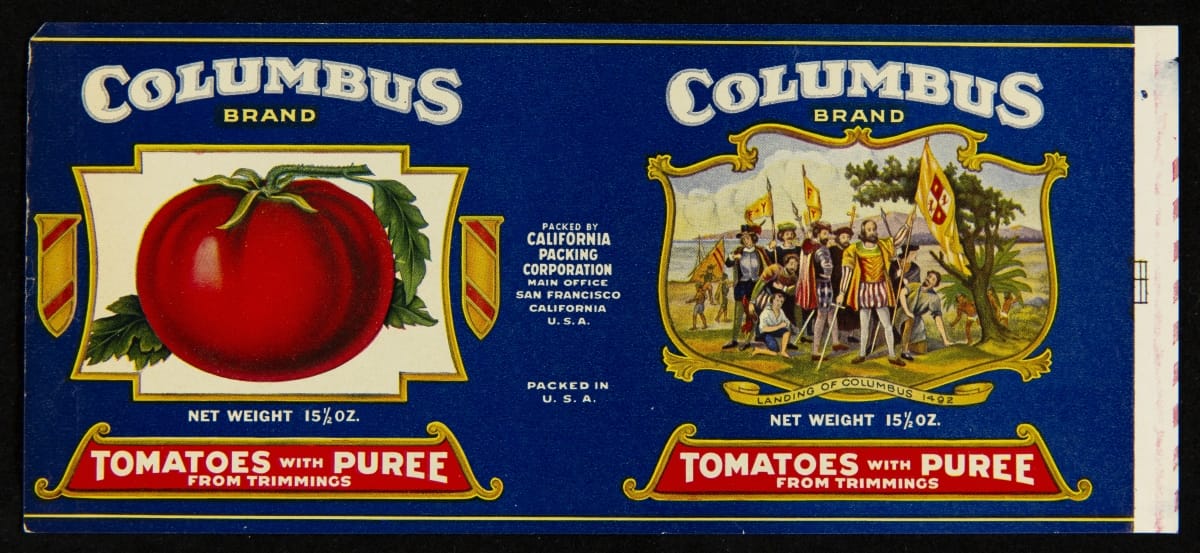
- circa 1930
- Collections - Artifact
Can Label, "Columbus Brand Tomatoes with Puree," circa 1930
Manufacturers of similar products sought ways to make their company's goods stand out on store shelves. Attractive labels, like this design for Columbus Brand Tomatoes with Puree, helped catch the attention of potential customers -- hopefully encouraging them to purchase the company's product rather than that of a competitor.
- Product Label for Tomato Catsup by Heinz, Noble & Co., 1872-1873 - Henry J. Heinz introduced tomato ketchup as one of his first bottled condiments in the 1870s. To ensure his success among competing ketchup manufacturers, Heinz employed innovative product packaging. Eye-catching labels attracted customers, and clear glass bottles revealed a high-quality product. By about 1905, the H.J. Heinz Company had become the largest ketchup producer in the nation.
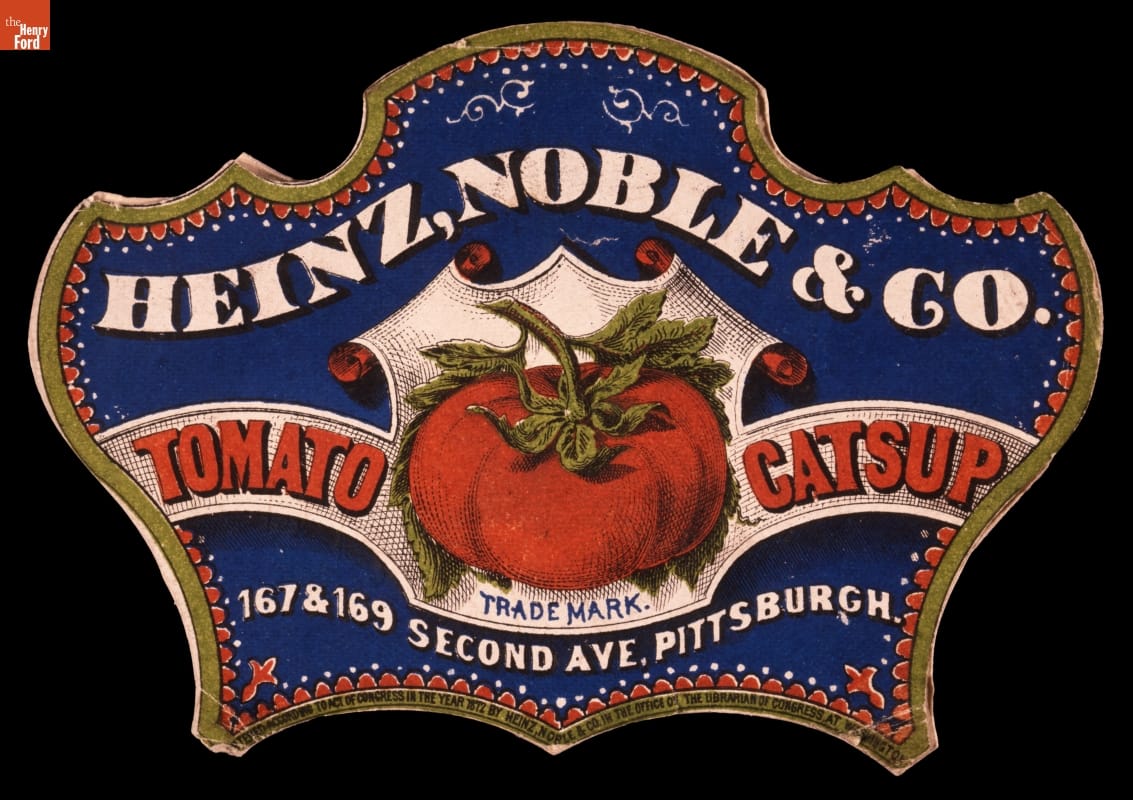
- 1872-1873
- Collections - Artifact
Product Label for Tomato Catsup by Heinz, Noble & Co., 1872-1873
Henry J. Heinz introduced tomato ketchup as one of his first bottled condiments in the 1870s. To ensure his success among competing ketchup manufacturers, Heinz employed innovative product packaging. Eye-catching labels attracted customers, and clear glass bottles revealed a high-quality product. By about 1905, the H.J. Heinz Company had become the largest ketchup producer in the nation.
- French's Mustard Recipe Booklet No. 16, 1926 - In 1904, the R.T. French Company introduced its Cream Salad Mustard. Prior to this, mustard was stone ground, thick, and often grainy, but French's new processed condiment was mild in flavor and easy to spread. It soon became a staple in American ballparks, where hot dogs were common fare. This recipe booklet offered additional uses, making it a favorite condiment in home kitchens as well.
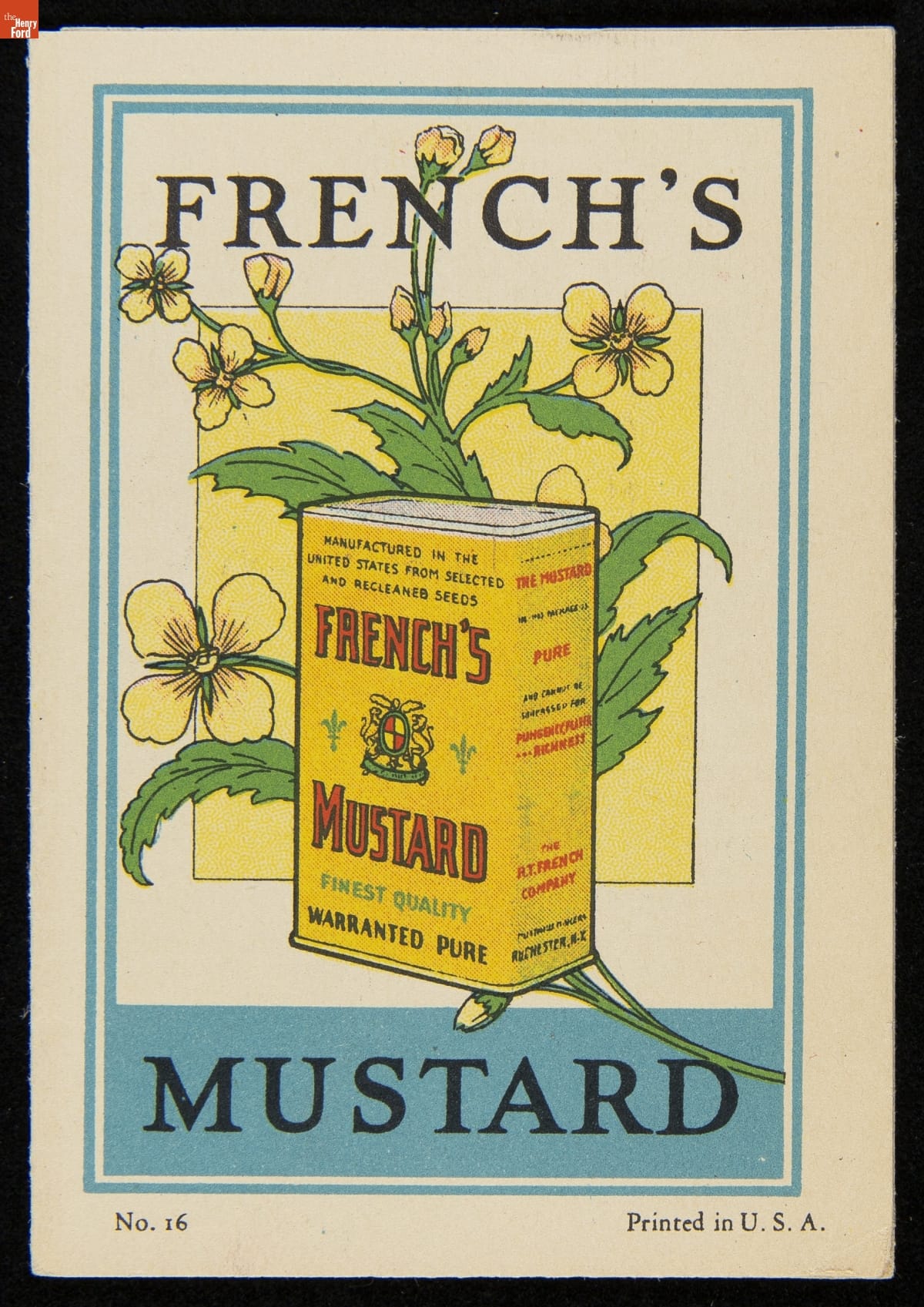
- 1926
- Collections - Artifact
French's Mustard Recipe Booklet No. 16, 1926
In 1904, the R.T. French Company introduced its Cream Salad Mustard. Prior to this, mustard was stone ground, thick, and often grainy, but French's new processed condiment was mild in flavor and easy to spread. It soon became a staple in American ballparks, where hot dogs were common fare. This recipe booklet offered additional uses, making it a favorite condiment in home kitchens as well.
- Advertising Layout Photograph of Heinz Employees Sealing Bottles, 1909 - Before complete mechanization of the manufacturing process, many tasks at the Heinz factory were done by hand. Photographs of this process were often taken and then modified for advertising and publications. Pictured here are employees sealing bottles.
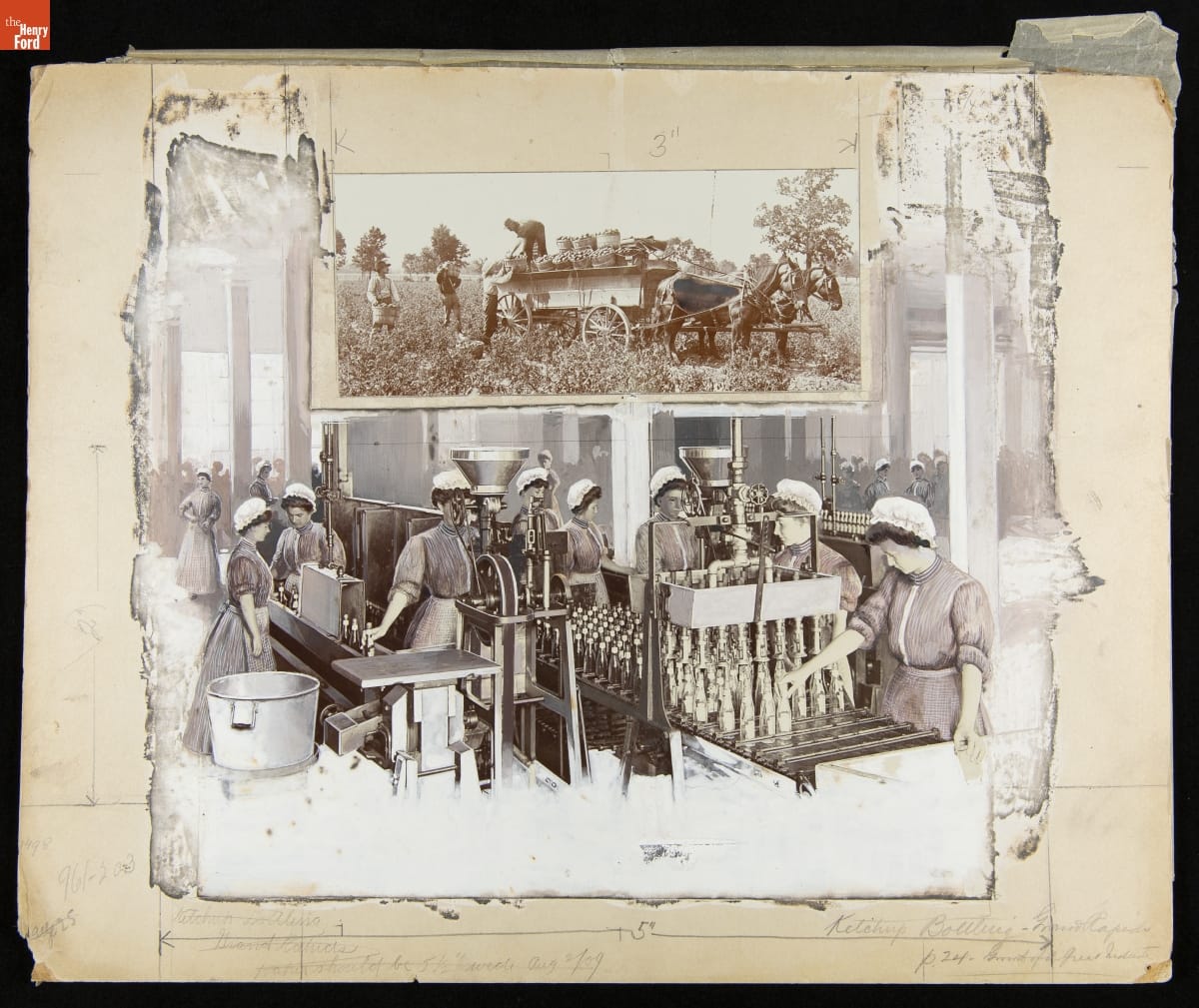
- 1909
- Collections - Artifact
Advertising Layout Photograph of Heinz Employees Sealing Bottles, 1909
Before complete mechanization of the manufacturing process, many tasks at the Heinz factory were done by hand. Photographs of this process were often taken and then modified for advertising and publications. Pictured here are employees sealing bottles.
- Vegetable Storage Room in a Ford Motor Company Cafeteria Kitchens, May 18, 1931 -
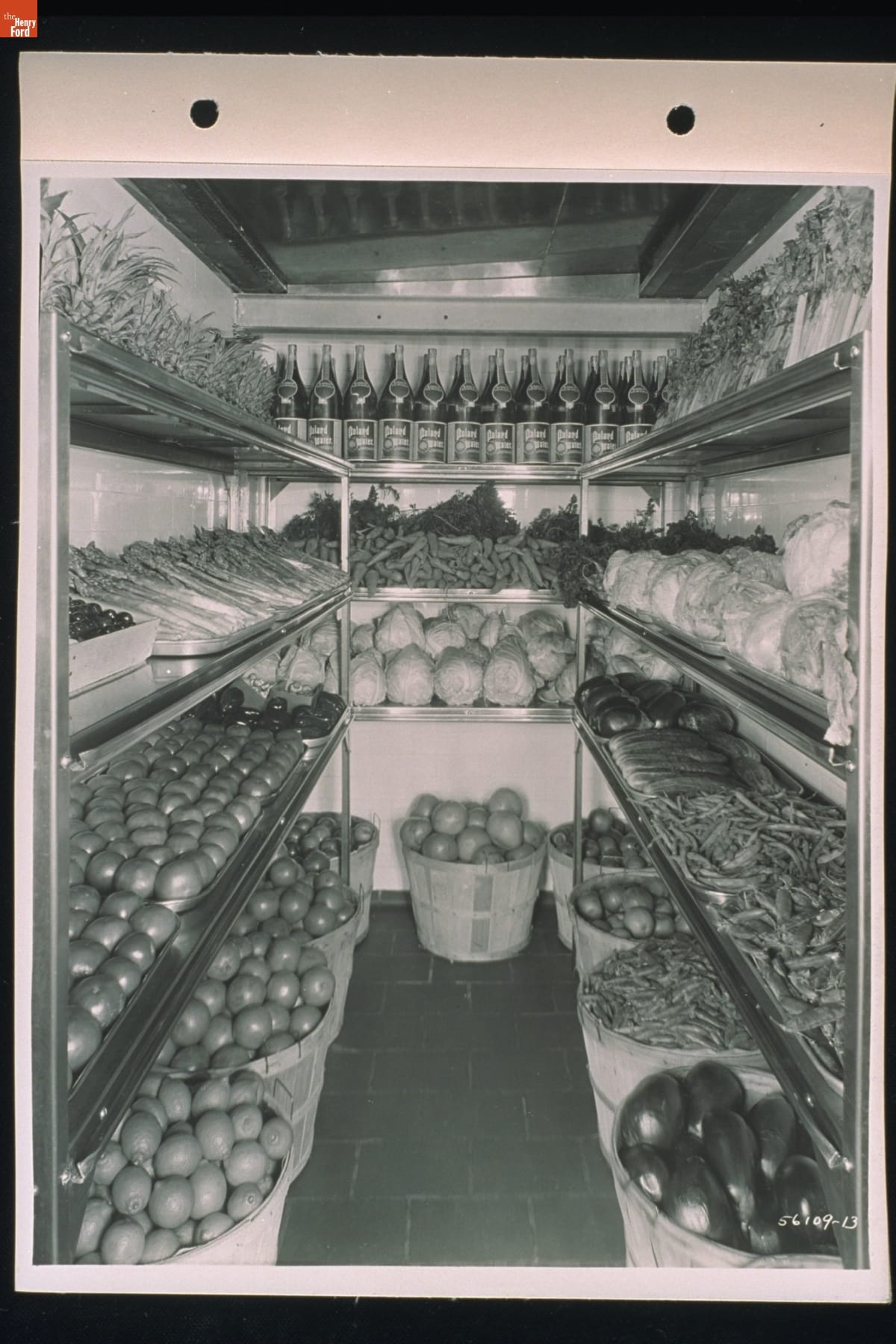
- May 18, 1931
- Collections - Artifact
Vegetable Storage Room in a Ford Motor Company Cafeteria Kitchens, May 18, 1931
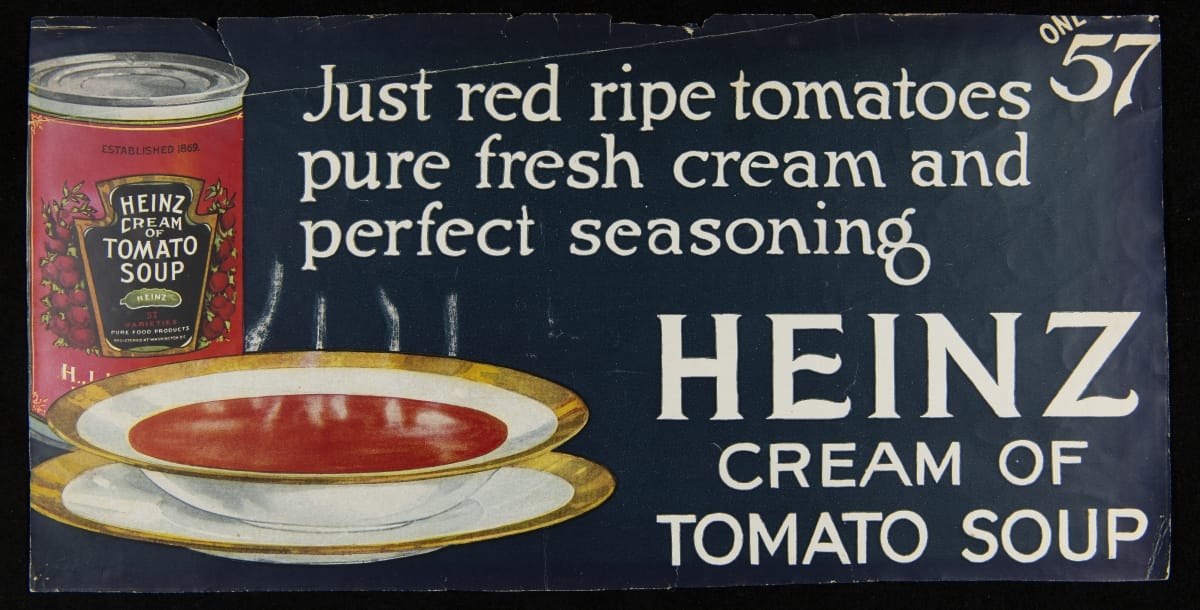
- Streetcar Advertising Poster for Heinz Cream of Tomato Soup, circa 1925 - Henry J. Heinz rarely missed an opportunity to market his "57 Varieties" -- a catchy slogan he created despite offering a line of more than 60 packaged food products. A prolific promoter, Heinz aimed to reach consumers in stores, at home, and everywhere in-between. This colorful poster advertised Heinz Cream of Tomato Soup to passengers riding a streetcar.
- circa 1925
- Collections - Artifact
Streetcar Advertising Poster for Heinz Cream of Tomato Soup, circa 1925
Henry J. Heinz rarely missed an opportunity to market his "57 Varieties" -- a catchy slogan he created despite offering a line of more than 60 packaged food products. A prolific promoter, Heinz aimed to reach consumers in stores, at home, and everywhere in-between. This colorful poster advertised Heinz Cream of Tomato Soup to passengers riding a streetcar.