
Search
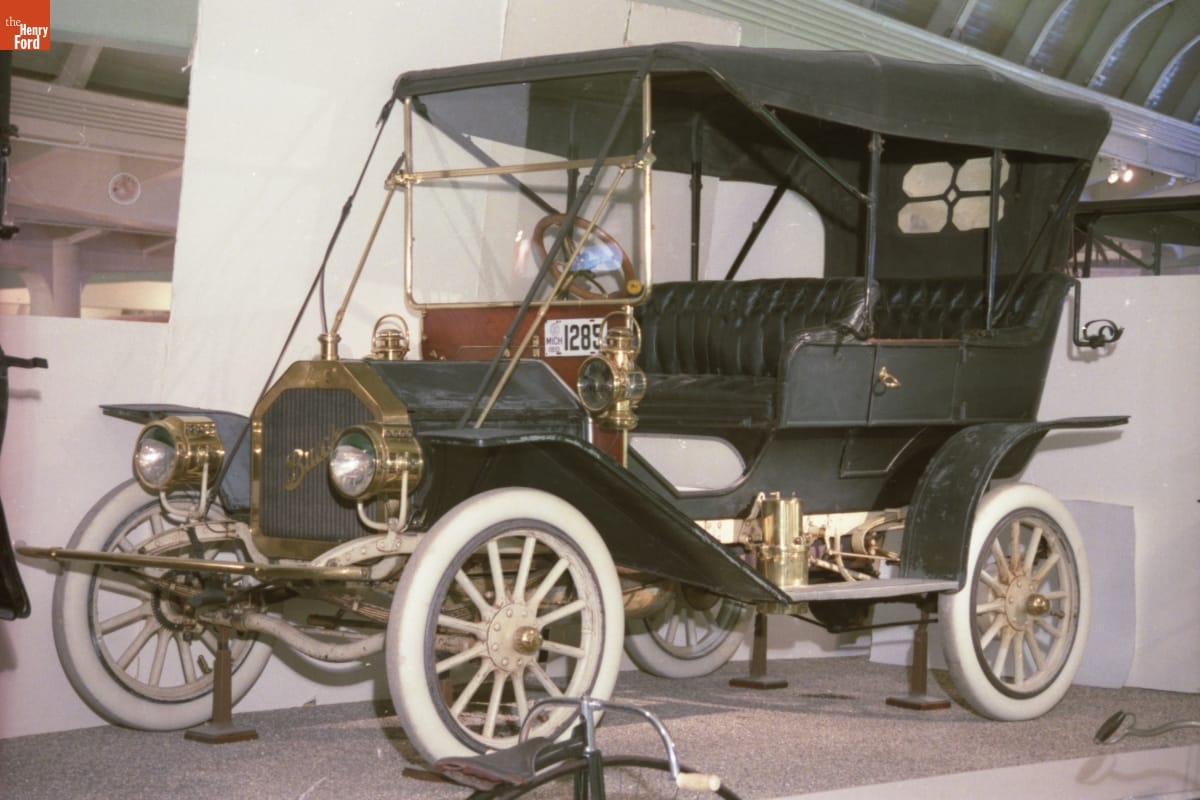
- 1910 Buick Model 10 Toy Tonneau - Buick prospered under Billy Durant's leadership, and in 1908 it became the cornerstone of his General Motors empire. Buick's Model 10 competed with Ford's Model T. At around $1,000, the Model 10's price tag compared favorably with the $900 starting price for a Model T. Buick built 27,377 cars for 1910, second only to Ford's production of 34,070.
- 1910
- Collections - Artifact
1910 Buick Model 10 Toy Tonneau
Buick prospered under Billy Durant's leadership, and in 1908 it became the cornerstone of his General Motors empire. Buick's Model 10 competed with Ford's Model T. At around $1,000, the Model 10's price tag compared favorably with the $900 starting price for a Model T. Buick built 27,377 cars for 1910, second only to Ford's production of 34,070.
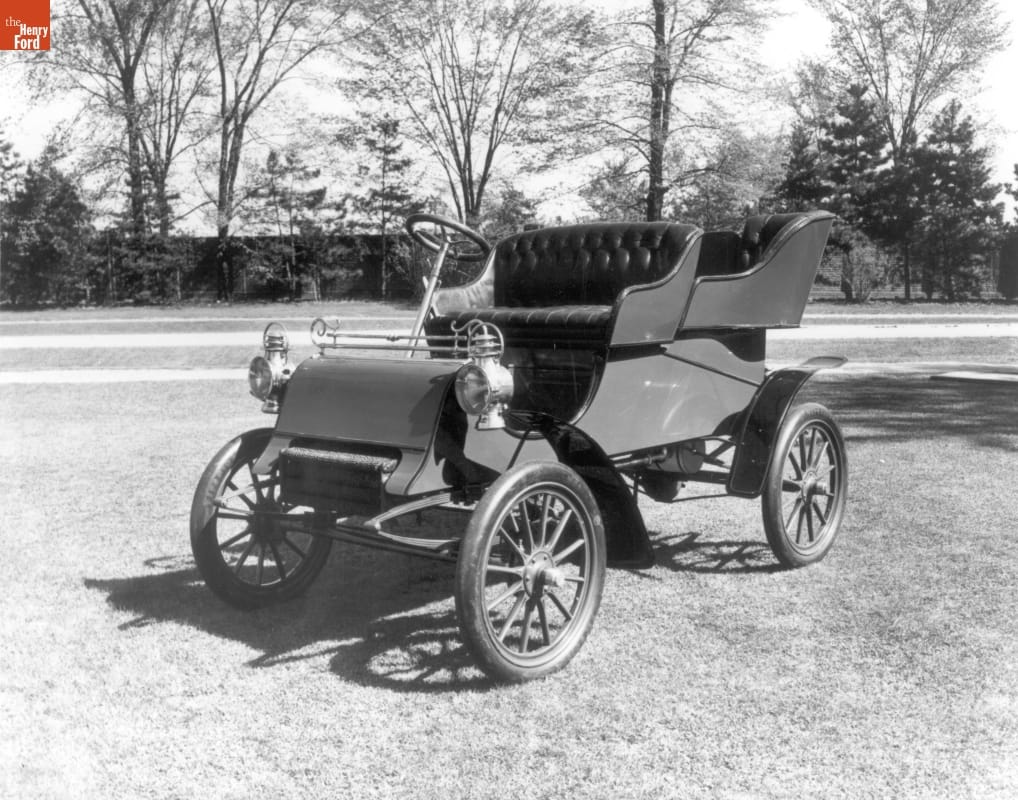
- 1903 Ford Model A, Photographed in 1952 - In naming its first product, Ford Motor Company logically settled on "Model A." The two-cylinder automobile could be fitted with an optional tonneau -- a rear seat compartment -- entered through a door in the back. The Model A was one of the first large-production cars with a steering wheel instead of a tiller. Total production was somewhere above 670 units.
- May 01, 1952
- Collections - Artifact
1903 Ford Model A, Photographed in 1952
In naming its first product, Ford Motor Company logically settled on "Model A." The two-cylinder automobile could be fitted with an optional tonneau -- a rear seat compartment -- entered through a door in the back. The Model A was one of the first large-production cars with a steering wheel instead of a tiller. Total production was somewhere above 670 units.
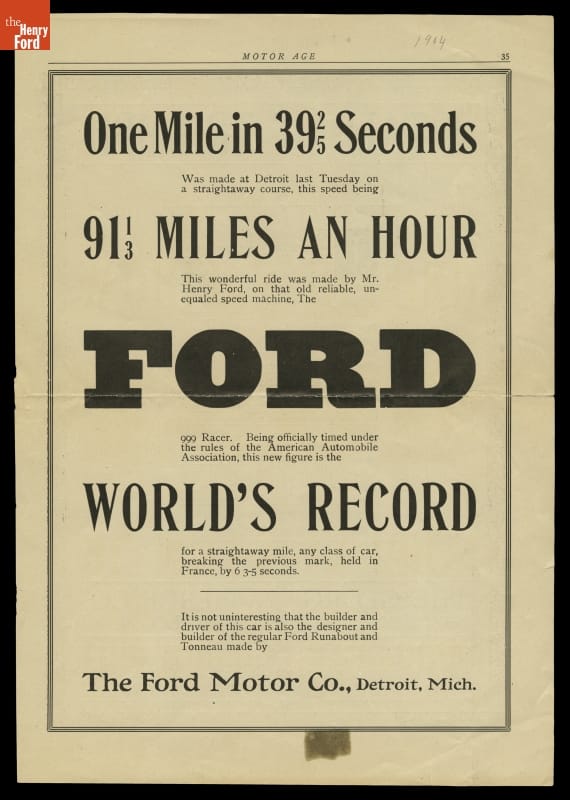
- Advertisement for the 1904 Ford Model A, "One Mile in 39-2/5 Seconds, Ford World's Record" - Henry Ford, along with Ed "Spider" Huff, raised Ford Motor Company's profile by driving the "Arrow" across frozen Lake St. Clair at a world-record speed of 91.37 miles per hour. Ford built two nearly identical "999" racers but the car that broke the world record on January 12, 1904, was named the "Arrow."
- 1904
- Collections - Artifact
Advertisement for the 1904 Ford Model A, "One Mile in 39-2/5 Seconds, Ford World's Record"
Henry Ford, along with Ed "Spider" Huff, raised Ford Motor Company's profile by driving the "Arrow" across frozen Lake St. Clair at a world-record speed of 91.37 miles per hour. Ford built two nearly identical "999" racers but the car that broke the world record on January 12, 1904, was named the "Arrow."
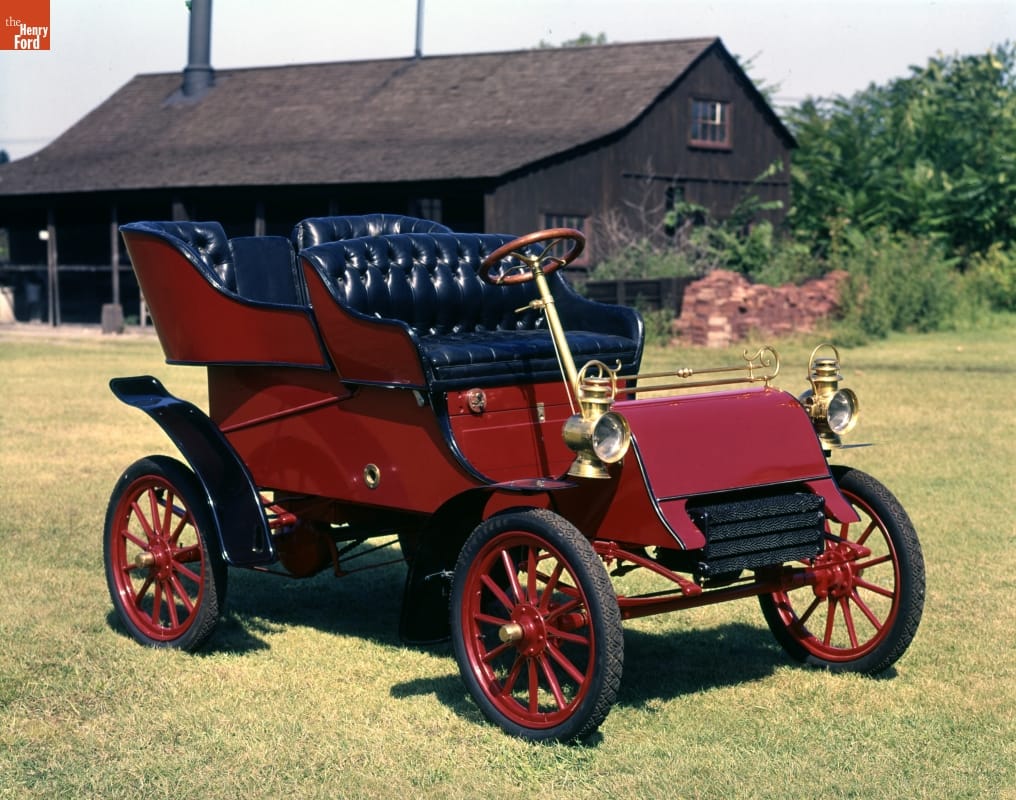
- 1903 Ford Model A Tonneau - In naming its first product, Ford Motor Company logically settled on "Model A." The two-cylinder automobile could be fitted with an optional tonneau -- a rear seat compartment -- entered through a door in the back. The Model A was one of the first large-production cars with a steering wheel instead of a tiller. Total production was somewhere above 670 units.
- 1903
- Collections - Artifact
1903 Ford Model A Tonneau
In naming its first product, Ford Motor Company logically settled on "Model A." The two-cylinder automobile could be fitted with an optional tonneau -- a rear seat compartment -- entered through a door in the back. The Model A was one of the first large-production cars with a steering wheel instead of a tiller. Total production was somewhere above 670 units.
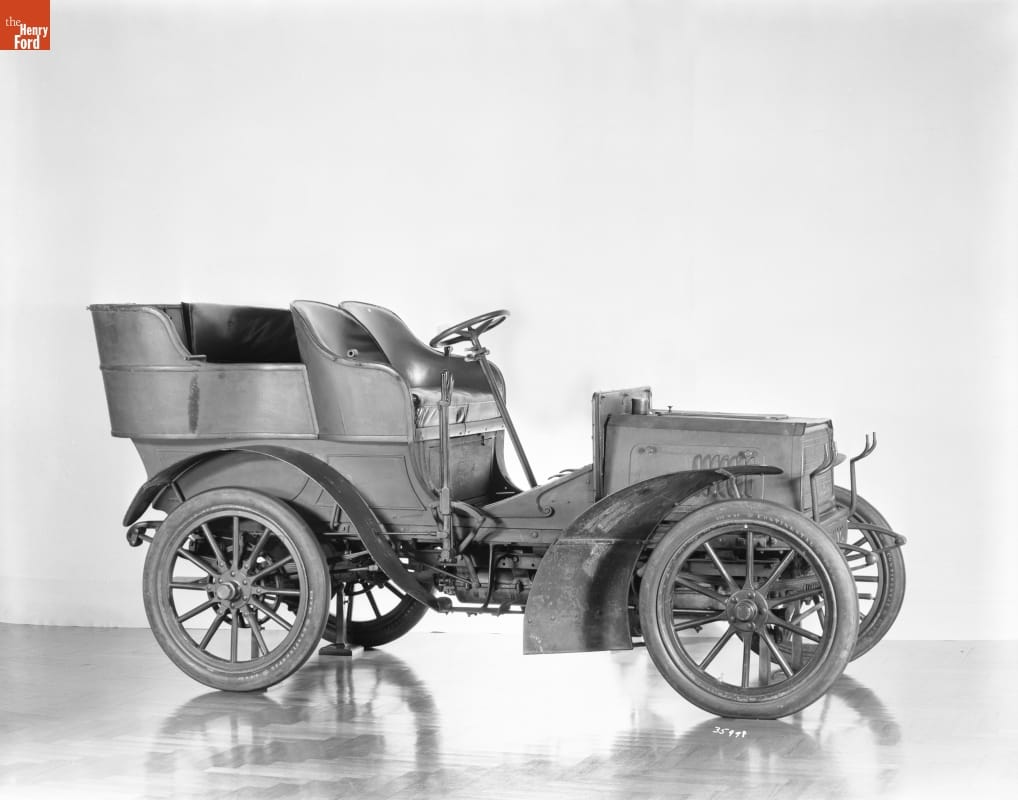
- 1903 Benz Parsifal Touring Car - Karl Benz's Parsifal signaled the transition from the concept of a motorized carriage to a modern automobile. Unlike a motorized carriage, Benz positioned the engine in the front of the vehicle as opposed to under the seat. This allowed the car to be built closer to the ground, which provided better handling for drivers and easier accessibility.
- 1903
- Collections - Artifact
1903 Benz Parsifal Touring Car
Karl Benz's Parsifal signaled the transition from the concept of a motorized carriage to a modern automobile. Unlike a motorized carriage, Benz positioned the engine in the front of the vehicle as opposed to under the seat. This allowed the car to be built closer to the ground, which provided better handling for drivers and easier accessibility.
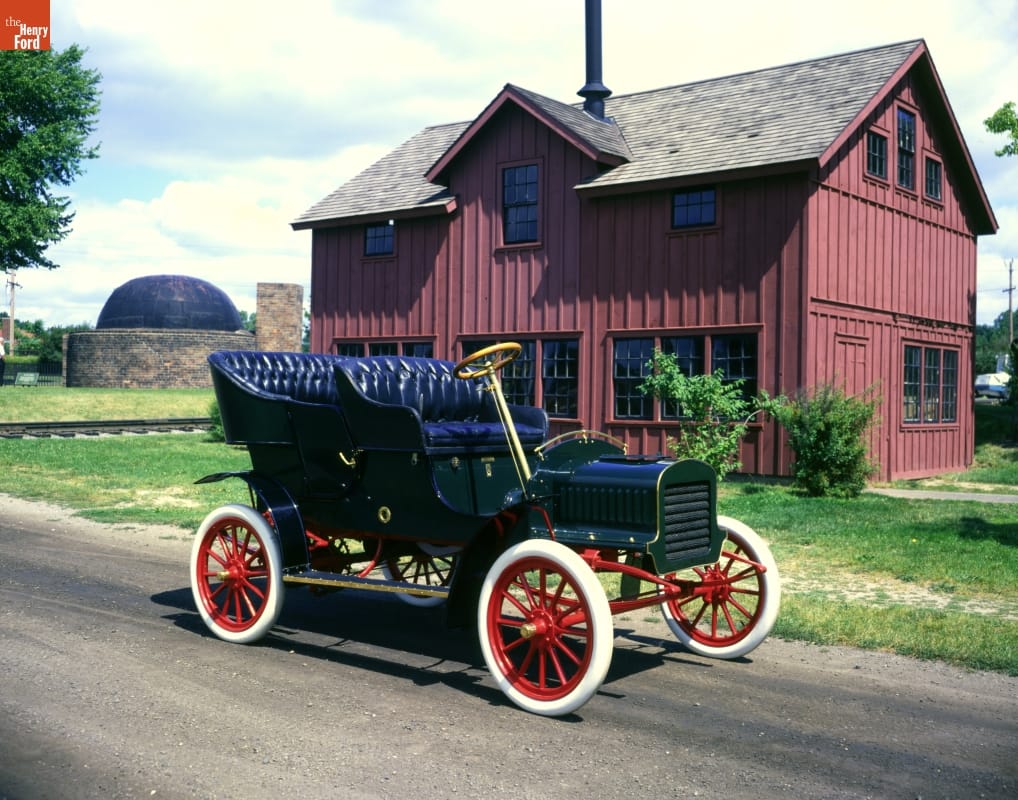
- 1904 Ford Model C Tonneau - While it looked different, Ford's Model C was based on its earlier Model A. The main difference on the C was its European-style front hood -- though its two-cylinder engine was still under the front seat as with the A. This example was further distinguished by an unusual rear tonneau with side doors instead of a single door in back.
- 1904
- Collections - Artifact
1904 Ford Model C Tonneau
While it looked different, Ford's Model C was based on its earlier Model A. The main difference on the C was its European-style front hood -- though its two-cylinder engine was still under the front seat as with the A. This example was further distinguished by an unusual rear tonneau with side doors instead of a single door in back.
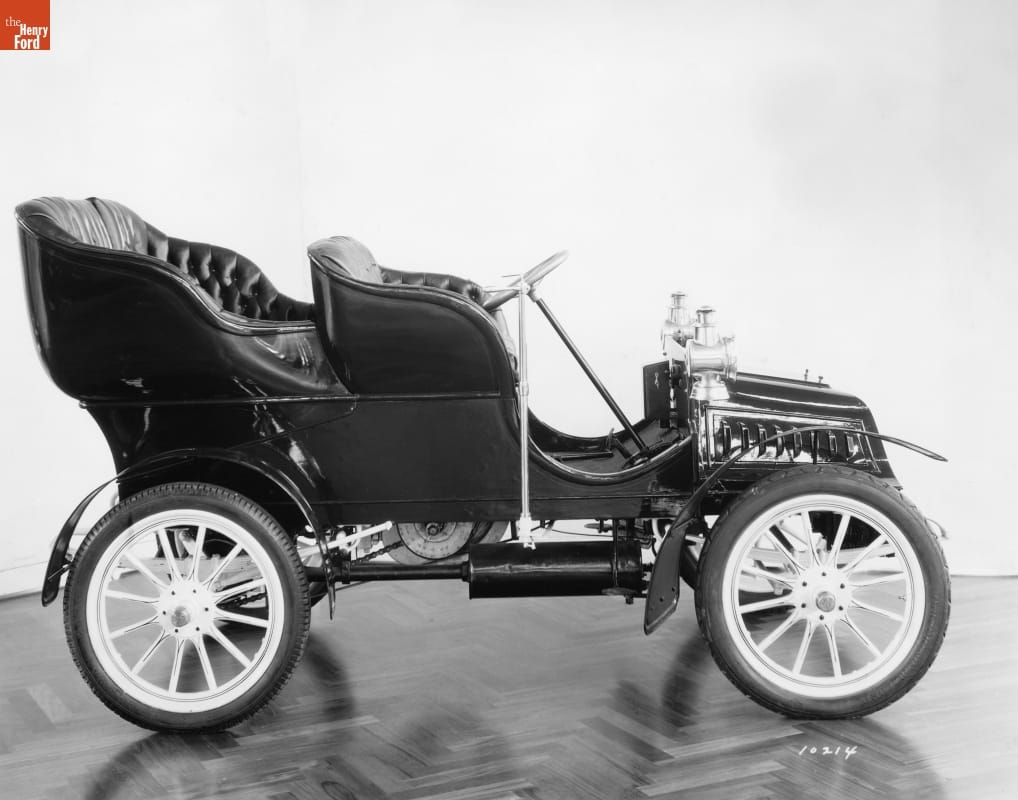
- 1904 Pope-Hartford Touring Car - Many early automobiles borrowed technology from bicycles, but the Pope-Hartford actually was built by a bicycle company. Albert A. Pope's Connecticut-based firm built high-quality cars from 1904 to 1914. This Model B features a single-cylinder engine under the driver's seat and a European-style false hood up front. Its $1,200 price was steep when the average 1904 annual wage was $490.
- 1904
- Collections - Artifact
1904 Pope-Hartford Touring Car
Many early automobiles borrowed technology from bicycles, but the Pope-Hartford actually was built by a bicycle company. Albert A. Pope's Connecticut-based firm built high-quality cars from 1904 to 1914. This Model B features a single-cylinder engine under the driver's seat and a European-style false hood up front. Its $1,200 price was steep when the average 1904 annual wage was $490.
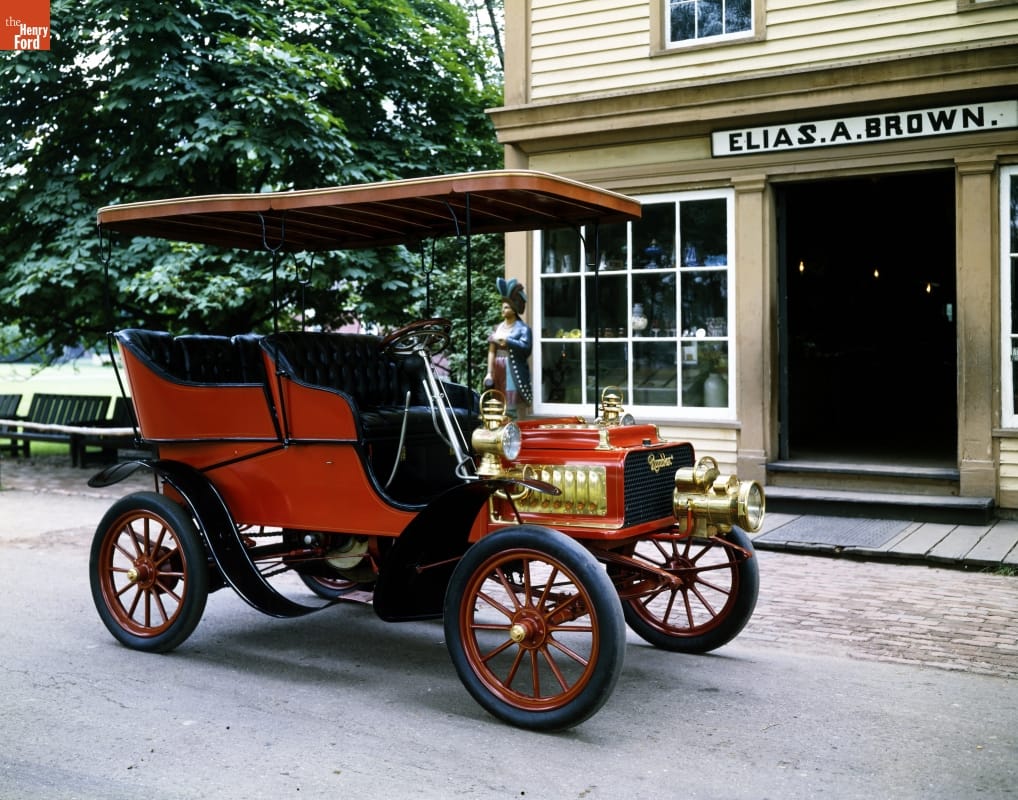
- 1904 Rambler Touring Car - Thomas B. Jeffery built Rambler bicycles in Chicago but relocated to Kenosha, Wisconsin, when he entered the automobile business around 1900. This two-cylinder Model K, with its steering wheel and front-mounted engine, was advanced for an American car in 1904. The Rambler name was retired in 1914 but was revived by successor Nash Motors for a compact car in 1950.
- 1904
- Collections - Artifact
1904 Rambler Touring Car
Thomas B. Jeffery built Rambler bicycles in Chicago but relocated to Kenosha, Wisconsin, when he entered the automobile business around 1900. This two-cylinder Model K, with its steering wheel and front-mounted engine, was advanced for an American car in 1904. The Rambler name was retired in 1914 but was revived by successor Nash Motors for a compact car in 1950.
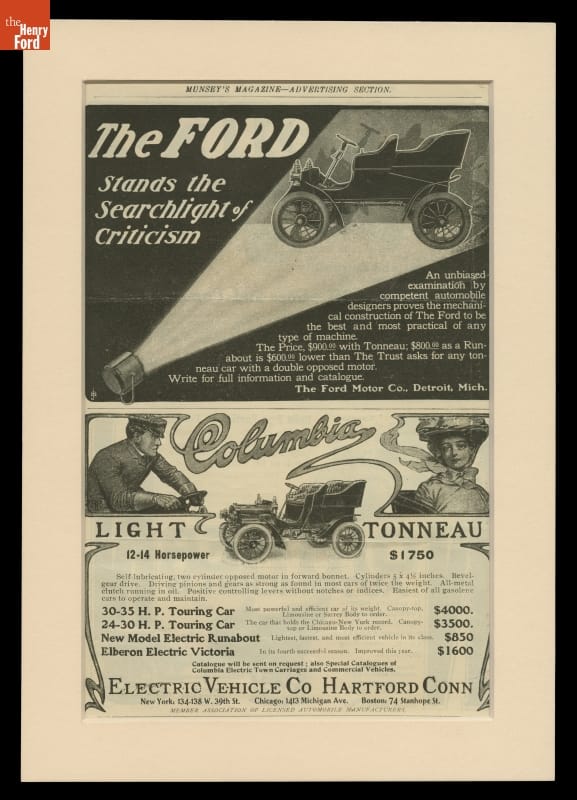
- Ford Model A Advertisement, "Ford Stands the Searchlight of Criticism," 1903 - Ford Motor Company touted the quality of its Model A runabout, able to withstand "the searchlight of criticism," in this ad from 1903. The optional tonneau rear seat provided room for additional passengers. Total production for Ford's first Model A was somewhere above 670 cars.
- 1903
- Collections - Artifact
Ford Model A Advertisement, "Ford Stands the Searchlight of Criticism," 1903
Ford Motor Company touted the quality of its Model A runabout, able to withstand "the searchlight of criticism," in this ad from 1903. The optional tonneau rear seat provided room for additional passengers. Total production for Ford's first Model A was somewhere above 670 cars.
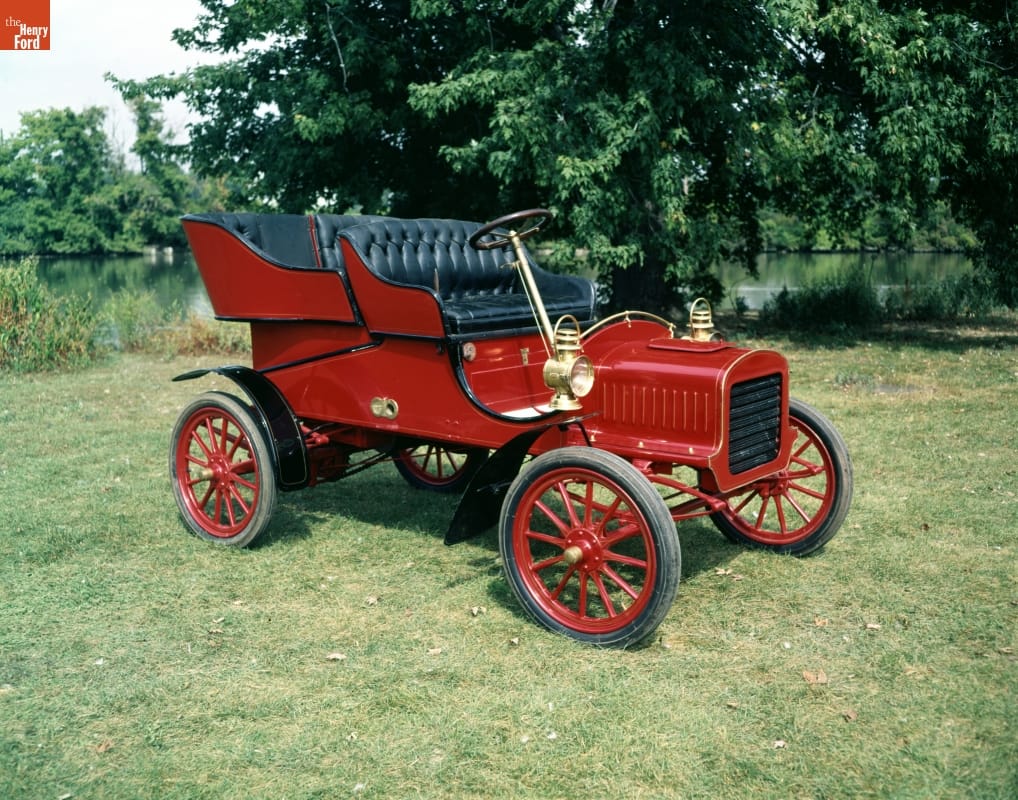
- 1904 Ford Model C Tonneau - Ford created its new Model C based on the earlier Model A platform. The cars looked quite different due to the C's European-style hood. The two-cylinder engine was still under the front seat like the A, but the fuel tank and radiator were under the hood. Ford built some 800 Model C cars over the 1904-1905 model years.
- 1904
- Collections - Artifact
1904 Ford Model C Tonneau
Ford created its new Model C based on the earlier Model A platform. The cars looked quite different due to the C's European-style hood. The two-cylinder engine was still under the front seat like the A, but the fuel tank and radiator were under the hood. Ford built some 800 Model C cars over the 1904-1905 model years.