
Search
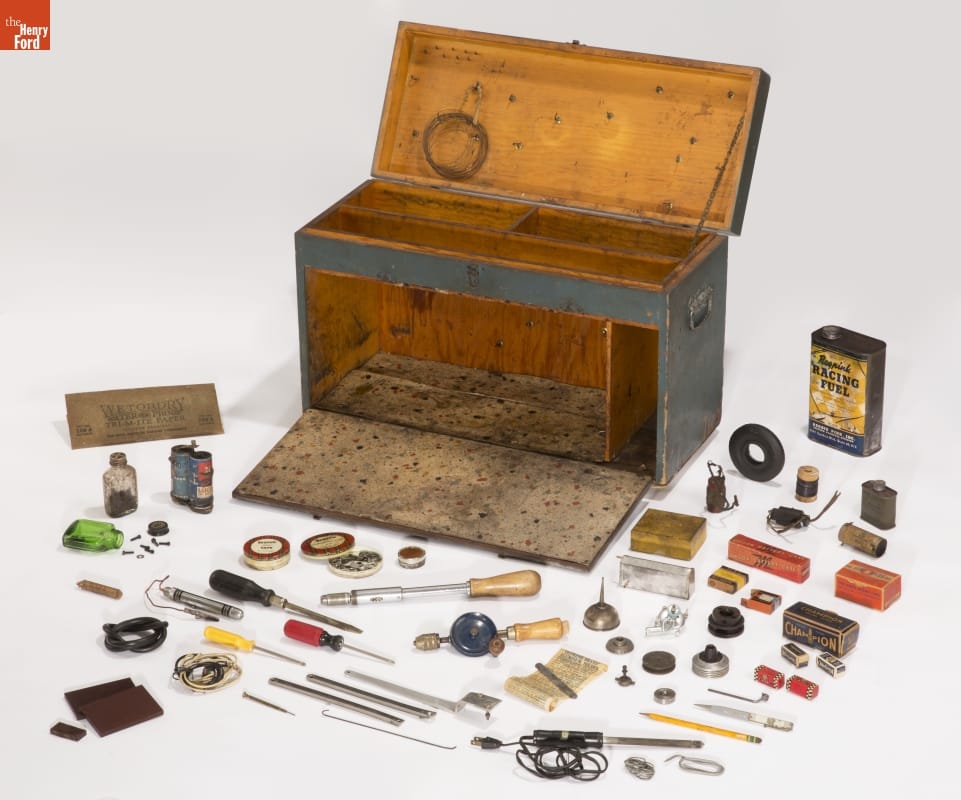
- Racing Box to Hold Model Race Cars, Spare Parts and Tools, Used by Rose Allen, circa 1945 - Tether cars, gas-powered model race cars, were popular in the 1930s and 1940s. They were raced individually while tethered to a central pivot, or against each other on a scaled-down board track. The hobby appealed to men and women alike. Rose Allen used this racing box, packed with spare parts and tools, as she competed throughout northern California.
- circa 1945
- Collections - Artifact
Racing Box to Hold Model Race Cars, Spare Parts and Tools, Used by Rose Allen, circa 1945
Tether cars, gas-powered model race cars, were popular in the 1930s and 1940s. They were raced individually while tethered to a central pivot, or against each other on a scaled-down board track. The hobby appealed to men and women alike. Rose Allen used this racing box, packed with spare parts and tools, as she competed throughout northern California.
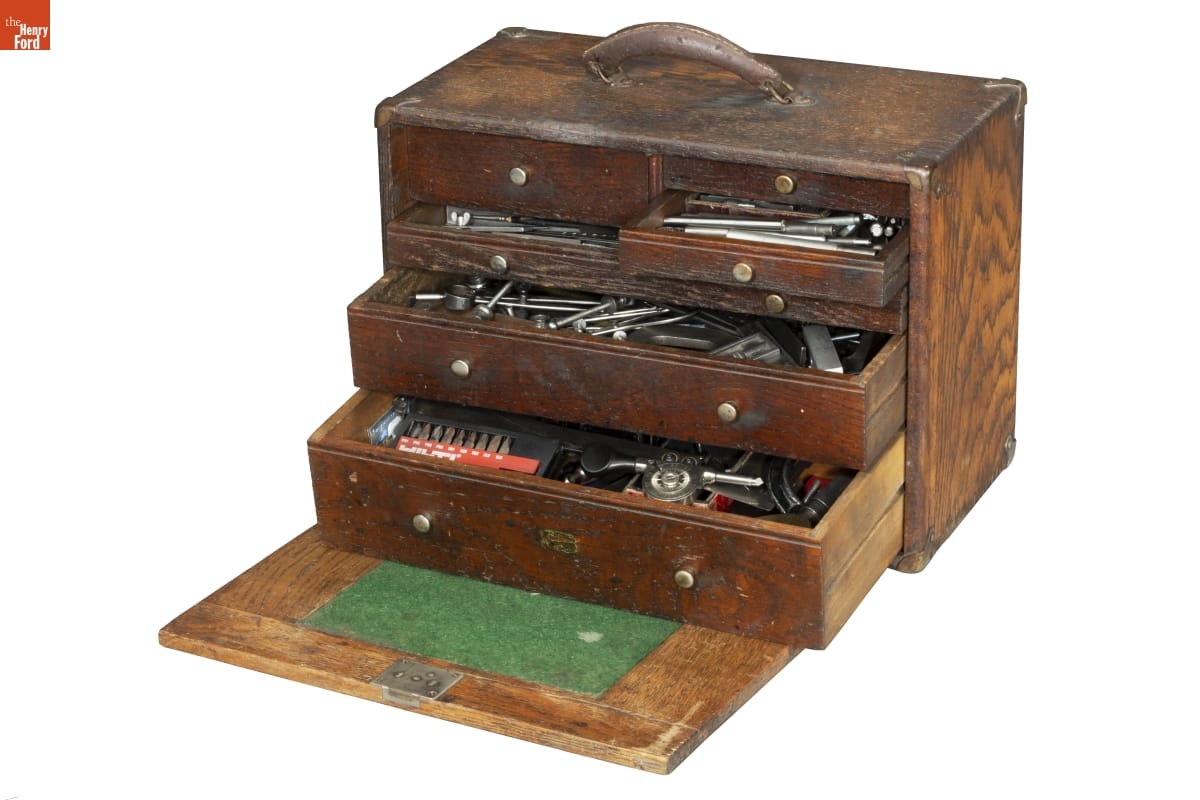
- Toolbox and Tools, Used by Phil Remington - Phil Remington was one of racing's greatest fabricators and metalworkers. He worked alongside innovators like Lance Reventlow, Carroll Shelby, and Dan Gurney throughout his 70-year career. Remington got this toolbox while still in high school, and he used it for the rest of his life. Always resourceful, "Rem" often made his own tools suited to the job at hand.
- Collections - Artifact
Toolbox and Tools, Used by Phil Remington
Phil Remington was one of racing's greatest fabricators and metalworkers. He worked alongside innovators like Lance Reventlow, Carroll Shelby, and Dan Gurney throughout his 70-year career. Remington got this toolbox while still in high school, and he used it for the rest of his life. Always resourceful, "Rem" often made his own tools suited to the job at hand.
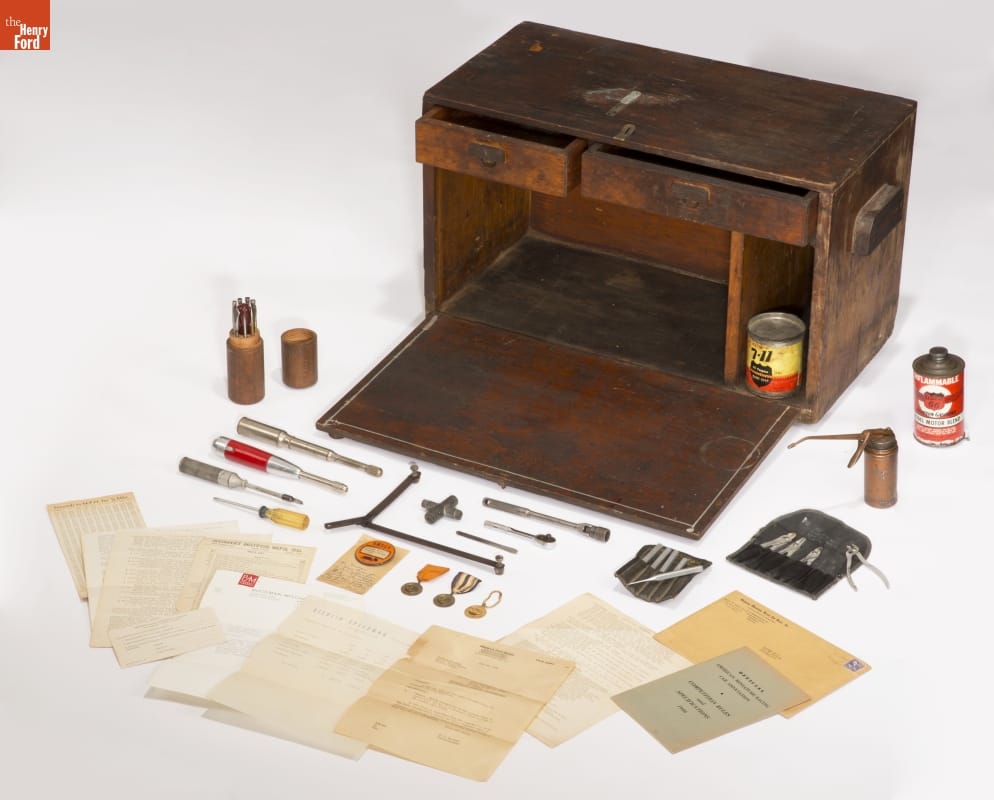
- Toolbox, Used by George Hook, 1946-1952 - Tether cars, gas-powered model race cars, were popular in the 1930s and 1940s. They were raced individually while tethered to a central pivot, or against each other on a scaled-down board track. Racers needed tools and spare parts with them at competitions. This box, used by George Hook, kept everything organized -- and included a place for the car as well.
- 1946-1952
- Collections - Artifact
Toolbox, Used by George Hook, 1946-1952
Tether cars, gas-powered model race cars, were popular in the 1930s and 1940s. They were raced individually while tethered to a central pivot, or against each other on a scaled-down board track. Racers needed tools and spare parts with them at competitions. This box, used by George Hook, kept everything organized -- and included a place for the car as well.
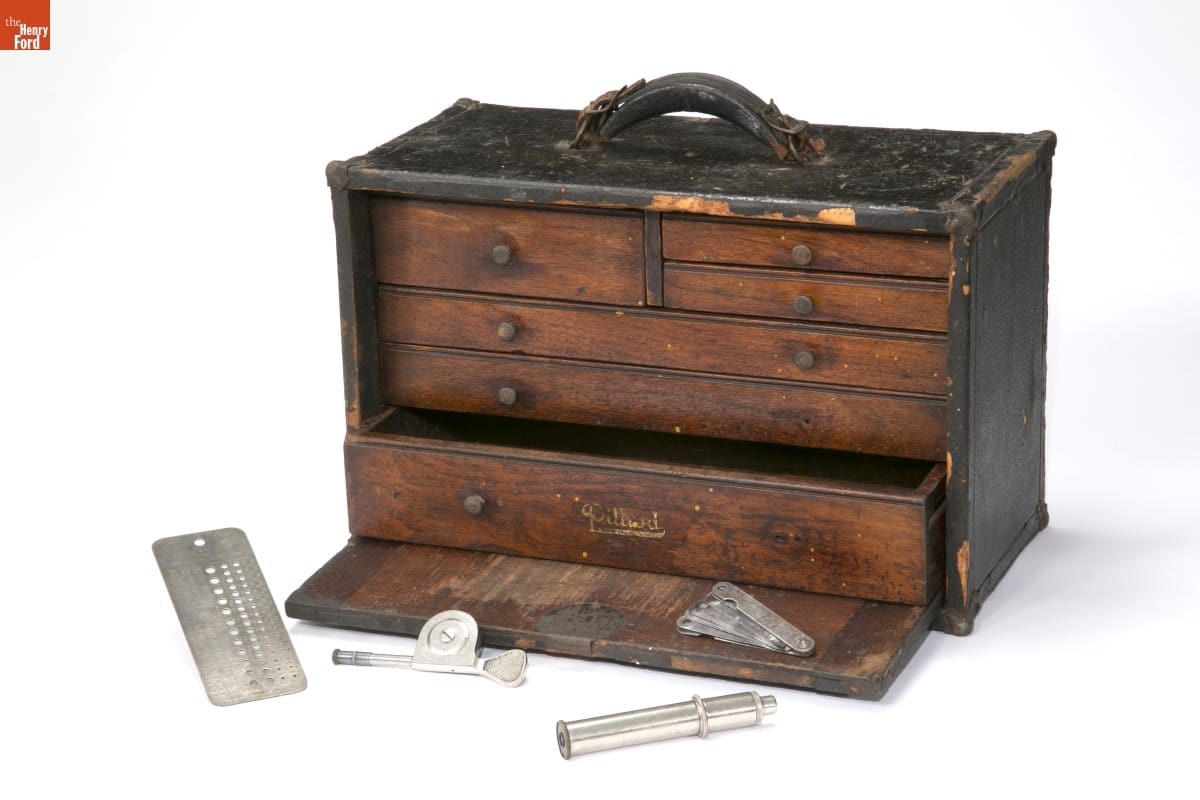
- Tool Chest Belonging to Charles E. Taylor, 1900-1930 - In 1901, as aviation experiments consumed more of their time and attention, Wilbur and Orville Wright hired mechanic Charles Taylor to manage their bicycle shop. Two years later, Taylor built the four-cylinder engine that powered the 1903 Wright Flyer on its pioneering flight at Kill Devil Hills.
- 1900-1930
- Collections - Artifact
Tool Chest Belonging to Charles E. Taylor, 1900-1930
In 1901, as aviation experiments consumed more of their time and attention, Wilbur and Orville Wright hired mechanic Charles Taylor to manage their bicycle shop. Two years later, Taylor built the four-cylinder engine that powered the 1903 Wright Flyer on its pioneering flight at Kill Devil Hills.
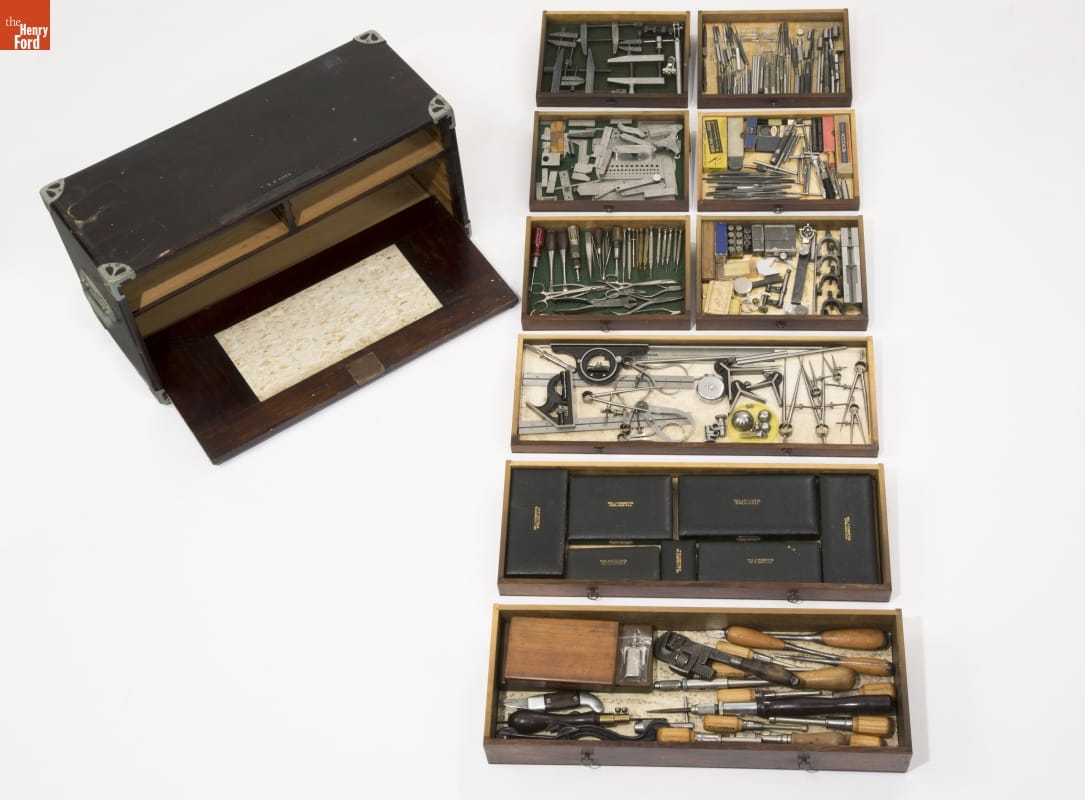
- Tool Chest Used by B.B. Korn, 1939-1950 - Tether cars, gas-powered model race cars, were popular in the 1930s and 1940s. Barney Korn was among the most skilled builders. While his models weren't particularly fast, they were exceptionally detailed. Korn even built model cars, boats, and airplanes for Hollywood movies. He used these tools while working on some of his tether cars.
- 1939-1950
- Collections - Artifact
Tool Chest Used by B.B. Korn, 1939-1950
Tether cars, gas-powered model race cars, were popular in the 1930s and 1940s. Barney Korn was among the most skilled builders. While his models weren't particularly fast, they were exceptionally detailed. Korn even built model cars, boats, and airplanes for Hollywood movies. He used these tools while working on some of his tether cars.
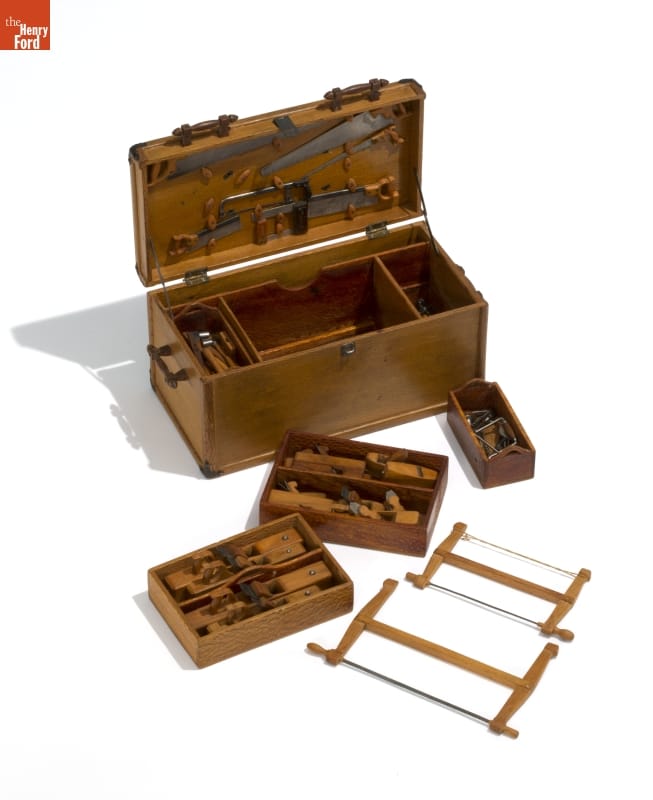
- Miniature Tool Chest with Woodworking Tools, Presented to Henry Ford, 1938 -
- 1935
- Collections - Artifact
Miniature Tool Chest with Woodworking Tools, Presented to Henry Ford, 1938
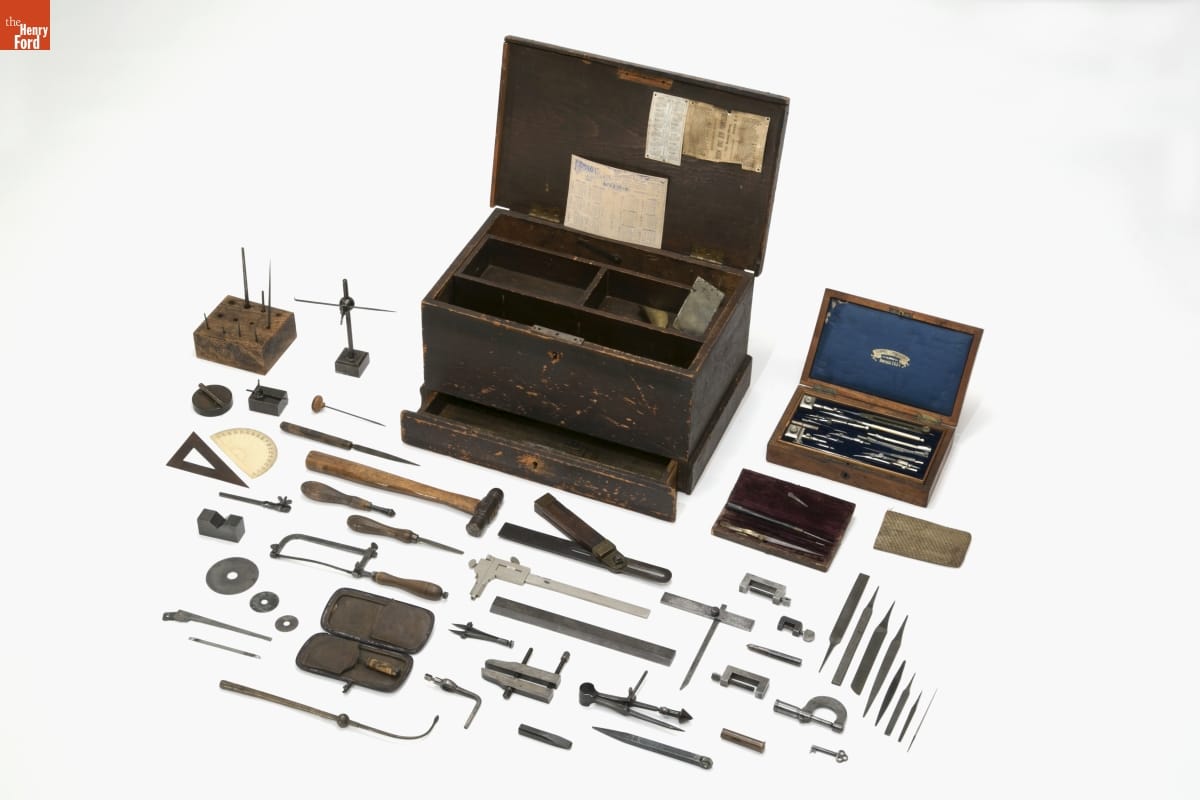
- Tool Chest Used by Machinist John Kruesi, While Working for Thomas Edison, 1872-1899 -
- 1872-1899
- Collections - Artifact
Tool Chest Used by Machinist John Kruesi, While Working for Thomas Edison, 1872-1899
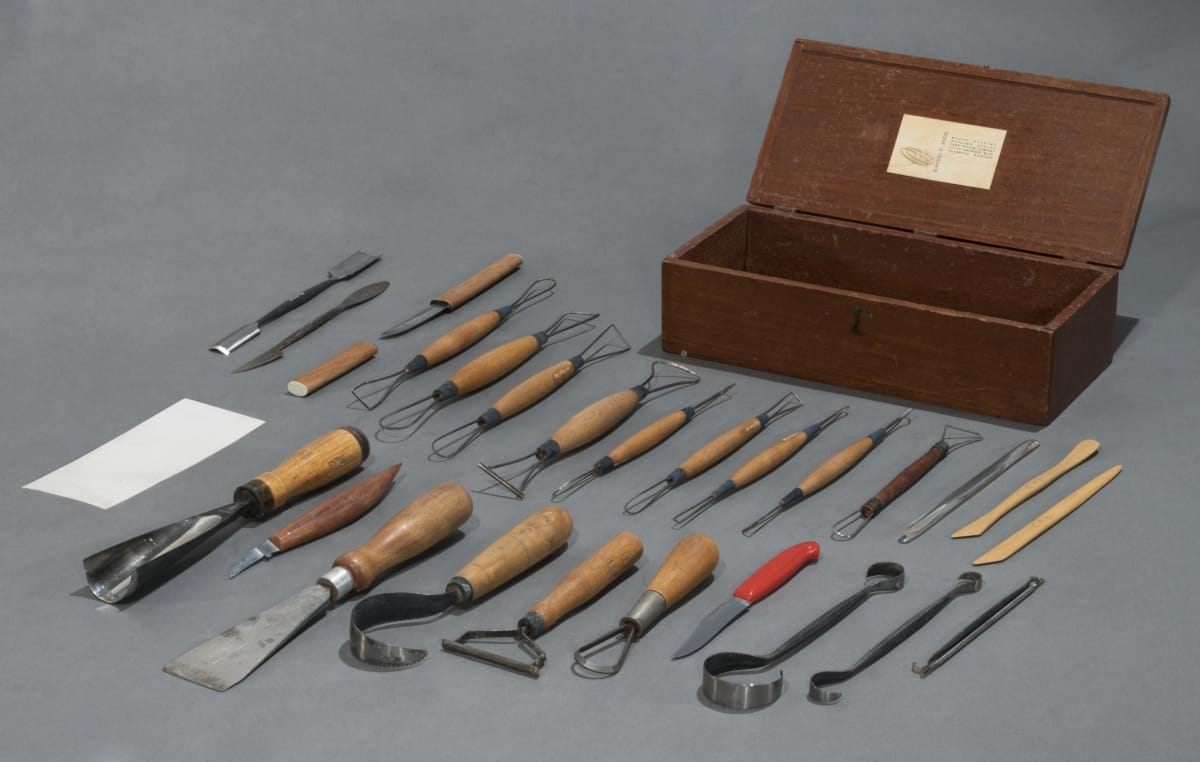
- Clay Modeling Tools, Used by Elwood P. Engel, 1955-1961 - Elwood Engel began his career in automotive design at General Motors. Following service in World War II, Engel produced designs for Ford's Mercury and Lincoln lines. He joined Chrysler as its chief designer in 1961 and retired from that company in 1973. Engel used these tools during his time at Ford, where he designed the striking 1961 Lincoln Continental.
- 1955-1961
- Collections - Artifact
Clay Modeling Tools, Used by Elwood P. Engel, 1955-1961
Elwood Engel began his career in automotive design at General Motors. Following service in World War II, Engel produced designs for Ford's Mercury and Lincoln lines. He joined Chrysler as its chief designer in 1961 and retired from that company in 1973. Engel used these tools during his time at Ford, where he designed the striking 1961 Lincoln Continental.
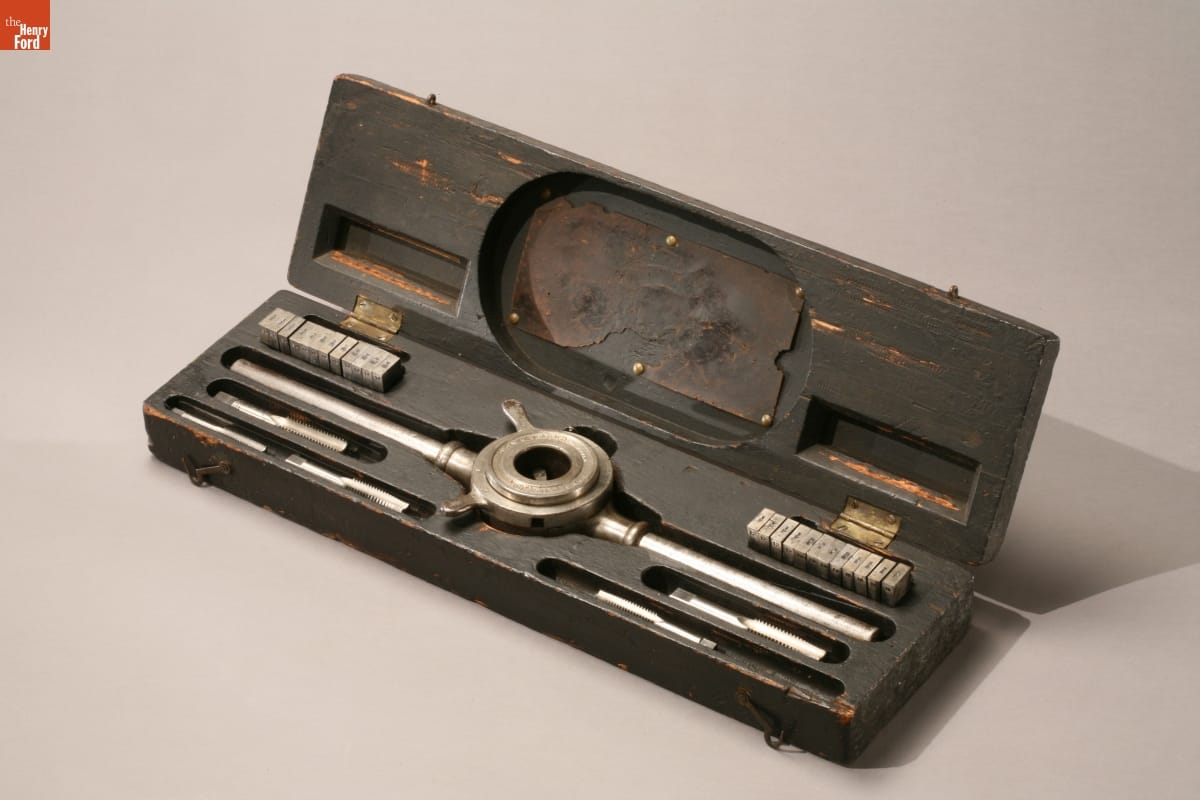
- Tap and Die Set Used by Henry Ford, 1882 - This tap and die set was used by Henry Ford when building the Quadricycle. Taps and dies are cutting tools used to create screw threads.
- 1882
- Collections - Artifact
Tap and Die Set Used by Henry Ford, 1882
This tap and die set was used by Henry Ford when building the Quadricycle. Taps and dies are cutting tools used to create screw threads.
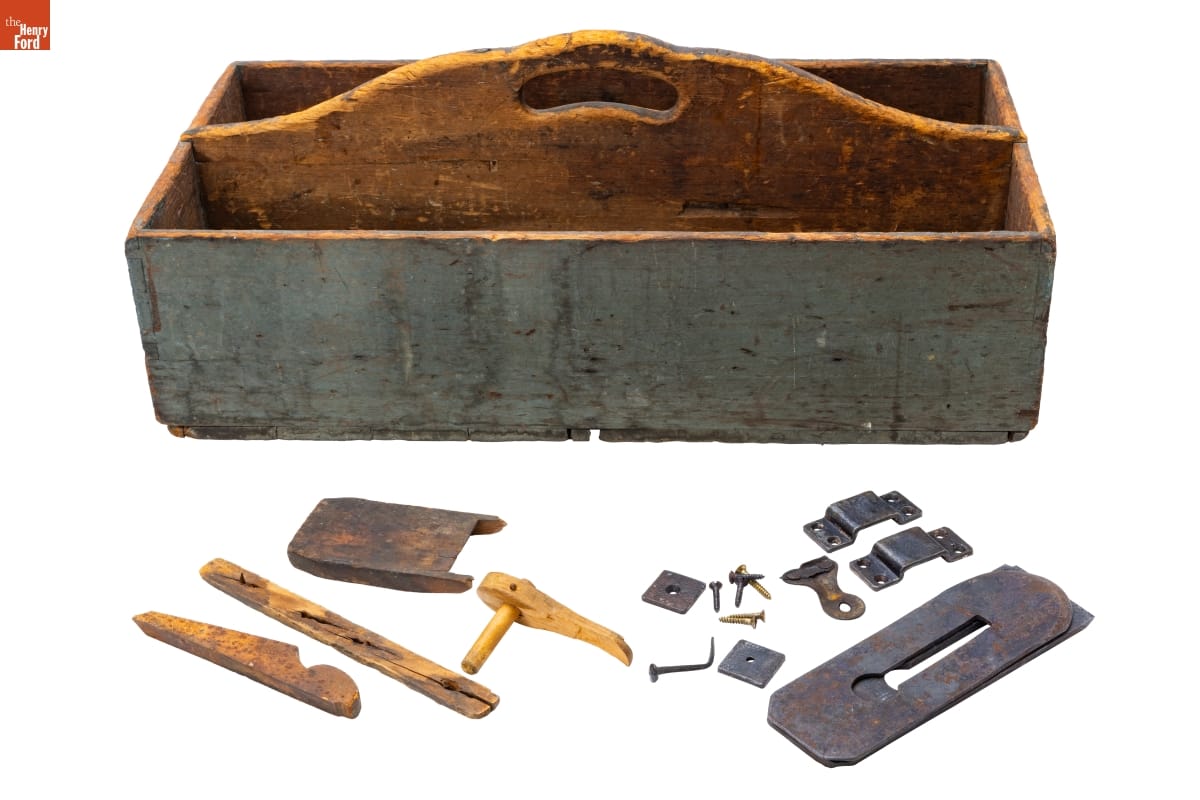
- Tool Box -
- Collections - Artifact
Tool Box