
Search
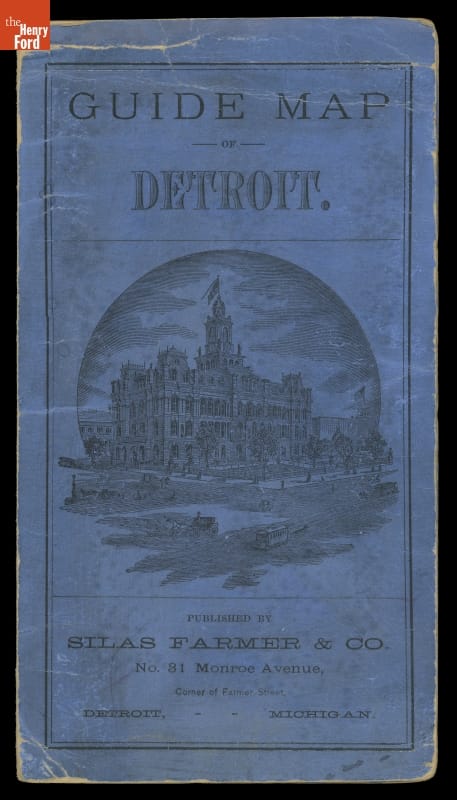
- "Guide Map of Detroit," 1878 -
- 1878
- Collections - Artifact
"Guide Map of Detroit," 1878
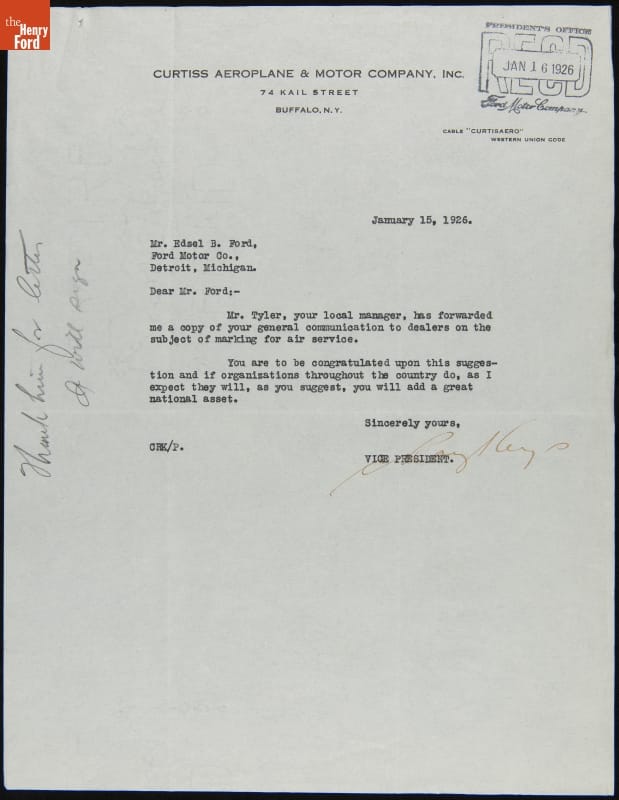
- Letter Congratulating Edsel Ford for Involving Ford Dealers with Airmarking Buildings in Their Towns, January 15, 1926 - Edsel Ford championed the development of commercial aviation in the United States. As an aid to aerial navigation, he wrote letters to Ford dealers encouraging them to paint two things on each dealer's roof: the name of the city and an arrow pointing due north. More than 4,000 communities had aerial markings of some sort by 1929.
- January 15, 1926
- Collections - Artifact
Letter Congratulating Edsel Ford for Involving Ford Dealers with Airmarking Buildings in Their Towns, January 15, 1926
Edsel Ford championed the development of commercial aviation in the United States. As an aid to aerial navigation, he wrote letters to Ford dealers encouraging them to paint two things on each dealer's roof: the name of the city and an arrow pointing due north. More than 4,000 communities had aerial markings of some sort by 1929.
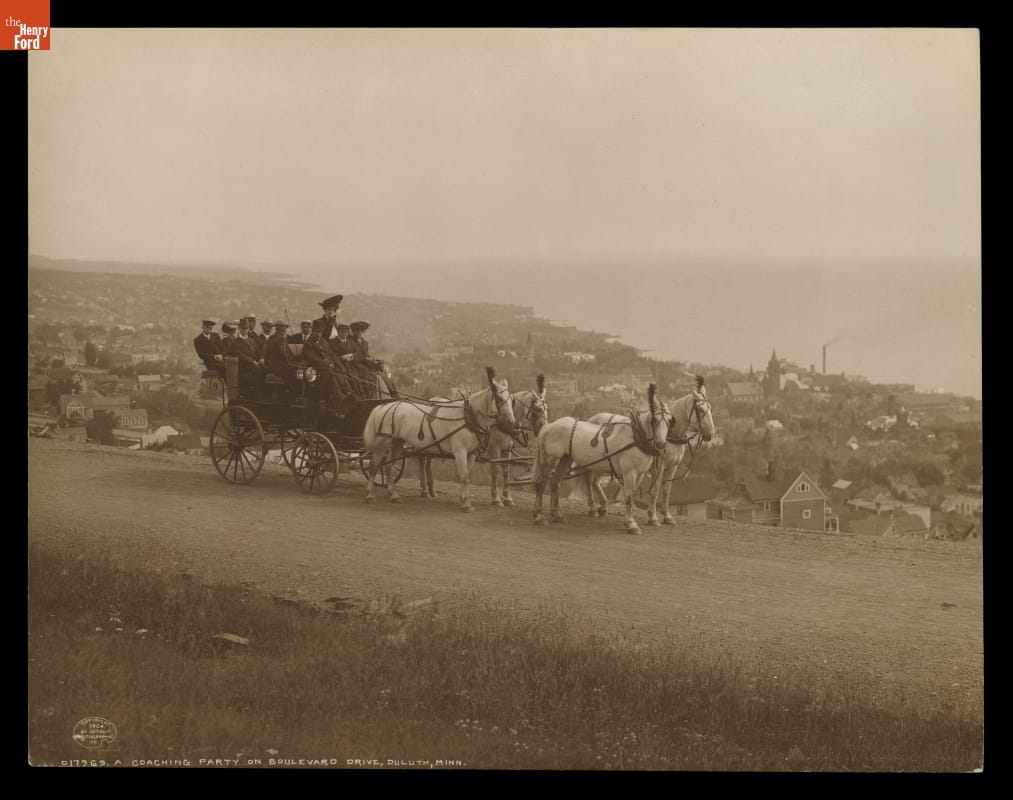
- "Coaching Party on Boulevard Drive, Duluth, Minnesota," 1904 - From 1895 to 1924, the Detroit Publishing Company was one of the major image publishers in the world. The company's wide-ranging stock of original photographs documented life and landscapes from across the nation and around the globe. From the tens of thousands of negatives, the company created prints, postcards, lantern slides, panoramas, and other merchandise for sale to educators, businessmen, advertisers, homeowners and travelers.
- circa 1904
- Collections - Artifact
"Coaching Party on Boulevard Drive, Duluth, Minnesota," 1904
From 1895 to 1924, the Detroit Publishing Company was one of the major image publishers in the world. The company's wide-ranging stock of original photographs documented life and landscapes from across the nation and around the globe. From the tens of thousands of negatives, the company created prints, postcards, lantern slides, panoramas, and other merchandise for sale to educators, businessmen, advertisers, homeowners and travelers.
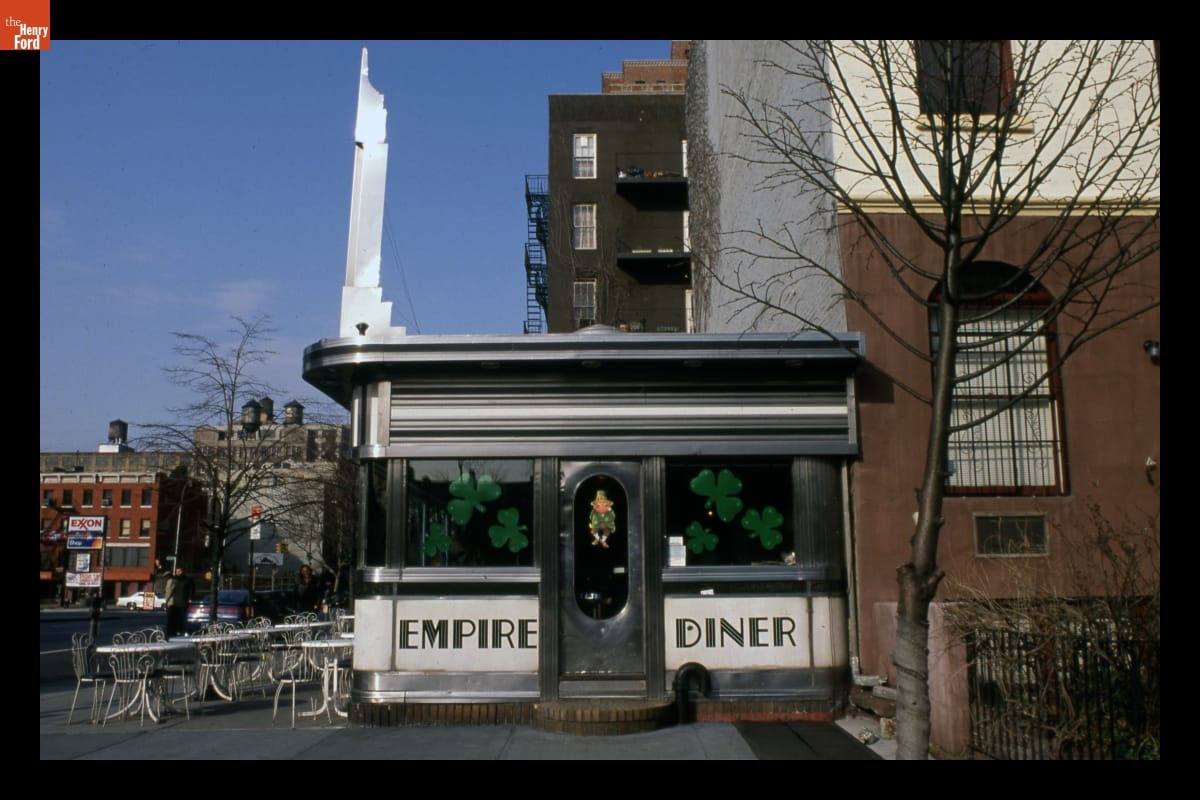
- Empire Diner at 10th Ave. and West 22nd St., New York City, March 1992 -
- March 01, 1992
- Collections - Artifact
Empire Diner at 10th Ave. and West 22nd St., New York City, March 1992
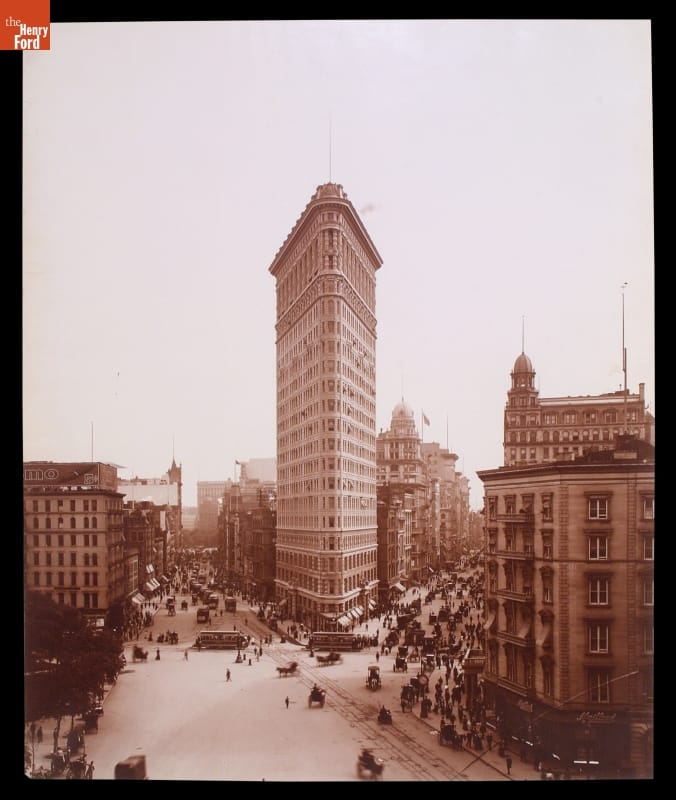
- Flat Iron Building, New York City, 1903 - From 1895 to 1924, the Detroit Publishing Company was one of the major image publishers in the world. The company's wide-ranging stock of original photographs documented life and landscapes from across the nation and around the globe. From the tens of thousands of negatives, the company created prints, postcards, lantern slides, panoramas, and other merchandise for sale to educators, businessmen, advertisers, homeowners and travelers.
- 1903
- Collections - Artifact
Flat Iron Building, New York City, 1903
From 1895 to 1924, the Detroit Publishing Company was one of the major image publishers in the world. The company's wide-ranging stock of original photographs documented life and landscapes from across the nation and around the globe. From the tens of thousands of negatives, the company created prints, postcards, lantern slides, panoramas, and other merchandise for sale to educators, businessmen, advertisers, homeowners and travelers.
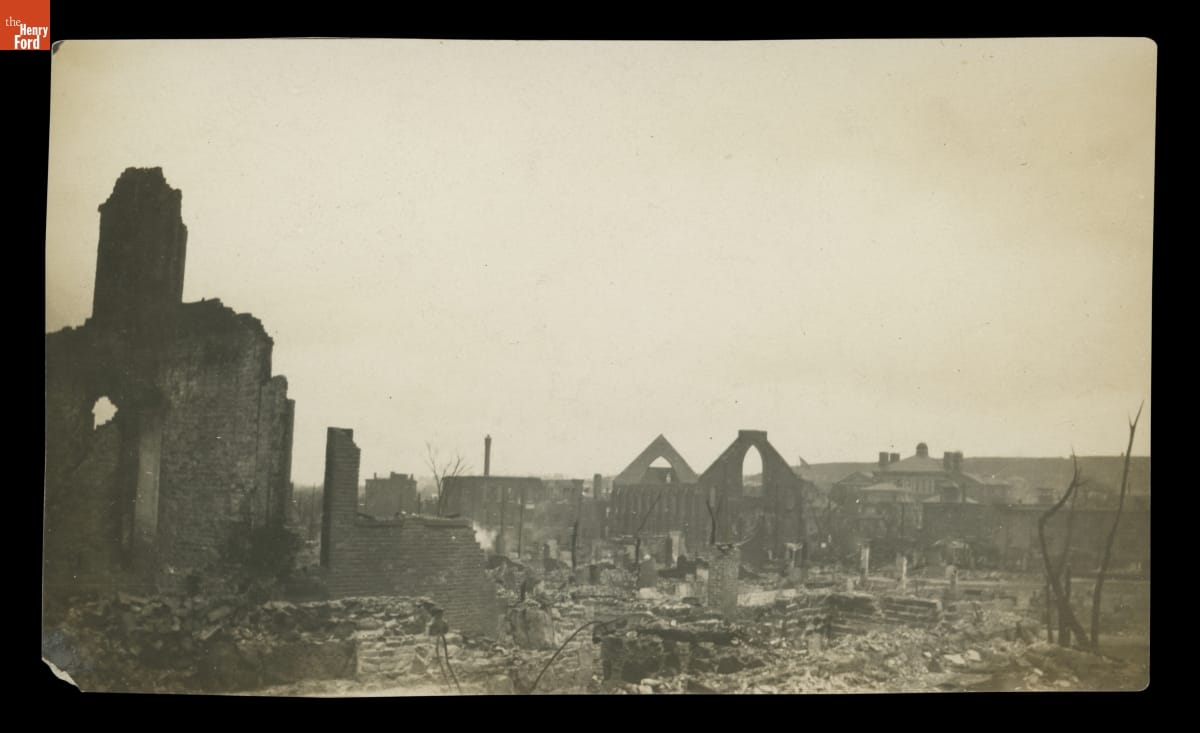
- Ruins of a Church in Salem, Massachusetts after the 1914 Fire -
- 1914
- Collections - Artifact
Ruins of a Church in Salem, Massachusetts after the 1914 Fire
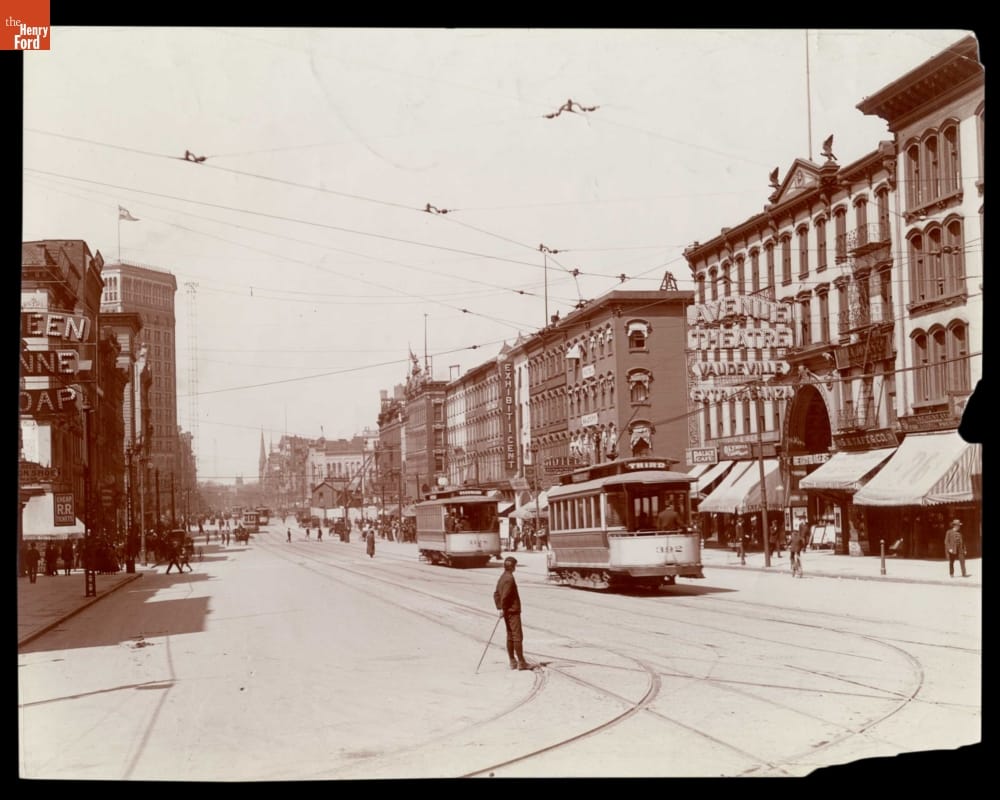
- Woodward Avenue, North from Jefferson Avenue, Detroit, Michigan, circa 1905 - From 1895 to 1924, the Detroit Publishing Company was one of the major image publishers in the world. The company's wide-ranging stock of original photographs documented life and landscapes from across the nation and around the globe. From the tens of thousands of negatives, the company created prints, postcards, lantern slides, panoramas, and other merchandise for sale to educators, businessmen, advertisers, homeowners and travelers.
- circa 1905
- Collections - Artifact
Woodward Avenue, North from Jefferson Avenue, Detroit, Michigan, circa 1905
From 1895 to 1924, the Detroit Publishing Company was one of the major image publishers in the world. The company's wide-ranging stock of original photographs documented life and landscapes from across the nation and around the globe. From the tens of thousands of negatives, the company created prints, postcards, lantern slides, panoramas, and other merchandise for sale to educators, businessmen, advertisers, homeowners and travelers.
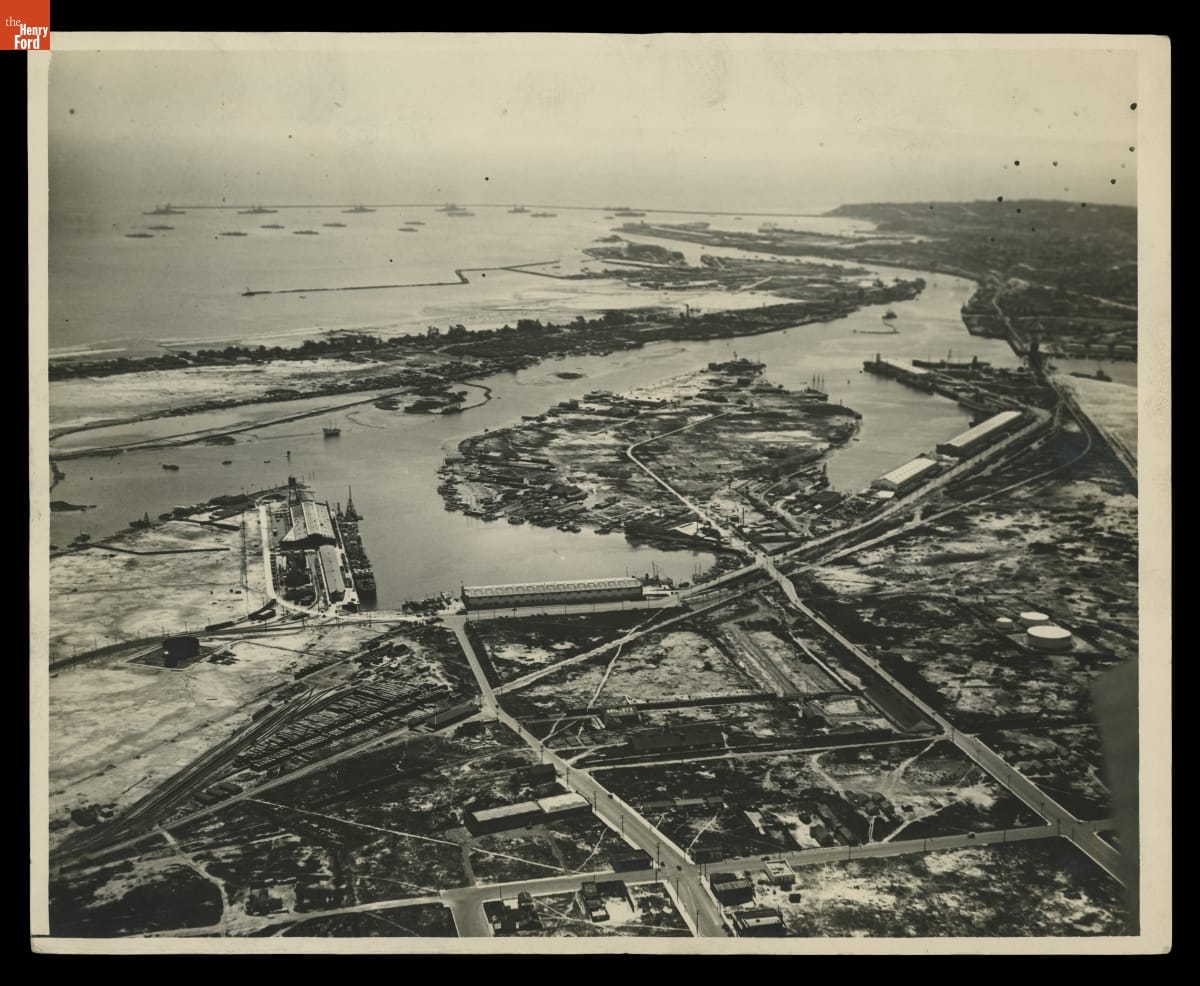
- Aerial View of Los Angeles Harbor and Part of the Pacific Fleet, circa 1922 - Military aerial reconnaissance during World War I accelerated the evolution of domestic aerial photography after the war. The sprawling city of Los Angeles became an important center for commercial aerial photography. Survey companies like Cross Aerial Photos, which captured this view, created images that remain important documents of the rapid urbanization of Southern California in the 1920s.
- circa 1922
- Collections - Artifact
Aerial View of Los Angeles Harbor and Part of the Pacific Fleet, circa 1922
Military aerial reconnaissance during World War I accelerated the evolution of domestic aerial photography after the war. The sprawling city of Los Angeles became an important center for commercial aerial photography. Survey companies like Cross Aerial Photos, which captured this view, created images that remain important documents of the rapid urbanization of Southern California in the 1920s.
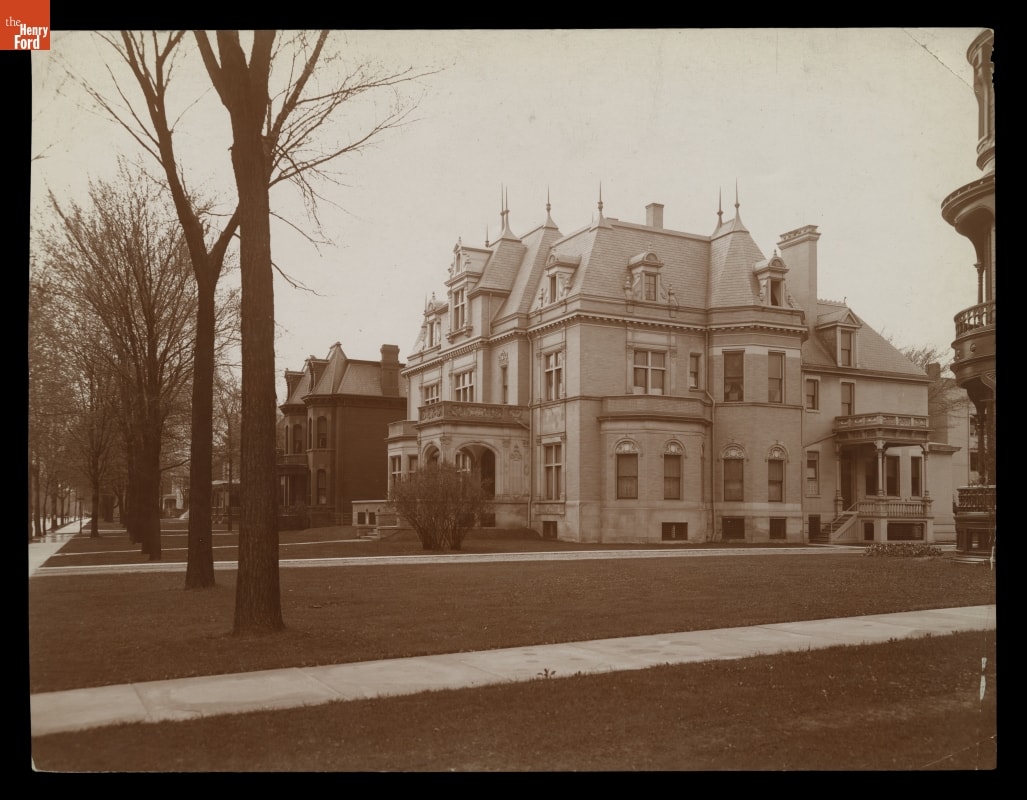
- Home of Mrs. C. L. Stephens, on Woodward Avenue, Detroit, Michigan, circa 1910 - From 1895 to 1924, the Detroit Publishing Company was one of the major image publishers in the world. The company's wide-ranging stock of original photographs documented life and landscapes from across the nation and around the globe. From the tens of thousands of negatives, the company created prints, postcards, lantern slides, panoramas, and other merchandise for sale to educators, businessmen, advertisers, homeowners and travelers.
- circa 1910
- Collections - Artifact
Home of Mrs. C. L. Stephens, on Woodward Avenue, Detroit, Michigan, circa 1910
From 1895 to 1924, the Detroit Publishing Company was one of the major image publishers in the world. The company's wide-ranging stock of original photographs documented life and landscapes from across the nation and around the globe. From the tens of thousands of negatives, the company created prints, postcards, lantern slides, panoramas, and other merchandise for sale to educators, businessmen, advertisers, homeowners and travelers.
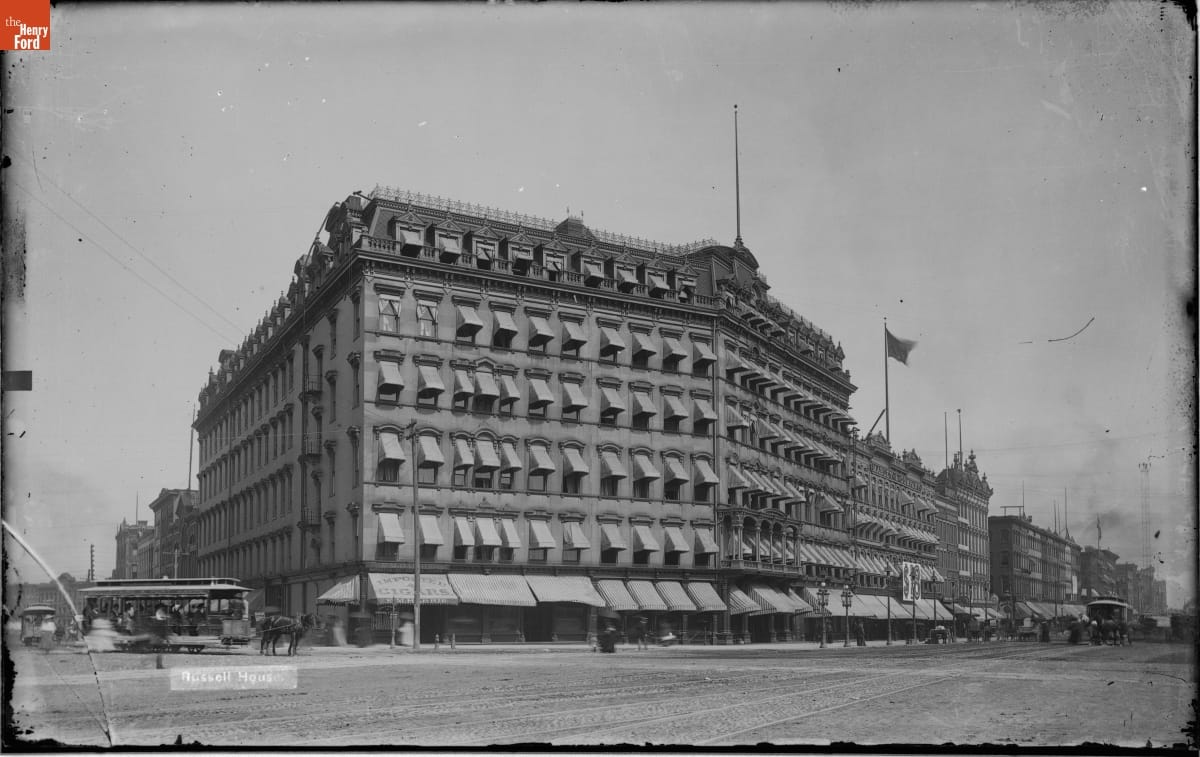
- Russell House Hotel, Detroit, Michigan, 1880-1895 -
- 1880-1895
- Collections - Artifact
Russell House Hotel, Detroit, Michigan, 1880-1895