
Search
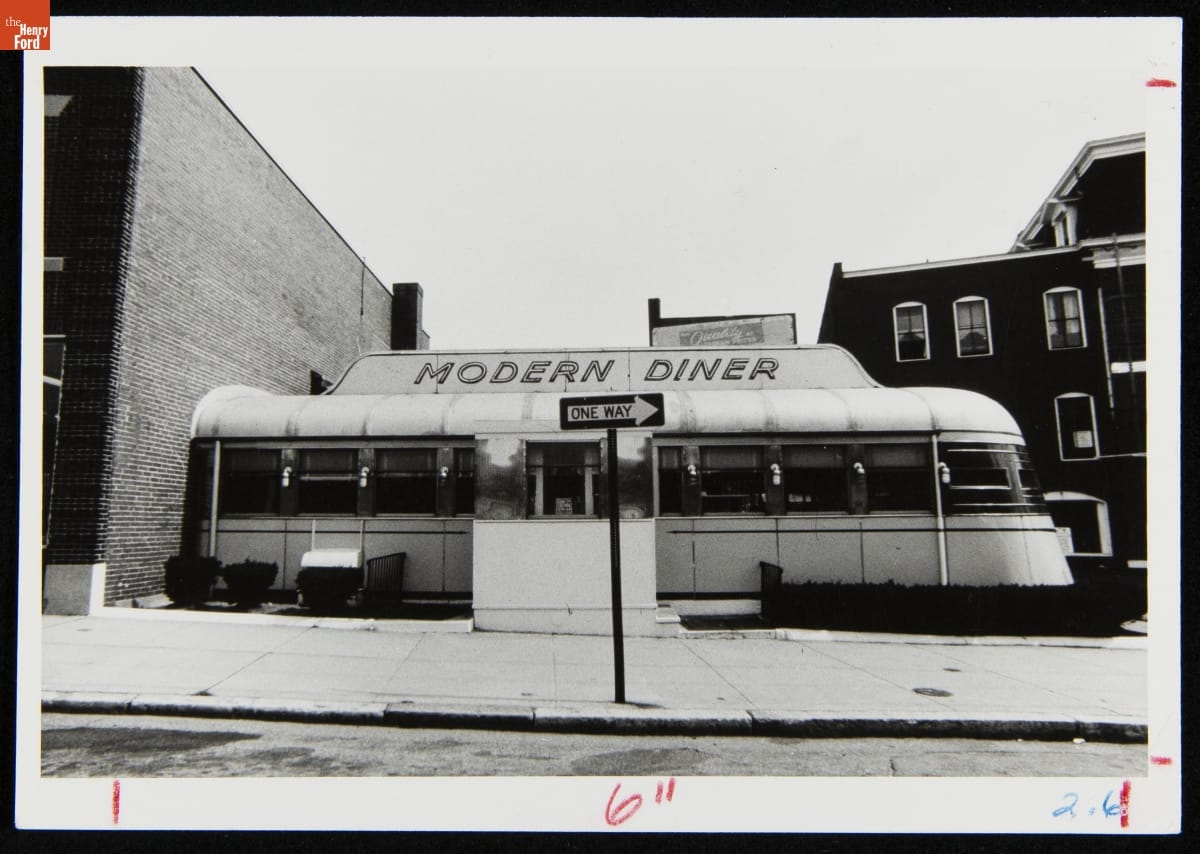
- Modern Diner, Pawtucket, Rhode Island, 1975-1980 -
- 1975-1980
- Collections - Artifact
Modern Diner, Pawtucket, Rhode Island, 1975-1980
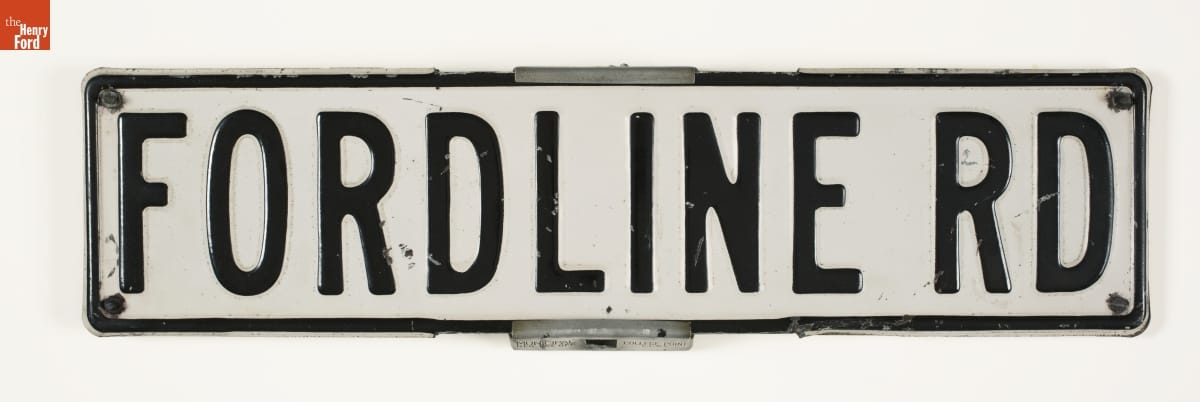
- Fordline Rd. Street Sign, 1920-1970 - Cities and towns inevitably had to figure out how to name their streets. Some named them on a numbering system, others after places and people -- like this sign from Allen Park, Michigan, commemorating Henry Ford.
- 1920-1970
- Collections - Artifact
Fordline Rd. Street Sign, 1920-1970
Cities and towns inevitably had to figure out how to name their streets. Some named them on a numbering system, others after places and people -- like this sign from Allen Park, Michigan, commemorating Henry Ford.
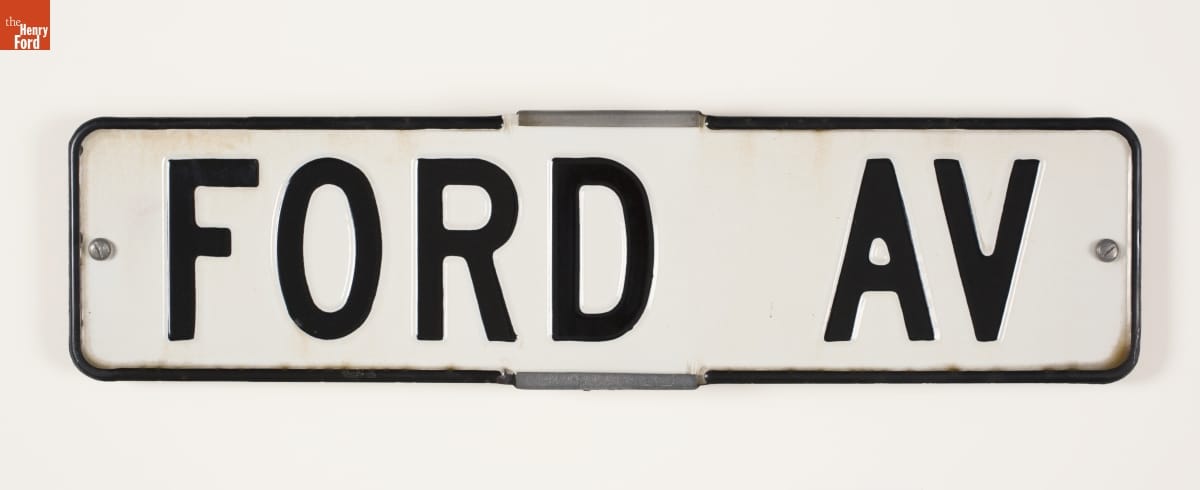
- Ford Av. Street Sign, 1920-1970 - Cities and towns inevitably had to figure out how to name their streets. Some named them on a numbering system, others after places and people -- like this sign from Allen Park, Michigan, commemorating Henry Ford.
- 1920-1970
- Collections - Artifact
Ford Av. Street Sign, 1920-1970
Cities and towns inevitably had to figure out how to name their streets. Some named them on a numbering system, others after places and people -- like this sign from Allen Park, Michigan, commemorating Henry Ford.
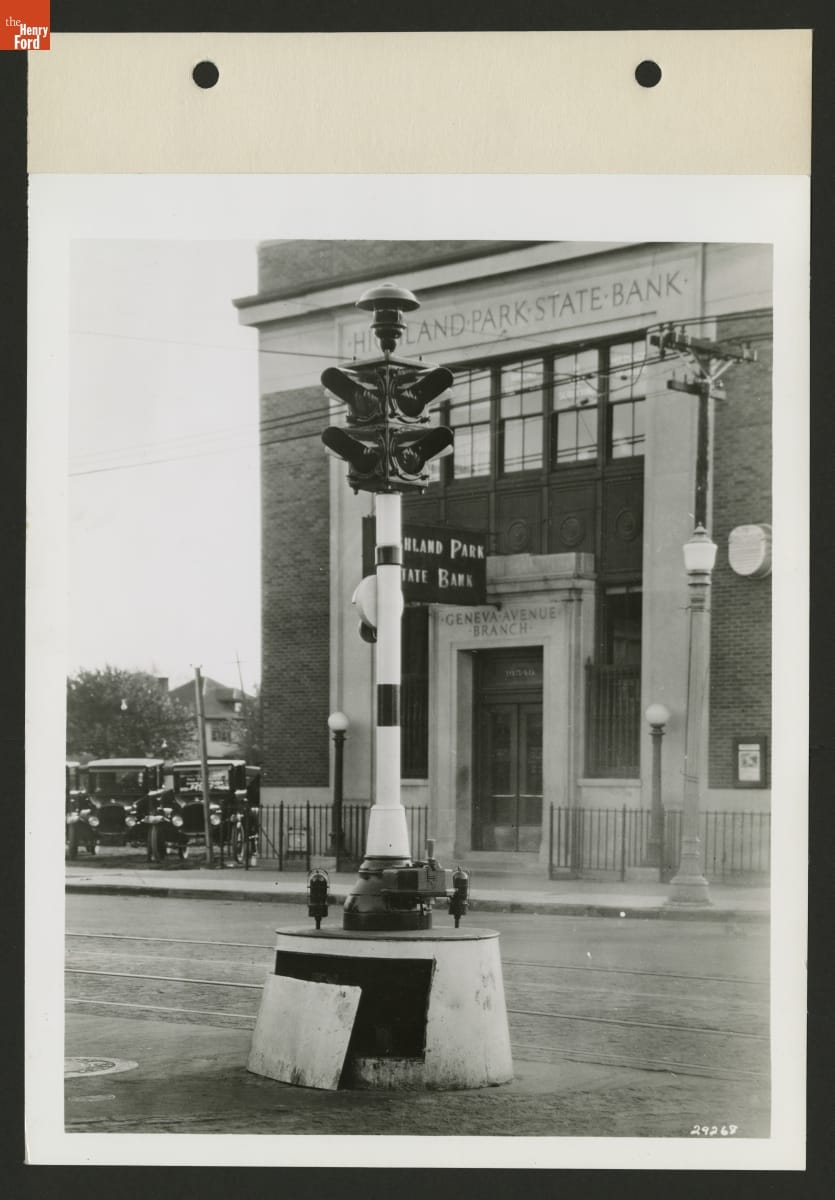
- Free Standing Traffic Signal on a Highland Park, Michigan Street, circa 1922 - Traffic signals regulate the movement of vehicles and people through intersections. This photograph from about 1922 shows a traffic light in front of the Highland Park State Bank in Michigan. It had only two lights -- red and green. By the mid-1930s three-color traffic signals, with an amber "caution" light, had become standard.
- circa 1922
- Collections - Artifact
Free Standing Traffic Signal on a Highland Park, Michigan Street, circa 1922
Traffic signals regulate the movement of vehicles and people through intersections. This photograph from about 1922 shows a traffic light in front of the Highland Park State Bank in Michigan. It had only two lights -- red and green. By the mid-1930s three-color traffic signals, with an amber "caution" light, had become standard.
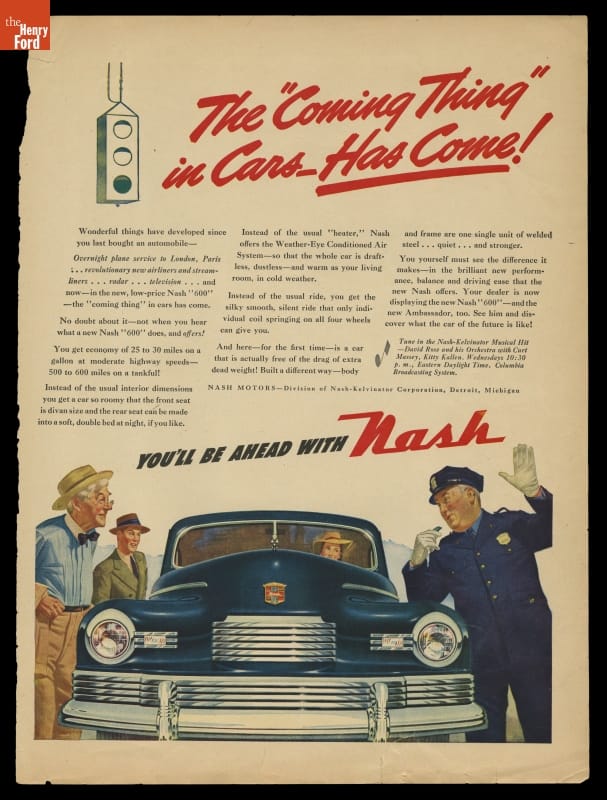
- 1946 Nash "600" Advertisement, "The Coming Thing in Cars Has Come!" - Nash introduced its 600 model for 1941. It featured unit-body construction with the frame and body built as an integral unit. The technique improved handling and stability, and it reduced weight. Nash advertised fuel economy as high as 30 miles per gallon which, with a 20-gallon tank, was enough for 600 miles of range -- the source of the model's name.
- 1946
- Collections - Artifact
1946 Nash "600" Advertisement, "The Coming Thing in Cars Has Come!"
Nash introduced its 600 model for 1941. It featured unit-body construction with the frame and body built as an integral unit. The technique improved handling and stability, and it reduced weight. Nash advertised fuel economy as high as 30 miles per gallon which, with a 20-gallon tank, was enough for 600 miles of range -- the source of the model's name.
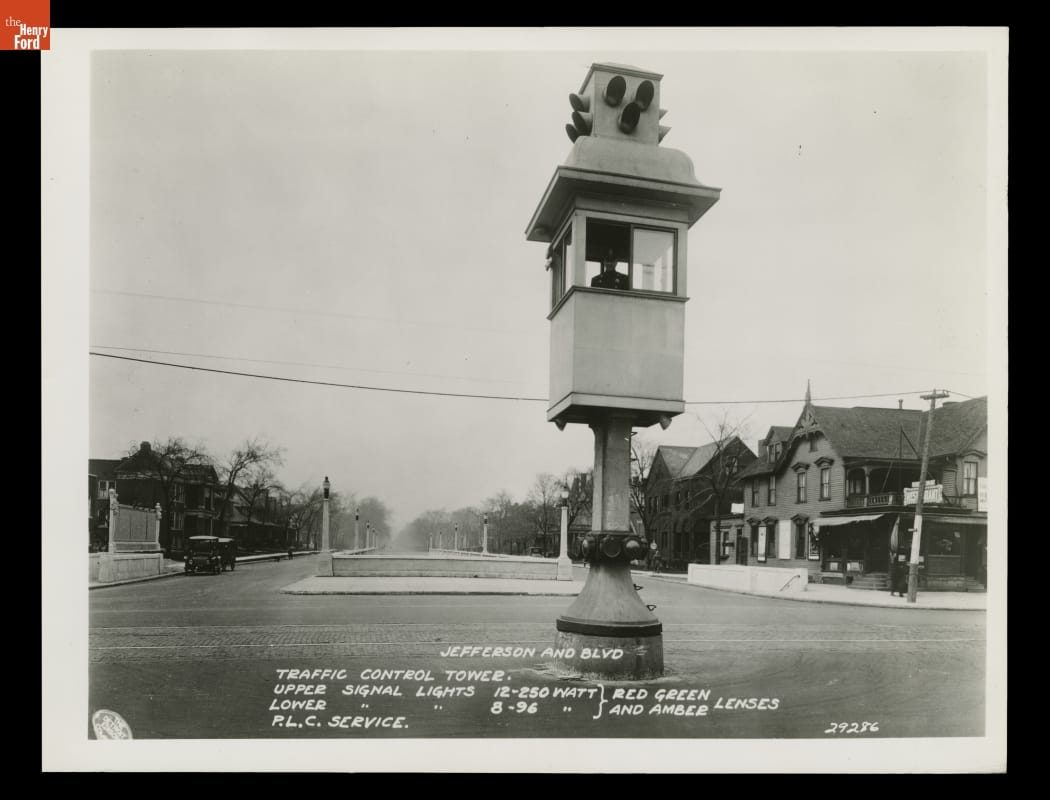
- Policeman Standing in Traffic Control Tower at an Intersection in Detroit, Michigan, circa 1922 - In the late 1910s and 1920s, many cities used traffic towers to make it easier for traffic officers to see -- and to be seen by -- drivers. The Detroit tower pictured here also utilized signal lights with red, green, and amber lenses to aid the occupying officer in traffic control.
- circa 1922
- Collections - Artifact
Policeman Standing in Traffic Control Tower at an Intersection in Detroit, Michigan, circa 1922
In the late 1910s and 1920s, many cities used traffic towers to make it easier for traffic officers to see -- and to be seen by -- drivers. The Detroit tower pictured here also utilized signal lights with red, green, and amber lenses to aid the occupying officer in traffic control.
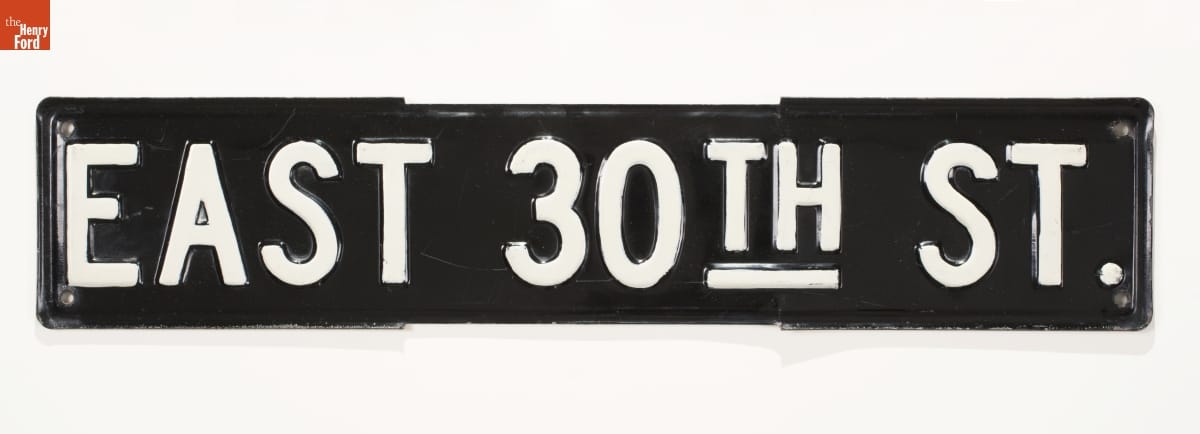
- East 30th St Sign, circa 1940 - Cities and towns inevitably had to figure out how to name their streets. Some named them after people and places, others on a numbering system -- like this sign.
- circa 1940
- Collections - Artifact
East 30th St Sign, circa 1940
Cities and towns inevitably had to figure out how to name their streets. Some named them after people and places, others on a numbering system -- like this sign.
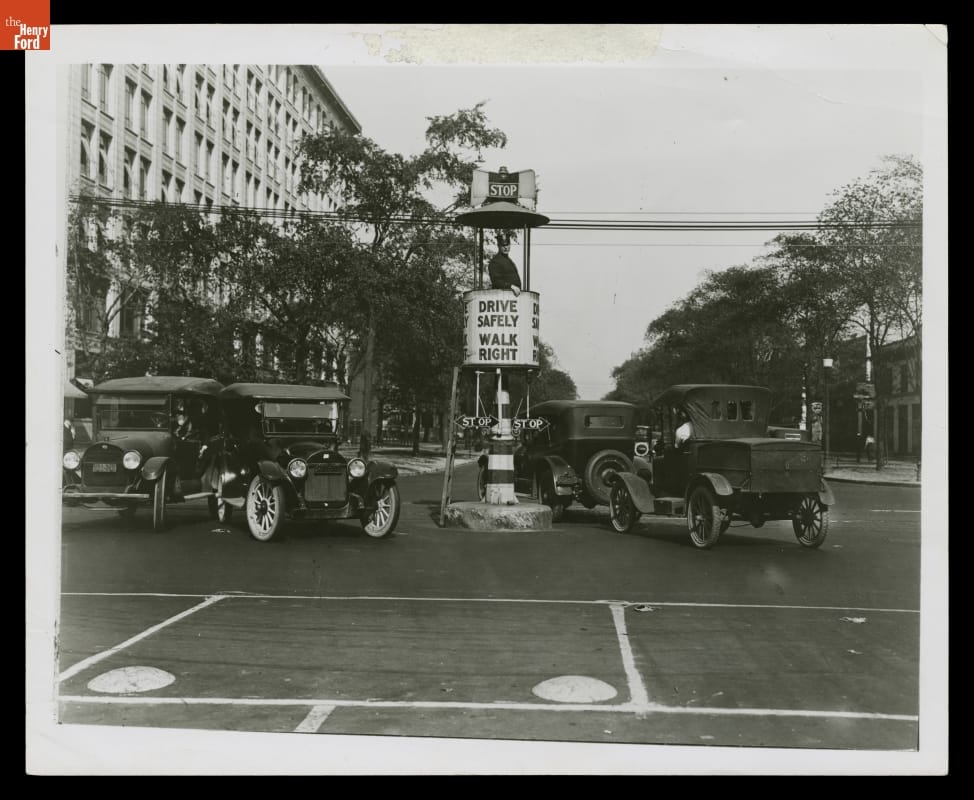
- Policeman Standing in Traffic Tower at Intersection, Detroit, Michigan, circa 1920 - In the late 1910s and 1920s, many cities used traffic towers to make it easier for traffic officers to see -- and be seen -- by drivers. This traffic tower was located at the busy intersection of Grand Boulevard and Second Avenue in Detroit, Michigan.
- circa 1920
- Collections - Artifact
Policeman Standing in Traffic Tower at Intersection, Detroit, Michigan, circa 1920
In the late 1910s and 1920s, many cities used traffic towers to make it easier for traffic officers to see -- and be seen -- by drivers. This traffic tower was located at the busy intersection of Grand Boulevard and Second Avenue in Detroit, Michigan.
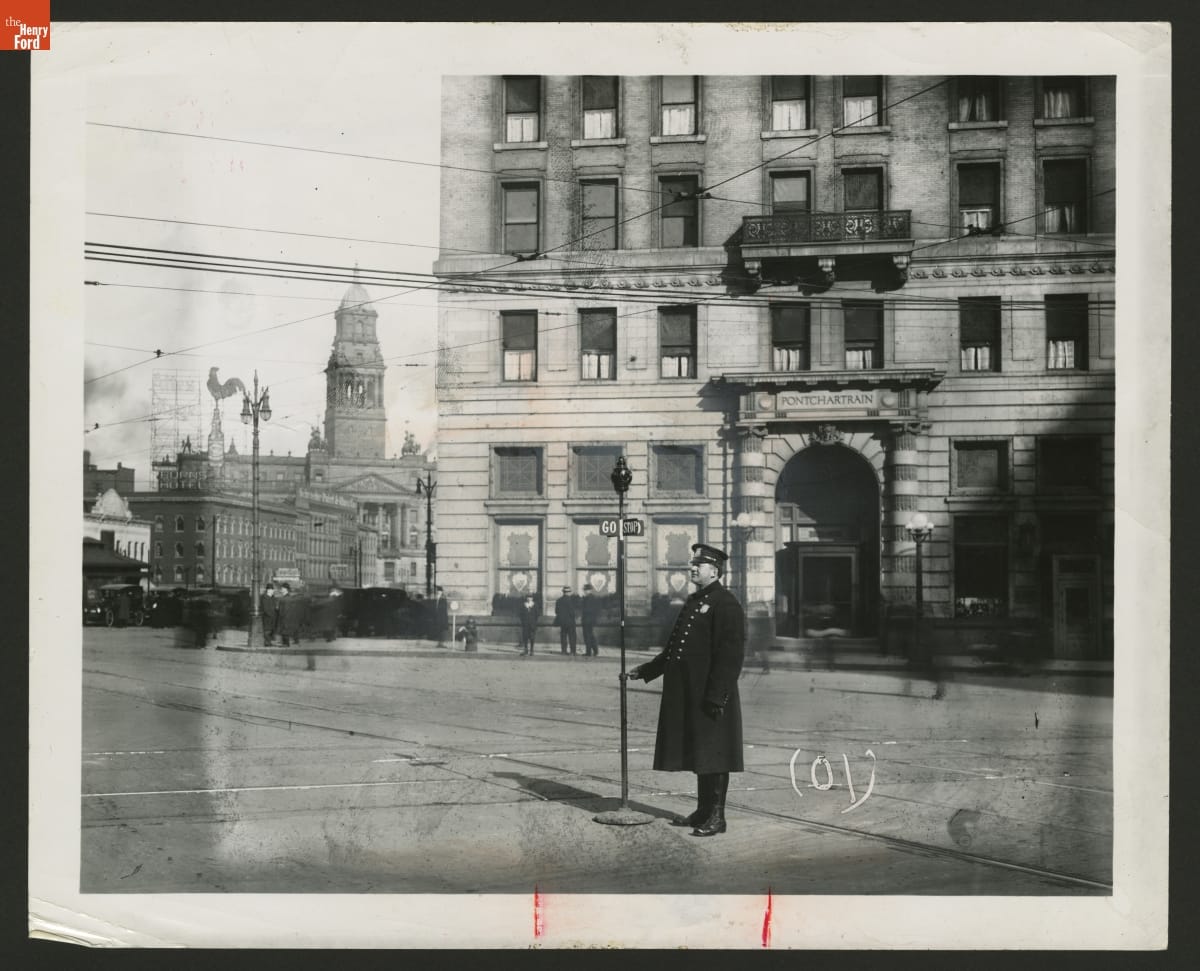
- Traffic Policeman Standing in Intersection with Stop Sign, Detroit, Michigan, circa 1920 - Before traffic lights, policemen used hand-operated devices called semaphores to regulate traffic. Officers blew a warning whistle before changing signals. The officer in this circa 1920 photograph controls traffic near the Hotel Pontchartrain in Detroit, Michigan.
- circa 1920
- Collections - Artifact
Traffic Policeman Standing in Intersection with Stop Sign, Detroit, Michigan, circa 1920
Before traffic lights, policemen used hand-operated devices called semaphores to regulate traffic. Officers blew a warning whistle before changing signals. The officer in this circa 1920 photograph controls traffic near the Hotel Pontchartrain in Detroit, Michigan.
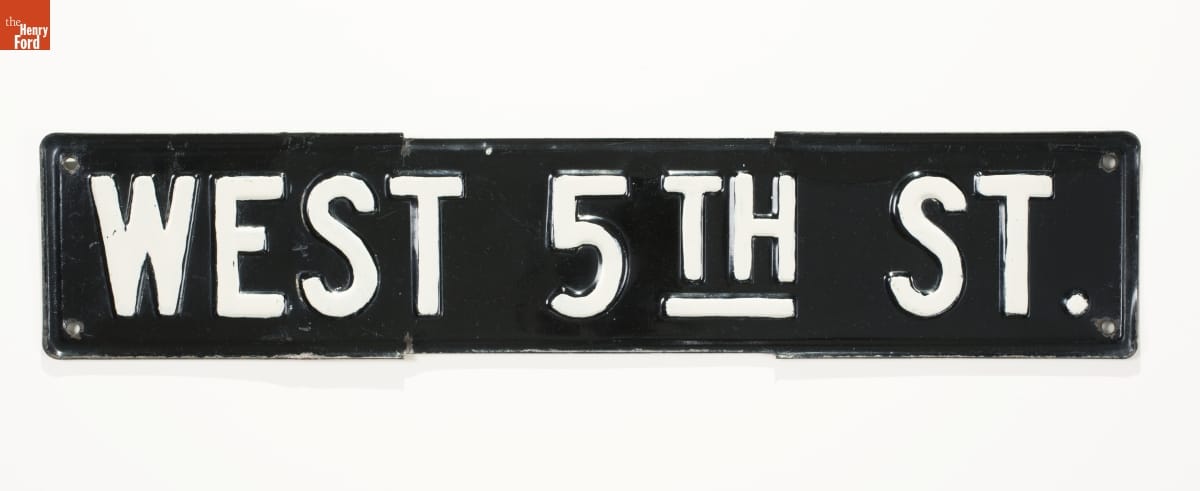
- West 5th St. Sign, circa 1940 - Cities and towns inevitably had to figure out how to name their streets. Some named them after people and places, others on a numbering system -- like this sign.
- circa 1940
- Collections - Artifact
West 5th St. Sign, circa 1940
Cities and towns inevitably had to figure out how to name their streets. Some named them after people and places, others on a numbering system -- like this sign.