
Search
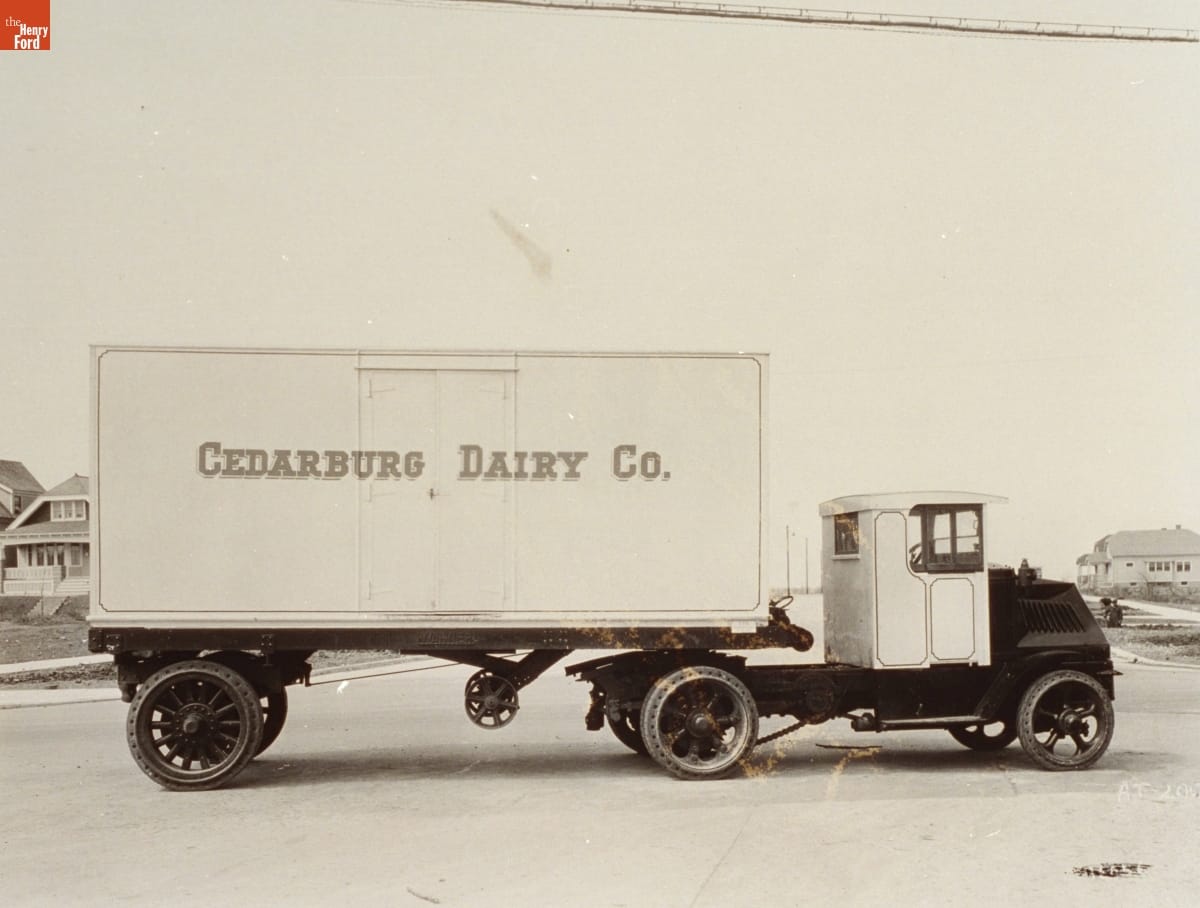
- Mack Model AC Truck Tractor with Warner Semi-Trailer, "Cedarburg Dairy Co.," September 1925 - Founded in Brooklyn, New York, in 1900, Mack Brothers Company relocated to Allentown, Pennsylvania, in 1905 and adopted the name Mack Trucks in 1922. Motorized trucks began to replace horse-drawn dairy delivery wagons early in the 20th century. Larger trucks delivered milk and other dairy products to commercial users like grocery stores and restaurants.
- September 01, 1925
- Collections - Artifact
Mack Model AC Truck Tractor with Warner Semi-Trailer, "Cedarburg Dairy Co.," September 1925
Founded in Brooklyn, New York, in 1900, Mack Brothers Company relocated to Allentown, Pennsylvania, in 1905 and adopted the name Mack Trucks in 1922. Motorized trucks began to replace horse-drawn dairy delivery wagons early in the 20th century. Larger trucks delivered milk and other dairy products to commercial users like grocery stores and restaurants.
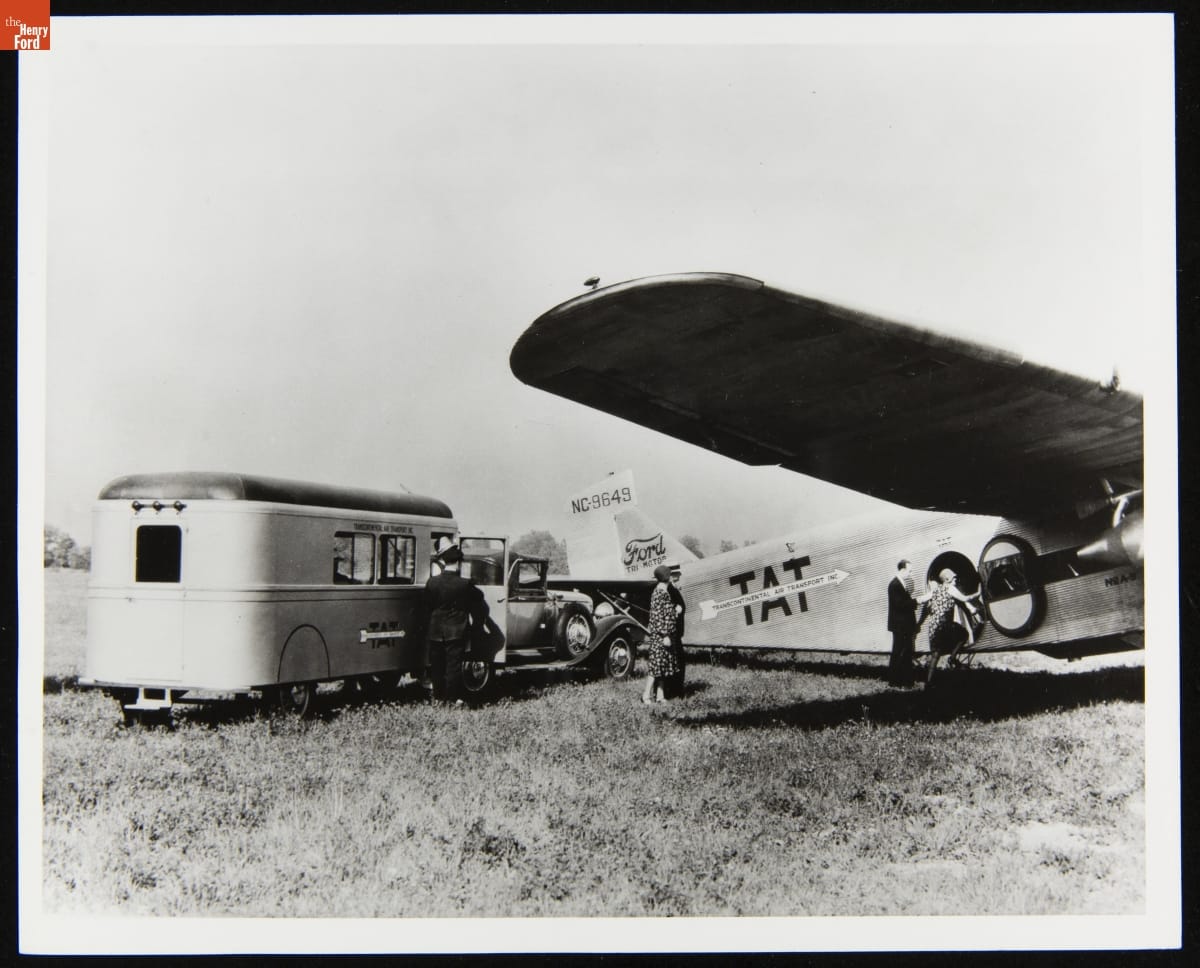
- Passengers Leaving a Curtiss Aerocar and Boarding a Ford Tri-Motor 5AT-20 Airplane, circa 1930 - Motorcycle and aviation pioneer Glenn Curtiss formed the Curtiss Aerocar Company in 1928. The Aerocar was an early version of the fifth-wheel campers that became popular in later decades. The trailer's strength and carrying capacity were due in part to struts and wires inspired by those used in Curtiss's early airplanes.
- circa 1930
- Collections - Artifact
Passengers Leaving a Curtiss Aerocar and Boarding a Ford Tri-Motor 5AT-20 Airplane, circa 1930
Motorcycle and aviation pioneer Glenn Curtiss formed the Curtiss Aerocar Company in 1928. The Aerocar was an early version of the fifth-wheel campers that became popular in later decades. The trailer's strength and carrying capacity were due in part to struts and wires inspired by those used in Curtiss's early airplanes.
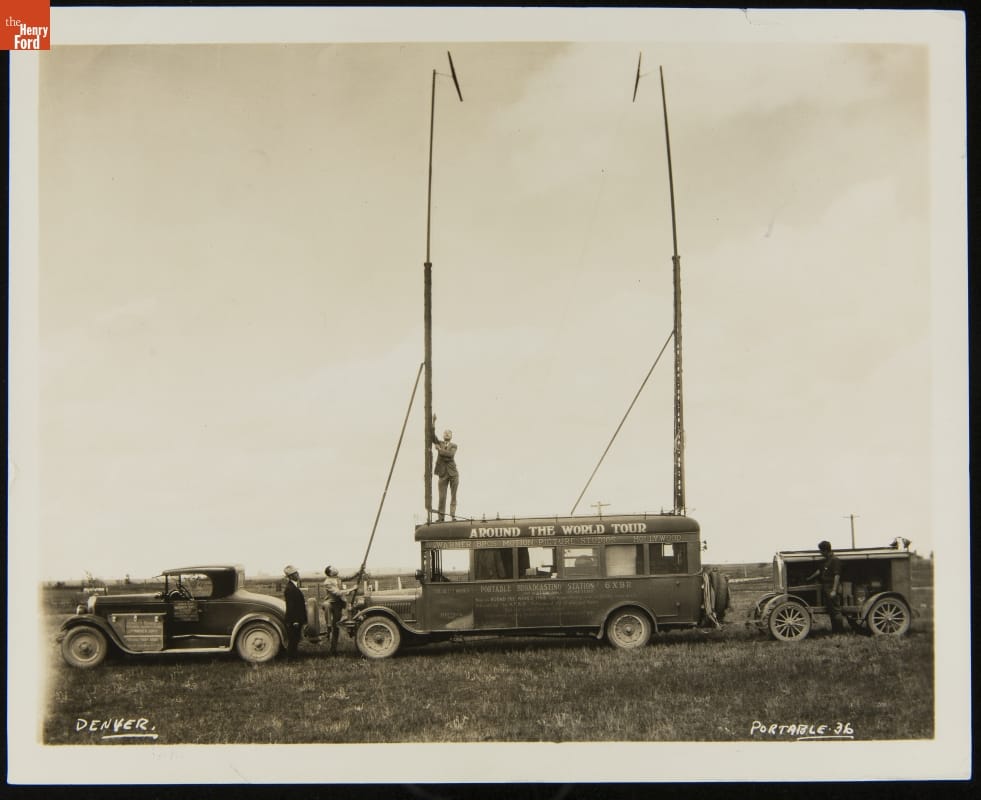
- Warner Brothers Studios Portable Radio Broadcasting Station 6XBR near Denver, Colorado, 1926 -
- 1926
- Collections - Artifact
Warner Brothers Studios Portable Radio Broadcasting Station 6XBR near Denver, Colorado, 1926
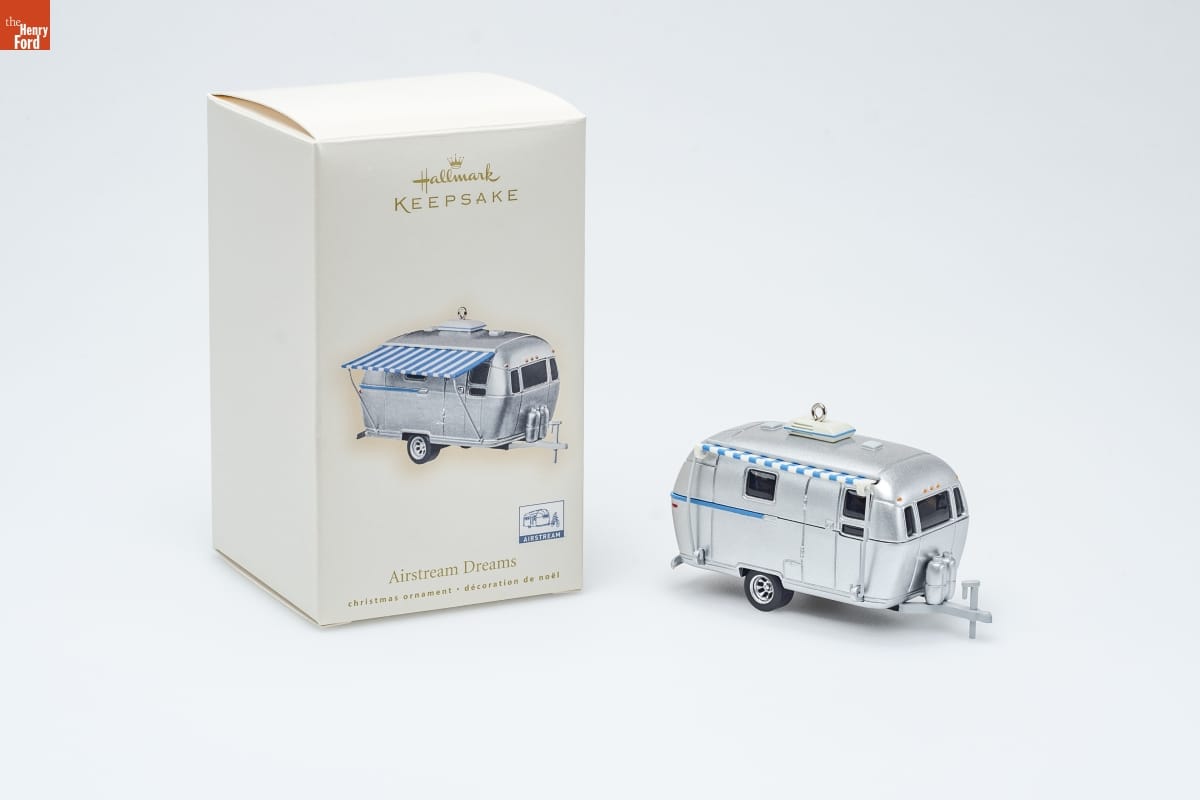
- Hallmark "Airstream Dreams" Christmas Ornament, 2007 - Already known for greeting cards, Hallmark introduced a line of Christmas ornaments in 1973. The company's annual release of an increasing array of ornaments revolutionized Christmas decorating, appealing to customers' interest in marking memories and milestones as well as expressing one's personality and unique tastes.
- 2007
- Collections - Artifact
Hallmark "Airstream Dreams" Christmas Ornament, 2007
Already known for greeting cards, Hallmark introduced a line of Christmas ornaments in 1973. The company's annual release of an increasing array of ornaments revolutionized Christmas decorating, appealing to customers' interest in marking memories and milestones as well as expressing one's personality and unique tastes.
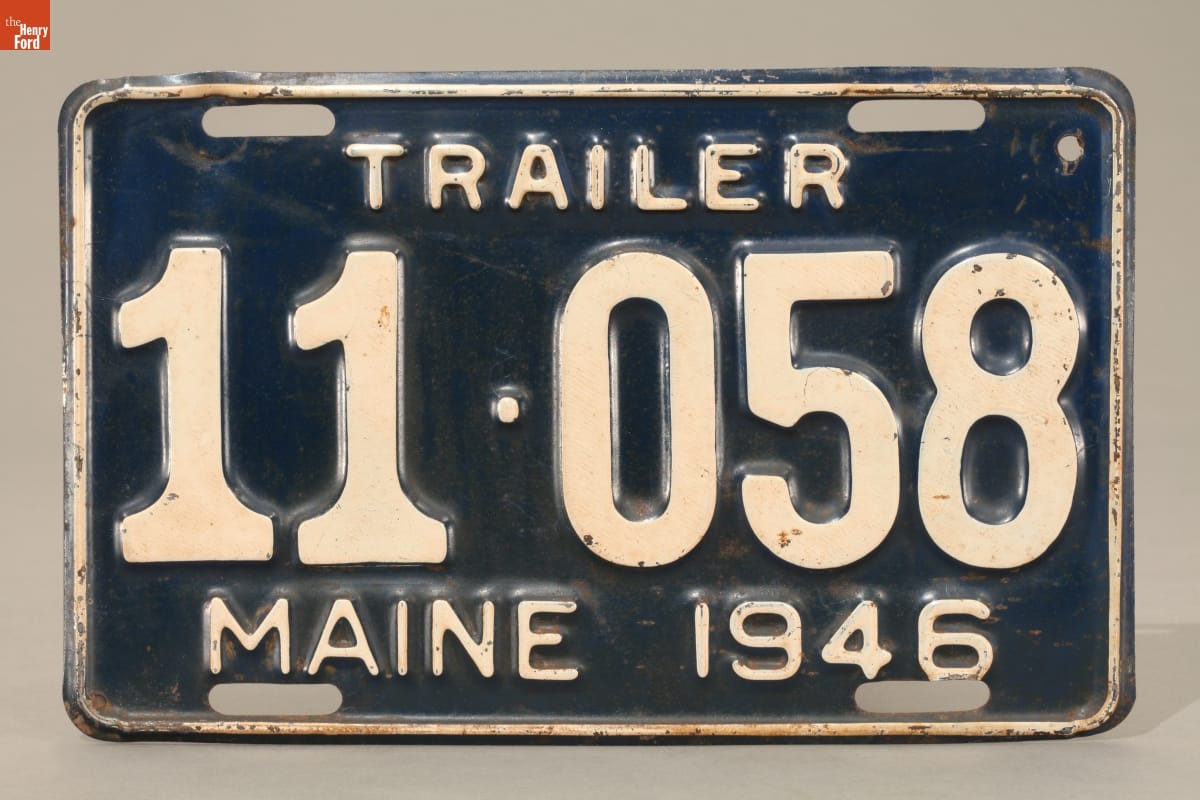
- Maine Trailer License Plate, 1946 - Early state-issued license plates were made of porcelain-coated iron. Later, states stamped tin, steel, or even copper to make plates. During the Second World War several states used fiberboard. Plate colors varied and some states added symbols, mottoes, or other design elements. Today, states use reflective sheeting to coat a standard-sized aluminum blank which is then stamped and decorated.
- 1946
- Collections - Artifact
Maine Trailer License Plate, 1946
Early state-issued license plates were made of porcelain-coated iron. Later, states stamped tin, steel, or even copper to make plates. During the Second World War several states used fiberboard. Plate colors varied and some states added symbols, mottoes, or other design elements. Today, states use reflective sheeting to coat a standard-sized aluminum blank which is then stamped and decorated.
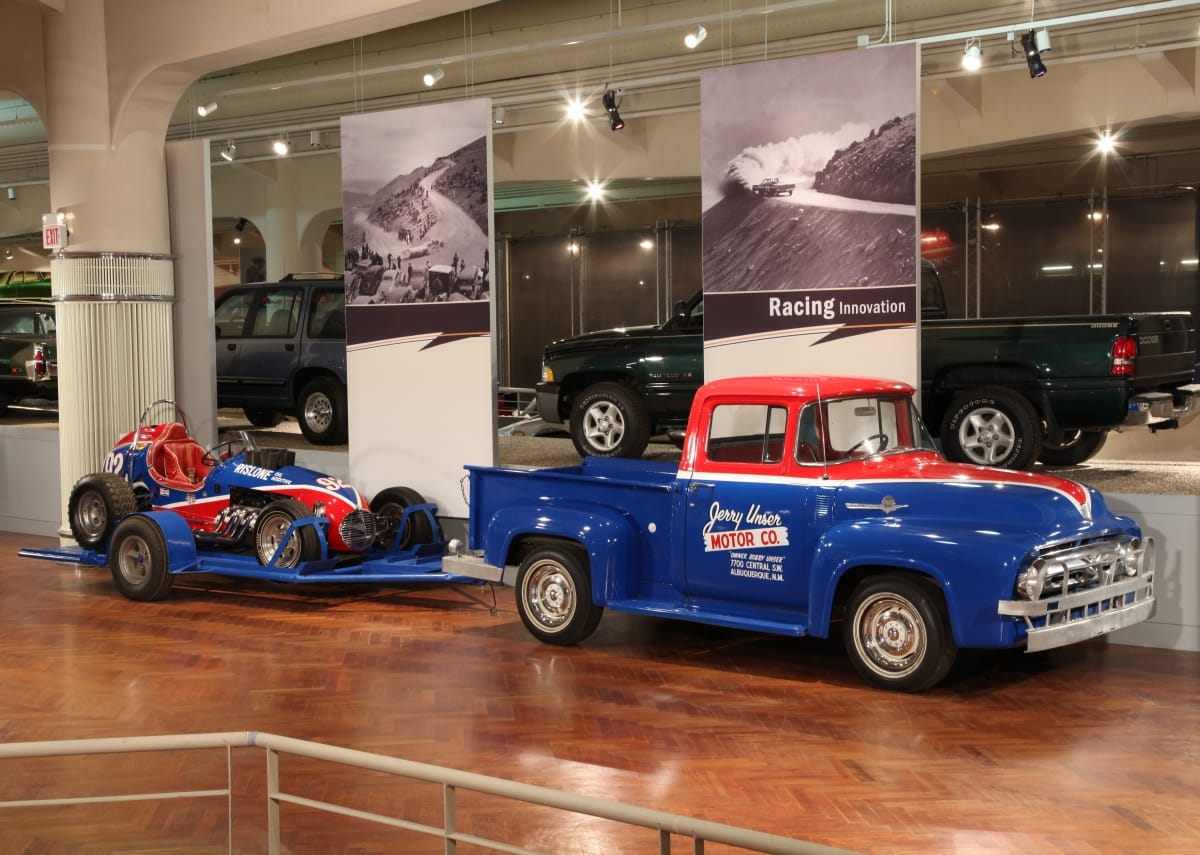
- Car Trailer, circa 1958. On loan from the Museum of American Speed, Lincoln, NE. - For decades, most race cars -- even at the top levels of racing -- were transported on open trailers pulled by pickup trucks or station wagons. Drivers and mechanics sometimes slept in their vehicles, or in inexpensive motels. It's a far cry from today, when race cars ride in huge trailers equipped as shops, and drivers travel by plane or in luxurious motorhomes.
- circa 1958
- Collections - Artifact
Car Trailer, circa 1958. On loan from the Museum of American Speed, Lincoln, NE.
For decades, most race cars -- even at the top levels of racing -- were transported on open trailers pulled by pickup trucks or station wagons. Drivers and mechanics sometimes slept in their vehicles, or in inexpensive motels. It's a far cry from today, when race cars ride in huge trailers equipped as shops, and drivers travel by plane or in luxurious motorhomes.
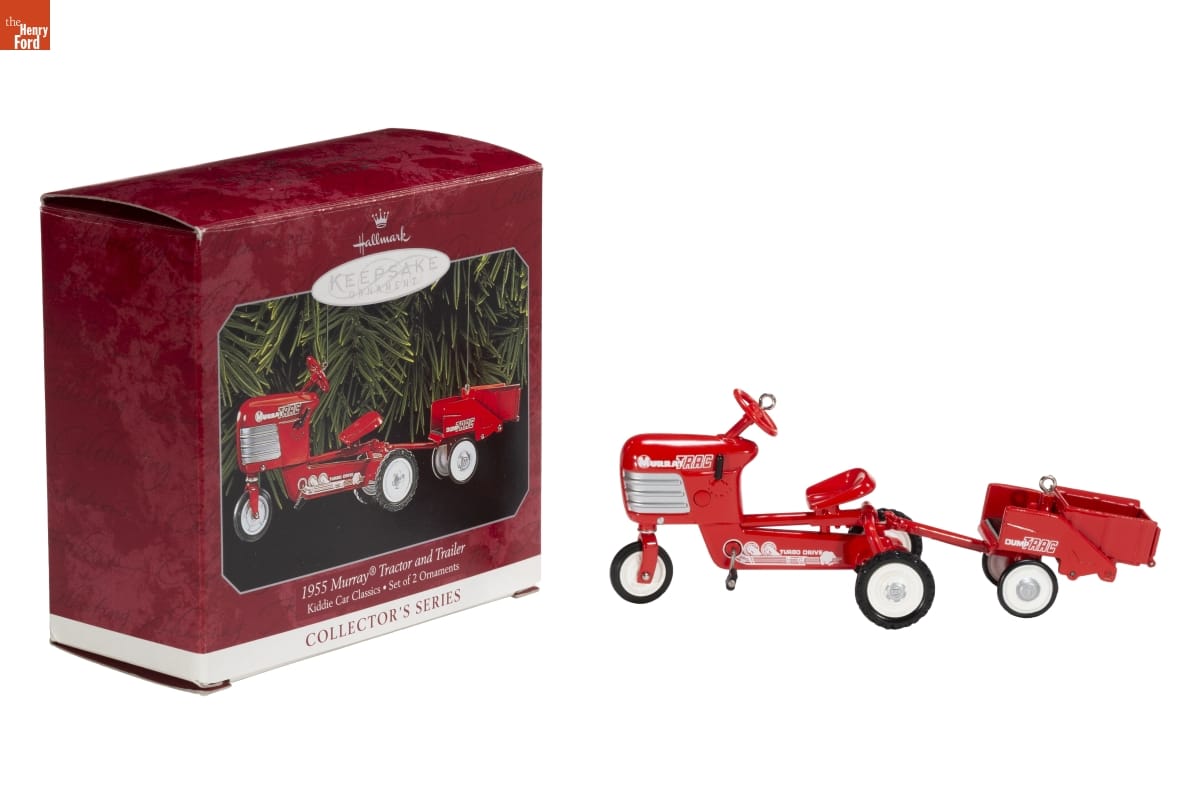
- Hallmark "Kiddie Car Classics Series: 1955 Murray Tractor and Trailer" Christmas Ornament, 1998 - Already known for greeting cards, Hallmark introduced a line of Christmas ornaments in 1973. The company's annual release of an increasing array of ornaments revolutionized Christmas decorating, appealing to customers' interest in marking memories and milestones as well as expressing one's personality and unique tastes.
- 1955
- Collections - Artifact
Hallmark "Kiddie Car Classics Series: 1955 Murray Tractor and Trailer" Christmas Ornament, 1998
Already known for greeting cards, Hallmark introduced a line of Christmas ornaments in 1973. The company's annual release of an increasing array of ornaments revolutionized Christmas decorating, appealing to customers' interest in marking memories and milestones as well as expressing one's personality and unique tastes.
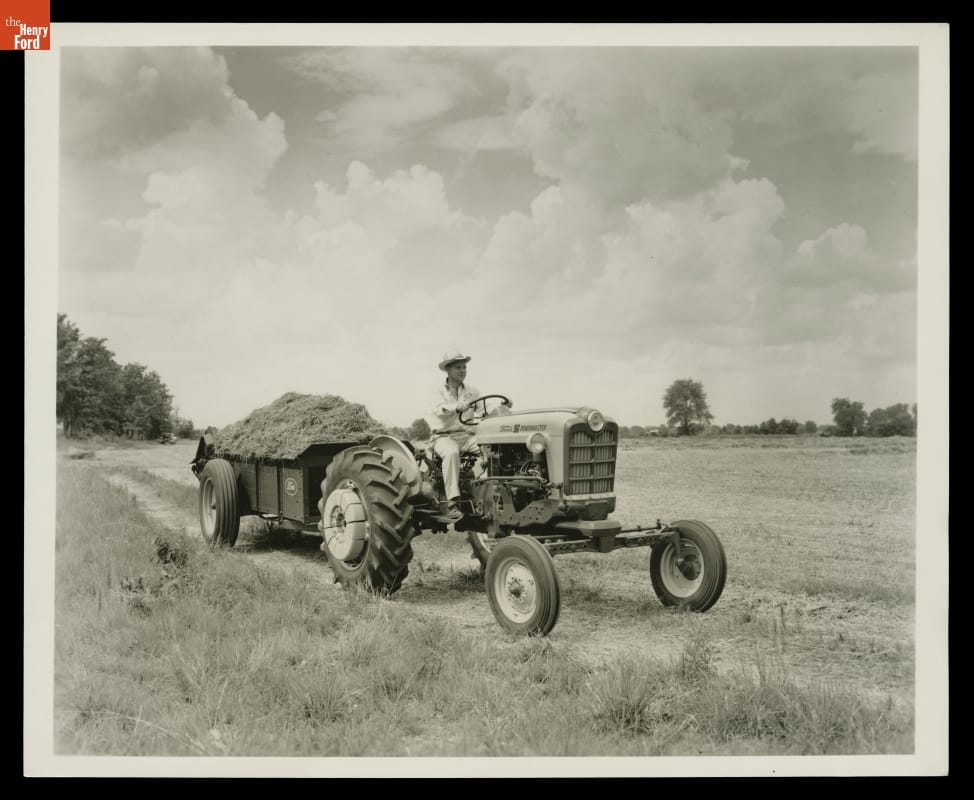
- Ford Powermaster Tractor Towing a Large Manure Spreader, 1957 -
- 1957
- Collections - Artifact
Ford Powermaster Tractor Towing a Large Manure Spreader, 1957
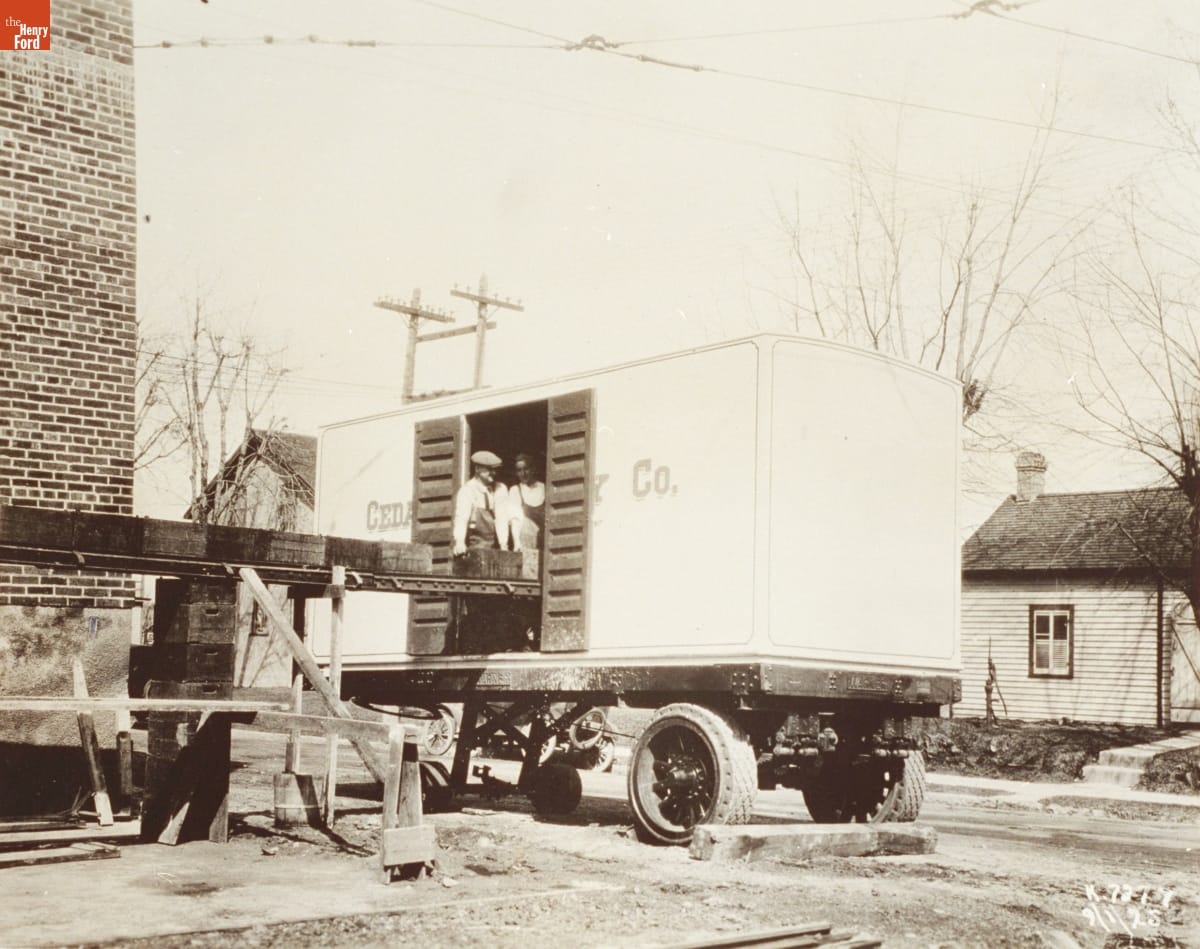
- Warner Truck Trailer, "Cedarburg Dairy Co.," September 1925 - Founded in Brooklyn, New York, in 1900, Mack Brothers Company relocated to Allentown, Pennsylvania, in 1905 and adopted the name Mack Trucks in 1922. Motorized trucks began to replace horse-drawn dairy delivery wagons early in the 20th century. Larger trucks delivered milk and other dairy products to commercial users like grocery stores and restaurants.
- September 01, 1925
- Collections - Artifact
Warner Truck Trailer, "Cedarburg Dairy Co.," September 1925
Founded in Brooklyn, New York, in 1900, Mack Brothers Company relocated to Allentown, Pennsylvania, in 1905 and adopted the name Mack Trucks in 1922. Motorized trucks began to replace horse-drawn dairy delivery wagons early in the 20th century. Larger trucks delivered milk and other dairy products to commercial users like grocery stores and restaurants.
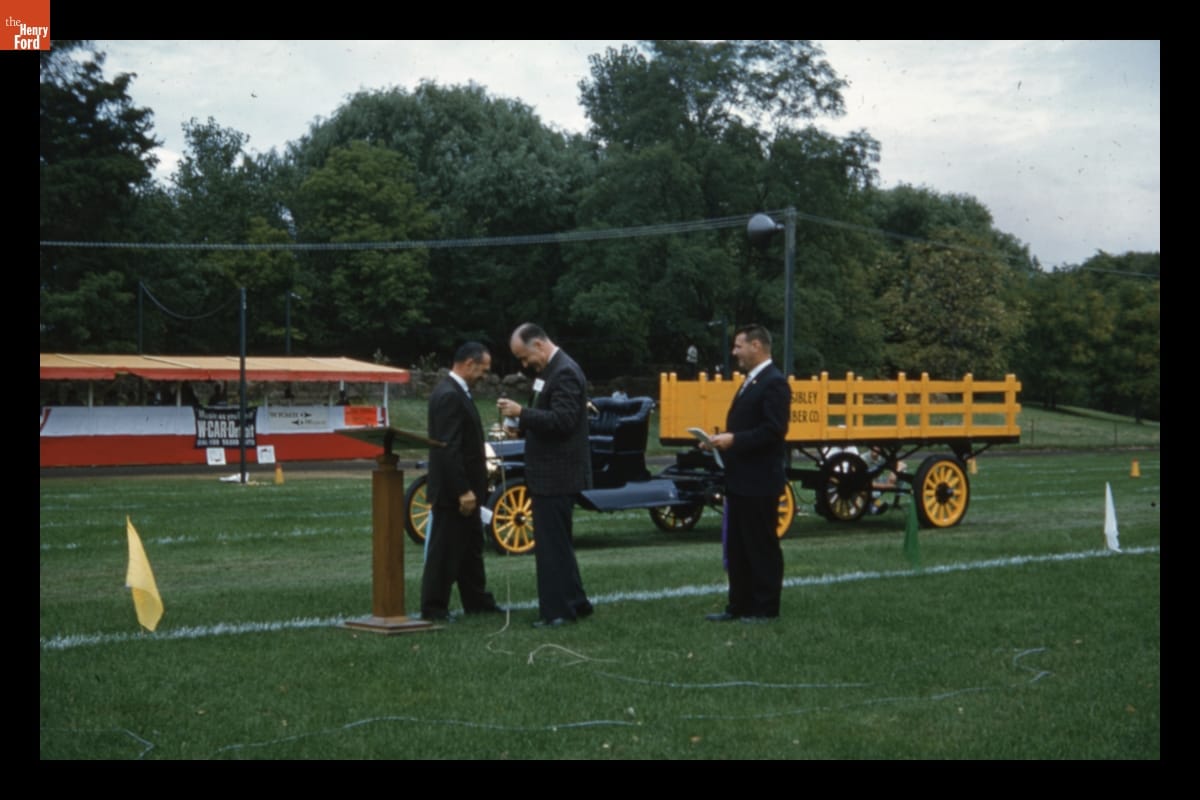
- Presentation of 1914 Fruehauf Truck Trailer at Old Car Festival in Greenfield Village, September 1962 - Held annually since 1951, The Henry Ford's Old Car Festival brings together hundreds of vintage motor vehicles and thousands of spectators each year. At times, it provided an opportunity for ceremonial presentations of new items to the museum's collection. Executive director Donald A. Shelley accepted a 1914 Fruehauf truck trailer on the institution's behalf in 1962.
- September 15, 1962
- Collections - Artifact
Presentation of 1914 Fruehauf Truck Trailer at Old Car Festival in Greenfield Village, September 1962
Held annually since 1951, The Henry Ford's Old Car Festival brings together hundreds of vintage motor vehicles and thousands of spectators each year. At times, it provided an opportunity for ceremonial presentations of new items to the museum's collection. Executive director Donald A. Shelley accepted a 1914 Fruehauf truck trailer on the institution's behalf in 1962.