
Search
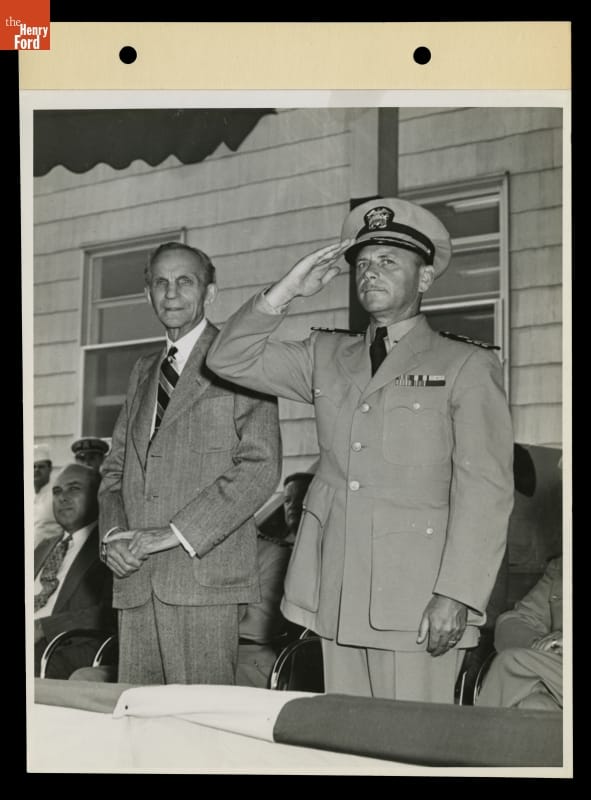
- Henry Ford on His 80th Birthday, U. S. Naval Training School at the Ford Rouge Plant, July 1943 - Personnel at the United States Naval Training School in Dearborn, Michigan, invited Henry Ford to celebrate his 80th birthday at the base. Ford was feted with gifts, a military drill, and a large cake modeled after the school buildings. The school -- built on land at Ford's Rouge Plant and leased to the Navy -- trained thousands of recruits in various skilled trades during World War II.
- July 28, 1943
- Collections - Artifact
Henry Ford on His 80th Birthday, U. S. Naval Training School at the Ford Rouge Plant, July 1943
Personnel at the United States Naval Training School in Dearborn, Michigan, invited Henry Ford to celebrate his 80th birthday at the base. Ford was feted with gifts, a military drill, and a large cake modeled after the school buildings. The school -- built on land at Ford's Rouge Plant and leased to the Navy -- trained thousands of recruits in various skilled trades during World War II.
- Henry Ford's Private Railroad Car "Fair Lane," 1921 - By 1920, Henry and Clara Ford found it increasingly difficult to travel with any degree of privacy. They purchased a private railcar and named it <EM>Fair Lane</EM>. The car had four private rooms, an observation lounge, a dining room, and a fully equipped kitchen. It could accommodate eight passengers. The couple made over 400 trips using <EM>Fair Lane</EM> before selling the passenger car in 1942.

- June 23, 1921
- Collections - Artifact
Henry Ford's Private Railroad Car "Fair Lane," 1921
By 1920, Henry and Clara Ford found it increasingly difficult to travel with any degree of privacy. They purchased a private railcar and named it Fair Lane. The car had four private rooms, an observation lounge, a dining room, and a fully equipped kitchen. It could accommodate eight passengers. The couple made over 400 trips using Fair Lane before selling the passenger car in 1942.
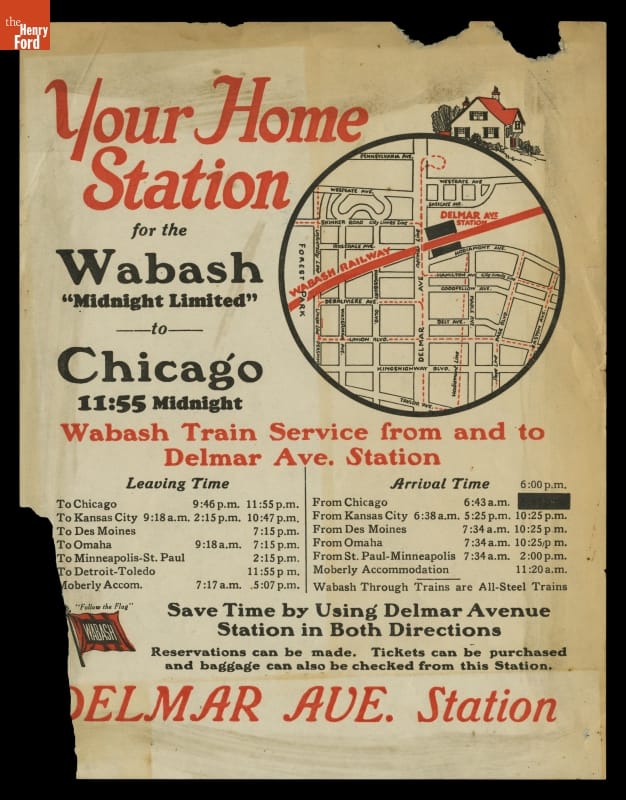
- Handbill and Timetable for Wabash Railway's "Midnight Limited," Leaving from Delmar Avenue Station, St. Louis, Missouri, 1929 - The Wabash Railway, with origins dating back to 1838, was a strong Midwestern carrier until Amtrak took over the national passenger railroad system in 1971. In 1928, the Wabash Railway erected the Delmar Avenue Station, providing west-end and suburban St. Louis residents -- particularly businessmen -- convenient access to their railroad system without having to go all the way downtown.
- 1929
- Collections - Artifact
Handbill and Timetable for Wabash Railway's "Midnight Limited," Leaving from Delmar Avenue Station, St. Louis, Missouri, 1929
The Wabash Railway, with origins dating back to 1838, was a strong Midwestern carrier until Amtrak took over the national passenger railroad system in 1971. In 1928, the Wabash Railway erected the Delmar Avenue Station, providing west-end and suburban St. Louis residents -- particularly businessmen -- convenient access to their railroad system without having to go all the way downtown.
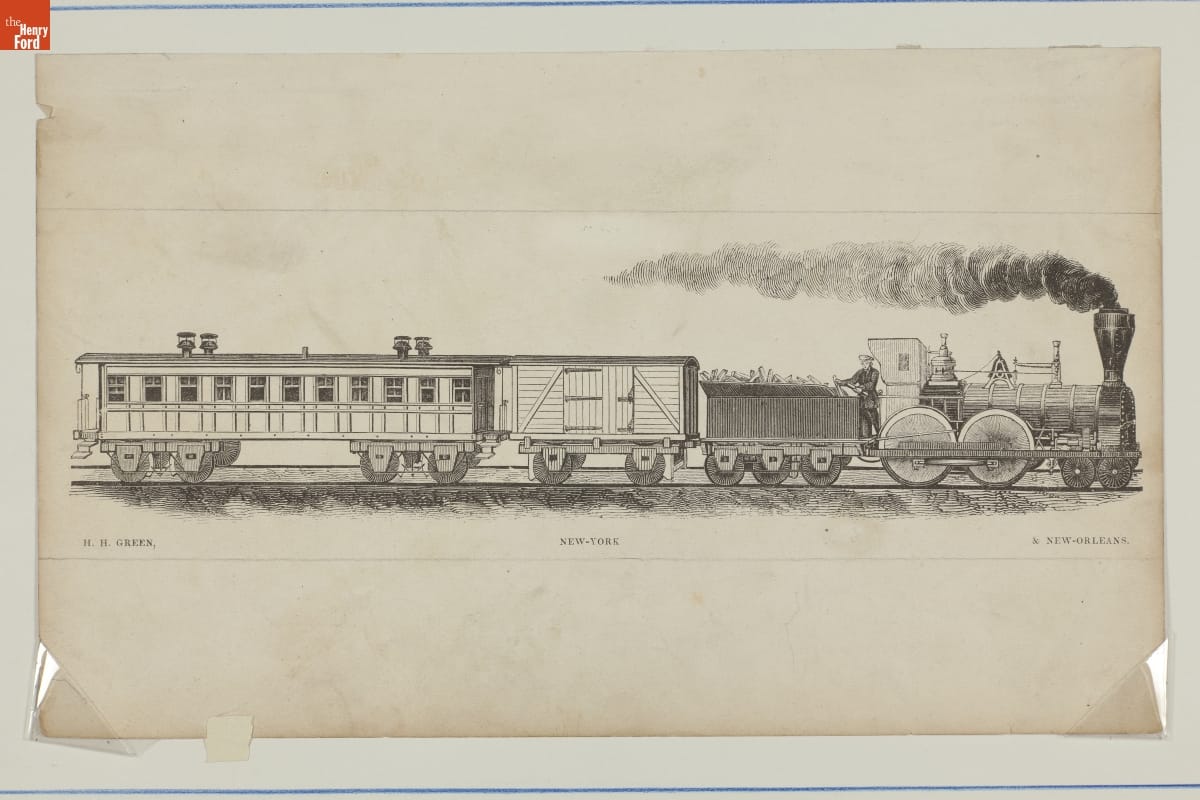
- Train with Steam Locomotive, Passenger and Freight Cars, circa 1856 - Locomotive boilers had to stay hot to produce steam. Lagging -- insulation around the boiler -- was crucial. This American-type locomotive of the 1850s had narrow wooden strips mounted around its boiler for insulation. But the wood deteriorated quickly when exposed to weather and sparks. Improved designs placed a protective sheet metal jacket over the wood.
- circa 1856
- Collections - Artifact
Train with Steam Locomotive, Passenger and Freight Cars, circa 1856
Locomotive boilers had to stay hot to produce steam. Lagging -- insulation around the boiler -- was crucial. This American-type locomotive of the 1850s had narrow wooden strips mounted around its boiler for insulation. But the wood deteriorated quickly when exposed to weather and sparks. Improved designs placed a protective sheet metal jacket over the wood.
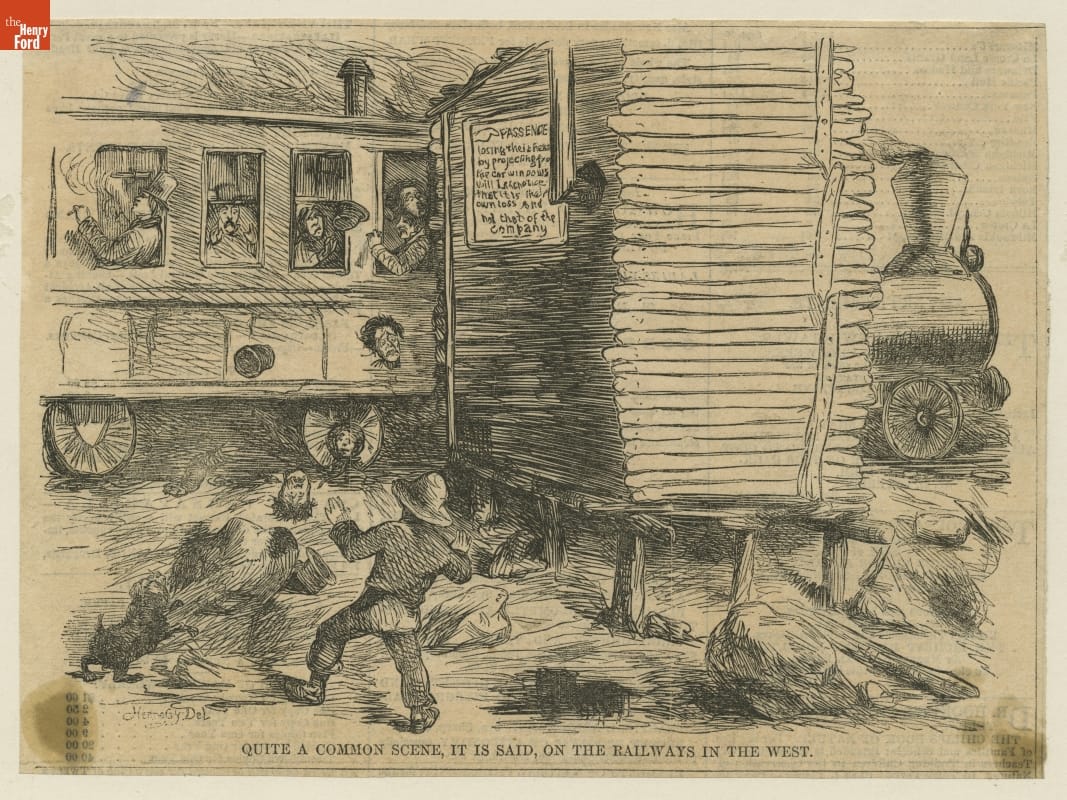
- Wood Engraving, "Quite a Common Scene, it is Said, on the Railways in the West," 1858 - While close clearances -- tight spaces between railroad cars and trackside structures -- did exist, this 1858 illustration from <em>Harper's Weekly</em> exaggerated the dangers faced by passengers who stuck their heads through windows. More likely threats from an open window included sparks, cinders and smoke from the steam locomotive pulling the train -- all of which could irritate eyes and damage clothing.
- 1858
- Collections - Artifact
Wood Engraving, "Quite a Common Scene, it is Said, on the Railways in the West," 1858
While close clearances -- tight spaces between railroad cars and trackside structures -- did exist, this 1858 illustration from Harper's Weekly exaggerated the dangers faced by passengers who stuck their heads through windows. More likely threats from an open window included sparks, cinders and smoke from the steam locomotive pulling the train -- all of which could irritate eyes and damage clothing.
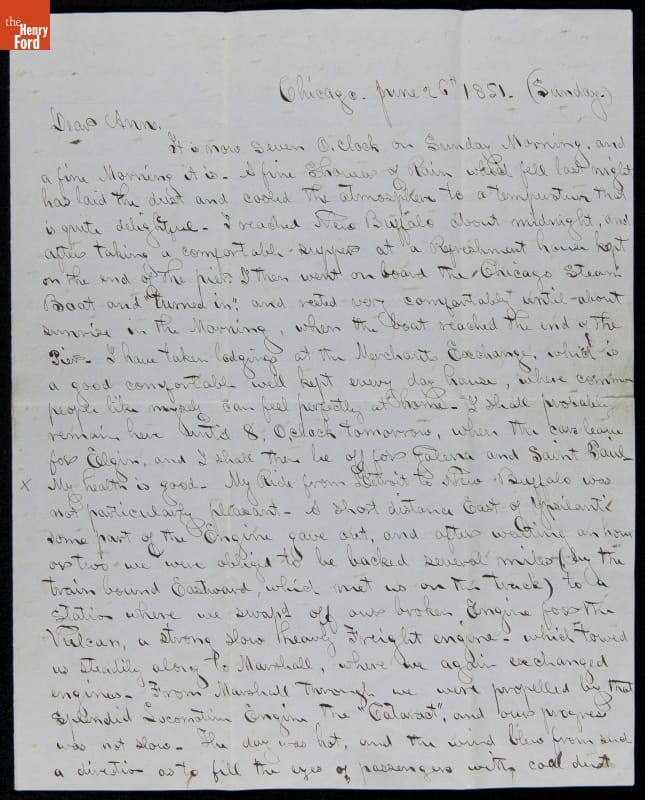
- Letter from E.P. Goodrich to Ann Goodrich, 1851 - This 1851 letter describes a trip on the Michigan Central Railroad from Detroit to Chicago. Author E.P. Goodrich colorfully relates the trials of mid-19th-century rail travel. Equipment breakdowns, smoke, and cinders were common, and average speeds were low. Because the Michigan Central wasn't completed into Chicago until 1852, Goodrich finished his journey by steamboat from New Buffalo across Lake Michigan.
- June 26, 1851
- Collections - Artifact
Letter from E.P. Goodrich to Ann Goodrich, 1851
This 1851 letter describes a trip on the Michigan Central Railroad from Detroit to Chicago. Author E.P. Goodrich colorfully relates the trials of mid-19th-century rail travel. Equipment breakdowns, smoke, and cinders were common, and average speeds were low. Because the Michigan Central wasn't completed into Chicago until 1852, Goodrich finished his journey by steamboat from New Buffalo across Lake Michigan.
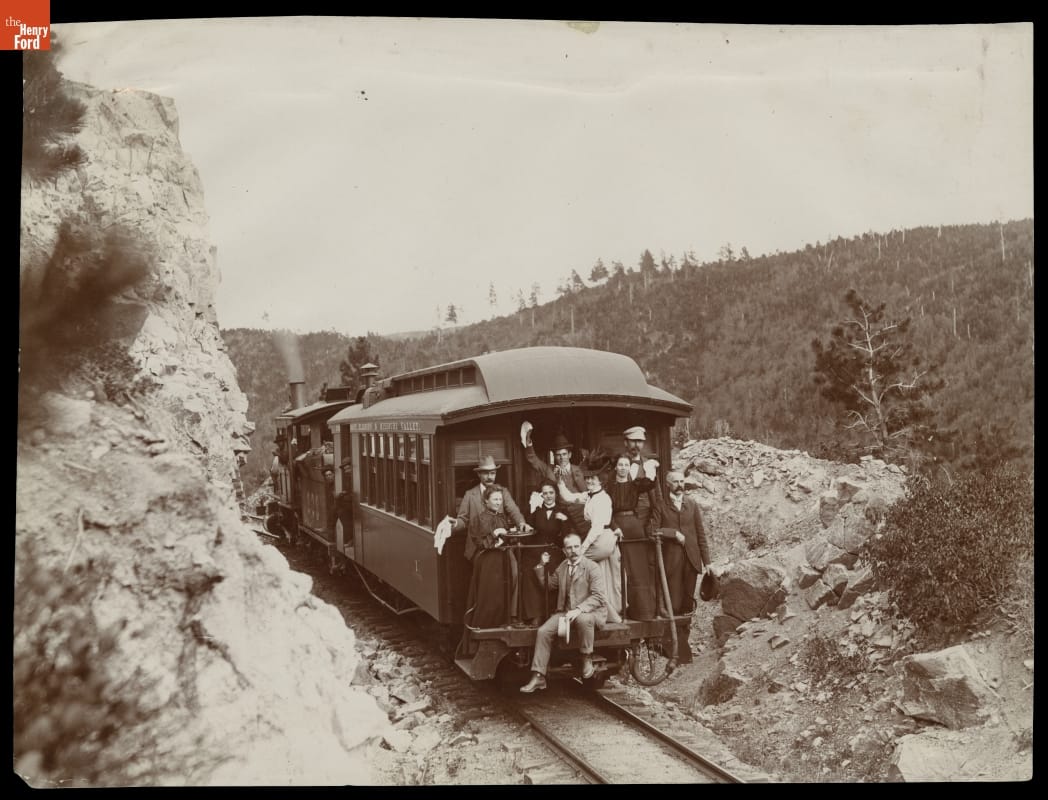
- Passengers on the Fremont, Elkhorn and Missouri Valley Railroad, South Dakota, circa 1895 - Passengers gathered for a photograph when the Fremont, Elkhorn, and Missouri Valley train stopped in a South Dakota mountain pass. The photograph, taken about 1907, shows the happy group on the back platform while the engineer and others peer out from the side.
- circa 1895
- Collections - Artifact
Passengers on the Fremont, Elkhorn and Missouri Valley Railroad, South Dakota, circa 1895
Passengers gathered for a photograph when the Fremont, Elkhorn, and Missouri Valley train stopped in a South Dakota mountain pass. The photograph, taken about 1907, shows the happy group on the back platform while the engineer and others peer out from the side.
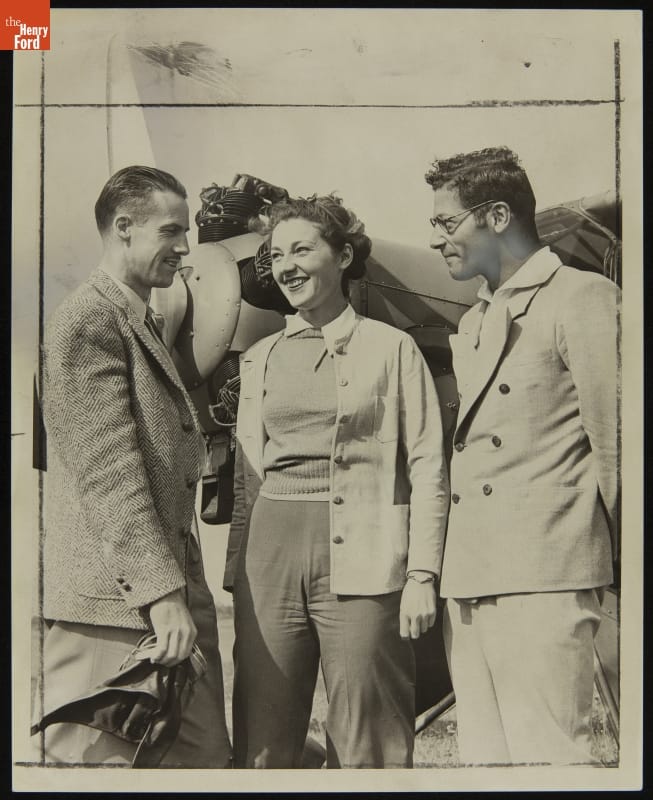
- Flight Instructors Glenn Brown, Barbara Kibbee, and Juan Basella, Civilian Pilot Training Program, July 13, 1939 - As the world descended toward war in the late 1930s, the United States government recognized a vital need for trained aviators. It established the Civilian Pilot Training Program in 1938. Ostensibly a peacetime initiative, CPTP in fact produced flyers ready for overseas combat or stateside support missions. Pilot Barbara Kibbee was the program's first female instructor.
- July 13, 1939
- Collections - Artifact
Flight Instructors Glenn Brown, Barbara Kibbee, and Juan Basella, Civilian Pilot Training Program, July 13, 1939
As the world descended toward war in the late 1930s, the United States government recognized a vital need for trained aviators. It established the Civilian Pilot Training Program in 1938. Ostensibly a peacetime initiative, CPTP in fact produced flyers ready for overseas combat or stateside support missions. Pilot Barbara Kibbee was the program's first female instructor.
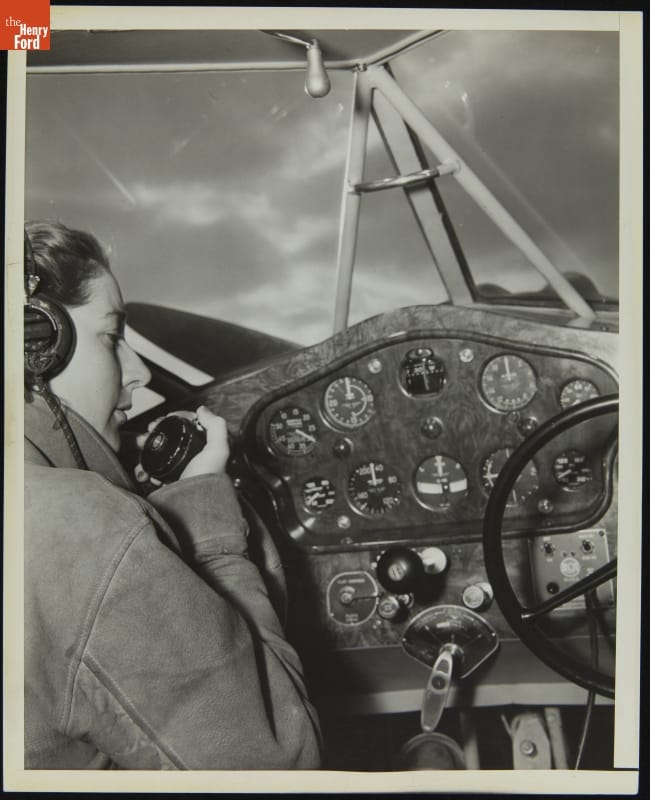
- Flight Instructor Barbara Kibbee, Civilian Pilot Training Program, November 21, 1939 - Barbara Kibbee started flying in 1937, earned a commercial rating, and took a job as a check pilot for the Ryan Aeronautical Company of San Diego. As the looming war created a need for trained flyers, Kibbee joined the Civilian Pilot Training Program as an instructor based at New York's Rensselaer Polytechnic Institute. She was the program's first female instructor.
- November 21, 1939
- Collections - Artifact
Flight Instructor Barbara Kibbee, Civilian Pilot Training Program, November 21, 1939
Barbara Kibbee started flying in 1937, earned a commercial rating, and took a job as a check pilot for the Ryan Aeronautical Company of San Diego. As the looming war created a need for trained flyers, Kibbee joined the Civilian Pilot Training Program as an instructor based at New York's Rensselaer Polytechnic Institute. She was the program's first female instructor.
- Flight Instructor Barbara Kibbee, Civilian Pilot Training Program, November 21, 1939 - Barbara Kibbee started flying in 1937, earned a commercial rating, and took a job as a check pilot for the Ryan Aeronautical Company of San Diego. As the looming war created a need for trained flyers, Kibbee joined the Civilian Pilot Training Program as an instructor based at New York's Rensselaer Polytechnic Institute. She was the program's first female instructor.
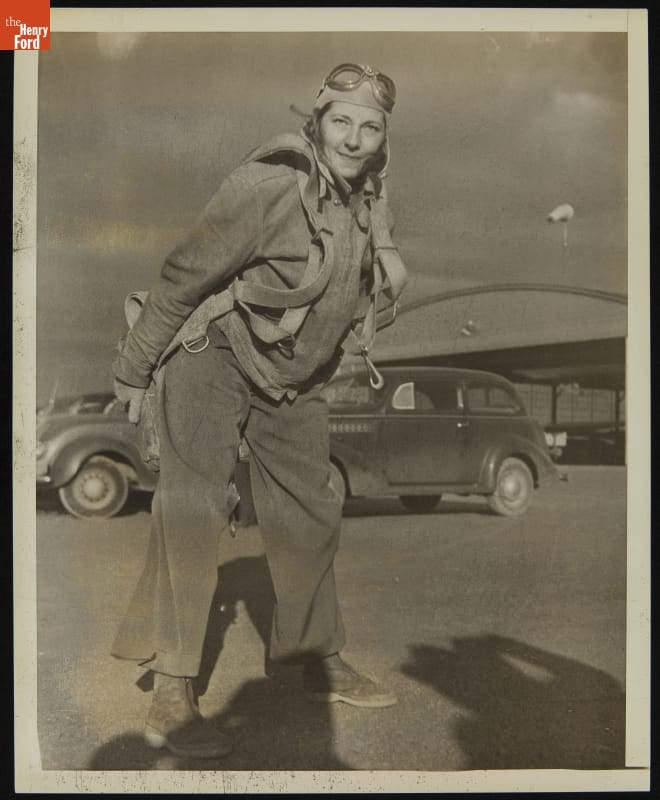
- November 21, 1939
- Collections - Artifact
Flight Instructor Barbara Kibbee, Civilian Pilot Training Program, November 21, 1939
Barbara Kibbee started flying in 1937, earned a commercial rating, and took a job as a check pilot for the Ryan Aeronautical Company of San Diego. As the looming war created a need for trained flyers, Kibbee joined the Civilian Pilot Training Program as an instructor based at New York's Rensselaer Polytechnic Institute. She was the program's first female instructor.