
Search
- Stenographic Report of Proceedings of Light's Golden Jubilee at Dearborn, Michigan, October 21, 1929 -
- October 21, 1929
- Collections - Artifact
Stenographic Report of Proceedings of Light's Golden Jubilee at Dearborn, Michigan, October 21, 1929
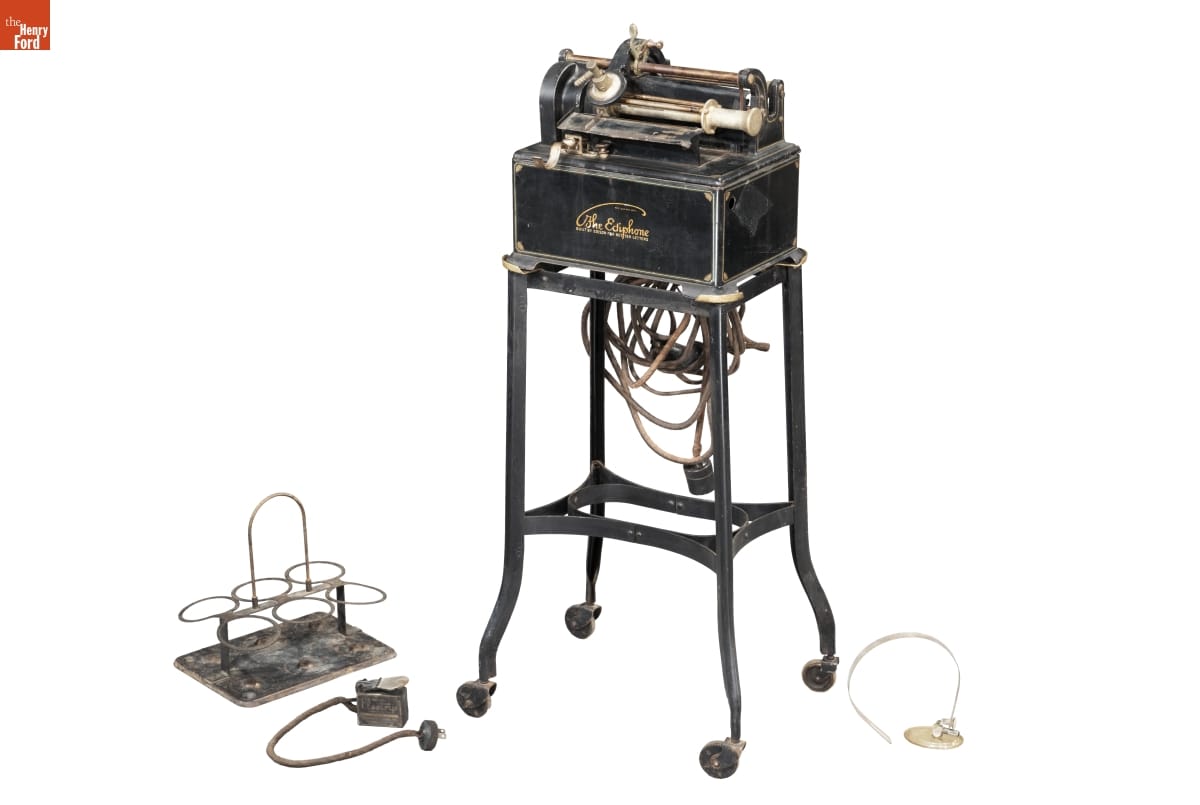
- Ediphone - Dictaphones and Ediphones were sound recording devices used for efficient oral dictation in business settings. When Edison invented the phonograph, one proposed use was "dictation without the aid of stenographers." Its tinfoil playback medium lacked quality, however. Alexander Graham Bell's Graphophone (later, Dictaphone) improved the phonograph by using wax cylinders for superior playback; cylinders were also used in the competing Ediphone.
- Collections - Artifact
Ediphone
Dictaphones and Ediphones were sound recording devices used for efficient oral dictation in business settings. When Edison invented the phonograph, one proposed use was "dictation without the aid of stenographers." Its tinfoil playback medium lacked quality, however. Alexander Graham Bell's Graphophone (later, Dictaphone) improved the phonograph by using wax cylinders for superior playback; cylinders were also used in the competing Ediphone.
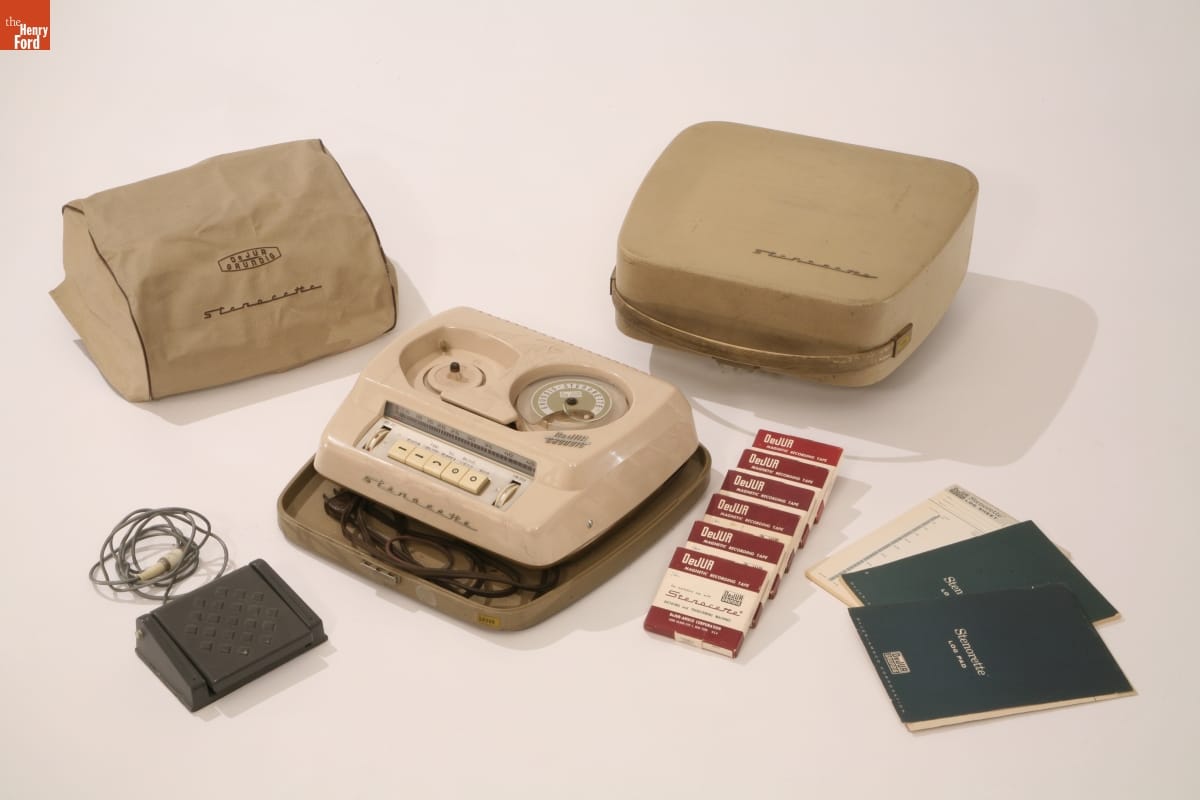
- DeJur Grundig "Stenorette" Dictation Machine, 1955-1970 -
- 1955-1970
- Collections - Artifact
DeJur Grundig "Stenorette" Dictation Machine, 1955-1970
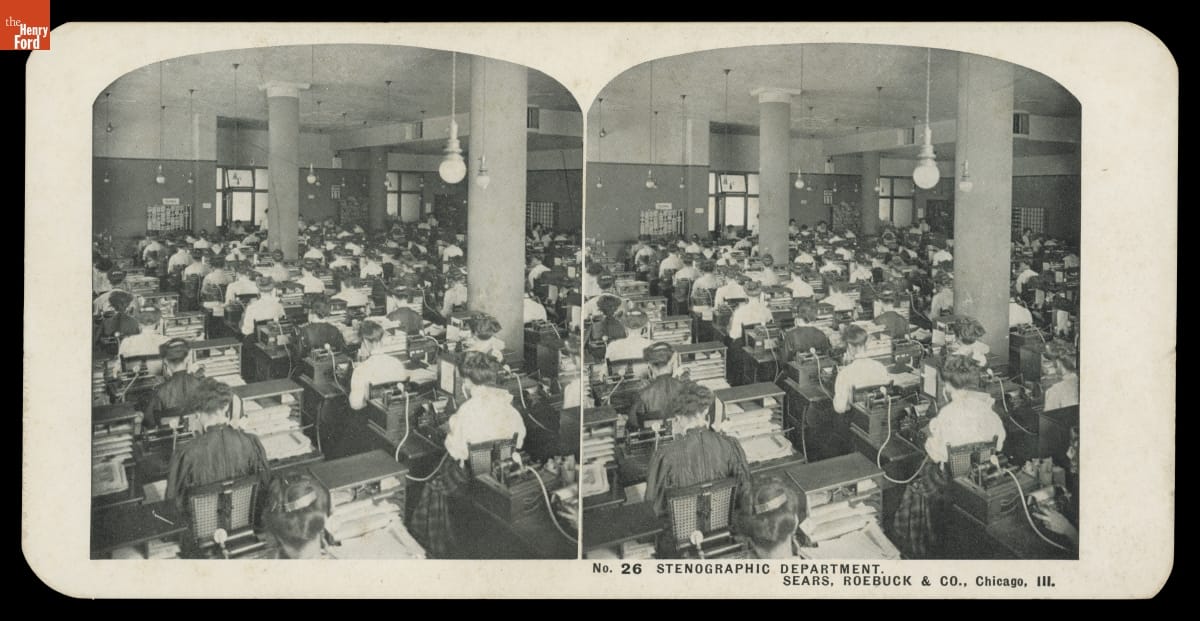
- "Stenographic Department. Sears, Roebuck & Co., Chicago, Ill.," 1906-1908 - Mail-order firm Sears, Roebuck, & Co. had become one of America's largest corporations by the early 1900s. Sears was particularly popular among rural Americans, as it offered better options, lower costs, and more efficient delivery methods than traditional general stores. This stereograph, one of a set of 50 sold through the Sears catalog beginning in 1908, offered a behind-the-scenes look at the company's operation.
- 1906-1908
- Collections - Artifact
"Stenographic Department. Sears, Roebuck & Co., Chicago, Ill.," 1906-1908
Mail-order firm Sears, Roebuck, & Co. had become one of America's largest corporations by the early 1900s. Sears was particularly popular among rural Americans, as it offered better options, lower costs, and more efficient delivery methods than traditional general stores. This stereograph, one of a set of 50 sold through the Sears catalog beginning in 1908, offered a behind-the-scenes look at the company's operation.
- Transcript regarding Lady Jean Doyle, July 26, 1923 -
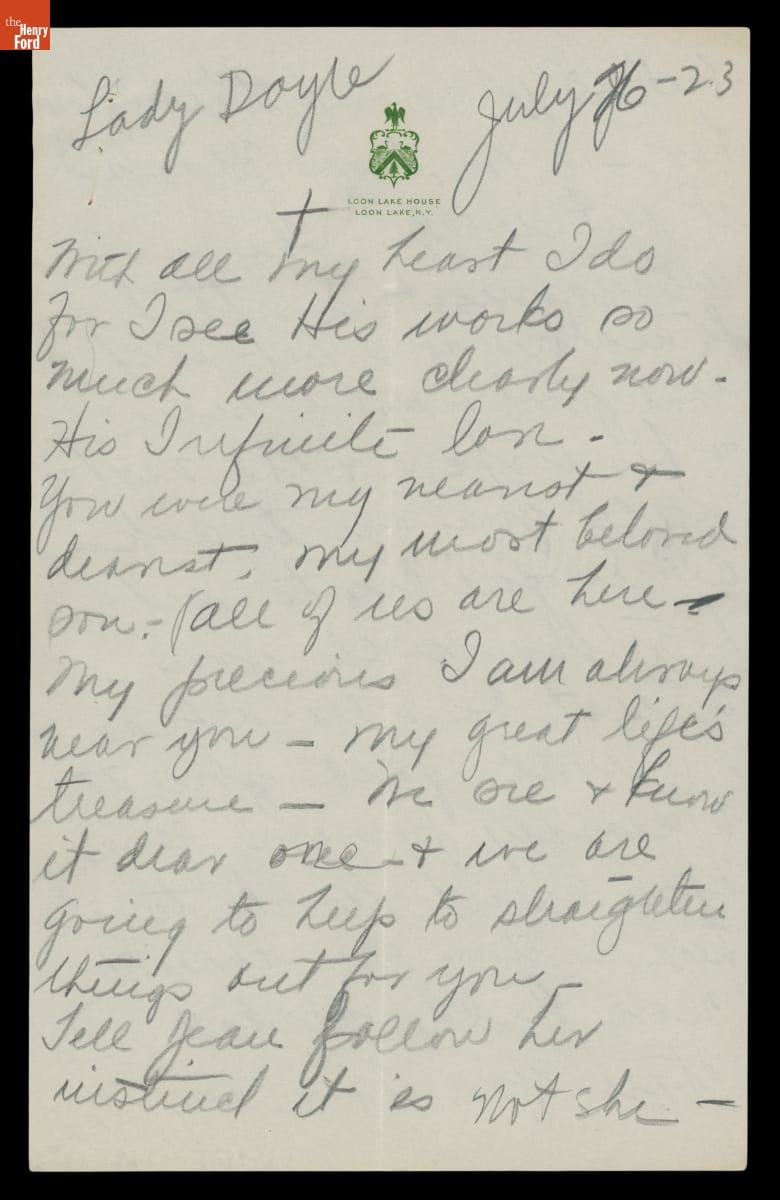
- July 26, 1923
- Collections - Artifact
Transcript regarding Lady Jean Doyle, July 26, 1923
- Account of a Seance Performed by Rev. D.A. Herrick, July 25, 1923 -
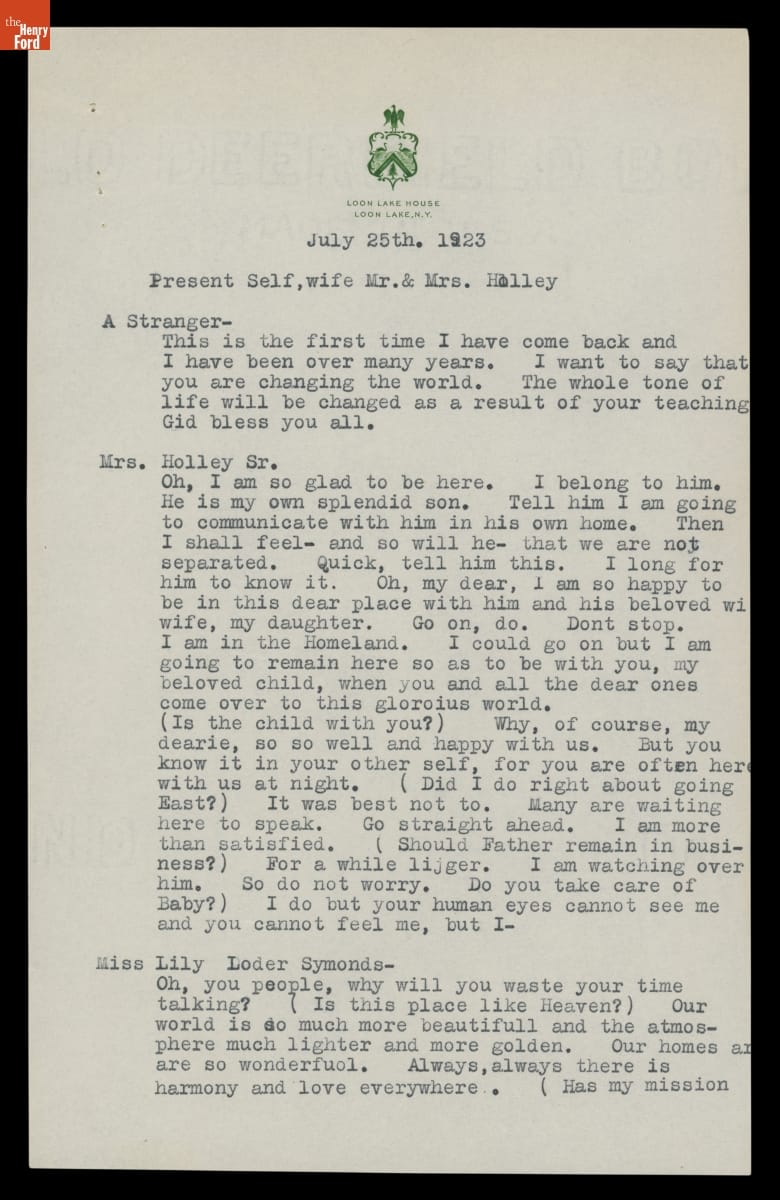
- July 25, 1923
- Collections - Artifact
Account of a Seance Performed by Rev. D.A. Herrick, July 25, 1923
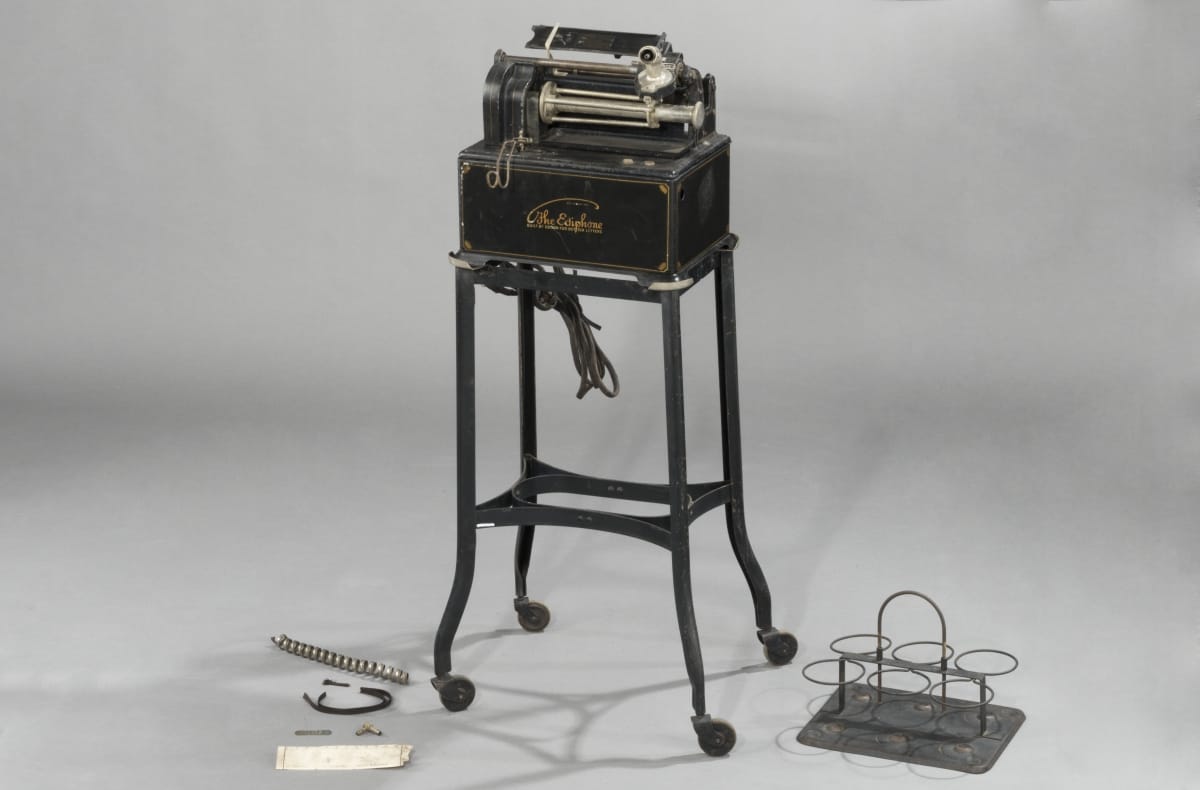
- Ediphone Transcriber - Dictaphones and Ediphones were sound recording devices used for efficient oral dictation in business settings. When Edison invented the phonograph, one proposed use was "dictation without the aid of stenographers." Its tinfoil playback medium lacked quality, however. Alexander Graham Bell's Graphophone (later, Dictaphone) improved the phonograph by using wax cylinders for superior playback; cylinders were also used in the competing Ediphone.
- Collections - Artifact
Ediphone Transcriber
Dictaphones and Ediphones were sound recording devices used for efficient oral dictation in business settings. When Edison invented the phonograph, one proposed use was "dictation without the aid of stenographers." Its tinfoil playback medium lacked quality, however. Alexander Graham Bell's Graphophone (later, Dictaphone) improved the phonograph by using wax cylinders for superior playback; cylinders were also used in the competing Ediphone.
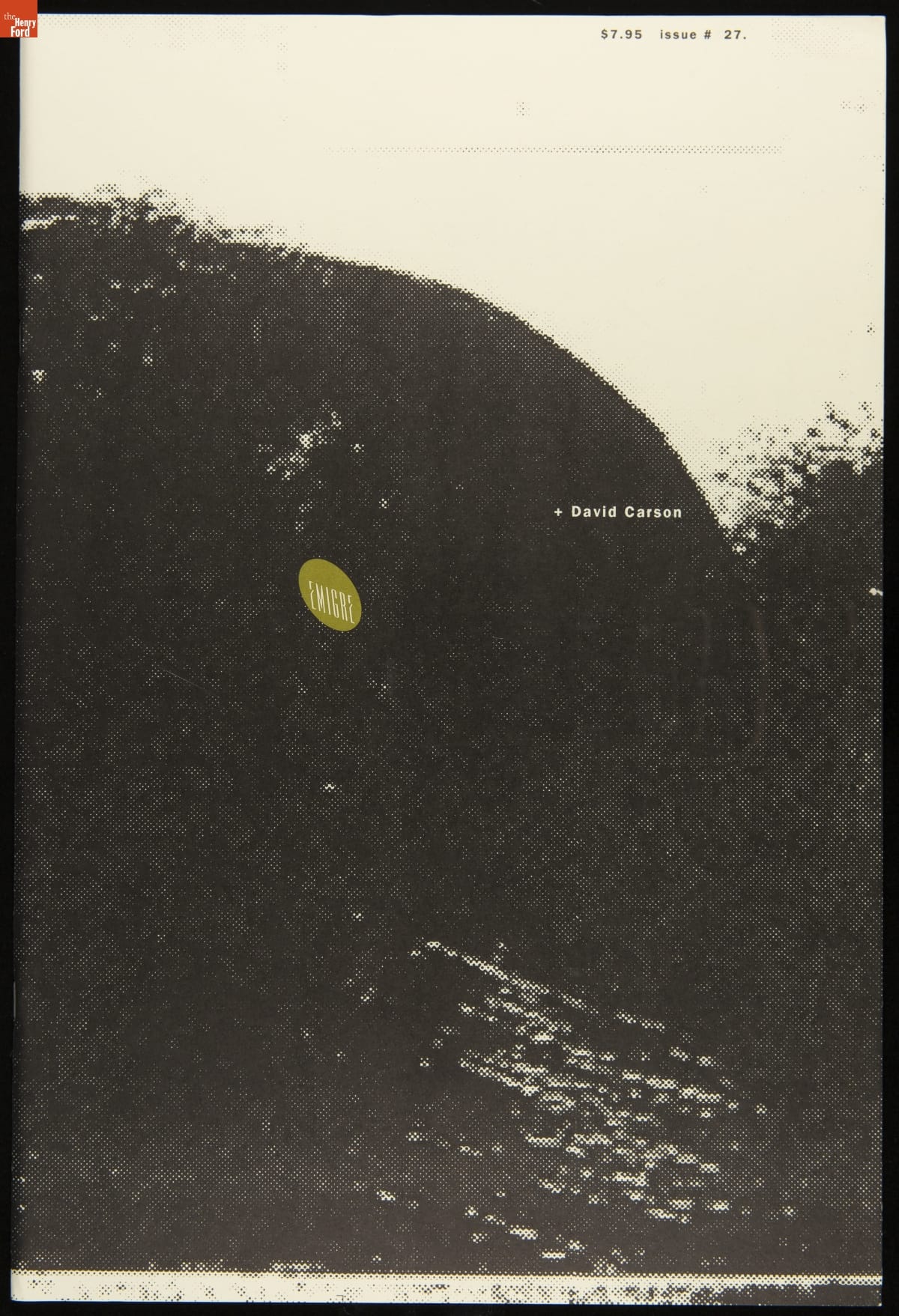
- Magazine, Emigre No. 27, "David Carson," 1993 - Emigre is a digital type foundry established by Rudy VanderLans and Zuzana Licko. The company's history is linked with the introduction of the 1984 Macintosh computer, used to design their early bitmapped typefaces. Emigre's digital work gained notoriety -- defying visual communication standards with fractured, layered combinations of text and image. <em>Emigre</em> magazine showcased their fonts and promoted groundbreaking designers.
- 1993
- Collections - Artifact
Magazine, Emigre No. 27, "David Carson," 1993
Emigre is a digital type foundry established by Rudy VanderLans and Zuzana Licko. The company's history is linked with the introduction of the 1984 Macintosh computer, used to design their early bitmapped typefaces. Emigre's digital work gained notoriety -- defying visual communication standards with fractured, layered combinations of text and image. Emigre magazine showcased their fonts and promoted groundbreaking designers.
- Ediphone Transcriber, circa 1920 - Dictaphones and Ediphones were sound recording devices used for efficient oral dictation in business settings. When Edison invented the phonograph, one proposed use was "dictation without the aid of stenographers." Its tinfoil playback medium lacked quality, however. Alexander Graham Bell's Graphophone (later, Dictaphone) improved the phonograph by using wax cylinders for superior playback; cylinders were also used in the competing Ediphone.
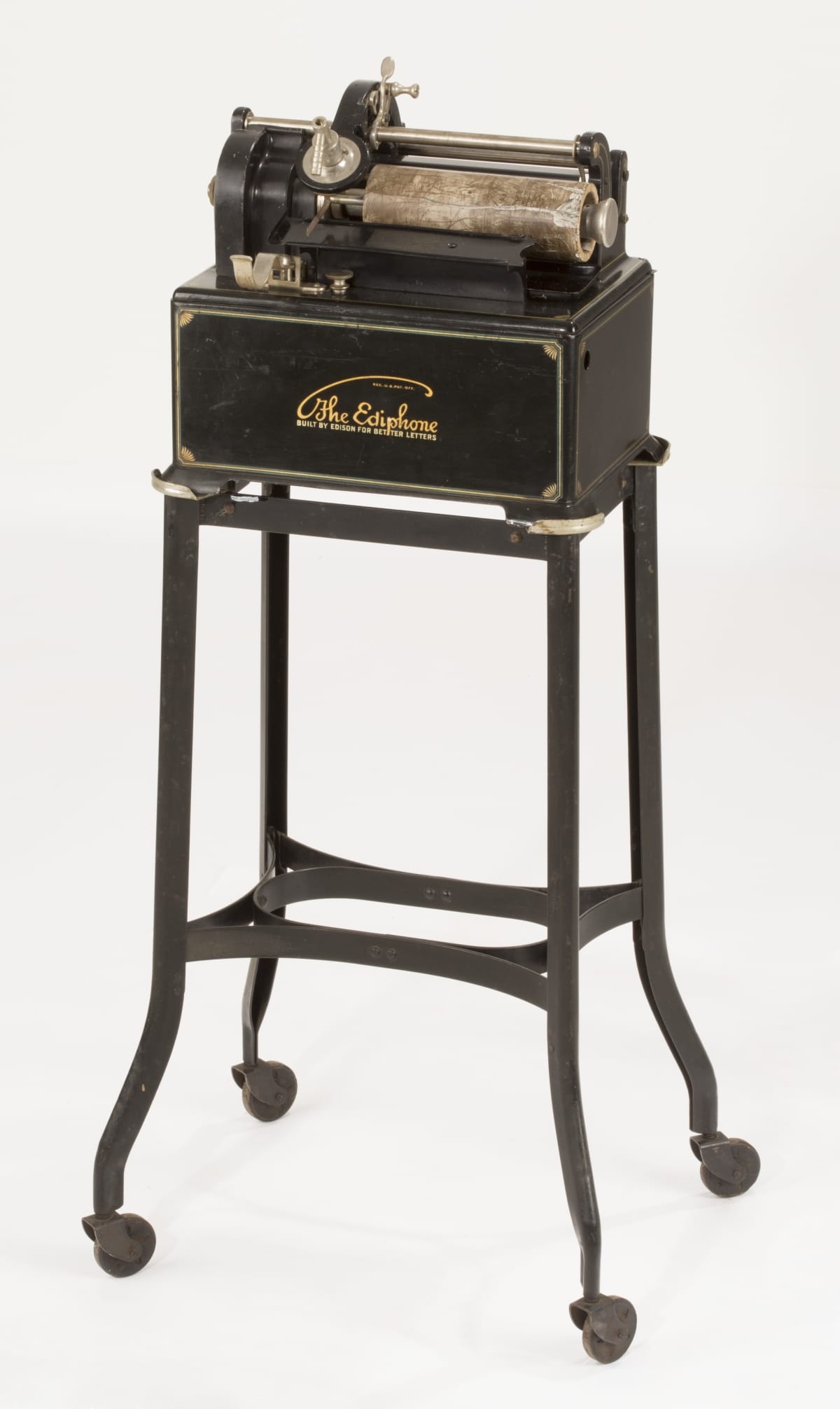
- circa 1920
- Collections - Artifact
Ediphone Transcriber, circa 1920
Dictaphones and Ediphones were sound recording devices used for efficient oral dictation in business settings. When Edison invented the phonograph, one proposed use was "dictation without the aid of stenographers." Its tinfoil playback medium lacked quality, however. Alexander Graham Bell's Graphophone (later, Dictaphone) improved the phonograph by using wax cylinders for superior playback; cylinders were also used in the competing Ediphone.
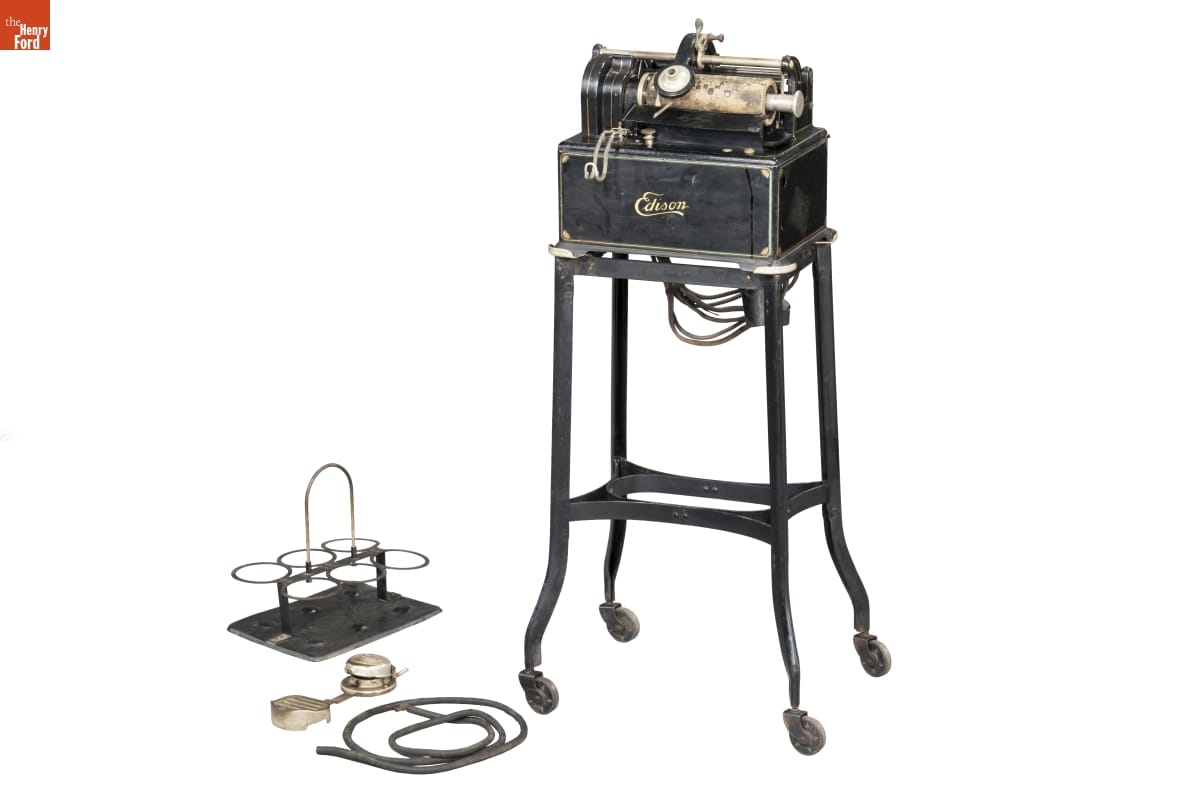
- Ediphone, Model E - Dictaphones and Ediphones were sound recording devices used for efficient oral dictation in business settings. When Edison invented the phonograph, one proposed use was "dictation without the aid of stenographers." Its tinfoil playback medium lacked quality, however. Alexander Graham Bell's Graphophone (later, Dictaphone) improved the phonograph by using wax cylinders for superior playback; cylinders were also used in the competing Ediphone.
- Collections - Artifact
Ediphone, Model E
Dictaphones and Ediphones were sound recording devices used for efficient oral dictation in business settings. When Edison invented the phonograph, one proposed use was "dictation without the aid of stenographers." Its tinfoil playback medium lacked quality, however. Alexander Graham Bell's Graphophone (later, Dictaphone) improved the phonograph by using wax cylinders for superior playback; cylinders were also used in the competing Ediphone.