
Search
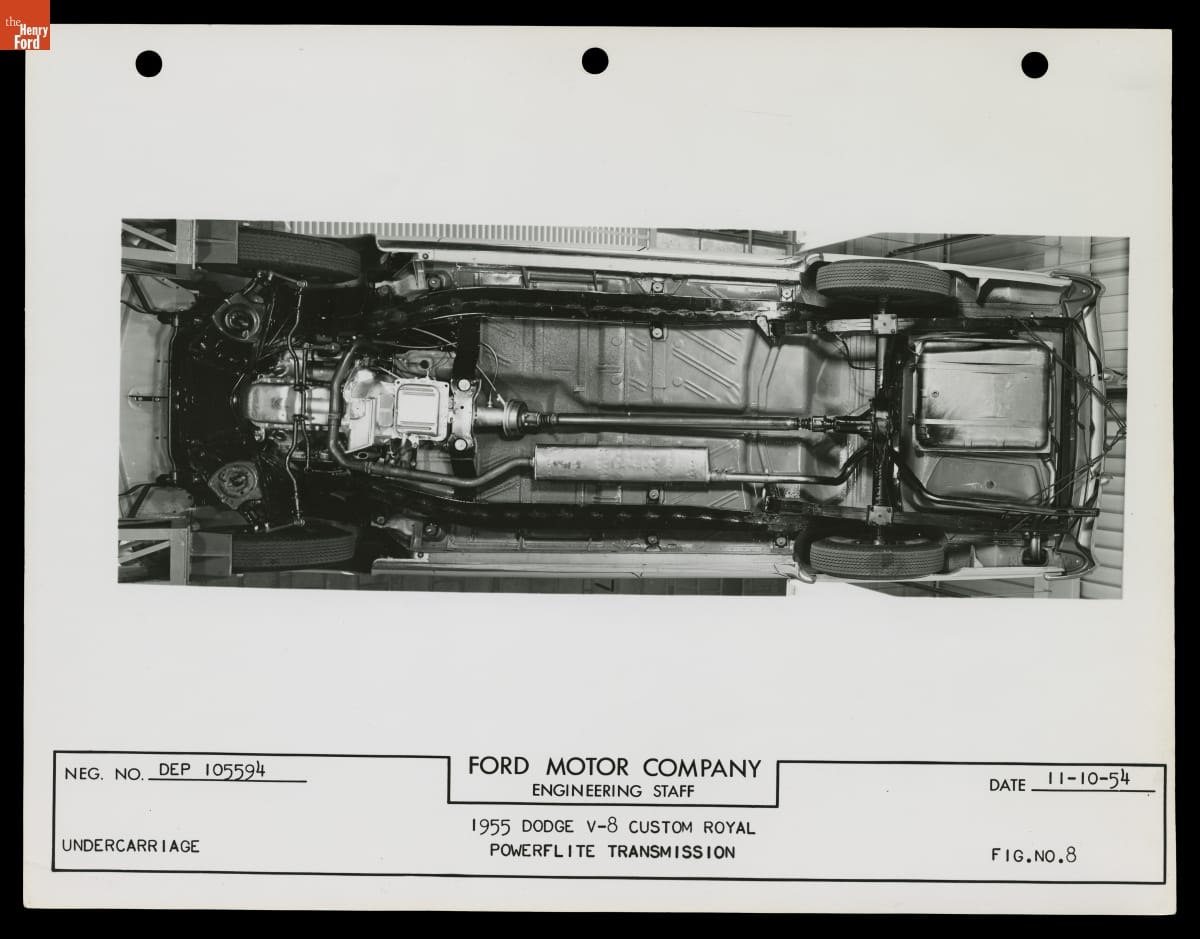
- 1955 Dodge V-8 Custom Royal Powerflite Transmission, November 1954 - Automakers routinely purchased samples of their competitors' vehicles to evaluate features and technologies. Ford Motor Company bought this 1955 Dodge Custom Royal in part to study its two-speed PowerFlite automatic transmission, introduced the previous model year. Chrysler brands replaced the PowerFlite with the three-speed TorqueFlite automatic transmission starting in the 1957 model year.
- November 10, 1954
- Collections - Artifact
1955 Dodge V-8 Custom Royal Powerflite Transmission, November 1954
Automakers routinely purchased samples of their competitors' vehicles to evaluate features and technologies. Ford Motor Company bought this 1955 Dodge Custom Royal in part to study its two-speed PowerFlite automatic transmission, introduced the previous model year. Chrysler brands replaced the PowerFlite with the three-speed TorqueFlite automatic transmission starting in the 1957 model year.
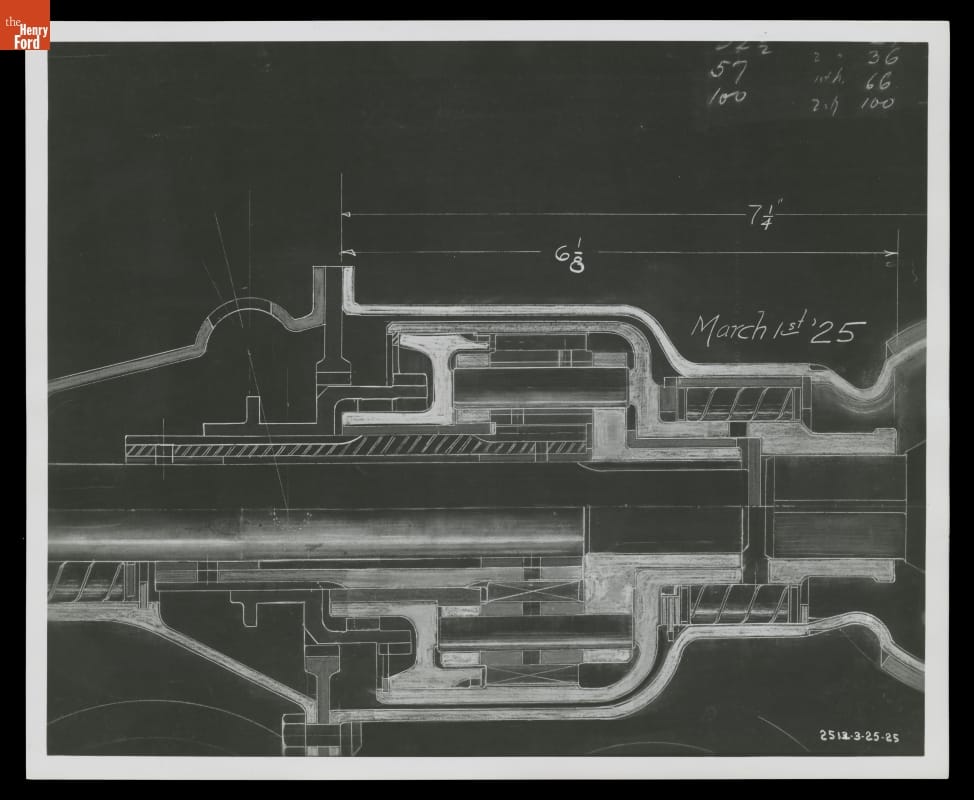
- Blackboard Drawing of Proposed Ford Transmission, March 1925 - Engineer Eugene Farkas worked on several projects at Ford Motor Company including tractors, experimental engines, the Model A chassis, and B-24 bombers. At Henry Ford's request, Farkas often sketched ideas on a large blackboard while talking through them, and he sometimes photographed these drawings for future reference. Farkas made this drawing of a proposed automobile transmission in March 1925.
- March 01, 1925
- Collections - Artifact
Blackboard Drawing of Proposed Ford Transmission, March 1925
Engineer Eugene Farkas worked on several projects at Ford Motor Company including tractors, experimental engines, the Model A chassis, and B-24 bombers. At Henry Ford's request, Farkas often sketched ideas on a large blackboard while talking through them, and he sometimes photographed these drawings for future reference. Farkas made this drawing of a proposed automobile transmission in March 1925.
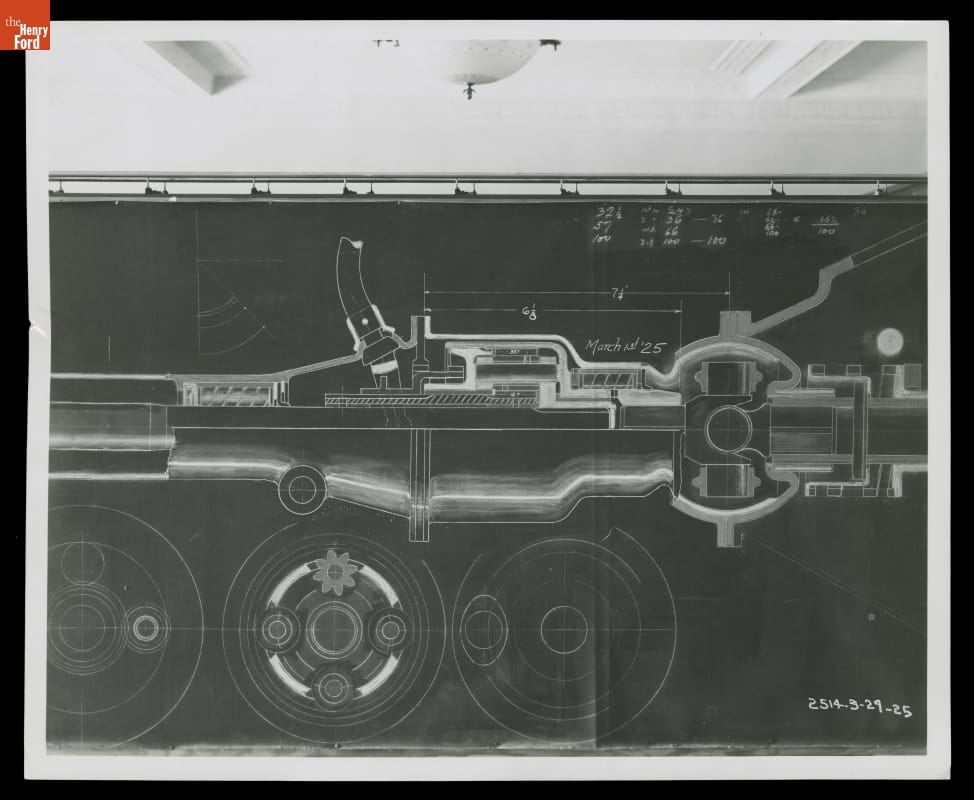
- Blackboard Drawing of Proposed Ford Transmission, March 1925 - Engineer Eugene Farkas worked on several projects at Ford Motor Company including tractors, experimental engines, the Model A chassis, and B-24 bombers. At Henry Ford's request, Farkas often sketched ideas on a large blackboard while talking through them, and he sometimes photographed these drawings for future reference. Farkas made this drawing of a proposed automobile transmission in March 1925.
- March 01, 1925
- Collections - Artifact
Blackboard Drawing of Proposed Ford Transmission, March 1925
Engineer Eugene Farkas worked on several projects at Ford Motor Company including tractors, experimental engines, the Model A chassis, and B-24 bombers. At Henry Ford's request, Farkas often sketched ideas on a large blackboard while talking through them, and he sometimes photographed these drawings for future reference. Farkas made this drawing of a proposed automobile transmission in March 1925.
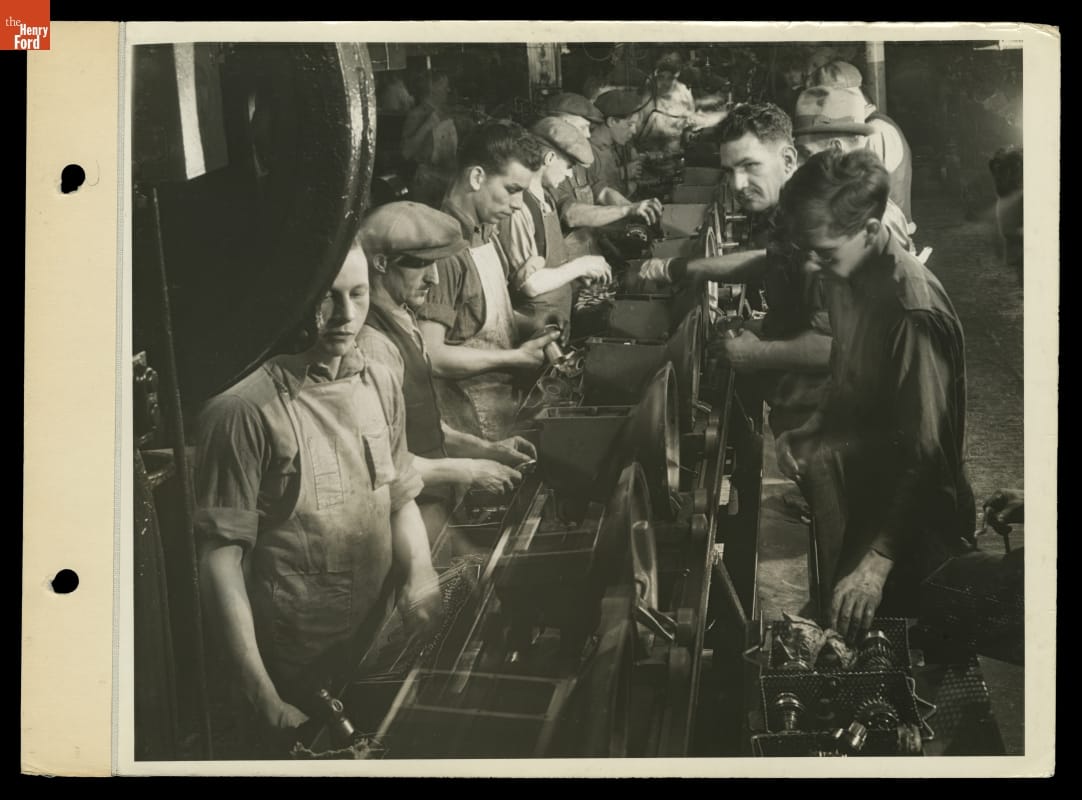
- Workers Assembling Automobile Transmissions, Ford Rouge Plant, 1936 - At its peak in the 1930s, Ford Motor Company's massive Rouge factory employed more than 100,000 workers. The complex included more than 15 million square feet of floor space and 120 miles of conveyors that turned out a new car every 49 seconds. In 1936, when this photo was taken, the people of Ford built more than 790,000 automobiles.
- December 16, 1936
- Collections - Artifact
Workers Assembling Automobile Transmissions, Ford Rouge Plant, 1936
At its peak in the 1930s, Ford Motor Company's massive Rouge factory employed more than 100,000 workers. The complex included more than 15 million square feet of floor space and 120 miles of conveyors that turned out a new car every 49 seconds. In 1936, when this photo was taken, the people of Ford built more than 790,000 automobiles.
- Drawing of the Ford Model T Transmission, circa 1917 - The Ford Model T used a two-speed planetary gearset in its transmission throughout the car's production run from 1908-1927. The central sun gear was surrounded by planet gears that rotated around it. Because the gears were always in mesh, they were easier to shift than the unsynchronized sliding gearsets of the time.
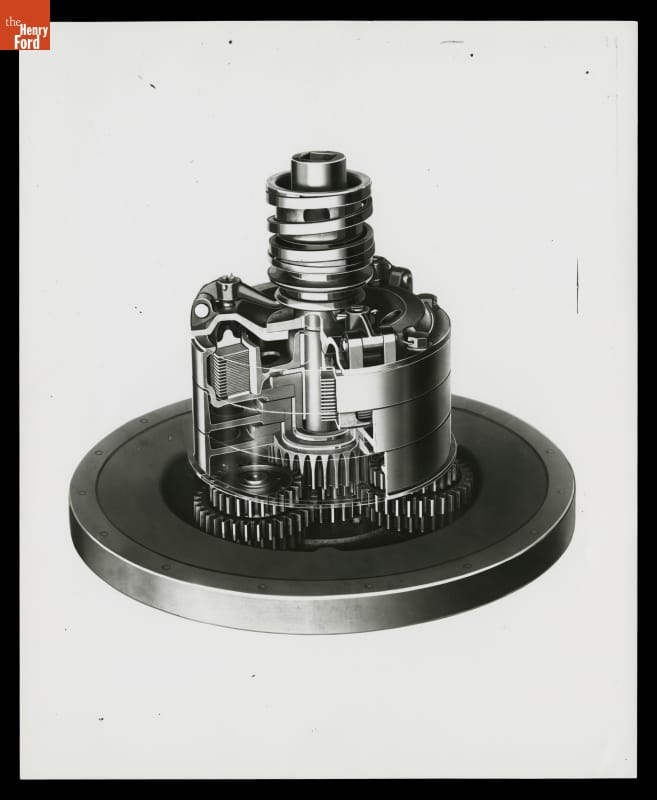
- circa 1917
- Collections - Artifact
Drawing of the Ford Model T Transmission, circa 1917
The Ford Model T used a two-speed planetary gearset in its transmission throughout the car's production run from 1908-1927. The central sun gear was surrounded by planet gears that rotated around it. Because the gears were always in mesh, they were easier to shift than the unsynchronized sliding gearsets of the time.
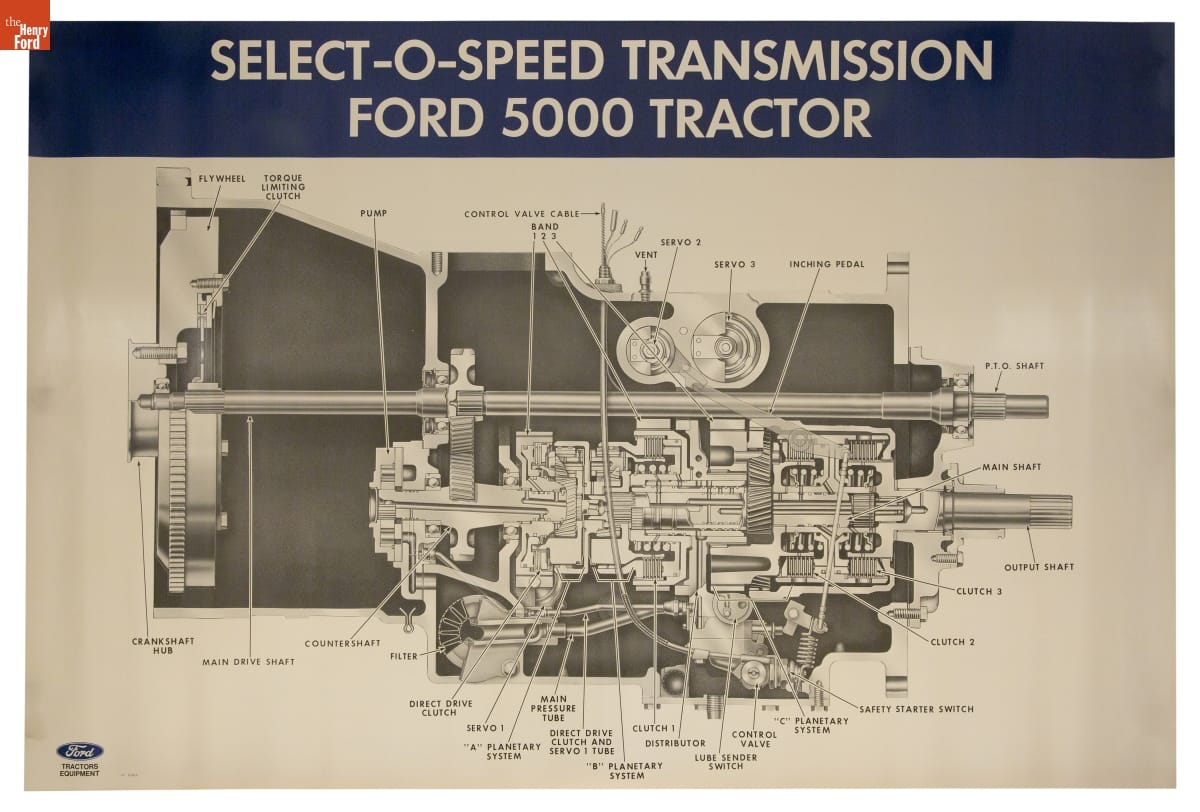
- Select-O-Speed Transmission Ford 5000 Tractor, 1965-1976 -
- 1965-1976
- Collections - Artifact
Select-O-Speed Transmission Ford 5000 Tractor, 1965-1976
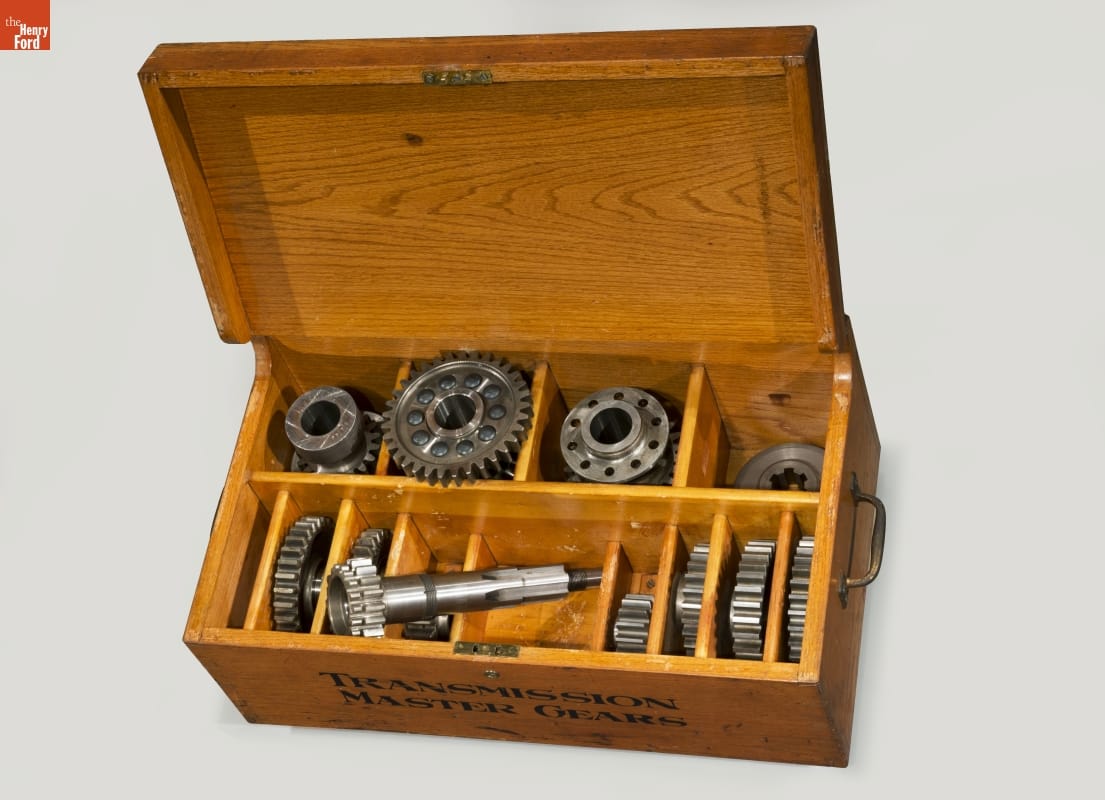
- Transmission Master Gears Box - Internal combustion engines produce a limited range of speeds, but automobiles operate over a wide range of speeds. Gears modify the engine's speed to match the car's needs. For example, a low 3:1 gear ratio converts three turns of the engine crankshaft into one turn of the driven wheels. High gear, with a 1:1 ratio, matches the engine's speed with the wheels.
- Collections - Artifact
Transmission Master Gears Box
Internal combustion engines produce a limited range of speeds, but automobiles operate over a wide range of speeds. Gears modify the engine's speed to match the car's needs. For example, a low 3:1 gear ratio converts three turns of the engine crankshaft into one turn of the driven wheels. High gear, with a 1:1 ratio, matches the engine's speed with the wheels.
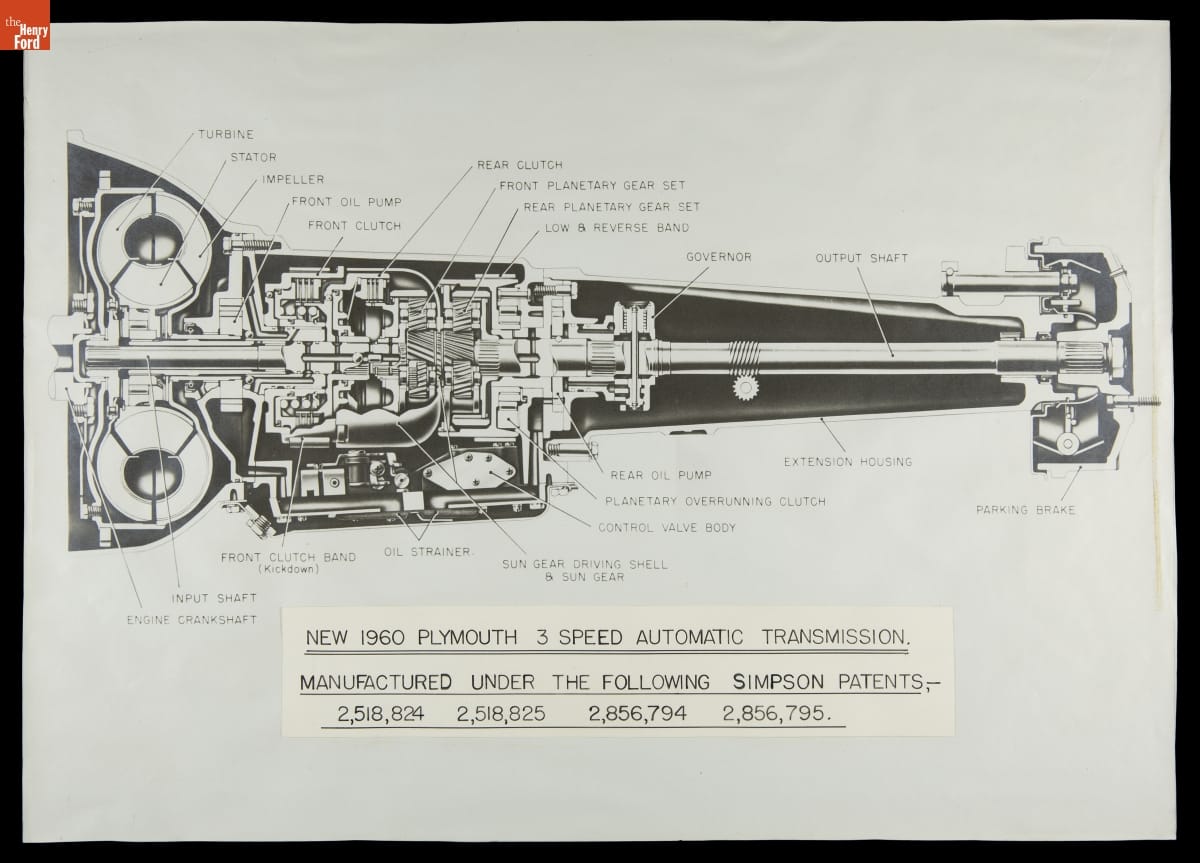
- "New 1960 Plymouth 3 Speed Automatic Transmission," circa 1959 - This diagram illustrates an automatic transmission developed for the Plymouth Valiant compact car, introduced for 1960. The three-speed unit used a planetary gearset based on a design by Howard Simpson. Simpson's gearsets were licensed by Ford and General Motors, too, and they became common in automatic transmissions produced through the latter half of the 20th century.
- circa 1959
- Collections - Artifact
"New 1960 Plymouth 3 Speed Automatic Transmission," circa 1959
This diagram illustrates an automatic transmission developed for the Plymouth Valiant compact car, introduced for 1960. The three-speed unit used a planetary gearset based on a design by Howard Simpson. Simpson's gearsets were licensed by Ford and General Motors, too, and they became common in automatic transmissions produced through the latter half of the 20th century.