
Search
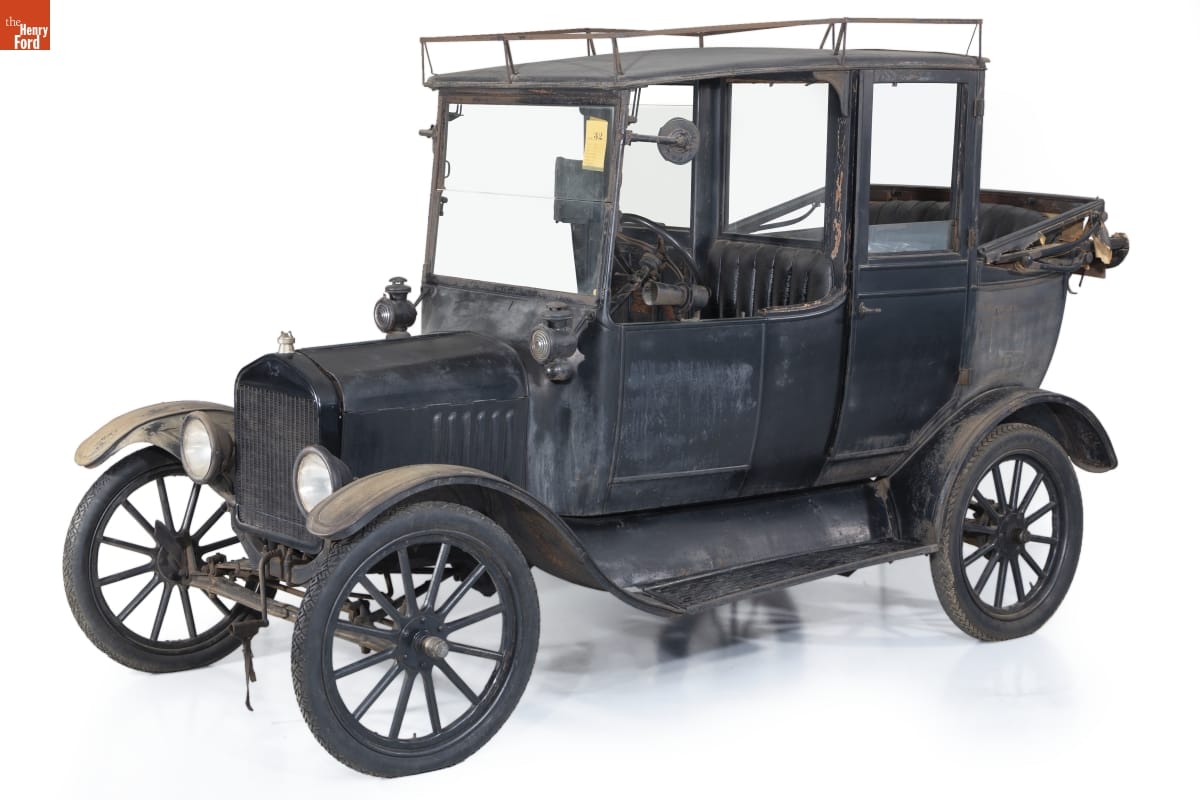
- 1917 Ford Model T Taxicab - The ever-versatile Ford Model T could be adapted for taxicab service. Taxi drivers appreciated the same qualities that made the Model T so appealing to private owners: its low price and modest operating costs. This cab features a landaulet body -- with a fixed roof for the driver and a convertible roof for the passengers.
- 1917
- Collections - Artifact
1917 Ford Model T Taxicab
The ever-versatile Ford Model T could be adapted for taxicab service. Taxi drivers appreciated the same qualities that made the Model T so appealing to private owners: its low price and modest operating costs. This cab features a landaulet body -- with a fixed roof for the driver and a convertible roof for the passengers.
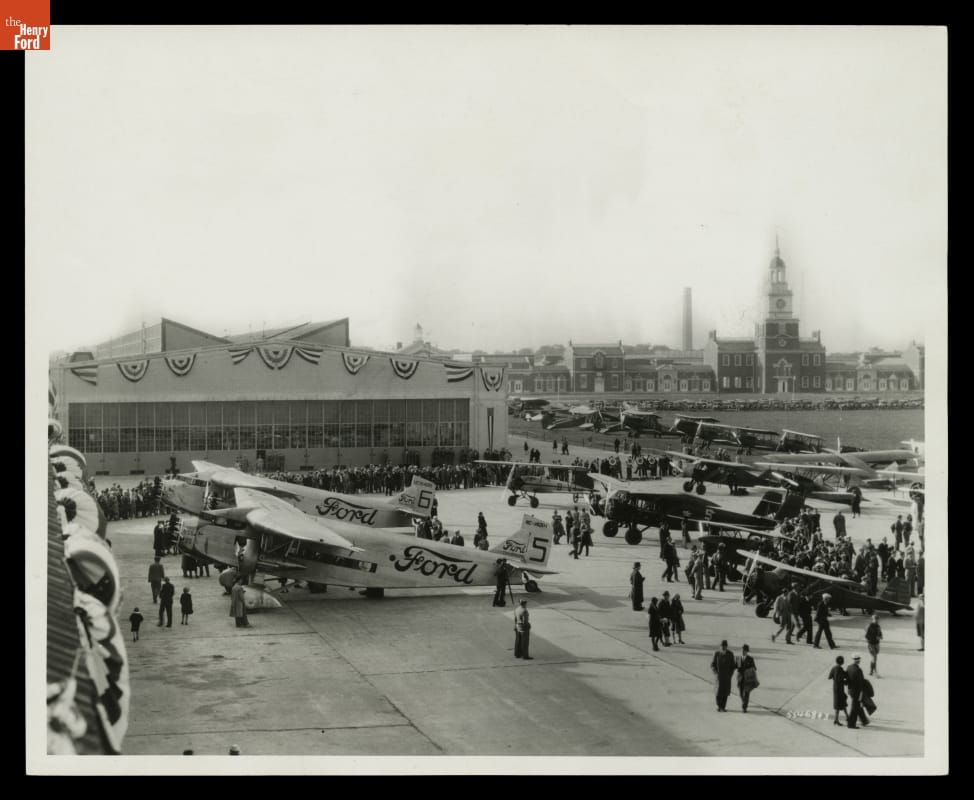
- Ford Reliability Tour at Ford Airport, Dearborn, Michigan, 1930 - From 1925-1931, Ford Motor Company sponsored annual air tours to promote reliability and safety in commercial aircraft. Pilots flew to pre-determined cities, and their airplanes were rated on the ability to take off and land quickly and maintain consistent speeds. The 1930 tour included 18 entries and visited 29 cities in the United States and Canada.
- September 27, 1930
- Collections - Artifact
Ford Reliability Tour at Ford Airport, Dearborn, Michigan, 1930
From 1925-1931, Ford Motor Company sponsored annual air tours to promote reliability and safety in commercial aircraft. Pilots flew to pre-determined cities, and their airplanes were rated on the ability to take off and land quickly and maintain consistent speeds. The 1930 tour included 18 entries and visited 29 cities in the United States and Canada.
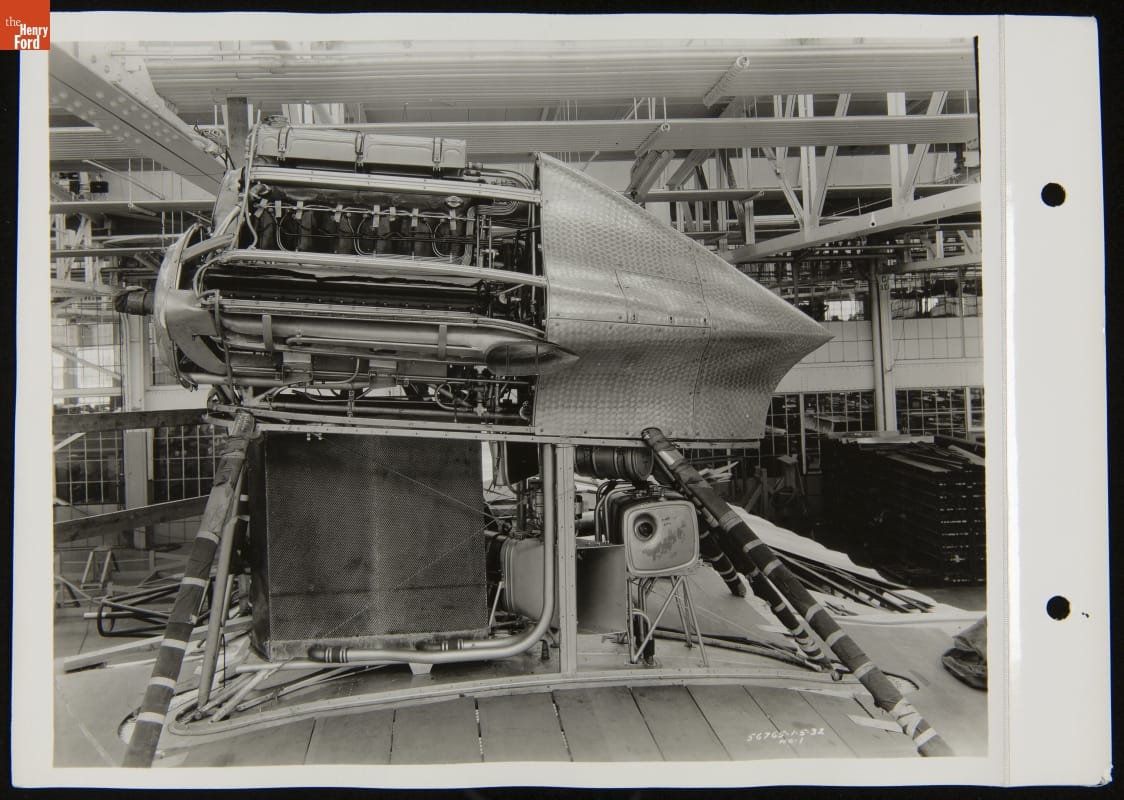
- Construction of Ford Tri-Motor 14-AT Showing Center Hispano Suiza Engine, January 1932 - Ford Motor Company's Tri-Motor, built from 1926-1933, flew in many early American airline fleets. The all-metal airplane was rugged, dependable, and equally adaptable to passenger and freight service. Tri-Motors were built with some of the same mass production techniques used in Ford's automobile plants. This version, the 14-AT, featured three Hispano-Suiza Engines. This photograph reveals the interior of the central engine.
- January 05, 1932
- Collections - Artifact
Construction of Ford Tri-Motor 14-AT Showing Center Hispano Suiza Engine, January 1932
Ford Motor Company's Tri-Motor, built from 1926-1933, flew in many early American airline fleets. The all-metal airplane was rugged, dependable, and equally adaptable to passenger and freight service. Tri-Motors were built with some of the same mass production techniques used in Ford's automobile plants. This version, the 14-AT, featured three Hispano-Suiza Engines. This photograph reveals the interior of the central engine.
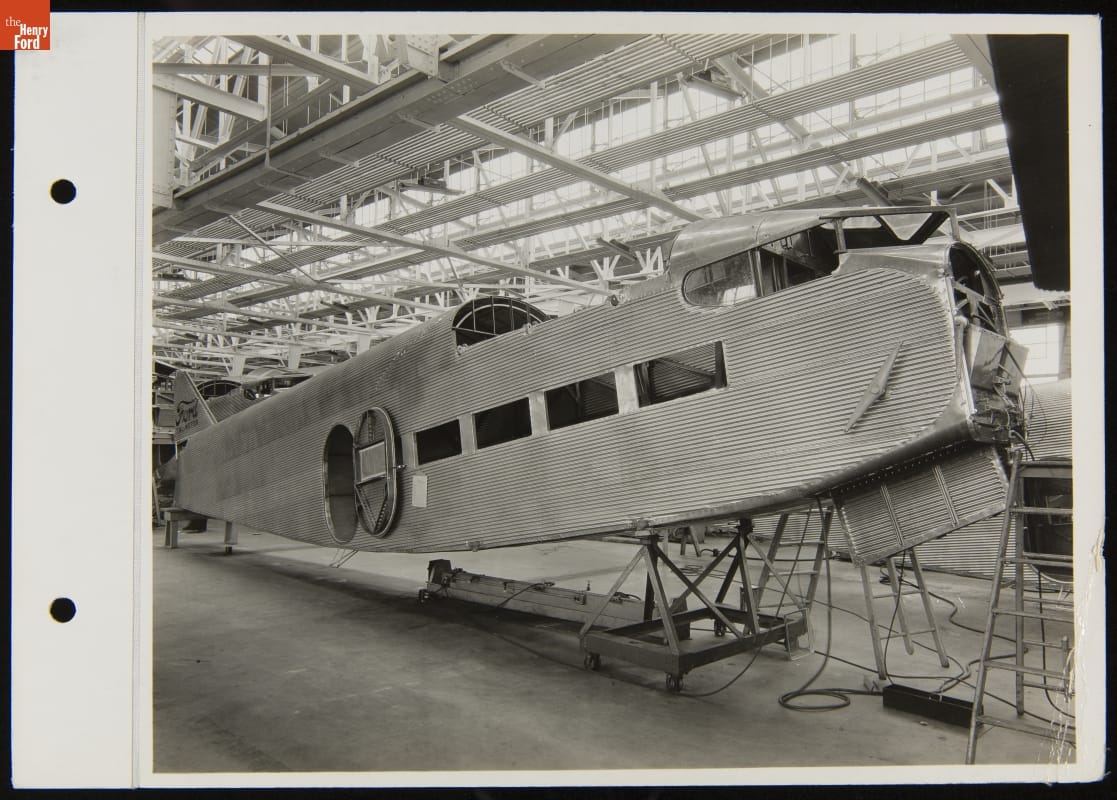
- Ford Tri-Motor Airplane Fuselage Being Constructed at the Stout Factory, Dearborn, Michigan, April 1929 - Ford Motor Company's Tri-Motor, built from 1926-1933, flew in many early American airline fleets. The all-metal airplane was rugged, dependable, and equally adaptable to passenger and freight service. Tri-Motors were built with some of the same mass production techniques used in Ford's automobile plants. The fuselage, or the main body of the airplane, is constructed in this photograph.
- April 30, 1929
- Collections - Artifact
Ford Tri-Motor Airplane Fuselage Being Constructed at the Stout Factory, Dearborn, Michigan, April 1929
Ford Motor Company's Tri-Motor, built from 1926-1933, flew in many early American airline fleets. The all-metal airplane was rugged, dependable, and equally adaptable to passenger and freight service. Tri-Motors were built with some of the same mass production techniques used in Ford's automobile plants. The fuselage, or the main body of the airplane, is constructed in this photograph.
- Alexander Hamilton's Arguments against Federal Subscription of Stock in the Proposed Chesapeake and Delaware Canal, circa 1803 -
- circa 1803
- Collections - Artifact
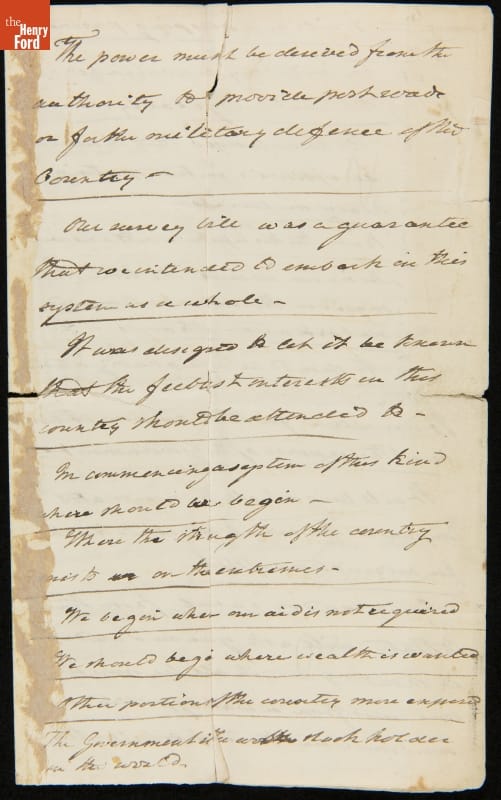
Alexander Hamilton's Arguments against Federal Subscription of Stock in the Proposed Chesapeake and Delaware Canal, circa 1803
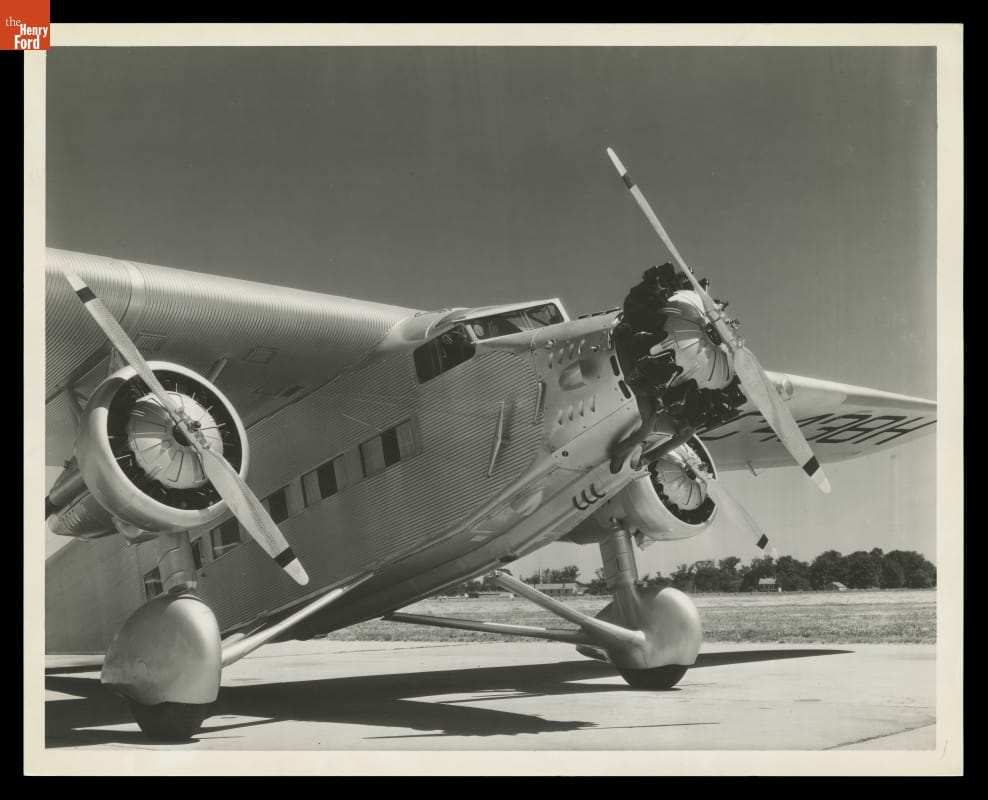
- Ford Tri-Motor 5-AT-112 Airplane at Ford Airport, 1932 - In 1928, the Stout Metal Airplane Company, a division of Ford Motor Company, introduced a new airliner. The 5-AT was faster and more powerful than its popular predecessor, the 4-AT. It had a longer wingspan and higher passenger capacity, and became the most successful all-metal, multi-engine passenger plane in the country. Virtually all existing airlines flew Ford 5-ATs.
- June 24, 1932
- Collections - Artifact
Ford Tri-Motor 5-AT-112 Airplane at Ford Airport, 1932
In 1928, the Stout Metal Airplane Company, a division of Ford Motor Company, introduced a new airliner. The 5-AT was faster and more powerful than its popular predecessor, the 4-AT. It had a longer wingspan and higher passenger capacity, and became the most successful all-metal, multi-engine passenger plane in the country. Virtually all existing airlines flew Ford 5-ATs.
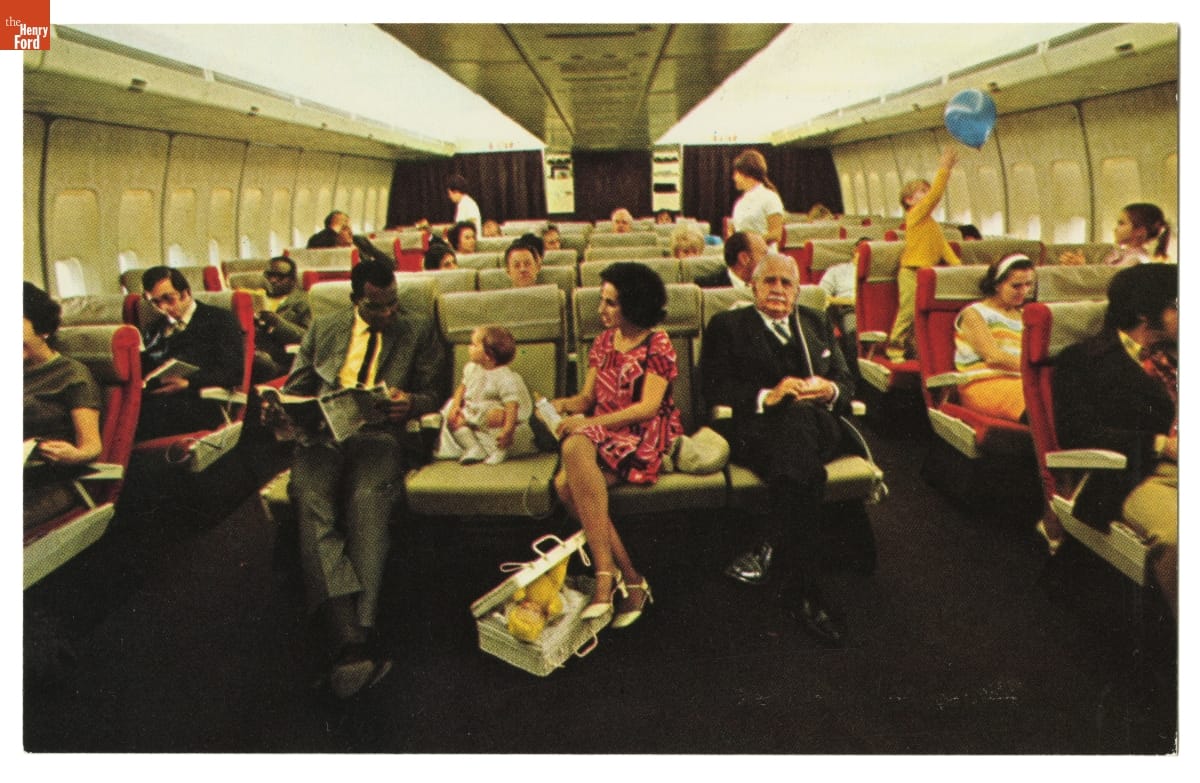
- Advertising Postcard for Pan American Airlines, circa 1970, "The Plane with All the Room in the World" - For much of the 20th century, Pan American World Airways exemplified innovation in air travel. The carrier pioneered the use of wide-body jumbo jets, like the Boeing 747 featured on this postcard, in the 1970s. But rising fuel costs and difficulty establishing domestic U.S. routes strained the company in the 1980s. Pan Am ended operations in 1991.
- circa 1970
- Collections - Artifact
Advertising Postcard for Pan American Airlines, circa 1970, "The Plane with All the Room in the World"
For much of the 20th century, Pan American World Airways exemplified innovation in air travel. The carrier pioneered the use of wide-body jumbo jets, like the Boeing 747 featured on this postcard, in the 1970s. But rising fuel costs and difficulty establishing domestic U.S. routes strained the company in the 1980s. Pan Am ended operations in 1991.
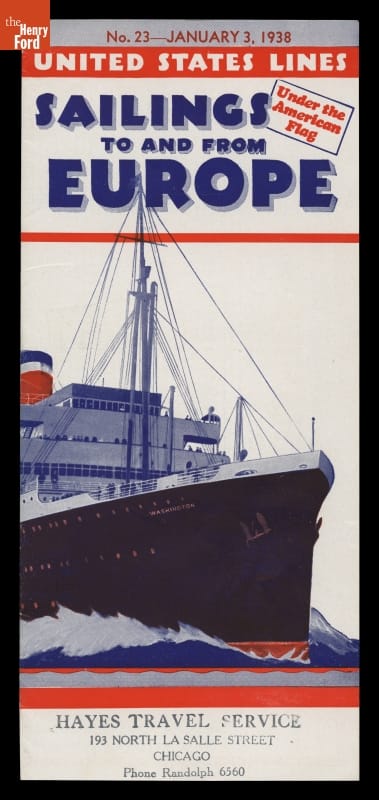
- "United States Lines, Sailings To and From Europe," January 3, 1938 - United States Lines was formed in 1921 and operated transatlantic passenger ocean liners until 1969. In the 1930s, when this brochure was printed, the company built two new liners: <em>Manhattan</em> and <em>Washington</em>. The arrival of transatlantic jet airliners in the late 1950s -- which cut travel time from days to hours -- ended the age of ocean liners.
- January 03, 1938
- Collections - Artifact
"United States Lines, Sailings To and From Europe," January 3, 1938
United States Lines was formed in 1921 and operated transatlantic passenger ocean liners until 1969. In the 1930s, when this brochure was printed, the company built two new liners: Manhattan and Washington. The arrival of transatlantic jet airliners in the late 1950s -- which cut travel time from days to hours -- ended the age of ocean liners.
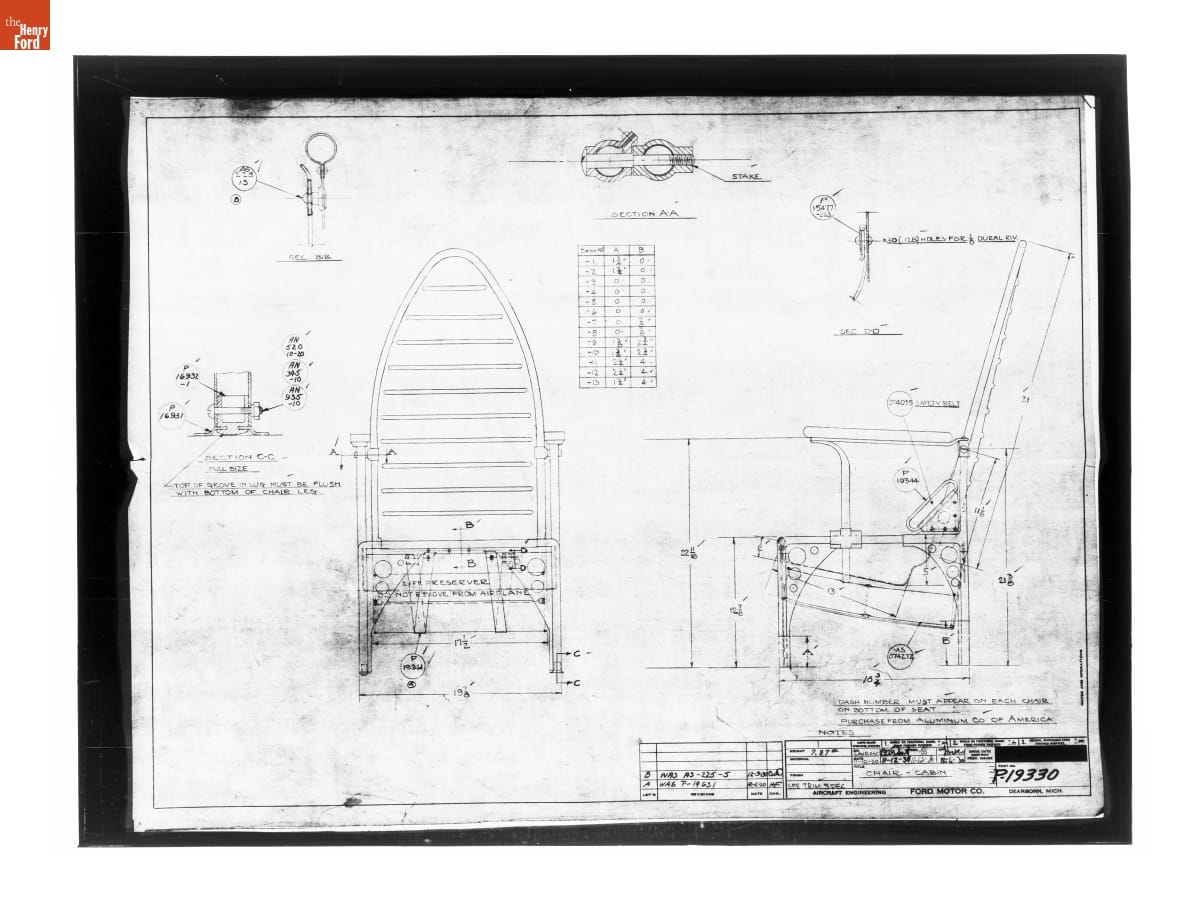
- Drawing, "Chair - Cabin," Ford Tri-Motor (5-AT), December 9, 1930 - The Ford Motor Company created over a million parts drawings from 1903 to 1957. Many of these drawings specify engineering requirements for the components of Ford-made vehicles--including automobiles, trucks, tractors, military vehicles and Tri-motor airplanes. Others document assembly components, stages of casting and forging, or experimental designs. Beginning in the 1940s, Ford transferred the drawings to microfilm.
- December 09, 1930
- Collections - Artifact
Drawing, "Chair - Cabin," Ford Tri-Motor (5-AT), December 9, 1930
The Ford Motor Company created over a million parts drawings from 1903 to 1957. Many of these drawings specify engineering requirements for the components of Ford-made vehicles--including automobiles, trucks, tractors, military vehicles and Tri-motor airplanes. Others document assembly components, stages of casting and forging, or experimental designs. Beginning in the 1940s, Ford transferred the drawings to microfilm.
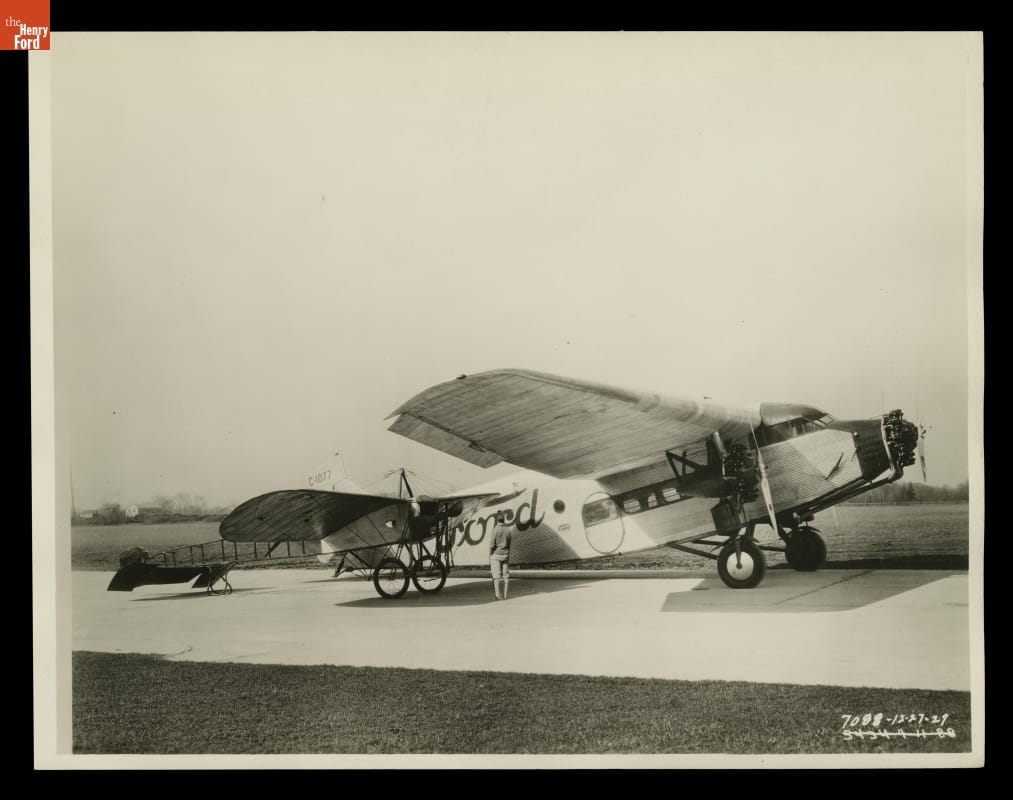
- Ford Trimotor 4-AT-10 and Bleriot Airplane at Ford Airport, Dearborn, Michigan, April 1928 - Two generations of aircraft contrasted at Ford Airport. The smaller Bleriot XI was of the type flown by French pilot Louis Bleriot across the English Channel in 1909. Its wood frame and fabric-covered surfaces were light but fragile. The larger Ford Trimotor was of a design built from 1926 to 1933. Its metal construction and three motors suggested strength and safety.
- April 11, 1928
- Collections - Artifact
Ford Trimotor 4-AT-10 and Bleriot Airplane at Ford Airport, Dearborn, Michigan, April 1928
Two generations of aircraft contrasted at Ford Airport. The smaller Bleriot XI was of the type flown by French pilot Louis Bleriot across the English Channel in 1909. Its wood frame and fabric-covered surfaces were light but fragile. The larger Ford Trimotor was of a design built from 1926 to 1933. Its metal construction and three motors suggested strength and safety.