
Search
- De Dion-Bouton Motor Tricycle, circa 1898 - French builders Albert Comte De Dion and Georges Bouton produced their first gasoline tricycles in 1895. Their three-wheel design provided more room for mounting the engine, and it eliminated the risk of "highsider" accidents -- in which a motorcycle loses traction and skids, then suddenly regains traction, throwing the rider from the bike. De Dion-Bouton's successful design was widely copied.
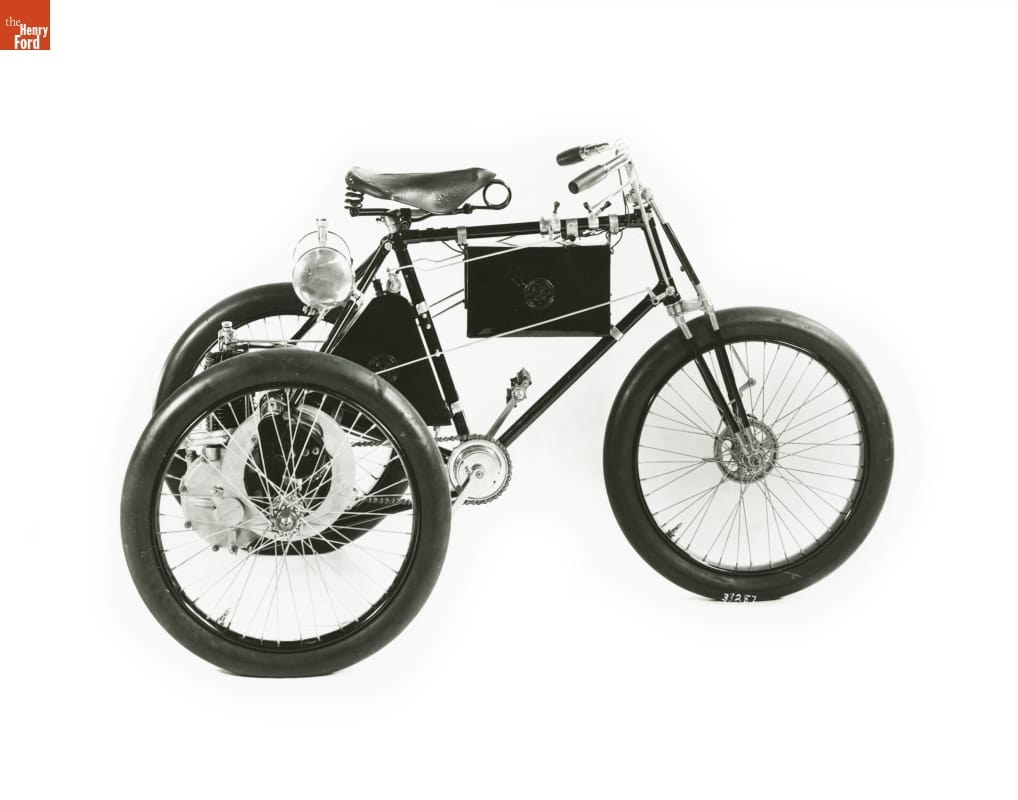
- 1898
- Collections - Artifact
De Dion-Bouton Motor Tricycle, circa 1898
French builders Albert Comte De Dion and Georges Bouton produced their first gasoline tricycles in 1895. Their three-wheel design provided more room for mounting the engine, and it eliminated the risk of "highsider" accidents -- in which a motorcycle loses traction and skids, then suddenly regains traction, throwing the rider from the bike. De Dion-Bouton's successful design was widely copied.
- M. M. M. Slattery's Electric Tricycle, circa 1910 - Marmaduke Slattery, chief electrician at the Fort Wayne Jenney Electric Light Company, had this electric tricycle built in 1889. Slattery powered his tricycle with storage batteries--probably of his own design--which reportedly could run for nine hours. Slattery died in 1892 but the vehicle must have remained in the Indiana city--this image was taken around 1910 by a Fort Wayne photographer.
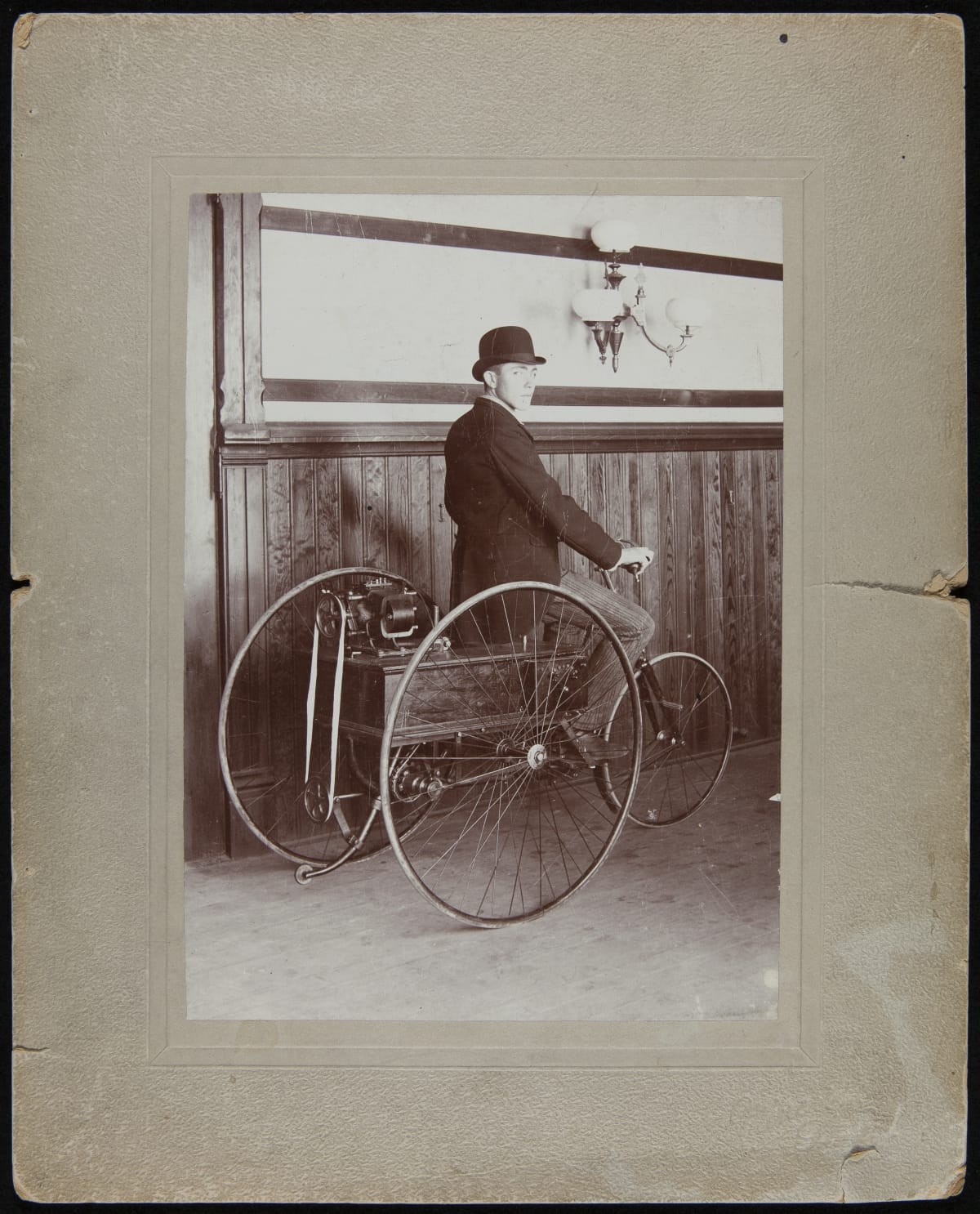
- circa 1910
- Collections - Artifact
M. M. M. Slattery's Electric Tricycle, circa 1910
Marmaduke Slattery, chief electrician at the Fort Wayne Jenney Electric Light Company, had this electric tricycle built in 1889. Slattery powered his tricycle with storage batteries--probably of his own design--which reportedly could run for nine hours. Slattery died in 1892 but the vehicle must have remained in the Indiana city--this image was taken around 1910 by a Fort Wayne photographer.
- Andrea Makar on Her Tricycle at the Makar Family Home on Stahelin Street, Detroit, Michigan, May 1947 -
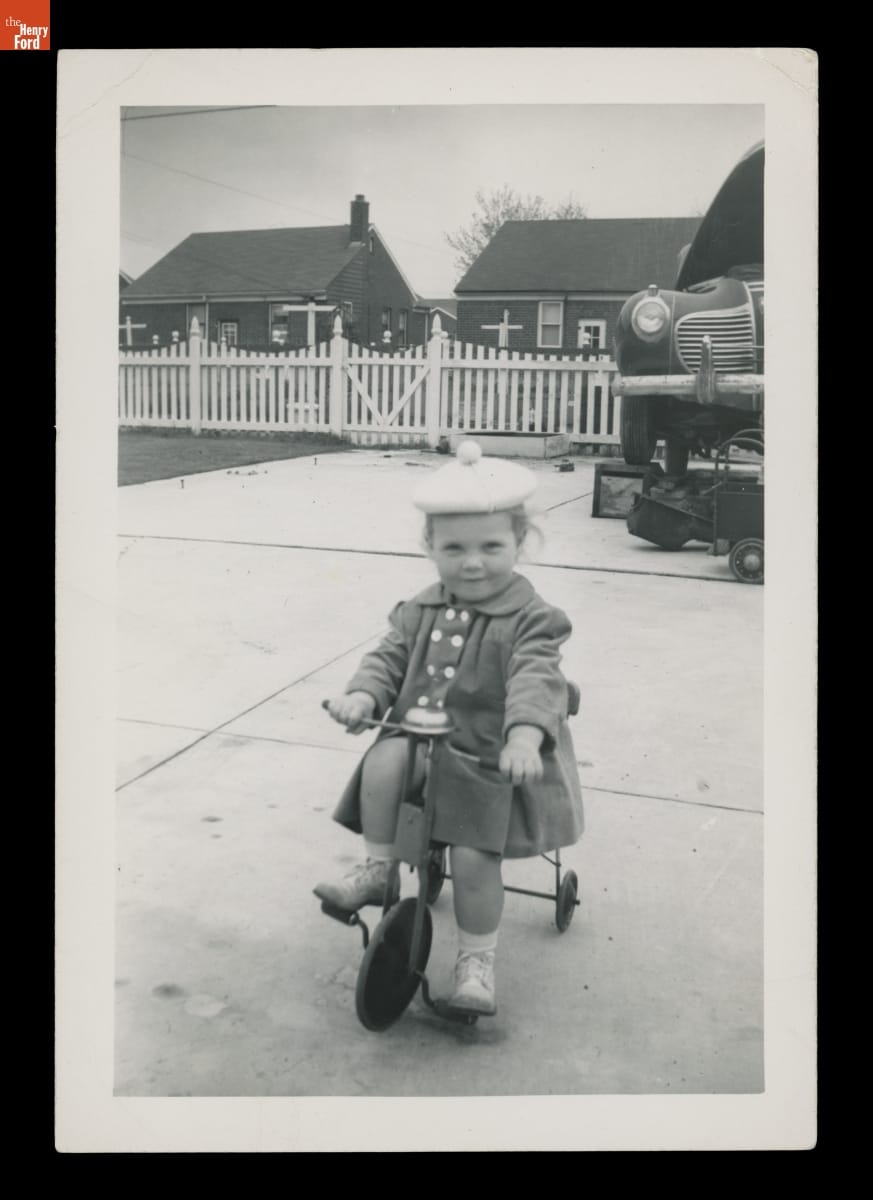
- May 01, 1947
- Collections - Artifact
Andrea Makar on Her Tricycle at the Makar Family Home on Stahelin Street, Detroit, Michigan, May 1947
- Man Seated on a Rowing Tricycle, circa 1885 - An unidentified cyclist from the mid-1880s poses on a rowing tricycle. Instead of pedaling, the cyclist propelled this velocipede by an intricate system of pulleys and cables -- a mechanism similar to a rowing machine. Oarsmen, who competed in professional, amateur, or collegiate rowing contests, were among the early users of this interesting bicycle adaptation.
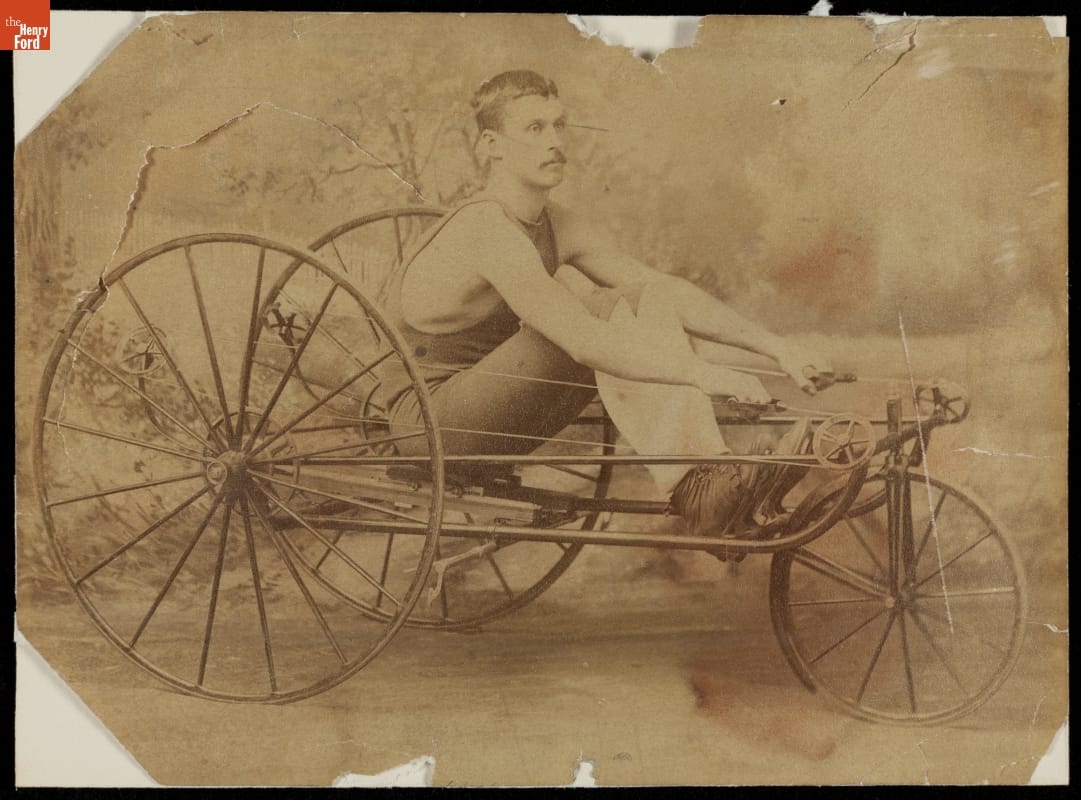
- circa 1885
- Collections - Artifact
Man Seated on a Rowing Tricycle, circa 1885
An unidentified cyclist from the mid-1880s poses on a rowing tricycle. Instead of pedaling, the cyclist propelled this velocipede by an intricate system of pulleys and cables -- a mechanism similar to a rowing machine. Oarsmen, who competed in professional, amateur, or collegiate rowing contests, were among the early users of this interesting bicycle adaptation.
- Boy Riding a Tricycle, circa 1940 - Small children who could not balance on two wheels could always pedal on three. A tricycle was the first step for many twentieth-century kids before they graduated to the two-wheeler (sometimes with help from a set of training wheels).
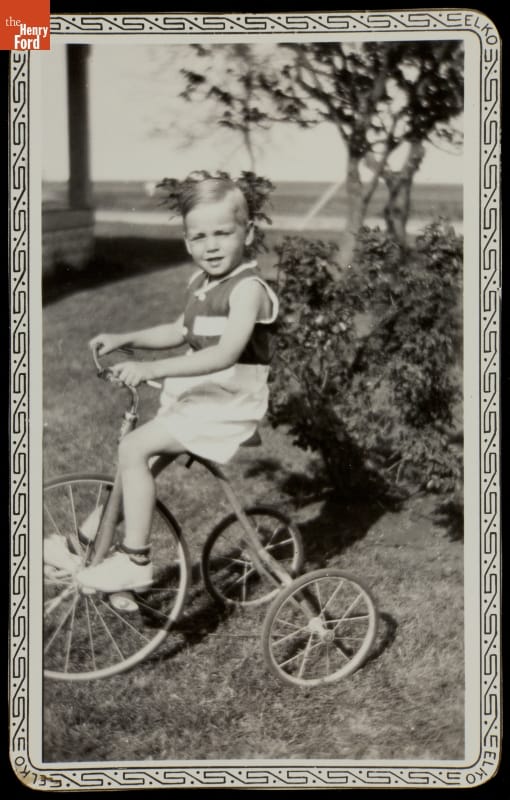
- circa 1940
- Collections - Artifact
Boy Riding a Tricycle, circa 1940
Small children who could not balance on two wheels could always pedal on three. A tricycle was the first step for many twentieth-century kids before they graduated to the two-wheeler (sometimes with help from a set of training wheels).
- Boy and Girl with a Tricycle, circa 1940 - Small children who could not balance on two wheels could always pedal on three. A tricycle was the first step for many twentieth-century kids before they graduated to the two-wheeler (sometimes with help from a set of training wheels).
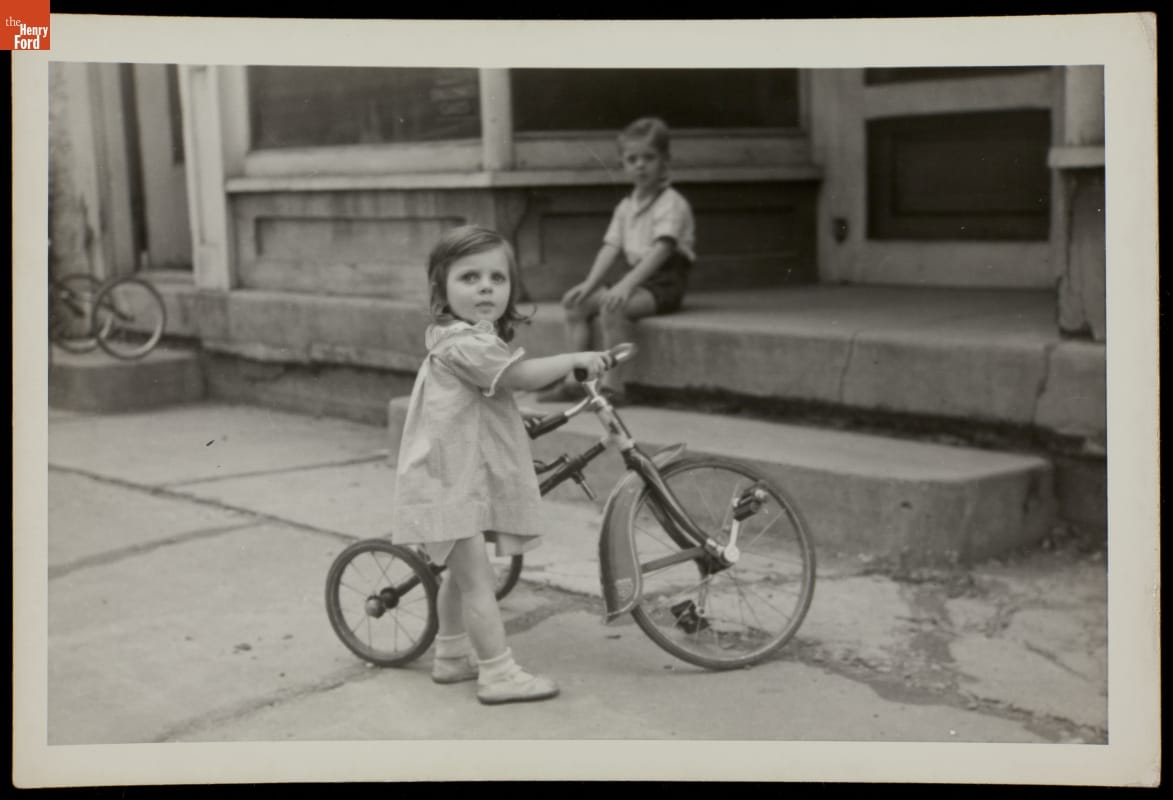
- circa 1940
- Collections - Artifact
Boy and Girl with a Tricycle, circa 1940
Small children who could not balance on two wheels could always pedal on three. A tricycle was the first step for many twentieth-century kids before they graduated to the two-wheeler (sometimes with help from a set of training wheels).
- William Clay Ford, Age 4, Riding a Tricycle at Fair Lane, 1929 - William Clay Ford (1925-2014) was Henry Ford's grandson and the youngest of Edsel and Eleanor Clay Ford's four children. He is shown here at age four, riding a tricycle on the grounds of Fair Lane, the Dearborn estate of his grandfather Henry and grandmother Clara Ford.
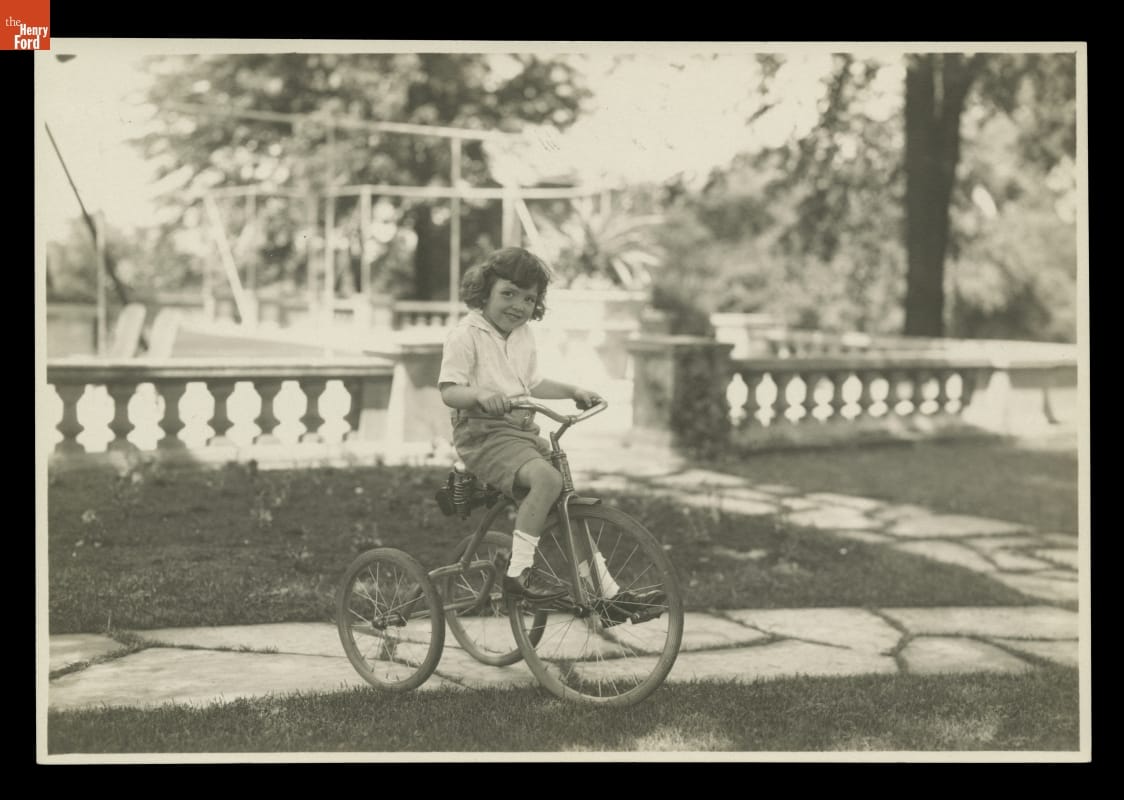
- June 17, 1929
- Collections - Artifact
William Clay Ford, Age 4, Riding a Tricycle at Fair Lane, 1929
William Clay Ford (1925-2014) was Henry Ford's grandson and the youngest of Edsel and Eleanor Clay Ford's four children. He is shown here at age four, riding a tricycle on the grounds of Fair Lane, the Dearborn estate of his grandfather Henry and grandmother Clara Ford.
- Hallmark "Kringle's Whirligig" Christmas Ornament, 1999 - Already known for greeting cards, Hallmark introduced a line of Christmas ornaments in 1973. The company's annual release of an increasing array of ornaments revolutionized Christmas decorating, appealing to customers' interest in marking memories and milestones as well as expressing one's personality and unique tastes.
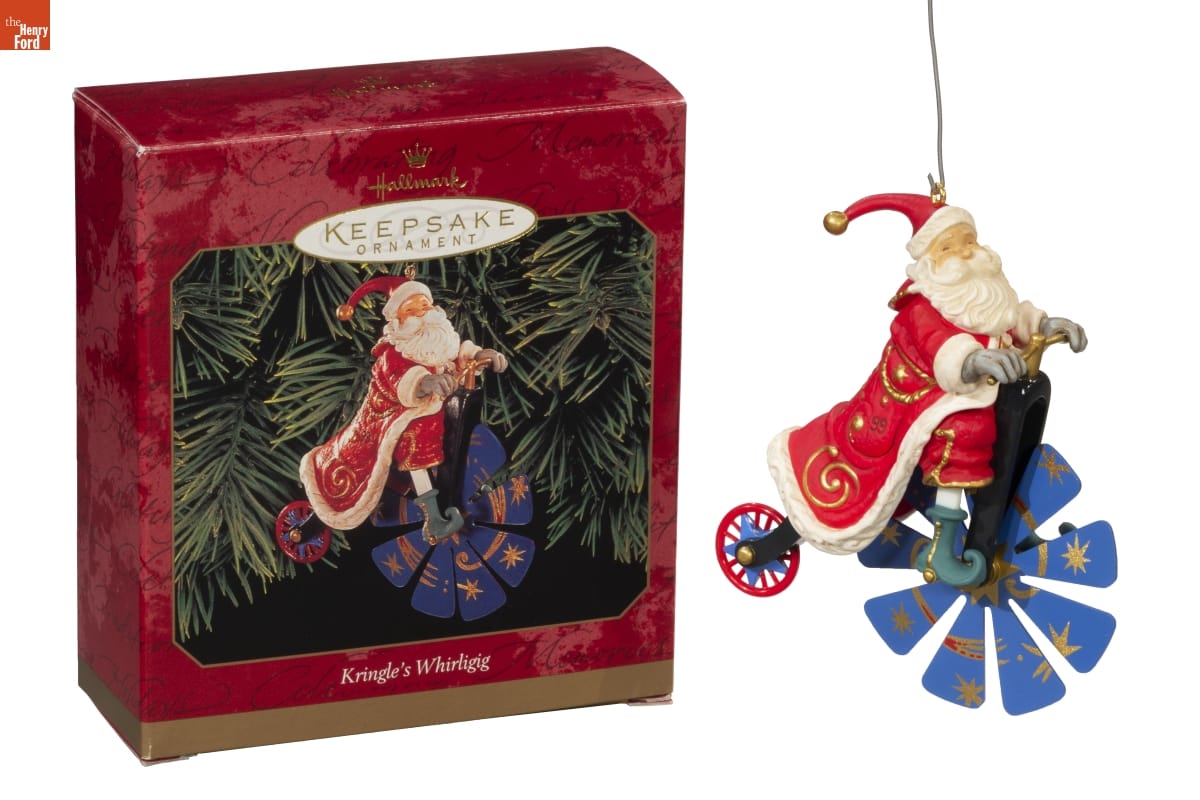
- 1999
- Collections - Artifact
Hallmark "Kringle's Whirligig" Christmas Ornament, 1999
Already known for greeting cards, Hallmark introduced a line of Christmas ornaments in 1973. The company's annual release of an increasing array of ornaments revolutionized Christmas decorating, appealing to customers' interest in marking memories and milestones as well as expressing one's personality and unique tastes.
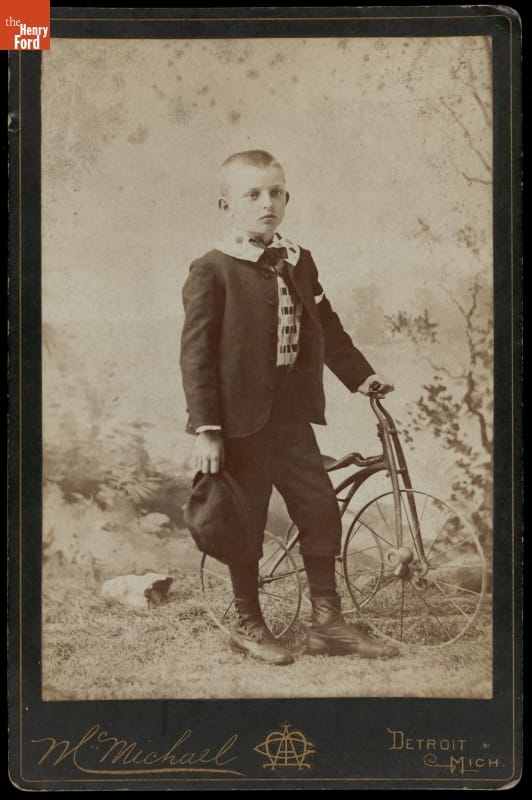
- Boy with a Tricycle, circa 1895 - Professional photographers began producing cabinet cards in 1867. Consumers quickly preferred them over earlier cartes-de-visite, which were mounted on smaller cardboard stock. Through the early 1900s, Americans commonly exchanged and collected cabinet photographs of family, friends and celebrities. This example depicts a young boy, who posed with a tricycle in Detroit's McMichael Studio around 1895.
- circa 1895
- Collections - Artifact
Boy with a Tricycle, circa 1895
Professional photographers began producing cabinet cards in 1867. Consumers quickly preferred them over earlier cartes-de-visite, which were mounted on smaller cardboard stock. Through the early 1900s, Americans commonly exchanged and collected cabinet photographs of family, friends and celebrities. This example depicts a young boy, who posed with a tricycle in Detroit's McMichael Studio around 1895.
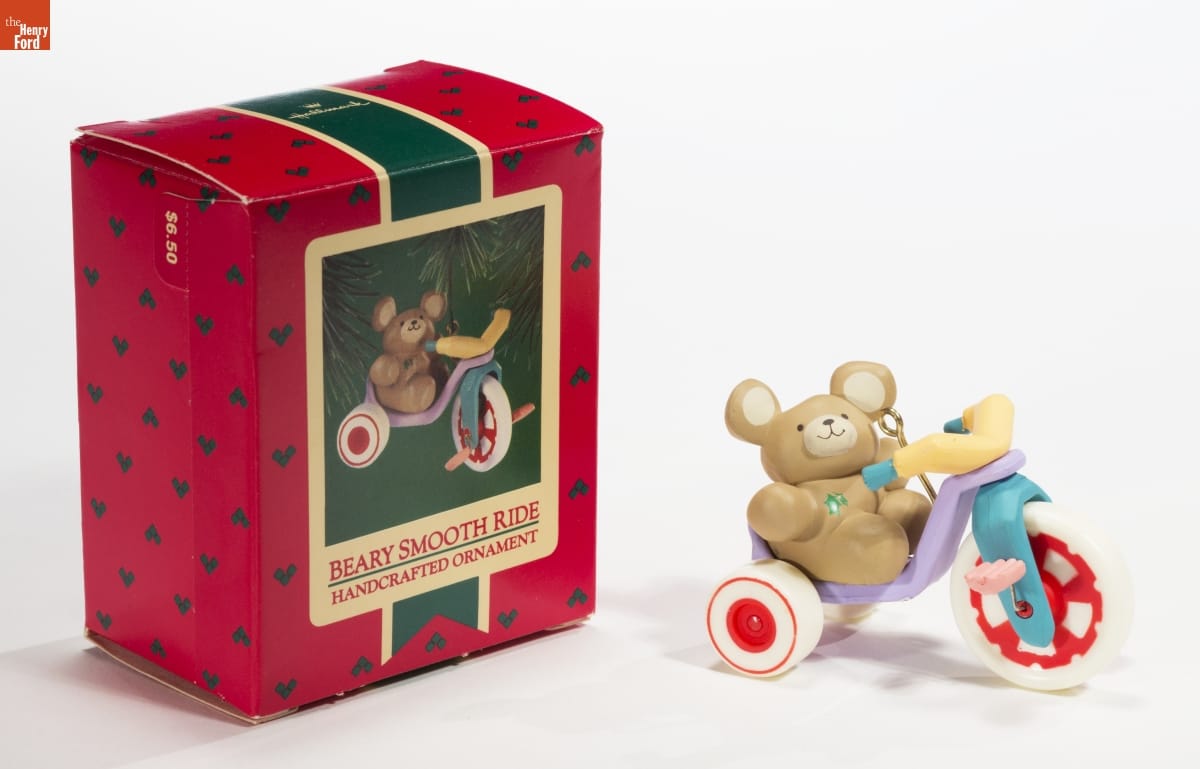
- Hallmark "Beary Smooth Ride" Christmas Ornament, 1985 - Already known for greeting cards, Hallmark introduced a line of Christmas ornaments in 1973. The company's annual release of an increasing array of ornaments revolutionized Christmas decorating, appealing to customers' interest in marking memories and milestones as well as expressing one's personality and unique tastes.
- 1985
- Collections - Artifact
Hallmark "Beary Smooth Ride" Christmas Ornament, 1985
Already known for greeting cards, Hallmark introduced a line of Christmas ornaments in 1973. The company's annual release of an increasing array of ornaments revolutionized Christmas decorating, appealing to customers' interest in marking memories and milestones as well as expressing one's personality and unique tastes.