
Search
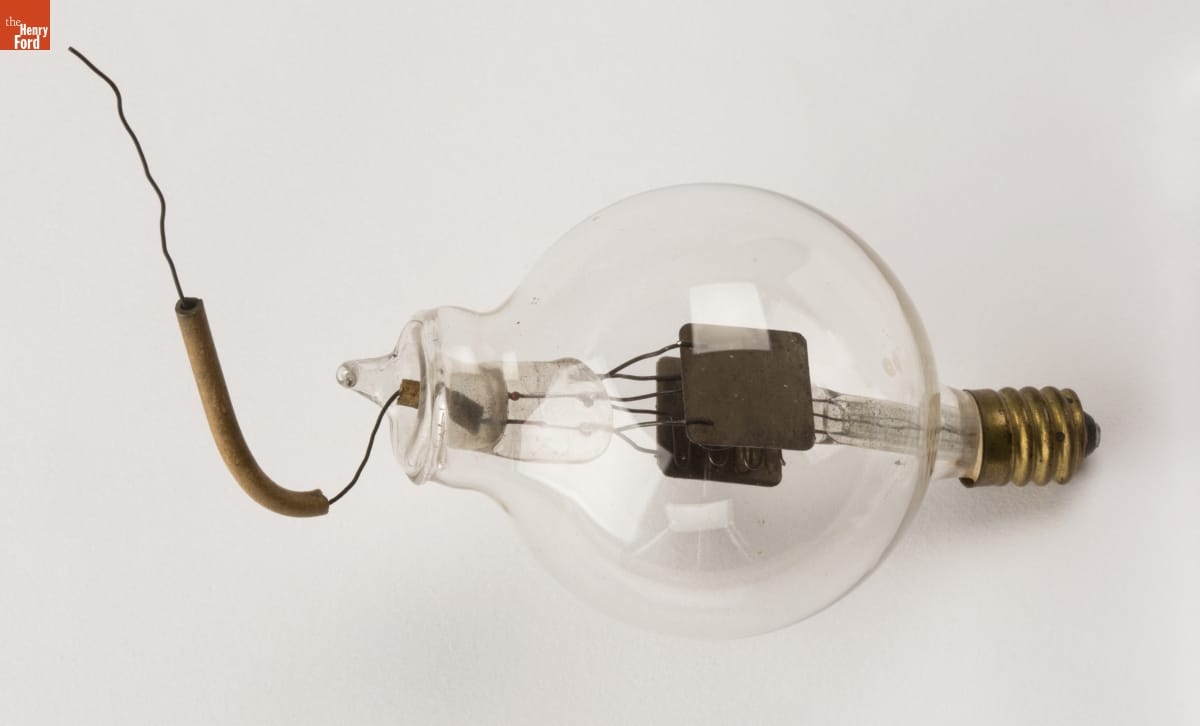
- De Forest Audion Tube, circa 1908 - Dr. Lee De Forest was an inventor, engineer, and the self-styled "Father of Radio." In 1906, De Forest invented the Audion tube, allowing the detection and amplification of weak radio signals. As the first triode vacuum tube, the Audion revolutionized radio broadcasting--and made it more practical. By the late 1920s, vacuum tube radios were the widespread in people's homes.
- circa 1908
- Collections - Artifact
De Forest Audion Tube, circa 1908
Dr. Lee De Forest was an inventor, engineer, and the self-styled "Father of Radio." In 1906, De Forest invented the Audion tube, allowing the detection and amplification of weak radio signals. As the first triode vacuum tube, the Audion revolutionized radio broadcasting--and made it more practical. By the late 1920s, vacuum tube radios were the widespread in people's homes.
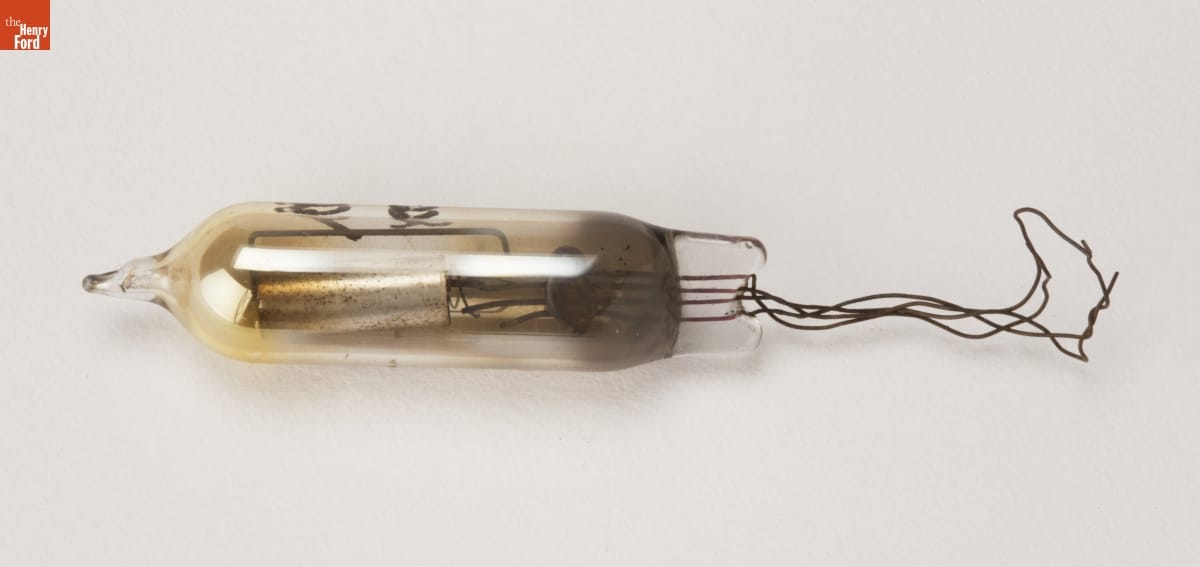
- Westinghouse Lamp Company Experimental Radio Tube, 1920-1921 - Radio engineer McMurdo Silver created six tiny experimental vacuum tubes while employed at Westinghouse Electric in the early 1920s. The tubes were near-duplicates of Western Electric's VT-5s--the original "peanut" tubes. Tubes like these were essential to the low-powered trench radios used in WWI. Silver went on to found Silver-Marshall Inc. and frequently contributed technical articles to radio hobbyist magazines.
- 1920-1921
- Collections - Artifact
Westinghouse Lamp Company Experimental Radio Tube, 1920-1921
Radio engineer McMurdo Silver created six tiny experimental vacuum tubes while employed at Westinghouse Electric in the early 1920s. The tubes were near-duplicates of Western Electric's VT-5s--the original "peanut" tubes. Tubes like these were essential to the low-powered trench radios used in WWI. Silver went on to found Silver-Marshall Inc. and frequently contributed technical articles to radio hobbyist magazines.
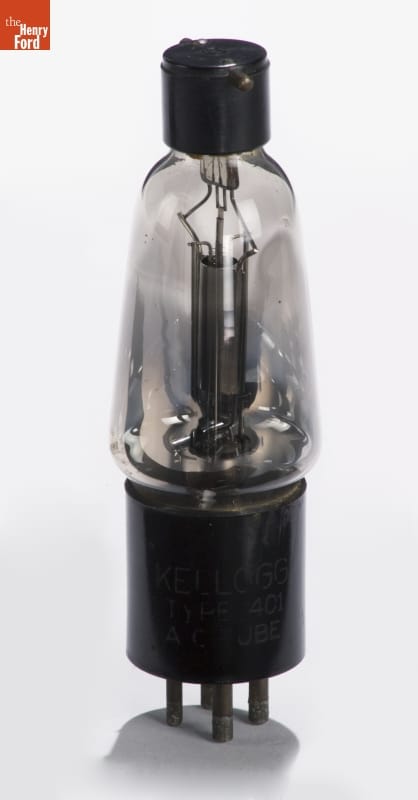
- Kellogg Triode Vacuum Tube, 1926 - Vacuum tubes appear in older radios, televisions, amplifiers, computers, and other electronic devices. Their function: to amplify and strengthen weak electronic signals. Typical tubes are sealed glass bulbs evacuated of gas, allowing electron flow to be influenced by an interior cathode, plate and grid. Perfected in 1906 by Lee De Forest, the vacuum tube was the genesis of a communications revolution.
- 1926
- Collections - Artifact
Kellogg Triode Vacuum Tube, 1926
Vacuum tubes appear in older radios, televisions, amplifiers, computers, and other electronic devices. Their function: to amplify and strengthen weak electronic signals. Typical tubes are sealed glass bulbs evacuated of gas, allowing electron flow to be influenced by an interior cathode, plate and grid. Perfected in 1906 by Lee De Forest, the vacuum tube was the genesis of a communications revolution.
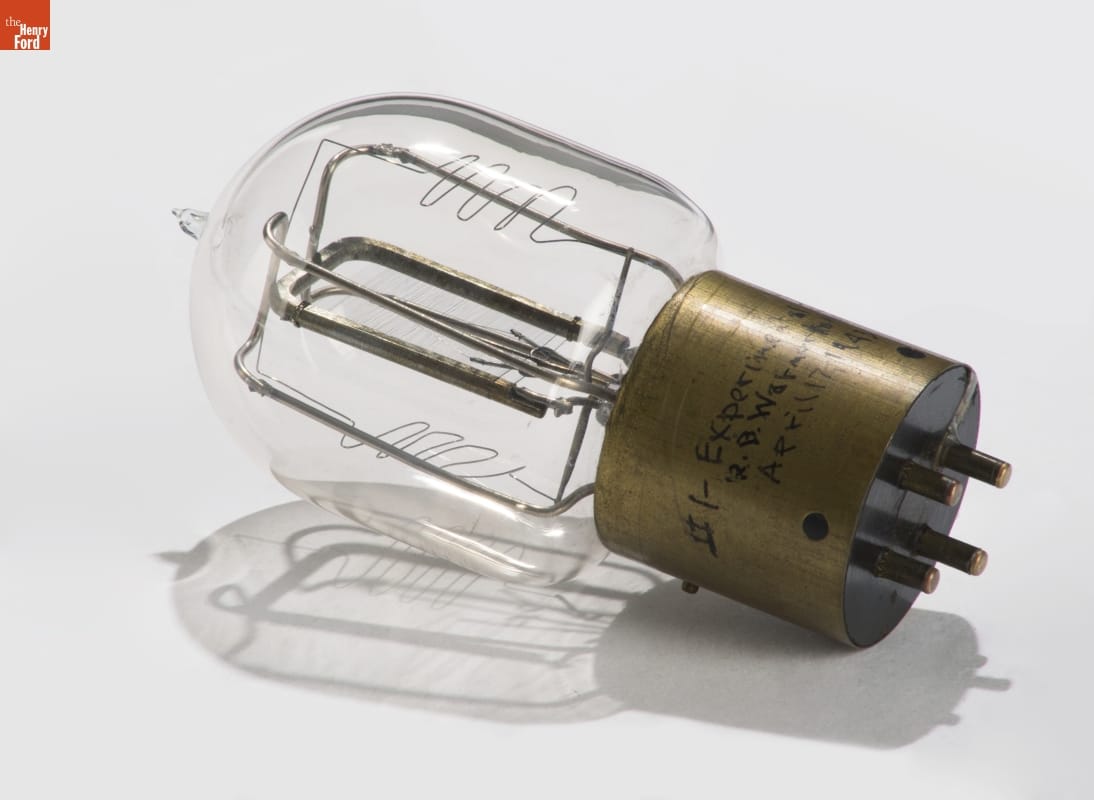
- General Electric Experimental Triode Vacuum Tube, circa 1919 - Vacuum tubes appear in older radios, televisions, amplifiers, computers, and other electronic devices. Their function: to amplify and strengthen weak electronic signals. Typical tubes are sealed glass bulbs evacuated of gas, allowing electron flow to be influenced by an interior cathode, plate and grid. Perfected in 1906 by Lee De Forest, the vacuum tube was the genesis of a communications revolution.
- circa 1919
- Collections - Artifact
General Electric Experimental Triode Vacuum Tube, circa 1919
Vacuum tubes appear in older radios, televisions, amplifiers, computers, and other electronic devices. Their function: to amplify and strengthen weak electronic signals. Typical tubes are sealed glass bulbs evacuated of gas, allowing electron flow to be influenced by an interior cathode, plate and grid. Perfected in 1906 by Lee De Forest, the vacuum tube was the genesis of a communications revolution.
- Western Electric 100 Kilowatt Water-Cooled Triode, Type 298A, circa 1939 - Vacuum tubes appear in older radios, televisions, amplifiers, computers, and other electronic devices. Their function: to amplify and strengthen weak electronic signals. Typical tubes are sealed glass bulbs evacuated of gas, allowing electron flow to be influenced by a cathode, plate and grid. This is a water-cooled version--a necessity to displace the intense heat generated by large, powerful tubes.
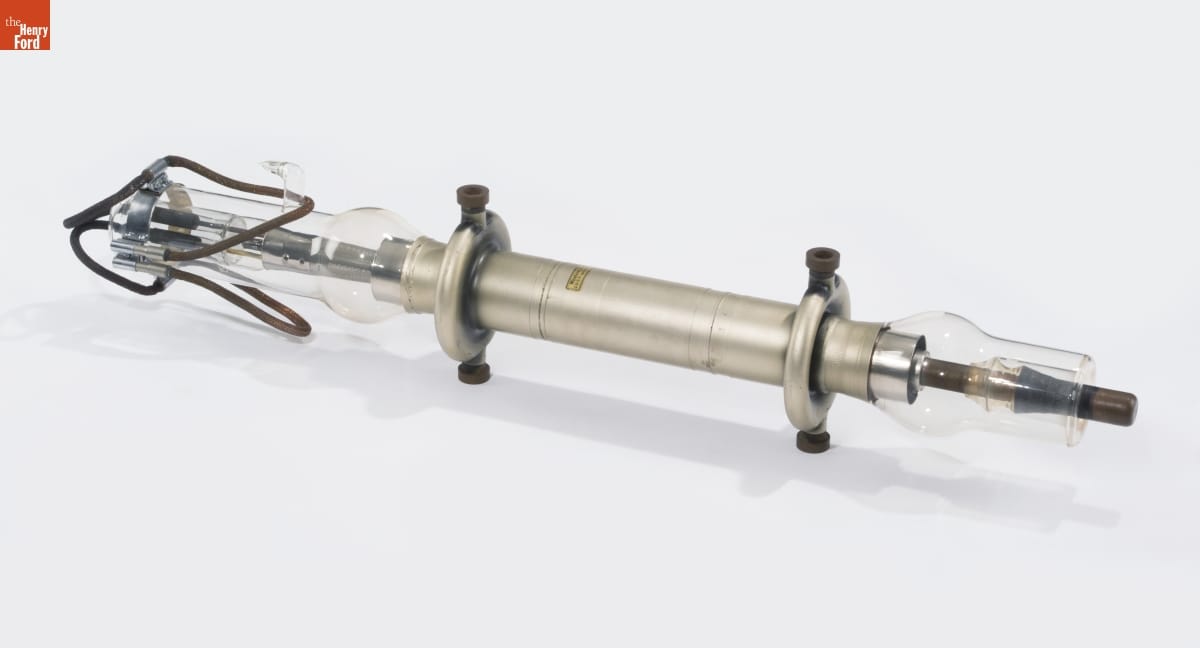
- circa 1939
- Collections - Artifact
Western Electric 100 Kilowatt Water-Cooled Triode, Type 298A, circa 1939
Vacuum tubes appear in older radios, televisions, amplifiers, computers, and other electronic devices. Their function: to amplify and strengthen weak electronic signals. Typical tubes are sealed glass bulbs evacuated of gas, allowing electron flow to be influenced by a cathode, plate and grid. This is a water-cooled version--a necessity to displace the intense heat generated by large, powerful tubes.
- Westinghouse Lamp Company Experimental Radio Tube, 1920-1921 - Radio engineer McMurdo Silver created six tiny experimental vacuum tubes while employed at Westinghouse Electric in the early 1920s. The tubes were near-duplicates of Western Electric's VT-5s--the original "peanut" tubes. Tubes like these were essential to the low-powered trench radios used in WWI. Silver went on to found Silver-Marshall Inc. and frequently contributed technical articles to radio hobbyist magazines.
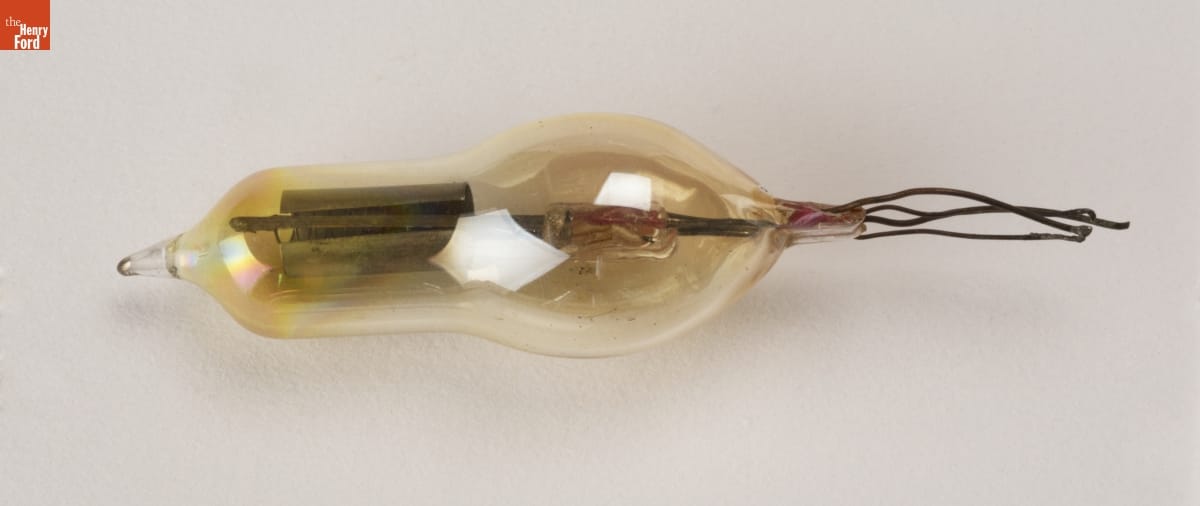
- 1920-1921
- Collections - Artifact
Westinghouse Lamp Company Experimental Radio Tube, 1920-1921
Radio engineer McMurdo Silver created six tiny experimental vacuum tubes while employed at Westinghouse Electric in the early 1920s. The tubes were near-duplicates of Western Electric's VT-5s--the original "peanut" tubes. Tubes like these were essential to the low-powered trench radios used in WWI. Silver went on to found Silver-Marshall Inc. and frequently contributed technical articles to radio hobbyist magazines.
- General Electric Company FP 54 Triode Vacuum Tube, circa 1942 - Vacuum tubes appear in older radios, televisions, amplifiers, computers, and other electronic devices. Their function: to amplify and strengthen weak electronic signals. Typical tubes are sealed glass bulbs evacuated of gas, allowing electron flow to be influenced by an interior cathode, plate and grid. Perfected in 1906 by Lee De Forest, the vacuum tube was the genesis of a communications revolution.
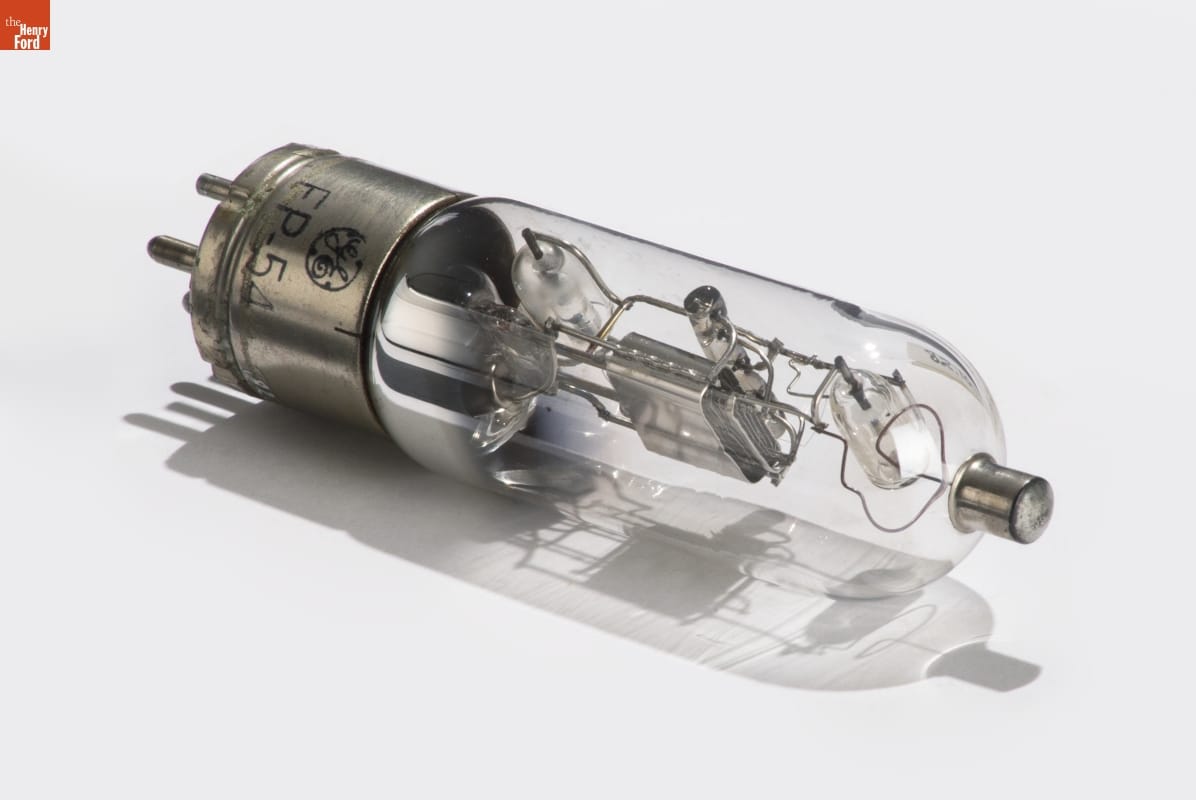
- circa 1942
- Collections - Artifact
General Electric Company FP 54 Triode Vacuum Tube, circa 1942
Vacuum tubes appear in older radios, televisions, amplifiers, computers, and other electronic devices. Their function: to amplify and strengthen weak electronic signals. Typical tubes are sealed glass bulbs evacuated of gas, allowing electron flow to be influenced by an interior cathode, plate and grid. Perfected in 1906 by Lee De Forest, the vacuum tube was the genesis of a communications revolution.
- Bootleg Triode Vacuum Tube, circa 1923 - Vacuum tubes appear in older radios, televisions, amplifiers, computers, and other electronic devices. Their function: to amplify and strengthen weak electronic signals. Typical tubes are sealed glass bulbs evacuated of gas, allowing electron flow to be influenced by an interior cathode, plate and grid. This is a "bootleg" tube--a cheaper alternative to DeForest Audion tubes, then monopolizing the market.
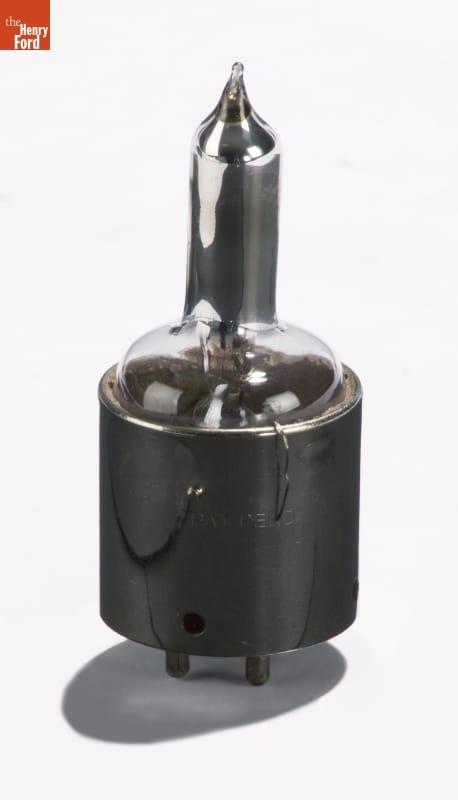
- circa 1923
- Collections - Artifact
Bootleg Triode Vacuum Tube, circa 1923
Vacuum tubes appear in older radios, televisions, amplifiers, computers, and other electronic devices. Their function: to amplify and strengthen weak electronic signals. Typical tubes are sealed glass bulbs evacuated of gas, allowing electron flow to be influenced by an interior cathode, plate and grid. This is a "bootleg" tube--a cheaper alternative to DeForest Audion tubes, then monopolizing the market.
- Westinghouse Lamp Company Experimental Radio Tube, 1920-1921 - Radio engineer McMurdo Silver created six tiny experimental vacuum tubes while employed at Westinghouse Electric in the early 1920s. The tubes were near-duplicates of Western Electric's VT-5s--the original "peanut" tubes. Tubes like these were essential to the low-powered trench radios used in WWI. Silver went on to found Silver-Marshall Inc. and frequently contributed technical articles to radio hobbyist magazines.
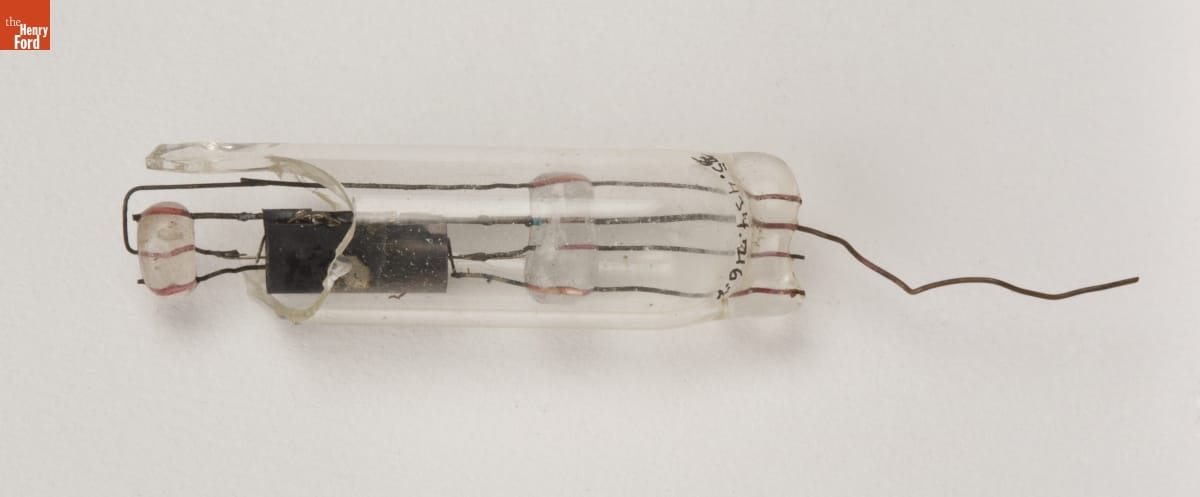
- 1920-1921
- Collections - Artifact
Westinghouse Lamp Company Experimental Radio Tube, 1920-1921
Radio engineer McMurdo Silver created six tiny experimental vacuum tubes while employed at Westinghouse Electric in the early 1920s. The tubes were near-duplicates of Western Electric's VT-5s--the original "peanut" tubes. Tubes like these were essential to the low-powered trench radios used in WWI. Silver went on to found Silver-Marshall Inc. and frequently contributed technical articles to radio hobbyist magazines.
- De Forest Audion Tube, 1910-1914 - Dr. Lee De Forest was an inventor, engineer, and the self-styled "Father of Radio." In 1906, De Forest invented the Audion tube, allowing the detection and amplification of weak radio signals. As the first triode vacuum tube, the Audion revolutionized radio broadcasting--and made it more practical. By the late 1920s, vacuum tube radios were the widespread in people's homes.
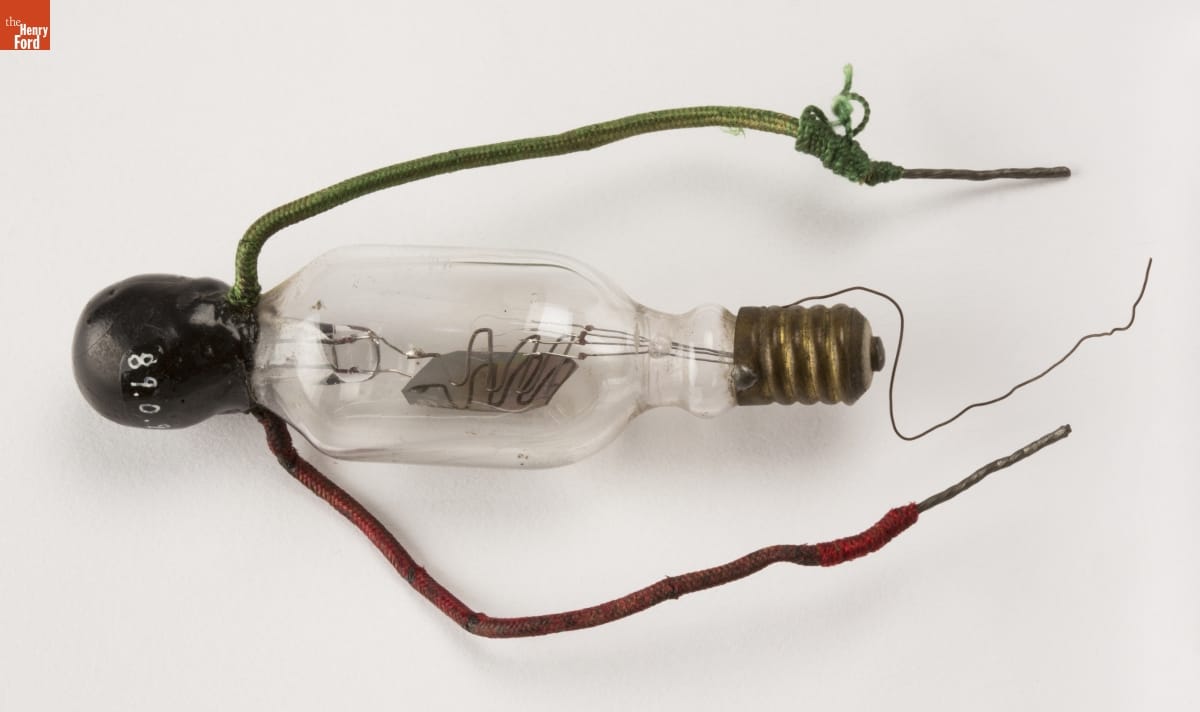
- 1910-1914
- Collections - Artifact
De Forest Audion Tube, 1910-1914
Dr. Lee De Forest was an inventor, engineer, and the self-styled "Father of Radio." In 1906, De Forest invented the Audion tube, allowing the detection and amplification of weak radio signals. As the first triode vacuum tube, the Audion revolutionized radio broadcasting--and made it more practical. By the late 1920s, vacuum tube radios were the widespread in people's homes.