
Search
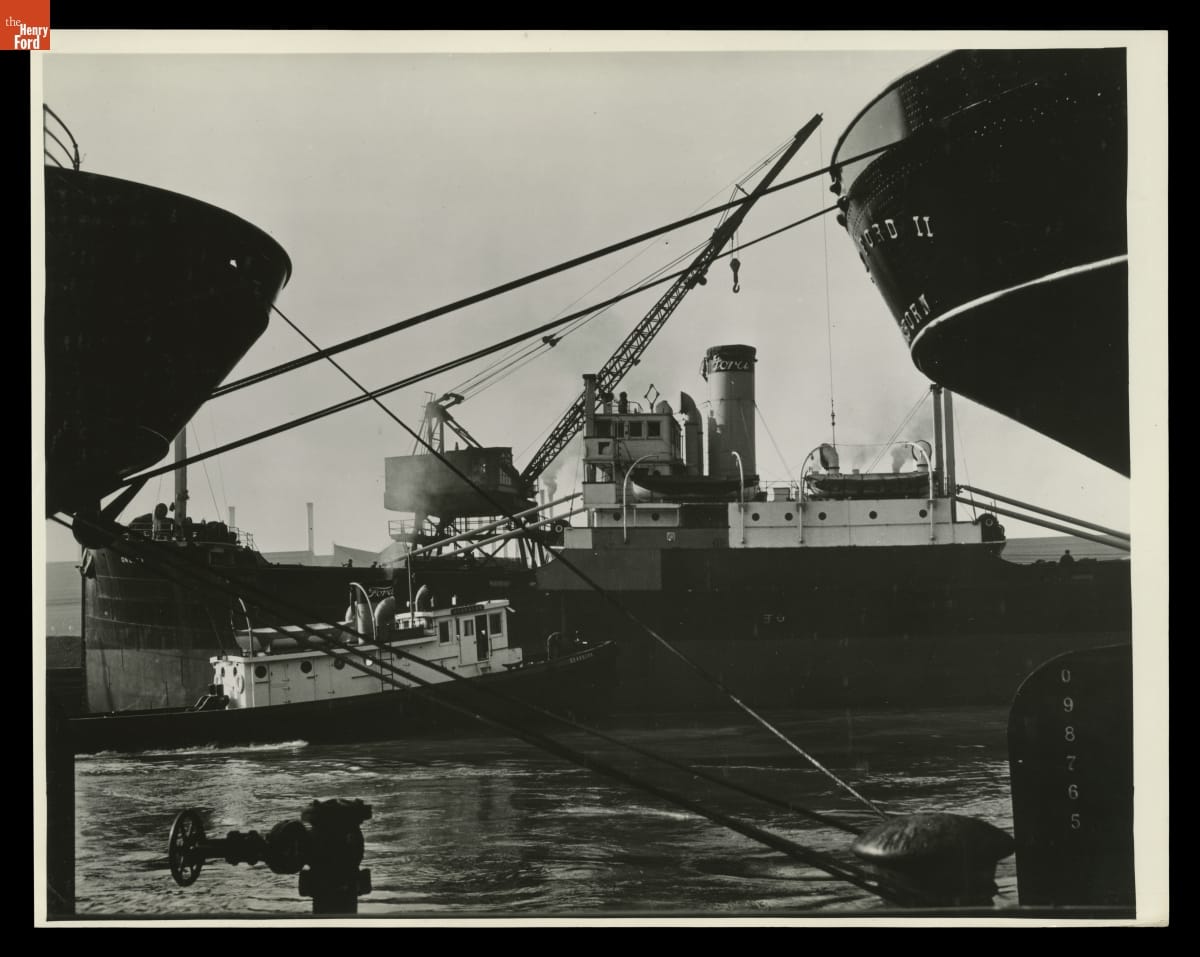
- Ford Motor Company Tugboat "Dearborn," January 1937 - Ford Motor Company's tugboat <em>Dearborn</em> was built in 1932 by Great Lakes Engineering. Eighty-five feet long and rated at 660 horsepower, it was smaller than other tugs in Ford's fleet. The <em>Dearborn</em> mostly worked inside the Ford Rouge plant's harbor, shuttling barges between the harbor and the Rouge River proper. Ford sold the <em>Dearborn</em> in 1946.
- January 06, 1937
- Collections - Artifact
Ford Motor Company Tugboat "Dearborn," January 1937
Ford Motor Company's tugboat Dearborn was built in 1932 by Great Lakes Engineering. Eighty-five feet long and rated at 660 horsepower, it was smaller than other tugs in Ford's fleet. The Dearborn mostly worked inside the Ford Rouge plant's harbor, shuttling barges between the harbor and the Rouge River proper. Ford sold the Dearborn in 1946.
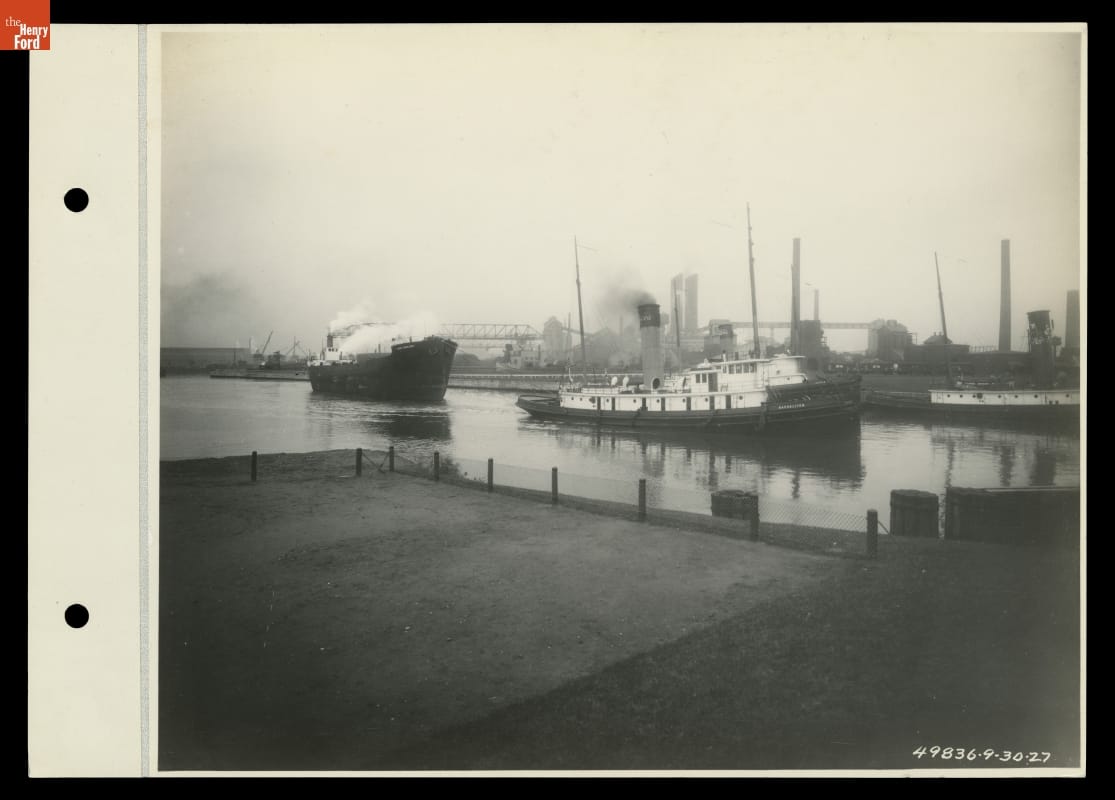
- Tugboat Towing the "Lake Hemlock" to be Salvaged at Ford Motor Company Rouge Plant Shipyard, 1927 - Completed in 1928 along the newly dredged River Rouge, Ford Motor Company's Rouge Plant quickly became an icon of modern industrial productivity. The factory's ship salvaging project exemplified Henry Ford's vision of efficiency at the plant. Workers disassembled surplus vessels, saving hardware and reconditioning functional machinery. Then, in the Rouge's production foundry, they melted down remaining scraps into reusable steel.
- September 30, 1927
- Collections - Artifact
Tugboat Towing the "Lake Hemlock" to be Salvaged at Ford Motor Company Rouge Plant Shipyard, 1927
Completed in 1928 along the newly dredged River Rouge, Ford Motor Company's Rouge Plant quickly became an icon of modern industrial productivity. The factory's ship salvaging project exemplified Henry Ford's vision of efficiency at the plant. Workers disassembled surplus vessels, saving hardware and reconditioning functional machinery. Then, in the Rouge's production foundry, they melted down remaining scraps into reusable steel.
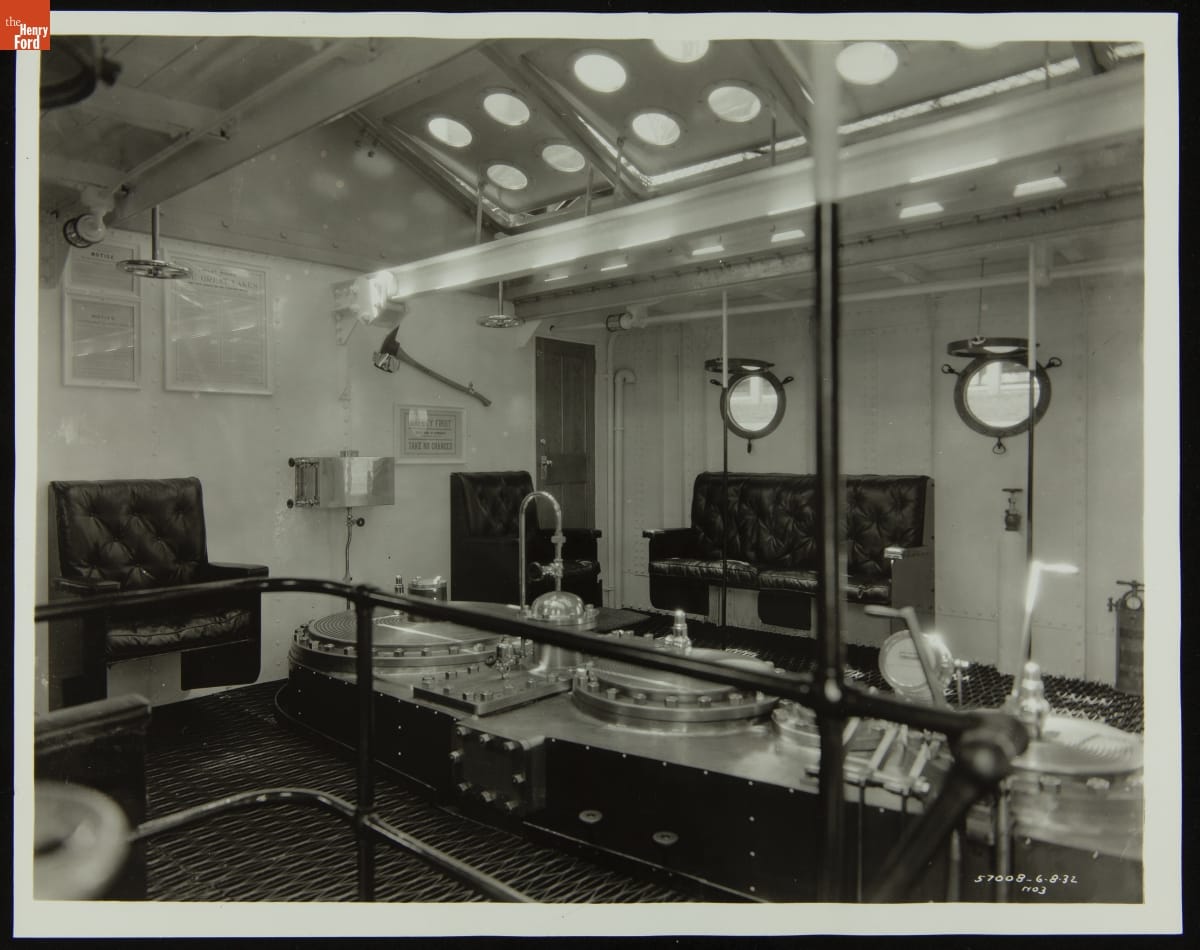
- Interior of Ford Tugboat "Barlow," June 8, 1932 - Henry Ford purchased 199 surplus World War I merchant ships from the United States government in 1925. Many of these ships were scrapped at Ford's River Rouge Plant. The rest operated as part of a fleet of vessels transporting products and materials as part of Ford's operation. Tugboats, like the <em>Barlow</em>, initially guided ships to Ford's scrapping facilities or towed barges around the Great Lakes.
- June 08, 1932
- Collections - Artifact
Interior of Ford Tugboat "Barlow," June 8, 1932
Henry Ford purchased 199 surplus World War I merchant ships from the United States government in 1925. Many of these ships were scrapped at Ford's River Rouge Plant. The rest operated as part of a fleet of vessels transporting products and materials as part of Ford's operation. Tugboats, like the Barlow, initially guided ships to Ford's scrapping facilities or towed barges around the Great Lakes.
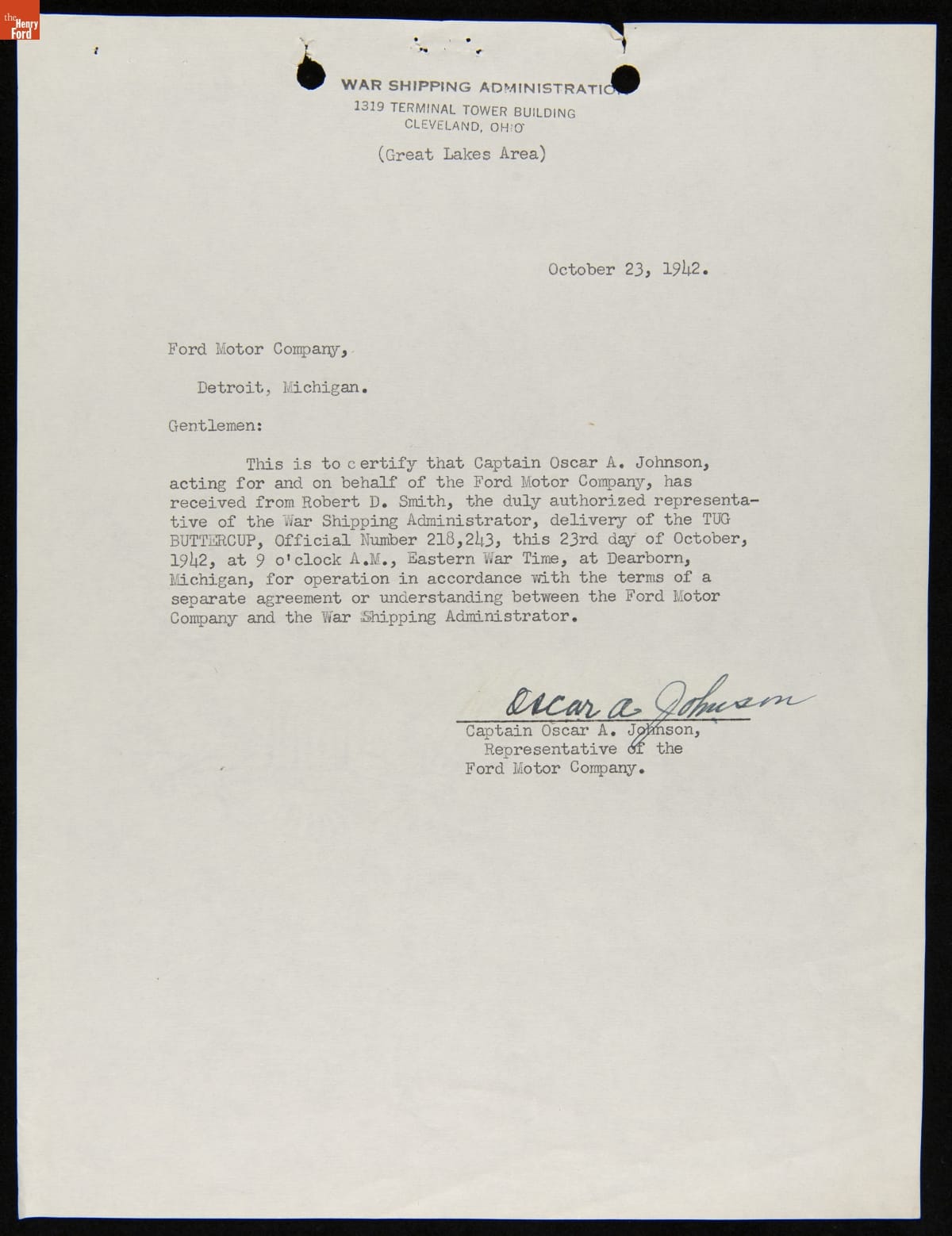
- Letter Certifying Receipt of Ford Tugboat "Buttercup" for War Service, October 23, 1942 - Ford Motor Company owned a fleet of barges, tugs, canal boats, cargo carriers, and ocean freighters that transported company products and materials before the Second World War. In 1942, with growing military demands, the United States began requisitioning all available ships for wartime service. Government maritime and shipping administrations worked with Ford to identify and acquire ships needed for the war effort.
- October 23, 1942
- Collections - Artifact
Letter Certifying Receipt of Ford Tugboat "Buttercup" for War Service, October 23, 1942
Ford Motor Company owned a fleet of barges, tugs, canal boats, cargo carriers, and ocean freighters that transported company products and materials before the Second World War. In 1942, with growing military demands, the United States began requisitioning all available ships for wartime service. Government maritime and shipping administrations worked with Ford to identify and acquire ships needed for the war effort.
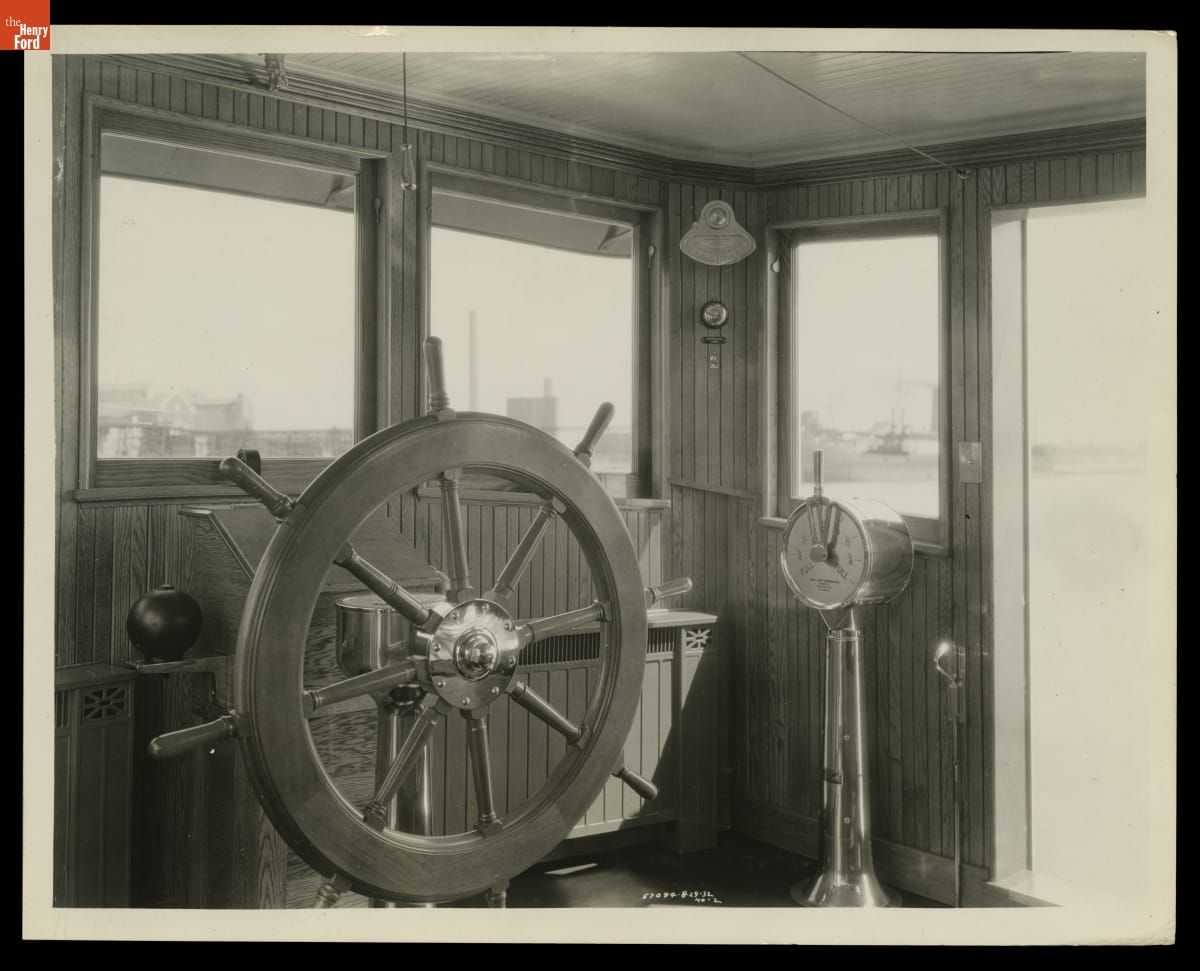
- Wheelhouse on Ford Motor Company Tugboat "Dearborn," Rouge Plant, August 1932 - Henry Ford sited his new manufacturing complex on the newly dredged River Rouge to accommodate ships bringing in raw materials or taking on finished product for delivery. Desiring complete self-sufficiency at the Rouge, Ford assembled his own fleet of cargo carriers, ocean freighters, barges, tugboats and canal boats. This photograph shows the pilothouse of the Ford Motor Company tugboat <EM>Dearborn</EM>.
- August 29, 1932
- Collections - Artifact
Wheelhouse on Ford Motor Company Tugboat "Dearborn," Rouge Plant, August 1932
Henry Ford sited his new manufacturing complex on the newly dredged River Rouge to accommodate ships bringing in raw materials or taking on finished product for delivery. Desiring complete self-sufficiency at the Rouge, Ford assembled his own fleet of cargo carriers, ocean freighters, barges, tugboats and canal boats. This photograph shows the pilothouse of the Ford Motor Company tugboat Dearborn.
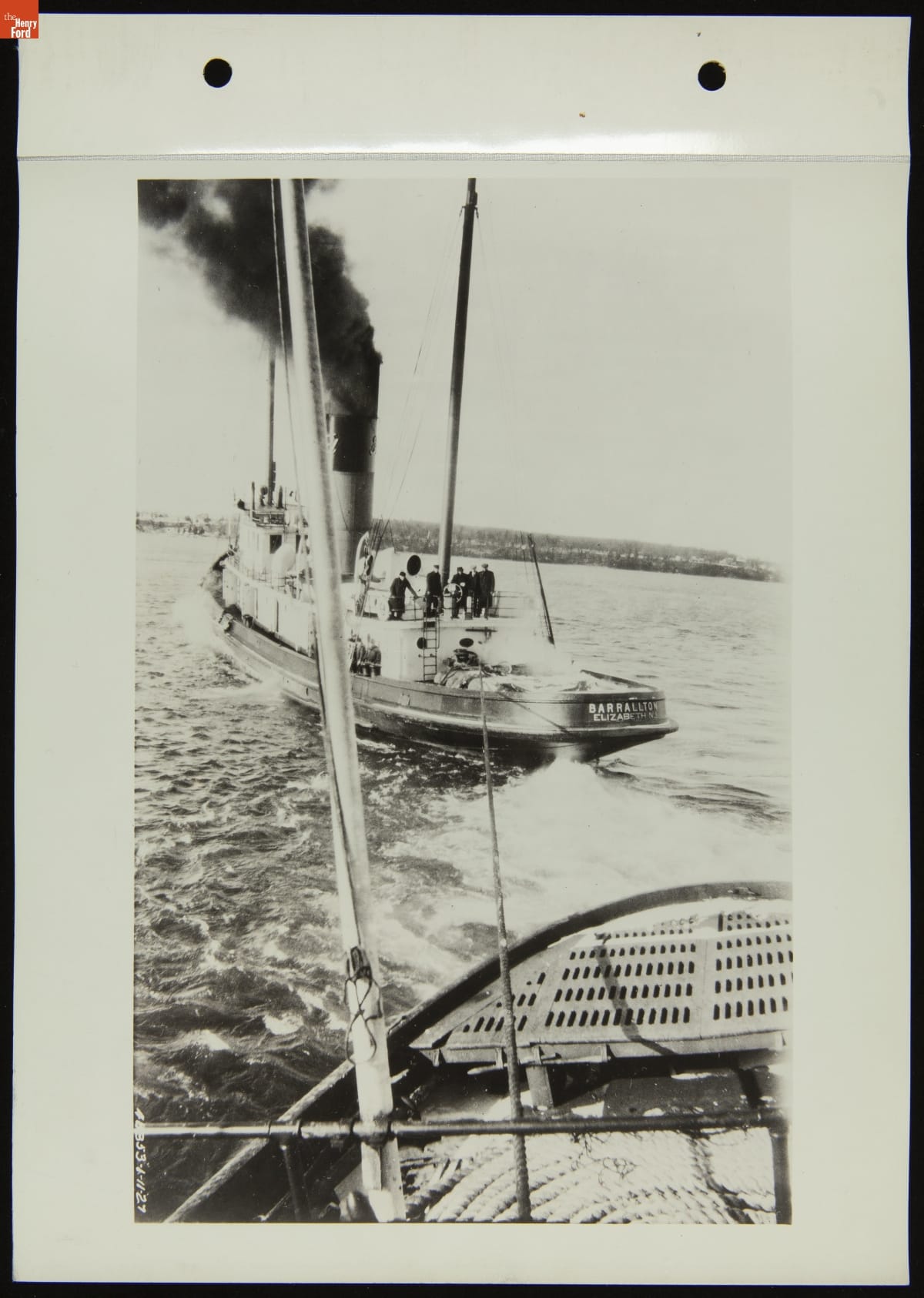
- Stern of Ford Tugboat "Barrallton" Towing Salvage Ship, January 11, 1927 - Henry Ford purchased 199 surplus World War I merchant ships from the United States government in 1925. Many of these ships were scrapped at Ford's River Rouge Plant. The rest operated as part of a fleet of vessels transporting products and materials as part of Ford's operation. Tugboats, like the <em>Barrallton</em>, initially guided ships to Ford's scrapping facilities or towed barges around the Great Lakes.
- January 11, 1927
- Collections - Artifact
Stern of Ford Tugboat "Barrallton" Towing Salvage Ship, January 11, 1927
Henry Ford purchased 199 surplus World War I merchant ships from the United States government in 1925. Many of these ships were scrapped at Ford's River Rouge Plant. The rest operated as part of a fleet of vessels transporting products and materials as part of Ford's operation. Tugboats, like the Barrallton, initially guided ships to Ford's scrapping facilities or towed barges around the Great Lakes.
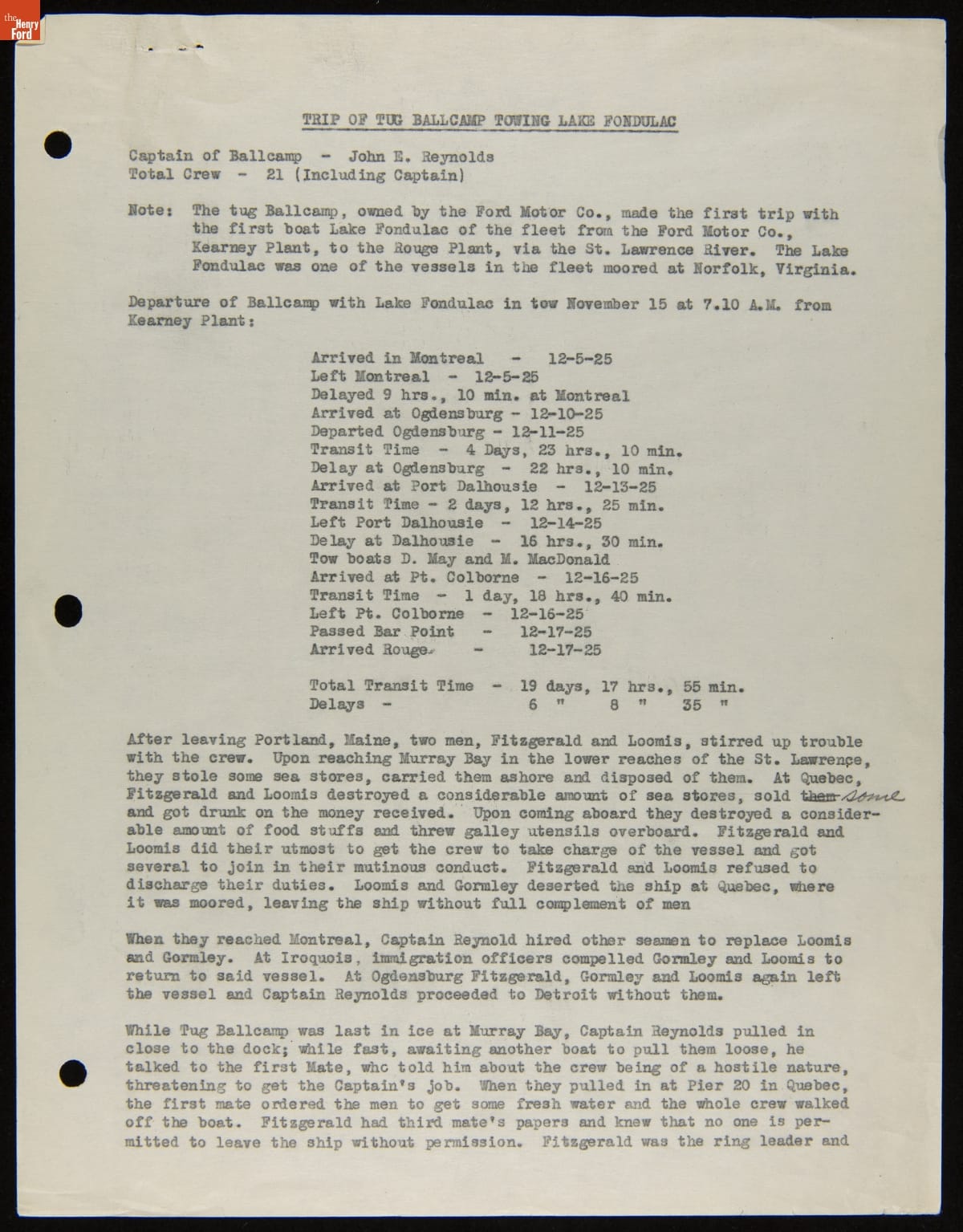
- Trip Report for Ford Tugboat "Ballcamp" Towing Ford Barge "Lake Fondulac," December 1925 - Henry Ford purchased 199 surplus World War I merchant ships from the United States government in 1925. Many of these ships were towed to Ford's River Rouge Plant to be scrapped. The <em>Lake Fondulac</em> was one of the first towed to the scrapyard. This report documents the labor troubles the captain of the tugboat <em>Ballcamp</em> encountered during the voyage.
- December 01, 1925
- Collections - Artifact
Trip Report for Ford Tugboat "Ballcamp" Towing Ford Barge "Lake Fondulac," December 1925
Henry Ford purchased 199 surplus World War I merchant ships from the United States government in 1925. Many of these ships were towed to Ford's River Rouge Plant to be scrapped. The Lake Fondulac was one of the first towed to the scrapyard. This report documents the labor troubles the captain of the tugboat Ballcamp encountered during the voyage.
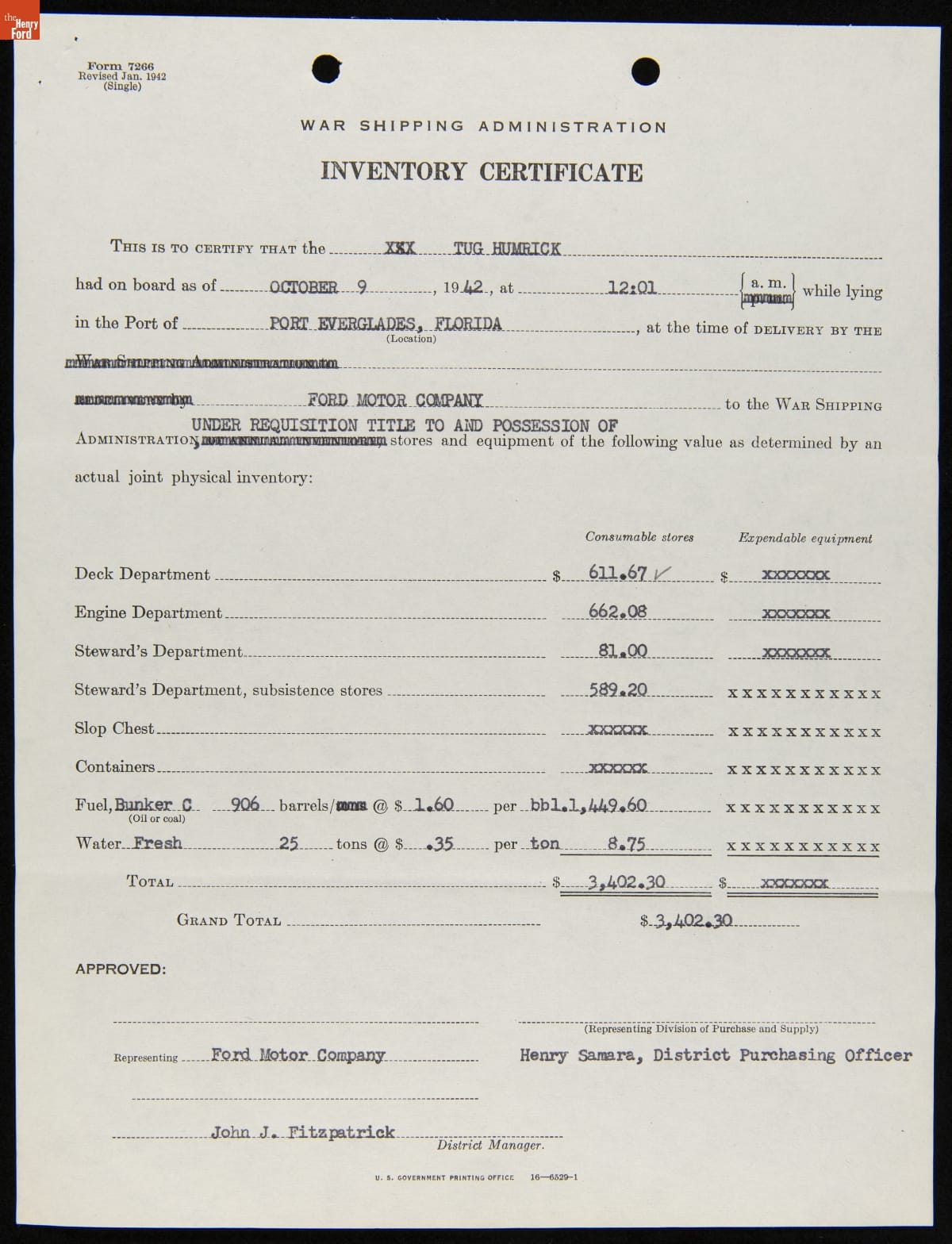
- War Shipping Administration Inventory Certificate for Ford Tugboat "Humerick," October 9, 1942 - Ford Motor Company owned a fleet of barges, tugs, canal boats, cargo carriers, and ocean freighters that transported company products and materials before the Second World War. In 1942, with growing military demands, the United States began requisitioning all available ships for wartime service. Government maritime and shipping administrations worked with Ford to identify and acquire ships needed for the war effort.
- October 09, 1942
- Collections - Artifact
War Shipping Administration Inventory Certificate for Ford Tugboat "Humerick," October 9, 1942
Ford Motor Company owned a fleet of barges, tugs, canal boats, cargo carriers, and ocean freighters that transported company products and materials before the Second World War. In 1942, with growing military demands, the United States began requisitioning all available ships for wartime service. Government maritime and shipping administrations worked with Ford to identify and acquire ships needed for the war effort.
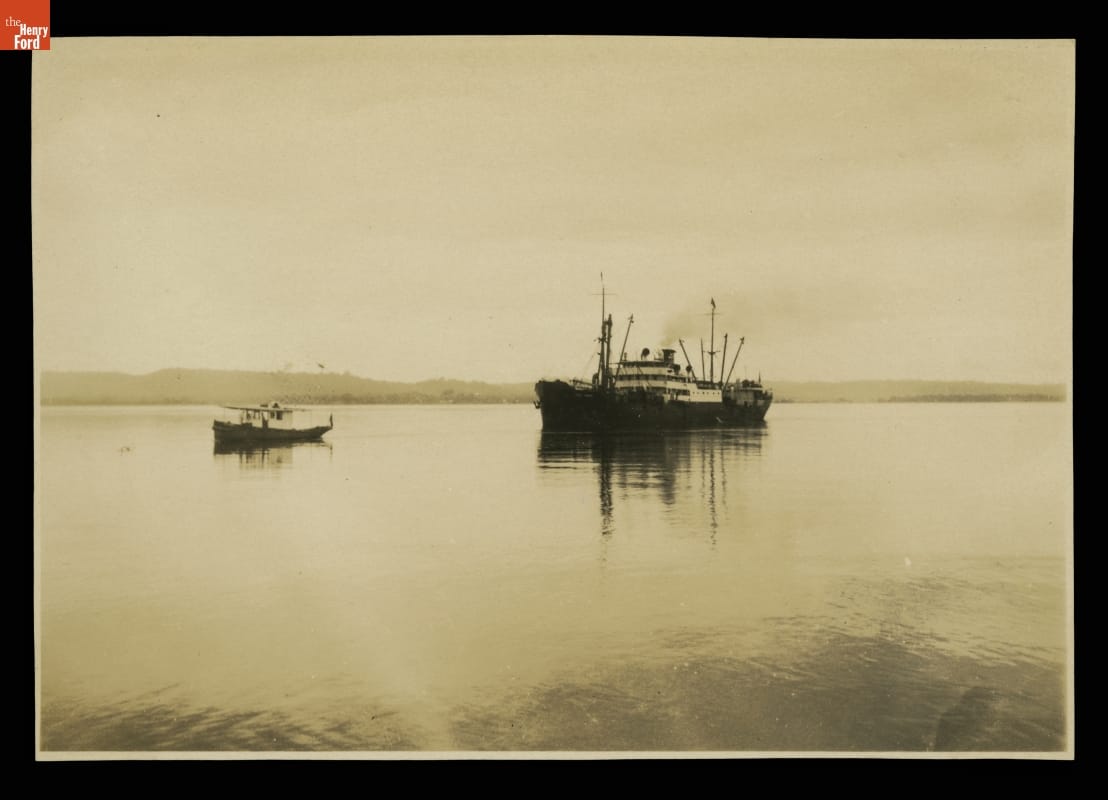
- Steamer "Lake Ormoc" Being Towed by the Tugboat Santarem, Fordlandia, Brazil, 1930 - Henry Ford established Fordlandia and Belterra in the Brazilian rainforest to supply rubber for automobile production. He began shipping machinery and supplies to the Amazon in 1928. Ford paid the indigenous workers good wages and supplied various amenities -- he also imposed foreign work traditions and behavioral restrictions which the workers resented. The plantations failed and Ford Motor Company disposed of the project in 1945.
- April 01, 1930
- Collections - Artifact
Steamer "Lake Ormoc" Being Towed by the Tugboat Santarem, Fordlandia, Brazil, 1930
Henry Ford established Fordlandia and Belterra in the Brazilian rainforest to supply rubber for automobile production. He began shipping machinery and supplies to the Amazon in 1928. Ford paid the indigenous workers good wages and supplied various amenities -- he also imposed foreign work traditions and behavioral restrictions which the workers resented. The plantations failed and Ford Motor Company disposed of the project in 1945.
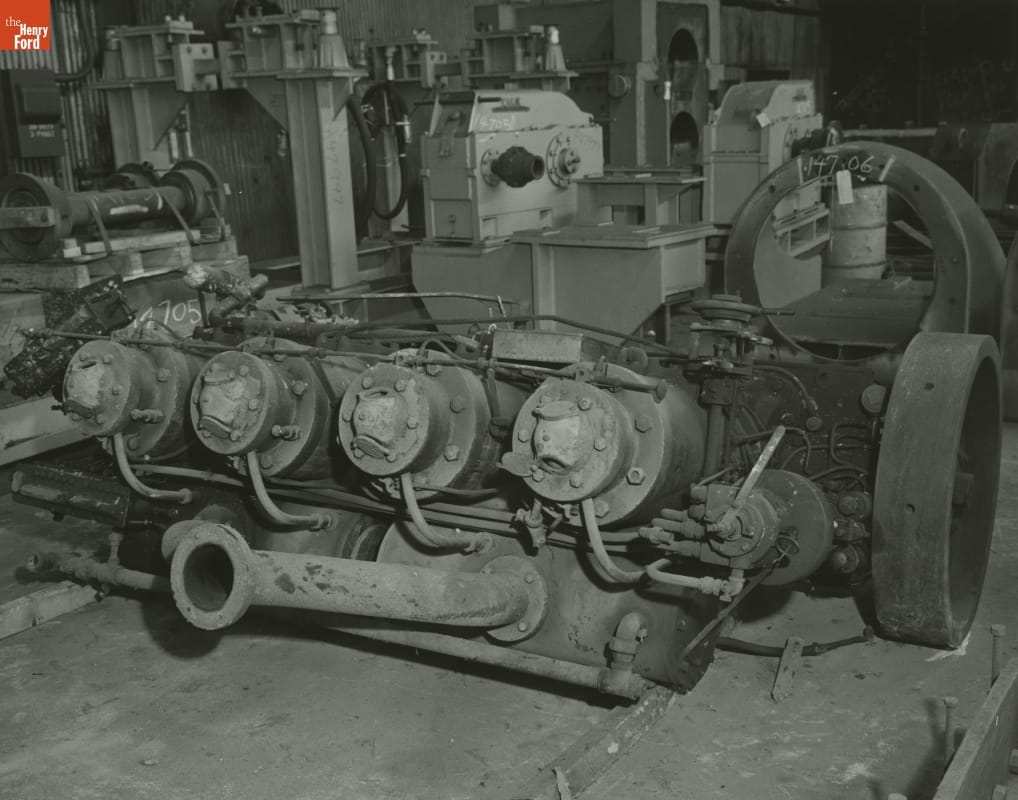
- Kahlenberg 4-Cylinder Marine Diesel Engine, 1927 - Kahlenberg of Two Rivers, Wisconsin, built steam and gasoline marine engines before focusing on hot-bulb semi-diesel engines in the 1920s. This early four-cylinder example was purchased by United Fisheries of Sandusky, Ohio, in 1929 and likely used in a small commercial fishing tug. These engines were more efficient and reliable than steam power and were widely adopted on the Great Lakes.
- 1927
- Collections - Artifact
Kahlenberg 4-Cylinder Marine Diesel Engine, 1927
Kahlenberg of Two Rivers, Wisconsin, built steam and gasoline marine engines before focusing on hot-bulb semi-diesel engines in the 1920s. This early four-cylinder example was purchased by United Fisheries of Sandusky, Ohio, in 1929 and likely used in a small commercial fishing tug. These engines were more efficient and reliable than steam power and were widely adopted on the Great Lakes.