
Search
- Everlast "Forged" Tumbler, 1955-1960 - In 1932, Louis Schnitzer and Nathan Gelfman formed Everlast Metal Products Corporation, producing high-quality, hand-forged aluminum giftware. In an era of growing uniformity via factory production, the "made by hand" aspect of these products held an aesthetic appeal for consumers. This piece is an example of the aluminum giftware sold by Everlast.
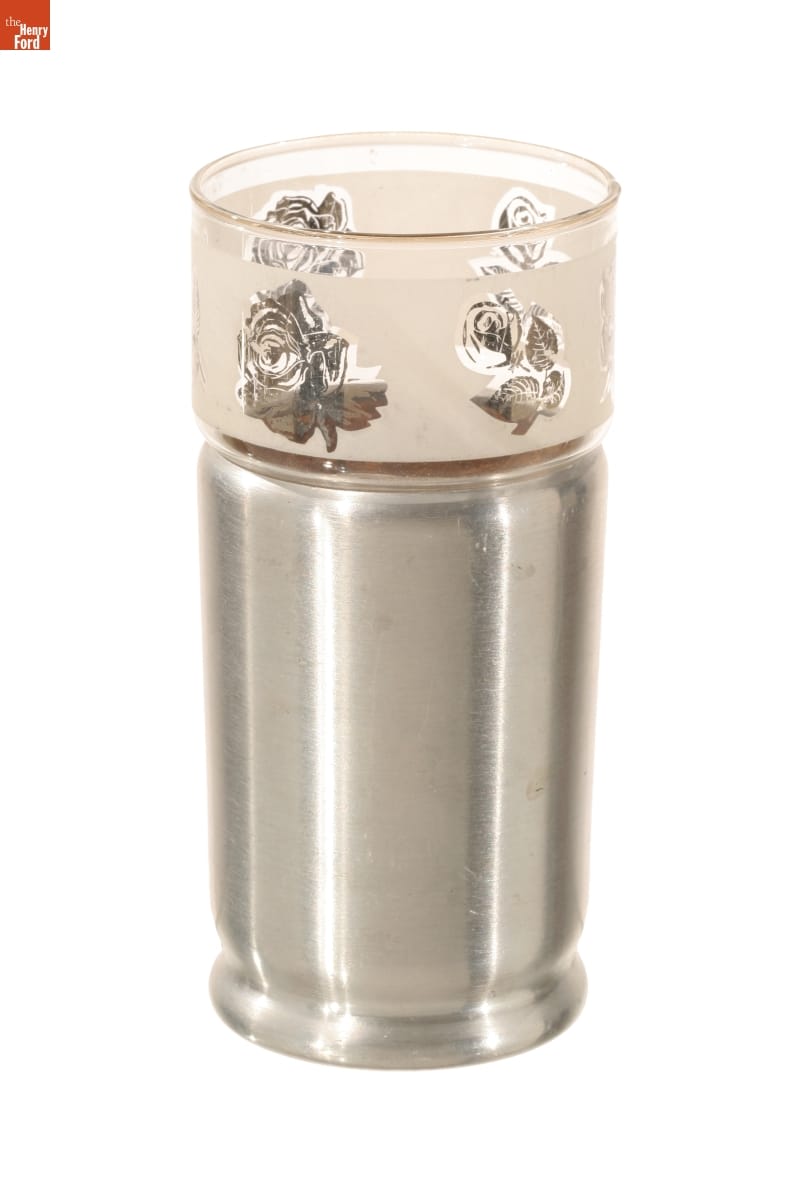
- 1955-1960
- Collections - Artifact
Everlast "Forged" Tumbler, 1955-1960
In 1932, Louis Schnitzer and Nathan Gelfman formed Everlast Metal Products Corporation, producing high-quality, hand-forged aluminum giftware. In an era of growing uniformity via factory production, the "made by hand" aspect of these products held an aesthetic appeal for consumers. This piece is an example of the aluminum giftware sold by Everlast.
- Everlast "Forged" Tumbler, 1947-1951 -
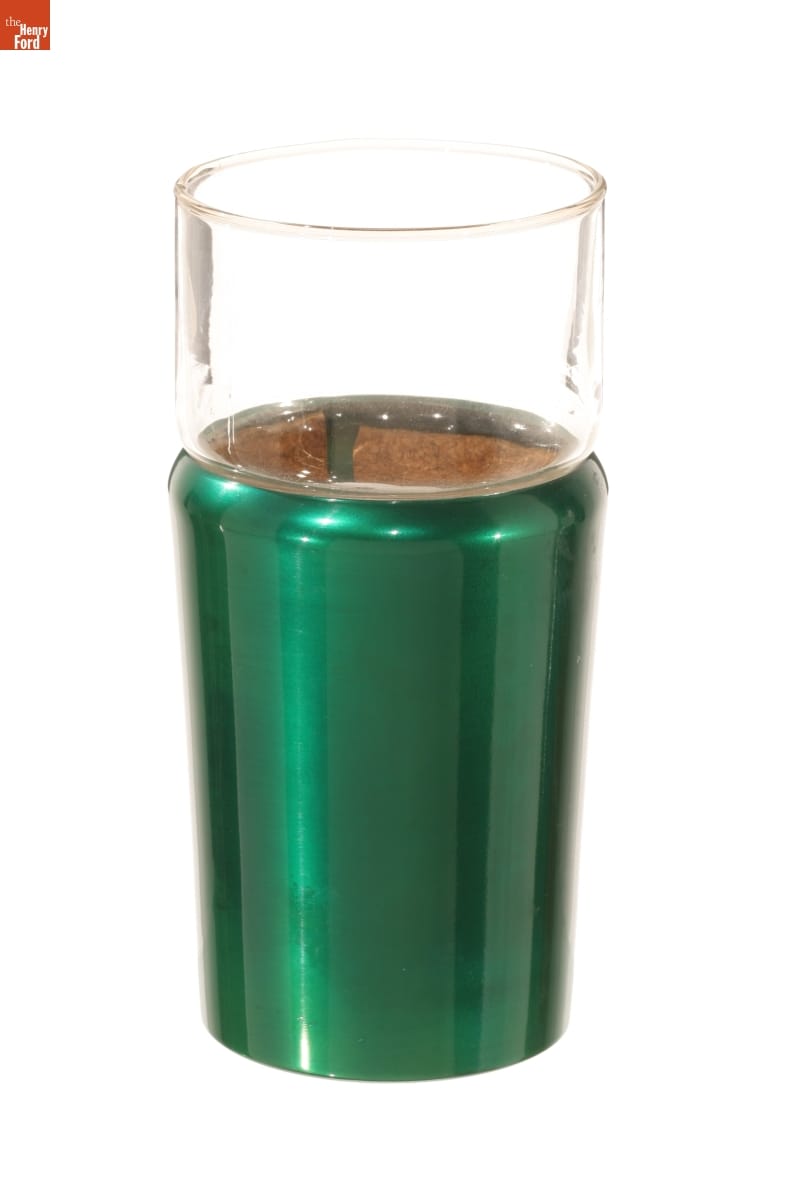
- 1947-1951
- Collections - Artifact
Everlast "Forged" Tumbler, 1947-1951
- Tumbler, 1850-1870 - Nineteenth-century American glassmakers experimented with new methods to create products for a growing consumer market. In the 1820s, pressing glass into metal molds by machine was perfected, and by the mid-1800s, manufacturers were creating a variety of inexpensive pressed glass housewares. America's middle-class consumers could now decorate their homes with attractive glass bowls, creamers, dishes, plates, vases, and other tableware.
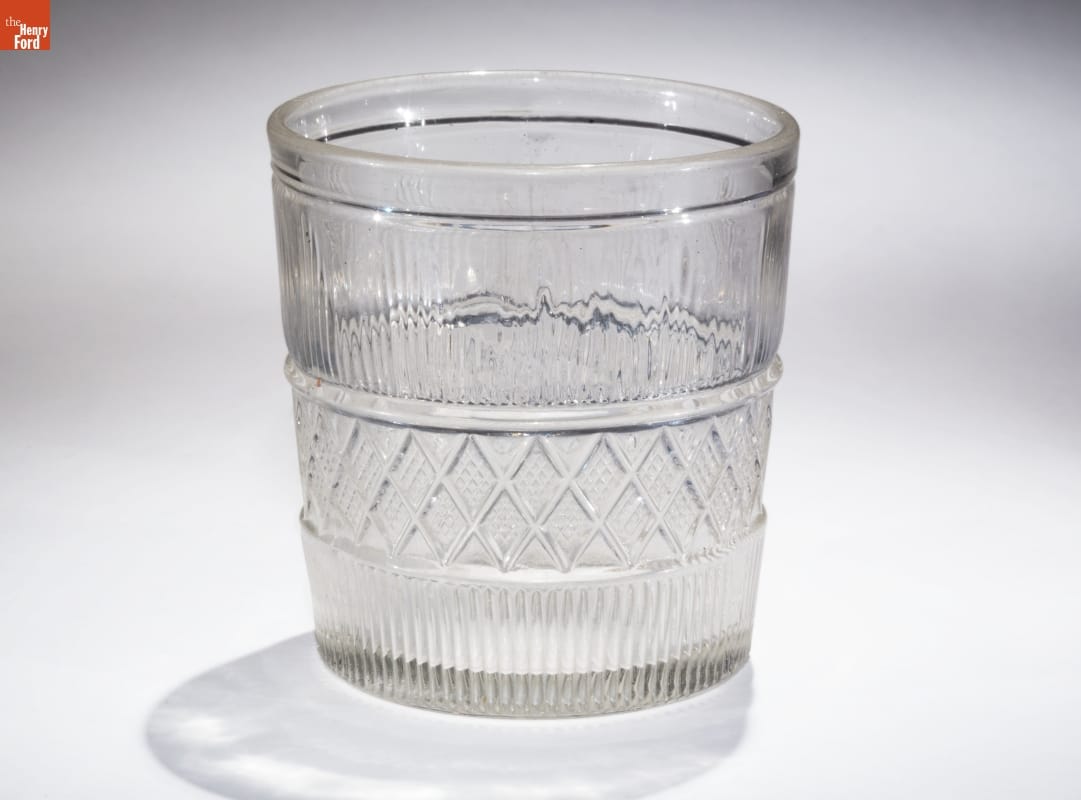
- 1850-1870
- Collections - Artifact
Tumbler, 1850-1870
Nineteenth-century American glassmakers experimented with new methods to create products for a growing consumer market. In the 1820s, pressing glass into metal molds by machine was perfected, and by the mid-1800s, manufacturers were creating a variety of inexpensive pressed glass housewares. America's middle-class consumers could now decorate their homes with attractive glass bowls, creamers, dishes, plates, vases, and other tableware.
- Everlast "Neocraft" Tumbler, 1938-1955 - In 1932, Louis Schnitzer and Nathan Gelfman formed Everlast Metal Products Corporation, producing high-quality, hand-forged aluminum giftware. In an era of growing uniformity via factory production, the "made by hand" aspect of these products held an aesthetic appeal for consumers. In 1938, Everlast introduced the "Neocraft" product line, made of anodized aluminum and featuring vibrant colors and clean lines.
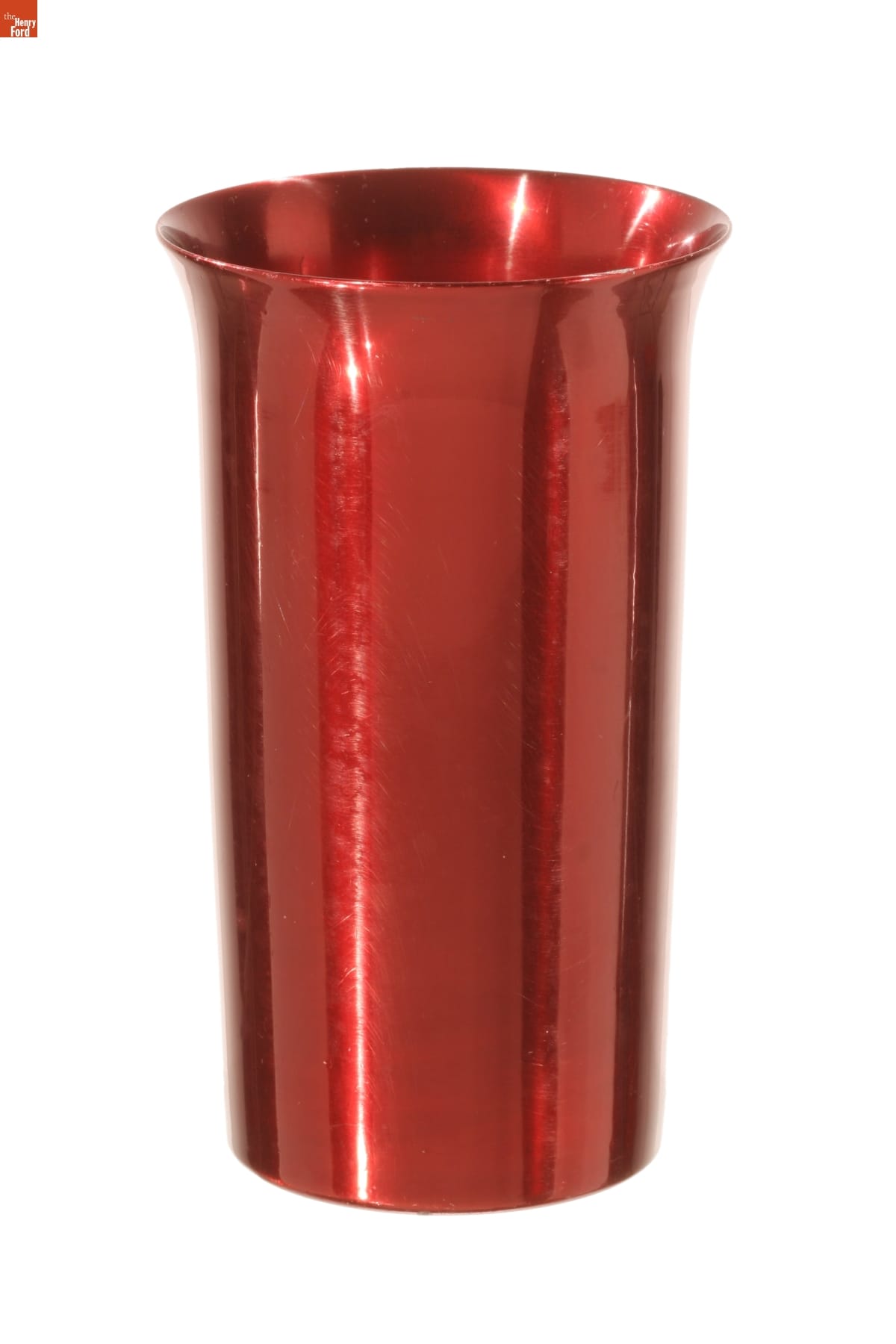
- 1938-1955
- Collections - Artifact
Everlast "Neocraft" Tumbler, 1938-1955
In 1932, Louis Schnitzer and Nathan Gelfman formed Everlast Metal Products Corporation, producing high-quality, hand-forged aluminum giftware. In an era of growing uniformity via factory production, the "made by hand" aspect of these products held an aesthetic appeal for consumers. In 1938, Everlast introduced the "Neocraft" product line, made of anodized aluminum and featuring vibrant colors and clean lines.
- Tumbler, circa 1955 - From the late 1930s through the 1960s, glass manufacturers designed "hostess sets" for every taste and budget. Often presented as wedding or housewarming gifts, these sets became features of the popular cocktail and patio parties of the time. Tumblers embellished with stylized "boomerangs" -- a symbol of the 1950s modern aesthetic -- showed guests the up-to-date style of the mid-20th century hostess.
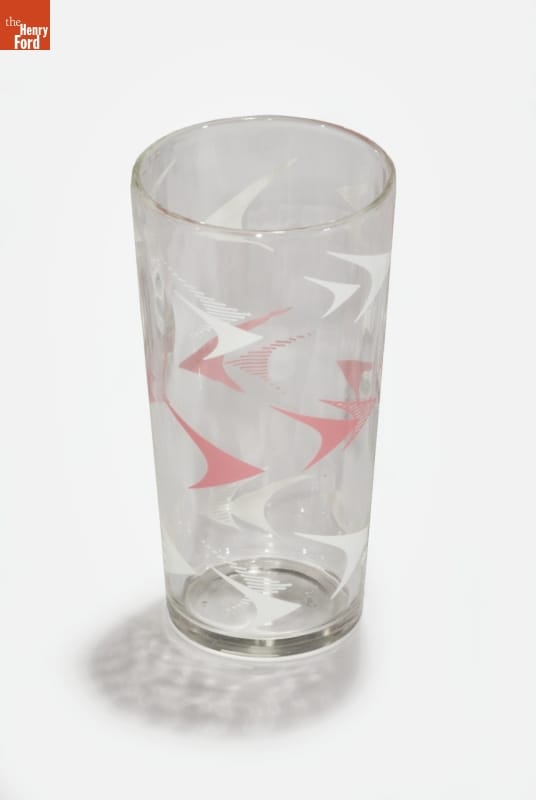
- circa 1955
- Collections - Artifact
Tumbler, circa 1955
From the late 1930s through the 1960s, glass manufacturers designed "hostess sets" for every taste and budget. Often presented as wedding or housewarming gifts, these sets became features of the popular cocktail and patio parties of the time. Tumblers embellished with stylized "boomerangs" -- a symbol of the 1950s modern aesthetic -- showed guests the up-to-date style of the mid-20th century hostess.
- Tumblers Designed by Russel Wright, 1940-1960 -
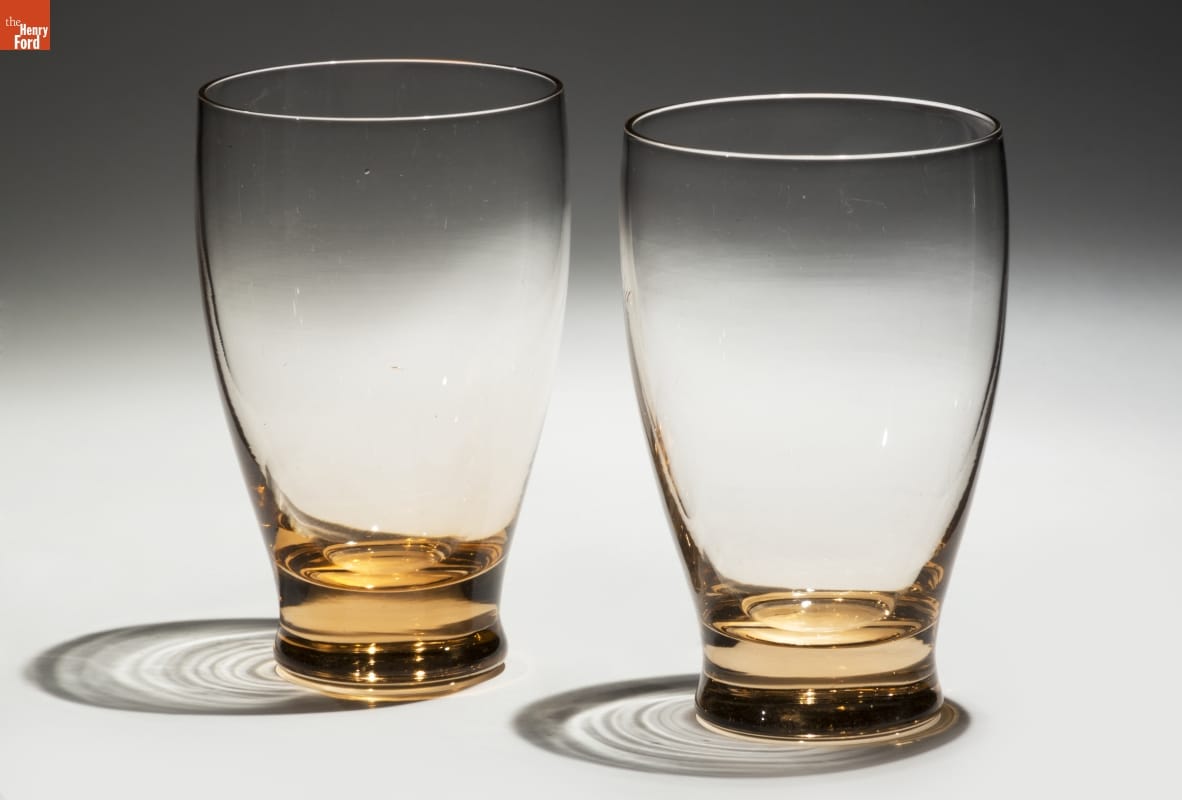
- 1940-1960
- Collections - Artifact
Tumblers Designed by Russel Wright, 1940-1960
- Tumbler Designed by Russel Wright, 1940-1960 -
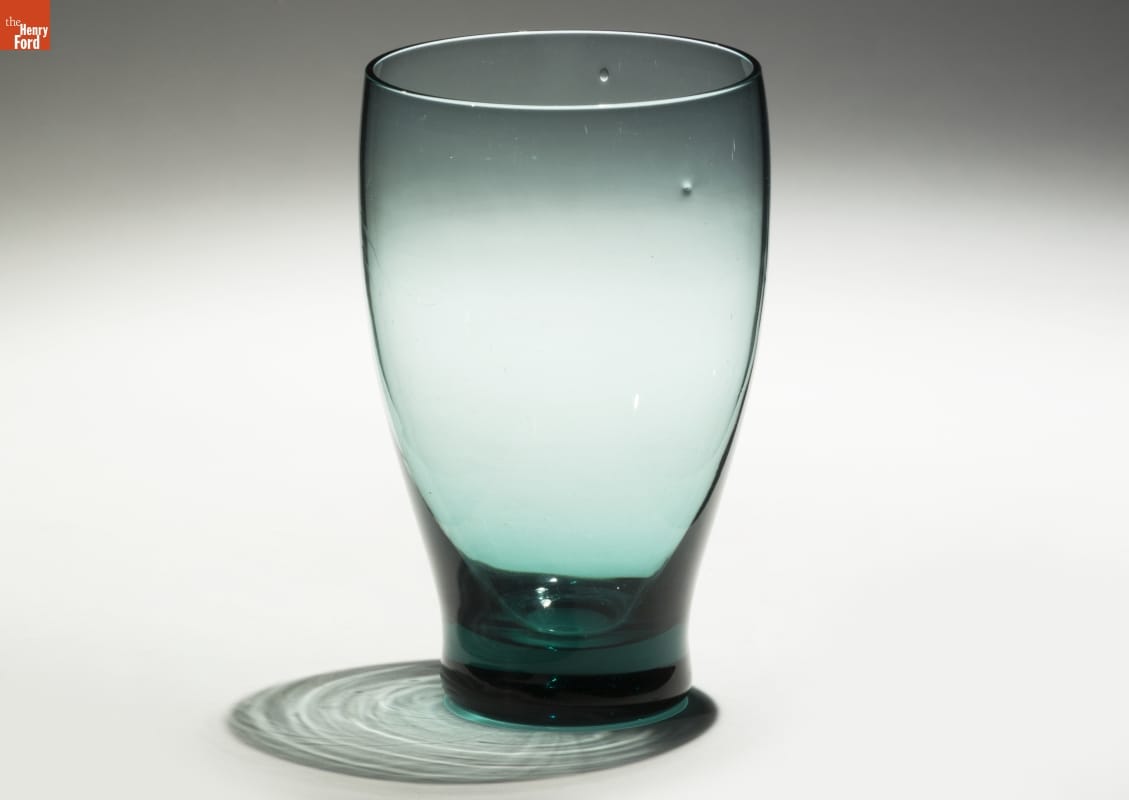
- 1940-1960
- Collections - Artifact
Tumbler Designed by Russel Wright, 1940-1960
- Pomona Tumbler, 1885-1888 - Art Glass is ornamental and decorative glass dating from the mid-to-late 19th century through the early 20th century. Makers of Art Glass employed newly developed technologies for producing vibrant colors and surface textures. This is most famously seen in the iridescent surfaces of Louis Comfort Tiffany and his contemporaries, although Art Glass took many shapes and forms.
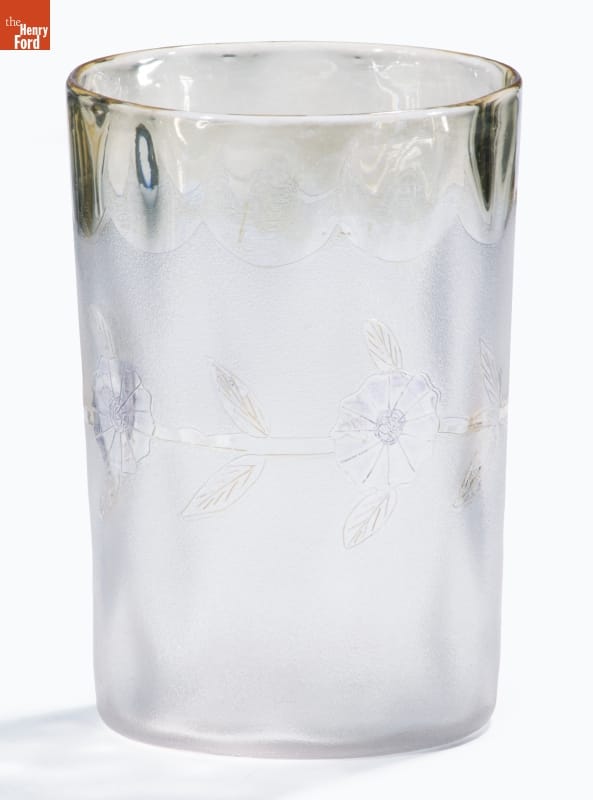
- 1885-1888
- Collections - Artifact
Pomona Tumbler, 1885-1888
Art Glass is ornamental and decorative glass dating from the mid-to-late 19th century through the early 20th century. Makers of Art Glass employed newly developed technologies for producing vibrant colors and surface textures. This is most famously seen in the iridescent surfaces of Louis Comfort Tiffany and his contemporaries, although Art Glass took many shapes and forms.
- Tumbler, 1920-1930 - Art Glass is ornamental and decorative glass dating from the mid-to-late 19th century through the early 20th century. Makers of Art Glass employed newly developed technologies for producing vibrant colors and surface textures. This is most famously seen in the iridescent surfaces of Louis Comfort Tiffany and his contemporaries, although Art Glass took many shapes and forms.
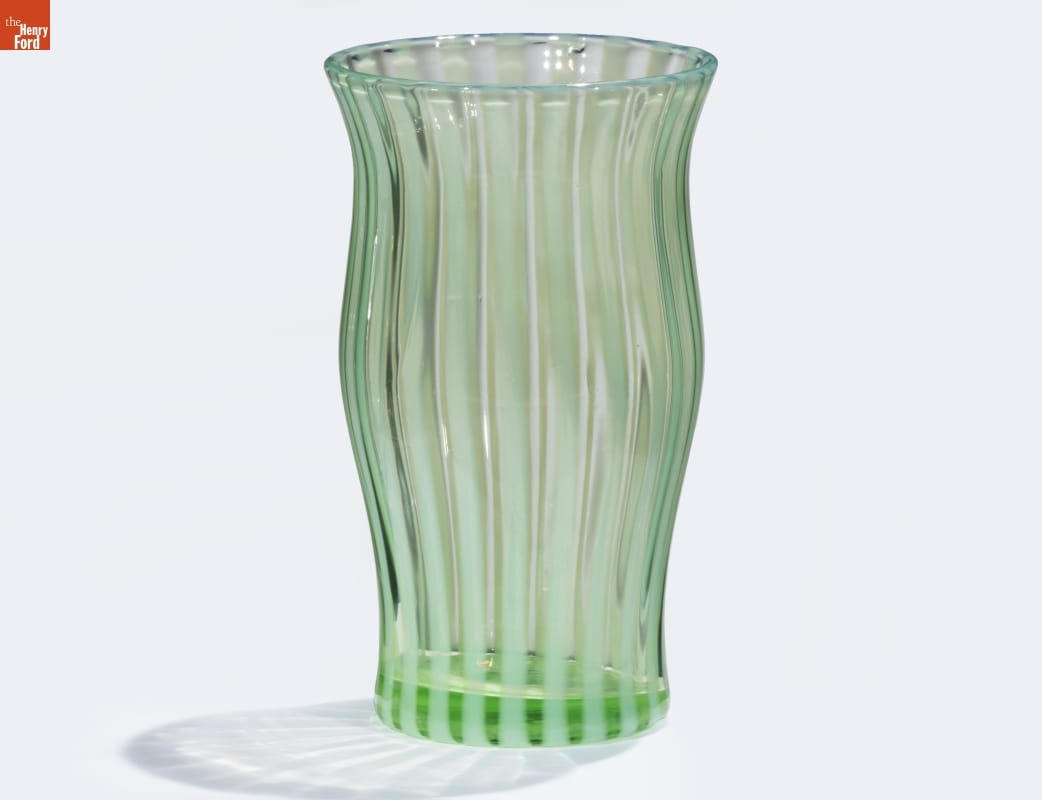
- 1920-1930
- Collections - Artifact
Tumbler, 1920-1930
Art Glass is ornamental and decorative glass dating from the mid-to-late 19th century through the early 20th century. Makers of Art Glass employed newly developed technologies for producing vibrant colors and surface textures. This is most famously seen in the iridescent surfaces of Louis Comfort Tiffany and his contemporaries, although Art Glass took many shapes and forms.
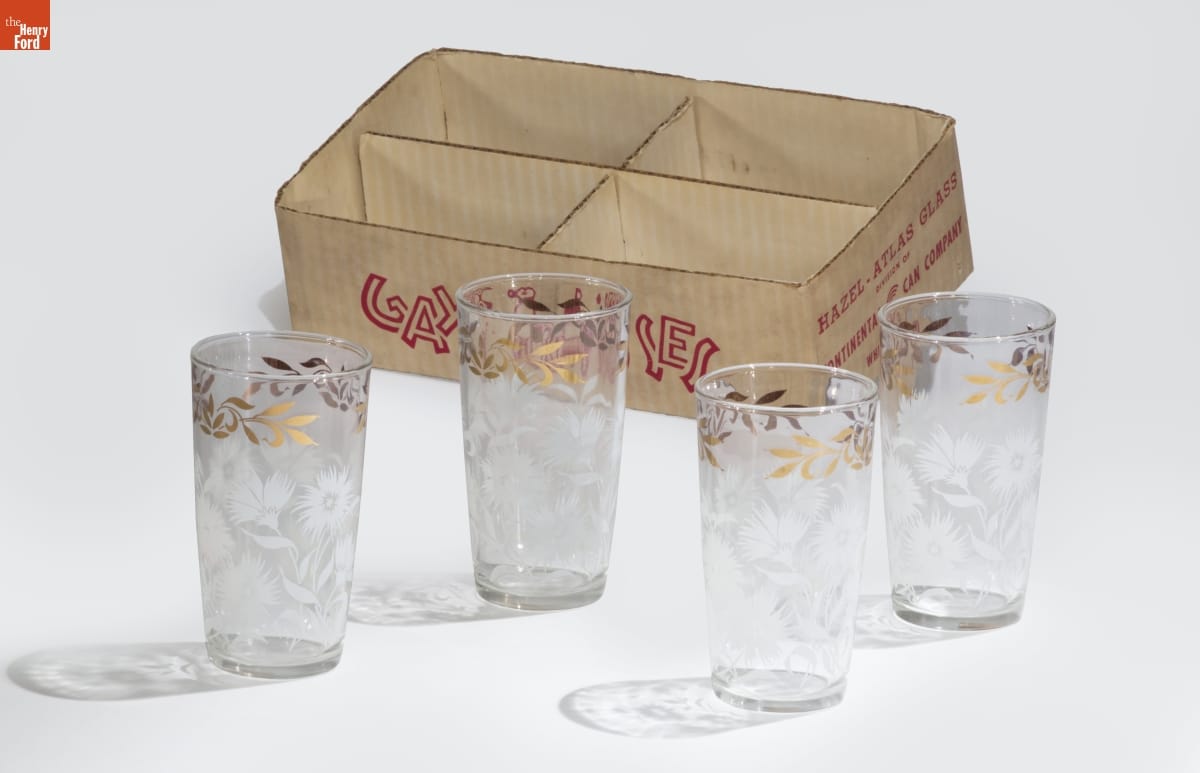
- Set of Tumblers, 1957-1964 - From the late 1930s through the 1960s, glass manufacturers designed "hostess sets" for every taste and budget. Often presented as wedding or housewarming gifts, these sets became features of the popular cocktail and patio parties of the time. The decoration on the glassware, such as the white flowers and gold foliage depicted on these tumblers, reflected the personality of the hostess.
- 1957-1964
- Collections - Artifact
Set of Tumblers, 1957-1964
From the late 1930s through the 1960s, glass manufacturers designed "hostess sets" for every taste and budget. Often presented as wedding or housewarming gifts, these sets became features of the popular cocktail and patio parties of the time. The decoration on the glassware, such as the white flowers and gold foliage depicted on these tumblers, reflected the personality of the hostess.