
Search
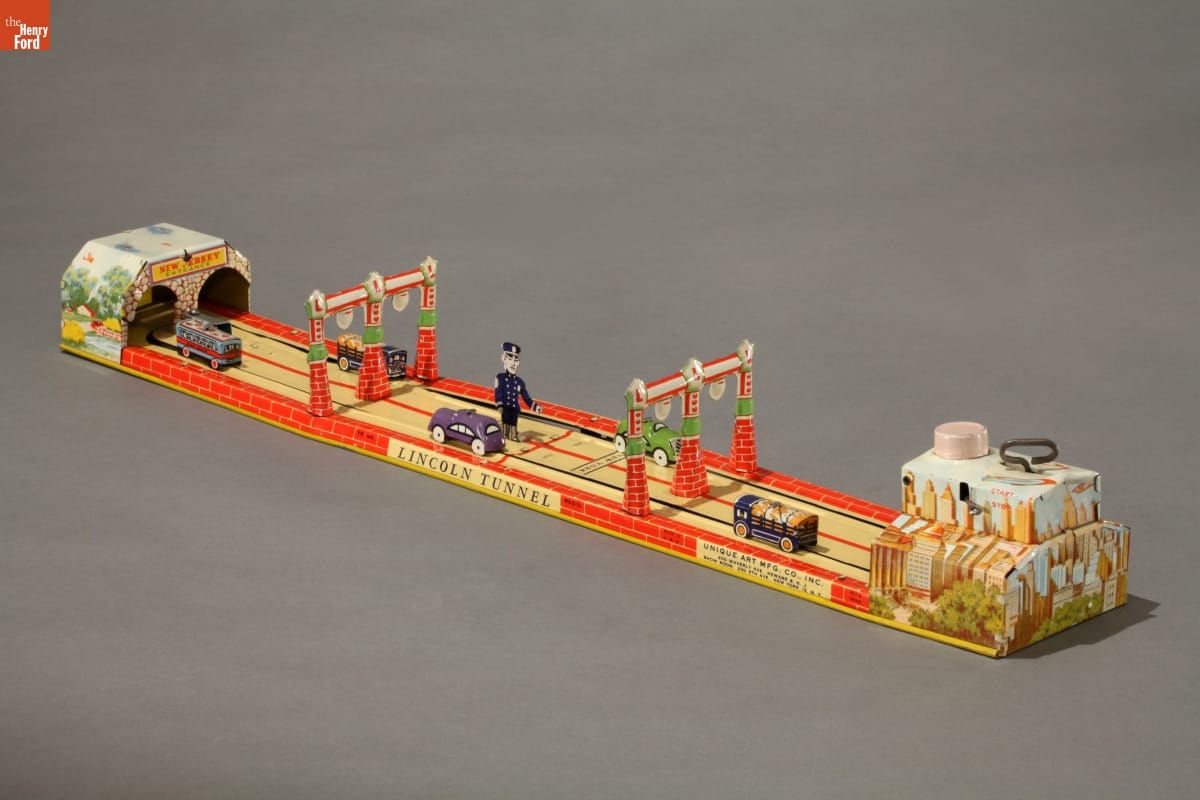
- Lincoln Tunnel Mechanical Toy, 1925-1940 - This lithographed, pressed metal toy by Unique Art Manufacturing Company, Inc., has vehicles traveling in and out of the Lincoln Tunnel. Cars enter either through rural New Jersey or urban New York. The Lincoln Tunnel opened in 1937 and runs under the Hudson River between New Jersey and Manhattan.
- 1925-1940
- Collections - Artifact
Lincoln Tunnel Mechanical Toy, 1925-1940
This lithographed, pressed metal toy by Unique Art Manufacturing Company, Inc., has vehicles traveling in and out of the Lincoln Tunnel. Cars enter either through rural New Jersey or urban New York. The Lincoln Tunnel opened in 1937 and runs under the Hudson River between New Jersey and Manhattan.
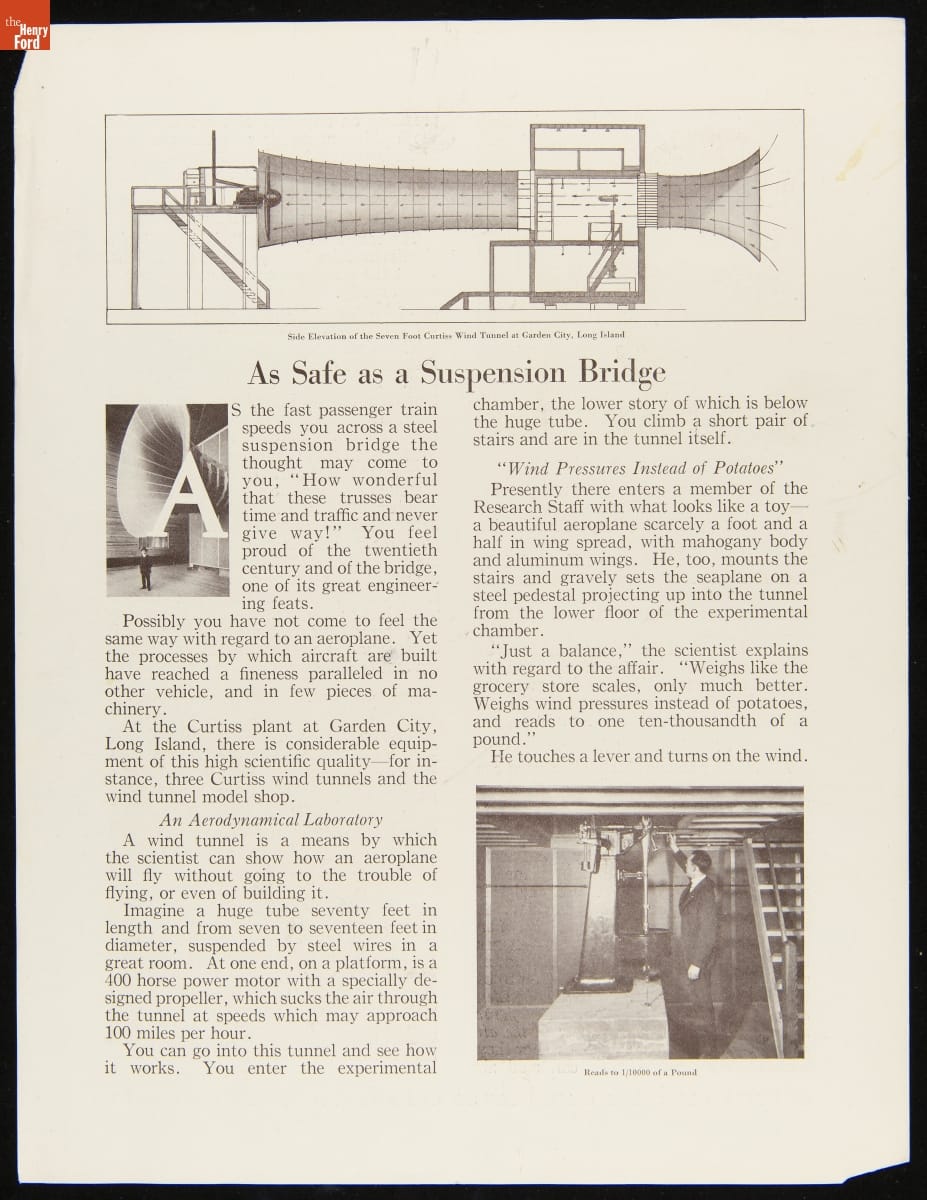
- As Safe as a Suspension Bridge, 1919-1920 - Glenn Curtiss, whose airplane business flourished during World War I, established a state-of-the-art research and experimentation facility on Long Island, New York, in 1917. At the Curtiss Engineering Corporation, a handpicked team built, tested, and refined propellers, engines, and airplanes. This brochure claimed a scientific approach made Curtiss airplanes as safe as the more established modes of transportation Americans already trusted.
- 1919-1920
- Collections - Artifact
As Safe as a Suspension Bridge, 1919-1920
Glenn Curtiss, whose airplane business flourished during World War I, established a state-of-the-art research and experimentation facility on Long Island, New York, in 1917. At the Curtiss Engineering Corporation, a handpicked team built, tested, and refined propellers, engines, and airplanes. This brochure claimed a scientific approach made Curtiss airplanes as safe as the more established modes of transportation Americans already trusted.
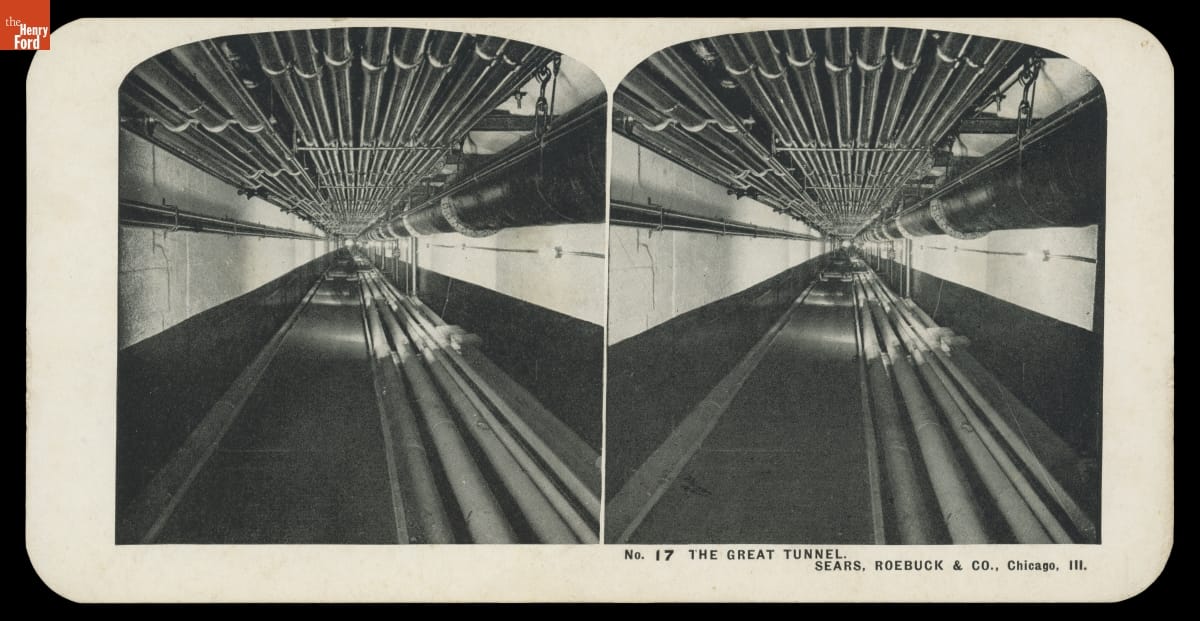
- "The Great Tunnel. Sears, Roebuck & Co., Chicago, Ill.," 1906-1908 - Mail-order firm Sears, Roebuck, & Co. had become one of America's largest corporations by the early 1900s. Sears was particularly popular among rural Americans, as it offered better options, lower costs, and more efficient delivery methods than traditional general stores. This stereograph, one of a set of 50 sold through the Sears catalog beginning in 1908, offered a behind-the-scenes look at the company's operation.
- 1906-1908
- Collections - Artifact
"The Great Tunnel. Sears, Roebuck & Co., Chicago, Ill.," 1906-1908
Mail-order firm Sears, Roebuck, & Co. had become one of America's largest corporations by the early 1900s. Sears was particularly popular among rural Americans, as it offered better options, lower costs, and more efficient delivery methods than traditional general stores. This stereograph, one of a set of 50 sold through the Sears catalog beginning in 1908, offered a behind-the-scenes look at the company's operation.
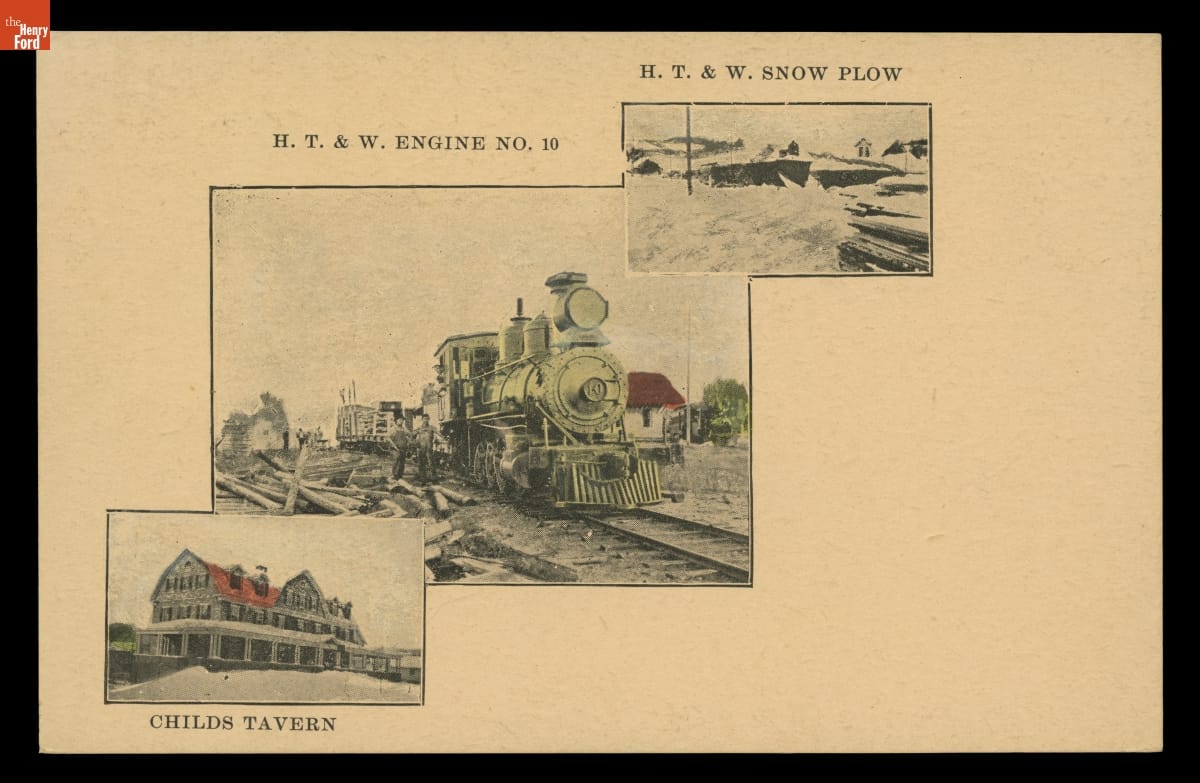
- Hoosac Tunnel & Wilmington Railroad Snowplow, Locomotive and Childs Tavern Postcard, 1898-1901 - The 25-mile Hoosac Tunnel & Wilmington Railroad connected Wilmington, in southwest Vermont, with the Hoosac Tunnel, in northwest Massachusetts. The 4.75-mile Hoosac Tunnel, completed in 1875, linked New England with New York and the Midwest beyond. The HT&W operated from 1886 until its abandonment in 1971. Childs Tavern, a popular Wilmington resort hotel, opened in 1903.
- 1898-1901
- Collections - Artifact
Hoosac Tunnel & Wilmington Railroad Snowplow, Locomotive and Childs Tavern Postcard, 1898-1901
The 25-mile Hoosac Tunnel & Wilmington Railroad connected Wilmington, in southwest Vermont, with the Hoosac Tunnel, in northwest Massachusetts. The 4.75-mile Hoosac Tunnel, completed in 1875, linked New England with New York and the Midwest beyond. The HT&W operated from 1886 until its abandonment in 1971. Childs Tavern, a popular Wilmington resort hotel, opened in 1903.
- Letter from Orville Wright to Fred Black about Photos of the Wind Tunnel in Wright Cycle Shop, January 16, 1939 - Henry Ford acquired the Wright brothers' home and cycle shop in 1936, and he relocated them from Dayton, Ohio, to his Greenfield Village museum in Dearborn, Michigan. Orville Wright consulted on the project to ensure accuracy. In this letter, Wright suggested corrections to text about the brothers' 1901 wind tunnel, and he questioned the placement of a toolbox in the shop.
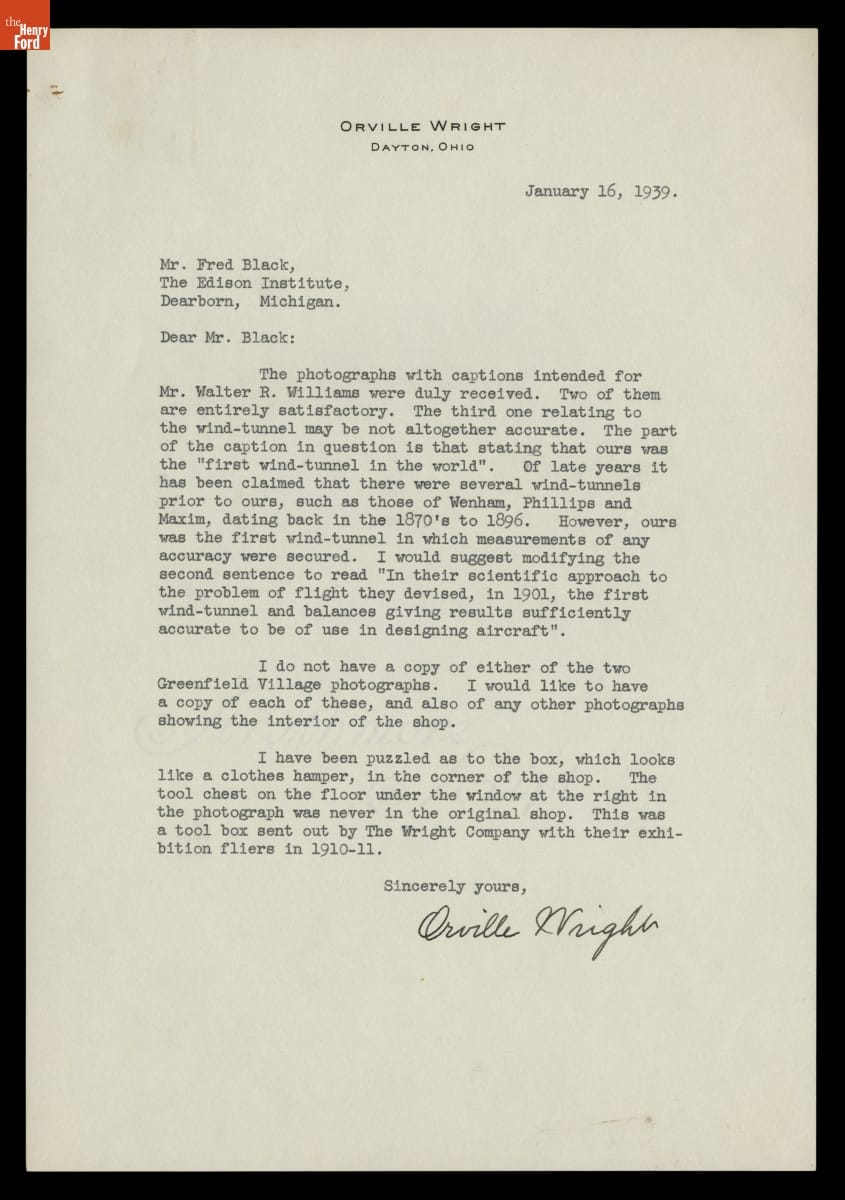
- January 16, 1939
- Collections - Artifact
Letter from Orville Wright to Fred Black about Photos of the Wind Tunnel in Wright Cycle Shop, January 16, 1939
Henry Ford acquired the Wright brothers' home and cycle shop in 1936, and he relocated them from Dayton, Ohio, to his Greenfield Village museum in Dearborn, Michigan. Orville Wright consulted on the project to ensure accuracy. In this letter, Wright suggested corrections to text about the brothers' 1901 wind tunnel, and he questioned the placement of a toolbox in the shop.
- Aquatint, "The Tunnel," 1831 - The Liverpool and Manchester Railway, connecting its namesake cities in the United Kingdom, opened in 1830. It was the world's first inter-city railroad, and the first to operate exclusively with steam locomotives. The 31-mile, double-track line was built to a high standard. Engineering highlights included Wapping Tunnel under Liverpool and the 600-foot-long Sankey Viaduct across the Sankey Valley.
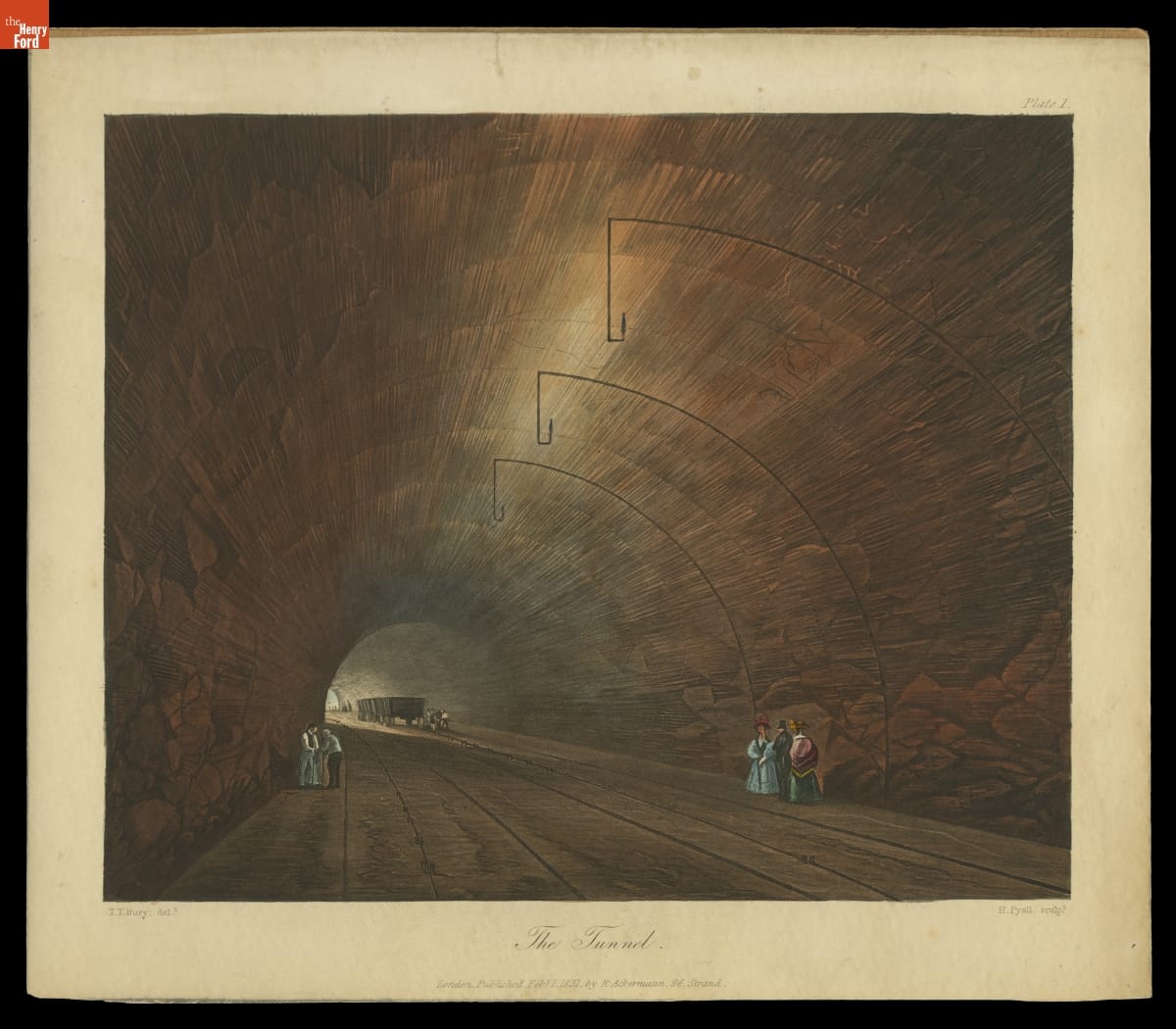
- February 01, 1831
- Collections - Artifact
Aquatint, "The Tunnel," 1831
The Liverpool and Manchester Railway, connecting its namesake cities in the United Kingdom, opened in 1830. It was the world's first inter-city railroad, and the first to operate exclusively with steam locomotives. The 31-mile, double-track line was built to a high standard. Engineering highlights included Wapping Tunnel under Liverpool and the 600-foot-long Sankey Viaduct across the Sankey Valley.
- Modern Train from New York, to Sacramento, California, with Pullman's Palace Cars, circa 1870 - The completion of the First Transcontinental Railroad in 1869 dramatically improved travel between the eastern United States and California. Pullman soon began operating first-class sleeping cars on Union Pacific trains between Omaha, Nebraska, and the connection with the Central Pacific in Utah. A journey that had taken months by wagon was reduced to about a week by railroad.
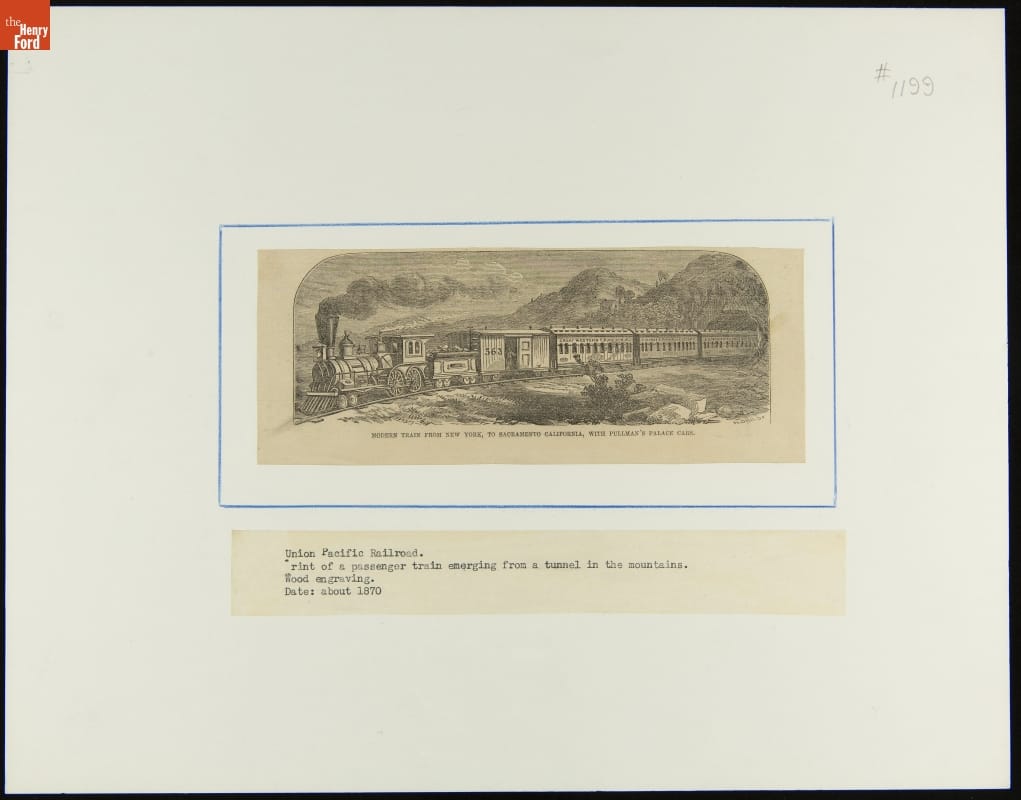
- circa 1870
- Collections - Artifact
Modern Train from New York, to Sacramento, California, with Pullman's Palace Cars, circa 1870
The completion of the First Transcontinental Railroad in 1869 dramatically improved travel between the eastern United States and California. Pullman soon began operating first-class sleeping cars on Union Pacific trains between Omaha, Nebraska, and the connection with the Central Pacific in Utah. A journey that had taken months by wagon was reduced to about a week by railroad.
- Shelby Mustang GT 500 Being Tested in a Wind Tunnel, 1967 - Wind tunnels are chambers that use flowing air to test the aerodynamic properties of an object. Automotive stylists and engineers use the results of wind tunnel testing to design motor vehicle chassis. This photograph shows a wind tunnel test of a 1967 Shelby Mustang. Shelby American built these high performance versions of Ford's Mustang in the late 1960s.
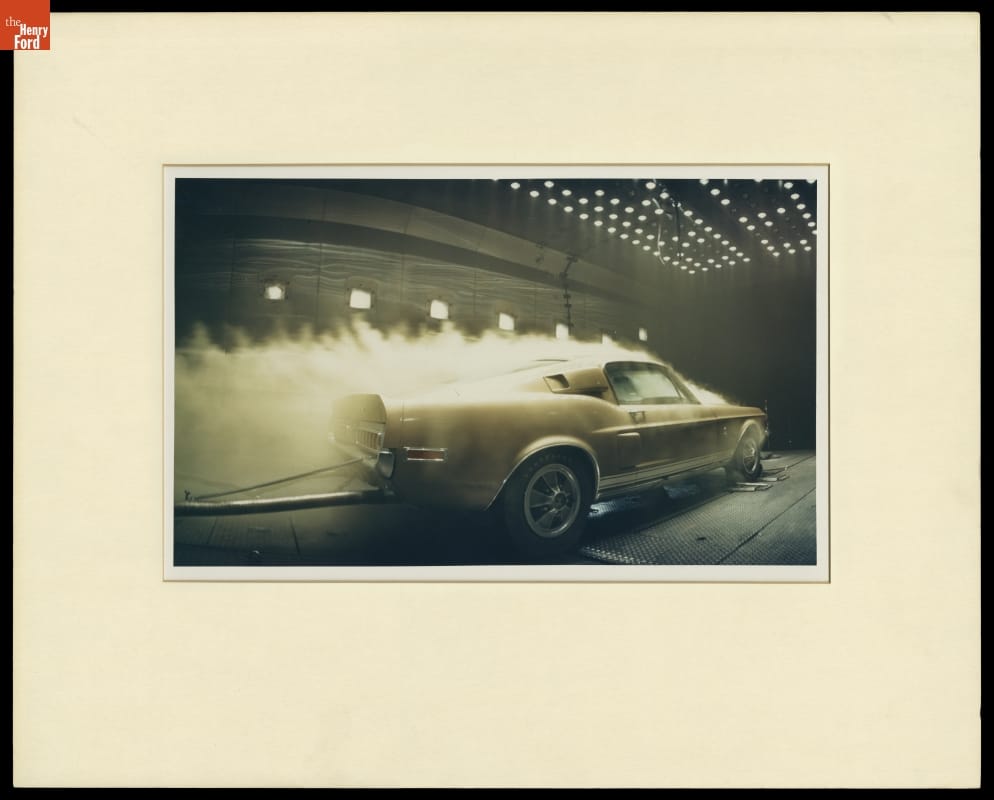
- 1967
- Collections - Artifact
Shelby Mustang GT 500 Being Tested in a Wind Tunnel, 1967
Wind tunnels are chambers that use flowing air to test the aerodynamic properties of an object. Automotive stylists and engineers use the results of wind tunnel testing to design motor vehicle chassis. This photograph shows a wind tunnel test of a 1967 Shelby Mustang. Shelby American built these high performance versions of Ford's Mustang in the late 1960s.
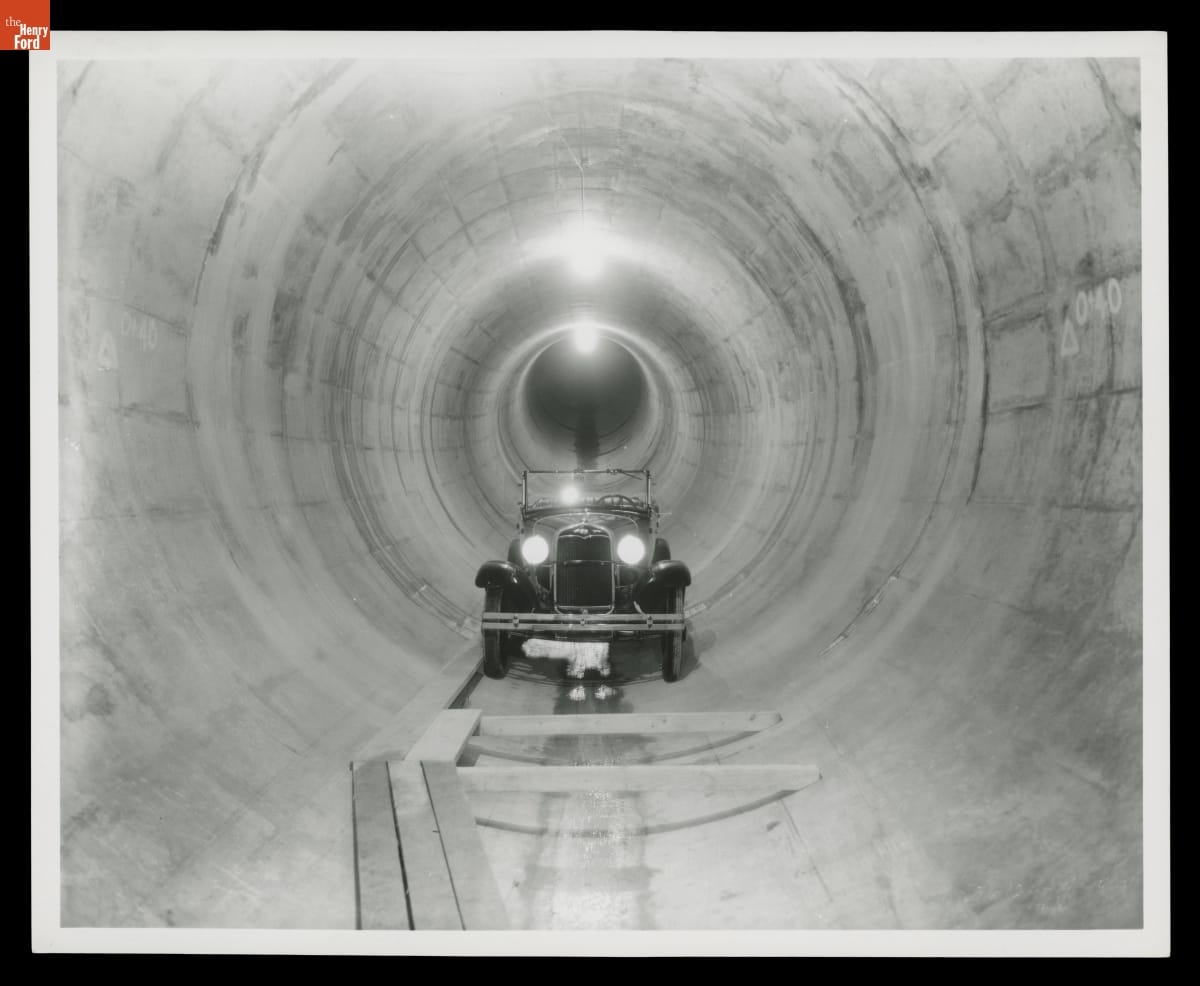
- Ford Model A inside Tunnel Supplying Water to the Ford Rouge Plant Power House, 1931 - In 1931, Ford Motor Company completed a tunnel diverting water from the Detroit River to its Rouge plant in Dearborn, Michigan. The Rouge used enormous quantities of water to produce steam for the powerhouse's electrical generators, to provide a coolant for steelmaking, and in other operations. The Ford Model A in this photograph emphasized the tunnel's massive dimensions.
- April 14, 1931
- Collections - Artifact
Ford Model A inside Tunnel Supplying Water to the Ford Rouge Plant Power House, 1931
In 1931, Ford Motor Company completed a tunnel diverting water from the Detroit River to its Rouge plant in Dearborn, Michigan. The Rouge used enormous quantities of water to produce steam for the powerhouse's electrical generators, to provide a coolant for steelmaking, and in other operations. The Ford Model A in this photograph emphasized the tunnel's massive dimensions.
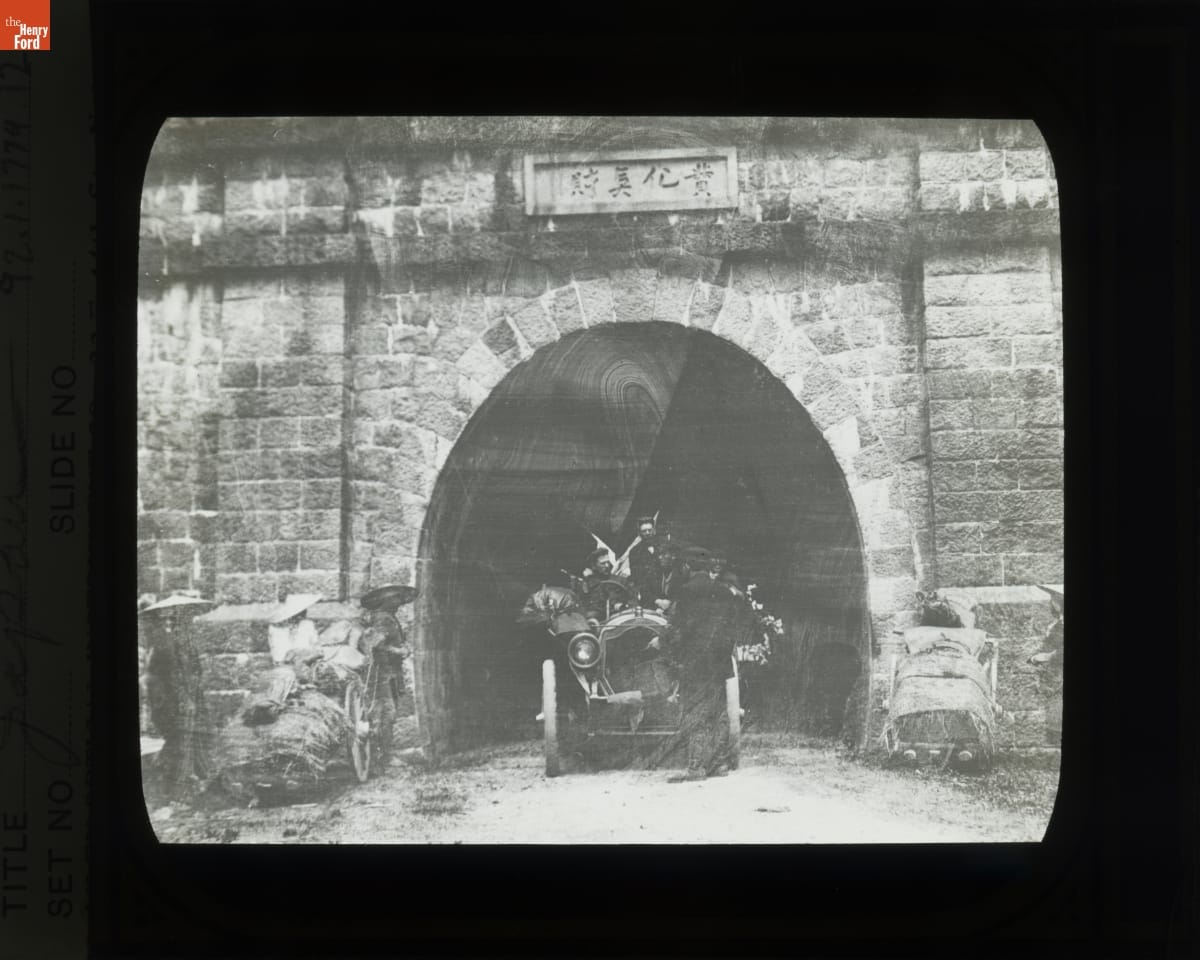
- Thomas Flyer Exiting Mountain Tunnel, Japan, New York to Paris Race, 1908 - The 1908 New York to Paris race was a 22,000-mile automobile endurance contest. After crossing the continental United States, teams shipped their vehicles to Asia. The Americans, driving a Thomas Flyer, disembarked in Japan in early May. As the Flyer and crew trekked carefully over the narrow Japanese roads, they encountered many inquisitive, courteous and helpful people.
- 1908
- Collections - Artifact
Thomas Flyer Exiting Mountain Tunnel, Japan, New York to Paris Race, 1908
The 1908 New York to Paris race was a 22,000-mile automobile endurance contest. After crossing the continental United States, teams shipped their vehicles to Asia. The Americans, driving a Thomas Flyer, disembarked in Japan in early May. As the Flyer and crew trekked carefully over the narrow Japanese roads, they encountered many inquisitive, courteous and helpful people.