
Search
- Turpentine Hack -
- Collections - Artifact
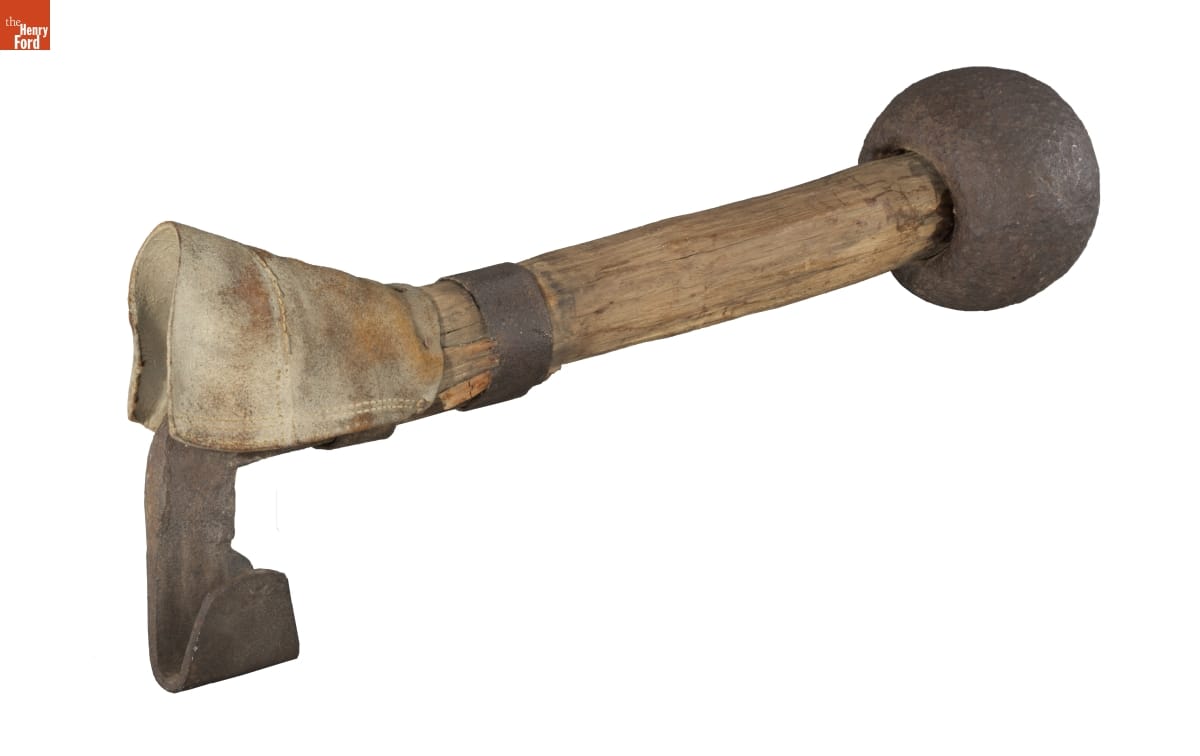
Turpentine Hack
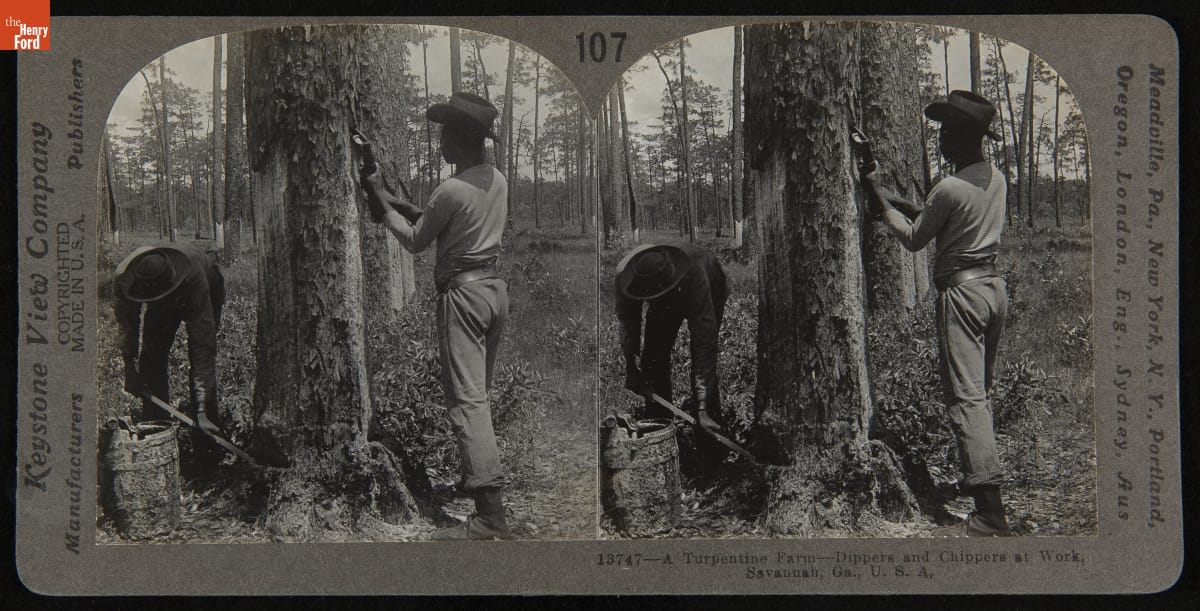
- A Turpentine Farm--Dippers and Chippers at Work, Savannah, Ga., U.S.A., 1904 - Pine sap (called resin) was the raw ingredient for numerous industrial products including turpentine and rosin. The process started with physically demanding labor in long-leaf pine forests, as depicted in this stereograph. Individuals "hacked" away bark to channel the sap into a container. Others strained it and stored it in barrels for shipment to market.
- 1904
- Collections - Artifact
A Turpentine Farm--Dippers and Chippers at Work, Savannah, Ga., U.S.A., 1904
Pine sap (called resin) was the raw ingredient for numerous industrial products including turpentine and rosin. The process started with physically demanding labor in long-leaf pine forests, as depicted in this stereograph. Individuals "hacked" away bark to channel the sap into a container. Others strained it and stored it in barrels for shipment to market.
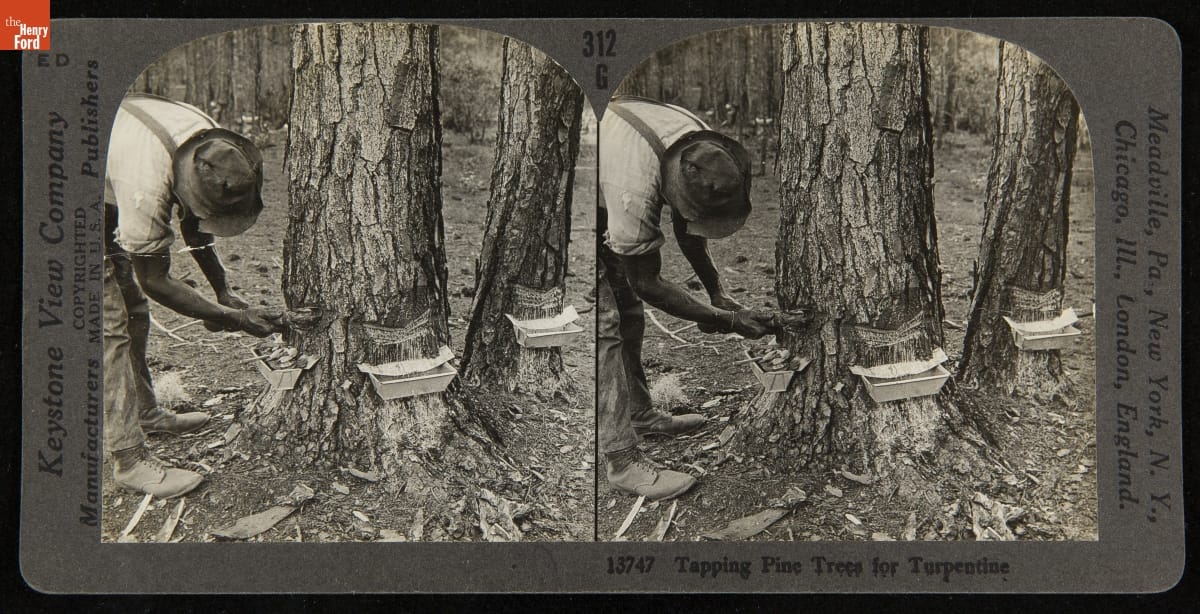
- Tapping Pine Trees for Turpentine, circa 1926 - Harvesting pine sap (resin) required physical labor and used techniques that weakened the pine trees. The individual in this stereograph "hacked" away bark to channel the sap into a container. Others collected the resin, strained it, stored it in barrels, and transported those to market for processing. The distilled sap yielded turpentine and rosin, essential ingredients in several industrial products.
- circa 1926
- Collections - Artifact
Tapping Pine Trees for Turpentine, circa 1926
Harvesting pine sap (resin) required physical labor and used techniques that weakened the pine trees. The individual in this stereograph "hacked" away bark to channel the sap into a container. Others collected the resin, strained it, stored it in barrels, and transported those to market for processing. The distilled sap yielded turpentine and rosin, essential ingredients in several industrial products.