
Search
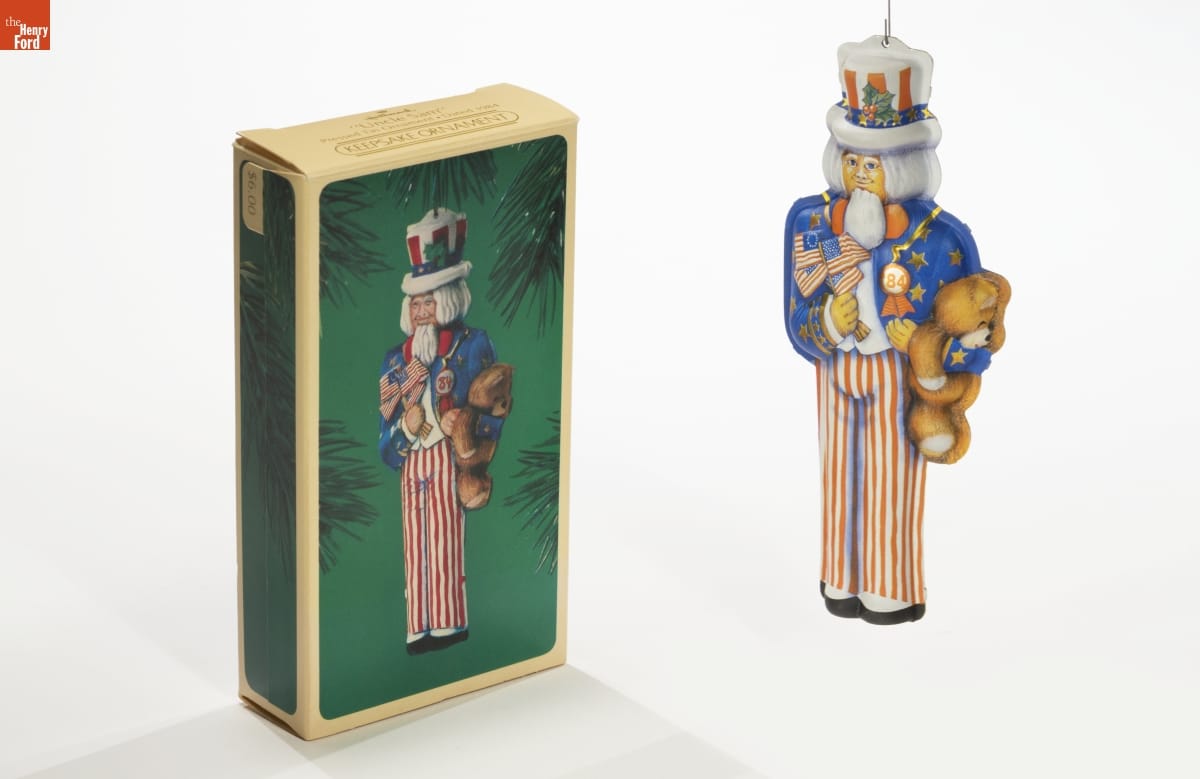
- Hallmark "Uncle Sam" Christmas Ornament, 1984 - Already known for greeting cards, Hallmark introduced a line of Christmas ornaments in 1973. The company's annual release of an increasing array of ornaments revolutionized Christmas decorating, appealing to customers' interest in marking memories and milestones as well as expressing one's personality and unique tastes.
- 1984
- Collections - Artifact
Hallmark "Uncle Sam" Christmas Ornament, 1984
Already known for greeting cards, Hallmark introduced a line of Christmas ornaments in 1973. The company's annual release of an increasing array of ornaments revolutionized Christmas decorating, appealing to customers' interest in marking memories and milestones as well as expressing one's personality and unique tastes.
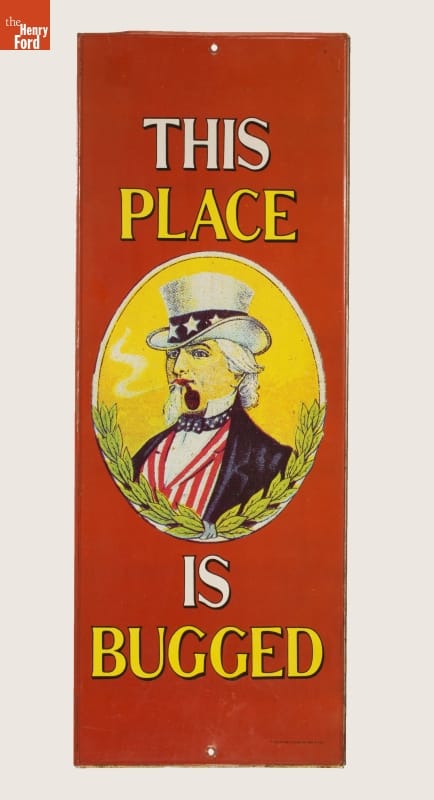
- Sign, "This Place is Bugged," 1974 -
- 1974
- Collections - Artifact
Sign, "This Place is Bugged," 1974
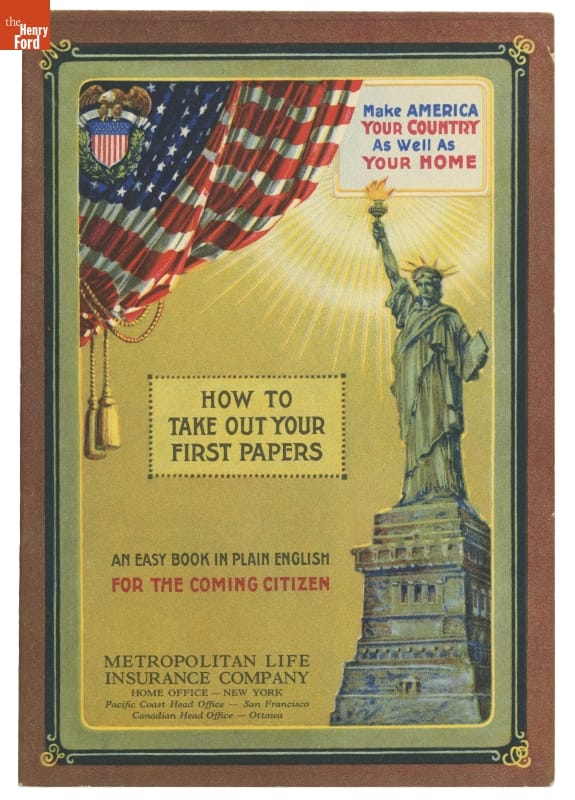
- "How to Take Out Your First Papers: An Easy Book in Plain English for the Coming Citizen," circa 1923 - In the early 20th century, mass immigration posed the challenge of integrating, or assimilating, immigrants into American society. Anglo-Americans believed that Americanization was the first step towards assimilation into a greater nation. This pamphlet is an example of a private agency that established an Americanization program to help immigrants learn American values and ultimately gain United States citizenship.
- circa 1923
- Collections - Artifact
"How to Take Out Your First Papers: An Easy Book in Plain English for the Coming Citizen," circa 1923
In the early 20th century, mass immigration posed the challenge of integrating, or assimilating, immigrants into American society. Anglo-Americans believed that Americanization was the first step towards assimilation into a greater nation. This pamphlet is an example of a private agency that established an Americanization program to help immigrants learn American values and ultimately gain United States citizenship.
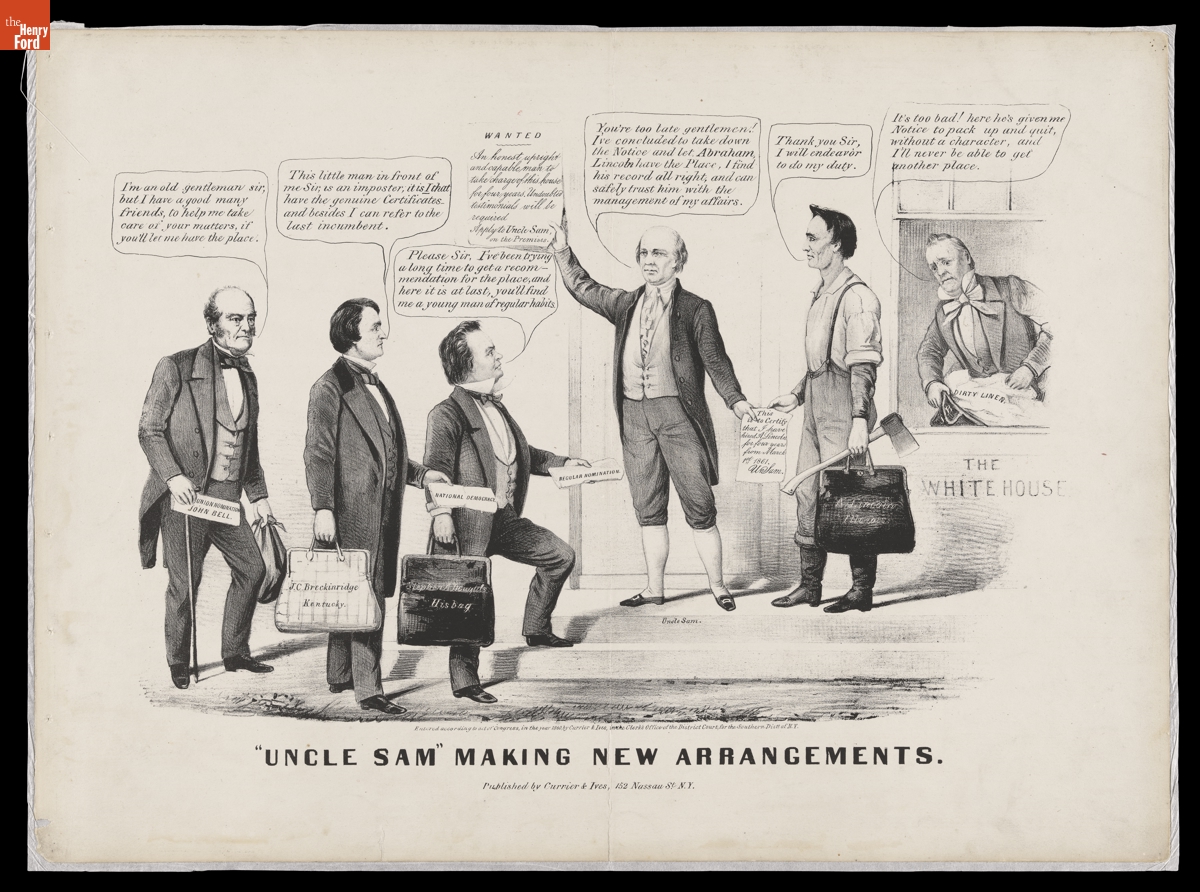
- Political Cartoon, "Uncle Sam Making New Arrangements," 1860 -
- 1860
- Collections - Artifact
Political Cartoon, "Uncle Sam Making New Arrangements," 1860
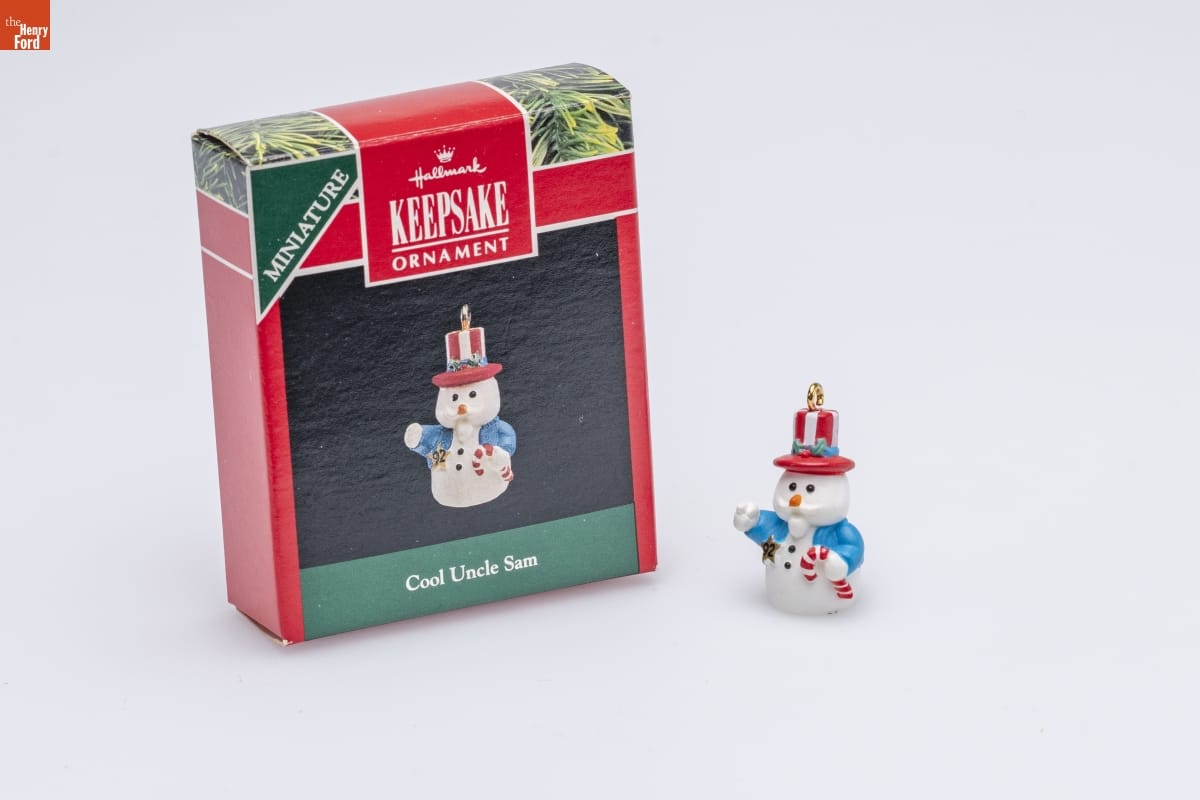
- Hallmark "Cool Uncle Sam" Miniature Christmas Ornament, 1992 - Already known for greeting cards, Hallmark introduced a line of Christmas ornaments in 1973. The company's annual release of an increasing array of ornaments revolutionized Christmas decorating, appealing to customers' interest in marking memories and milestones as well as expressing one's personality and unique tastes.
- 1992
- Collections - Artifact
Hallmark "Cool Uncle Sam" Miniature Christmas Ornament, 1992
Already known for greeting cards, Hallmark introduced a line of Christmas ornaments in 1973. The company's annual release of an increasing array of ornaments revolutionized Christmas decorating, appealing to customers' interest in marking memories and milestones as well as expressing one's personality and unique tastes.
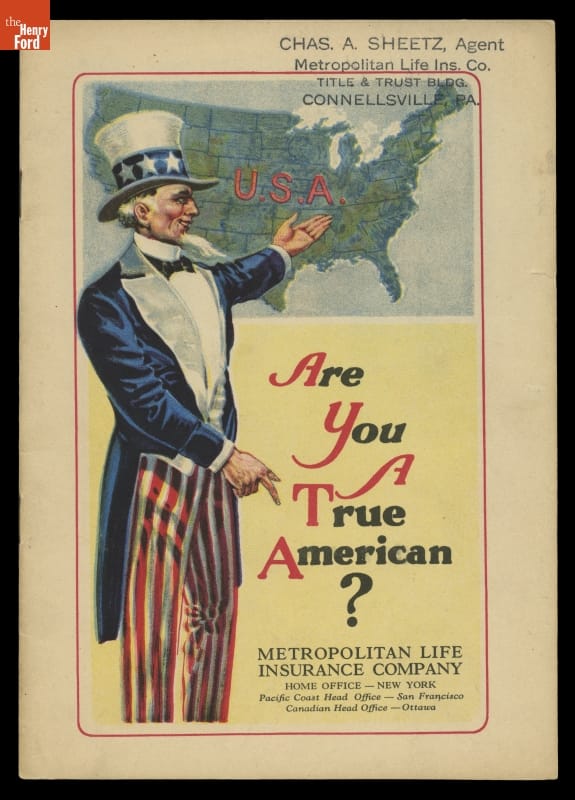
- "Are You a True American?," circa 1923 - Metropolitan Life Insurance Company was a private agency that set up Americanization programs. Anglo-Americans utilized these programs to assimilate immigrants into "true Americans" preserving the integrity of their perceived concept of America. Pamphlets like the one pictured here, were passed out to immigrants and provided information on citizenship and American values.
- circa 1923
- Collections - Artifact
"Are You a True American?," circa 1923
Metropolitan Life Insurance Company was a private agency that set up Americanization programs. Anglo-Americans utilized these programs to assimilate immigrants into "true Americans" preserving the integrity of their perceived concept of America. Pamphlets like the one pictured here, were passed out to immigrants and provided information on citizenship and American values.
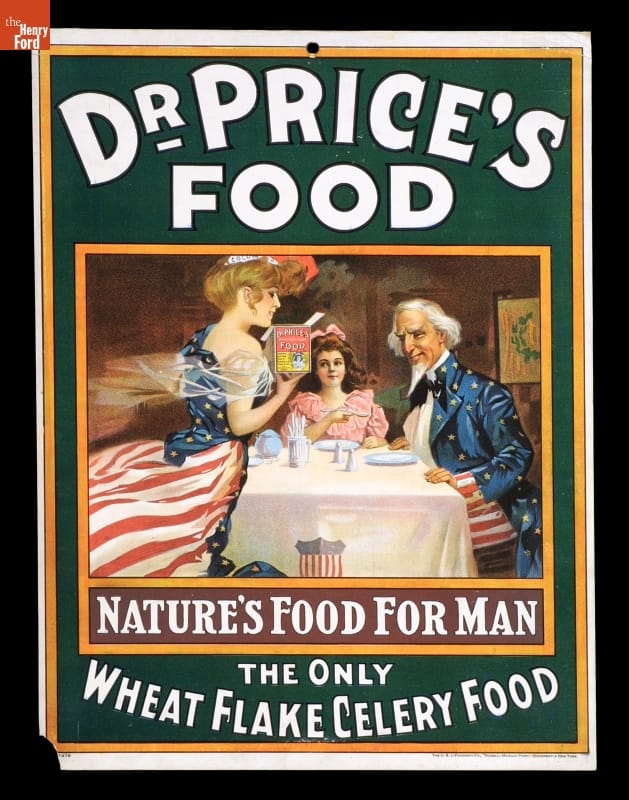
- Advertising Poster, "Dr. Price's Food, Nature's Food for Man, the Only Wheat Flake Celery Food," circa 1910 - Celery, the vegetable eaten around the world, attracted the attention of health food entrepreneurs like Dr. Vincent C. Price (1832-1914). He purchased Tryabita Celery Food Company in Battle Creek, Michigan, in 1902 and operated it as Price Cereal Food Company. He also produced and marketed Dr. Price's Wheat Flake Celery Food as essential for the health of vegetarians and the infirm.
- circa 1910
- Collections - Artifact
Advertising Poster, "Dr. Price's Food, Nature's Food for Man, the Only Wheat Flake Celery Food," circa 1910
Celery, the vegetable eaten around the world, attracted the attention of health food entrepreneurs like Dr. Vincent C. Price (1832-1914). He purchased Tryabita Celery Food Company in Battle Creek, Michigan, in 1902 and operated it as Price Cereal Food Company. He also produced and marketed Dr. Price's Wheat Flake Celery Food as essential for the health of vegetarians and the infirm.
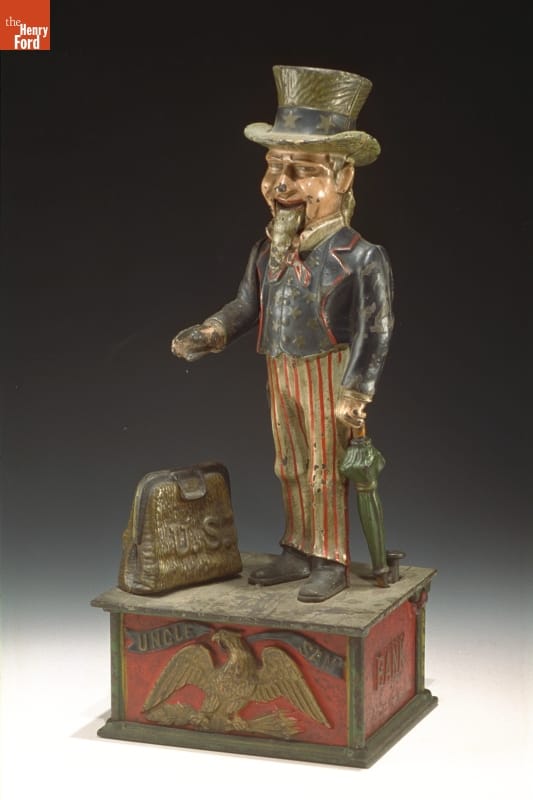
- "Uncle Sam" Mechanical Bank, 1886-1900 - Cast iron mechanical banks, which used ingenious mechanisms to deposit the money, became particularly popular between 1870 and 1930. Banks were produced in a variety of forms. When the button behind Uncle Sam's left foot is pressed, the coin in his right hand is deposited into the open valise at the same time that his beard whiskers move.
- 1886-1900
- Collections - Artifact
"Uncle Sam" Mechanical Bank, 1886-1900
Cast iron mechanical banks, which used ingenious mechanisms to deposit the money, became particularly popular between 1870 and 1930. Banks were produced in a variety of forms. When the button behind Uncle Sam's left foot is pressed, the coin in his right hand is deposited into the open valise at the same time that his beard whiskers move.
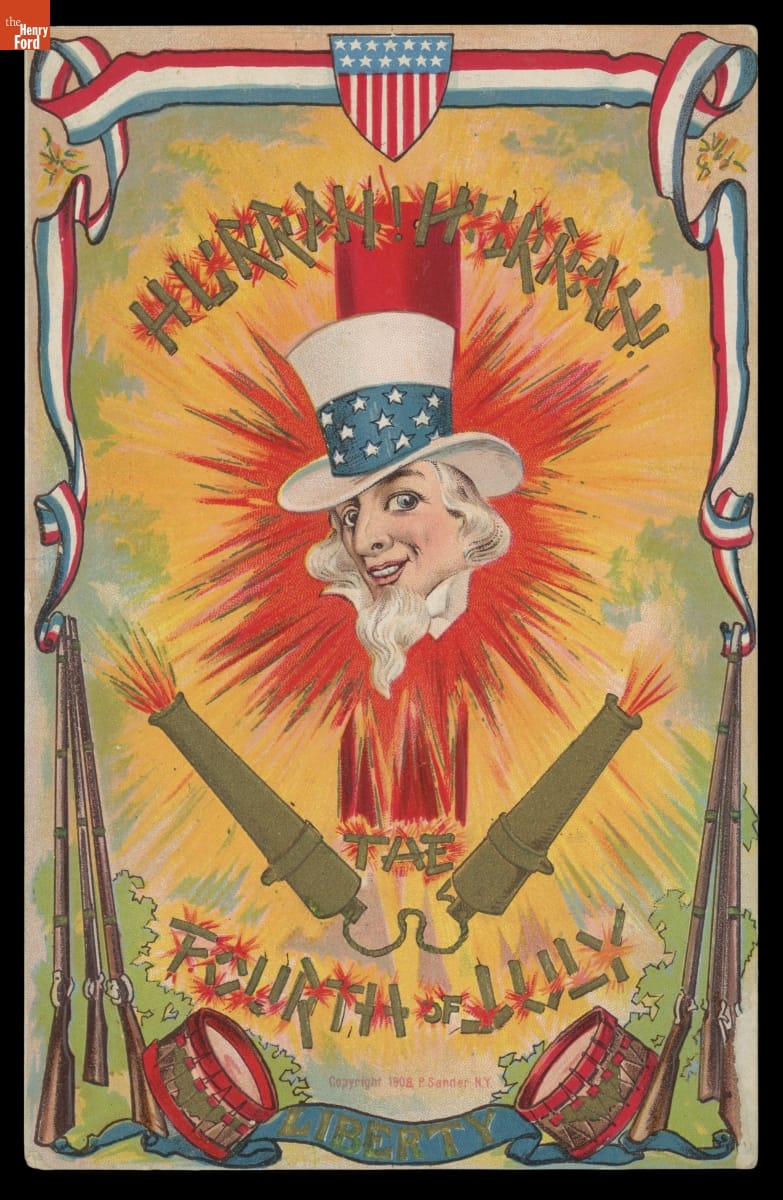
- "Hurrah! Hurrah! The Fourth of July!," 1908 - In 1898, the United States Post Office reduced the cost of mailing privately printed postcards to one cent. As postcards caught the public's fancy in the first decade of the 20th century, these cards blossomed with colorful images, humorous messages, or holiday greetings. Colorful, printed Fourth of July postcards often depicted flags, fireworks, and scenes of Independence Day celebrations.
- 1908
- Collections - Artifact
"Hurrah! Hurrah! The Fourth of July!," 1908
In 1898, the United States Post Office reduced the cost of mailing privately printed postcards to one cent. As postcards caught the public's fancy in the first decade of the 20th century, these cards blossomed with colorful images, humorous messages, or holiday greetings. Colorful, printed Fourth of July postcards often depicted flags, fireworks, and scenes of Independence Day celebrations.
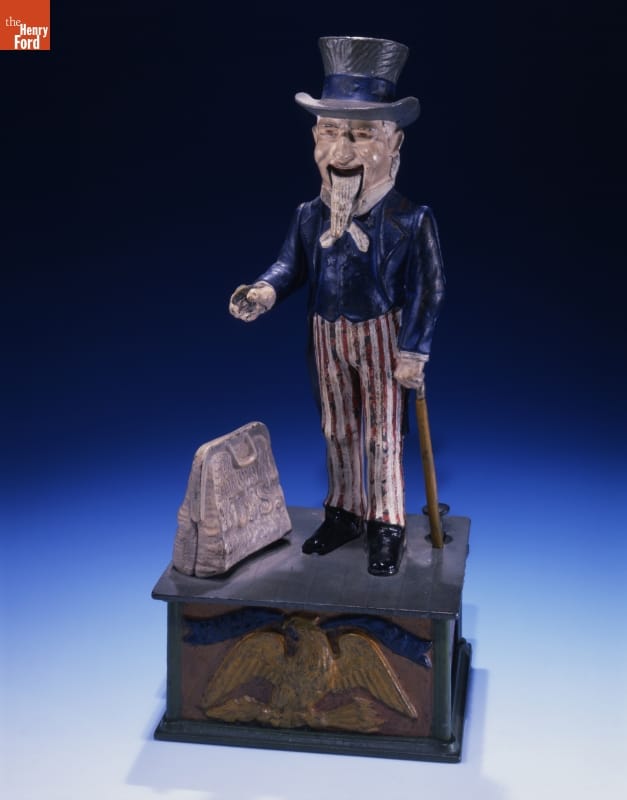
- "Uncle Sam" Mechanical Bank, 1886-1900 - Cast iron mechanical banks, which used ingenious mechanisms to deposit the money, became particularly popular between 1870 and 1930. Banks were produced in a variety of forms. When the button behind Uncle Sam's left foot is pressed, the coin in his right hand is deposited into the open valise at the same time that his beard whiskers move.
- 1886-1900
- Collections - Artifact
"Uncle Sam" Mechanical Bank, 1886-1900
Cast iron mechanical banks, which used ingenious mechanisms to deposit the money, became particularly popular between 1870 and 1930. Banks were produced in a variety of forms. When the button behind Uncle Sam's left foot is pressed, the coin in his right hand is deposited into the open valise at the same time that his beard whiskers move.