
Search
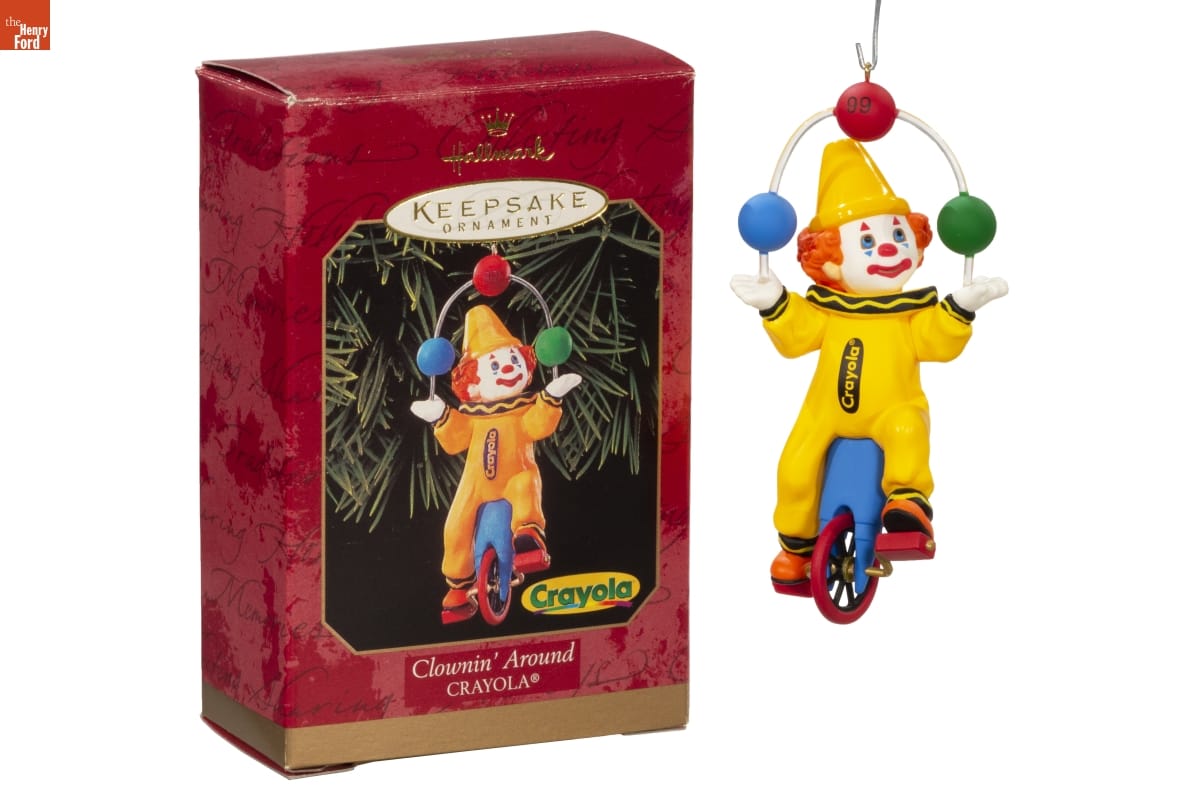
- Hallmark "Crayola: Clownin' Around" Christmas Ornament, 1999 - Already known for greeting cards, Hallmark introduced a line of Christmas ornaments in 1973. The company's annual release of an increasing array of ornaments revolutionized Christmas decorating, appealing to customers' interest in marking memories and milestones as well as expressing one's personality and unique tastes.
- 1999
- Collections - Artifact
Hallmark "Crayola: Clownin' Around" Christmas Ornament, 1999
Already known for greeting cards, Hallmark introduced a line of Christmas ornaments in 1973. The company's annual release of an increasing array of ornaments revolutionized Christmas decorating, appealing to customers' interest in marking memories and milestones as well as expressing one's personality and unique tastes.
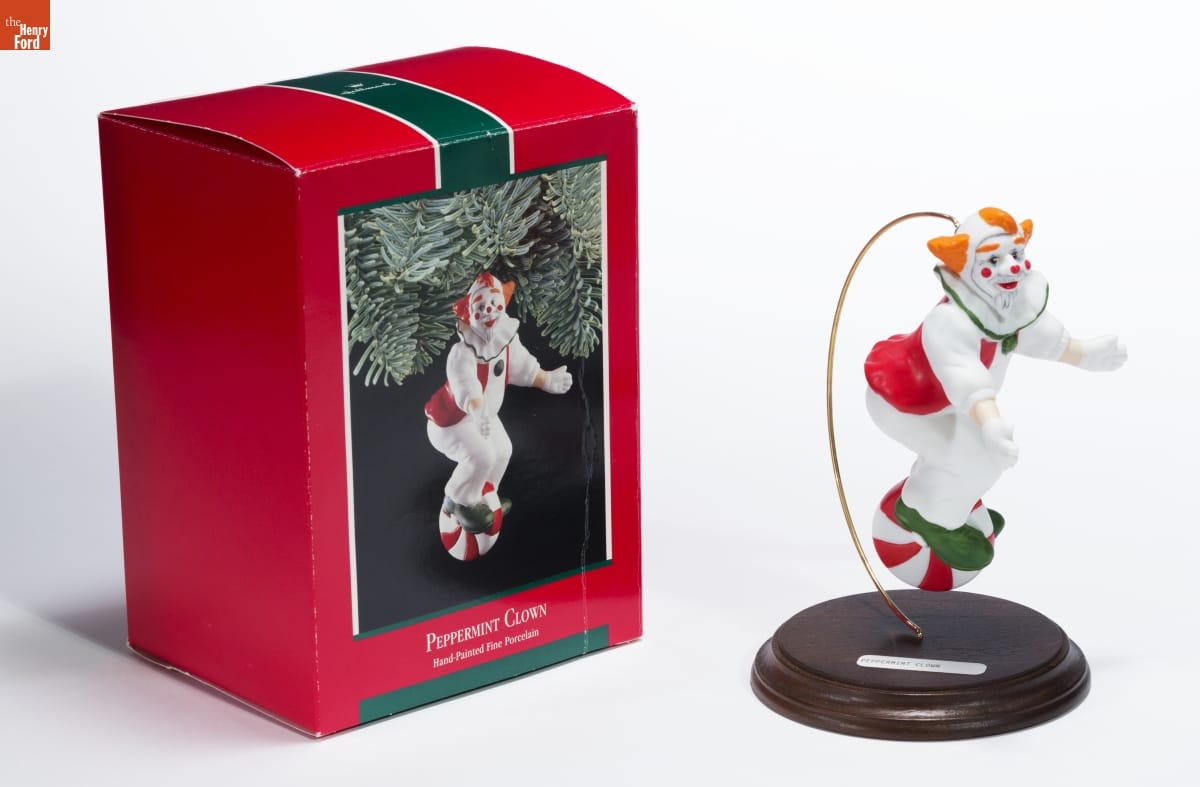
- Hallmark "Peppermint Clown" Christmas Ornament, 1989 - Already known for greeting cards, Hallmark introduced a line of Christmas ornaments in 1973. The company's annual release of an increasing array of ornaments revolutionized Christmas decorating, appealing to customers' interest in marking memories and milestones as well as expressing one's personality and unique tastes.
- 1989
- Collections - Artifact
Hallmark "Peppermint Clown" Christmas Ornament, 1989
Already known for greeting cards, Hallmark introduced a line of Christmas ornaments in 1973. The company's annual release of an increasing array of ornaments revolutionized Christmas decorating, appealing to customers' interest in marking memories and milestones as well as expressing one's personality and unique tastes.
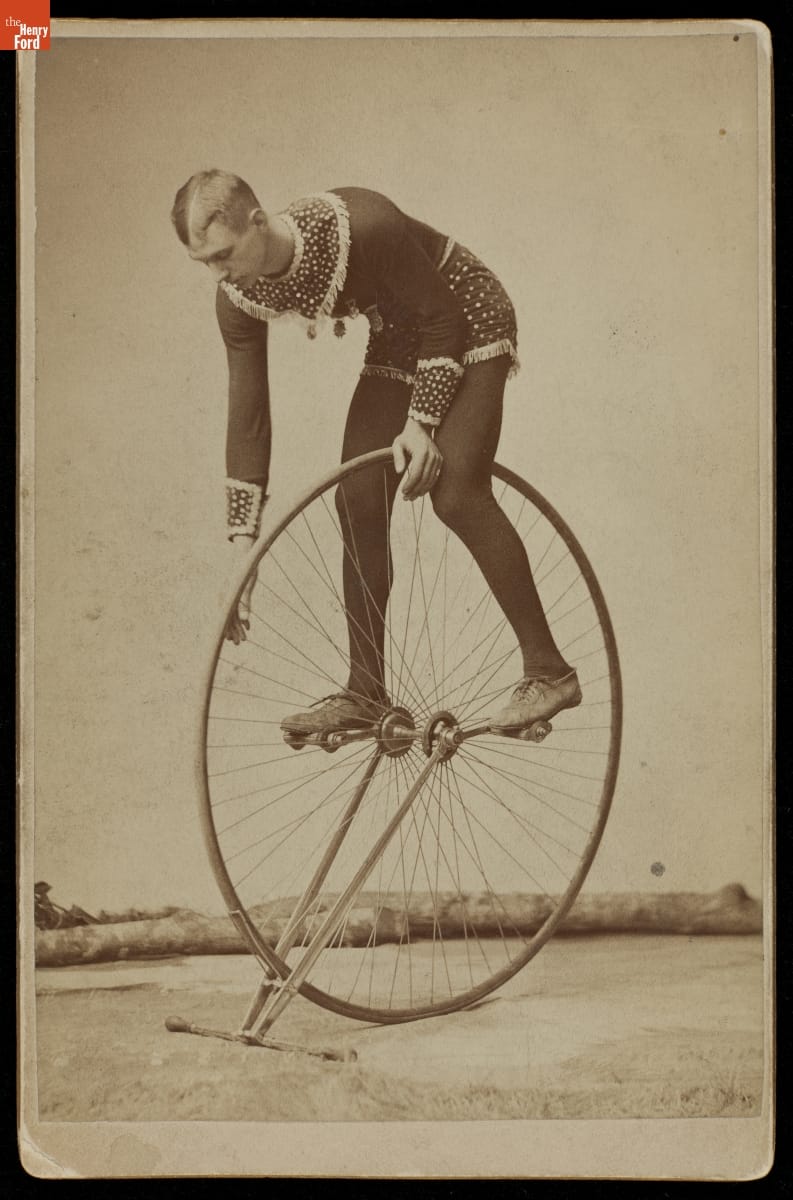
- Trick Cyclist Nicholas Kaufmann, Rochester, New York, 1884 - Nicholas Kaufmann was a world famous trick bicyclist in the late nineteenth and early twentieth centuries. In this 1884 photograph, Kaufmann balances on a monocycle -- one of many wheeled props he used to entertain audiences. He won numerous medals for his mastery of the bicycle. A showman as well as an athlete, he later traveled the theater circuit and managed other bicycle acts.
- 1884
- Collections - Artifact
Trick Cyclist Nicholas Kaufmann, Rochester, New York, 1884
Nicholas Kaufmann was a world famous trick bicyclist in the late nineteenth and early twentieth centuries. In this 1884 photograph, Kaufmann balances on a monocycle -- one of many wheeled props he used to entertain audiences. He won numerous medals for his mastery of the bicycle. A showman as well as an athlete, he later traveled the theater circuit and managed other bicycle acts.
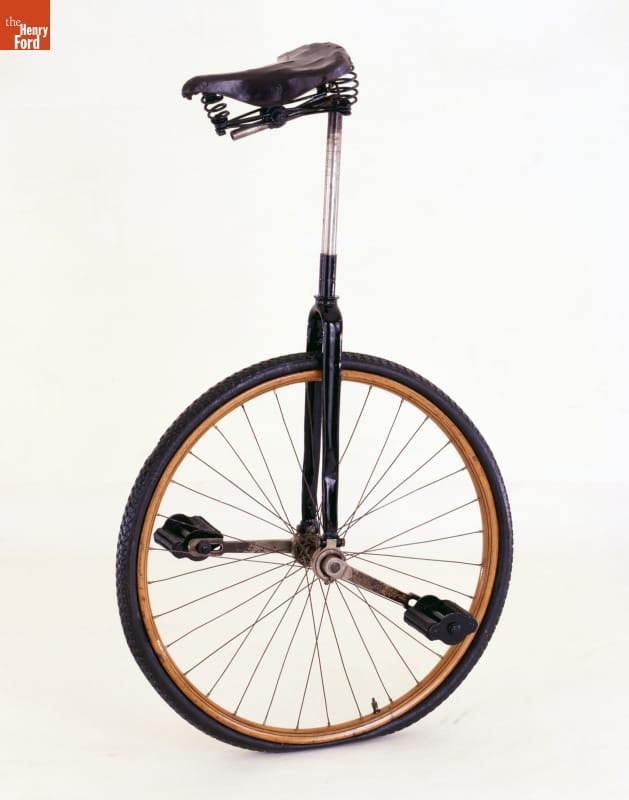
- Unicycle, circa 1895 - The first patent for a unicycle was issued in 1869. This circa 1895 example is typical, with direct-drive pedals attached at the wheel hub, but no brakes and no freewheel mechanism. These unusual single-wheeled vehicles are most often associated with circuses and street performers, though enthusiasts have used unicycles for everything from trail riding to long-distance touring.
- circa 1895
- Collections - Artifact
Unicycle, circa 1895
The first patent for a unicycle was issued in 1869. This circa 1895 example is typical, with direct-drive pedals attached at the wheel hub, but no brakes and no freewheel mechanism. These unusual single-wheeled vehicles are most often associated with circuses and street performers, though enthusiasts have used unicycles for everything from trail riding to long-distance touring.
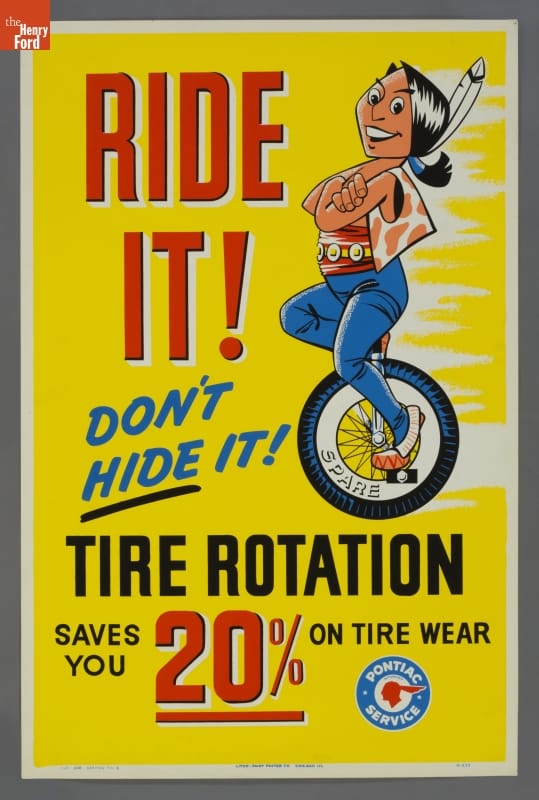
- Pontiac Service Poster, "Ride It! Don't Hide It! Tire Rotation Saves You 20% on Tire Wear," November 1958 - Artist Jacqueline Bergey Ward worked for several prominent Detroit-based commercial art studios. At Roupp Art Studios in the late 1950s, Ward created posters advertising automobile maintenance and repair services. Bright colors and playful slogans characterized her work, but this poster for General Motors' Pontiac division also includes an offensive caricature of a Native American.
- November 01, 1958
- Collections - Artifact
Pontiac Service Poster, "Ride It! Don't Hide It! Tire Rotation Saves You 20% on Tire Wear," November 1958
Artist Jacqueline Bergey Ward worked for several prominent Detroit-based commercial art studios. At Roupp Art Studios in the late 1950s, Ward created posters advertising automobile maintenance and repair services. Bright colors and playful slogans characterized her work, but this poster for General Motors' Pontiac division also includes an offensive caricature of a Native American.