
Search
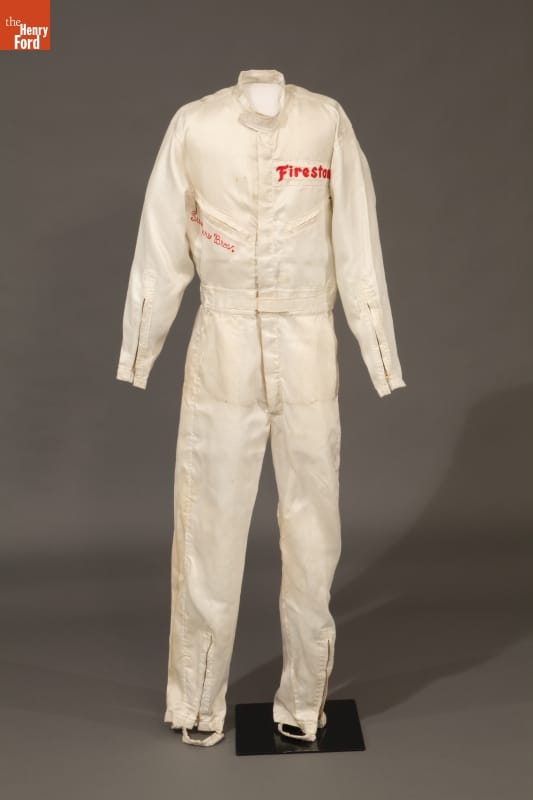
- Racing Suit Worn by Bob Summers While Winning New Land Speed Record, 1965 - Bob Summers of Ontario, California, wore this racing suit when he achieved a new wheel-driven land speed record of 409.277 miles per hour on November 12, 1965. Summers was in Goldenrod, the sleek four-engine car he built with his brother Bill. The Summers brothers' record stood until 1991.
- November 12, 1965
- Collections - Artifact
Racing Suit Worn by Bob Summers While Winning New Land Speed Record, 1965
Bob Summers of Ontario, California, wore this racing suit when he achieved a new wheel-driven land speed record of 409.277 miles per hour on November 12, 1965. Summers was in Goldenrod, the sleek four-engine car he built with his brother Bill. The Summers brothers' record stood until 1991.
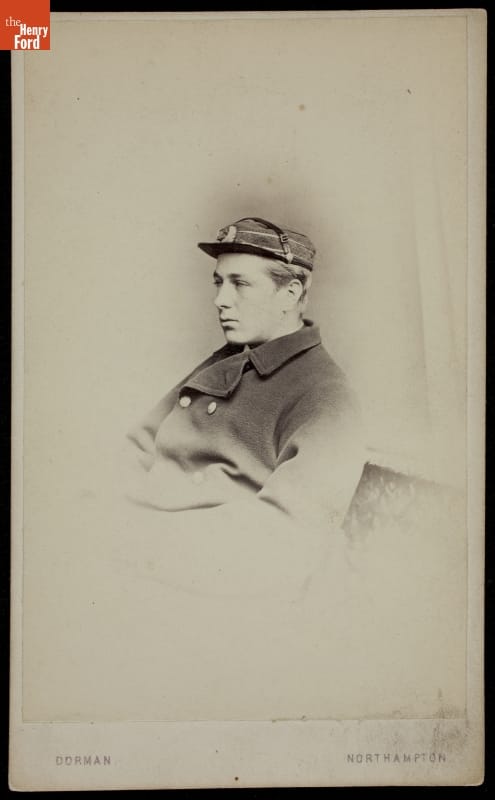
- Portrait of Unidentified English Soldier Wearing Military Cap, circa 1870 -
- circa 1870
- Collections - Artifact
Portrait of Unidentified English Soldier Wearing Military Cap, circa 1870
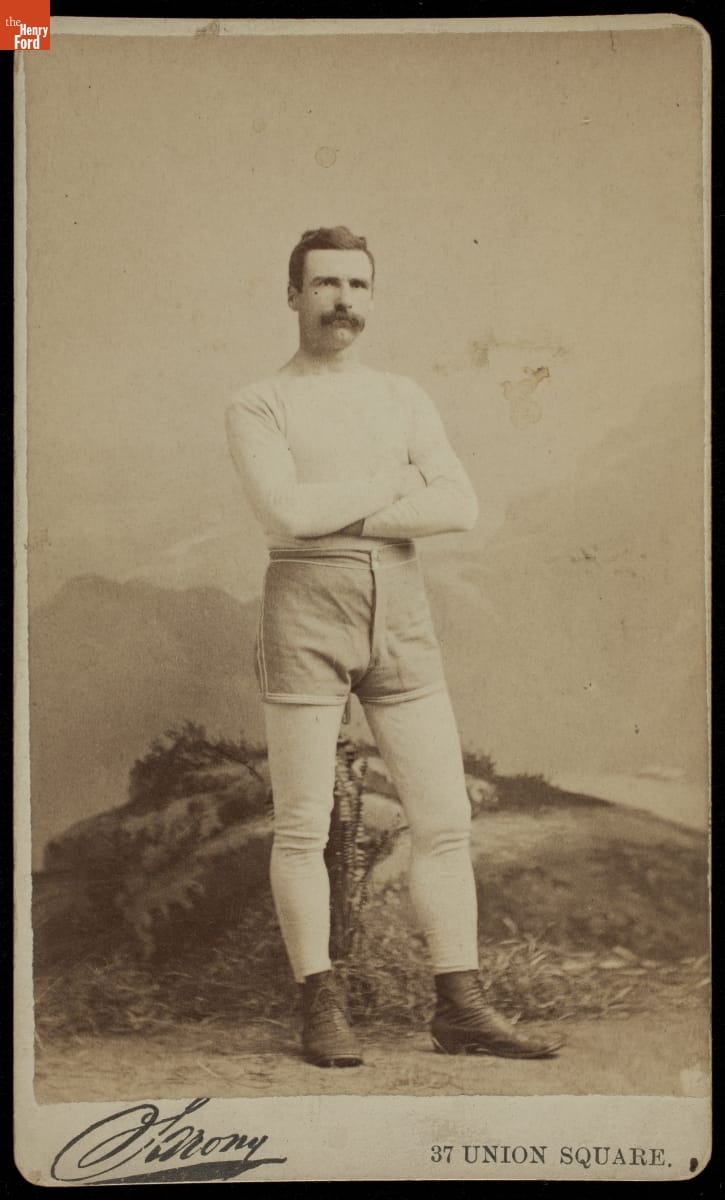
- Portrait of John Ennis, Long-Distance Competitive Walker, 1871-1885 - John Ennis was a well-known long-distance walker in the 1870s and 80s. Competitive walking at that time was a popular spectator sport. Fans crowded into arenas to watch athletes race around a track. Ennis competed in many six-day races and distance events; and his energy never waned. In 1910, at the age of 68, Ennis walked from New York to San Francisco.
- 1871-1885
- Collections - Artifact
Portrait of John Ennis, Long-Distance Competitive Walker, 1871-1885
John Ennis was a well-known long-distance walker in the 1870s and 80s. Competitive walking at that time was a popular spectator sport. Fans crowded into arenas to watch athletes race around a track. Ennis competed in many six-day races and distance events; and his energy never waned. In 1910, at the age of 68, Ennis walked from New York to San Francisco.
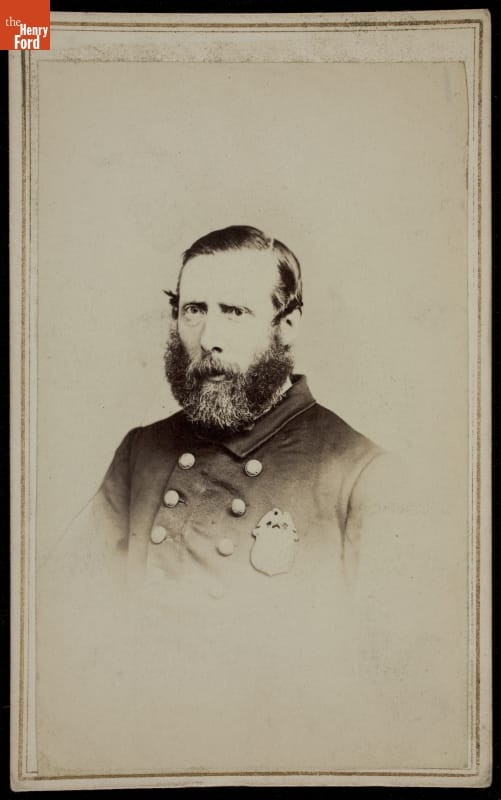
- Portrait of Man Wearing Uniform and Badge, 1860-1870 - The carte-de-visite was a small photographic print on cardboard stock made by professional photographers. Popular in the United States from the 1860s through the 1880s, people exchanged and collected them to help them remember family and friends. This CdV shows a man with a badge -- perhaps a police officer. In the late 1800s, most police officers wore badges and military-type uniforms to help citizens identify them.
- 1860-1870
- Collections - Artifact
Portrait of Man Wearing Uniform and Badge, 1860-1870
The carte-de-visite was a small photographic print on cardboard stock made by professional photographers. Popular in the United States from the 1860s through the 1880s, people exchanged and collected them to help them remember family and friends. This CdV shows a man with a badge -- perhaps a police officer. In the late 1800s, most police officers wore badges and military-type uniforms to help citizens identify them.
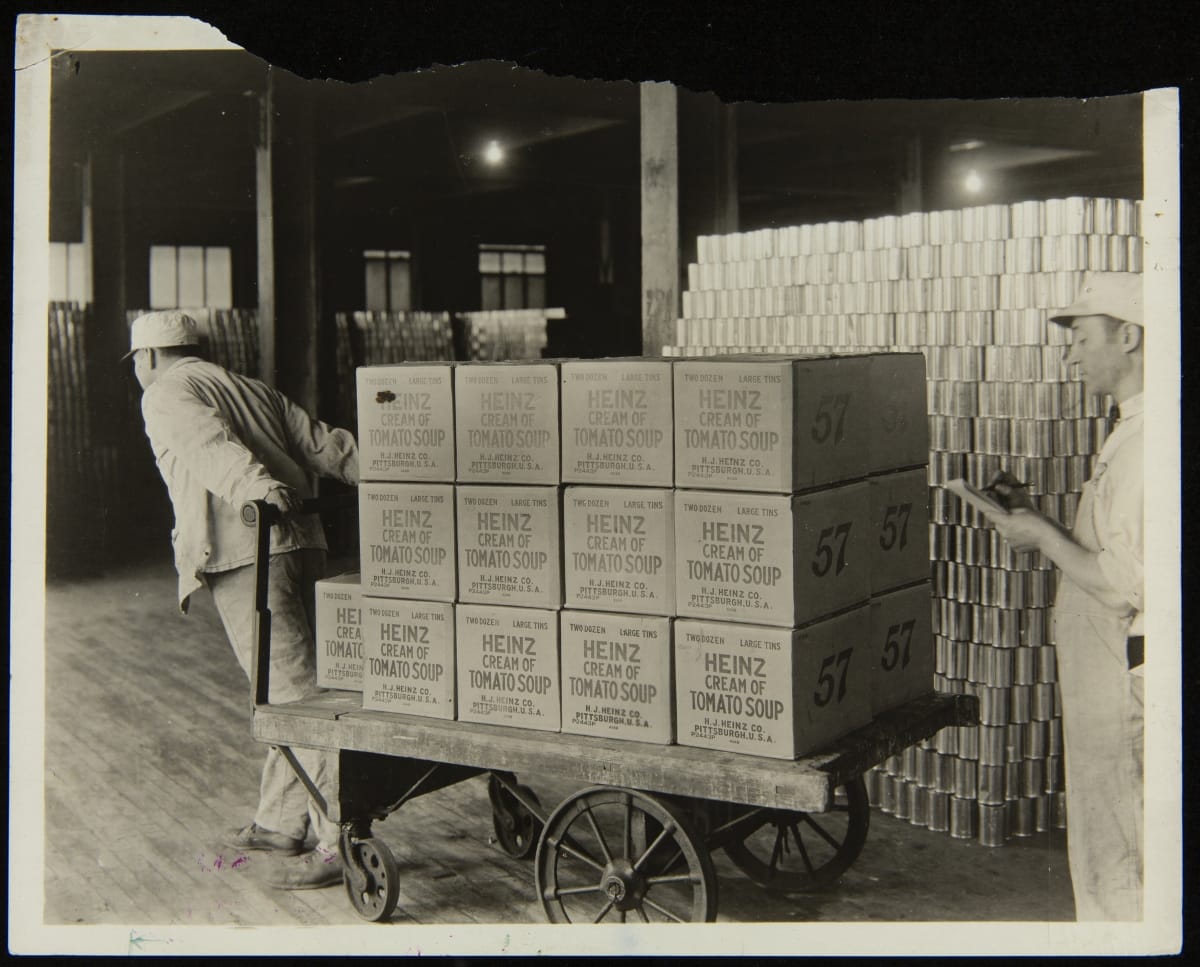
- Employee Moving Boxes of H. J. Heinz Cream of Tomato Soup, Pittsburgh, Pennsylvania, circa 1920 - Before complete mechanization of the manufacturing process, many tasks at the Heinz factory were done by hand. The H.J. Heinz Company documented the many departments of the manufacturing process through photographs. This photograph shows an employee moving boxes. These boxes were possibly heading for the shipping dock to be loaded onto a train or truck.
- circa 1920
- Collections - Artifact
Employee Moving Boxes of H. J. Heinz Cream of Tomato Soup, Pittsburgh, Pennsylvania, circa 1920
Before complete mechanization of the manufacturing process, many tasks at the Heinz factory were done by hand. The H.J. Heinz Company documented the many departments of the manufacturing process through photographs. This photograph shows an employee moving boxes. These boxes were possibly heading for the shipping dock to be loaded onto a train or truck.
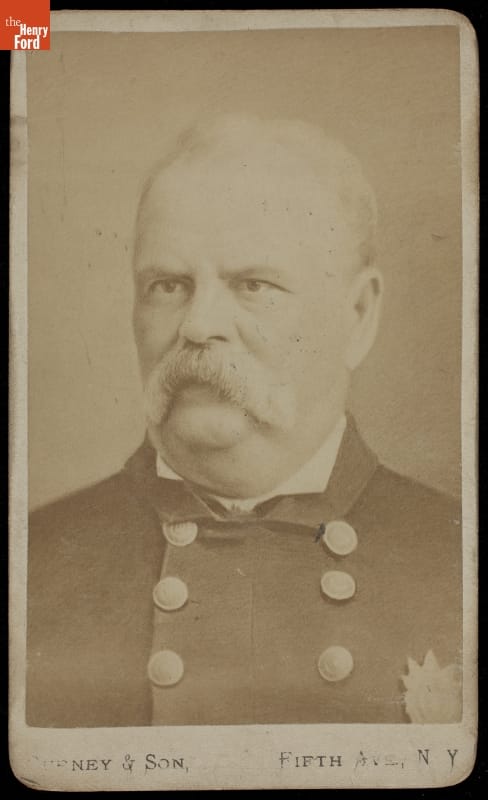
- Portrait of Man Wearing Uniform and Badge, 1860-1874 - The carte-de-visite was a small photographic print on cardboard stock made by professional photographers. Popular in the United States from the 1860s through the 1880s, people exchanged and collected them to help them remember family and friends. This CdV shows a man with a badge -- perhaps a police officer. In the late 1800s, most police officers wore badges and military-type uniforms to help citizens identify them.
- 1860-1874
- Collections - Artifact
Portrait of Man Wearing Uniform and Badge, 1860-1874
The carte-de-visite was a small photographic print on cardboard stock made by professional photographers. Popular in the United States from the 1860s through the 1880s, people exchanged and collected them to help them remember family and friends. This CdV shows a man with a badge -- perhaps a police officer. In the late 1800s, most police officers wore badges and military-type uniforms to help citizens identify them.
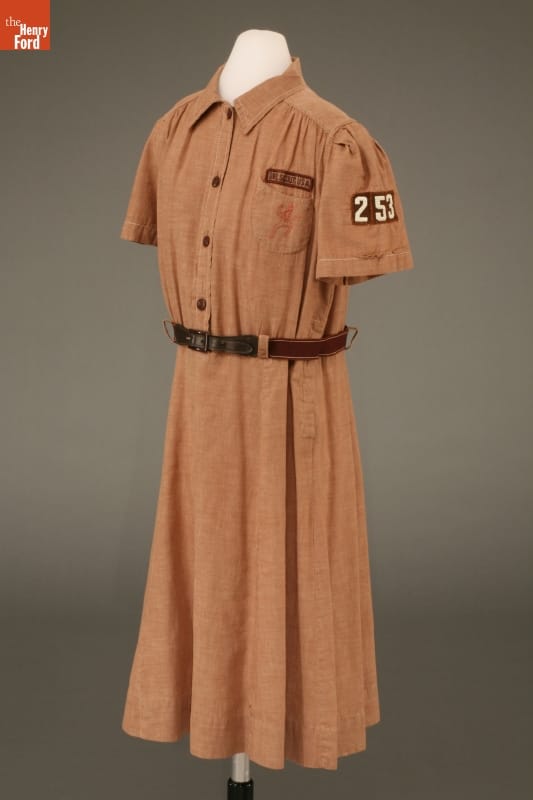
- Brownie Uniform, 1956-1963 - American Girl Scouts have worn specialized uniforms since their organization was founded in 1912. In the 1950s, Brownie scouts (ages 7 to 9) could make or purchase practical brown dresses with short sleeves. A Girl Scout in Royal Oak, Michigan, wore an official elastic belt and beanie with this uniform, which features a tangerine-colored Brownie emblem on the breast pocket.
- 1956-1963
- Collections - Artifact
Brownie Uniform, 1956-1963
American Girl Scouts have worn specialized uniforms since their organization was founded in 1912. In the 1950s, Brownie scouts (ages 7 to 9) could make or purchase practical brown dresses with short sleeves. A Girl Scout in Royal Oak, Michigan, wore an official elastic belt and beanie with this uniform, which features a tangerine-colored Brownie emblem on the breast pocket.
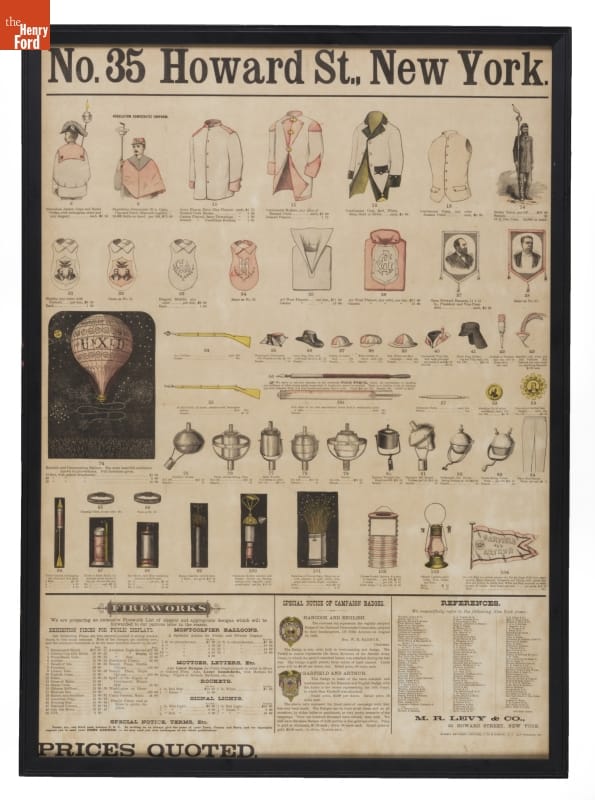
- Advertisement for Political Campaign Supplies, Equipment and Clothing, 1880 - M. R. Levy & Company presented its line of political campaign material for 1880 with this broadside advertisement. Supporters of Democratic and Republican Party candidates could find a range of products -- uniforms, parade torches, badges, banners, and fireworks -- available at Levy's New York City location.
- August 18, 1880
- Collections - Artifact
Advertisement for Political Campaign Supplies, Equipment and Clothing, 1880
M. R. Levy & Company presented its line of political campaign material for 1880 with this broadside advertisement. Supporters of Democratic and Republican Party candidates could find a range of products -- uniforms, parade torches, badges, banners, and fireworks -- available at Levy's New York City location.
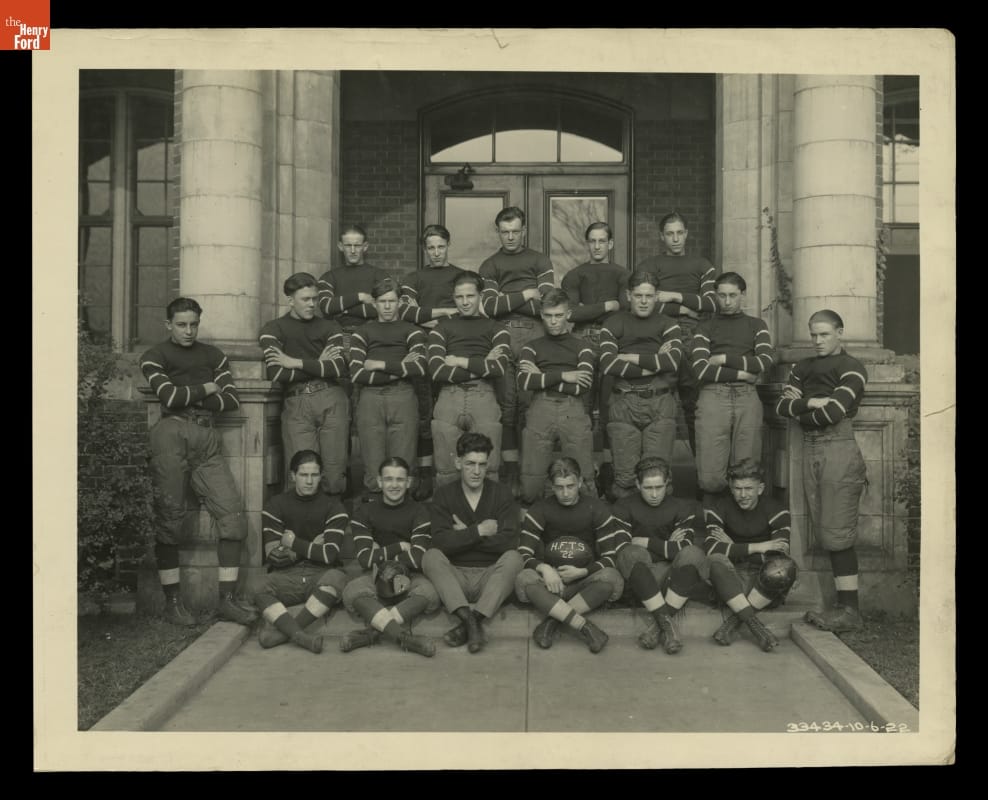
- Henry Ford Trade School Football Team, 1922 - Boys who attended the Henry Ford Trade School learned by doing. The school, the brainchild of Henry Ford, trained teenage boys in a variety of skilled, industrial trade work. In addition to the manual training received, students attended traditional academic classes and could take part in athletic opportunities through a variety of sports like football.
- October 06, 1922
- Collections - Artifact
Henry Ford Trade School Football Team, 1922
Boys who attended the Henry Ford Trade School learned by doing. The school, the brainchild of Henry Ford, trained teenage boys in a variety of skilled, industrial trade work. In addition to the manual training received, students attended traditional academic classes and could take part in athletic opportunities through a variety of sports like football.
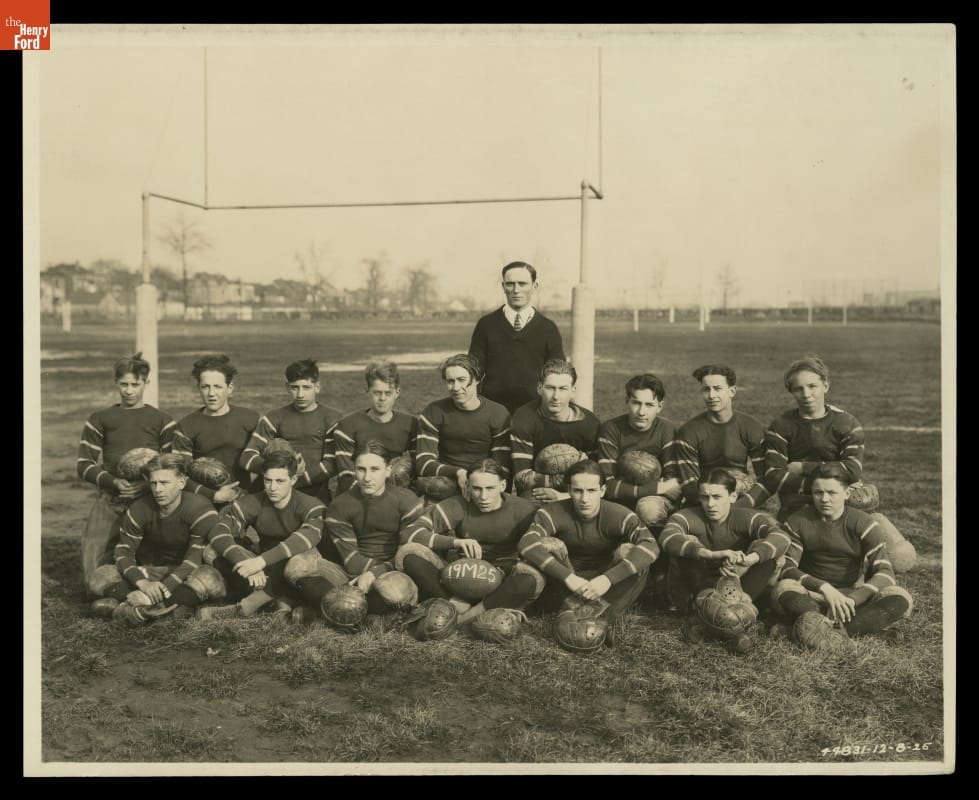
- Henry Ford Trade School Football Team, December 1925 - Boys who attended the Henry Ford Trade School learned by doing. The school, the brainchild of Henry Ford, trained teenage boys in a variety of skilled, industrial trade work. In addition to the manual training received, students attended traditional academic classes and could take part in athletic opportunities through a variety of sports like football.
- December 08, 1925
- Collections - Artifact
Henry Ford Trade School Football Team, December 1925
Boys who attended the Henry Ford Trade School learned by doing. The school, the brainchild of Henry Ford, trained teenage boys in a variety of skilled, industrial trade work. In addition to the manual training received, students attended traditional academic classes and could take part in athletic opportunities through a variety of sports like football.