
Search
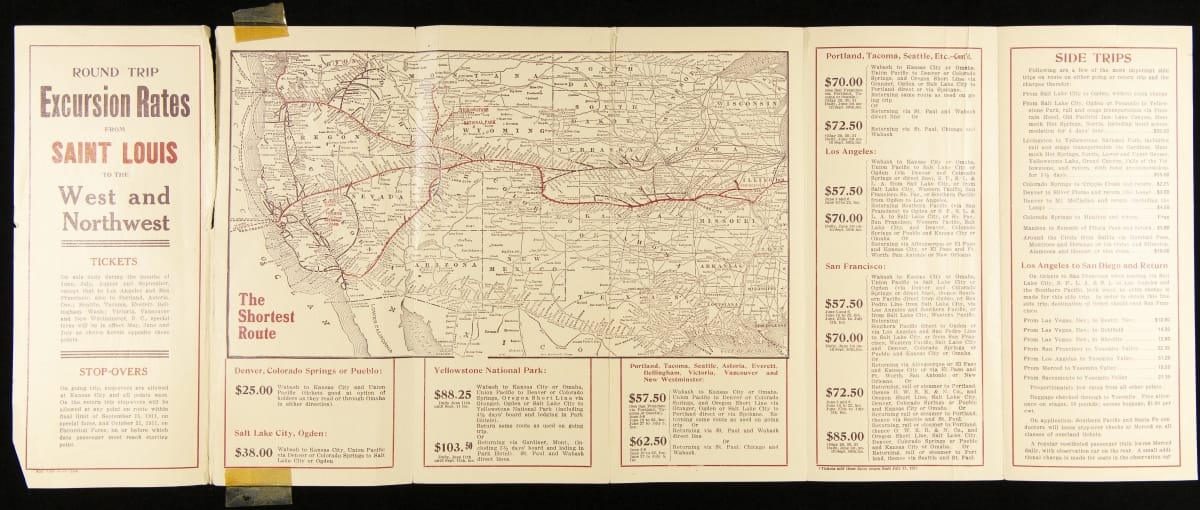
- Special Low Excursion Rates and Double Daily Train Service to Colorado, Utah, California, Oregon, Washington, and Yellowstone National Park, 1911 - The Wabash Railway, with origins dating back to 1838, was a strong Midwestern carrier until Amtrak took over the national passenger railroad system in 1971. Railroads made Yellowstone National Park accessible to tourists until cross-country automobile travel became feasible and popular. This timetable promoted Wabash's through trains to Yellowstone, operated in partnership with Union Pacific.
- 1911
- Collections - Artifact
Special Low Excursion Rates and Double Daily Train Service to Colorado, Utah, California, Oregon, Washington, and Yellowstone National Park, 1911
The Wabash Railway, with origins dating back to 1838, was a strong Midwestern carrier until Amtrak took over the national passenger railroad system in 1971. Railroads made Yellowstone National Park accessible to tourists until cross-country automobile travel became feasible and popular. This timetable promoted Wabash's through trains to Yellowstone, operated in partnership with Union Pacific.
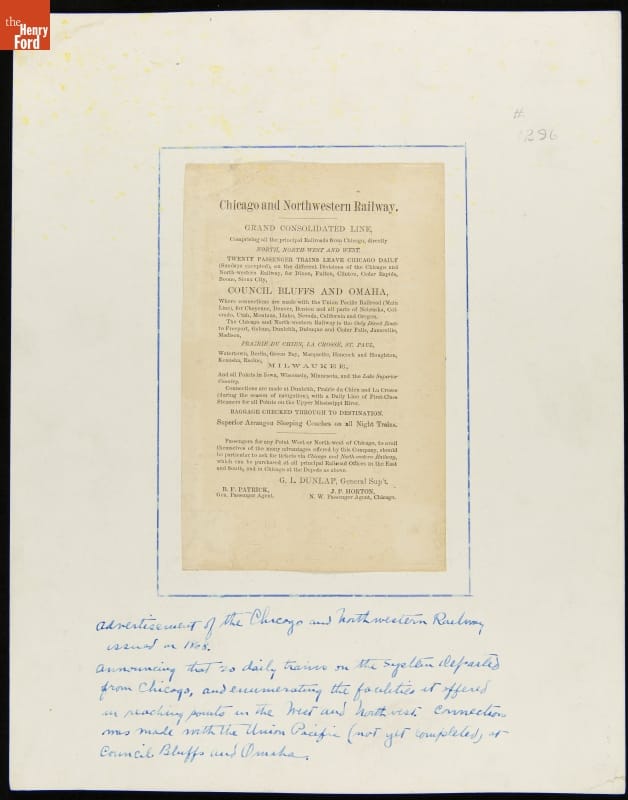
- Chicago and Northwestern Railway Advertising Broadside, 1868 - President Lincoln designated Council Bluffs, Iowa, as the official eastern terminus of the First Transcontinental Railroad. (Though the Missouri River wasn't bridged until 1872, making Omaha, Nebraska, the effective terminus until then.) The transcontinental route connected with the rest of the eastern U.S. railroad network via the Chicago & North Western Railway, completed to Council Bluffs from Chicago in 1867.
- 1868
- Collections - Artifact
Chicago and Northwestern Railway Advertising Broadside, 1868
President Lincoln designated Council Bluffs, Iowa, as the official eastern terminus of the First Transcontinental Railroad. (Though the Missouri River wasn't bridged until 1872, making Omaha, Nebraska, the effective terminus until then.) The transcontinental route connected with the rest of the eastern U.S. railroad network via the Chicago & North Western Railway, completed to Council Bluffs from Chicago in 1867.
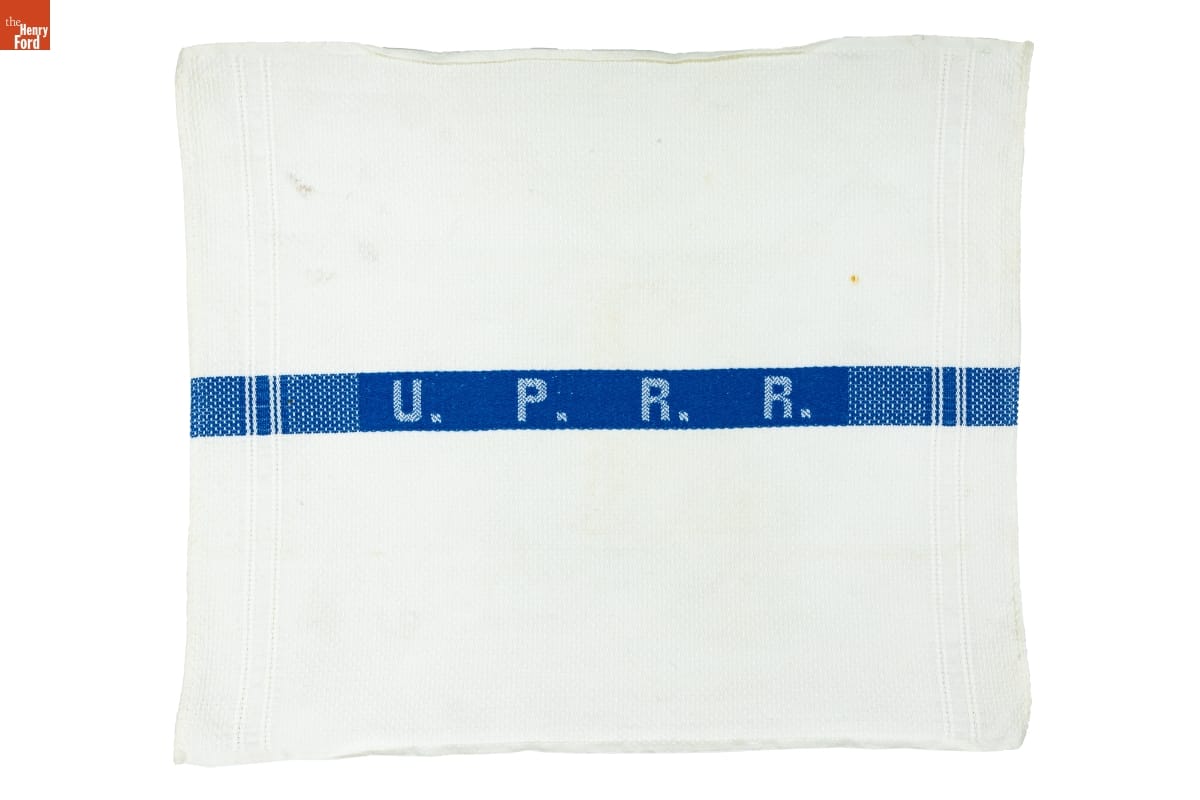
- Hand Towel Used on Pullman Passenger Cars - From its founding in 1867 until its demise a century later, Pullman was synonymous with first-class travel on American railroads. The company built sleeping cars and operated them under contract with host railroads. For Black Americans, jobs as Pullman porters offered a pathway into the middle class, though the work was difficult. This hand towel was used on Union Pacific trains.
- Collections - Artifact
Hand Towel Used on Pullman Passenger Cars
From its founding in 1867 until its demise a century later, Pullman was synonymous with first-class travel on American railroads. The company built sleeping cars and operated them under contract with host railroads. For Black Americans, jobs as Pullman porters offered a pathway into the middle class, though the work was difficult. This hand towel was used on Union Pacific trains.
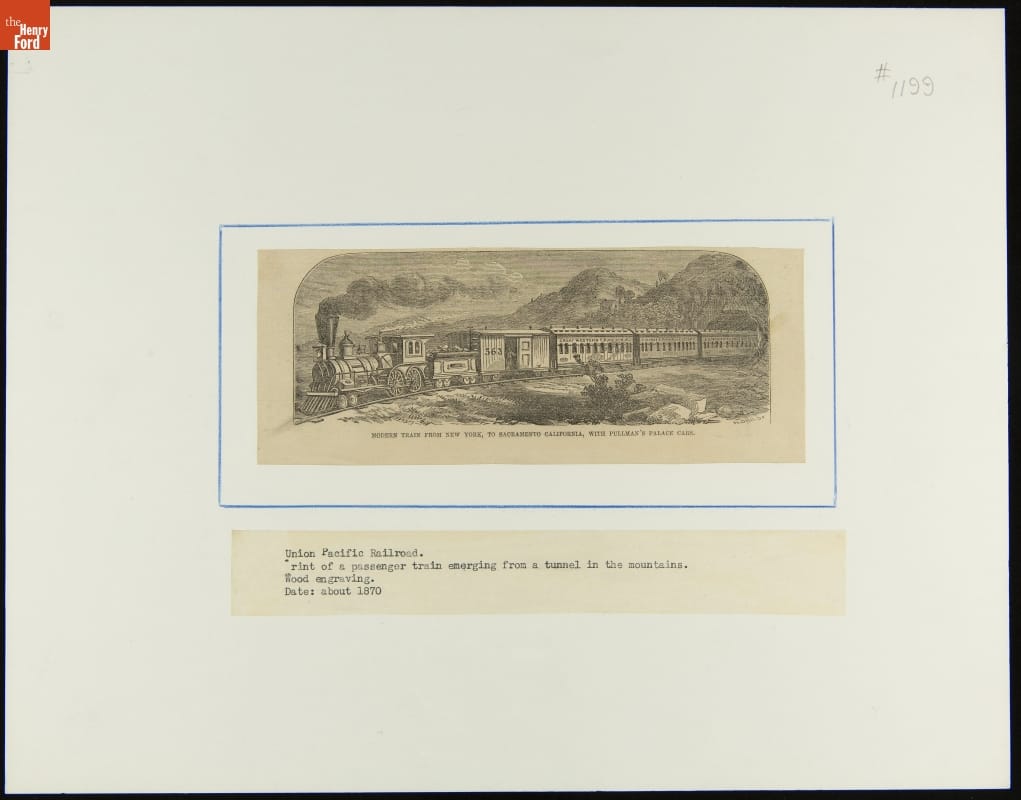
- Modern Train from New York, to Sacramento, California, with Pullman's Palace Cars, circa 1870 - The completion of the First Transcontinental Railroad in 1869 dramatically improved travel between the eastern United States and California. Pullman soon began operating first-class sleeping cars on Union Pacific trains between Omaha, Nebraska, and the connection with the Central Pacific in Utah. A journey that had taken months by wagon was reduced to about a week by railroad.
- circa 1870
- Collections - Artifact
Modern Train from New York, to Sacramento, California, with Pullman's Palace Cars, circa 1870
The completion of the First Transcontinental Railroad in 1869 dramatically improved travel between the eastern United States and California. Pullman soon began operating first-class sleeping cars on Union Pacific trains between Omaha, Nebraska, and the connection with the Central Pacific in Utah. A journey that had taken months by wagon was reduced to about a week by railroad.
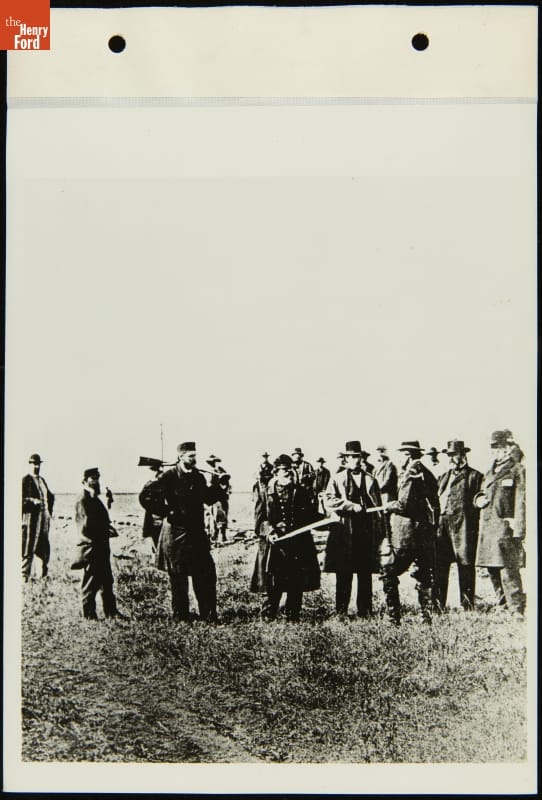
- Union Pacific Railroad, 1866 - Union Pacific Railroad was founded in 1862 to construct and operate the eastern portion of the First Transcontinental Railroad, building west from Council Bluffs, Iowa, to Promontory Summit, Utah. UP expanded -- by building new lines and acquiring other railroads -- throughout the 19th and 20th centuries. By the early 21st century, it operated a 32,000-mile network throughout the western United States.
- April 17, 1929
- Collections - Artifact
Union Pacific Railroad, 1866
Union Pacific Railroad was founded in 1862 to construct and operate the eastern portion of the First Transcontinental Railroad, building west from Council Bluffs, Iowa, to Promontory Summit, Utah. UP expanded -- by building new lines and acquiring other railroads -- throughout the 19th and 20th centuries. By the early 21st century, it operated a 32,000-mile network throughout the western United States.
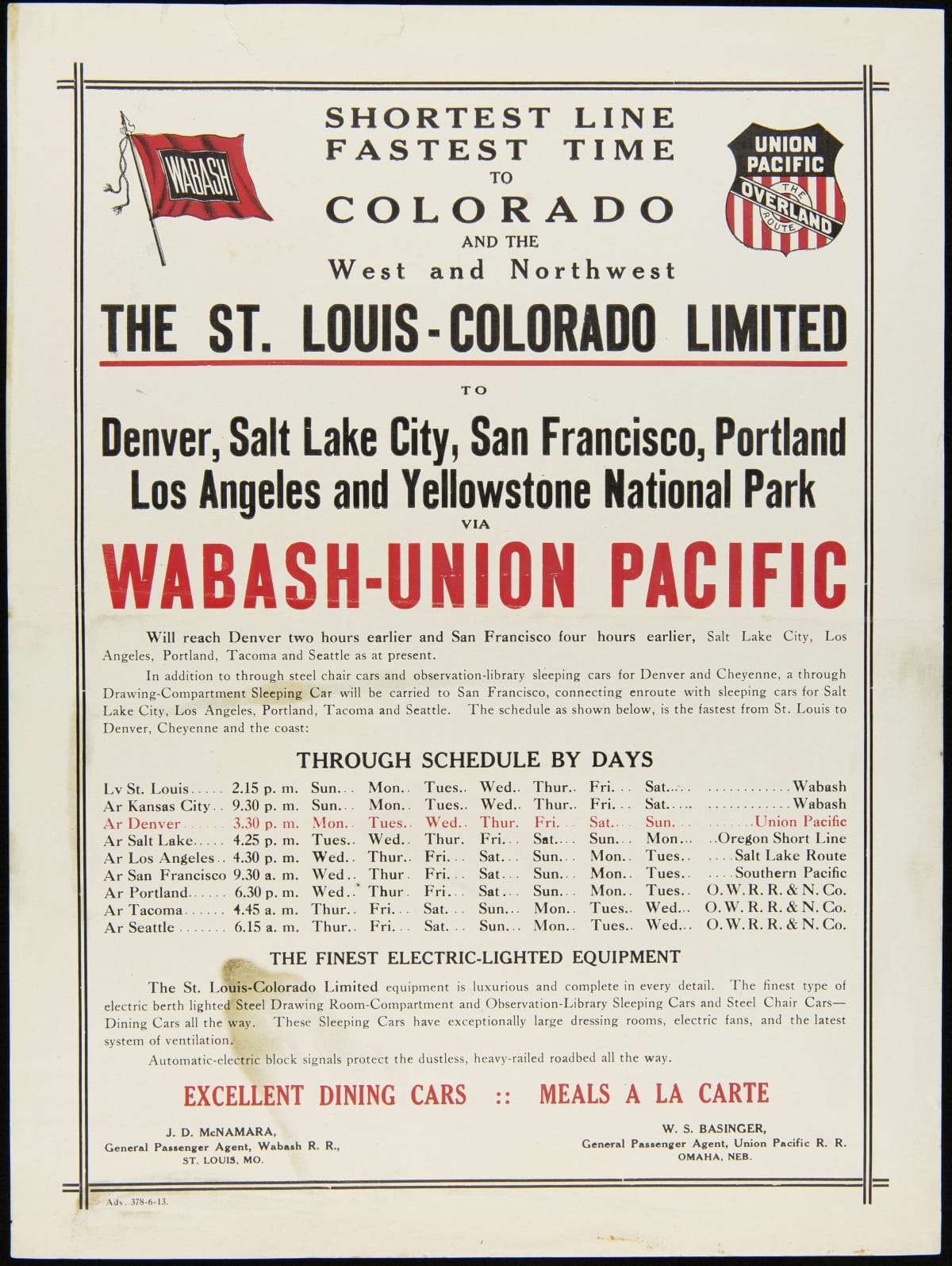
- Shortest Line, Fastest Time to Colorado and the West and Northwest - The St. Louis Colorado Limited, 1913 - The Wabash Railway, with origins dating back to 1838, was a strong Midwestern carrier until Amtrak took over the national passenger railroad system in 1971. Railroads made Yellowstone National Park accessible to tourists until cross-country automobile travel became feasible and popular. This timetable promoted Wabash's through trains to Yellowstone, operated in partnership with Union Pacific.
- 1913
- Collections - Artifact
Shortest Line, Fastest Time to Colorado and the West and Northwest - The St. Louis Colorado Limited, 1913
The Wabash Railway, with origins dating back to 1838, was a strong Midwestern carrier until Amtrak took over the national passenger railroad system in 1971. Railroads made Yellowstone National Park accessible to tourists until cross-country automobile travel became feasible and popular. This timetable promoted Wabash's through trains to Yellowstone, operated in partnership with Union Pacific.
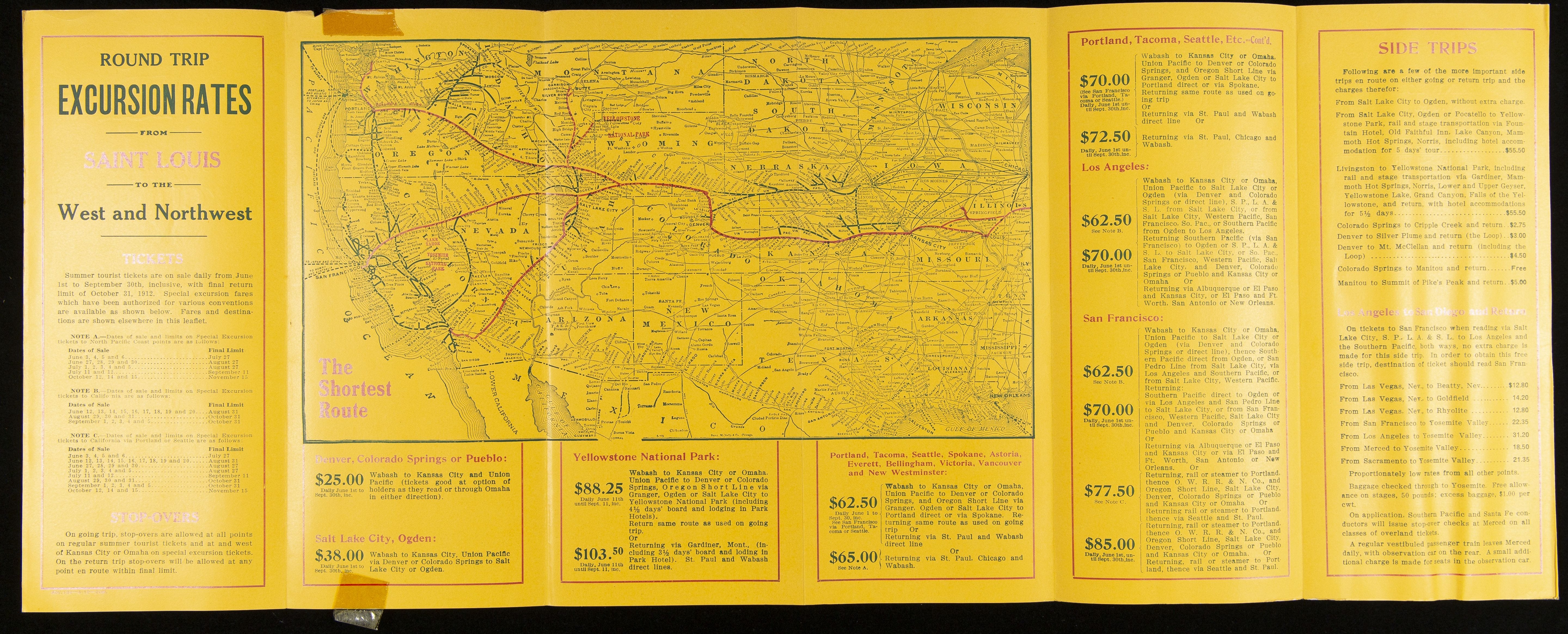
- Wabash-Union Pacific Low Colonist Fares Every Day from March 15 to April 15, 1913 Inclusive - The Wabash Railway, with origins dating back to 1838, was a strong Midwestern carrier until Amtrak took over the national passenger railroad system in 1971. This timetable advertised Wabash's passenger trains to the western United States, operated jointly with Union Pacific. Low-cost "colonist" fares were offered to attract immigrant travelers heading west to start new lives.
- 15 March to 15 April 1913
- Collections - Artifact
Wabash-Union Pacific Low Colonist Fares Every Day from March 15 to April 15, 1913 Inclusive
The Wabash Railway, with origins dating back to 1838, was a strong Midwestern carrier until Amtrak took over the national passenger railroad system in 1971. This timetable advertised Wabash's passenger trains to the western United States, operated jointly with Union Pacific. Low-cost "colonist" fares were offered to attract immigrant travelers heading west to start new lives.
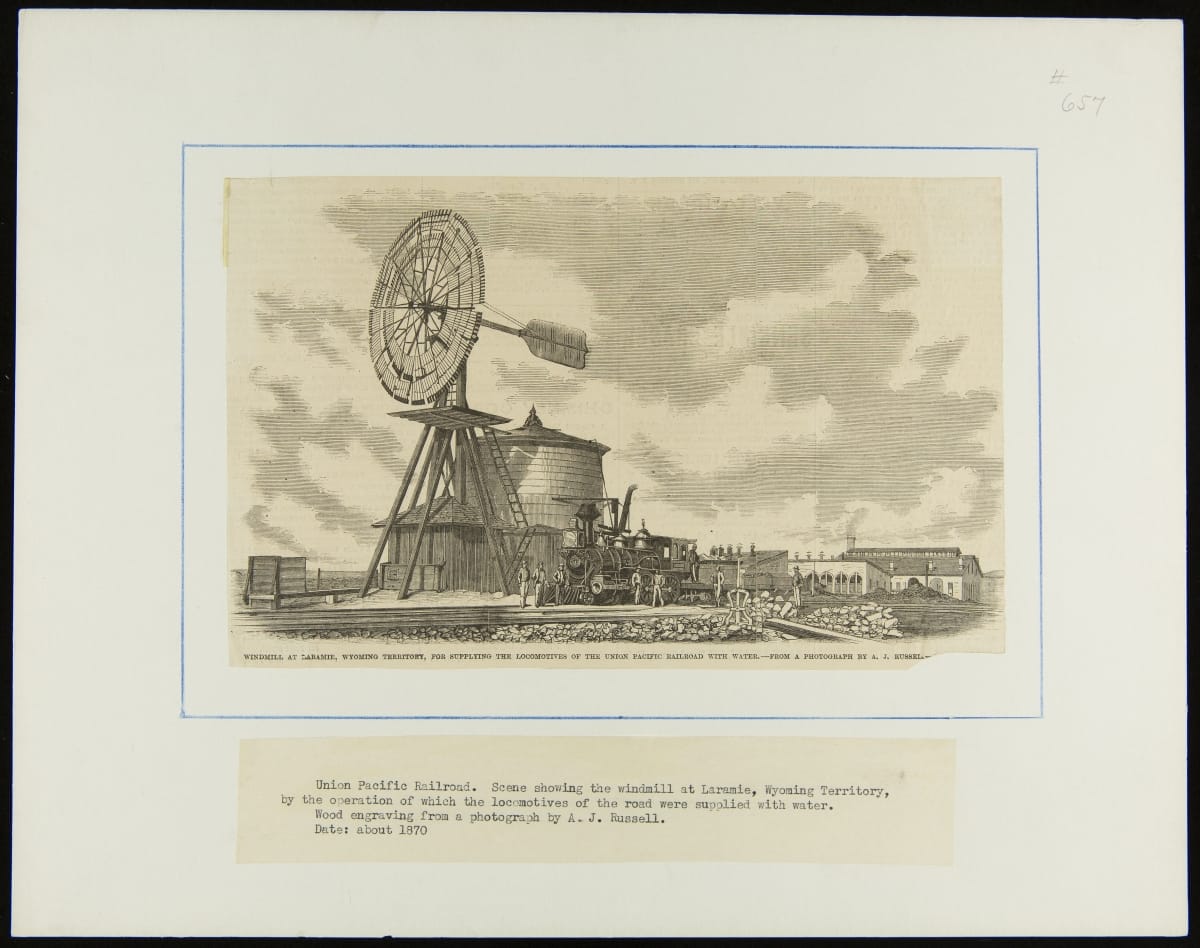
- Windmill at Laramie, Wyoming Territory, for Supplying the Locomotives of the Union Pacific Railroad with Water, 1868, circa 1870 - As the Union Pacific Railroad built farther west, it became increasingly difficult to find water for the railroad's steam locomotives. In some places, UP built wells and wind-driven pumps to fill water supply tanks like this one at Laramie, Wyoming.
- 1868
- Collections - Artifact
Windmill at Laramie, Wyoming Territory, for Supplying the Locomotives of the Union Pacific Railroad with Water, 1868, circa 1870
As the Union Pacific Railroad built farther west, it became increasingly difficult to find water for the railroad's steam locomotives. In some places, UP built wells and wind-driven pumps to fill water supply tanks like this one at Laramie, Wyoming.
- Union Pacific Railroad, 1866 - Union Pacific Railroad was founded in 1862 to construct and operate the eastern portion of the First Transcontinental Railroad, building west from Council Bluffs, Iowa, to Promontory Summit, Utah. UP expanded -- by building new lines and acquiring other railroads -- throughout the 19th and 20th centuries. By the early 21st century, it operated a 32,000-mile network throughout the western United States.
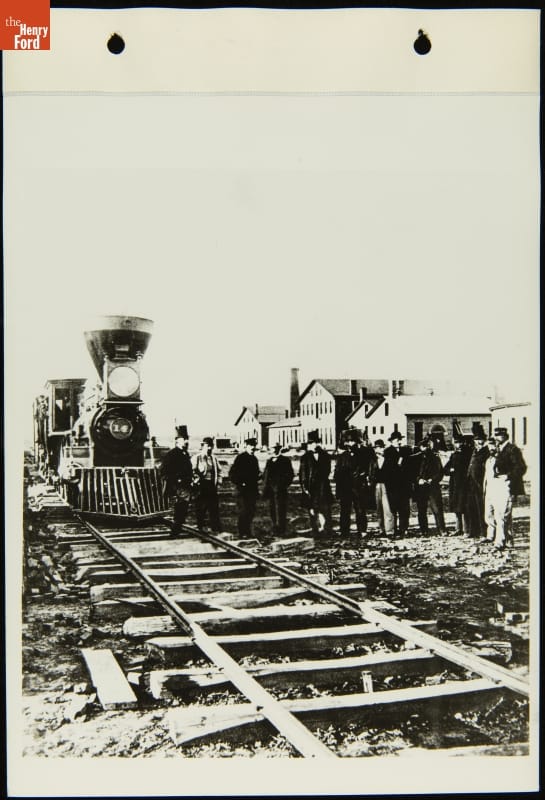
- April 17, 1929
- Collections - Artifact
Union Pacific Railroad, 1866
Union Pacific Railroad was founded in 1862 to construct and operate the eastern portion of the First Transcontinental Railroad, building west from Council Bluffs, Iowa, to Promontory Summit, Utah. UP expanded -- by building new lines and acquiring other railroads -- throughout the 19th and 20th centuries. By the early 21st century, it operated a 32,000-mile network throughout the western United States.
- "Union Pacific Tracks, Depot and Park, Cheyenne, Wyoming," 1908-1910 - Cheyenne's Union Pacific depot is a city landmark. Built in 1886, the Richardson Romanesque building was renovated in 1922 and redecorated in 1929. When the railroad moved out in 1990, Union Pacific transferred the depot to the city. After further renovations from 2001-2006, the depot became a museum and community center.
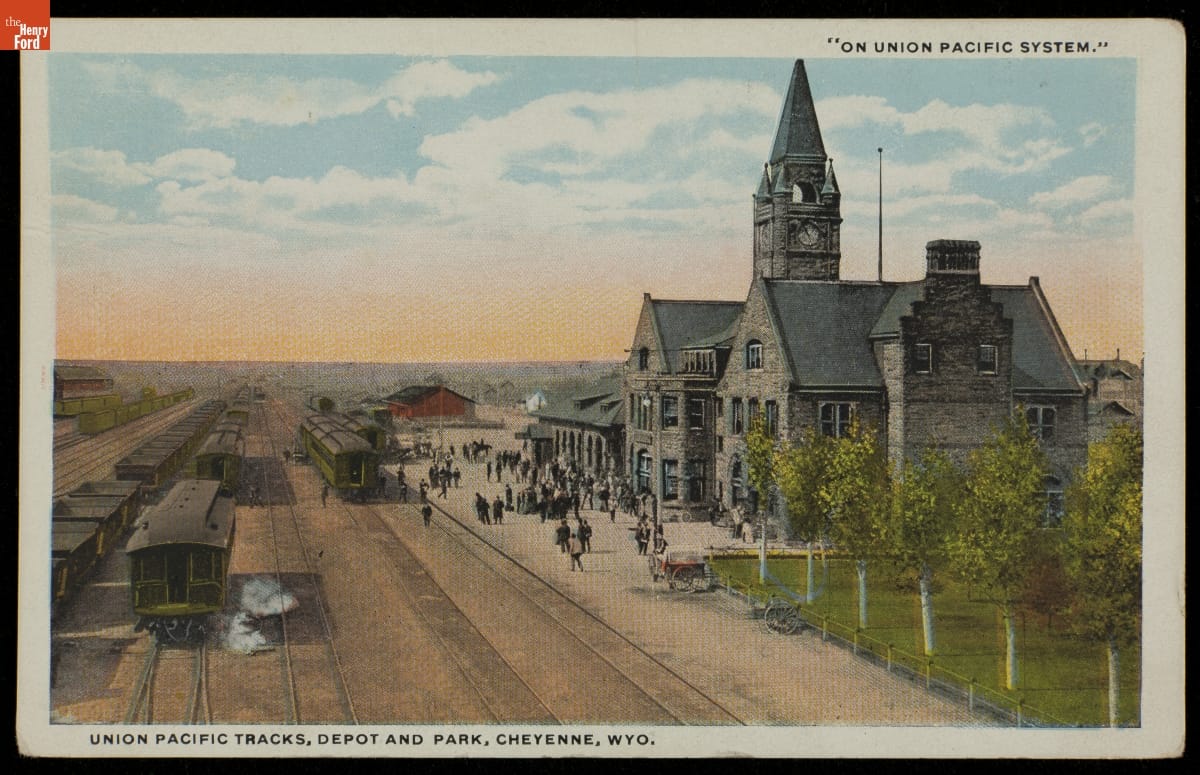
- 1908-1910
- Collections - Artifact
"Union Pacific Tracks, Depot and Park, Cheyenne, Wyoming," 1908-1910
Cheyenne's Union Pacific depot is a city landmark. Built in 1886, the Richardson Romanesque building was renovated in 1922 and redecorated in 1929. When the railroad moved out in 1990, Union Pacific transferred the depot to the city. After further renovations from 2001-2006, the depot became a museum and community center.