
Search
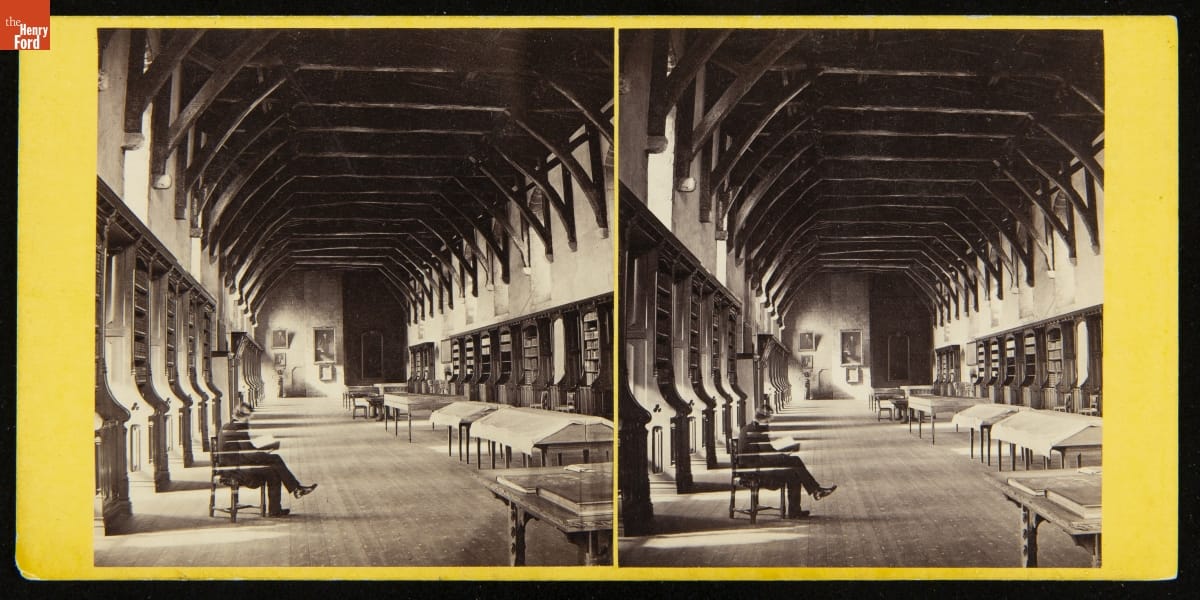
- Stereograph, "Durham Cathedral--The Library," 1870-1873 - The Durham Cathedral in northern England has housed a collection of religious texts, manuscripts, and secular works since its early founding. Dedicated areas throughout the Cathedral served as a library space over time. The library pictured in this stereograph opened in the mid-1800s to accommodate the Cathedral's growing collection.
- 1870-1873
- Collections - Artifact
Stereograph, "Durham Cathedral--The Library," 1870-1873
The Durham Cathedral in northern England has housed a collection of religious texts, manuscripts, and secular works since its early founding. Dedicated areas throughout the Cathedral served as a library space over time. The library pictured in this stereograph opened in the mid-1800s to accommodate the Cathedral's growing collection.
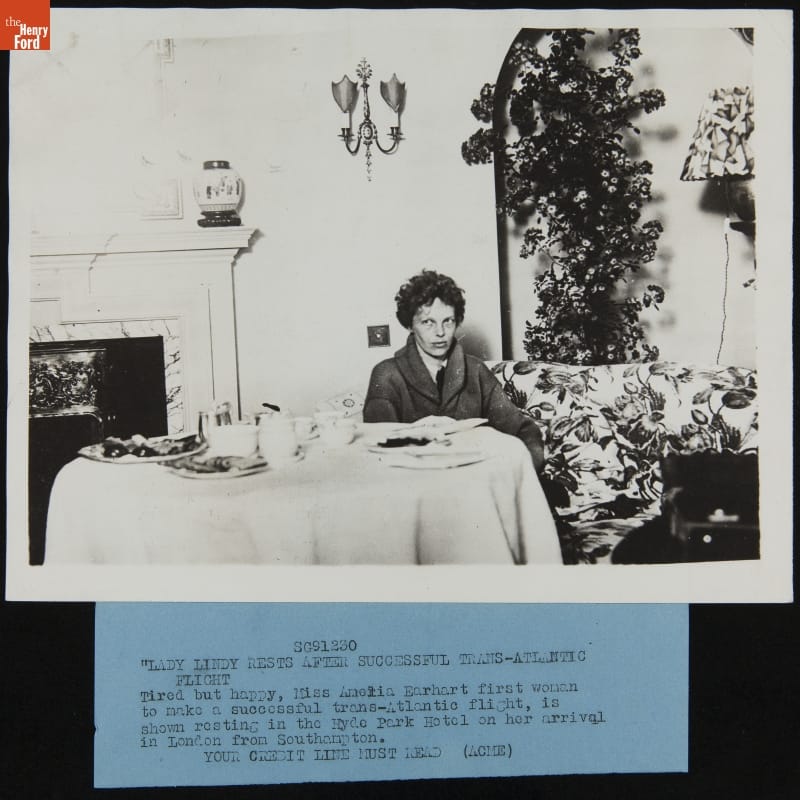
- Amelia Earhart at London's Hyde Park Hotel, June 1928 - After her June 1928 transatlantic flight with Wilmer Stultz and Louis Gordon, in which she became the first woman to fly the Atlantic, Amelia Earhart was given a hero's welcome wherever she went. Receptions in Southampton and London, England, were followed by a ticker-tape parade through New York City and a visit with President Calvin Coolidge at the White House.
- June 01, 1928
- Collections - Artifact
Amelia Earhart at London's Hyde Park Hotel, June 1928
After her June 1928 transatlantic flight with Wilmer Stultz and Louis Gordon, in which she became the first woman to fly the Atlantic, Amelia Earhart was given a hero's welcome wherever she went. Receptions in Southampton and London, England, were followed by a ticker-tape parade through New York City and a visit with President Calvin Coolidge at the White House.
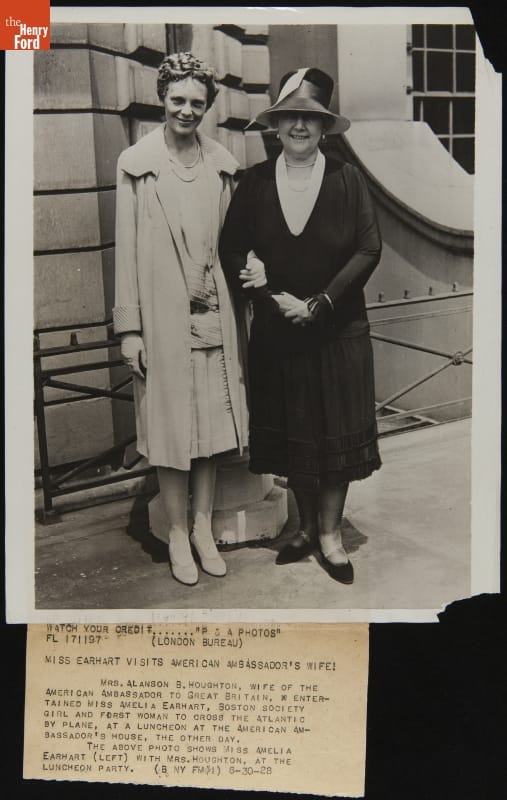
- Amelia Earhart with Adelaide Wellington Houghton, Wife of American Ambassador to Great Britain, June 1928 - After her June 1928 transatlantic flight with Wilmer Stultz and Louis Gordon, in which she became the first woman to fly the Atlantic, Amelia Earhart was given a hero's welcome wherever she went. Receptions in Southampton and London, England, were followed by a ticker-tape parade through New York City and a visit with President Calvin Coolidge at the White House.
- June 01, 1928
- Collections - Artifact
Amelia Earhart with Adelaide Wellington Houghton, Wife of American Ambassador to Great Britain, June 1928
After her June 1928 transatlantic flight with Wilmer Stultz and Louis Gordon, in which she became the first woman to fly the Atlantic, Amelia Earhart was given a hero's welcome wherever she went. Receptions in Southampton and London, England, were followed by a ticker-tape parade through New York City and a visit with President Calvin Coolidge at the White House.
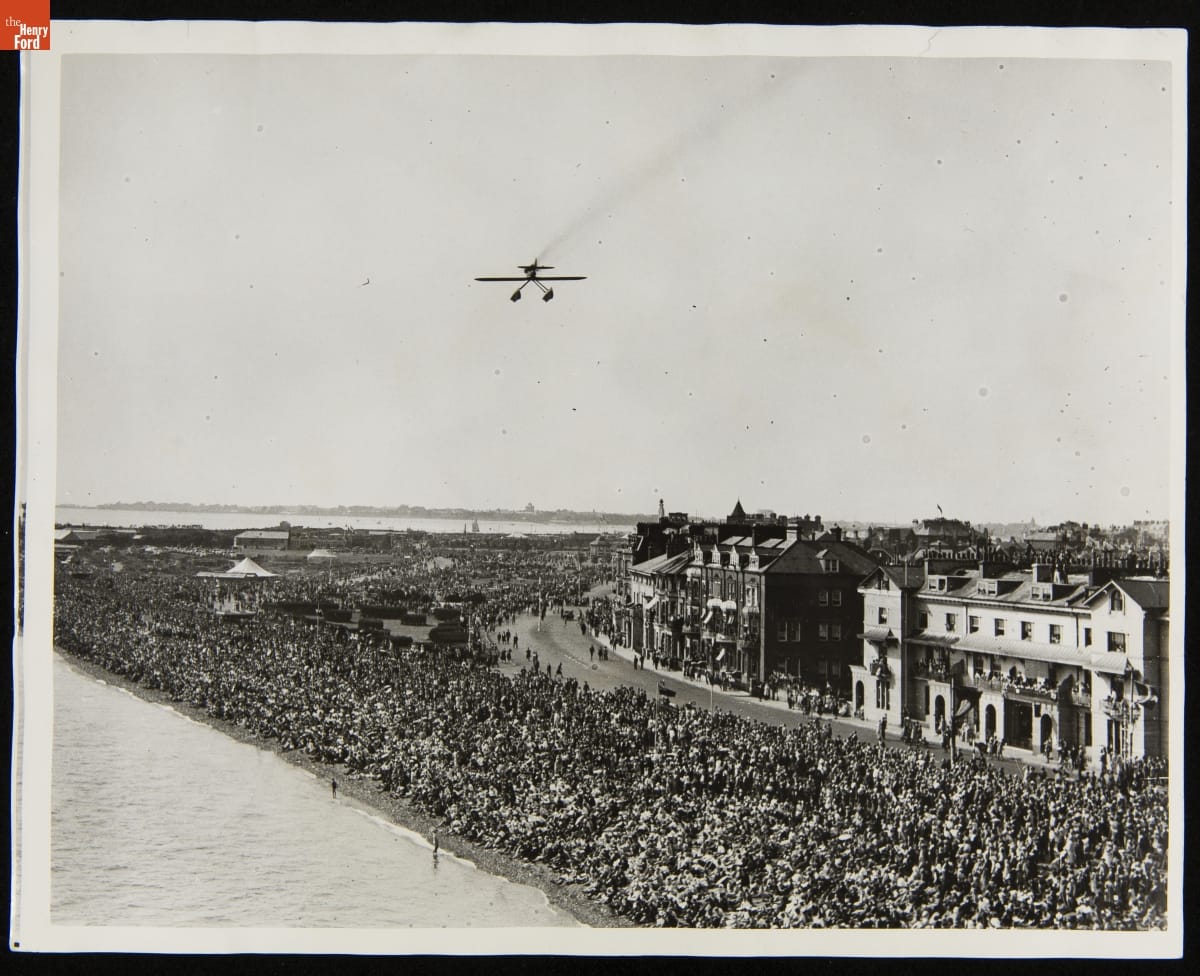
- Crowds Watch the Schneider Trophy Race at Calshot, England, September 1929 - The Schneider Trophy Race, established by French aviation enthusiast Jacques Schneider, was held 12 times from 1913 to 1931. The competition was created specifically for seaplanes and flying boats. Each year's winning country was tasked with hosting the next year's event. Host countries included Monaco, the United Kingdom, Italy, and the United States.
- September 07, 1929
- Collections - Artifact
Crowds Watch the Schneider Trophy Race at Calshot, England, September 1929
The Schneider Trophy Race, established by French aviation enthusiast Jacques Schneider, was held 12 times from 1913 to 1931. The competition was created specifically for seaplanes and flying boats. Each year's winning country was tasked with hosting the next year's event. Host countries included Monaco, the United Kingdom, Italy, and the United States.
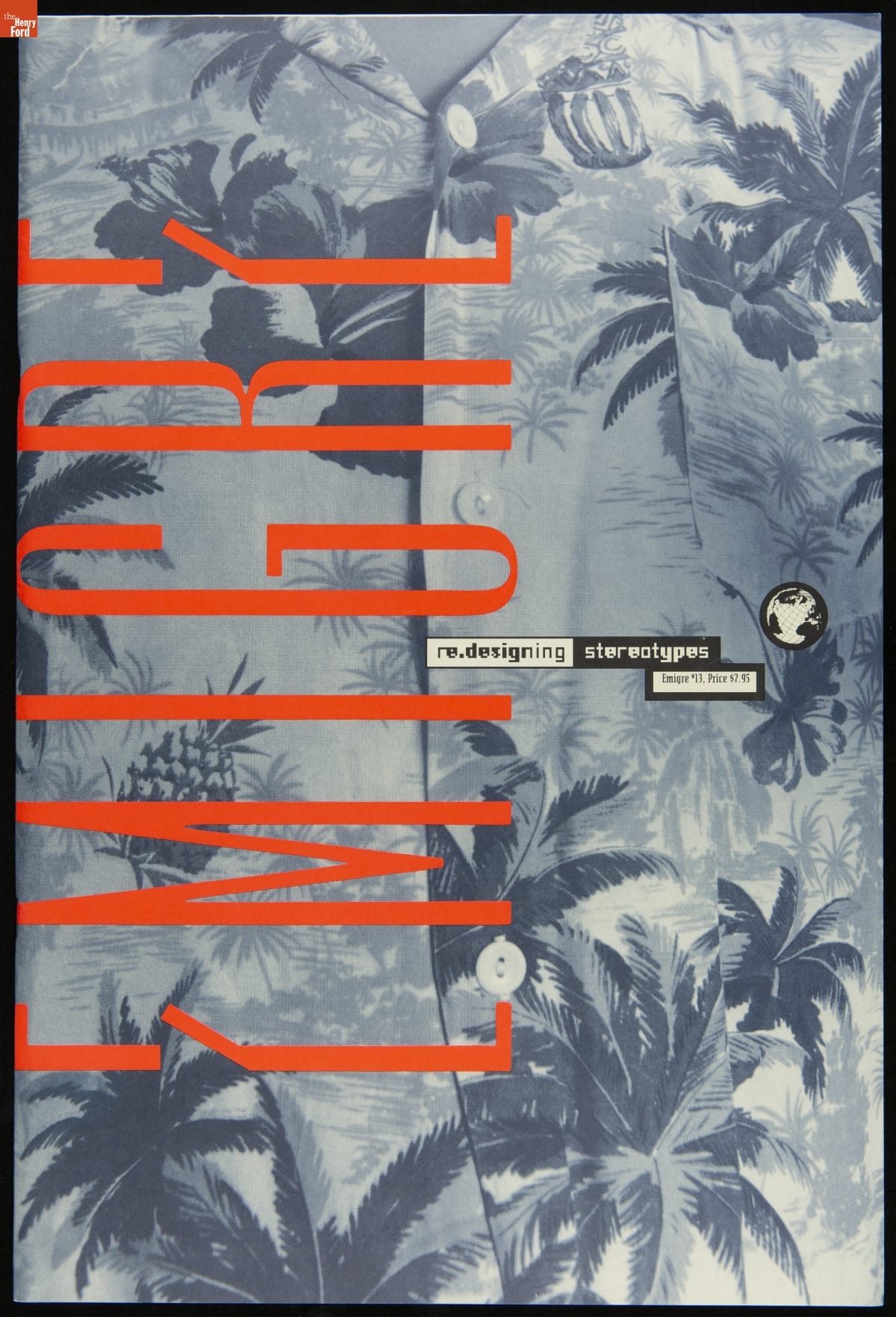
- Magazine, Emigre No. 13, "Redesigning Stereotypes," 1989 - Emigre is a digital type foundry established by Rudy VanderLans and Zuzana Licko. The company's history is linked with the introduction of the 1984 Macintosh computer, used to design their early bitmapped typefaces. Emigre's digital work gained notoriety -- defying visual communication standards with fractured, layered combinations of text and image. <em>Emigre</em> magazine showcased their fonts and promoted groundbreaking designers.
- 1989
- Collections - Artifact
Magazine, Emigre No. 13, "Redesigning Stereotypes," 1989
Emigre is a digital type foundry established by Rudy VanderLans and Zuzana Licko. The company's history is linked with the introduction of the 1984 Macintosh computer, used to design their early bitmapped typefaces. Emigre's digital work gained notoriety -- defying visual communication standards with fractured, layered combinations of text and image. Emigre magazine showcased their fonts and promoted groundbreaking designers.
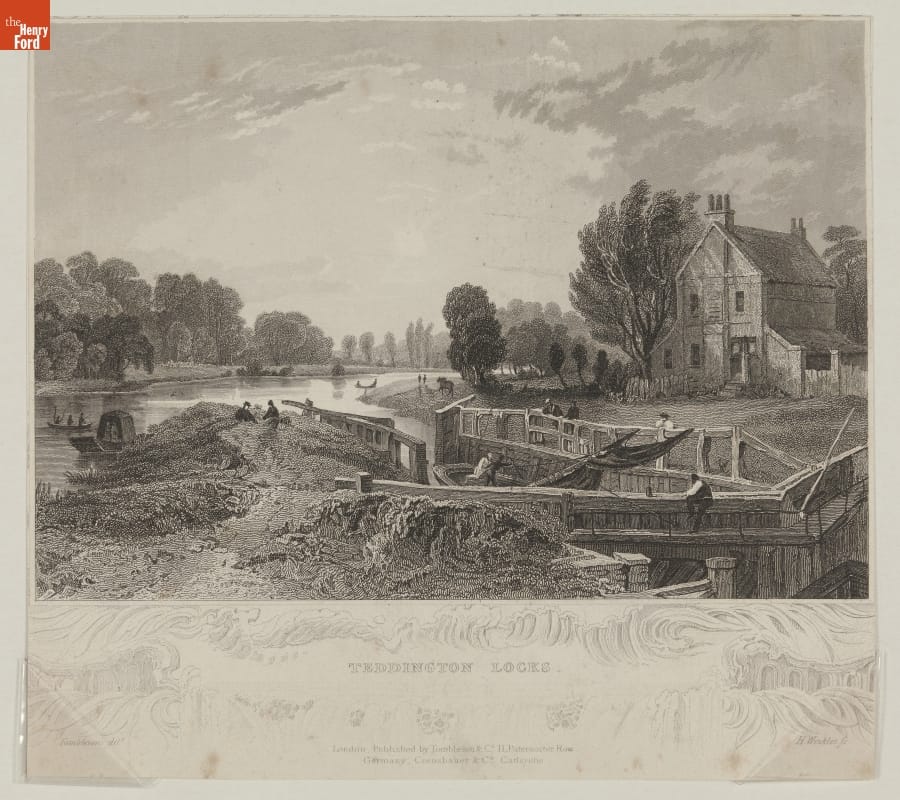
- Steel Engraving, "Teddington Locks," circa 1837 - Before railroads, rivers provided quick transportation routes for people and goods. But rapids and dams impeded a boat's movement. To avert these obstacles, a lock was built to lift or lower a boat from one navigable section of a waterway to another. This steel engraving, done about 1837, depicts the Teddington locks on the River Thames in England.
- 1835-1840
- Collections - Artifact
Steel Engraving, "Teddington Locks," circa 1837
Before railroads, rivers provided quick transportation routes for people and goods. But rapids and dams impeded a boat's movement. To avert these obstacles, a lock was built to lift or lower a boat from one navigable section of a waterway to another. This steel engraving, done about 1837, depicts the Teddington locks on the River Thames in England.
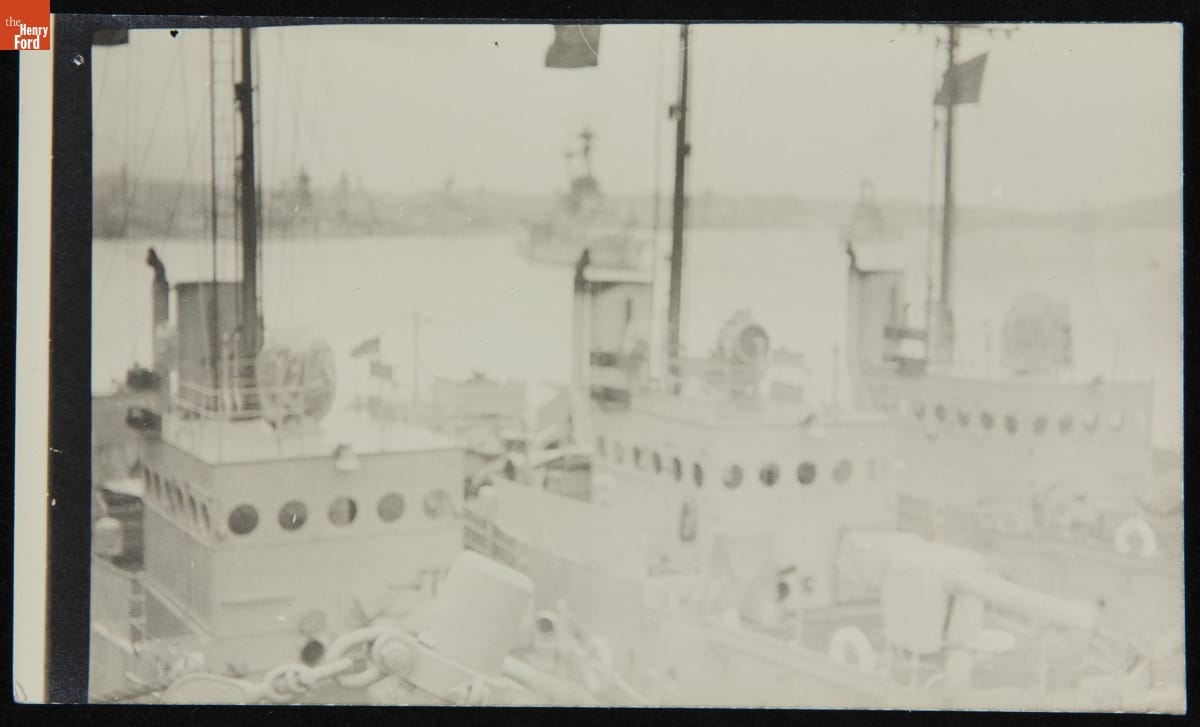
- USS Eagles 1, 2, and 3 at Plymouth, England, Bound for Arkhangelsk, May 1919 - World War I ended before any of the 60 Ford-built Eagle submarine chasers could participate in the conflict. But three Eagle boats were sent to northern Russia in 1919 to aid the American Expeditionary Force in action against the Bolsheviks. The Americans landed at Arkhangelsk, near the Arctic Circle, and called themselves the "Polar Bears."
- May 01, 1919
- Collections - Artifact
USS Eagles 1, 2, and 3 at Plymouth, England, Bound for Arkhangelsk, May 1919
World War I ended before any of the 60 Ford-built Eagle submarine chasers could participate in the conflict. But three Eagle boats were sent to northern Russia in 1919 to aid the American Expeditionary Force in action against the Bolsheviks. The Americans landed at Arkhangelsk, near the Arctic Circle, and called themselves the "Polar Bears."
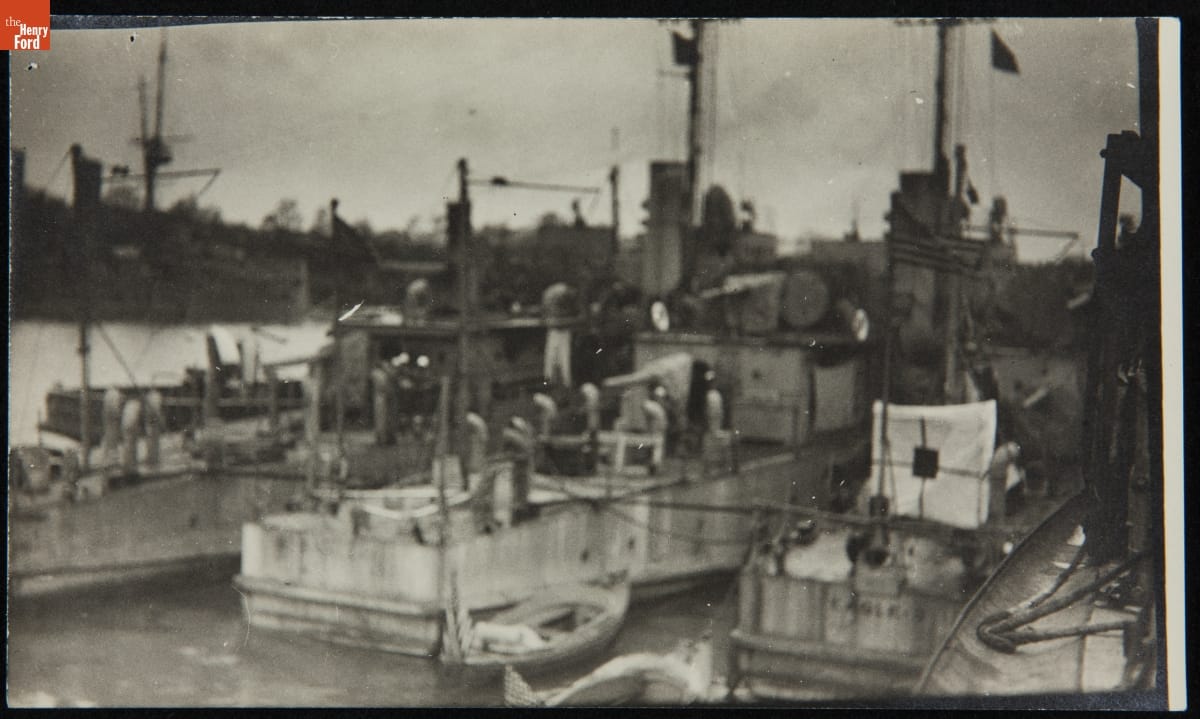
- USS Eagles 1, 2, and 3 at Plymouth, England, Bound for Arkhangelsk, May 1919 - World War I ended before any of the 60 Ford-built Eagle submarine chasers could participate in the conflict. But three Eagle boats were sent to northern Russia in 1919 to aid the American Expeditionary Force in action against the Bolsheviks. The Americans landed at Arkhangelsk, near the Arctic Circle, and called themselves the "Polar Bears."
- May 01, 1919
- Collections - Artifact
USS Eagles 1, 2, and 3 at Plymouth, England, Bound for Arkhangelsk, May 1919
World War I ended before any of the 60 Ford-built Eagle submarine chasers could participate in the conflict. But three Eagle boats were sent to northern Russia in 1919 to aid the American Expeditionary Force in action against the Bolsheviks. The Americans landed at Arkhangelsk, near the Arctic Circle, and called themselves the "Polar Bears."
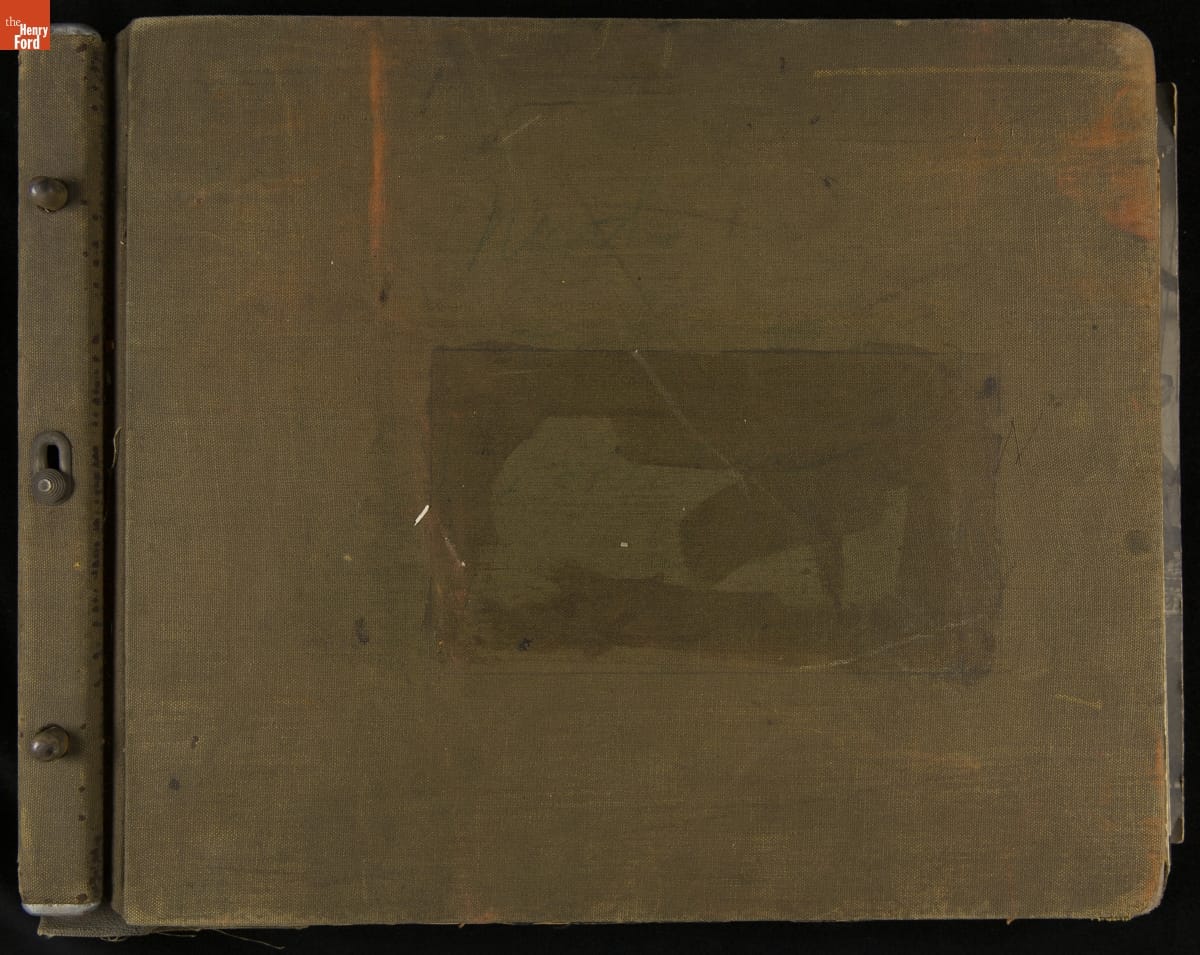
- Photograph Album of the Heinz Girls' 57 Club Banquets and Bowling League, 1922-1930 - Company scrapbooks are often reminders of the company's history, significant moments in time, and the employees who worked there. This album, compiled by the H. J. Heinz Company, includes photographs from the Heinz Girls' 57 Club banquets and bowling league. Other photographs feature the actors and actresses of the Heinz Players group and Howard Heinz with employees at the branch factory in London.
- 1922-1930
- Collections - Artifact
Photograph Album of the Heinz Girls' 57 Club Banquets and Bowling League, 1922-1930
Company scrapbooks are often reminders of the company's history, significant moments in time, and the employees who worked there. This album, compiled by the H. J. Heinz Company, includes photographs from the Heinz Girls' 57 Club banquets and bowling league. Other photographs feature the actors and actresses of the Heinz Players group and Howard Heinz with employees at the branch factory in London.
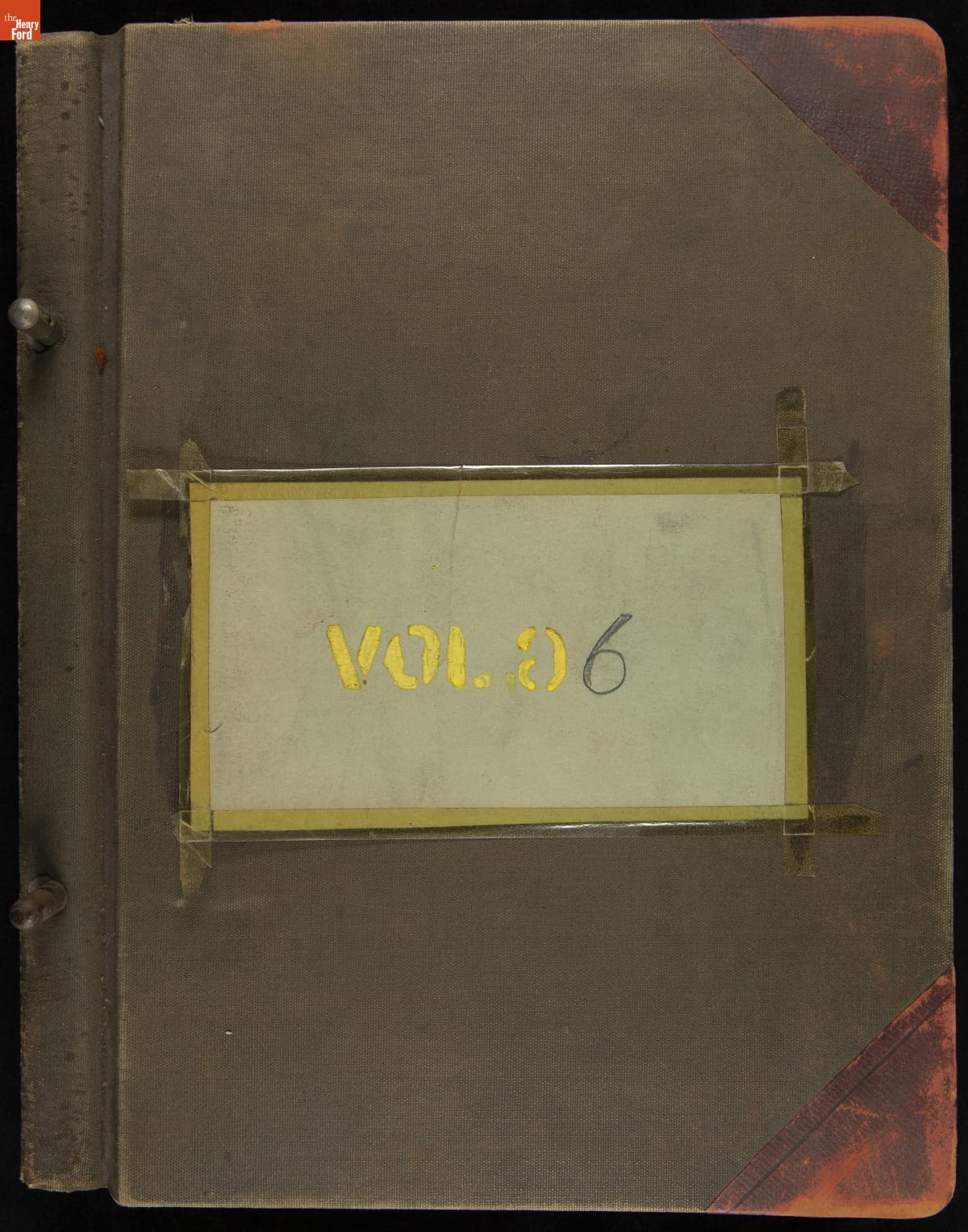
- Photograph Album of Heinz Company Branches and Branch Employees, 1884-1915 - Company photograph albums are often reminders of the company's history, significant moments in time, and the employees who worked there. This album, compiled by the H.J. Heinz Company, includes photographs of Heinz factory branch buildings, employees at conventions, and several images of F. & J. Heinz, the former name of the company before H.J. Heinz became the sole owner.
- 1884-1915
- Collections - Artifact
Photograph Album of Heinz Company Branches and Branch Employees, 1884-1915
Company photograph albums are often reminders of the company's history, significant moments in time, and the employees who worked there. This album, compiled by the H.J. Heinz Company, includes photographs of Heinz factory branch buildings, employees at conventions, and several images of F. & J. Heinz, the former name of the company before H.J. Heinz became the sole owner.