
Search
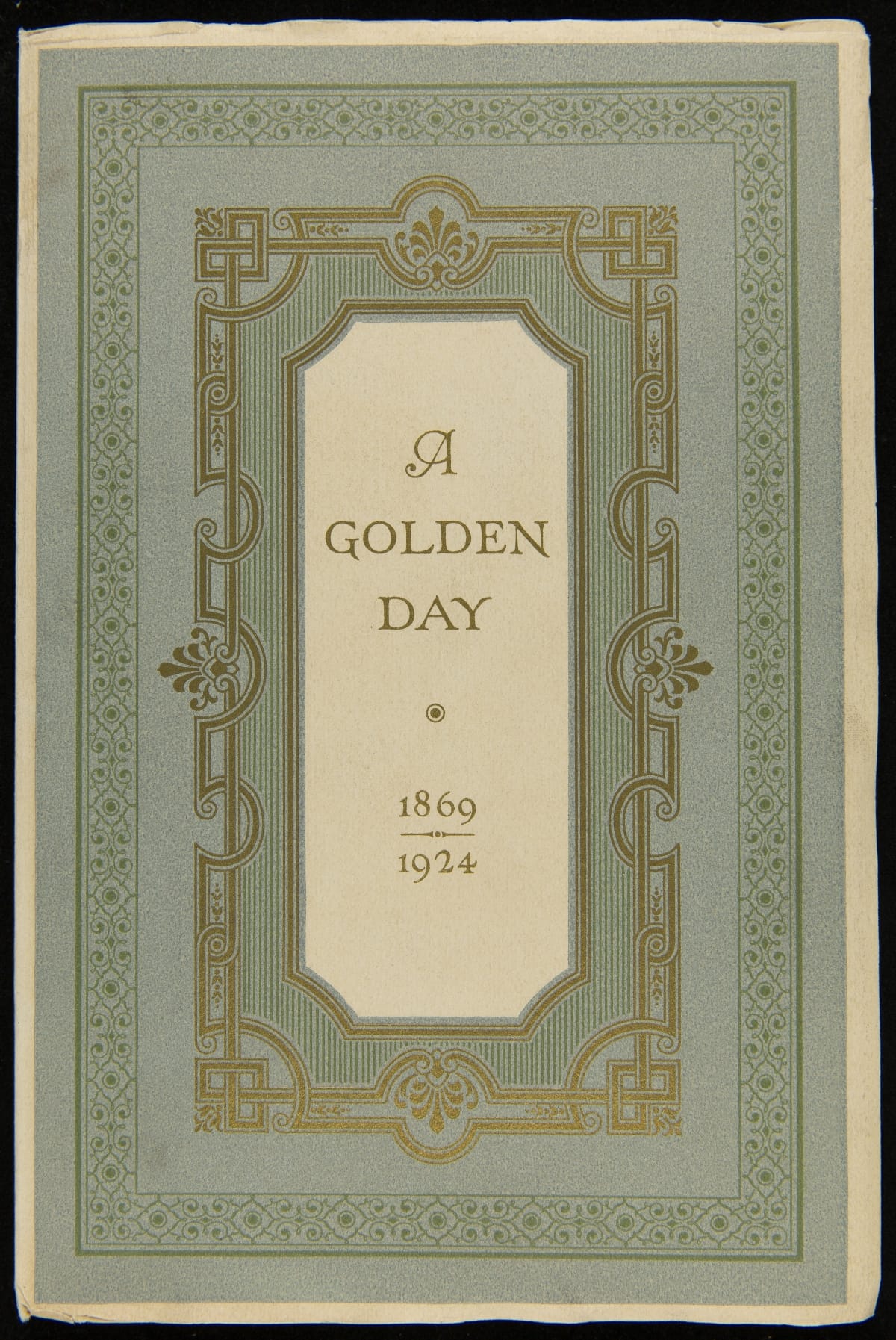
- H. J. Heinz Memorial Statue Dedication, "A Golden Day," at Heinz Main Plant, Pittsburgh, Pennsylvania, October 11, 1924 - H.J. Heinz valued a strong relationship between his company and its employees. This resulted in a world-class employee welfare program which included amenities, programs, and policies with consideration for employees' well-being. In 1924, to commemorate the company's 55th anniversary, employees erected a memorial statue as a token of their gratitude for their employer. This is a program from the celebration, called "A Golden Day."
- 1925
- Collections - Artifact
H. J. Heinz Memorial Statue Dedication, "A Golden Day," at Heinz Main Plant, Pittsburgh, Pennsylvania, October 11, 1924
H.J. Heinz valued a strong relationship between his company and its employees. This resulted in a world-class employee welfare program which included amenities, programs, and policies with consideration for employees' well-being. In 1924, to commemorate the company's 55th anniversary, employees erected a memorial statue as a token of their gratitude for their employer. This is a program from the celebration, called "A Golden Day."
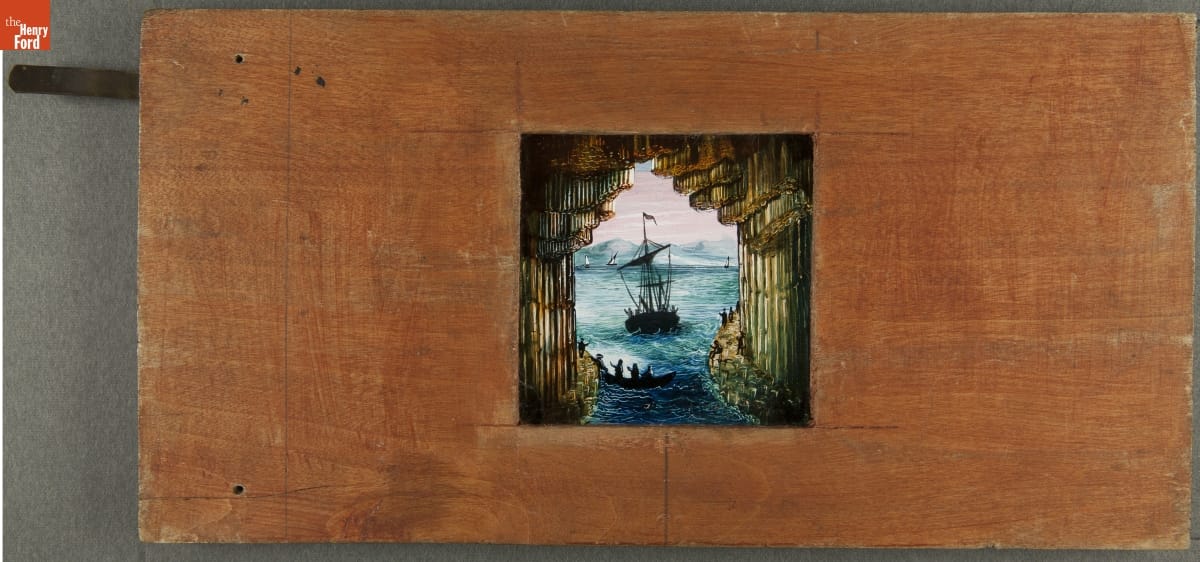
- Mechanical Lantern Slide, "Fingal's Cave in the West of Scotland," 1860-1900 - Magic lanterns use a concave mirror and light source to project images on glass slides with painted or photographic scenes. Developed in the 17th century, magic lanterns predate slide projectors and motion pictures. In the hands of magicians, they became "lanterns of fright," projecting wondrous images and apparitions. Slide themes ranged widely: exotic travel, folklore, advertising, history, science, and art.
- 1860-1900
- Collections - Artifact
Mechanical Lantern Slide, "Fingal's Cave in the West of Scotland," 1860-1900
Magic lanterns use a concave mirror and light source to project images on glass slides with painted or photographic scenes. Developed in the 17th century, magic lanterns predate slide projectors and motion pictures. In the hands of magicians, they became "lanterns of fright," projecting wondrous images and apparitions. Slide themes ranged widely: exotic travel, folklore, advertising, history, science, and art.
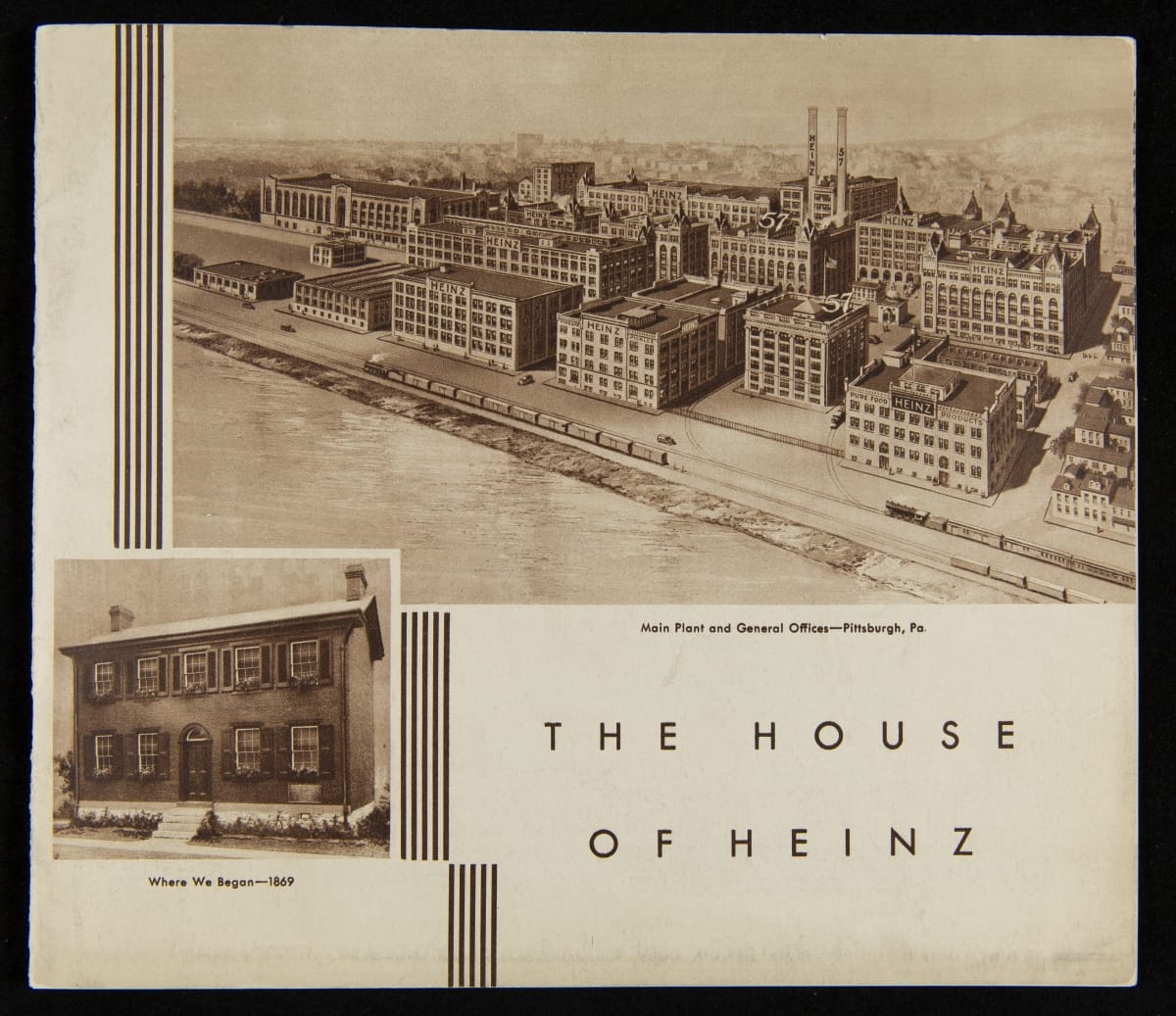
- The House of Heinz, circa 1929 - The H.J. Heinz Company was founded from humble beginnings in 1869. By the turn of the century it had become a well-known manufacturer of processed food. Its rapid success resulted in the expansion of its operations at home and abroad. This booklet from 1929 provides an overview of the many branch factories and buildings operated by the company, referred to as "The House of Heinz."
- circa 1929
- Collections - Artifact
The House of Heinz, circa 1929
The H.J. Heinz Company was founded from humble beginnings in 1869. By the turn of the century it had become a well-known manufacturer of processed food. Its rapid success resulted in the expansion of its operations at home and abroad. This booklet from 1929 provides an overview of the many branch factories and buildings operated by the company, referred to as "The House of Heinz."
- "Hotels in England and Scotland," 1938 -
- 1938
- Collections - Artifact
"Hotels in England and Scotland," 1938
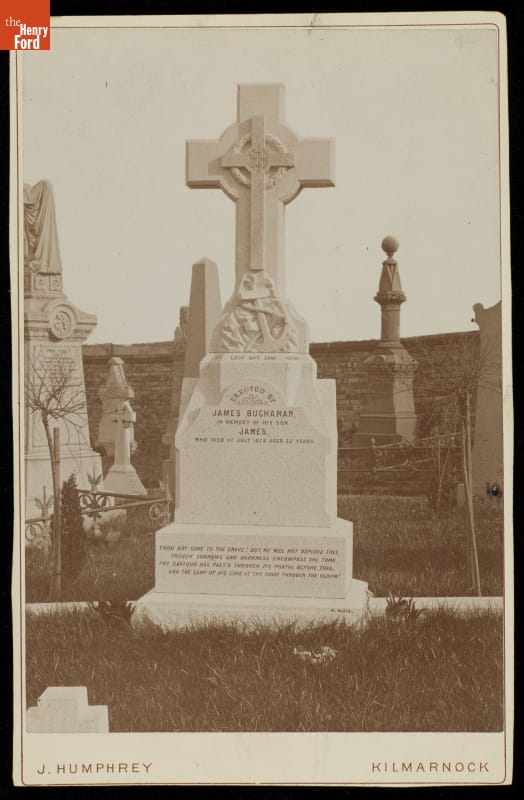
- Headstone in Scottish Cemetery, circa 1883 - Photographs of graveyard monuments reminded family and friends of the deceased. These images were especially helpful to those unable to travel to the funeral or gravesite. These personal mementos provided a lasting remembrance and connected mourners separated by great distances in their common grief.
- circa 1883
- Collections - Artifact
Headstone in Scottish Cemetery, circa 1883
Photographs of graveyard monuments reminded family and friends of the deceased. These images were especially helpful to those unable to travel to the funeral or gravesite. These personal mementos provided a lasting remembrance and connected mourners separated by great distances in their common grief.
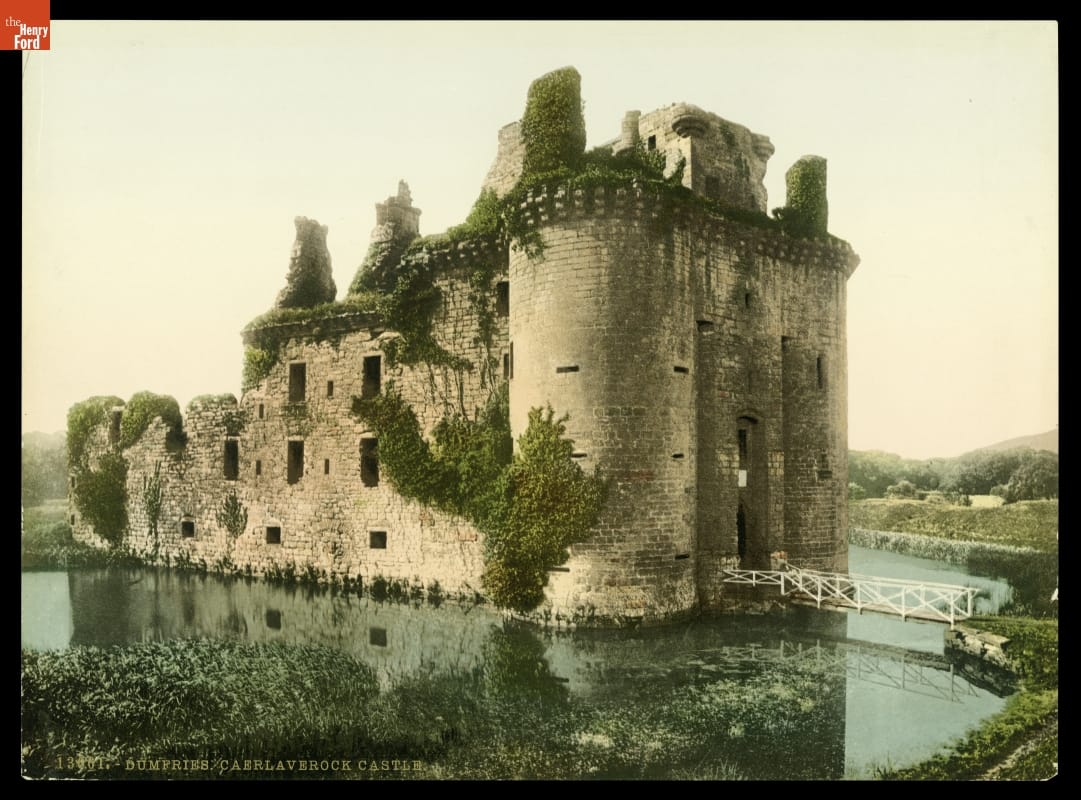
- Caerlaverock Castle, Dumfries, Scotland, circa 1905 - From 1895 to 1924, the Detroit Publishing Company was one of the major image publishers in the world. The company had a wide-ranging stock of original photographs, including many scenes from around the world. These colorful prints were reproduced for ads, purchased to decorate homes and offices, bought as souvenirs, and used as teaching tools in schools and libraries.
- circa 1905
- Collections - Artifact
Caerlaverock Castle, Dumfries, Scotland, circa 1905
From 1895 to 1924, the Detroit Publishing Company was one of the major image publishers in the world. The company had a wide-ranging stock of original photographs, including many scenes from around the world. These colorful prints were reproduced for ads, purchased to decorate homes and offices, bought as souvenirs, and used as teaching tools in schools and libraries.
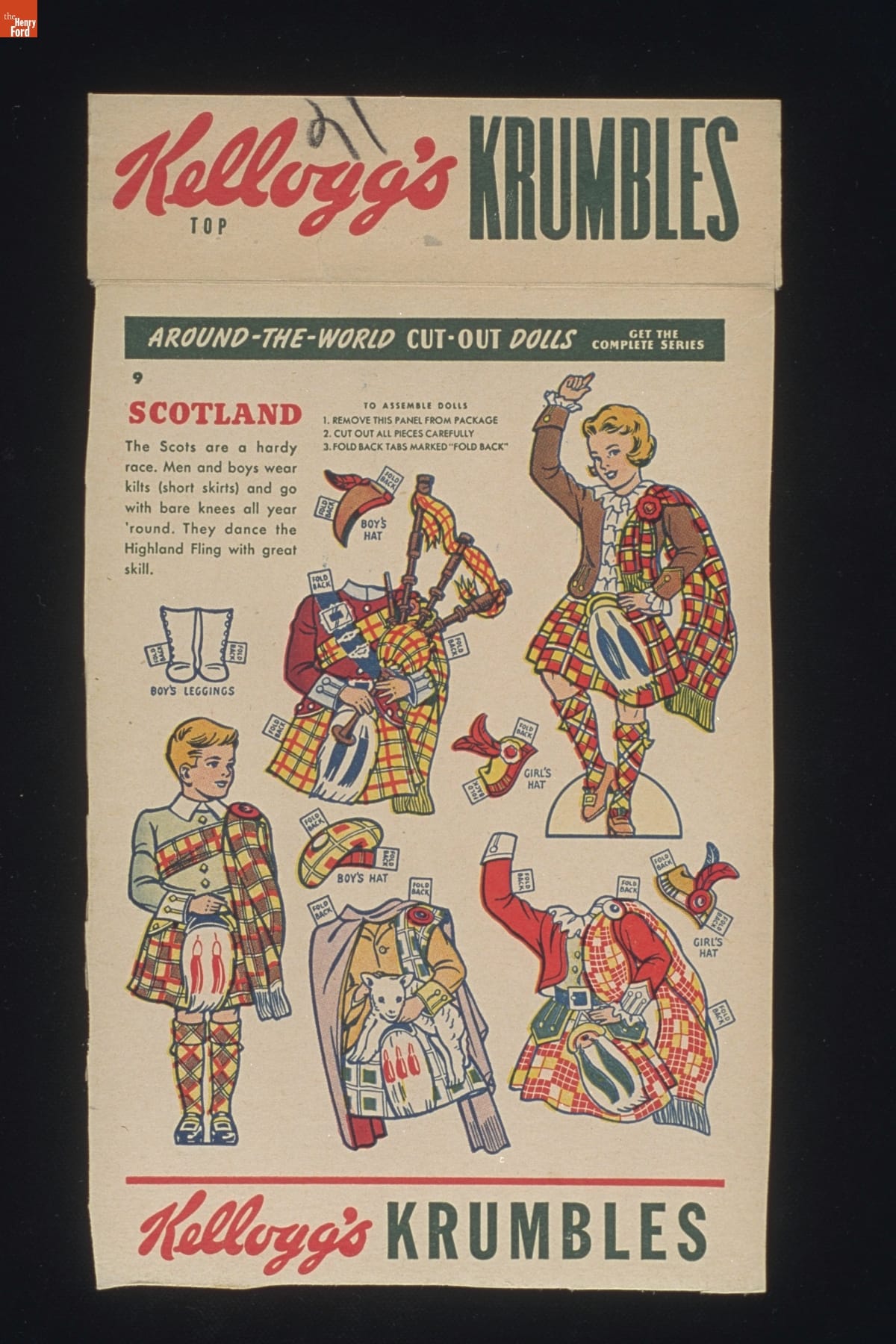
- Kellogg's Krumbles Around-the-World Cut-Out Dolls, Scotland, 1946-1949 - The breakfast food manufacturer Kellogg's created attractive advertising premiums to entice customers to buy its products. In the late 1940s, as the United States became a global leader, the company printed cut-out paper dolls of children from around the world on the backs of Kellogg's Krumbles cereal boxes. Kellogg's Krumbles, a tasty toasted whole wheat cereal, was one of the company's best-selling products.
- 1946-1949
- Collections - Artifact
Kellogg's Krumbles Around-the-World Cut-Out Dolls, Scotland, 1946-1949
The breakfast food manufacturer Kellogg's created attractive advertising premiums to entice customers to buy its products. In the late 1940s, as the United States became a global leader, the company printed cut-out paper dolls of children from around the world on the backs of Kellogg's Krumbles cereal boxes. Kellogg's Krumbles, a tasty toasted whole wheat cereal, was one of the company's best-selling products.
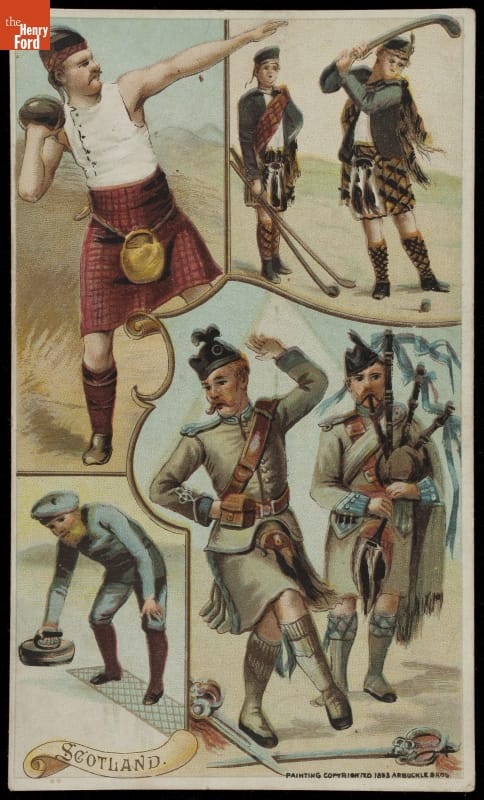
- Trade Card for Ariosa Coffee, Arbuckle Bros., "Scotland," 1893 - Grocers sold coffee in bulk when John and Charles Arbuckle came up with an innovative process for individually packaging different grades of coffee. Their popular Ariosa coffee beans were glazed with a sugar and egg coating supposedly to improve quality and flavor. This trade card, from the Chicago Columbian Exposition, was in a series depicting different nations' sports and pastimes.
- 1893
- Collections - Artifact
Trade Card for Ariosa Coffee, Arbuckle Bros., "Scotland," 1893
Grocers sold coffee in bulk when John and Charles Arbuckle came up with an innovative process for individually packaging different grades of coffee. Their popular Ariosa coffee beans were glazed with a sugar and egg coating supposedly to improve quality and flavor. This trade card, from the Chicago Columbian Exposition, was in a series depicting different nations' sports and pastimes.