
Search
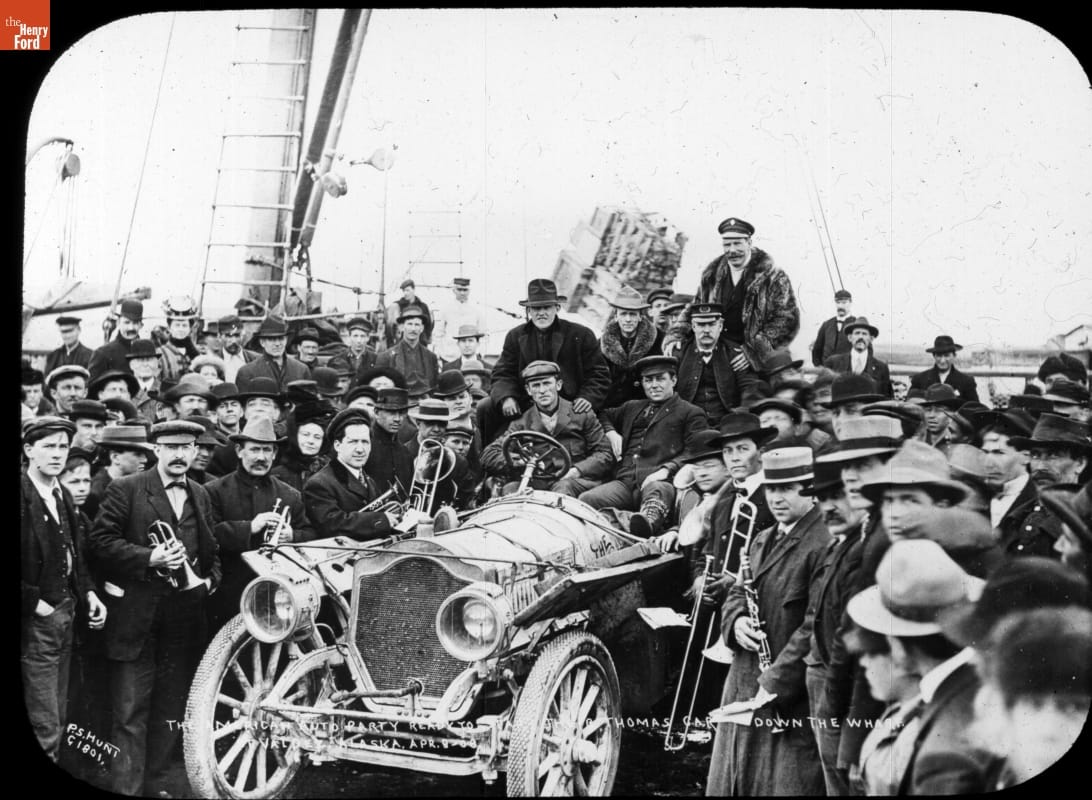
- The Thomas Flyer and Team in Valdez, Alaska, New York to Paris Race, 1908 - The American team in the 1908 New York to Paris race shipped their automobile to Alaska after reaching San Francisco. Race planners had thought the cars could cross at the Bering Strait. Soon after landing, the Americans -- the only ones to reach Alaska -- learned that race officials decided that all teams would ship their vehicles to Vladivostok, Russia, and restart the race.
- April 08, 1908
- Collections - Artifact
The Thomas Flyer and Team in Valdez, Alaska, New York to Paris Race, 1908
The American team in the 1908 New York to Paris race shipped their automobile to Alaska after reaching San Francisco. Race planners had thought the cars could cross at the Bering Strait. Soon after landing, the Americans -- the only ones to reach Alaska -- learned that race officials decided that all teams would ship their vehicles to Vladivostok, Russia, and restart the race.
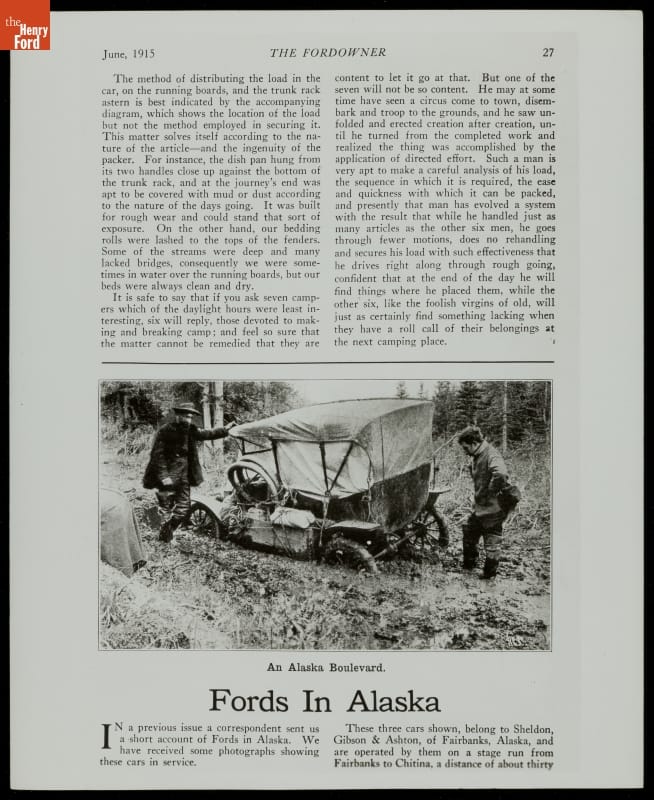
- Ford Model T Stuck in the Mud in Alaska, 1915 - Early drivers faced two types of roads: bad roads and no roads at all. America's crude dirt and gravel roads were dusty paths in good weather, and impassible mires of muck and mud in bad weather. The automobile's growing popularity led motorists to press elected officials for better roads -- and better roads encouraged more people to buy cars.
- June 01, 1915
- Collections - Artifact
Ford Model T Stuck in the Mud in Alaska, 1915
Early drivers faced two types of roads: bad roads and no roads at all. America's crude dirt and gravel roads were dusty paths in good weather, and impassible mires of muck and mud in bad weather. The automobile's growing popularity led motorists to press elected officials for better roads -- and better roads encouraged more people to buy cars.
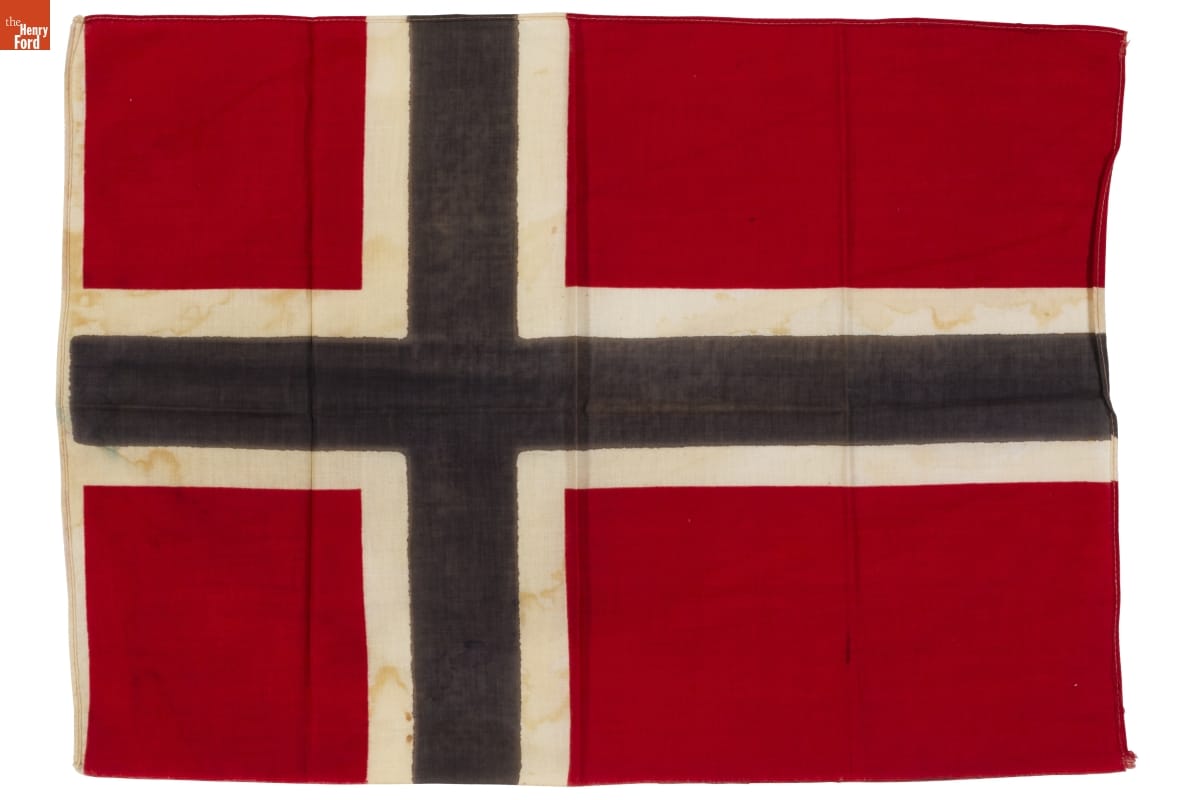
- Norwegian Flag Carried by Roald Amundsen During Navigation of the Northwest Passage and Presented to Mary P. Bruner, 1906 - Under the command of explorer Roald Amundsen, the <em>Gjoa</em> was the first ship to sail through the entire Northwest Passage. Amundsen and six crew members left Kristiania (present-day Oslo), Norway, in June 1903 and arrived at Nome, Alaska, in September 1906. Amundsen presented this small Norwegian flag to Mary Bruner, a resident of Nome, during a dinner reception in his honor.
- 1906
- Collections - Artifact
Norwegian Flag Carried by Roald Amundsen During Navigation of the Northwest Passage and Presented to Mary P. Bruner, 1906
Under the command of explorer Roald Amundsen, the Gjoa was the first ship to sail through the entire Northwest Passage. Amundsen and six crew members left Kristiania (present-day Oslo), Norway, in June 1903 and arrived at Nome, Alaska, in September 1906. Amundsen presented this small Norwegian flag to Mary Bruner, a resident of Nome, during a dinner reception in his honor.
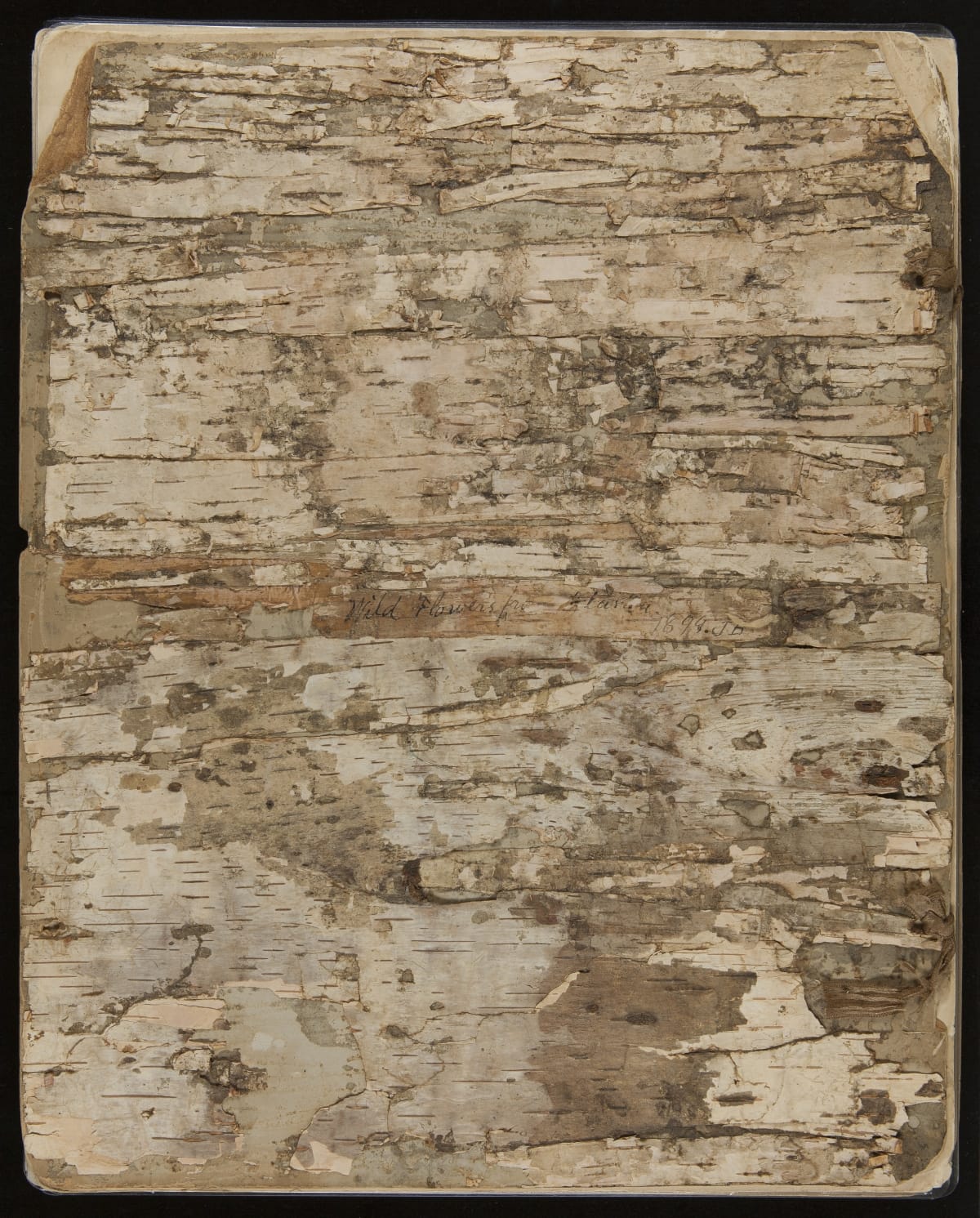
- John Burroughs' Album of Pressed Wildflowers Gathered during the Harriman Alaska Expedition, 1899 - In 1899, John Burroughs joined a group of more than 20 scientists, naturalists, and artists for a scientific exploration of the Alaskan coast. Financed and accompanied by railroad tycoon Edward H. Harriman, the expedition traveled aboard the lavishly refitted <EM>George W. Elder</EM>, collecting specimens along the way. Those specimens included native wildflowers, hand-picked by Burroughs and pressed into this book.
- 1899
- Collections - Artifact
John Burroughs' Album of Pressed Wildflowers Gathered during the Harriman Alaska Expedition, 1899
In 1899, John Burroughs joined a group of more than 20 scientists, naturalists, and artists for a scientific exploration of the Alaskan coast. Financed and accompanied by railroad tycoon Edward H. Harriman, the expedition traveled aboard the lavishly refitted George W. Elder, collecting specimens along the way. Those specimens included native wildflowers, hand-picked by Burroughs and pressed into this book.
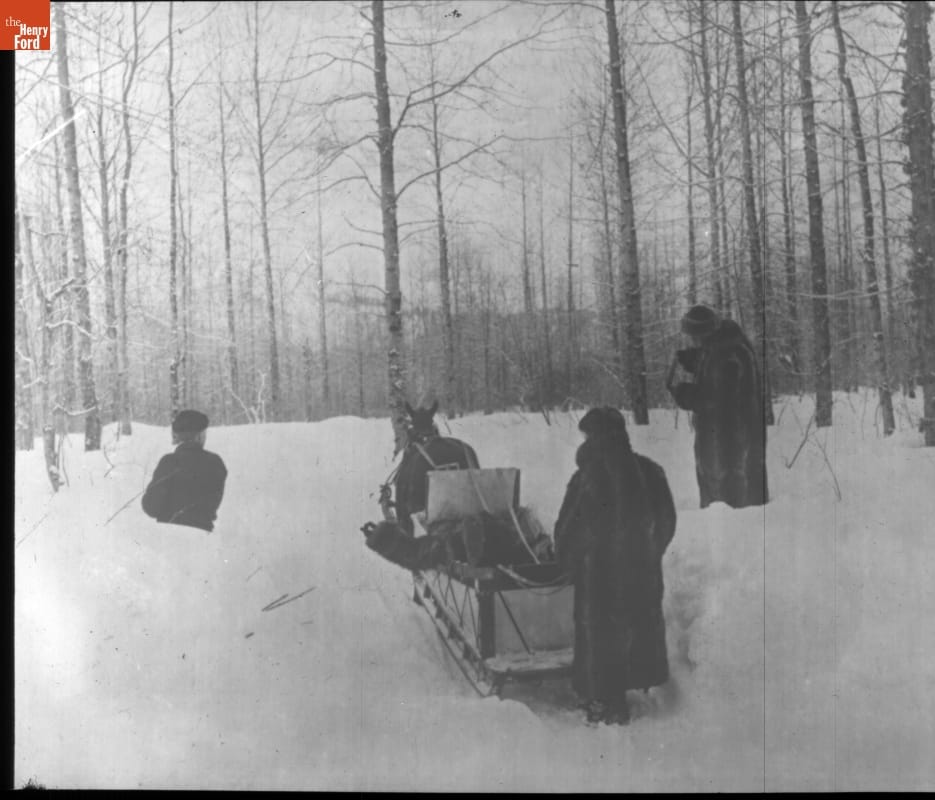
- Thomas Flyer Team Locating Trail with Horse-Drawn Sled, Valdez, Alaska, New York to Paris Race, 1908 - The American team in the 1908 New York to Paris race was the only team to make it to Alaska. The team made initial attempts to find a route through the Alaskan territory. Soon after arrival, race officials decided that all vehicles should be shipped to Vladivostok, Russia -- bypassing Alaska. The race would restart from there.
- 1908
- Collections - Artifact
Thomas Flyer Team Locating Trail with Horse-Drawn Sled, Valdez, Alaska, New York to Paris Race, 1908
The American team in the 1908 New York to Paris race was the only team to make it to Alaska. The team made initial attempts to find a route through the Alaskan territory. Soon after arrival, race officials decided that all vehicles should be shipped to Vladivostok, Russia -- bypassing Alaska. The race would restart from there.
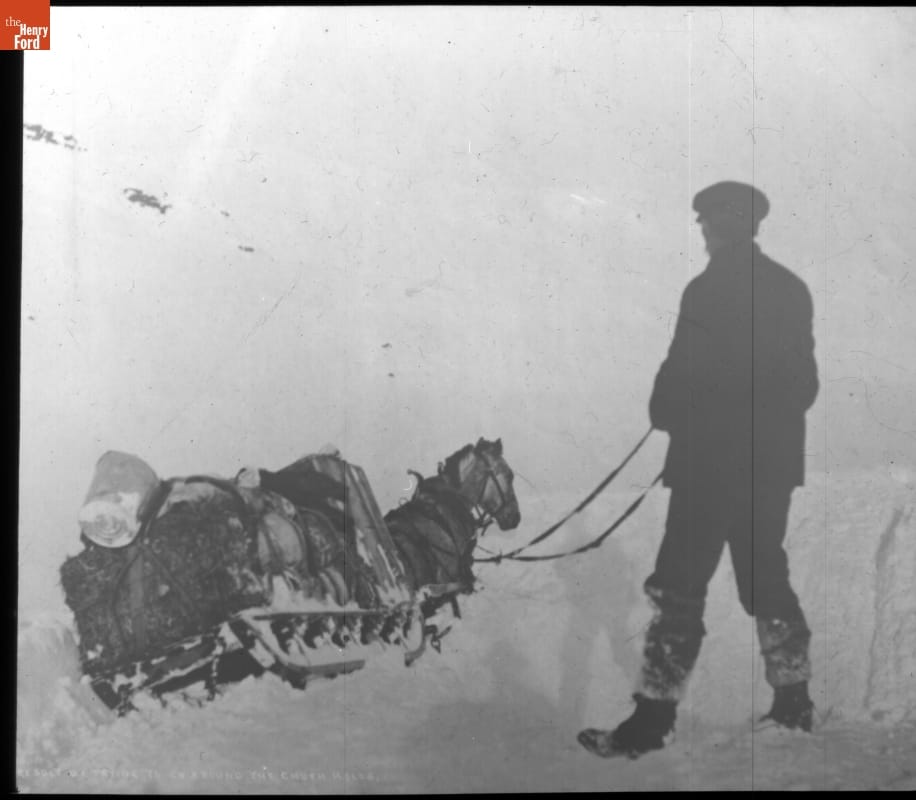
- Horse-Drawn Sled Caught in Impassable Snow near Valdez, Alaska, New York to Paris Race, 1908 - The American team in the 1908 New York to Paris race was the only team to make it to Alaska. The team made initial attempts to find a route through the Alaskan territory. Soon after arrival, race officials decided that all vehicles should be shipped to Vladivostok, Russia -- bypassing Alaska. The race would restart from there.
- 1908
- Collections - Artifact
Horse-Drawn Sled Caught in Impassable Snow near Valdez, Alaska, New York to Paris Race, 1908
The American team in the 1908 New York to Paris race was the only team to make it to Alaska. The team made initial attempts to find a route through the Alaskan territory. Soon after arrival, race officials decided that all vehicles should be shipped to Vladivostok, Russia -- bypassing Alaska. The race would restart from there.
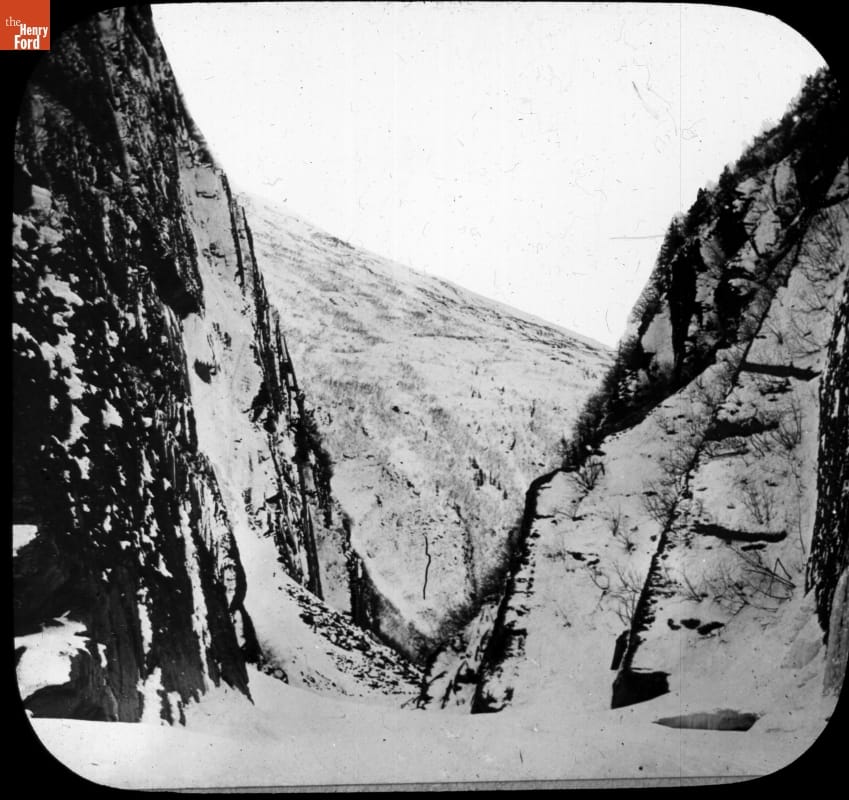
- Alaska Mountains, New York to Paris Race, 1908 - The American team in the 1908 New York to Paris race was the only team to make it to Alaska. The team made initial attempts to find a route through the Alaskan territory. Soon after arrival, race officials decided that all vehicles should be shipped to Vladivostok, Russia -- bypassing Alaska. The race would restart from there.
- 1908
- Collections - Artifact
Alaska Mountains, New York to Paris Race, 1908
The American team in the 1908 New York to Paris race was the only team to make it to Alaska. The team made initial attempts to find a route through the Alaskan territory. Soon after arrival, race officials decided that all vehicles should be shipped to Vladivostok, Russia -- bypassing Alaska. The race would restart from there.
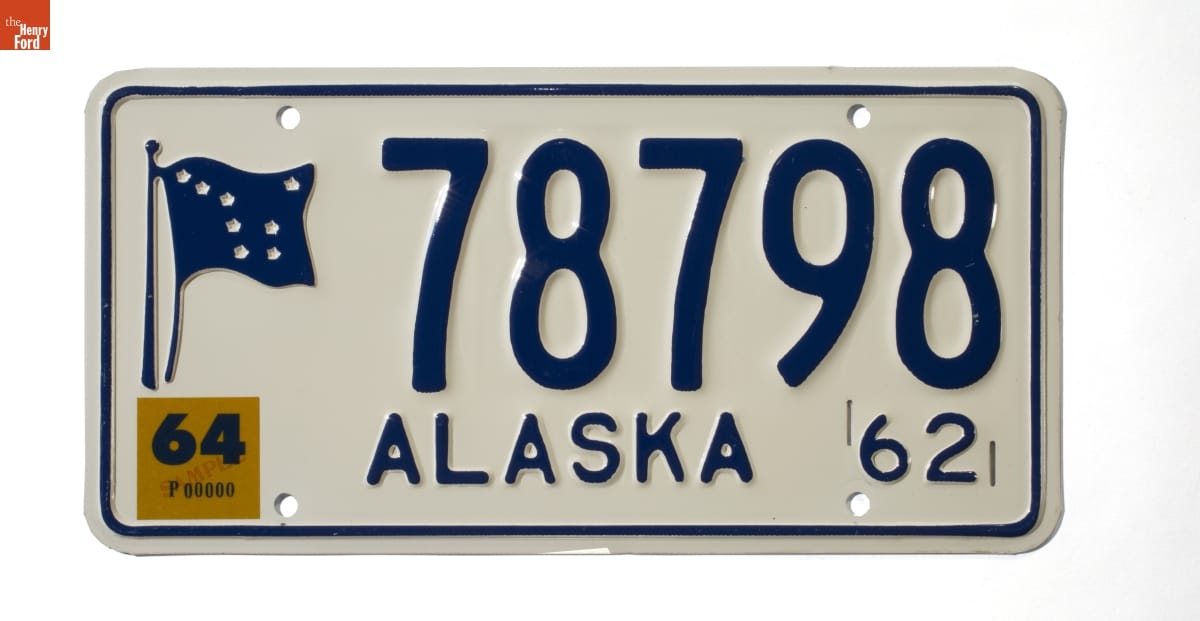
- Alaska License Plate from 1964-65 New York World's Fair - Visitors to the Ford Motor Company pavilion at the 1964-65 New York World's Fair could ride on the Magic Skyway. Late model Ford convertibles traveled along a track in and out of the pavilion -- winding through exhibits and providing spectacular views. Each automobile sported a license plate, like this one, from one of the fifty states or the District of Columbia.
- 1964-1965
- Collections - Artifact
Alaska License Plate from 1964-65 New York World's Fair
Visitors to the Ford Motor Company pavilion at the 1964-65 New York World's Fair could ride on the Magic Skyway. Late model Ford convertibles traveled along a track in and out of the pavilion -- winding through exhibits and providing spectacular views. Each automobile sported a license plate, like this one, from one of the fifty states or the District of Columbia.
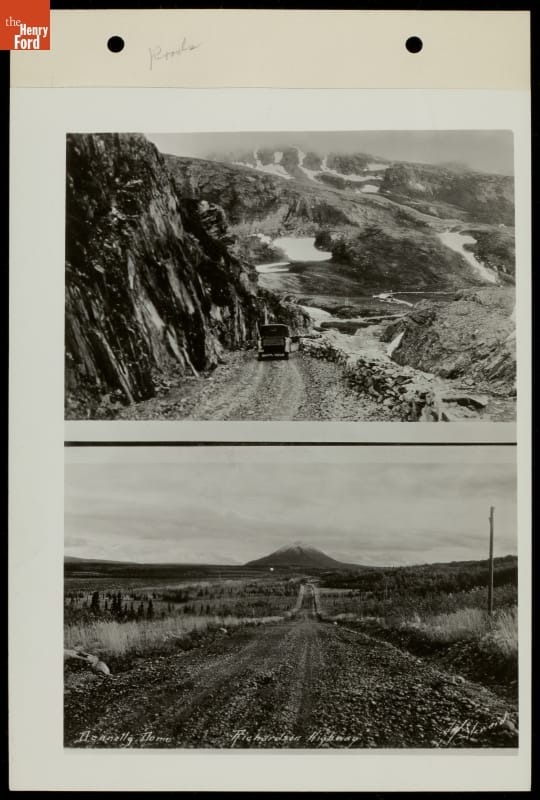
- Dirt Road down a Glacier Area and Donnelly Dome on Richardson Highway, Alaska, circa 1929 - "Roads of the Pacific" was part of the Ford Exhibit, the most popular attraction at the 1935 California Pacific International Exposition. Visitors rode in brand new Ford V-8s over 14 reproductions of famous roads. Crews used reference photographs to construct a realistic, immersive visitor experience. These images helped them recreate a section of Richardson Highway, Alaska's first major road.
- 1920-1930
- Collections - Artifact
Dirt Road down a Glacier Area and Donnelly Dome on Richardson Highway, Alaska, circa 1929
"Roads of the Pacific" was part of the Ford Exhibit, the most popular attraction at the 1935 California Pacific International Exposition. Visitors rode in brand new Ford V-8s over 14 reproductions of famous roads. Crews used reference photographs to construct a realistic, immersive visitor experience. These images helped them recreate a section of Richardson Highway, Alaska's first major road.
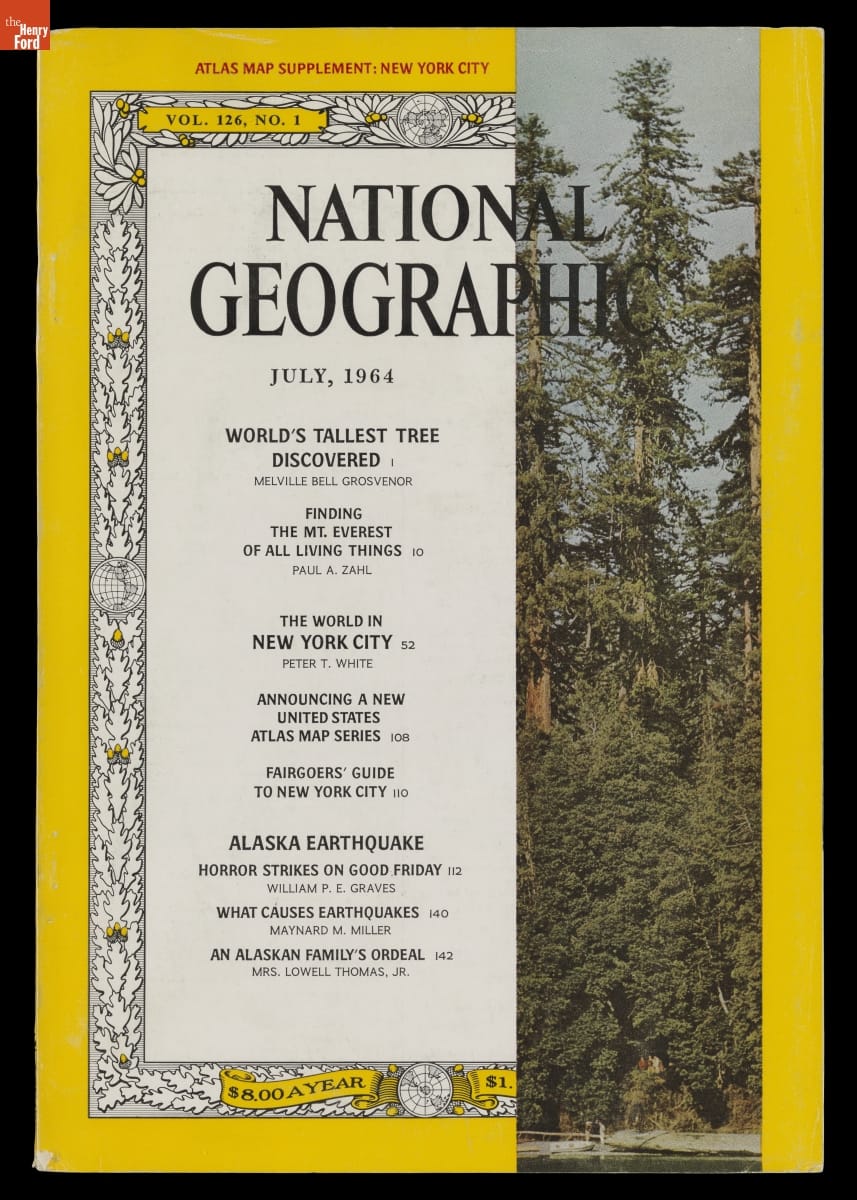
- "National Geographic," Vol. 126, No. 1, July 1964 - The National Geographic Society published the first issue of its magazine in the fall of 1888, within a year of its founding. <i>National Geographic</i>, initially a scholarly magazine for the Society's members, would not include a photograph in its pages until 1905; its distinctive yellow border would not appear until 1910. By 2024, more than one-and-a-half million subscribers received a digital or print version.
- July 01, 1964
- Collections - Artifact
"National Geographic," Vol. 126, No. 1, July 1964
The National Geographic Society published the first issue of its magazine in the fall of 1888, within a year of its founding. National Geographic, initially a scholarly magazine for the Society's members, would not include a photograph in its pages until 1905; its distinctive yellow border would not appear until 1910. By 2024, more than one-and-a-half million subscribers received a digital or print version.