
Search
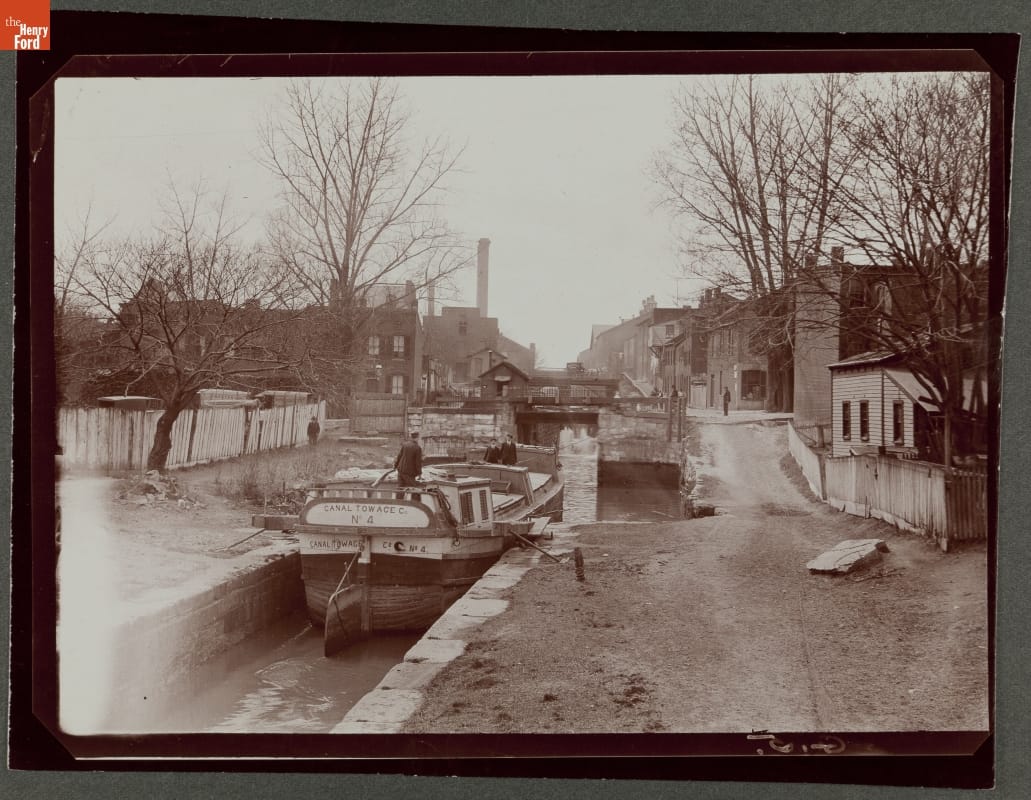
- The Lower Locks, Chesapeake and Ohio Canal, Washington D.C., 1910-1920 - President George Washington was devoted to improving the Potomac, the only river bisecting the Appalachian mountain barrier and an important trade route. Americans continued work on the waterway, completing the Chesapeake and Ohio Canal in 1850. This photograph shows a boat using one of many lift locks, which raised or lowered water to make the canal navigable.
- 1910-1920
- Collections - Artifact
The Lower Locks, Chesapeake and Ohio Canal, Washington D.C., 1910-1920
President George Washington was devoted to improving the Potomac, the only river bisecting the Appalachian mountain barrier and an important trade route. Americans continued work on the waterway, completing the Chesapeake and Ohio Canal in 1850. This photograph shows a boat using one of many lift locks, which raised or lowered water to make the canal navigable.
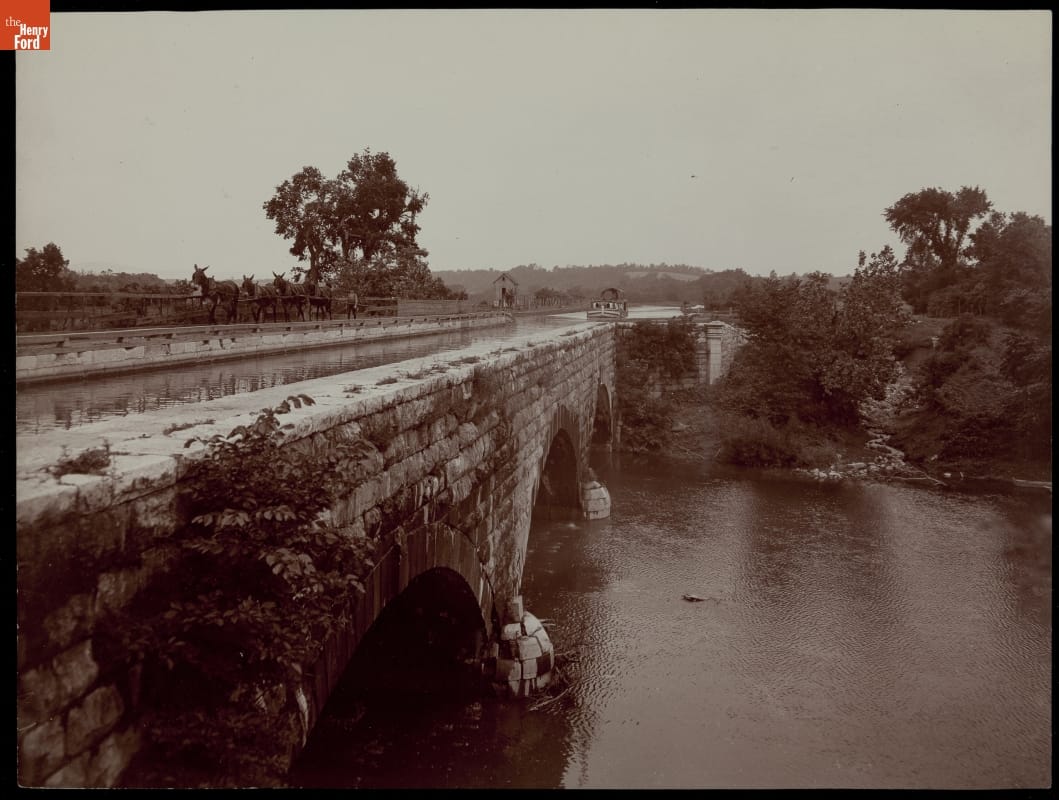
- Chesapeake and Ohio Canal at Williamsport, Maryland, circa 1903 - President George Washington was devoted to improving the Potomac, the only river bisecting the Appalachian mountain barrier and an important trade route. Americans continued work on the waterway, completing the Chesapeake and Ohio Canal in 1850. In this Detroit Publishing Company photograph, a team of mules pulls a boat over one of the canal's aqueducts.
- circa 1903
- Collections - Artifact
Chesapeake and Ohio Canal at Williamsport, Maryland, circa 1903
President George Washington was devoted to improving the Potomac, the only river bisecting the Appalachian mountain barrier and an important trade route. Americans continued work on the waterway, completing the Chesapeake and Ohio Canal in 1850. In this Detroit Publishing Company photograph, a team of mules pulls a boat over one of the canal's aqueducts.
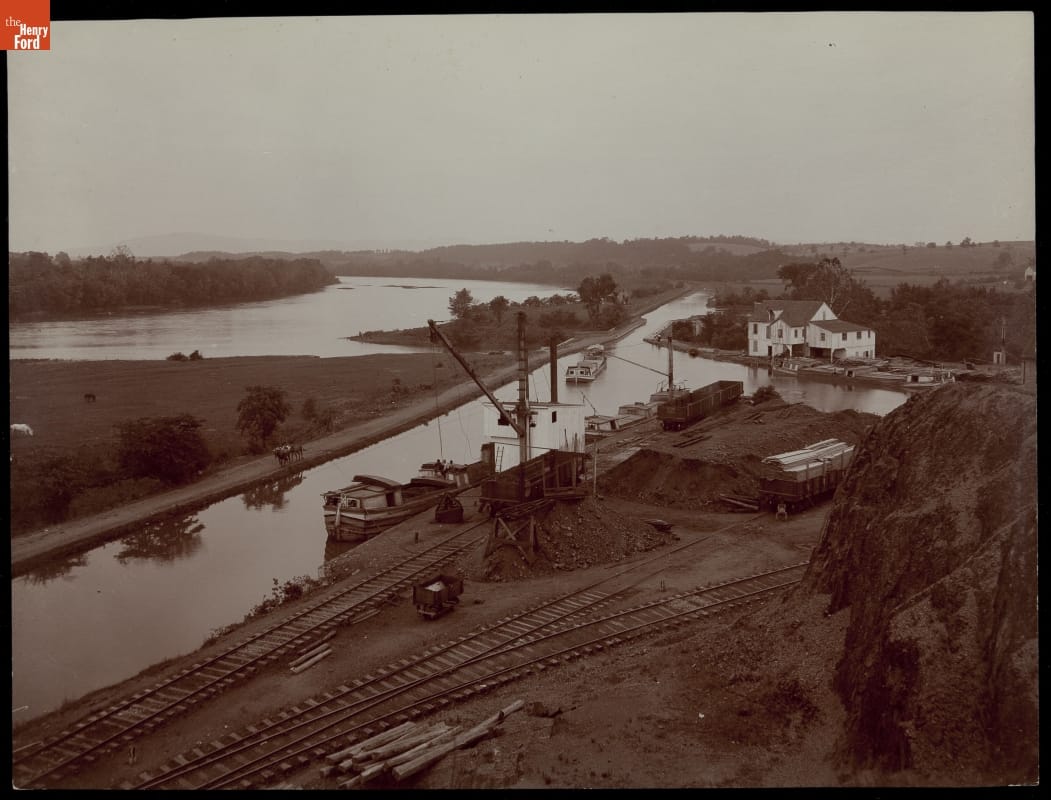
- Potomac River at Williamsport, Maryland, 1900-1906 - President George Washington was devoted to improving the Potomac, the only river bisecting the Appalachian mountain barrier and an important trade route. Americans have continued work on the waterway, constructing canals to allow for the passage of rafts and boats. This Detroit Publishing Company photograph shows the river, a lateral canal, and tracks connecting waterway to railway.
- 1900-1906
- Collections - Artifact
Potomac River at Williamsport, Maryland, 1900-1906
President George Washington was devoted to improving the Potomac, the only river bisecting the Appalachian mountain barrier and an important trade route. Americans have continued work on the waterway, constructing canals to allow for the passage of rafts and boats. This Detroit Publishing Company photograph shows the river, a lateral canal, and tracks connecting waterway to railway.
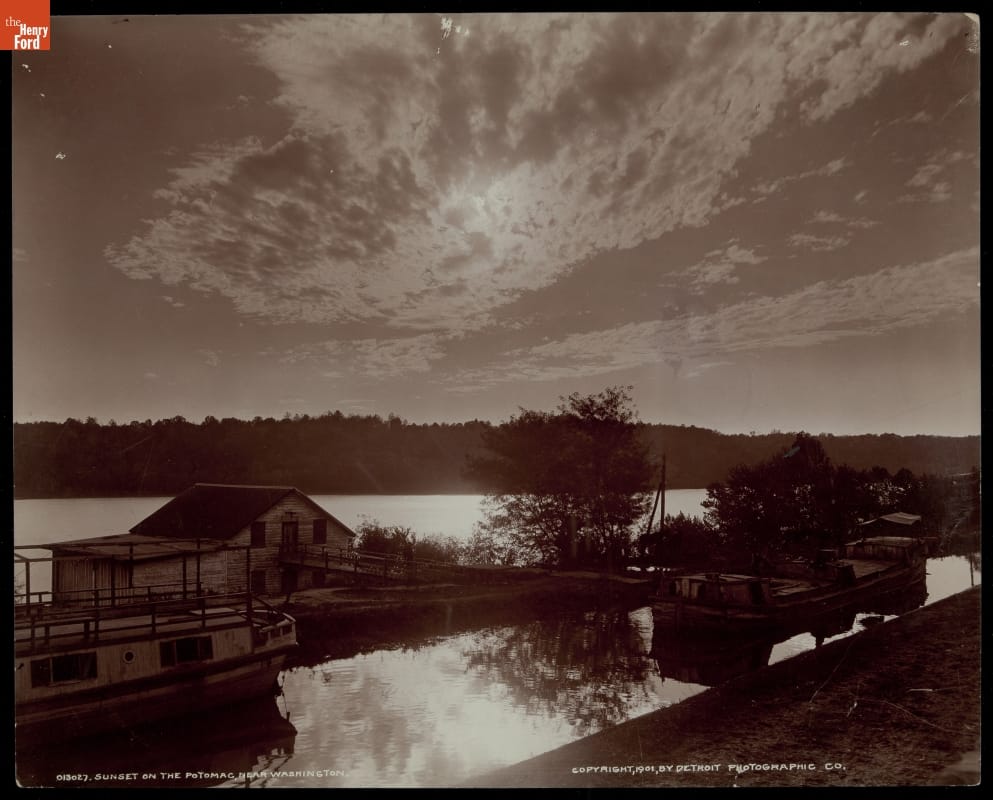
- Sunset on the Potomac River, near Washington D.C., circa 1901 - From 1895 to 1924, the Detroit Publishing Company was one of the major image publishers in the world. The company had a wide-ranging stock of original photographs, including many scenes from across North America. Here, boats use a canal paralleling the Potomac River.
- circa 1901
- Collections - Artifact
Sunset on the Potomac River, near Washington D.C., circa 1901
From 1895 to 1924, the Detroit Publishing Company was one of the major image publishers in the world. The company had a wide-ranging stock of original photographs, including many scenes from across North America. Here, boats use a canal paralleling the Potomac River.
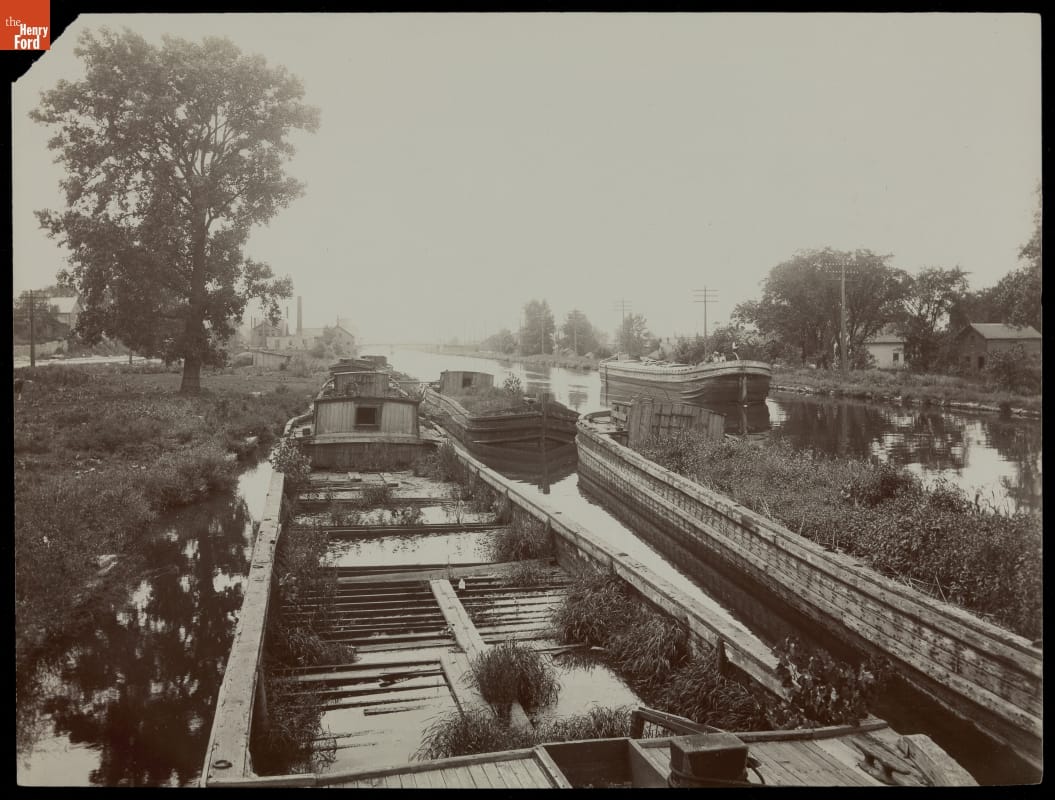
- Old Canal Boats at Lockport, Illinois, 1900-1906 - Opened in 1848, the 96-mile Illinois & Michigan Canal connected the Great Lakes with the Mississippi River, by way of the Chicago and Illinois Rivers. The canal's headquarters were in Lockport, Illinois, about 30 miles southwest of Chicago. This Detroit Publishing Company photograph shows canal boats there at the turn of the 20th century.
- 1900-1906
- Collections - Artifact
Old Canal Boats at Lockport, Illinois, 1900-1906
Opened in 1848, the 96-mile Illinois & Michigan Canal connected the Great Lakes with the Mississippi River, by way of the Chicago and Illinois Rivers. The canal's headquarters were in Lockport, Illinois, about 30 miles southwest of Chicago. This Detroit Publishing Company photograph shows canal boats there at the turn of the 20th century.
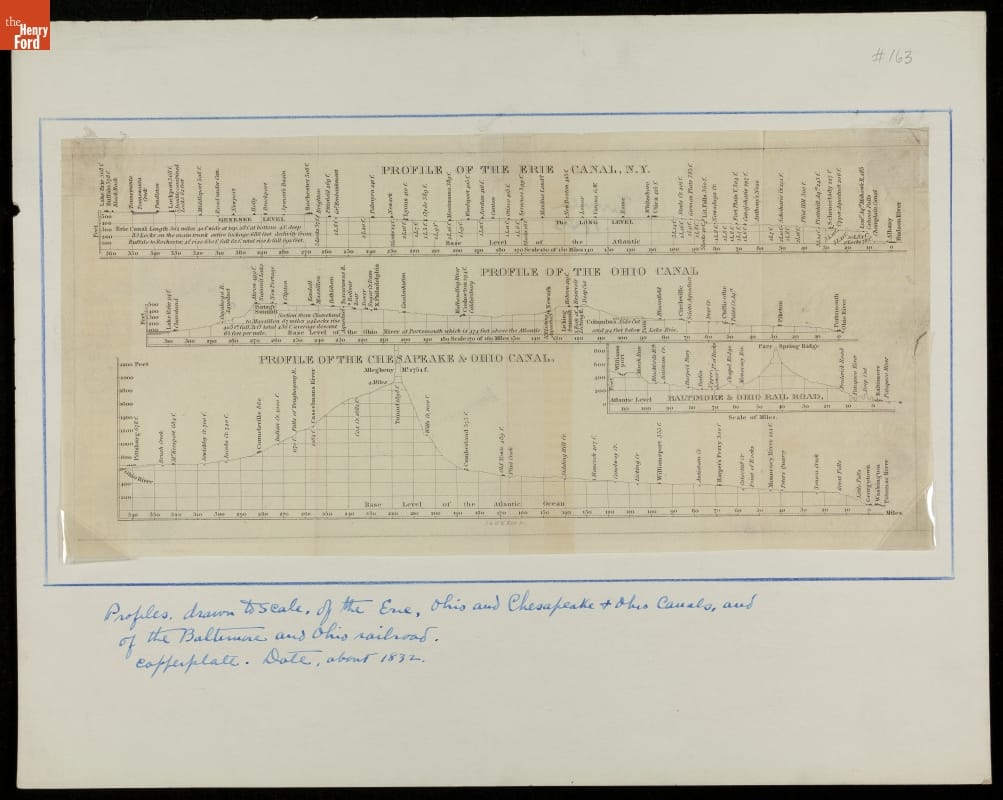
- "Profiles of the Erie, Ohio and Chesapeake & Ohio Canals and the Baltimore & Ohio Railroad," circa 1832 - The first half of the 19th century was the heyday of canal construction in the United States. This circa 1832 copperplate engraving shows the elevation profiles of the Erie Canal, the Ohio Canal, and the Chesapeake and Ohio Canal, along with the profile of the Baltimore and Ohio Railroad, measured in feet above sea level of the Atlantic Ocean.
- circa 1832
- Collections - Artifact
"Profiles of the Erie, Ohio and Chesapeake & Ohio Canals and the Baltimore & Ohio Railroad," circa 1832
The first half of the 19th century was the heyday of canal construction in the United States. This circa 1832 copperplate engraving shows the elevation profiles of the Erie Canal, the Ohio Canal, and the Chesapeake and Ohio Canal, along with the profile of the Baltimore and Ohio Railroad, measured in feet above sea level of the Atlantic Ocean.
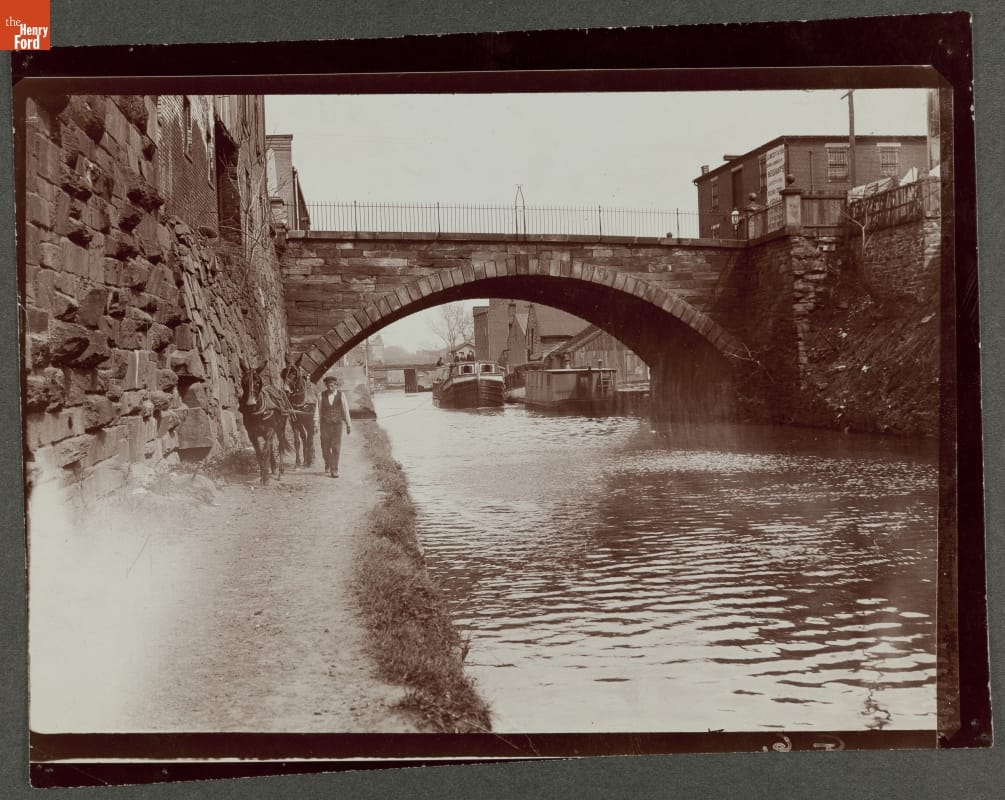
- Along the Towpath of the Chesapeake and Ohio Canal, Washington, D.C., circa 1915 - Moving heavy goods and materials on water is a cost-effective shipment method. On this canal, boats traveled 184 miles from Washington, D.C., to Cumberland, Maryland, beginning in 1831 until 1924. Here a typical 19th-century canal boat is pulled by two mules through the city. It is below the level of the streets allowing the boat to maintain momentum.
- 1910-1913
- Collections - Artifact
Along the Towpath of the Chesapeake and Ohio Canal, Washington, D.C., circa 1915
Moving heavy goods and materials on water is a cost-effective shipment method. On this canal, boats traveled 184 miles from Washington, D.C., to Cumberland, Maryland, beginning in 1831 until 1924. Here a typical 19th-century canal boat is pulled by two mules through the city. It is below the level of the streets allowing the boat to maintain momentum.