
Search
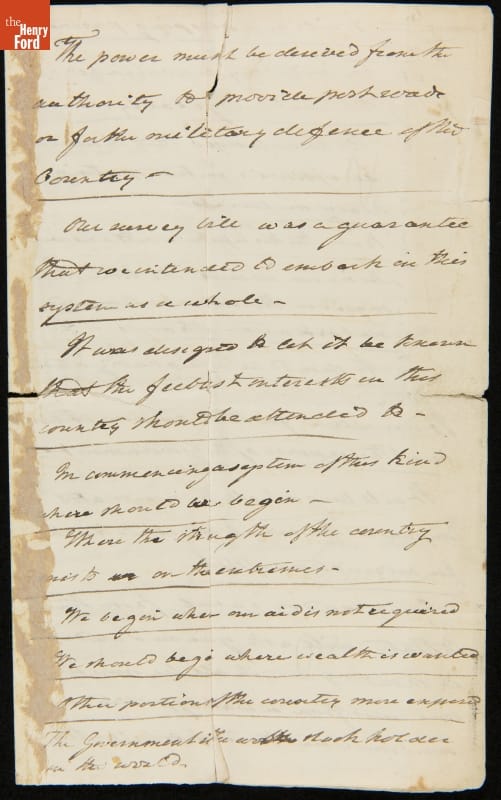
- Alexander Hamilton's Arguments against Federal Subscription of Stock in the Proposed Chesapeake and Delaware Canal, circa 1803 -
- circa 1803
- Collections - Artifact
Alexander Hamilton's Arguments against Federal Subscription of Stock in the Proposed Chesapeake and Delaware Canal, circa 1803
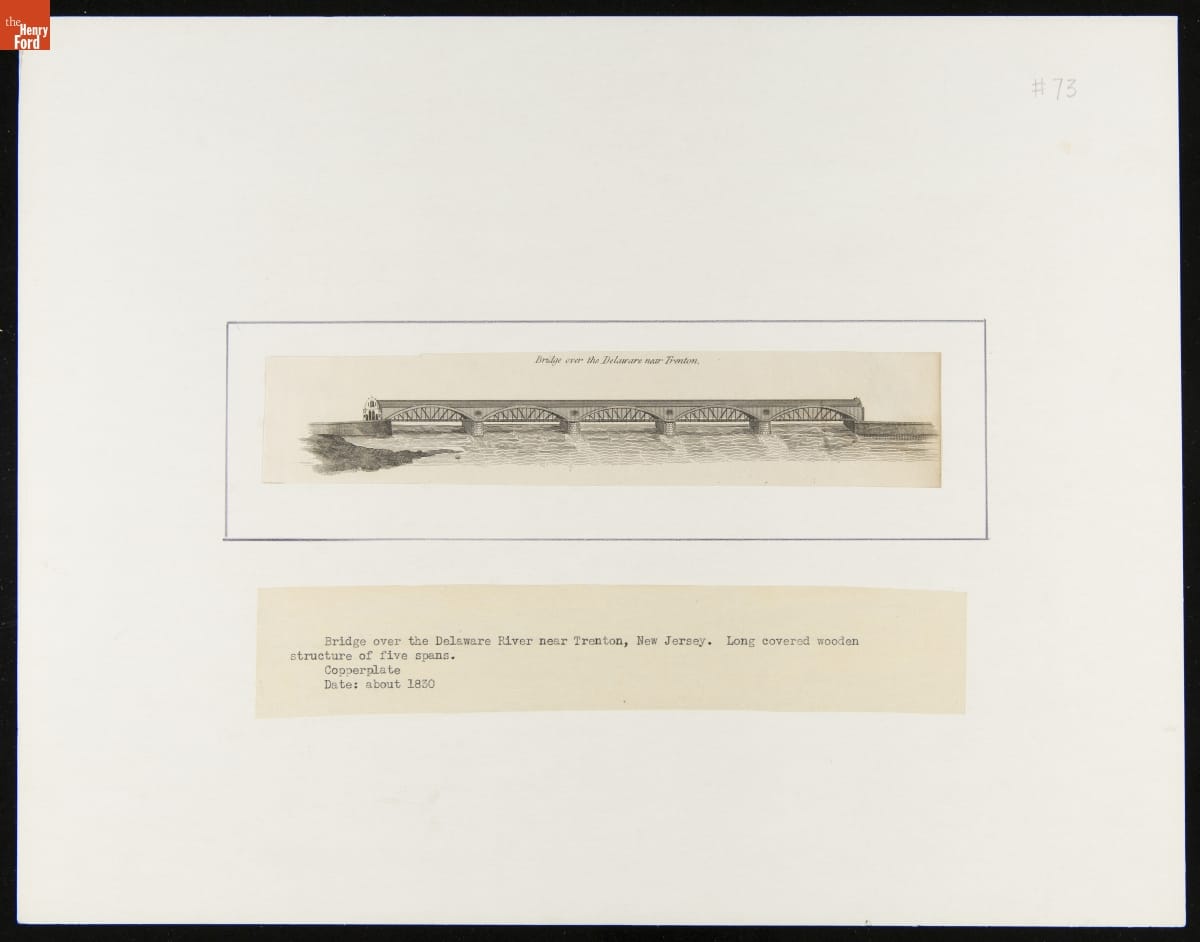
- "Bridge over the Delaware River near Trenton," Copper Engraving, circa 1830 - Covered bridges were built across the United States throughout the 19th and into the early 20th centuries. Bridges provided important commercial and community connections, but constructing them required careful planning and a substantial investment of time, labor, and materials. Walls and a roof helped preserve these valuable structures by protecting the truss system and keeping structural timbers dry.
- circa 1830
- Collections - Artifact
"Bridge over the Delaware River near Trenton," Copper Engraving, circa 1830
Covered bridges were built across the United States throughout the 19th and into the early 20th centuries. Bridges provided important commercial and community connections, but constructing them required careful planning and a substantial investment of time, labor, and materials. Walls and a roof helped preserve these valuable structures by protecting the truss system and keeping structural timbers dry.
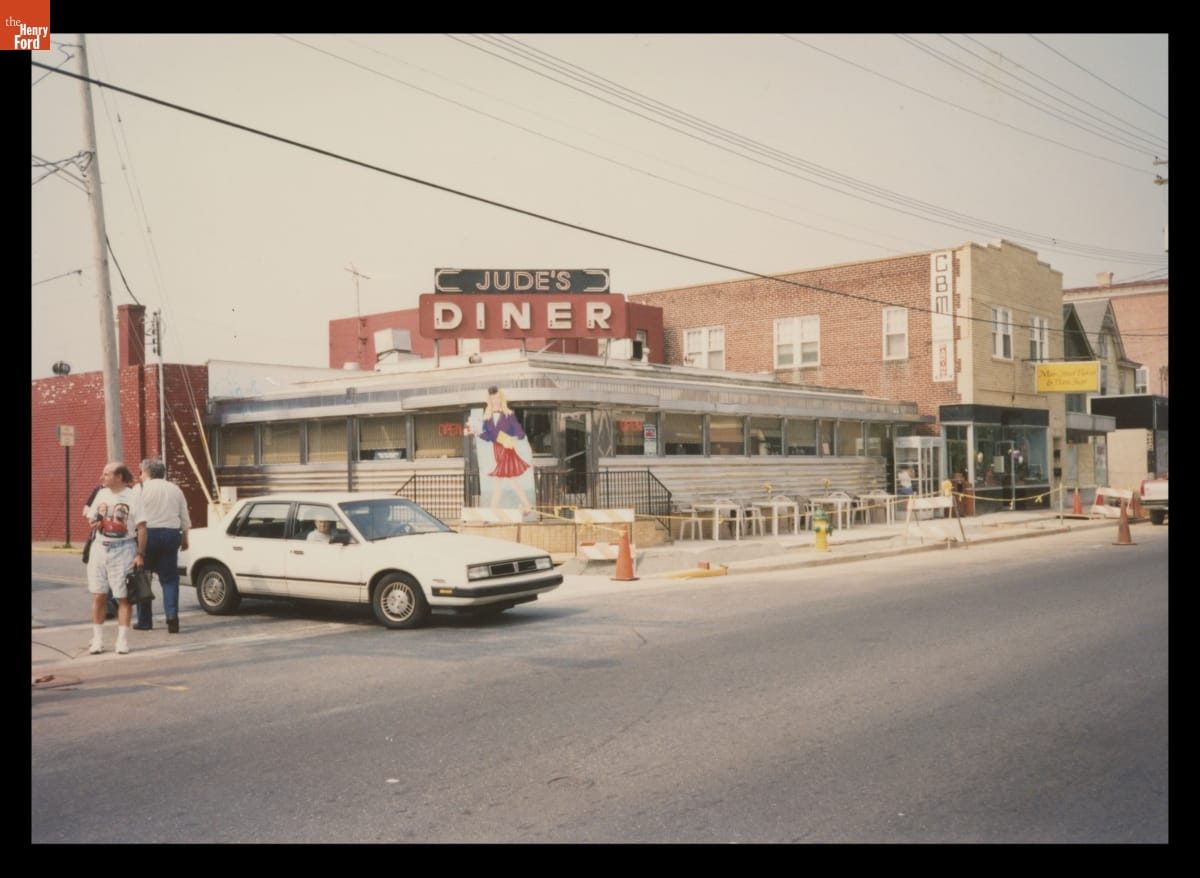
- Jude's Diner, Newark, Delaware, June 1993 -
- June 01, 1993
- Collections - Artifact
Jude's Diner, Newark, Delaware, June 1993
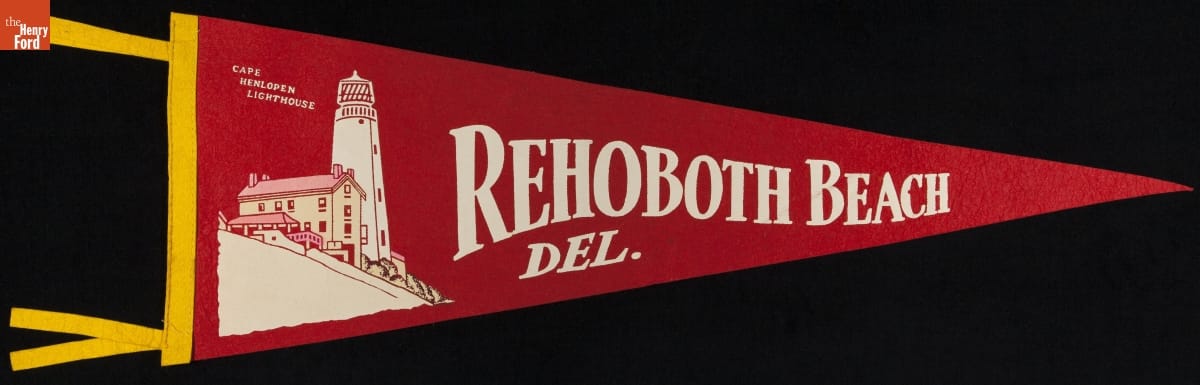
- Pennant, "Rehoboth Beach, Del.," 1940-1965 - Tourists purchase simple, inexpensive souvenirs as proof of their travels. These mementos transport vacationers back to the places they visited and the things they did. This pennant depicts the lighthouse once located near Rehoboth Beach, Delaware. The lighthouse collapsed in 1926, but remained an iconic symbol for the popular seaside destination long after its demise.
- 1940-1965
- Collections - Artifact
Pennant, "Rehoboth Beach, Del.," 1940-1965
Tourists purchase simple, inexpensive souvenirs as proof of their travels. These mementos transport vacationers back to the places they visited and the things they did. This pennant depicts the lighthouse once located near Rehoboth Beach, Delaware. The lighthouse collapsed in 1926, but remained an iconic symbol for the popular seaside destination long after its demise.
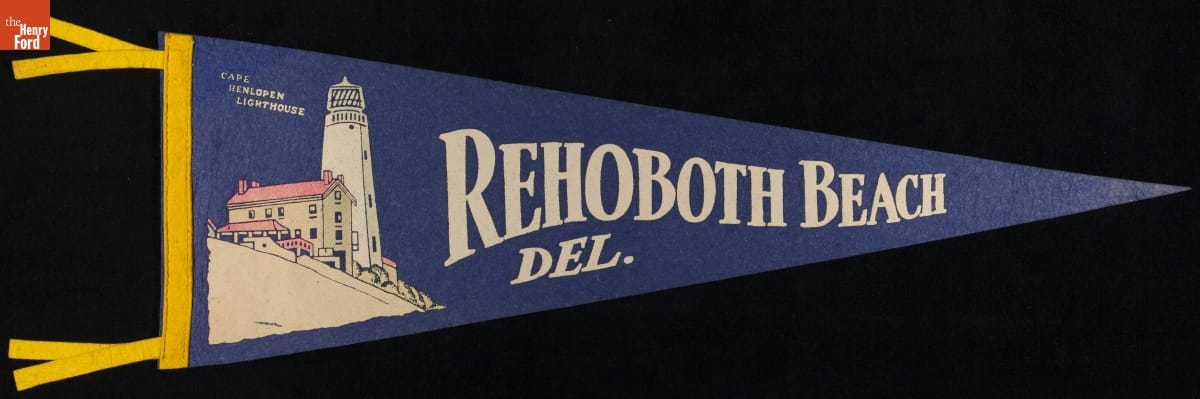
- Pennant, "Cape Henlopen Lighthouse, Rehoboth Beach, Del.," 1940-1965 - Tourists purchase simple, inexpensive souvenirs as proof of their travels. These mementos transport vacationers back to the places they visited and the things they did. This pennant depicts the lighthouse once located near Rehoboth Beach, Delaware. The lighthouse collapsed in 1926, but remained an iconic symbol for the popular seaside destination long after its demise.
- 1940-1965
- Collections - Artifact
Pennant, "Cape Henlopen Lighthouse, Rehoboth Beach, Del.," 1940-1965
Tourists purchase simple, inexpensive souvenirs as proof of their travels. These mementos transport vacationers back to the places they visited and the things they did. This pennant depicts the lighthouse once located near Rehoboth Beach, Delaware. The lighthouse collapsed in 1926, but remained an iconic symbol for the popular seaside destination long after its demise.
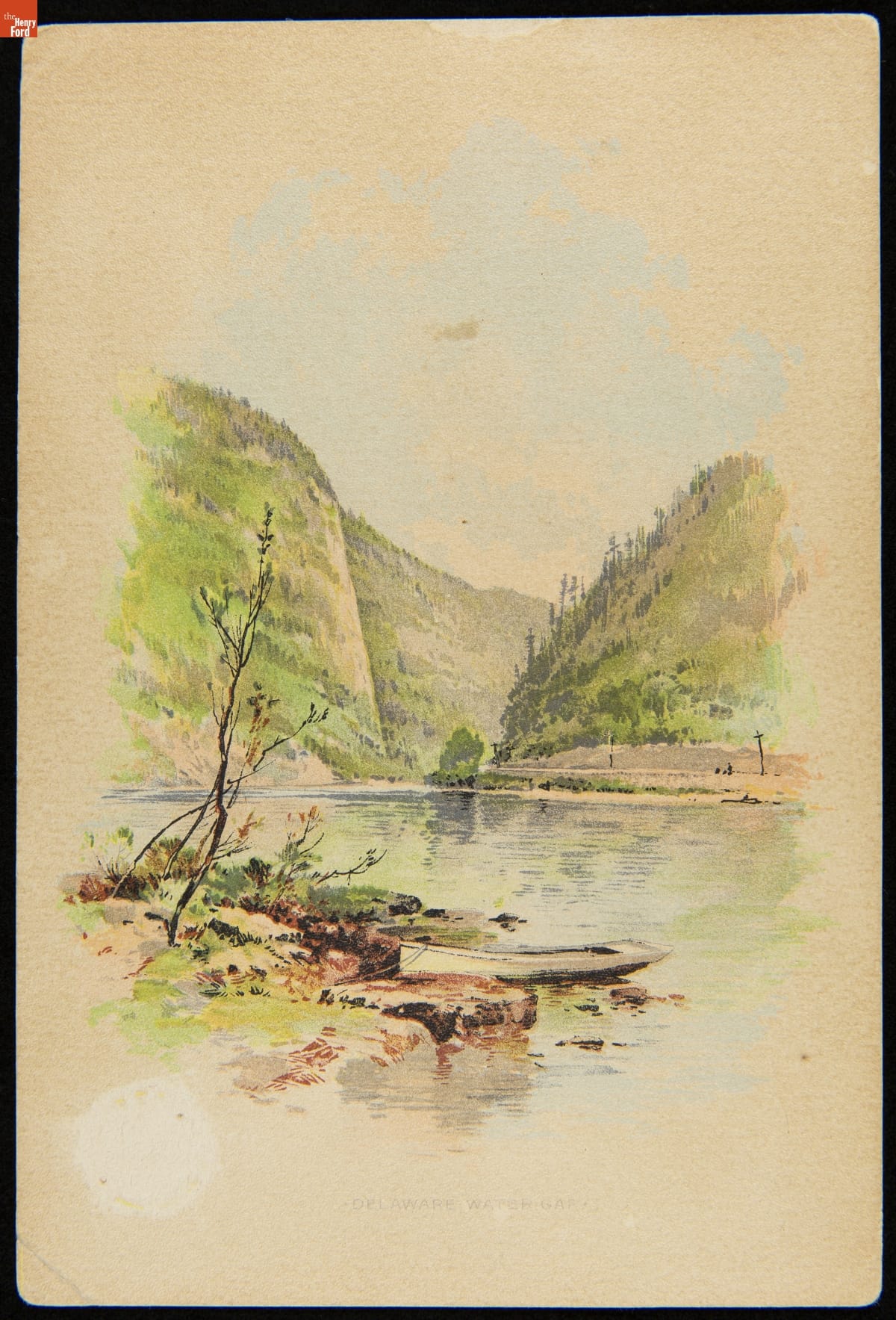
- Trade Card for Clark's O.N.T. Spool Cotton, Clark's O.N.T., 1880-1890 - In the last third of the nineteenth century, an unprecedented variety of consumer goods and services flooded the American market. Advertisers, armed with new methods of color printing, bombarded potential customers with trade cards. Americans enjoyed and often saved the vibrant little advertisements found in product packages or distributed by local merchants. Many survive as historical records of commercialism in the United States.
- 1880-1890
- Collections - Artifact
Trade Card for Clark's O.N.T. Spool Cotton, Clark's O.N.T., 1880-1890
In the last third of the nineteenth century, an unprecedented variety of consumer goods and services flooded the American market. Advertisers, armed with new methods of color printing, bombarded potential customers with trade cards. Americans enjoyed and often saved the vibrant little advertisements found in product packages or distributed by local merchants. Many survive as historical records of commercialism in the United States.
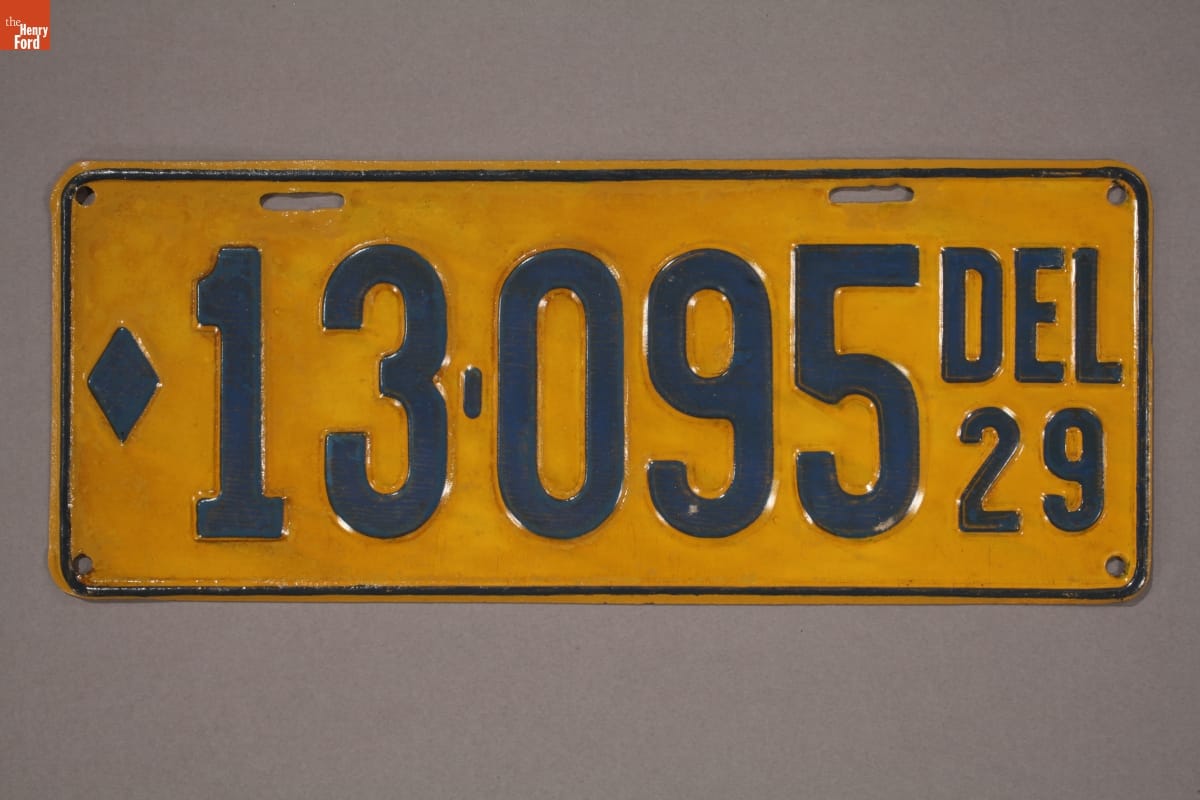
- Delaware License Plate, 1929 - Early state-issued license plates were made of porcelain-coated iron. Later, states stamped tin, steel, or even copper to make plates. During the Second World War several states used fiberboard. Plate colors varied and some states added symbols, mottoes, or other design elements. Today, states use reflective sheeting to coat a standard-sized aluminum blank which is then stamped and decorated.
- 1929
- Collections - Artifact
Delaware License Plate, 1929
Early state-issued license plates were made of porcelain-coated iron. Later, states stamped tin, steel, or even copper to make plates. During the Second World War several states used fiberboard. Plate colors varied and some states added symbols, mottoes, or other design elements. Today, states use reflective sheeting to coat a standard-sized aluminum blank which is then stamped and decorated.
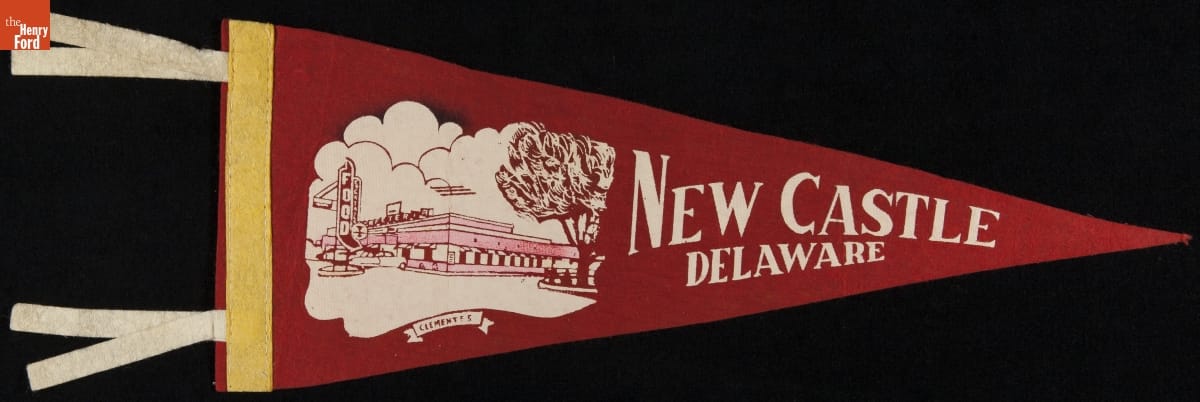
- Pennant, "New Castle, Delaware," 1952-1965 - Tourists purchase simple, inexpensive souvenirs as proof of their travels. These mementos transport travelers back to the places they visited and the things they did. In the mid-20th century, felt pennants were trendy. Clemente's Cafeteria was a stop on the Greyhound bus line. The roadside cafeteria offered passengers and passing auto tourists a place to eat, rest and pick up a souvenir.
- 1952-1965
- Collections - Artifact
Pennant, "New Castle, Delaware," 1952-1965
Tourists purchase simple, inexpensive souvenirs as proof of their travels. These mementos transport travelers back to the places they visited and the things they did. In the mid-20th century, felt pennants were trendy. Clemente's Cafeteria was a stop on the Greyhound bus line. The roadside cafeteria offered passengers and passing auto tourists a place to eat, rest and pick up a souvenir.
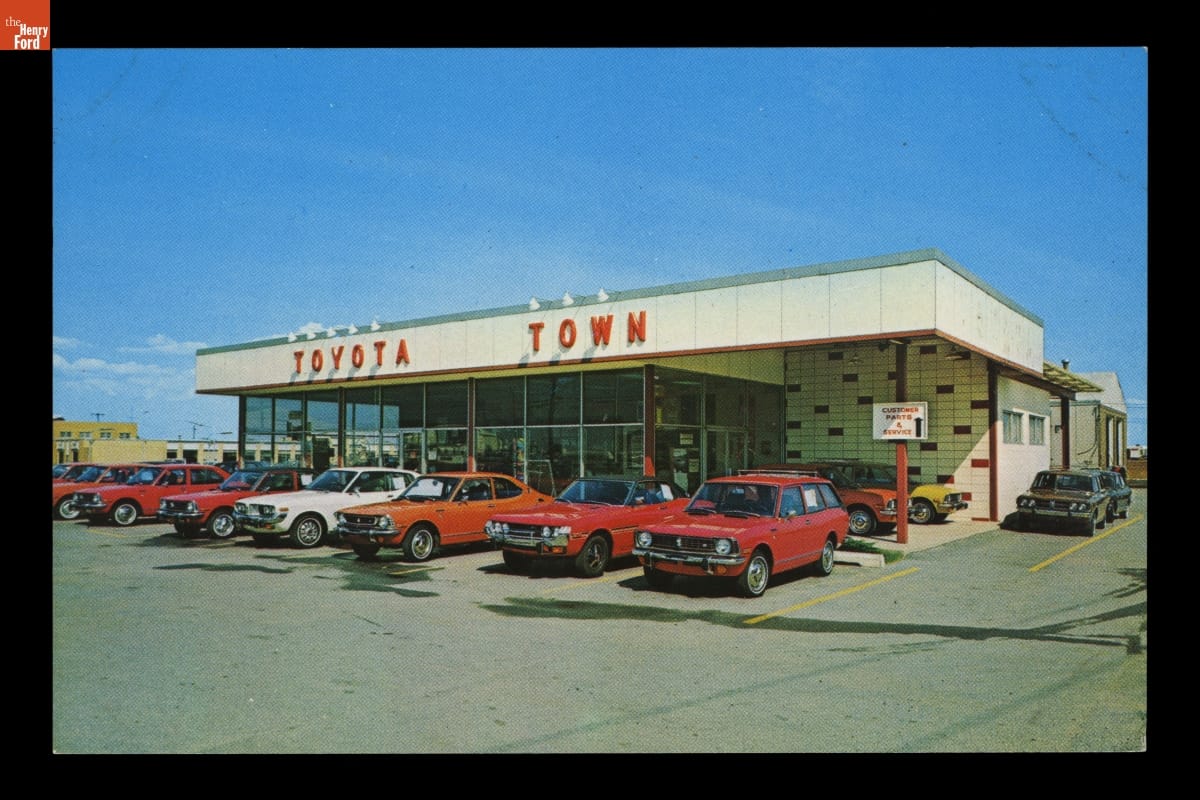
- Toyota Town Dealership, New Castle, Delaware, circa 1965 - Japanese automobile exports to the U.S. were hampered in the 1950s by a lack of dealerships beyond the West Coast. By the early 1970s, Toyota had established eastern dealerships, like this one in New Castle, Delaware.
- circa 1965
- Collections - Artifact
Toyota Town Dealership, New Castle, Delaware, circa 1965
Japanese automobile exports to the U.S. were hampered in the 1950s by a lack of dealerships beyond the West Coast. By the early 1970s, Toyota had established eastern dealerships, like this one in New Castle, Delaware.
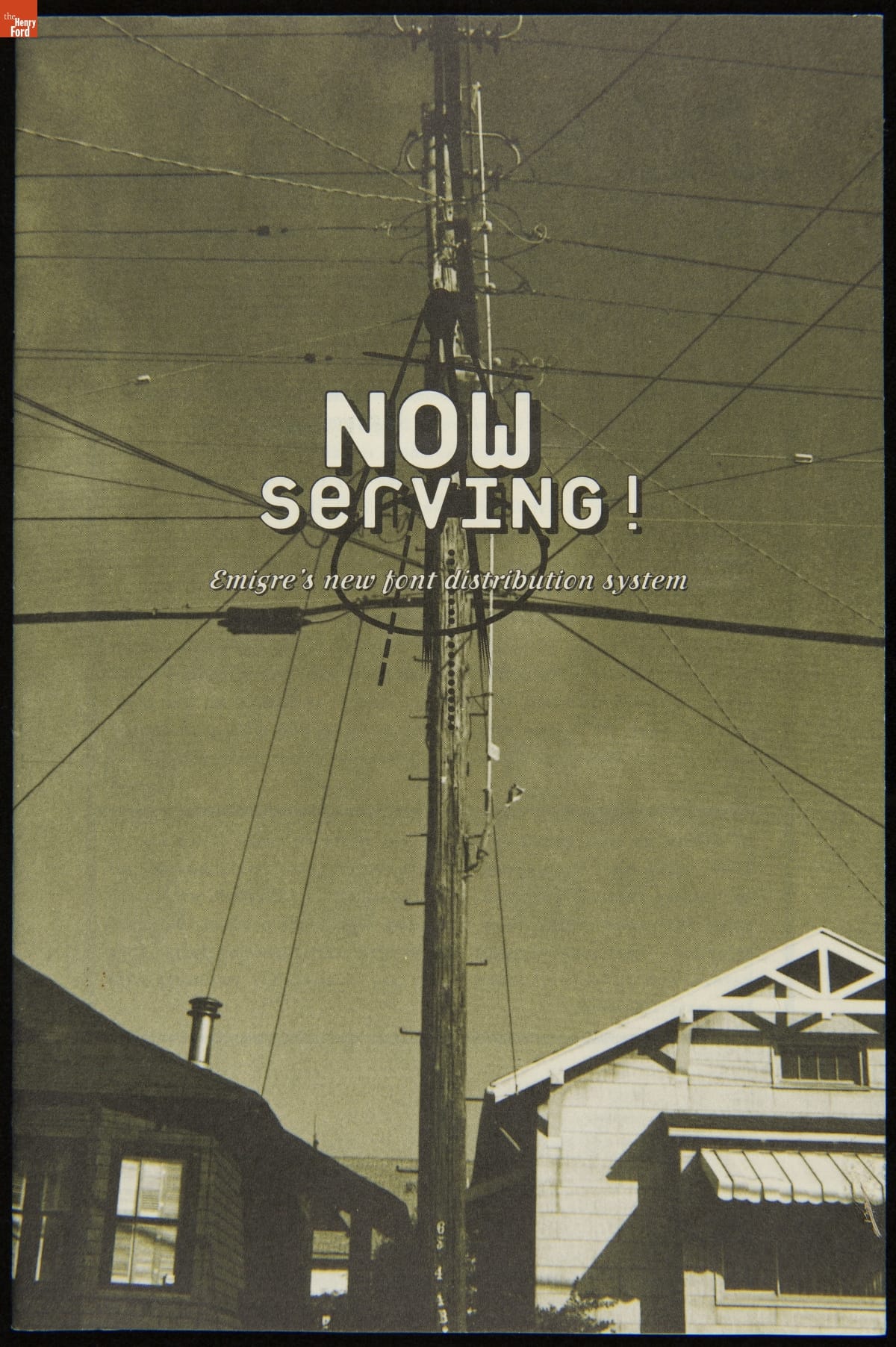
- Mailer, "Now Serving! Emigre's New Font Distribution System," 1994 - Emigre is a digital type foundry established by Rudy VanderLans and Zuzana Licko. The company's history is linked with the introduction of the 1984 Macintosh computer, used to design their early bitmapped typefaces. Emigre's digital work gained notoriety -- defying visual communication standards with fractured, layered combinations of text and image. This item advertised fonts or other items available for purchase.
- 1994
- Collections - Artifact
Mailer, "Now Serving! Emigre's New Font Distribution System," 1994
Emigre is a digital type foundry established by Rudy VanderLans and Zuzana Licko. The company's history is linked with the introduction of the 1984 Macintosh computer, used to design their early bitmapped typefaces. Emigre's digital work gained notoriety -- defying visual communication standards with fractured, layered combinations of text and image. This item advertised fonts or other items available for purchase.