
Search
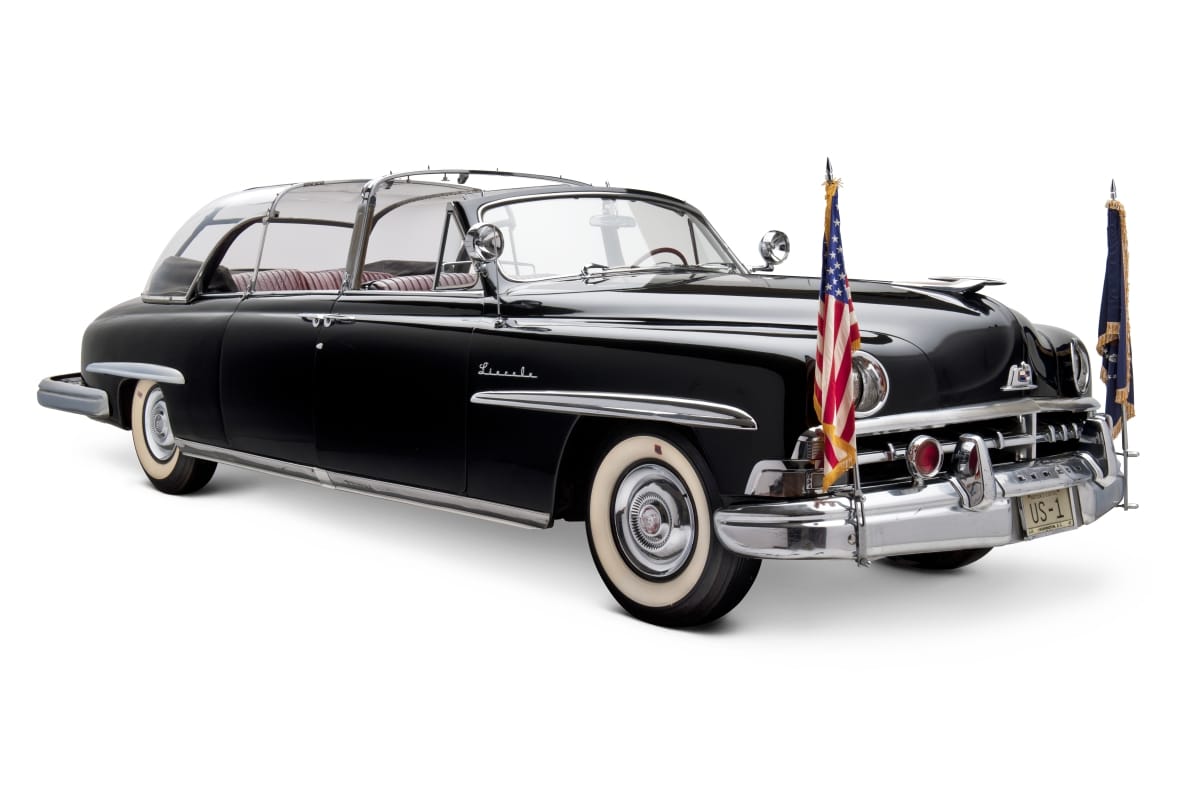
- 1950 Lincoln Presidential Limousine Used by Dwight D. Eisenhower - This massive convertible Lincoln was built for President Harry S Truman in 1950, but it is most associated with Truman's successor Dwight D. Eisenhower, who used the car from 1952 until 1960. Eisenhower added the distinctive plastic "bubble top." Presidents John F. Kennedy and Lyndon B. Johnson also used this car as a spare until its retirement in 1967.
- 1950-1967
- Collections - Artifact
1950 Lincoln Presidential Limousine Used by Dwight D. Eisenhower
This massive convertible Lincoln was built for President Harry S Truman in 1950, but it is most associated with Truman's successor Dwight D. Eisenhower, who used the car from 1952 until 1960. Eisenhower added the distinctive plastic "bubble top." Presidents John F. Kennedy and Lyndon B. Johnson also used this car as a spare until its retirement in 1967.
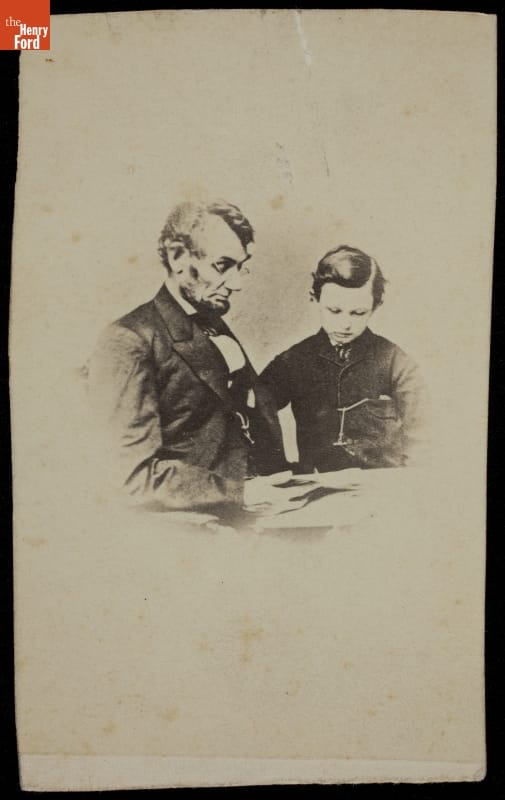
- Abraham Lincoln and His Son, Tad, 1864 - This portrait shows President Abraham Lincoln and his youngest son, Tad. The original photograph was taken by Anthony Berger in the Mathew Brady studio in Washington, D.C., on February 9, 1864. D.C. Burnite & Company of Harrisburg, Pennsylvania, made this carte-de-visite from a copy of Berger's photo. Because of its appealing subject of Abraham Lincoln as a father, it was a popular image to purchase and place in albums.
- February 09, 1864
- Collections - Artifact
Abraham Lincoln and His Son, Tad, 1864
This portrait shows President Abraham Lincoln and his youngest son, Tad. The original photograph was taken by Anthony Berger in the Mathew Brady studio in Washington, D.C., on February 9, 1864. D.C. Burnite & Company of Harrisburg, Pennsylvania, made this carte-de-visite from a copy of Berger's photo. Because of its appealing subject of Abraham Lincoln as a father, it was a popular image to purchase and place in albums.
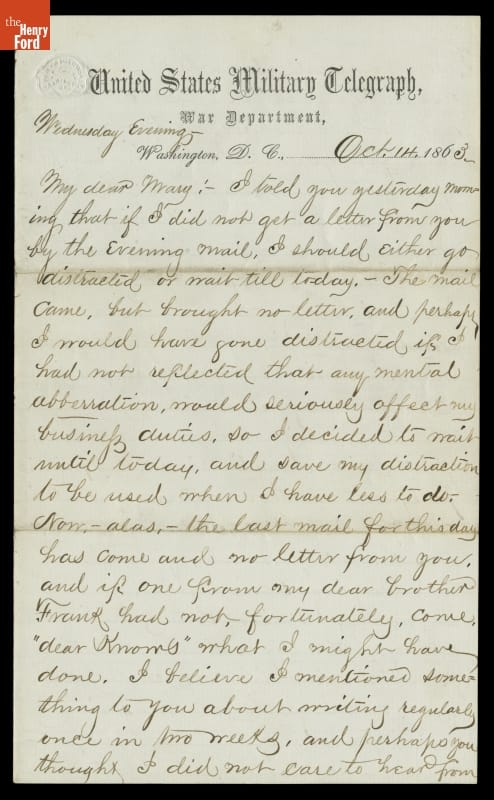
- Letter from Albert B. Chandler to Marilla Stedman, October 14, 1863 - Albert B. Chandler served as a cipher operator at the War Department office in Washington, D.C., during the Civil War. He transmitted coded messages to and decoded messages from Union military field commanders. While at this post, he became acquainted with President Abraham Lincoln. Chandler describes some of his wartime experiences in this letter to Marilla Stedman, his future bride.
- October 14, 1863
- Collections - Artifact
Letter from Albert B. Chandler to Marilla Stedman, October 14, 1863
Albert B. Chandler served as a cipher operator at the War Department office in Washington, D.C., during the Civil War. He transmitted coded messages to and decoded messages from Union military field commanders. While at this post, he became acquainted with President Abraham Lincoln. Chandler describes some of his wartime experiences in this letter to Marilla Stedman, his future bride.
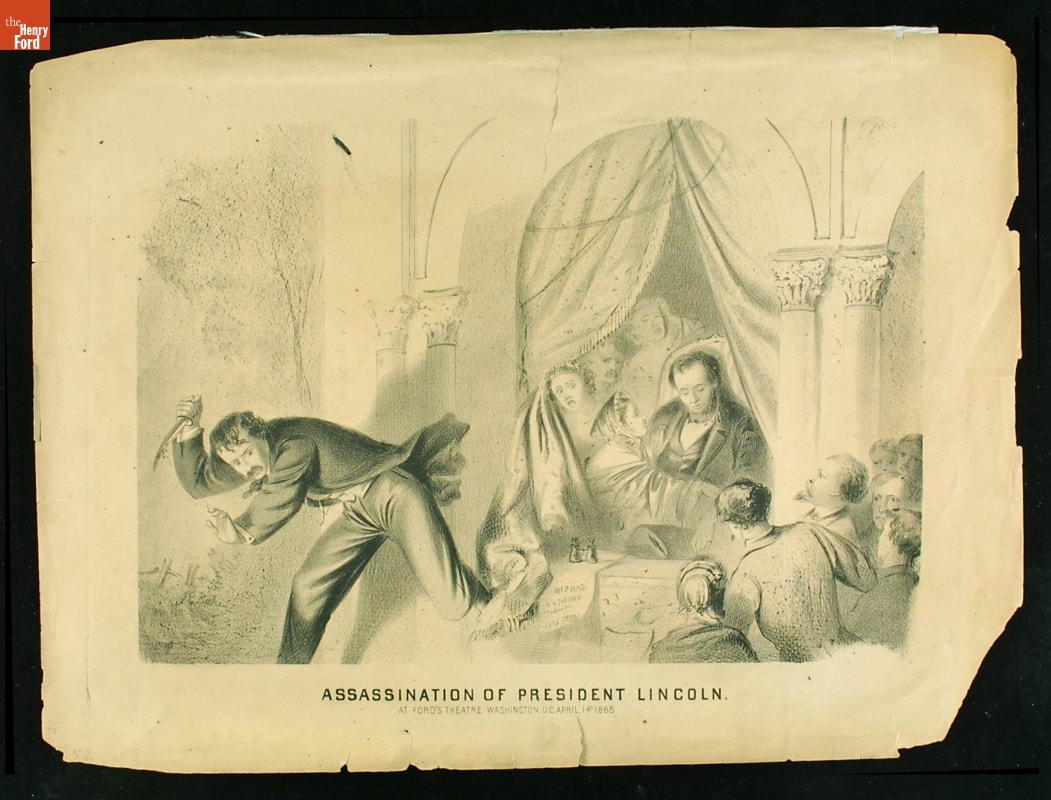
- Print, Assassination of President LIncoln, 1865-1870 - Before the existence of newspaper photos and television, lithographs helped people to understand the tragic event of President Abraham Lincoln's death in April 1865. This shows the assassin escaping after shooting President Lincoln at Ford's Theatre in Washington, D.C., on April 14, 1865. Printmakers produced various versions of this event, based on verbal reports.
- April 14, 1865
- Collections - Artifact
Print, Assassination of President LIncoln, 1865-1870
Before the existence of newspaper photos and television, lithographs helped people to understand the tragic event of President Abraham Lincoln's death in April 1865. This shows the assassin escaping after shooting President Lincoln at Ford's Theatre in Washington, D.C., on April 14, 1865. Printmakers produced various versions of this event, based on verbal reports.
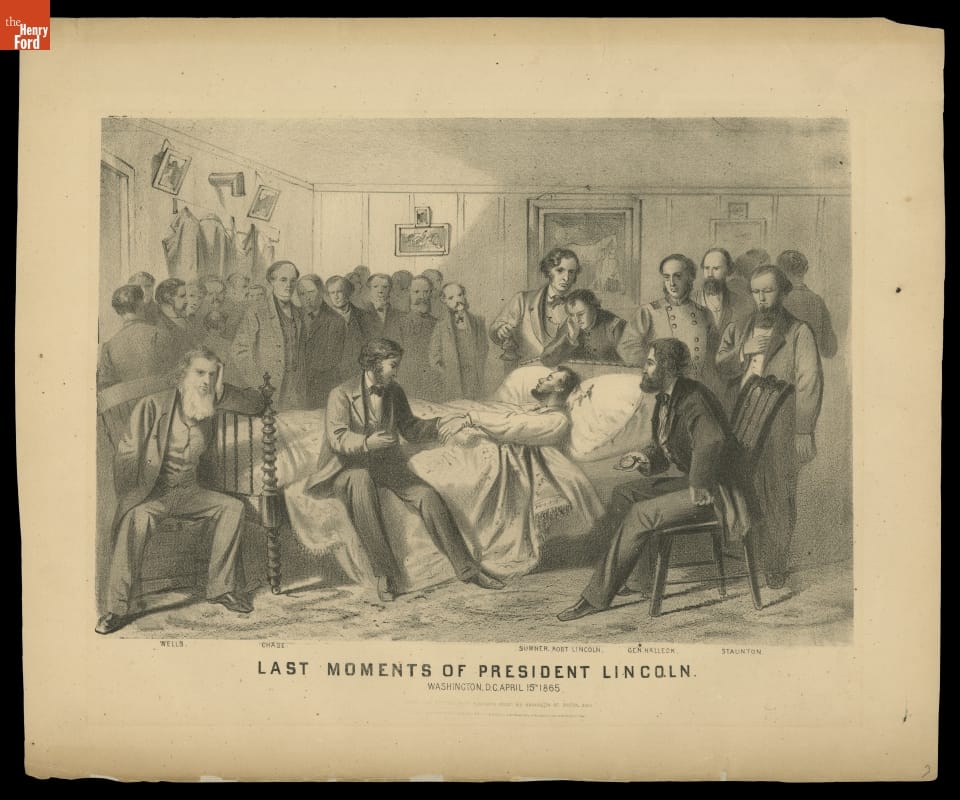
- Lithograph, "Last Moments of President LIncoln," 1865 - Abraham Lincoln's assassination in April 1865 plunged Americans into deep mourning. Before the existence of newspaper photos and television, lithographs helped people to understand the tragic event. This print depicts a room of the Petersen House, where the president died, across the street from Ford's Theatre in Washington, D.C. Not all of these people were actually in the room the morning Lincoln died.
- April 15, 1865
- Collections - Artifact
Lithograph, "Last Moments of President LIncoln," 1865
Abraham Lincoln's assassination in April 1865 plunged Americans into deep mourning. Before the existence of newspaper photos and television, lithographs helped people to understand the tragic event. This print depicts a room of the Petersen House, where the president died, across the street from Ford's Theatre in Washington, D.C. Not all of these people were actually in the room the morning Lincoln died.
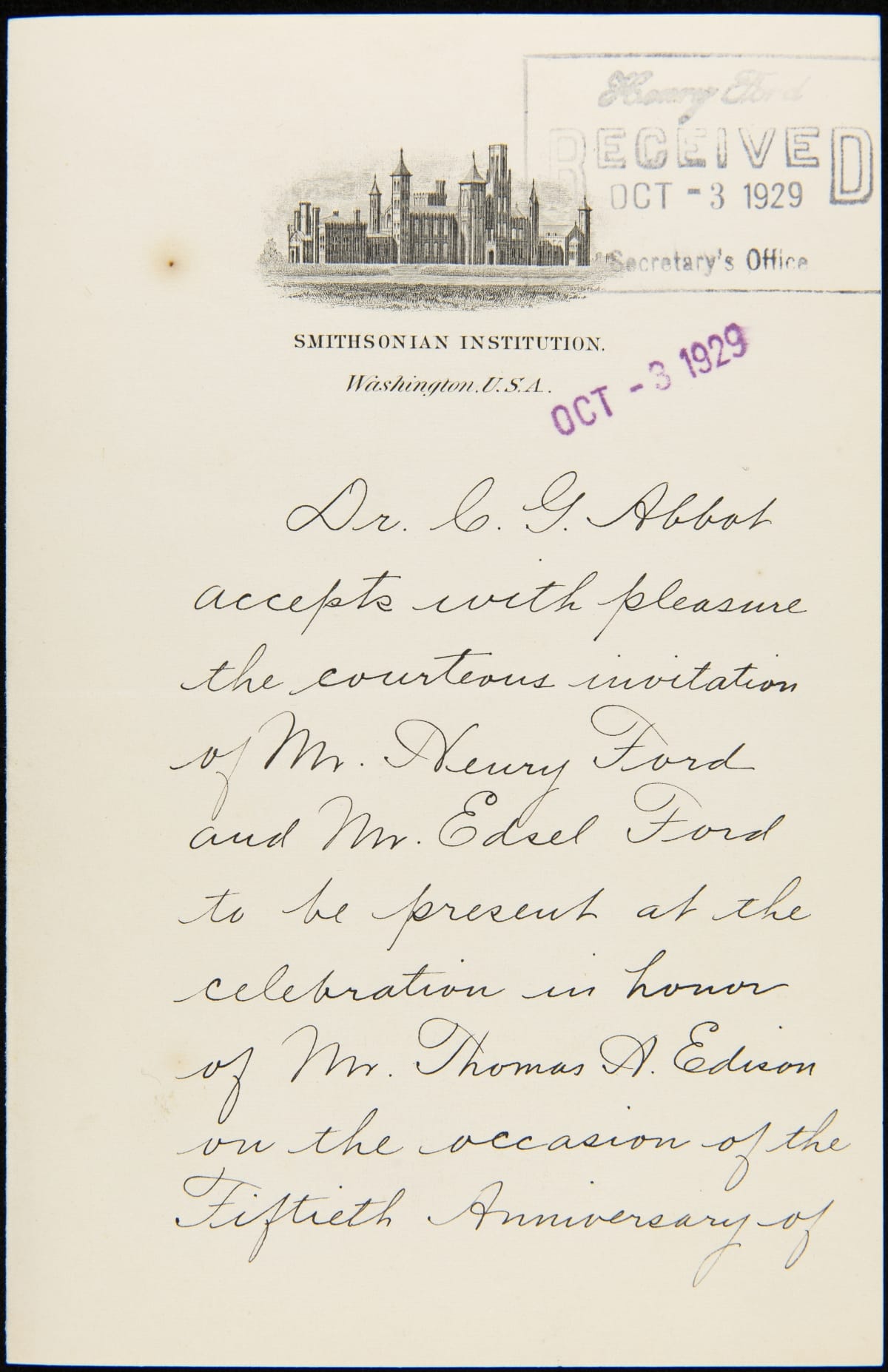
- Letter from Charles Greely (C.G.) Abbot to Henry Ford and Edsel Ford regarding Invitation to Light's Golden Jubilee, October 1, 1929 - On October 21, 1929, Henry Ford hosted an event, Light's Golden Jubilee, which celebrated the 50th anniversary of Thomas Edison's invention of the incandescent lamp. The event also served as the official dedication of The Edison Institute, Ford's museum complex named in honor of his friend. Among the invited guests was Secretary of the Smithsonian Dr. C.G. Abbott, who accepted the Ford's courteous invitation.
- October 21, 1929
- Collections - Artifact
Letter from Charles Greely (C.G.) Abbot to Henry Ford and Edsel Ford regarding Invitation to Light's Golden Jubilee, October 1, 1929
On October 21, 1929, Henry Ford hosted an event, Light's Golden Jubilee, which celebrated the 50th anniversary of Thomas Edison's invention of the incandescent lamp. The event also served as the official dedication of The Edison Institute, Ford's museum complex named in honor of his friend. Among the invited guests was Secretary of the Smithsonian Dr. C.G. Abbott, who accepted the Ford's courteous invitation.
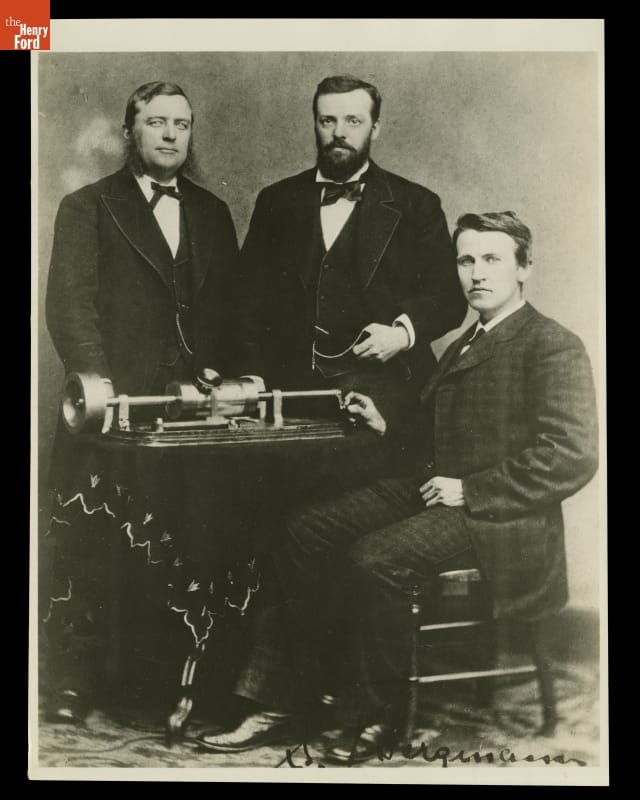
- Thomas Edison, Charles Batchelor, and Uriah Painter with Edison's Phonograph, April 18, 1878 - While in Washington, D.C., for an 1878 presentation to the National Academy of Sciences, inventor Thomas Edison, his lab assistant Charles Batchelor, and Philadelphia Inquirer correspondent Uriah Painter sat for famed Civil War photographer Mathew Brady. They posed with Edison's phonograph, a new invention that could, for the first time, record and reproduce sound. The machine made Edison an overnight celebrity.
- April 18, 1878
- Collections - Artifact
Thomas Edison, Charles Batchelor, and Uriah Painter with Edison's Phonograph, April 18, 1878
While in Washington, D.C., for an 1878 presentation to the National Academy of Sciences, inventor Thomas Edison, his lab assistant Charles Batchelor, and Philadelphia Inquirer correspondent Uriah Painter sat for famed Civil War photographer Mathew Brady. They posed with Edison's phonograph, a new invention that could, for the first time, record and reproduce sound. The machine made Edison an overnight celebrity.
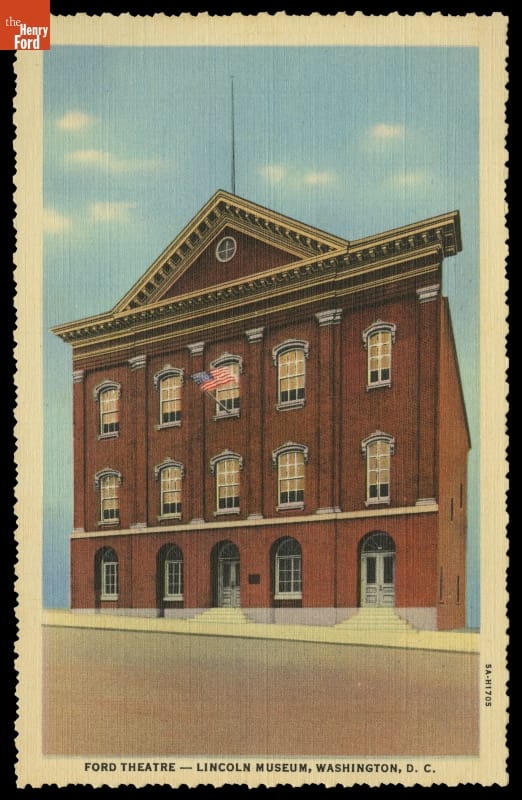
- "Ford Theatre--Lincoln Museum, Washington, D.C.," 1935 Postcard - Abraham Lincoln was assassinated in Ford's Theatre in April 1865. In the fall, the U.S. government leased--and later purchased--the building after an attempt to reopen the theater failed. Over the next sixty-five years the building housed offices and became a warehouse. In 1931, a museum displaying Lincoln memorabilia was created. The theatre returned to its 1865 appearance in the 1960s after Congress appropriated funds for the building's restoration.
- 1935
- Collections - Artifact
"Ford Theatre--Lincoln Museum, Washington, D.C.," 1935 Postcard
Abraham Lincoln was assassinated in Ford's Theatre in April 1865. In the fall, the U.S. government leased--and later purchased--the building after an attempt to reopen the theater failed. Over the next sixty-five years the building housed offices and became a warehouse. In 1931, a museum displaying Lincoln memorabilia was created. The theatre returned to its 1865 appearance in the 1960s after Congress appropriated funds for the building's restoration.
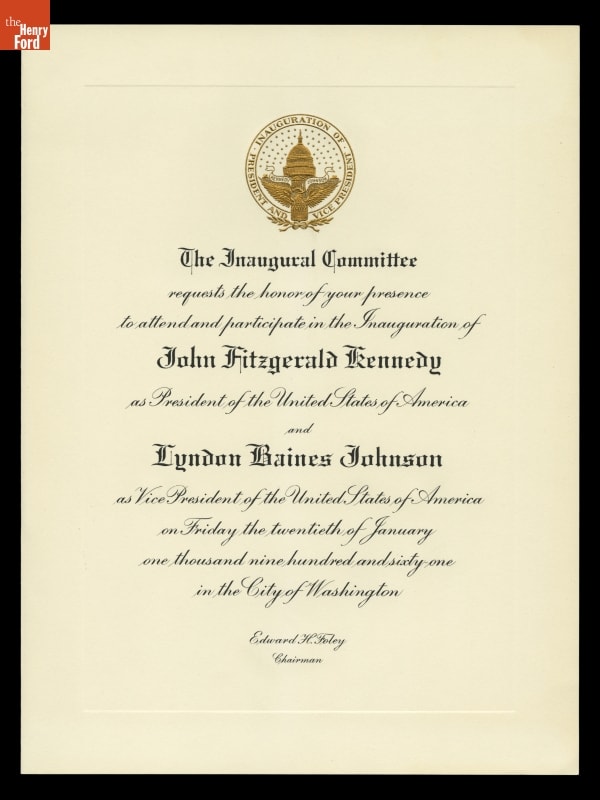
- Invitation to John F. Kennedy Inauguration, January 20, 1961 - Mrs. Arnold J. Zimmer of Detroit, Michigan, received this personal invitation from the Joint Congressional Committee on Inaugural Ceremonies, to attend the inauguration of John F. Kennedy and Lyndon Johnson on January 20, 1961 in Washington, D.C. The recipient was guaranteed a place in a special area where the new president and vice president were to take their oath of office.
- January 20, 1961
- Collections - Artifact
Invitation to John F. Kennedy Inauguration, January 20, 1961
Mrs. Arnold J. Zimmer of Detroit, Michigan, received this personal invitation from the Joint Congressional Committee on Inaugural Ceremonies, to attend the inauguration of John F. Kennedy and Lyndon Johnson on January 20, 1961 in Washington, D.C. The recipient was guaranteed a place in a special area where the new president and vice president were to take their oath of office.
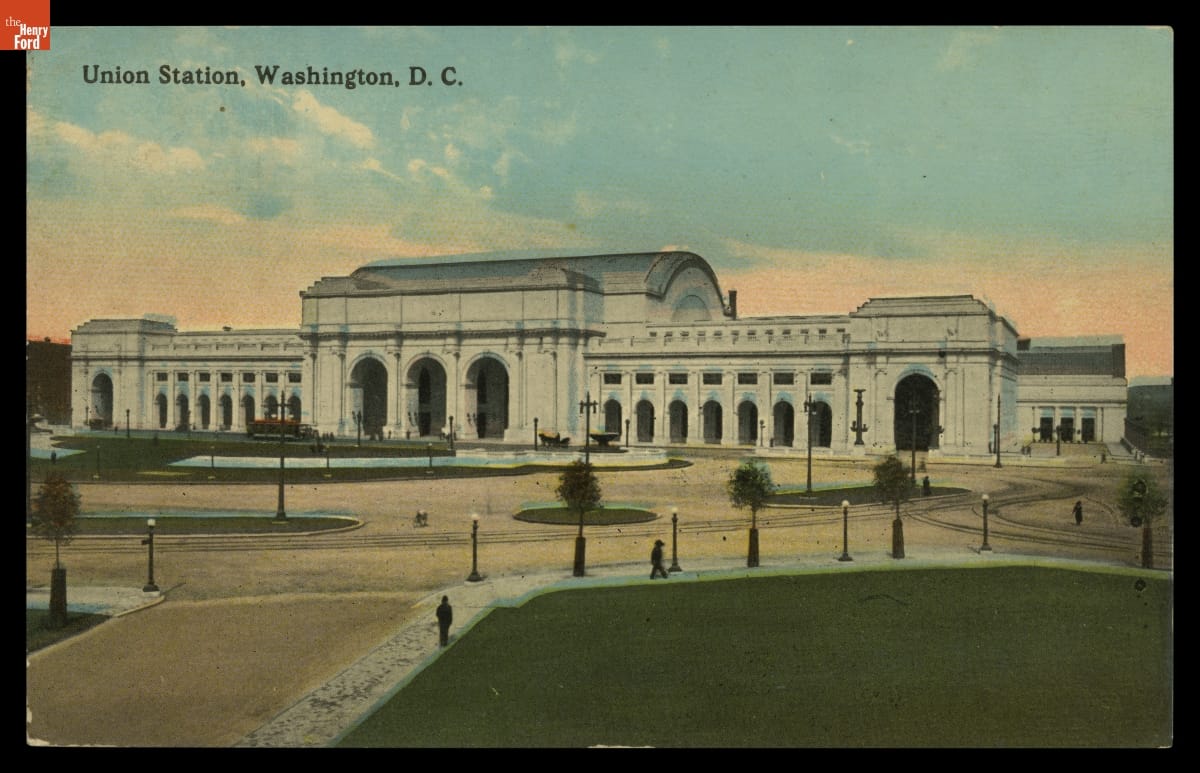
- Union Station, Washington, D.C., circa 1913 - Washington's Union Station was opened by the Baltimore & Ohio and Pennsylvania Railroads in 1907. The monumental building -- well suited to a city of monuments -- was part of a larger project to beautify the nation's capital in the early 1900s. Removal of the Pennsylvania Railroad's previous station, located directly on the National Mall, was a major component of the plan.
- April 27, 1913
- Collections - Artifact
Union Station, Washington, D.C., circa 1913
Washington's Union Station was opened by the Baltimore & Ohio and Pennsylvania Railroads in 1907. The monumental building -- well suited to a city of monuments -- was part of a larger project to beautify the nation's capital in the early 1900s. Removal of the Pennsylvania Railroad's previous station, located directly on the National Mall, was a major component of the plan.