
Search
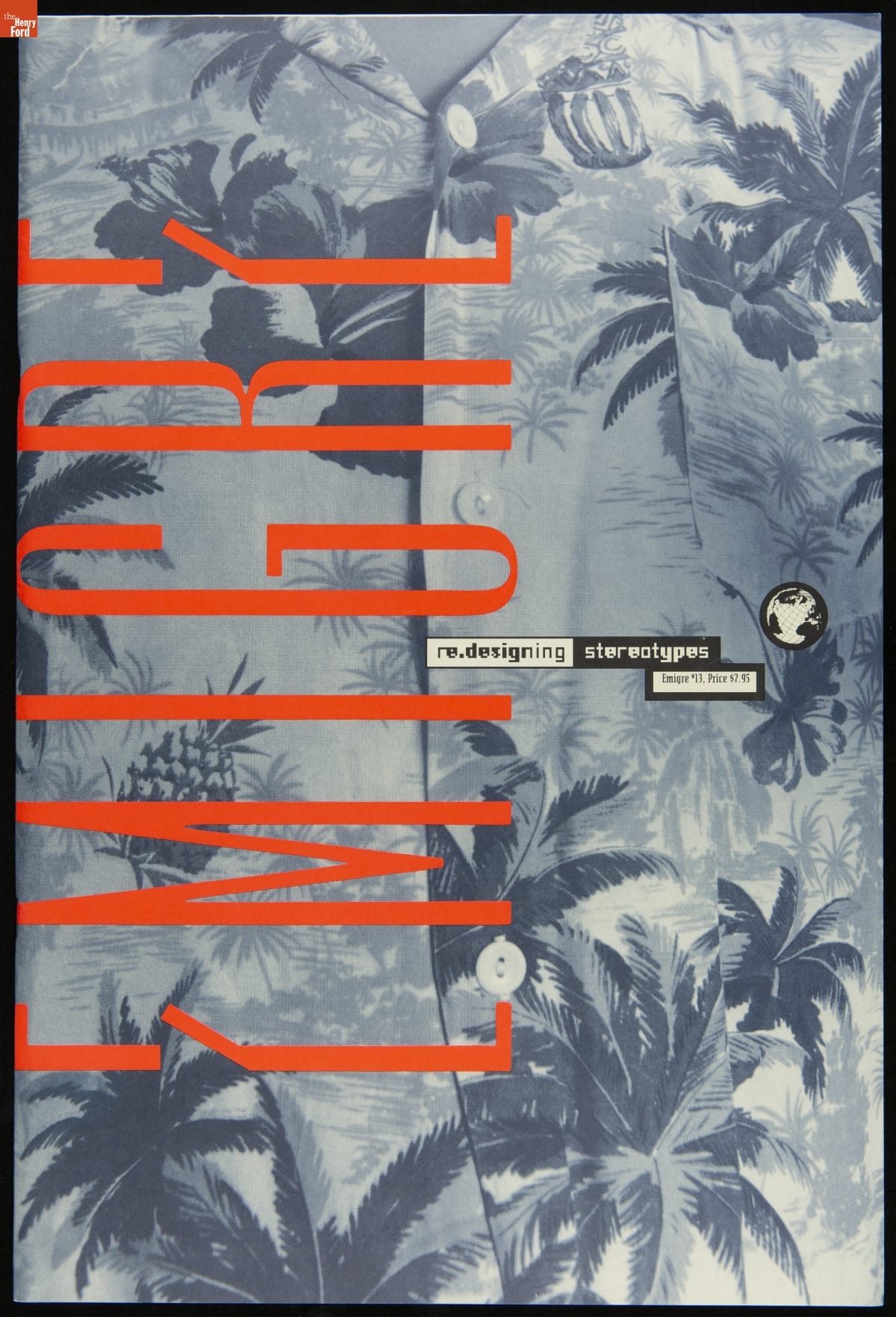
- Magazine, Emigre No. 13, "Redesigning Stereotypes," 1989 - Emigre is a digital type foundry established by Rudy VanderLans and Zuzana Licko. The company's history is linked with the introduction of the 1984 Macintosh computer, used to design their early bitmapped typefaces. Emigre's digital work gained notoriety -- defying visual communication standards with fractured, layered combinations of text and image. <em>Emigre</em> magazine showcased their fonts and promoted groundbreaking designers.
- 1989
- Collections - Artifact
Magazine, Emigre No. 13, "Redesigning Stereotypes," 1989
Emigre is a digital type foundry established by Rudy VanderLans and Zuzana Licko. The company's history is linked with the introduction of the 1984 Macintosh computer, used to design their early bitmapped typefaces. Emigre's digital work gained notoriety -- defying visual communication standards with fractured, layered combinations of text and image. Emigre magazine showcased their fonts and promoted groundbreaking designers.
- Banana Tree, Hawaii, 1906 -
- 1906
- Collections - Artifact
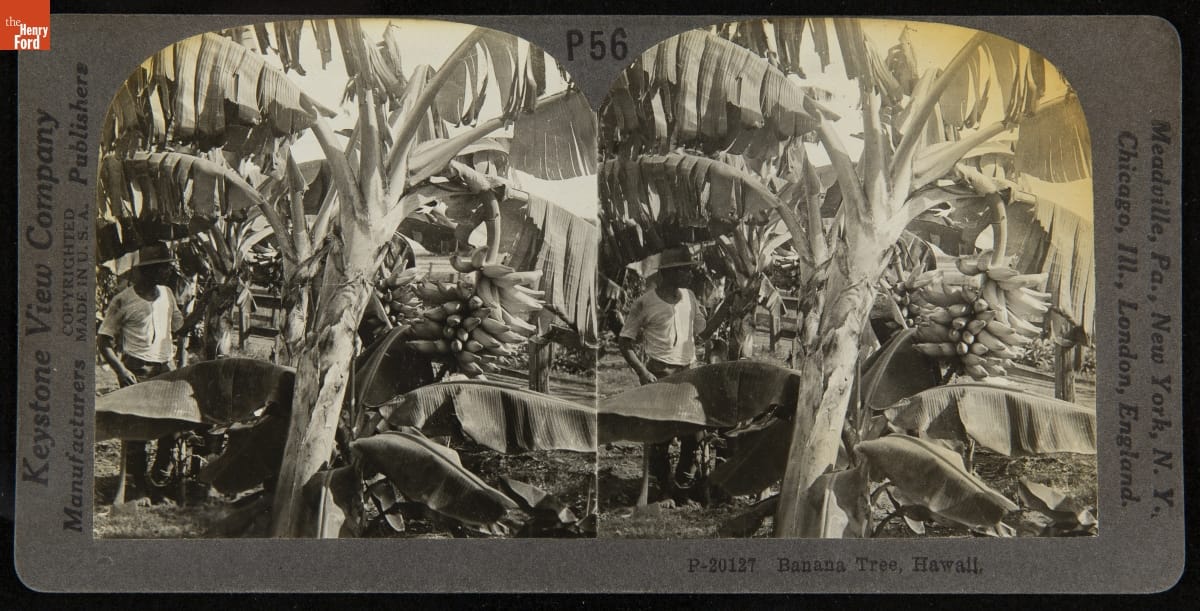
Banana Tree, Hawaii, 1906
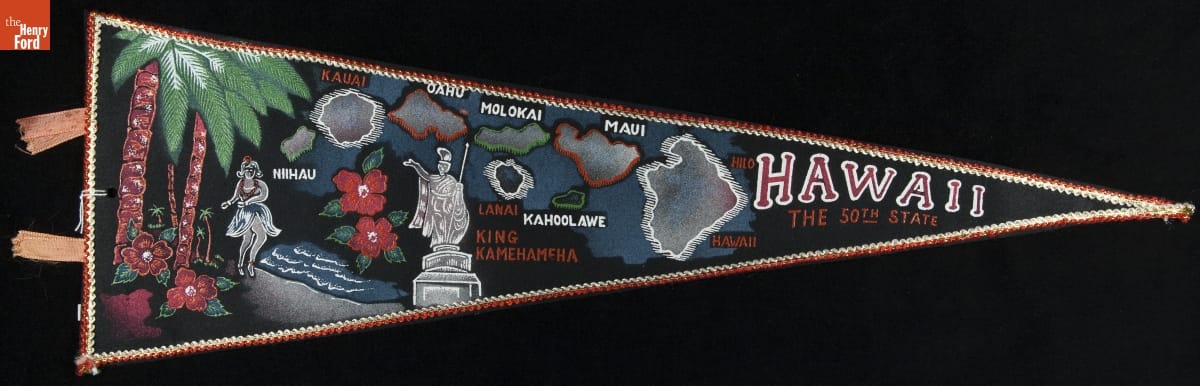
- Pennant, "Hawaii, The 50th State," 1958-1968 - Tourists purchase simple, inexpensive souvenirs as proof of their travels. These mementos transport vacationers back to the places they visited and the things they did. In the mid-20th century, felt pennants were trendy. This colorful pennant provided visitors returning from Hawaii -- the most recent state to enter the Union -- a map of the Pacific islands grouping along with other tropical scenes.
- 1958-1968
- Collections - Artifact
Pennant, "Hawaii, The 50th State," 1958-1968
Tourists purchase simple, inexpensive souvenirs as proof of their travels. These mementos transport vacationers back to the places they visited and the things they did. In the mid-20th century, felt pennants were trendy. This colorful pennant provided visitors returning from Hawaii -- the most recent state to enter the Union -- a map of the Pacific islands grouping along with other tropical scenes.
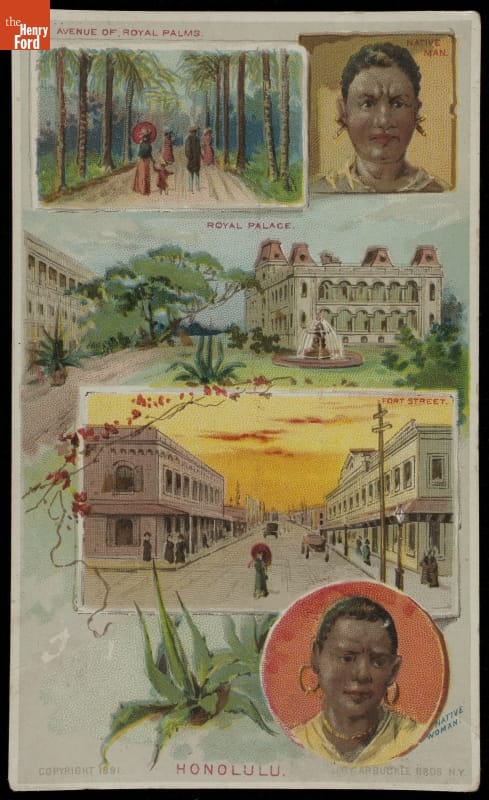
- Trade Card for Ariosa Coffee, Arbuckle Bros., "Honolulu," 1891 - In the last third of the nineteenth century, an unprecedented variety of consumer goods and services flooded the American market. Advertisers, armed with new methods of color printing, bombarded potential customers with trade cards. Americans enjoyed and often saved the vibrant little advertisements found in product packages or distributed by local merchants. Many survive as historical records of commercialism in the United States.
- 1891
- Collections - Artifact
Trade Card for Ariosa Coffee, Arbuckle Bros., "Honolulu," 1891
In the last third of the nineteenth century, an unprecedented variety of consumer goods and services flooded the American market. Advertisers, armed with new methods of color printing, bombarded potential customers with trade cards. Americans enjoyed and often saved the vibrant little advertisements found in product packages or distributed by local merchants. Many survive as historical records of commercialism in the United States.
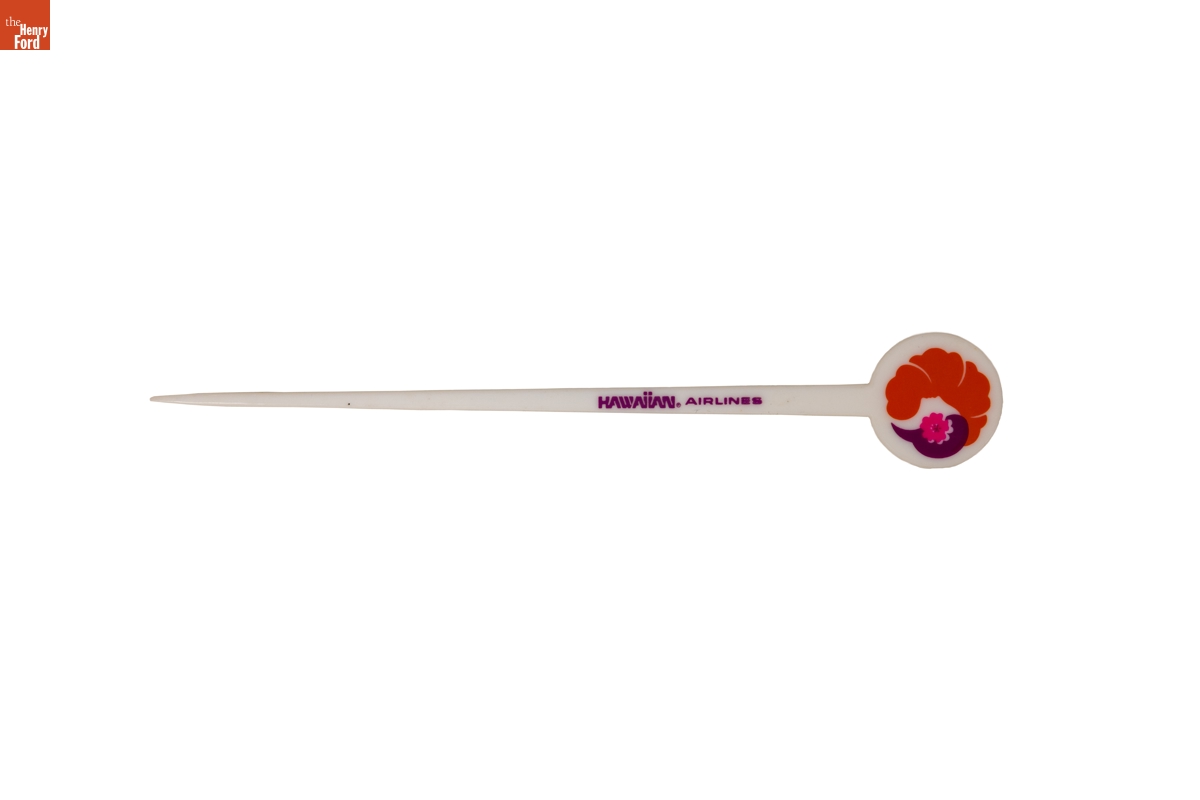
- Hawaiian Airlines Swizzle Stick, 1995-2001 - Diane Beers joined TWA as a flight attendant in 1965 but left to marry Richard Hill a year later -- a time when many airlines employed only single women in that job. Beers Hill continued her interest in the aviation industry. Her memorabilia collection included many airline swizzle sticks and stirrers for cocktails and coffee -- some delightfully shaped like airplane propellers.
- 1995-2001
- Collections - Artifact
Hawaiian Airlines Swizzle Stick, 1995-2001
Diane Beers joined TWA as a flight attendant in 1965 but left to marry Richard Hill a year later -- a time when many airlines employed only single women in that job. Beers Hill continued her interest in the aviation industry. Her memorabilia collection included many airline swizzle sticks and stirrers for cocktails and coffee -- some delightfully shaped like airplane propellers.
- Photograph Album, California Packing Corporation Hawaii Pineapple Operations, circa 1950 -

- circa 1950
- Collections - Artifact
Photograph Album, California Packing Corporation Hawaii Pineapple Operations, circa 1950
- Photograph Album, California Packing Corporation Operations, circa 1922 -
- circa 1922
- Collections - Artifact
Photograph Album, California Packing Corporation Operations, circa 1922
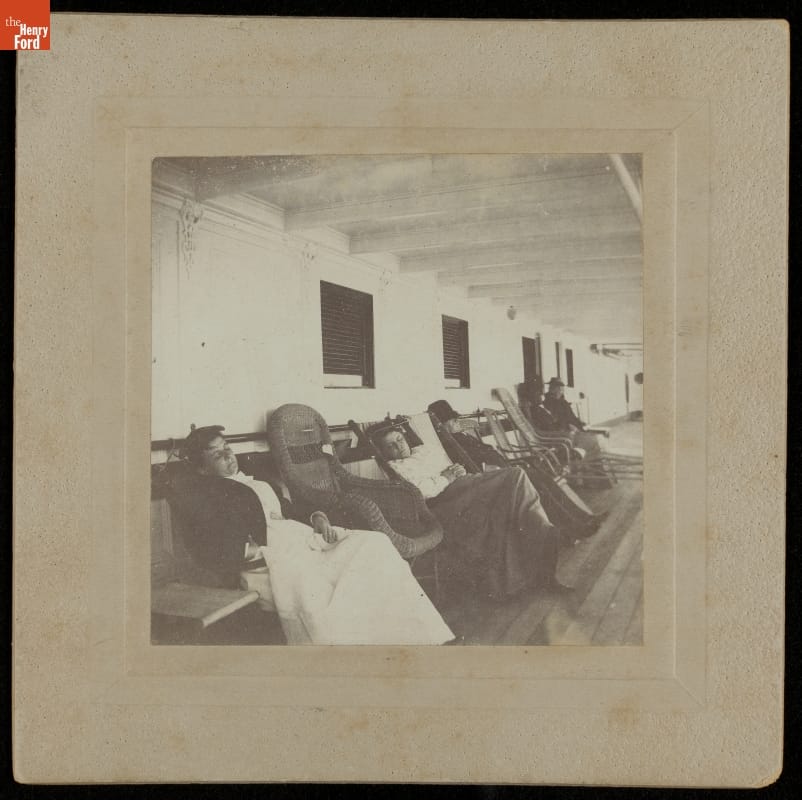
- Passengers Sleeping on Steamship Deck during Pacific Voyage, 1897 -
- October 01, 1897
- Collections - Artifact
Passengers Sleeping on Steamship Deck during Pacific Voyage, 1897
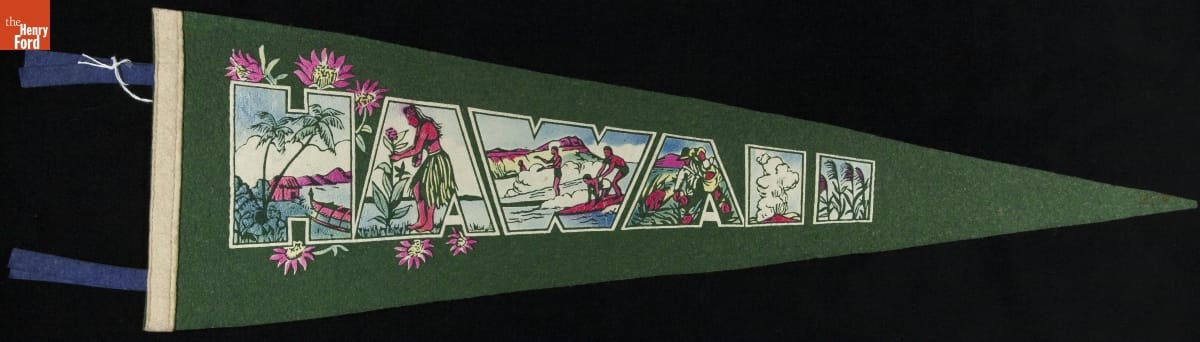
- Pennant, "Hawaii," 1950-1959 - Tourists purchase simple, inexpensive souvenirs as proof of their travels. These mementos transport vacationers back to the places they visited and the things they did. In the mid-20th century, felt pennants were trendy. This pennant shows a number of tropical scenes visitors may have seen on their trip to the Hawaii.
- 1950-1959
- Collections - Artifact
Pennant, "Hawaii," 1950-1959
Tourists purchase simple, inexpensive souvenirs as proof of their travels. These mementos transport vacationers back to the places they visited and the things they did. In the mid-20th century, felt pennants were trendy. This pennant shows a number of tropical scenes visitors may have seen on their trip to the Hawaii.
- Amelia Earhart in Hawaii before Her Flight to California in January 1935 - Amelia Earhart was among the best-known pilots of her day. She earned her license in 1923 and proceeded to set several records. She became the first woman to fly solo across the Atlantic in 1932, and the first person to fly solo from Hawaii to California in 1935. Earhart disappeared during an around-the-world flight in 1937, but her fame endured.
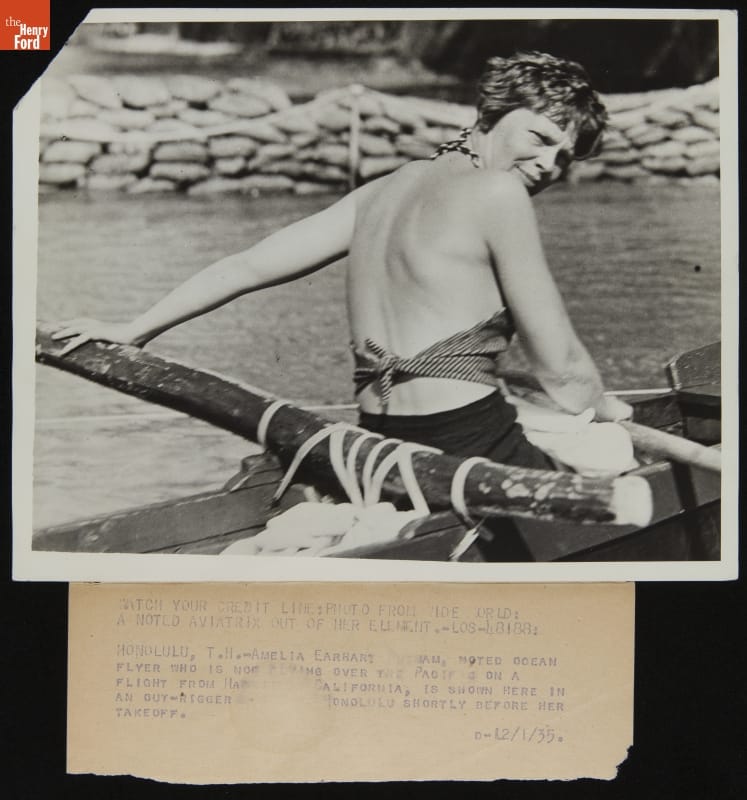
- December 01, 1934
- Collections - Artifact
Amelia Earhart in Hawaii before Her Flight to California in January 1935
Amelia Earhart was among the best-known pilots of her day. She earned her license in 1923 and proceeded to set several records. She became the first woman to fly solo across the Atlantic in 1932, and the first person to fly solo from Hawaii to California in 1935. Earhart disappeared during an around-the-world flight in 1937, but her fame endured.