
Search
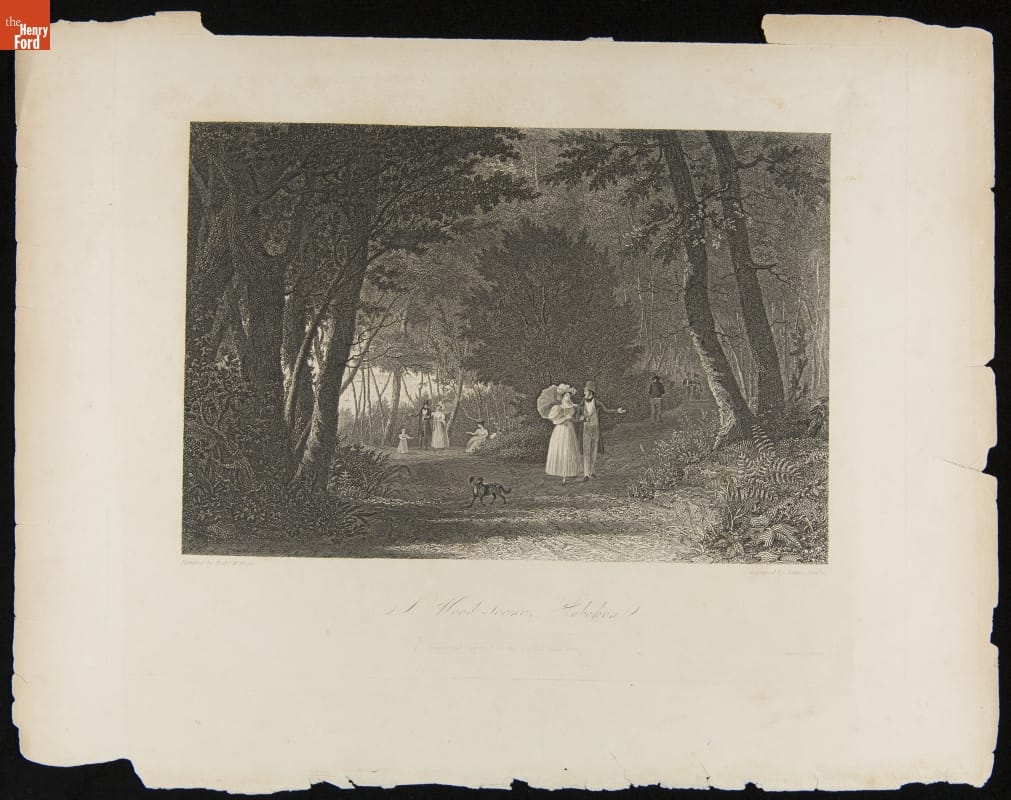
- "A Wood Scene, Hoboken," 1832 Engraving -
- July 07, 1832
- Collections - Artifact
"A Wood Scene, Hoboken," 1832 Engraving
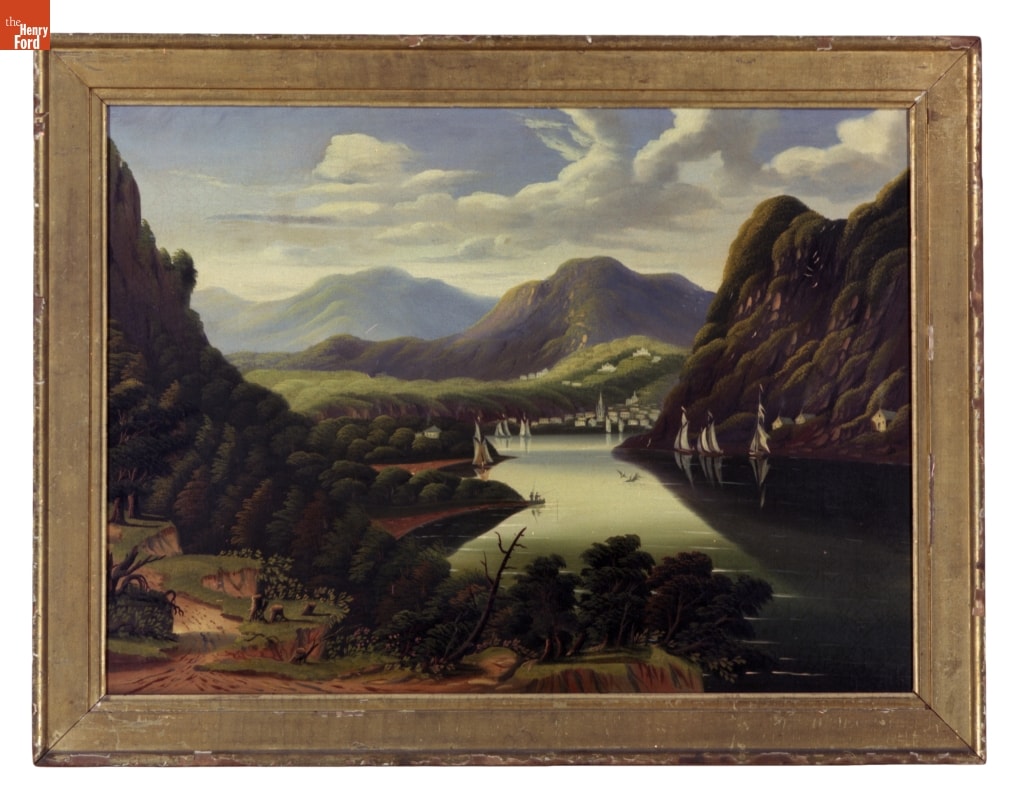
- "View near Anthony's Nose, Hudson Highlands," by Thomas Chambers, 1840-1850 -
- 1840-1850
- Collections - Artifact
"View near Anthony's Nose, Hudson Highlands," by Thomas Chambers, 1840-1850
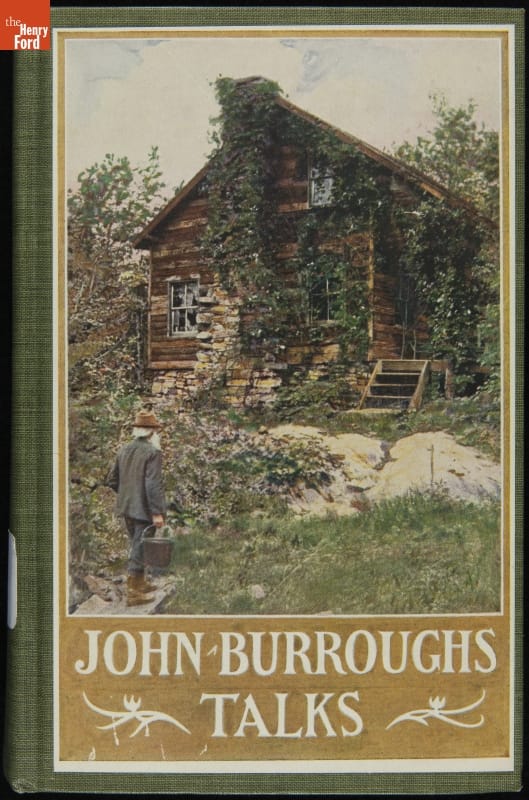
- John Burroughs Talks: His Reminiscences and Comments as Reported by Clifton Johnson, 1922 -
- 1922
- Collections - Artifact
John Burroughs Talks: His Reminiscences and Comments as Reported by Clifton Johnson, 1922
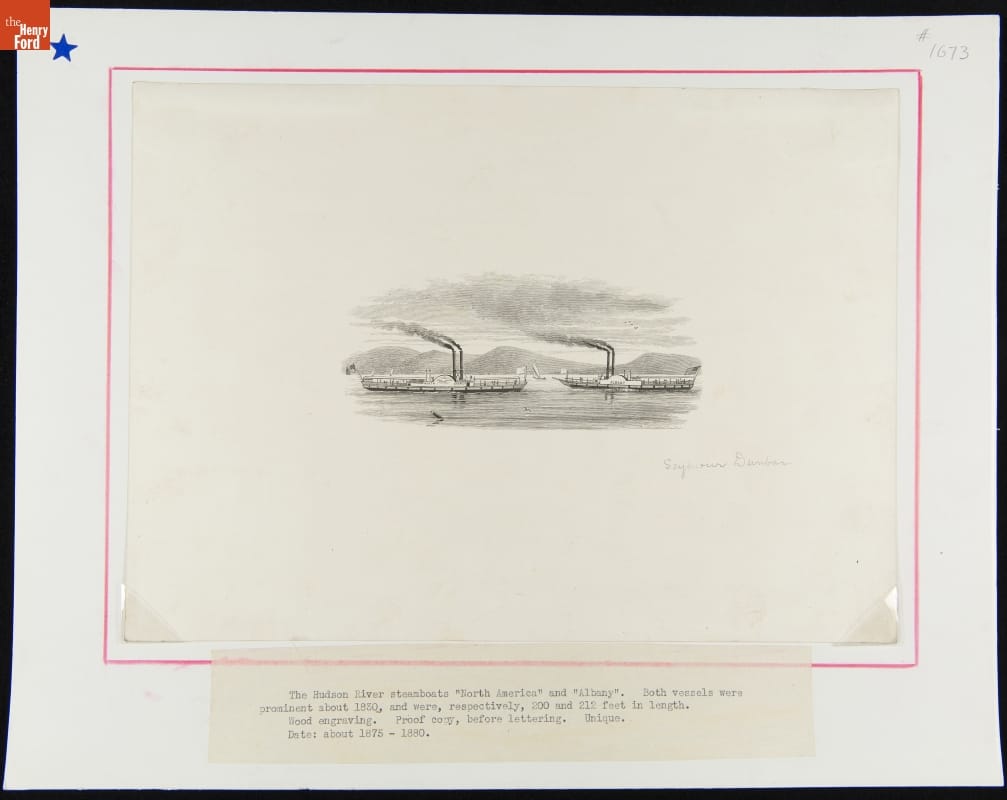
- The Hudson River Steamboats "North America" and "Albany," Wood Engraving, 1875-1880 - Robert Fulton operated the world's first commercially successful steamboat, <i>Clermont</i>, on the Hudson River in 1807. The Hudson was broad, deep and straight for many of the 150 miles between New York City and Albany. By the 1860s, steam-powered boats could cover that distance in about nine hours. Spacious, well-equipped steamboats offered a uniquely pleasant way to travel.
- circa 1830
- Collections - Artifact
The Hudson River Steamboats "North America" and "Albany," Wood Engraving, 1875-1880
Robert Fulton operated the world's first commercially successful steamboat, Clermont, on the Hudson River in 1807. The Hudson was broad, deep and straight for many of the 150 miles between New York City and Albany. By the 1860s, steam-powered boats could cover that distance in about nine hours. Spacious, well-equipped steamboats offered a uniquely pleasant way to travel.
- Five River Steamboats (as Depicted 1824-1837), Wood Engraving, circa 1880 - Robert Fulton operated the world's first commercially successful steamboat, <i>Clermont</i>, on the Hudson River in 1807. The Hudson was broad, deep and straight for many of the 150 miles between New York City and Albany. By the 1860s, steam-powered boats could cover that distance in about nine hours. Spacious, well-equipped steamboats offered a uniquely pleasant way to travel.
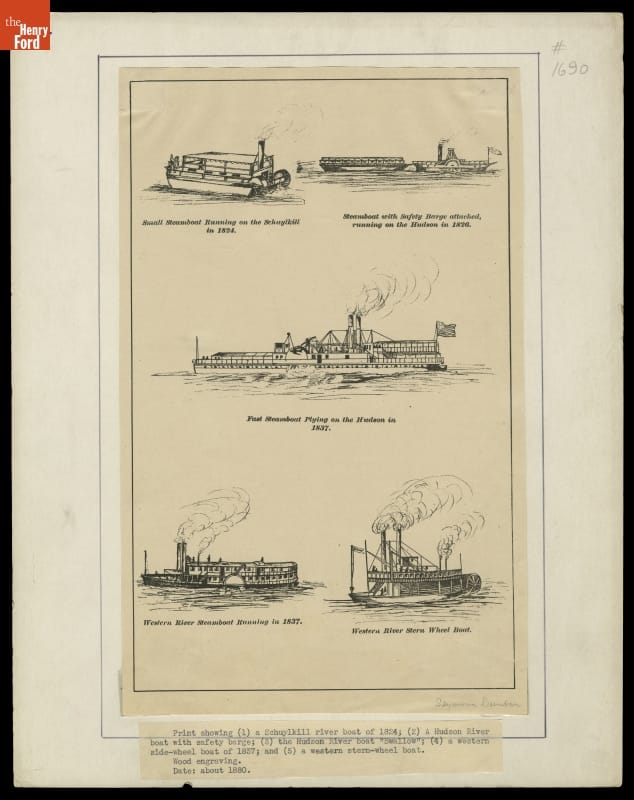
- 1824-1837
- Collections - Artifact
Five River Steamboats (as Depicted 1824-1837), Wood Engraving, circa 1880
Robert Fulton operated the world's first commercially successful steamboat, Clermont, on the Hudson River in 1807. The Hudson was broad, deep and straight for many of the 150 miles between New York City and Albany. By the 1860s, steam-powered boats could cover that distance in about nine hours. Spacious, well-equipped steamboats offered a uniquely pleasant way to travel.
- Letter from Benedict Arnold to George Clinton, Governor of New York, August 22, 1780 - This is the letter that made "Benedict Arnold" synonymous with "traitor." Arnold, a talented Continental Army general, had grown leery of the Continental Congress. He wrote for permission to make repairs at West Point, but really intended to weaken the fort and surrender it to the British. Arnold's plot was ultimately foiled, but his attempted treason shocked the nation.
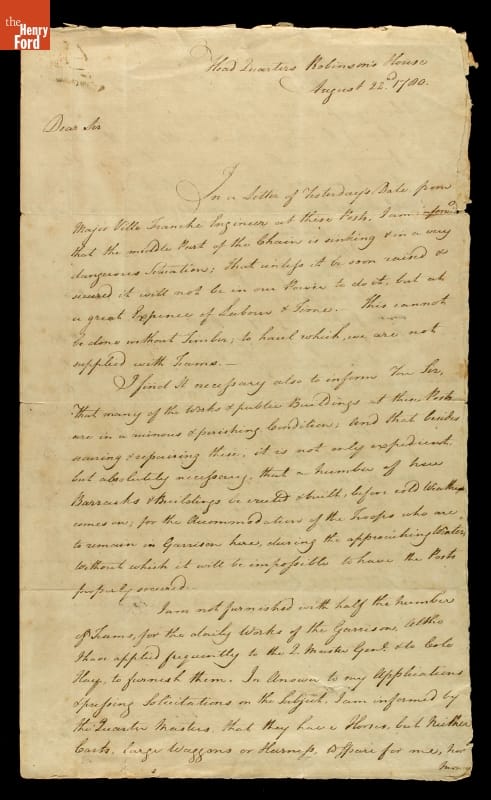
- August 22, 1780
- Collections - Artifact
Letter from Benedict Arnold to George Clinton, Governor of New York, August 22, 1780
This is the letter that made "Benedict Arnold" synonymous with "traitor." Arnold, a talented Continental Army general, had grown leery of the Continental Congress. He wrote for permission to make repairs at West Point, but really intended to weaken the fort and surrender it to the British. Arnold's plot was ultimately foiled, but his attempted treason shocked the nation.
- "Sandy Hook Steamer 'Asbury Park'," 1909 - The <EM>Asbury Park</EM> was a high-speed coastal steamer that transported well-to-do vacationers from New York City to their summer homes on the New Jersey shore. In this photograph, the steamer is taking part in the Hudson-Fulton Celebration, commemorating both Henry Hudson's discovery of the Hudson River and Robert Fulton's first successful commercial application of the paddle steamer.
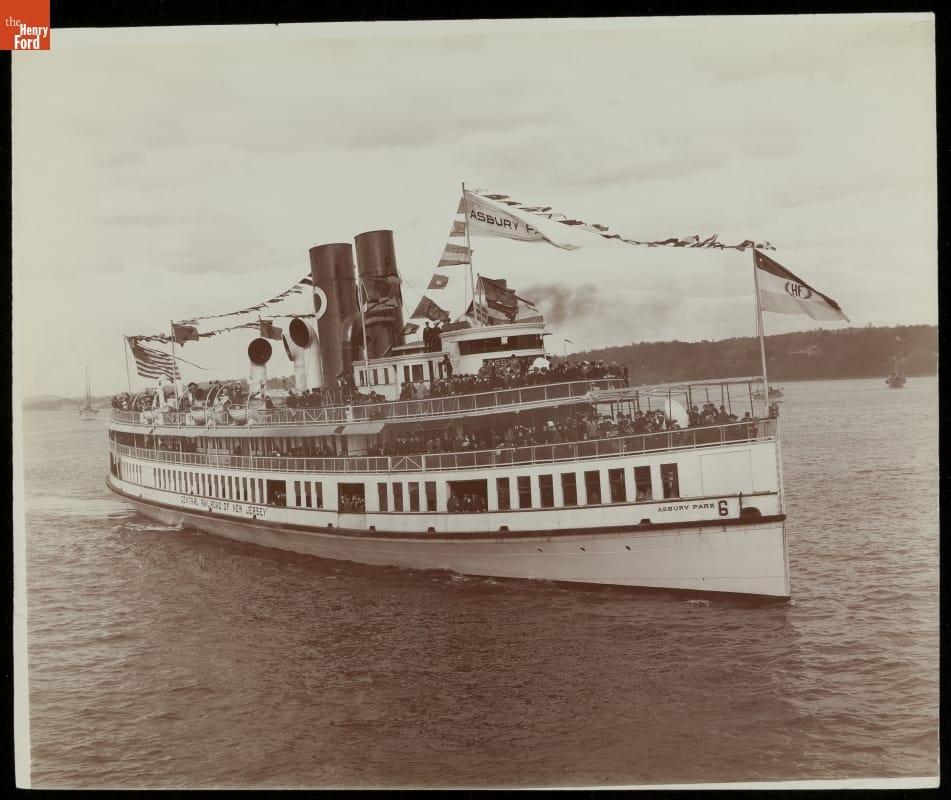
- 1909
- Collections - Artifact
"Sandy Hook Steamer 'Asbury Park'," 1909
The Asbury Park was a high-speed coastal steamer that transported well-to-do vacationers from New York City to their summer homes on the New Jersey shore. In this photograph, the steamer is taking part in the Hudson-Fulton Celebration, commemorating both Henry Hudson's discovery of the Hudson River and Robert Fulton's first successful commercial application of the paddle steamer.
- Letters from James Clinton to Colonel Hughes and General McDougall about the Hudson River "Great Chain" at West Point, 1778 -
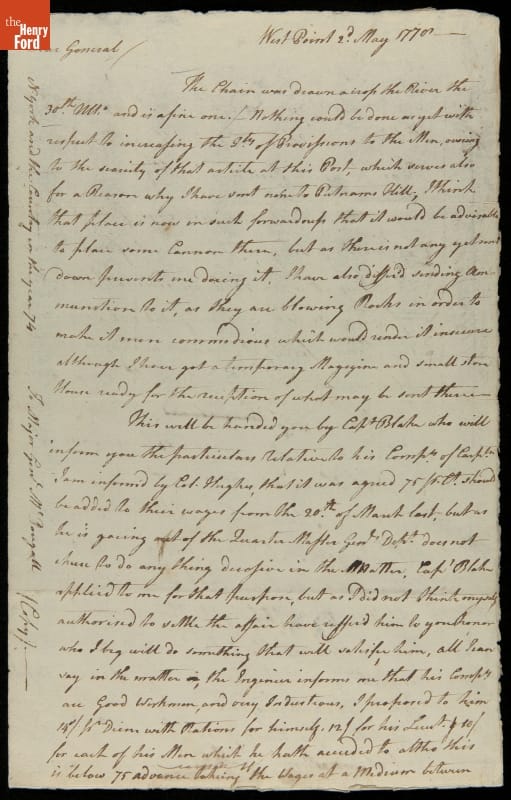
- May 02, 1778
- Collections - Artifact
Letters from James Clinton to Colonel Hughes and General McDougall about the Hudson River "Great Chain" at West Point, 1778
- Ribbon Commemorating the Completion of the Erie Canal, 1825 - One of the earliest known labor organization ribbons, this silk ribbon was worn by members of the New York Typographical Association in a parade celebrating the completion of the Erie and Hudson Canal in 1825. Labor organizations commonly took part in civic celebrations as evidence of their prestige and contributions to the commonwealth.
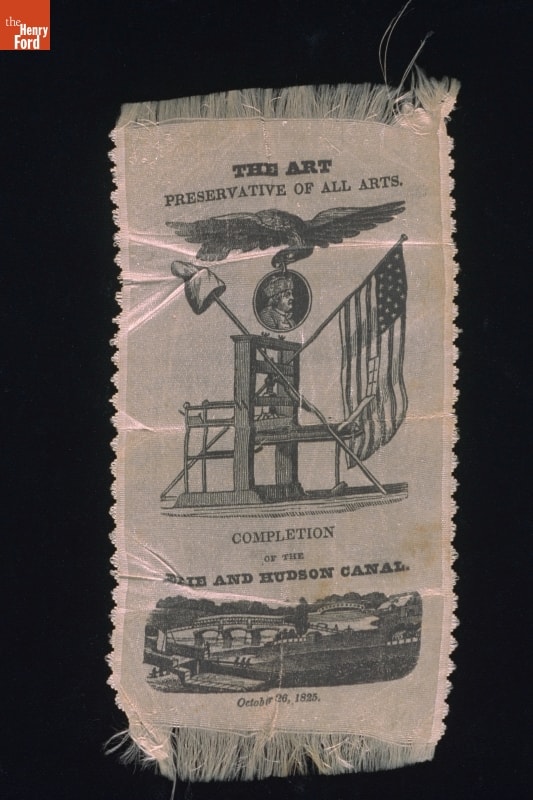
- October 26, 1825
- Collections - Artifact
Ribbon Commemorating the Completion of the Erie Canal, 1825
One of the earliest known labor organization ribbons, this silk ribbon was worn by members of the New York Typographical Association in a parade celebrating the completion of the Erie and Hudson Canal in 1825. Labor organizations commonly took part in civic celebrations as evidence of their prestige and contributions to the commonwealth.
- Last Stopping Point on Manhattan Island - Boys Cruise Hudson River, 1890-1915 - In 1890, Jenny Young Chandler, 25 years old and recently widowed, began working for the <EM>New York Herald</EM>. As a photojournalist and feature writer, Chandler captured life in Brooklyn, New York, and vicinity. By 1922, the time of her death, she had produced over 800 glass plate negatives. Her sensitive, insightful photographs depict people from all walks of life and the world in which they lived.
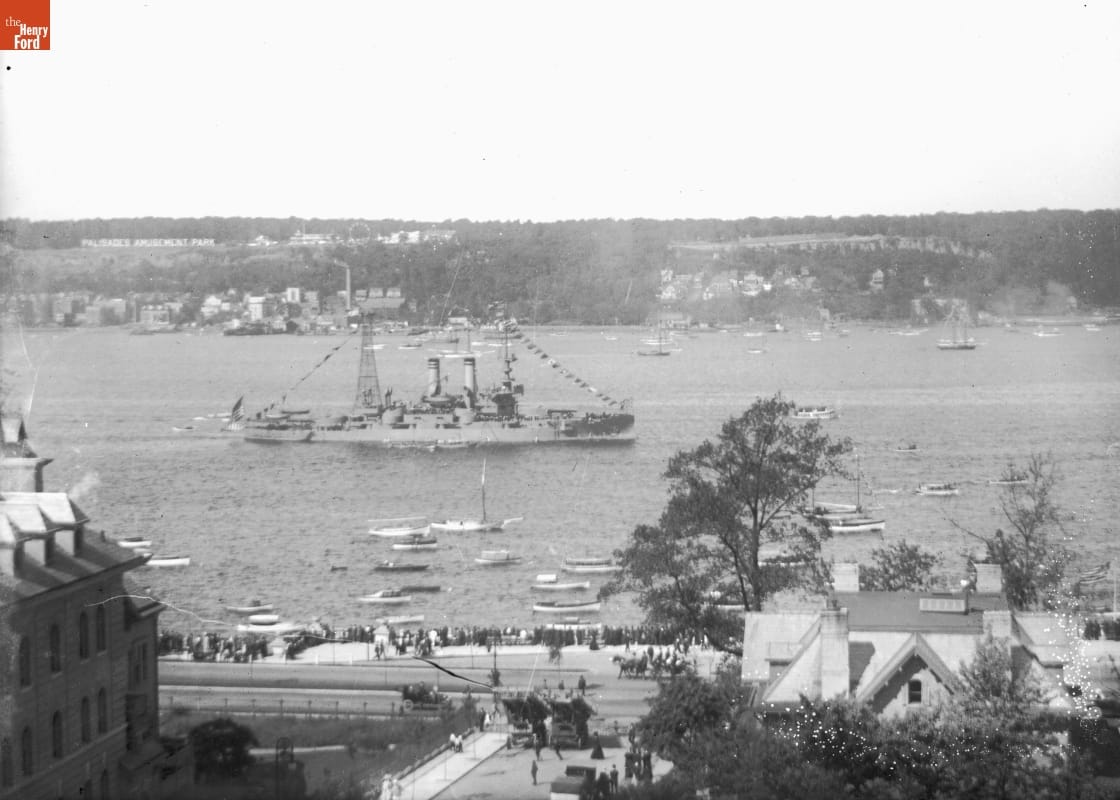
- 1890-1915
- Collections - Artifact
Last Stopping Point on Manhattan Island - Boys Cruise Hudson River, 1890-1915
In 1890, Jenny Young Chandler, 25 years old and recently widowed, began working for the New York Herald. As a photojournalist and feature writer, Chandler captured life in Brooklyn, New York, and vicinity. By 1922, the time of her death, she had produced over 800 glass plate negatives. Her sensitive, insightful photographs depict people from all walks of life and the world in which they lived.