
Search
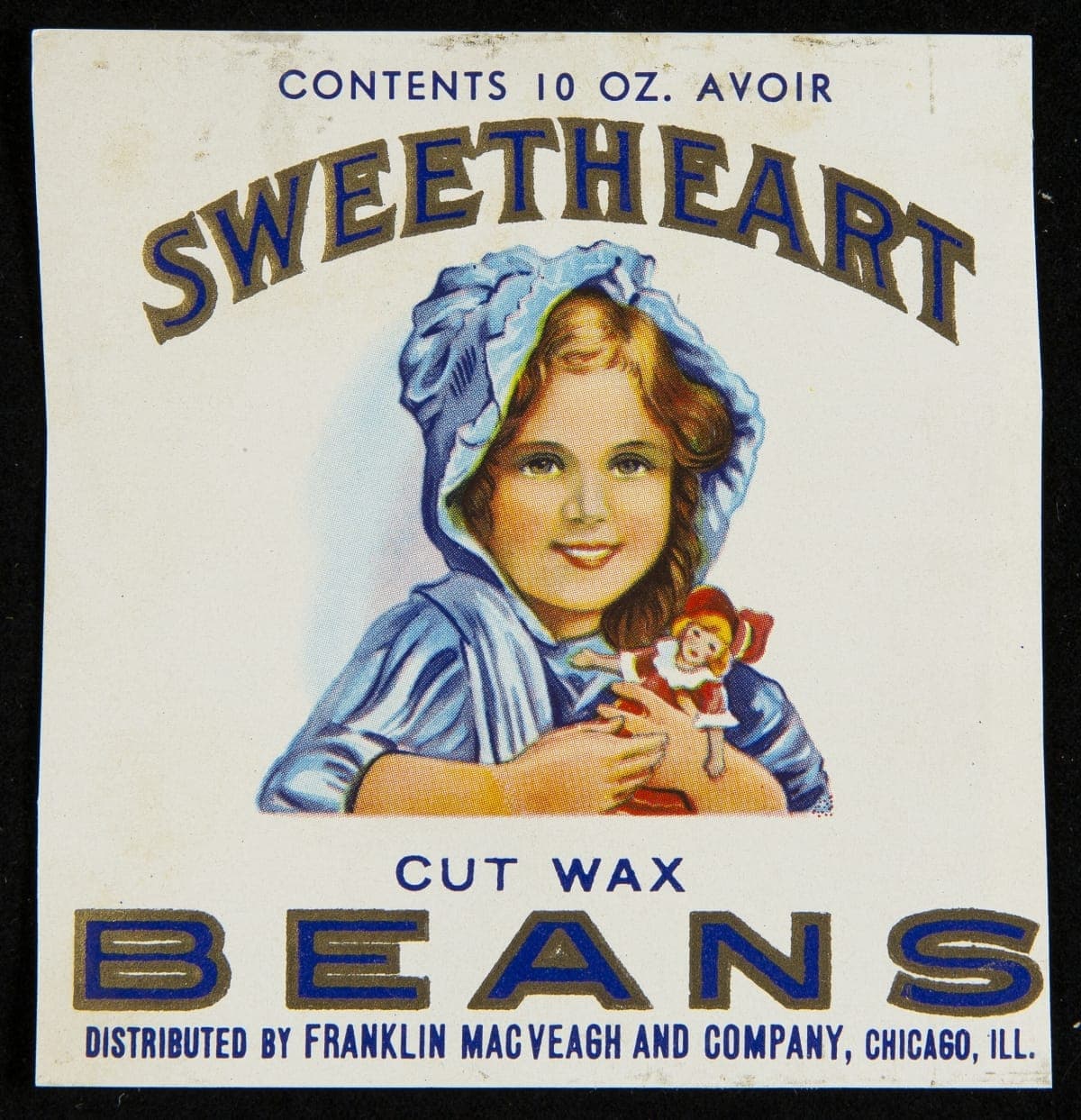
- Crate Label, "Sweetheart Brand Beans," circa 1930 - In 1869, the transcontinental railroad opened eastern markets to the West Coast produce industry for the first time. As produce companies shipped crates of fruits and vegetables across the country, they needed a way to distinguish their goods from their competitors'. Colorful, eye-catching labels, like this one for Sweetheart Brand Beans, were created to attract grocers purchasing goods from wholesale markets.
- circa 1930
- Collections - Artifact
Crate Label, "Sweetheart Brand Beans," circa 1930
In 1869, the transcontinental railroad opened eastern markets to the West Coast produce industry for the first time. As produce companies shipped crates of fruits and vegetables across the country, they needed a way to distinguish their goods from their competitors'. Colorful, eye-catching labels, like this one for Sweetheart Brand Beans, were created to attract grocers purchasing goods from wholesale markets.
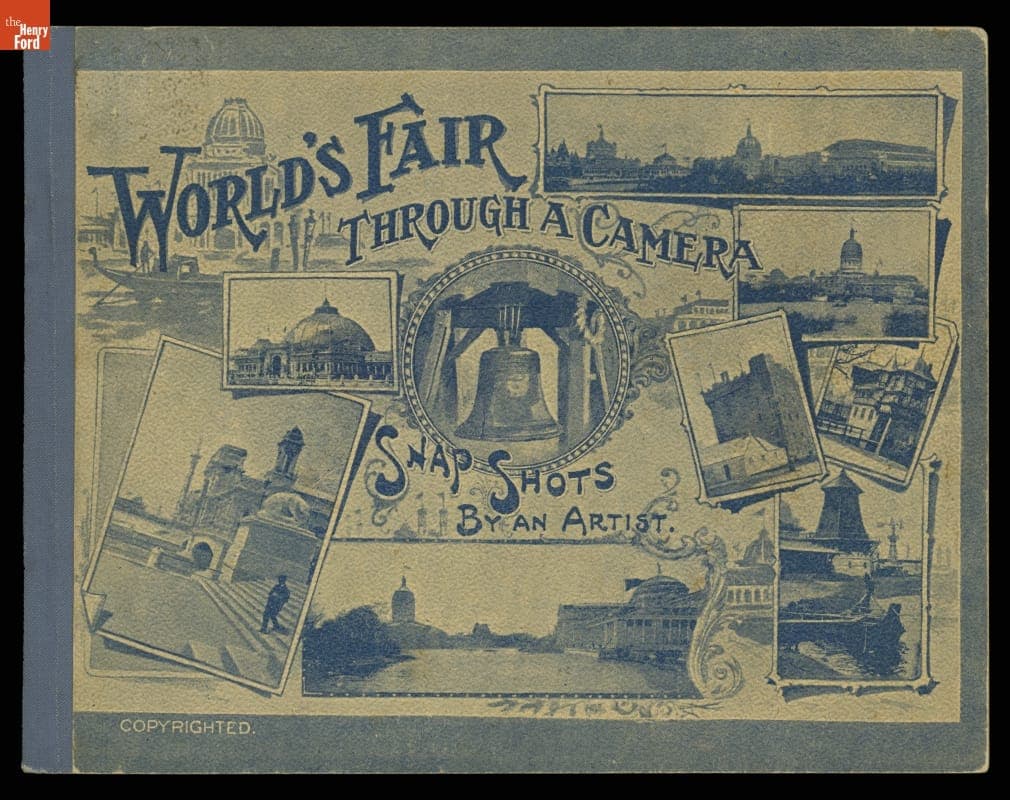
- Souvenir Book, "World's Fair through a Camera," 1893 - More than 25 million visitors attended the World's Columbian Exposition held in Chicago, Illinois, in 1893. The fair celebrated the 400th anniversary of Christopher Columbus's landing in America. Many fairgoers returned home with mementos to help relive their experience at the exposition. This souvenir photograph book contains images of the buildings, grounds, and "other views of general interest."
- 1893
- Collections - Artifact
Souvenir Book, "World's Fair through a Camera," 1893
More than 25 million visitors attended the World's Columbian Exposition held in Chicago, Illinois, in 1893. The fair celebrated the 400th anniversary of Christopher Columbus's landing in America. Many fairgoers returned home with mementos to help relive their experience at the exposition. This souvenir photograph book contains images of the buildings, grounds, and "other views of general interest."
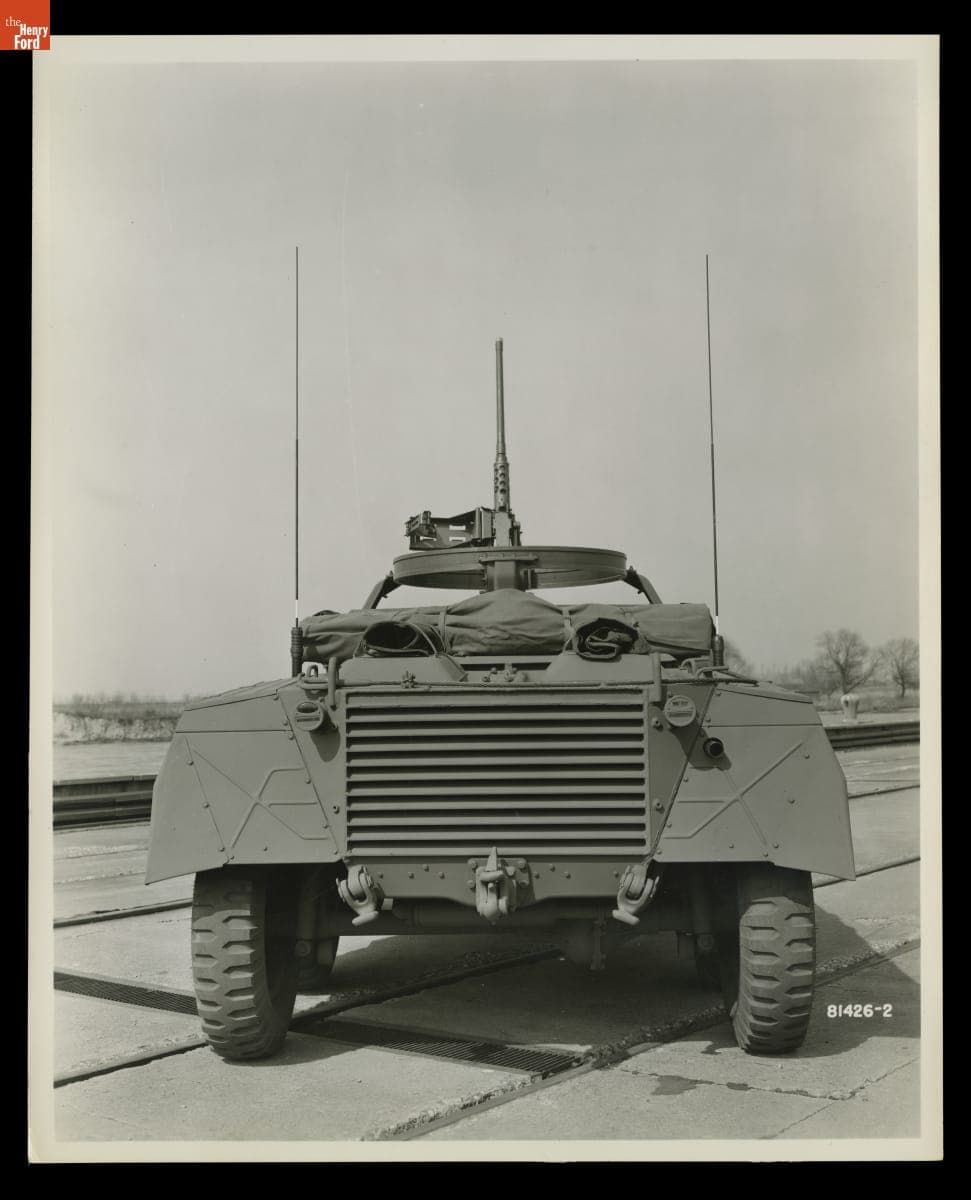
- M20 Armored Car Built at the Ford Motor Company Chicago Assembly Plant, March 1945 - Ford's T-26 Command Car, designated M20 by the U.S. Army, combined speed with protection. The vehicle featured six-wheel drive, a cruising range of 400 miles, and a top speed of 56 miles per hour. Armor plating, up to 3/4-inch thick, and a top-mounted .50 caliber machine gun provided further defense. Ford built 3,791 M20 vehicles, all at its Chicago plant.
- March 12, 1945
- Collections - Artifact
M20 Armored Car Built at the Ford Motor Company Chicago Assembly Plant, March 1945
Ford's T-26 Command Car, designated M20 by the U.S. Army, combined speed with protection. The vehicle featured six-wheel drive, a cruising range of 400 miles, and a top speed of 56 miles per hour. Armor plating, up to 3/4-inch thick, and a top-mounted .50 caliber machine gun provided further defense. Ford built 3,791 M20 vehicles, all at its Chicago plant.
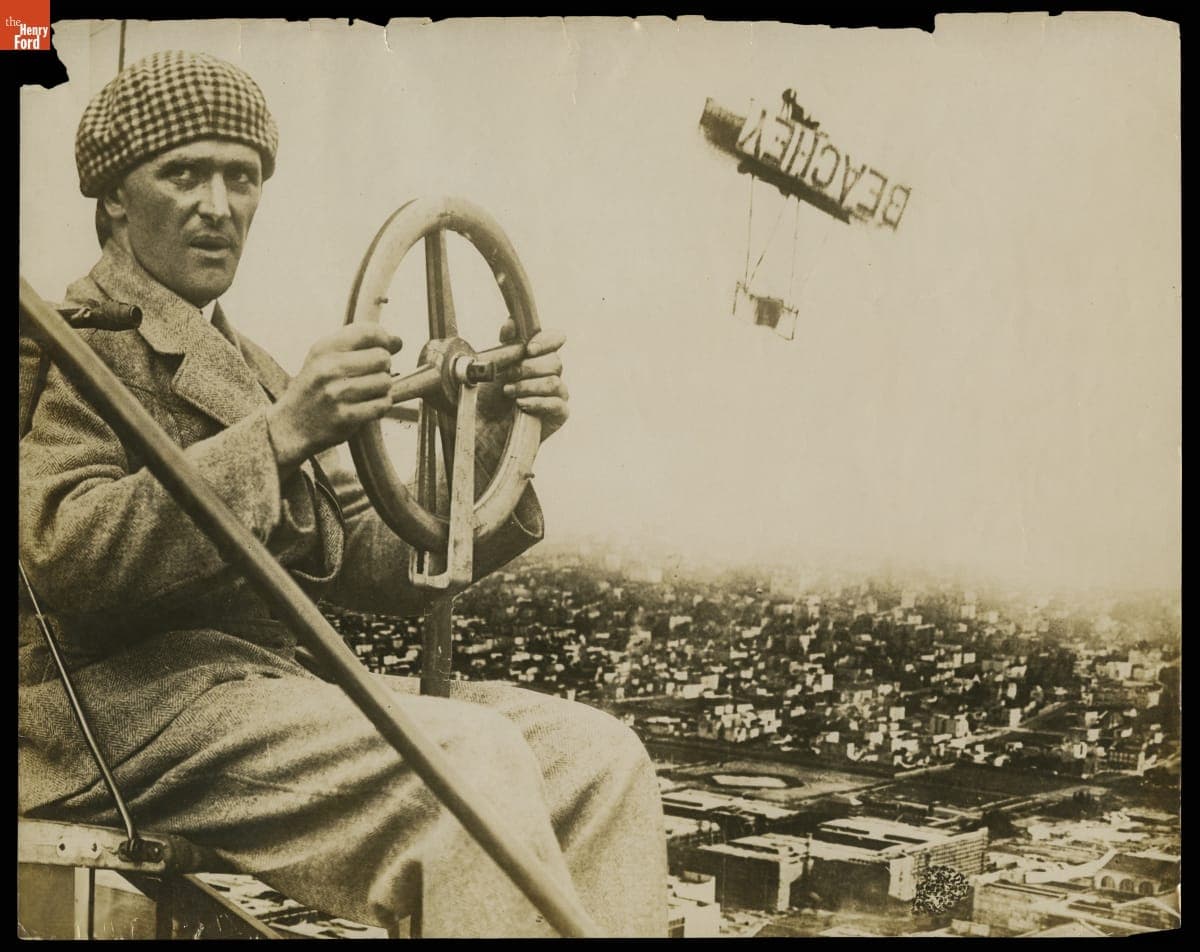
- Lincoln Beachey Stunt Flying over San Francisco, California, circa 1915 - Lincoln Beachey is remembered as America's first great stunt flyer. He perfected a series of aerobatic maneuvers -- including spins, dives, spirals, and loops -- and earned fame and fortune by staging heart-stopping exhibition flights for audiences across the country. Beachey died when the wings broke loose from his airplane during a stunt flight over San Francisco Bay in 1915.
- circa 1915
- Collections - Artifact
Lincoln Beachey Stunt Flying over San Francisco, California, circa 1915
Lincoln Beachey is remembered as America's first great stunt flyer. He perfected a series of aerobatic maneuvers -- including spins, dives, spirals, and loops -- and earned fame and fortune by staging heart-stopping exhibition flights for audiences across the country. Beachey died when the wings broke loose from his airplane during a stunt flight over San Francisco Bay in 1915.
- Touring Ford's Roads of the World Exhibit, Century of Progress International Exposition, Chicago, Illinois, 1934 - Ford Motor Company recreated 21 sections of different historic and modern roadways outside the Ford Exhibition Building at Chicago's Century of Progress Exposition in 1934. Fairgoers could tour these reproduction "Roads of the World" in courtesy vehicles.
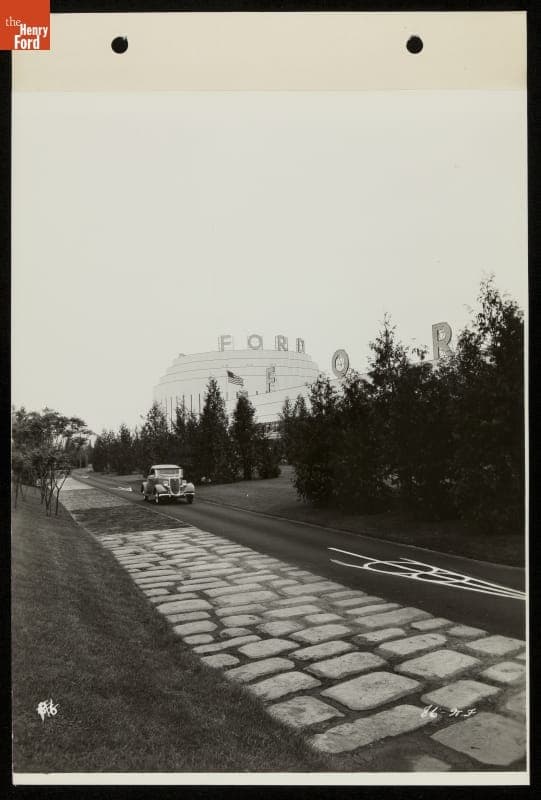
- 1934
- Collections - Artifact
Touring Ford's Roads of the World Exhibit, Century of Progress International Exposition, Chicago, Illinois, 1934
Ford Motor Company recreated 21 sections of different historic and modern roadways outside the Ford Exhibition Building at Chicago's Century of Progress Exposition in 1934. Fairgoers could tour these reproduction "Roads of the World" in courtesy vehicles.
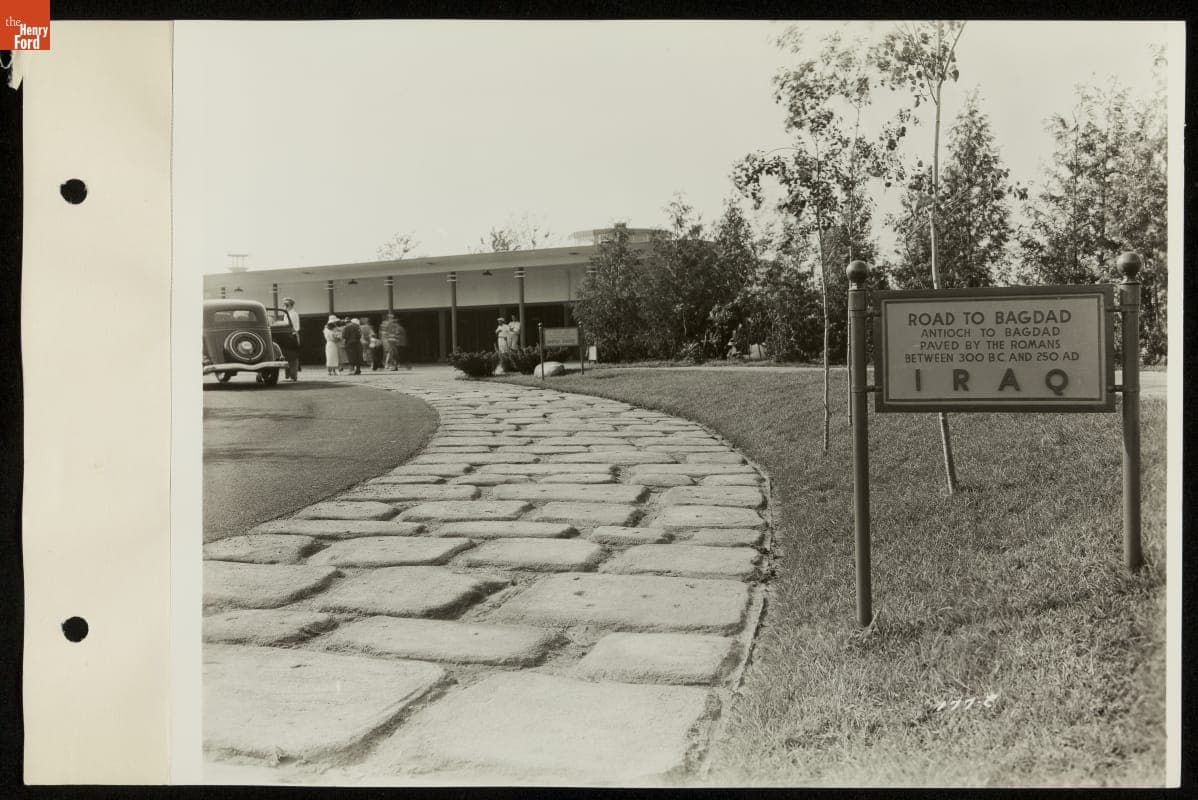
- Replica of the Road to Baghdad, Roads of the World, Century of Progress International Exposition, Chicago, Illinois, 1934 - "Roads of the World" was part of the Ford Motor Company's exhibition at Chicago's Century of Progress Exposition in 1934. Fairgoers rode in brand new Ford V-8s over 21 reproductions of famous roadways. This section representing the ancient Road to Baghdad in Western Asia contributed to the immersive "Roads of the World" experience.
- 1934
- Collections - Artifact
Replica of the Road to Baghdad, Roads of the World, Century of Progress International Exposition, Chicago, Illinois, 1934
"Roads of the World" was part of the Ford Motor Company's exhibition at Chicago's Century of Progress Exposition in 1934. Fairgoers rode in brand new Ford V-8s over 21 reproductions of famous roadways. This section representing the ancient Road to Baghdad in Western Asia contributed to the immersive "Roads of the World" experience.
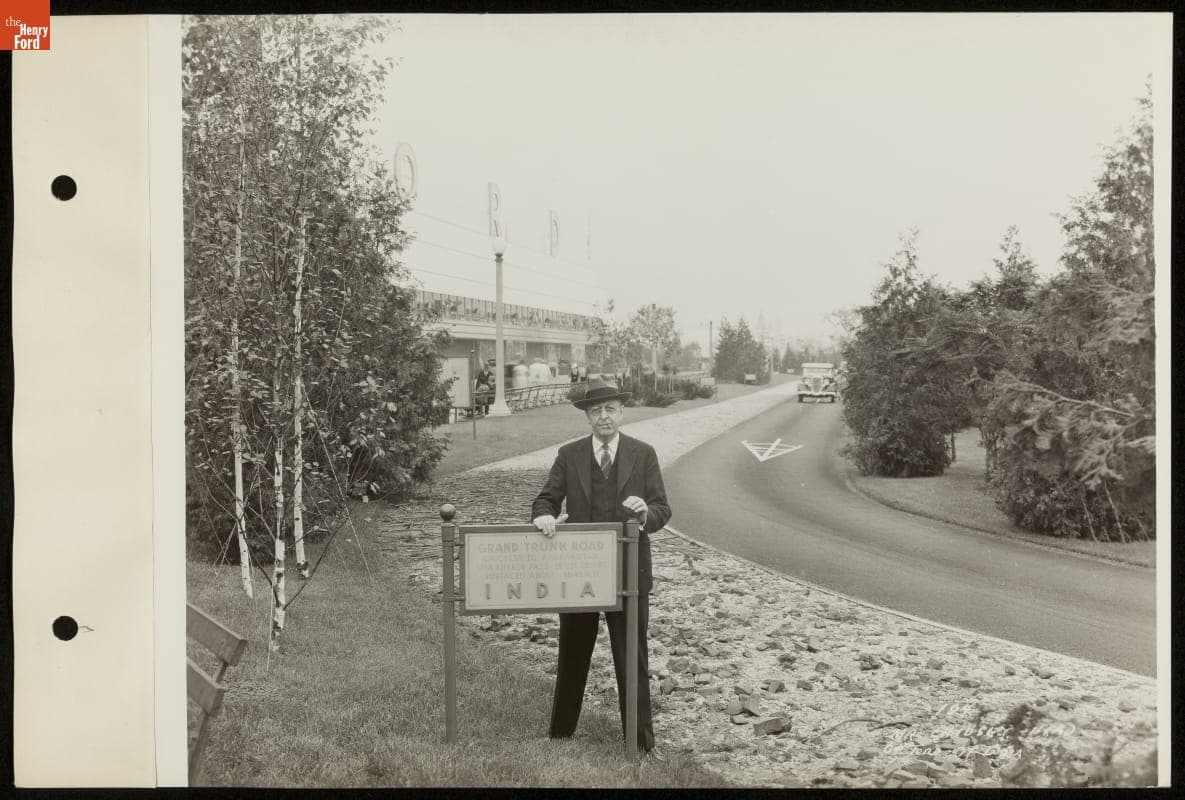
- Ford of India Executive, Roads of the World Exhibit, Century of Progress International Exposition, Chicago, Illinois, 1934 - Ford Motor Company's exhibit at the Chicago Century of Progress Exposition in 1934 included "Roads of the World," where fairgoers could tour reproductions of famous roadways in brand new Fords. Here, a Ford of India executive poses near a recreated section of South Asia's historic Grand Trunk Road.
- 1934
- Collections - Artifact
Ford of India Executive, Roads of the World Exhibit, Century of Progress International Exposition, Chicago, Illinois, 1934
Ford Motor Company's exhibit at the Chicago Century of Progress Exposition in 1934 included "Roads of the World," where fairgoers could tour reproductions of famous roadways in brand new Fords. Here, a Ford of India executive poses near a recreated section of South Asia's historic Grand Trunk Road.
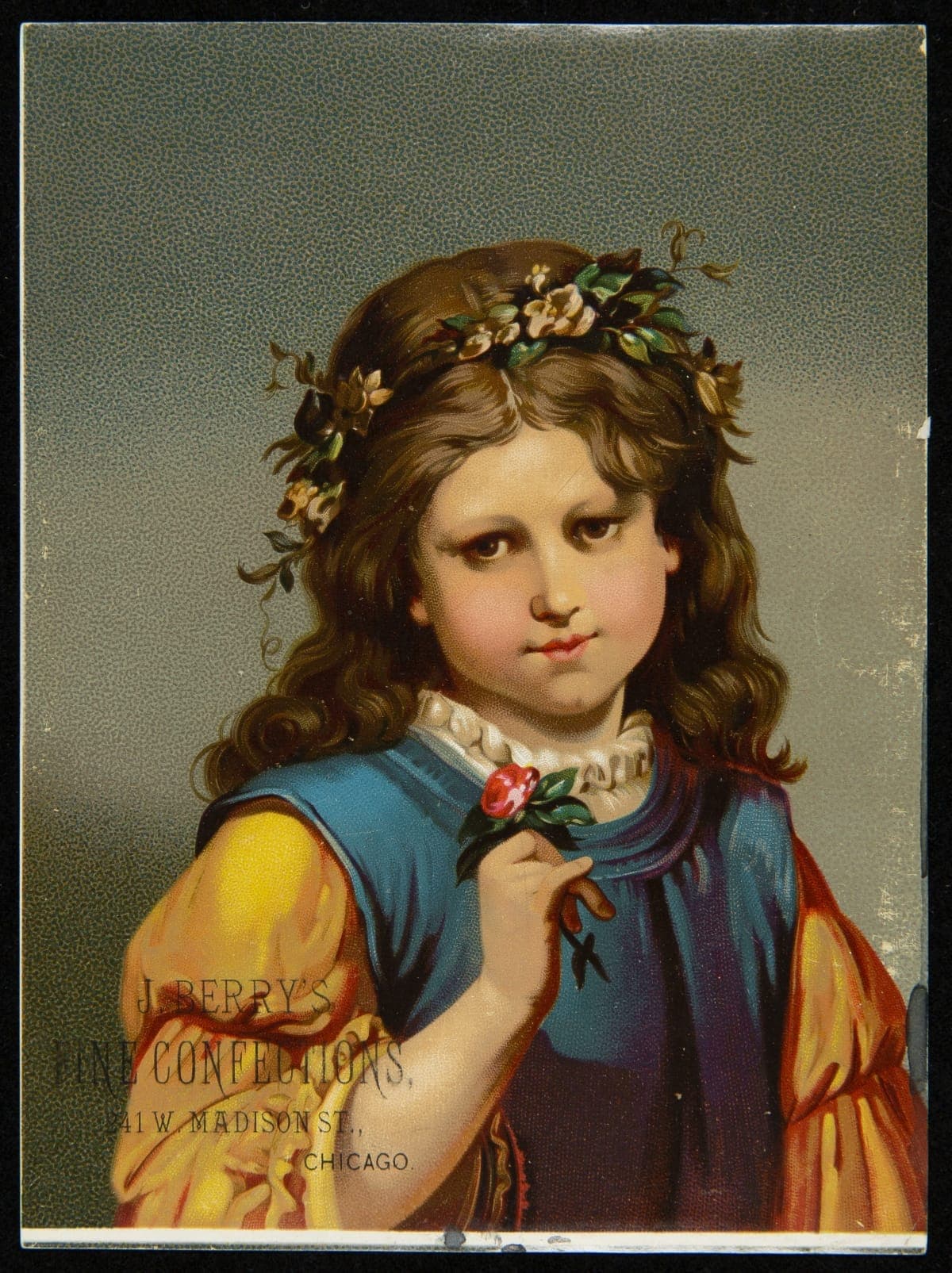
- Label, "J. Berry's Fine Confections," 1886-1905 -
- 1886-1905
- Collections - Artifact
Label, "J. Berry's Fine Confections," 1886-1905
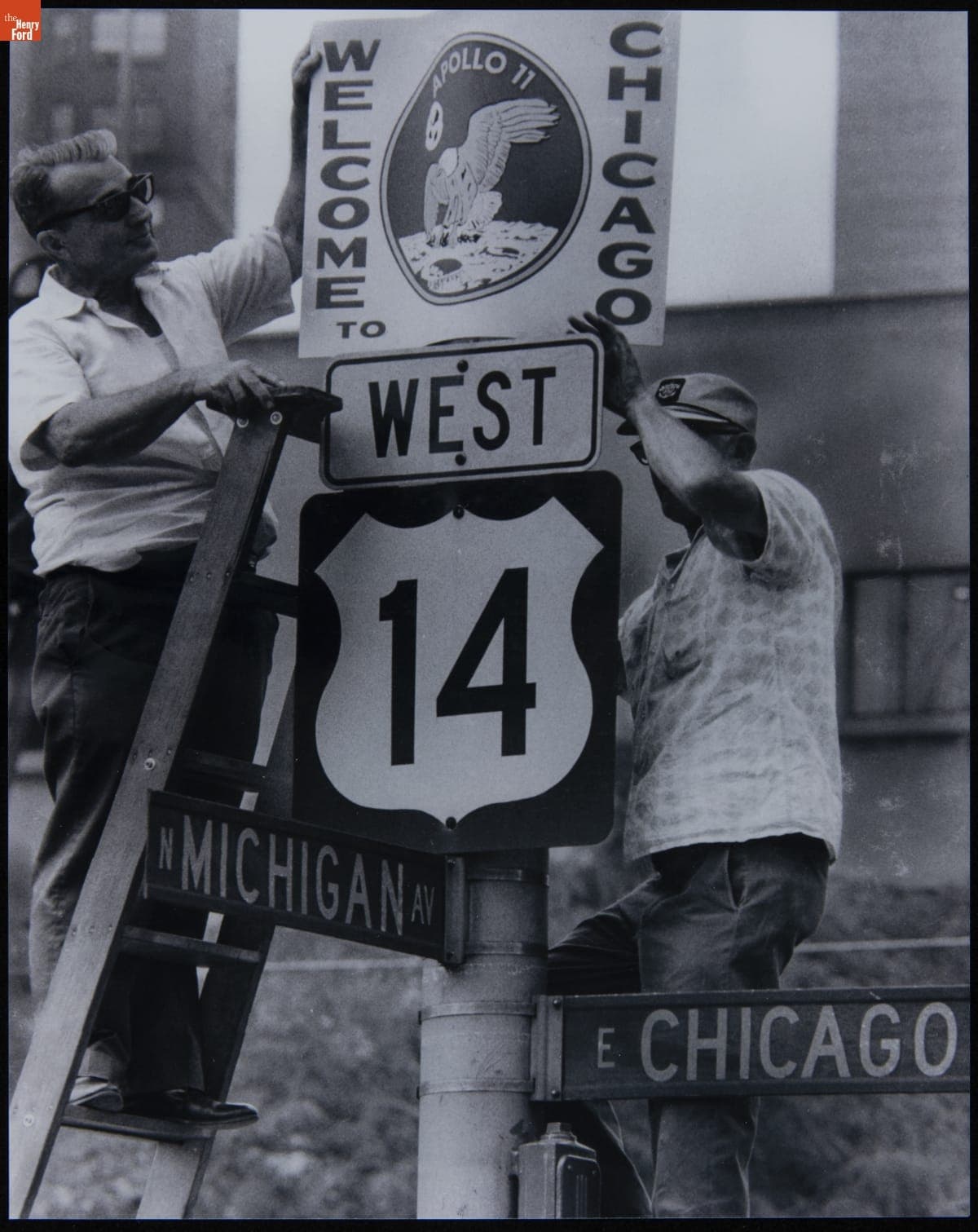
- Workers Installing a Sign for the Ticker Tape Parade Honoring the Apollo 11 Astronauts, August 13, 1969 - The crew of Apollo 11 -- Neil Armstrong, Edwin "Buzz" Aldrin (the first men to walk on the Moon) and Michael Collins (command module pilot) -- were given a hero's welcome upon their return from space. On August 13, 1969, Chicago, Illinois, hosted a ticker-tape parade for the astronauts. This photograph shows workers placing a sign along the parade route.
- August 13, 1969
- Collections - Artifact
Workers Installing a Sign for the Ticker Tape Parade Honoring the Apollo 11 Astronauts, August 13, 1969
The crew of Apollo 11 -- Neil Armstrong, Edwin "Buzz" Aldrin (the first men to walk on the Moon) and Michael Collins (command module pilot) -- were given a hero's welcome upon their return from space. On August 13, 1969, Chicago, Illinois, hosted a ticker-tape parade for the astronauts. This photograph shows workers placing a sign along the parade route.
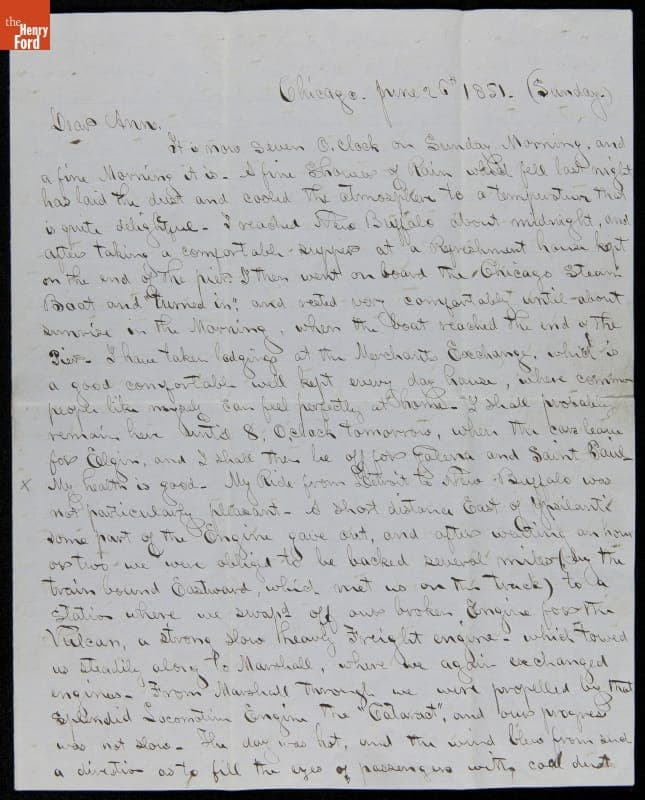
- Letter from E.P. Goodrich to Ann Goodrich, 1851 - This 1851 letter describes a trip on the Michigan Central Railroad from Detroit to Chicago. Author E.P. Goodrich colorfully relates the trials of mid-19th-century rail travel. Equipment breakdowns, smoke, and cinders were common, and average speeds were low. Because the Michigan Central wasn't completed into Chicago until 1852, Goodrich finished his journey by steamboat from New Buffalo across Lake Michigan.
- June 26, 1851
- Collections - Artifact
Letter from E.P. Goodrich to Ann Goodrich, 1851
This 1851 letter describes a trip on the Michigan Central Railroad from Detroit to Chicago. Author E.P. Goodrich colorfully relates the trials of mid-19th-century rail travel. Equipment breakdowns, smoke, and cinders were common, and average speeds were low. Because the Michigan Central wasn't completed into Chicago until 1852, Goodrich finished his journey by steamboat from New Buffalo across Lake Michigan.