
Search
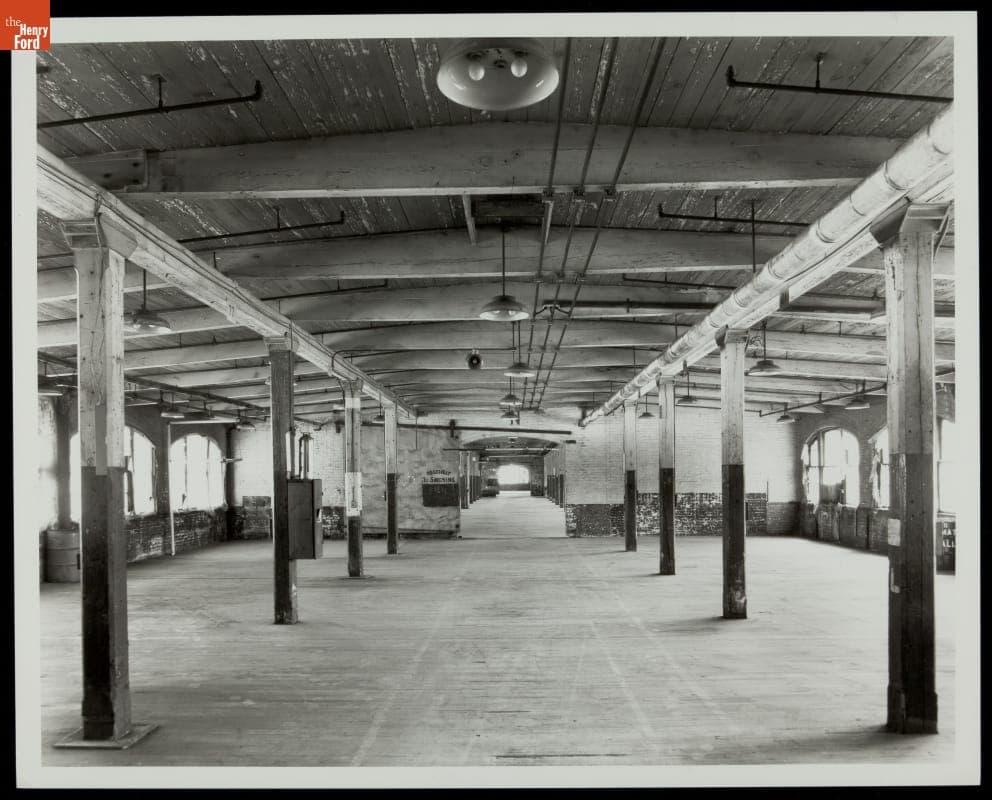
- Interior of Former Ford Motor Company Piquette Plant, Detroit, Michigan, 1989 - Ford Motor Company quickly outgrew its first factory on Detroit's Mack Avenue and, in 1904, moved into the newly constructed Piquette Avenue Plant. At first, the three-story building seemed too large. One employee wondered if the company could ever use all the space, but his concerns soon seemed quaint. In 1910, the burgeoning company again moved into more spacious quarters.
- 1989
- Collections - Artifact
Interior of Former Ford Motor Company Piquette Plant, Detroit, Michigan, 1989
Ford Motor Company quickly outgrew its first factory on Detroit's Mack Avenue and, in 1904, moved into the newly constructed Piquette Avenue Plant. At first, the three-story building seemed too large. One employee wondered if the company could ever use all the space, but his concerns soon seemed quaint. In 1910, the burgeoning company again moved into more spacious quarters.
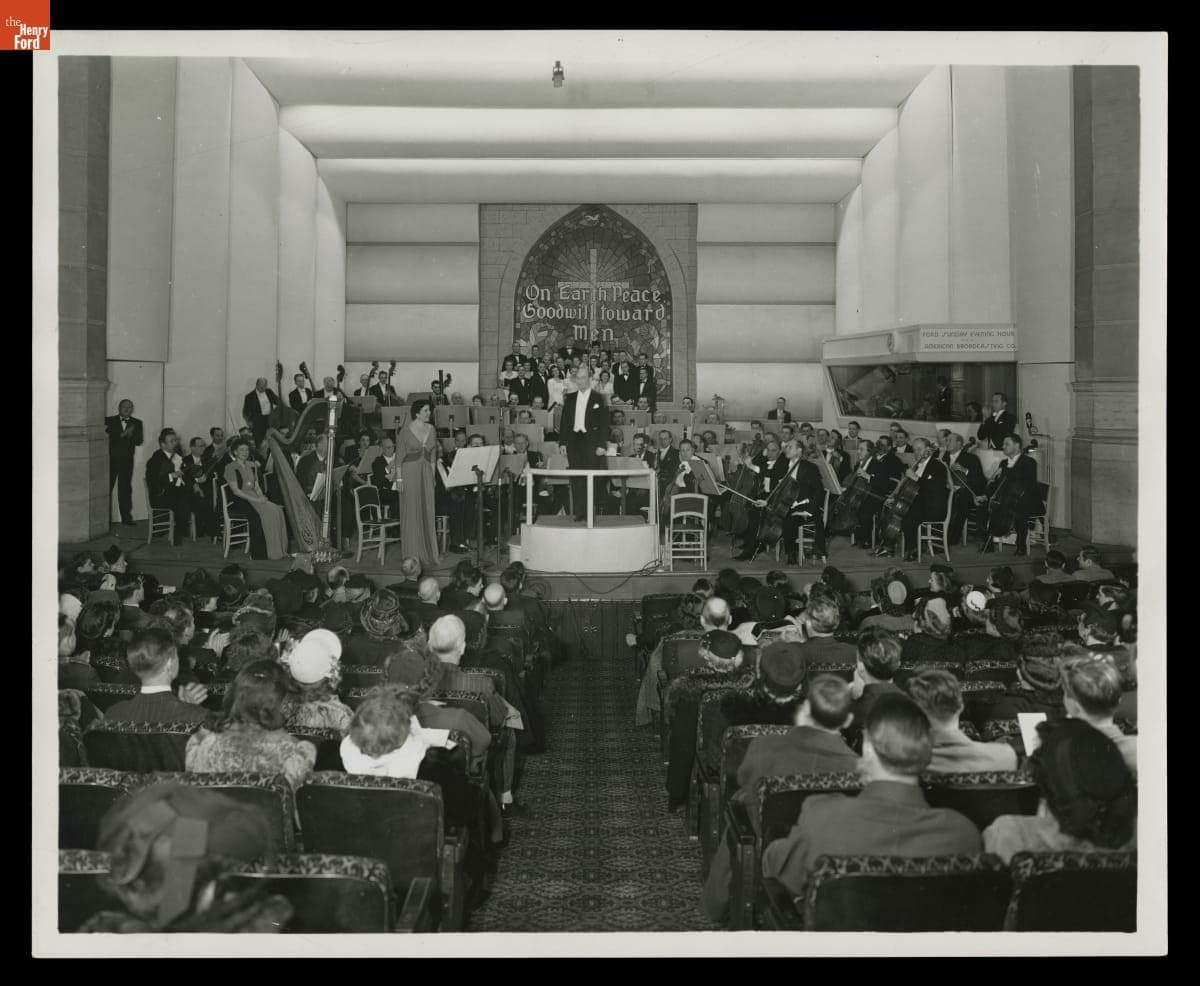
- Soloist Rose Bampton Performing on the "Ford Sunday Evening Hour" Program, December 16, 1945 -
- December 16, 1945
- Collections - Artifact
Soloist Rose Bampton Performing on the "Ford Sunday Evening Hour" Program, December 16, 1945
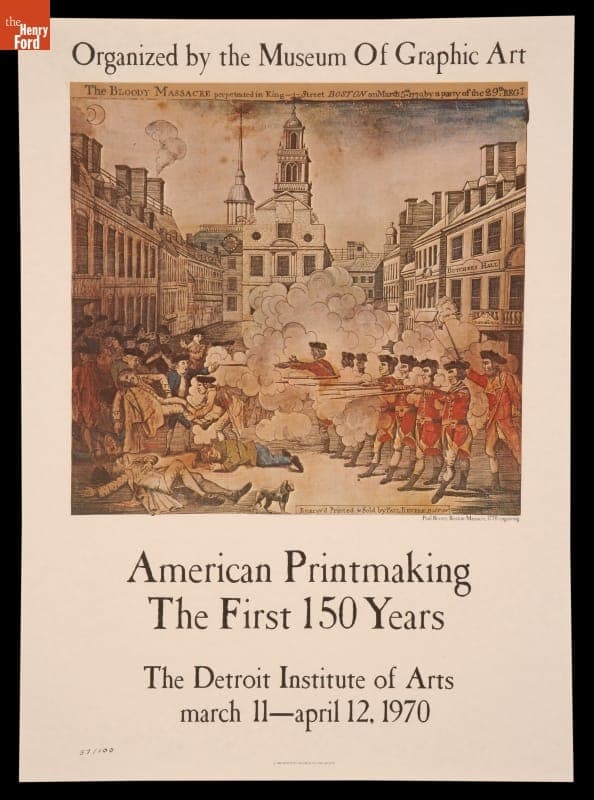
- Exhibition Poster, "American Printmaking: The First 150 Years," 1970 -
- 11 March 1970 - 12 April 1970
- Collections - Artifact
Exhibition Poster, "American Printmaking: The First 150 Years," 1970
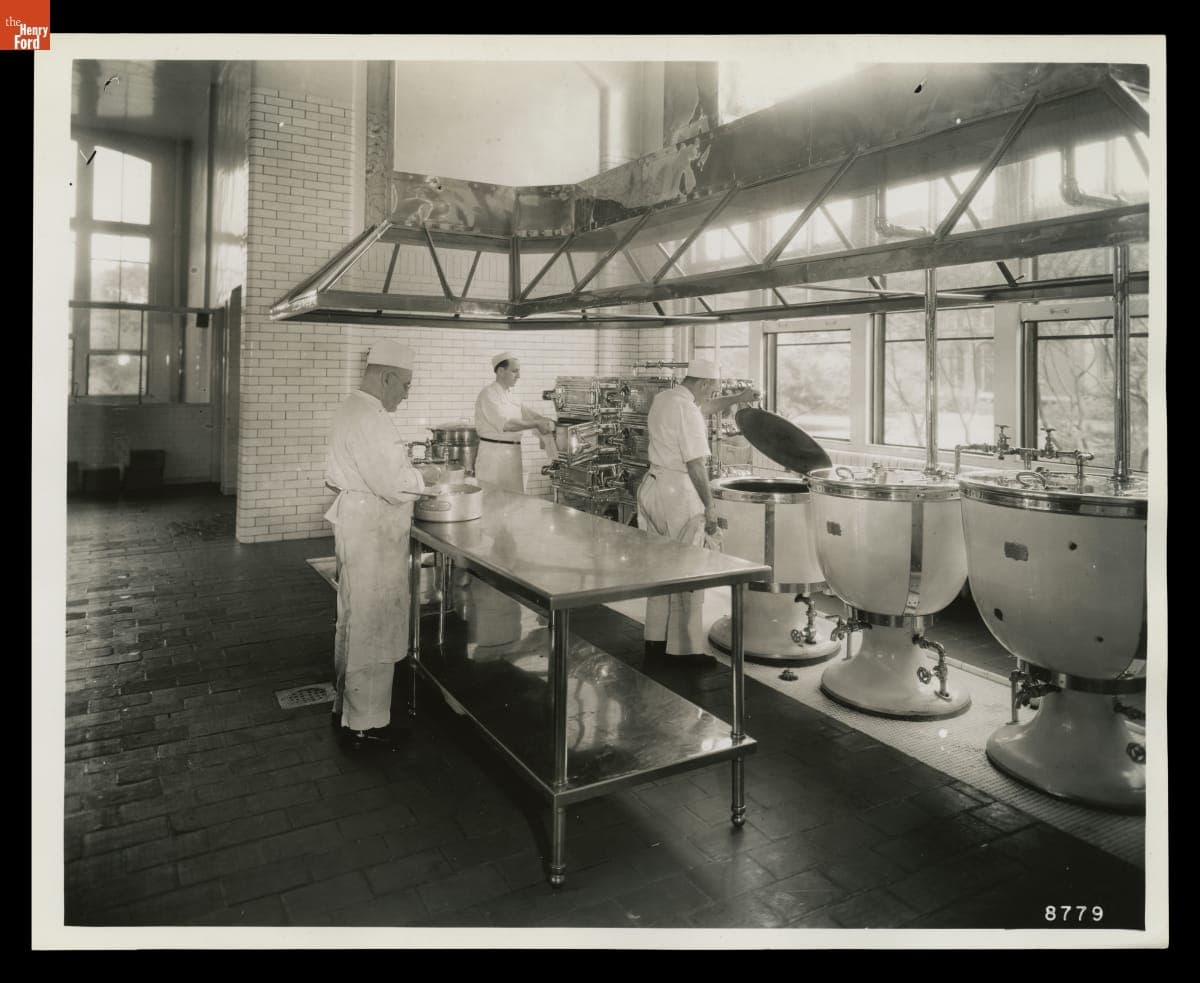
- Kitchen at Henry Ford Hospital, Detroit, Michigan, April 1931 - In 1915, Henry Ford funded a new hospital for Detroit. Designed and built in consultation with leading medical experts, Henry Ford Hospital employed salaried doctors and charged low, fixed fees to patients. In 1929, the hospital's kitchens prepared nearly 1,200 meals each day. By that point in its history, Henry Ford Hospital had registered more than 132,000 patients.
- April 29, 1931
- Collections - Artifact
Kitchen at Henry Ford Hospital, Detroit, Michigan, April 1931
In 1915, Henry Ford funded a new hospital for Detroit. Designed and built in consultation with leading medical experts, Henry Ford Hospital employed salaried doctors and charged low, fixed fees to patients. In 1929, the hospital's kitchens prepared nearly 1,200 meals each day. By that point in its history, Henry Ford Hospital had registered more than 132,000 patients.
- Detroit Edison Damage Assessment, Detroit, Michigan, 1967 - Throughout the 20th century, Detroit Edison photographers documented the company's work to develop and maintain the electrical infrastructure of Southeast Michigan. This image, part of a larger series, was taken immediately following the July 1967 Detroit Riot. Detroit Edison staff, accompanied by state and local officers and federal troops, inspected and repaired damaged lines after one of the era's largest episodes of civil unrest.
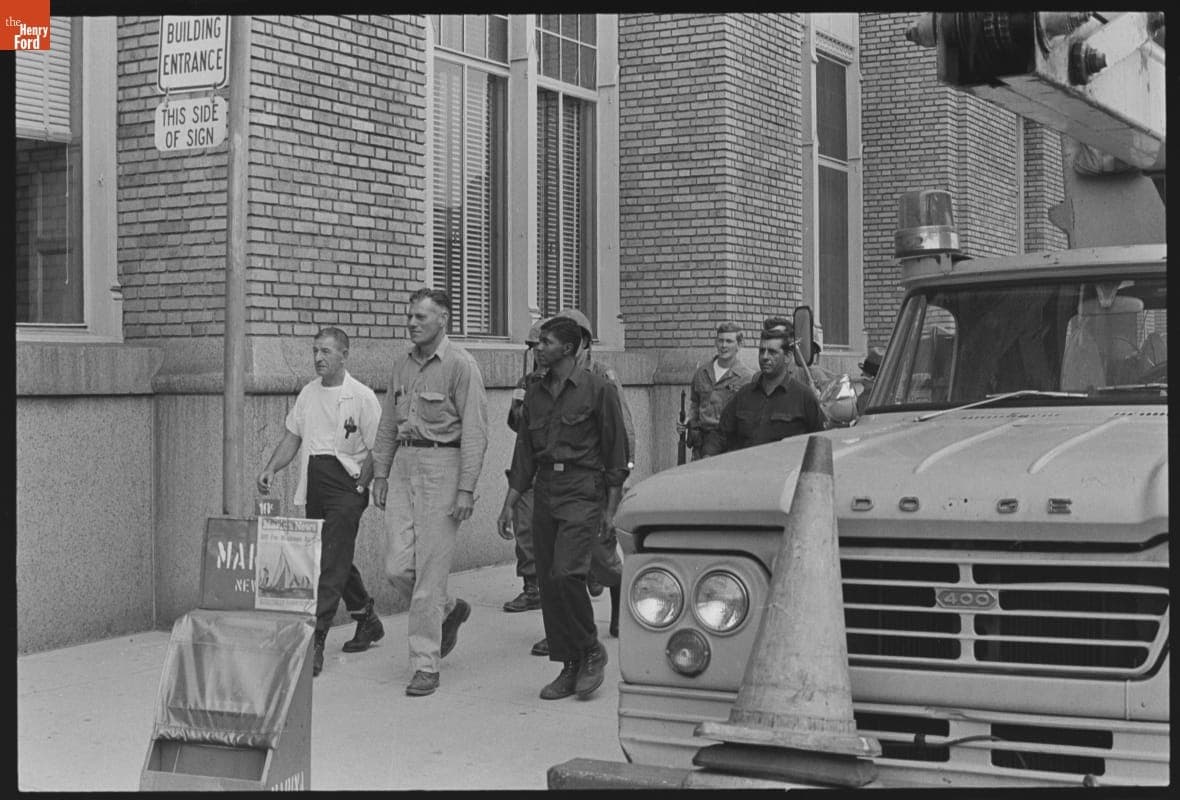
- July 27, 1967
- Collections - Artifact
Detroit Edison Damage Assessment, Detroit, Michigan, 1967
Throughout the 20th century, Detroit Edison photographers documented the company's work to develop and maintain the electrical infrastructure of Southeast Michigan. This image, part of a larger series, was taken immediately following the July 1967 Detroit Riot. Detroit Edison staff, accompanied by state and local officers and federal troops, inspected and repaired damaged lines after one of the era's largest episodes of civil unrest.
- Finch Facsimile Transmitter, 1938-1940 - From 1938-1940, the <em>Detroit News</em> experimented with a domestic radio-facsimile subscription service. This transmitter converted images and text into electrical impulses, sent over the radio waves--reassembled by receivers in the homes of customers. The idea was revolutionary, however, the process was slow and signal reception was unreliable beyond a mile or two of the transmission tower.
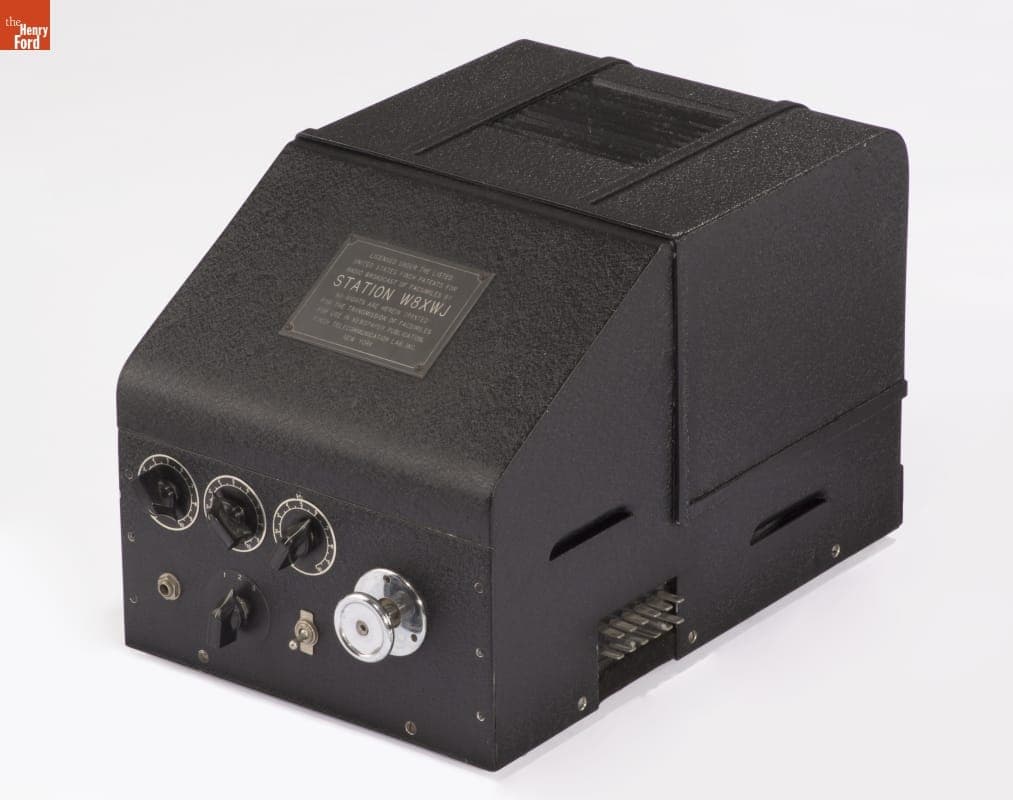
- 1938-1940
- Collections - Artifact
Finch Facsimile Transmitter, 1938-1940
From 1938-1940, the Detroit News experimented with a domestic radio-facsimile subscription service. This transmitter converted images and text into electrical impulses, sent over the radio waves--reassembled by receivers in the homes of customers. The idea was revolutionary, however, the process was slow and signal reception was unreliable beyond a mile or two of the transmission tower.
- Program, "Mendelssohn Quintette Club Concert," Young Men's Hall, Detroit, Michigan, November 7, 1871 -
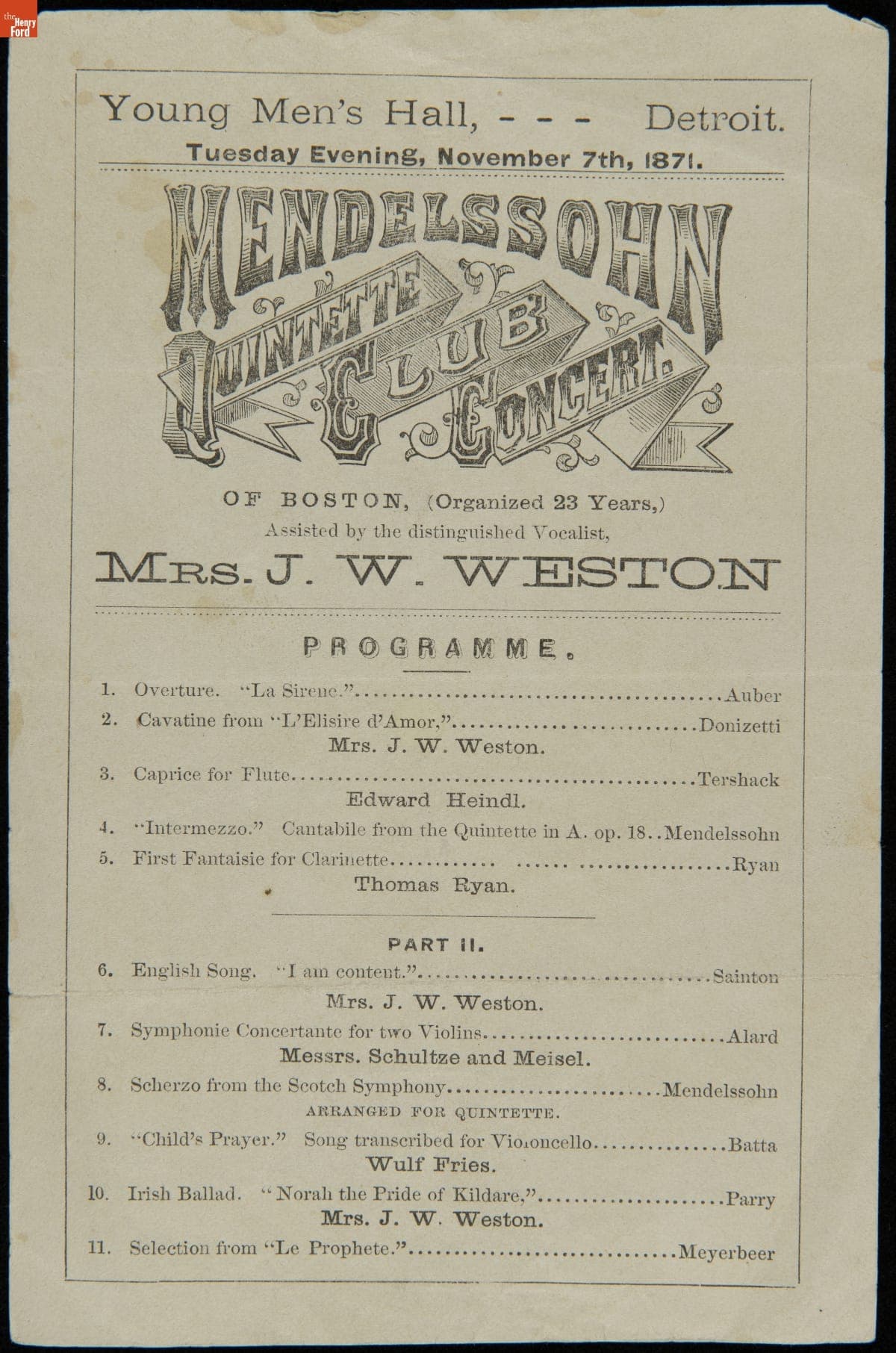
- November 07, 1871
- Collections - Artifact
Program, "Mendelssohn Quintette Club Concert," Young Men's Hall, Detroit, Michigan, November 7, 1871
- Henry Ford Theater (Edsel Ford Workshop) - When Edsel Ford passed away in 1943, Henry and Clara Ford constructed this building to memorialize their son. It was based on a workshop that father and son shared above the garage at the family home in Detroit's Boston-Edison neighborhood, where the Fords lived while Edsel was a teenager. The short posts framing the door are from the original site.
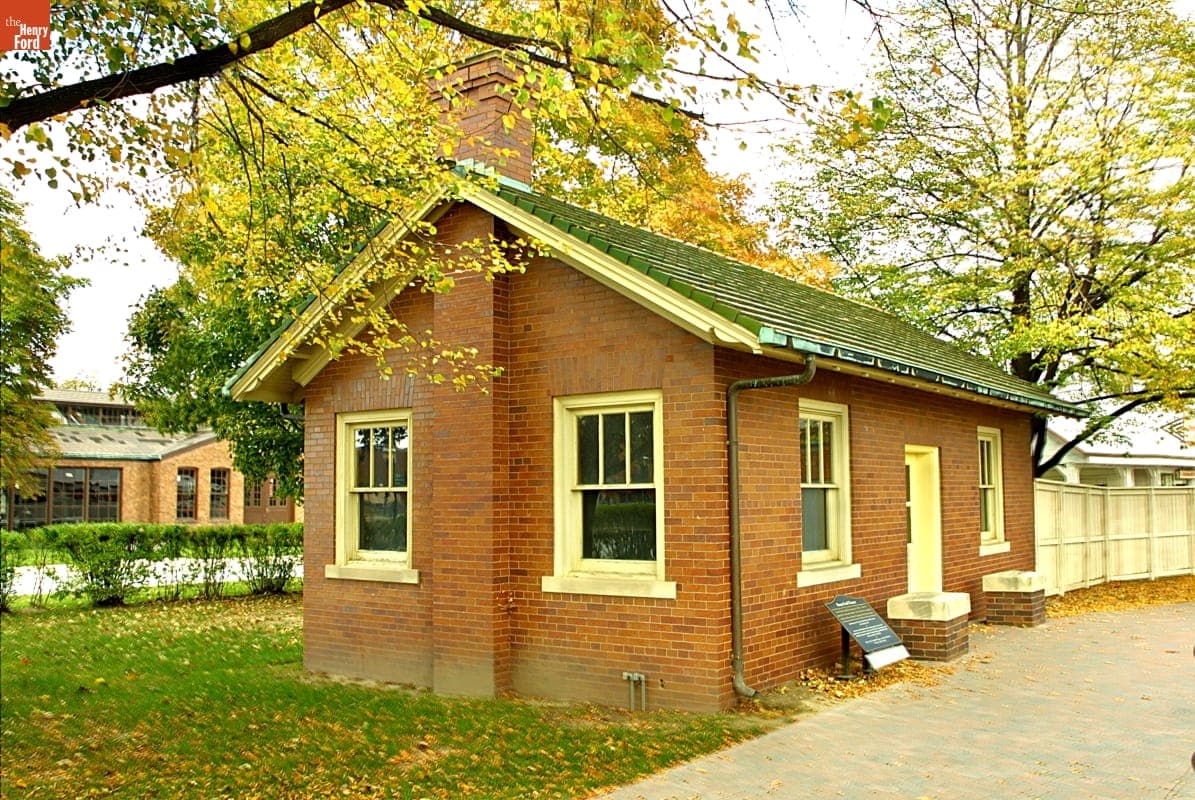
- 1943-1944
- Collections - Artifact
Henry Ford Theater (Edsel Ford Workshop)
When Edsel Ford passed away in 1943, Henry and Clara Ford constructed this building to memorialize their son. It was based on a workshop that father and son shared above the garage at the family home in Detroit's Boston-Edison neighborhood, where the Fords lived while Edsel was a teenager. The short posts framing the door are from the original site.
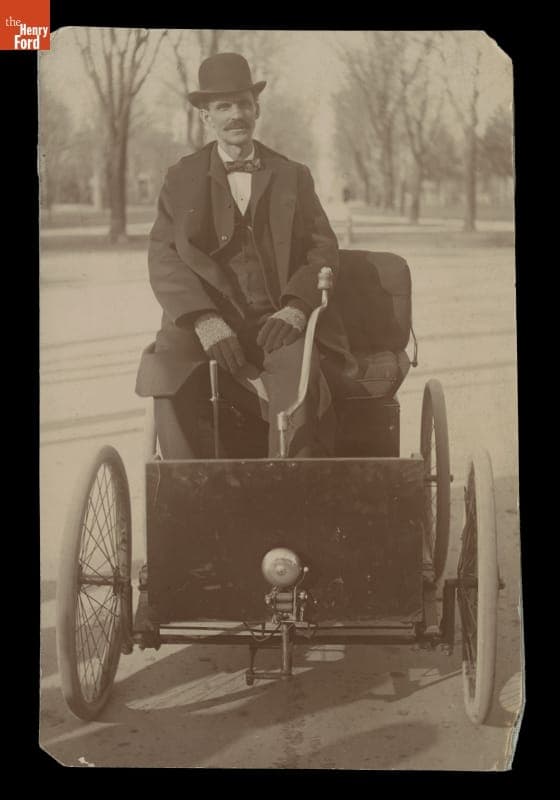
- Henry Ford Driving the Quadricycle near Cass Park in Detroit, 1896 - This photograph shows Henry Ford, age 33, with his Quadricycle in Detroit in the fall of 1896. He built his first gasoline powered vehicle with help from some friends in a shed behind a house he and his wife, Clara, rented.
- 1896
- Collections - Artifact
Henry Ford Driving the Quadricycle near Cass Park in Detroit, 1896
This photograph shows Henry Ford, age 33, with his Quadricycle in Detroit in the fall of 1896. He built his first gasoline powered vehicle with help from some friends in a shed behind a house he and his wife, Clara, rented.
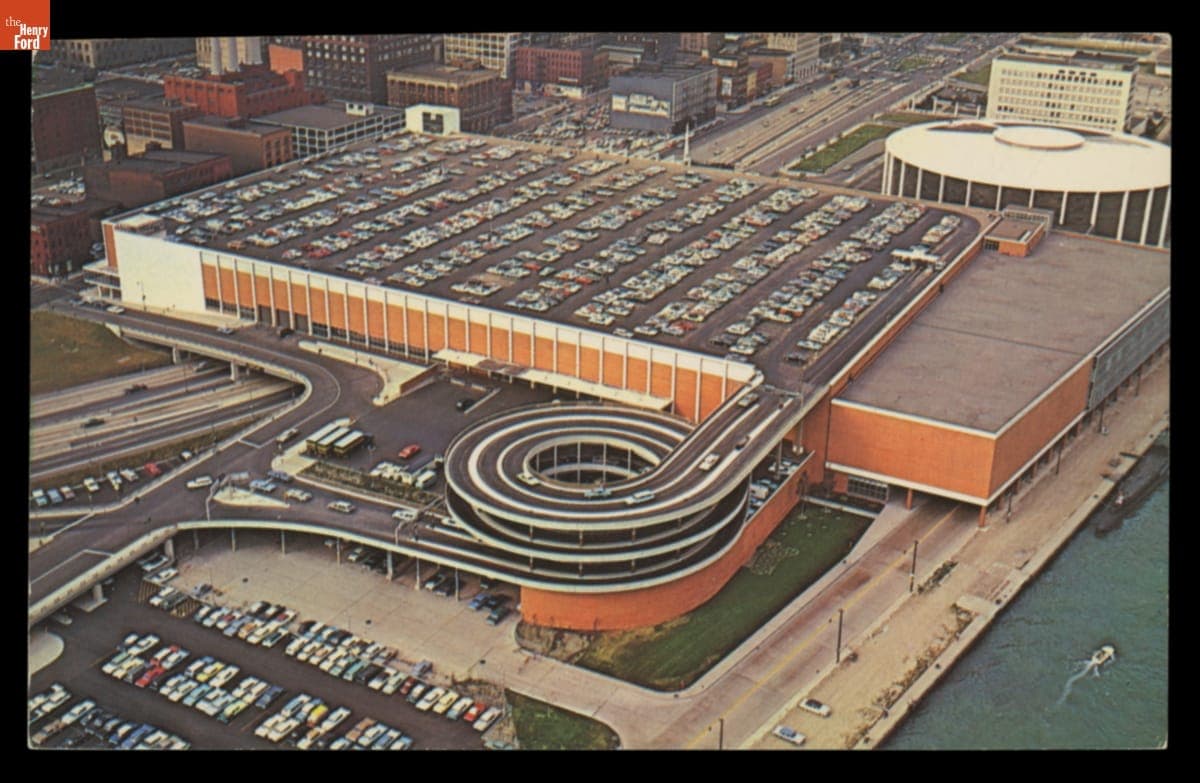
- Postcard, "Cobo Hall," circa 1960 - Cobo Hall opened in Detroit, Michigan, in 1960. Located on the Detroit River, the convention center and arena complex hosted meetings, concerts, sporting events, and other activities. Notably, it is the longtime home of the annual North American International Auto Show. The facility was renamed Huntington Place in 2021.
- circa 1960
- Collections - Artifact
Postcard, "Cobo Hall," circa 1960
Cobo Hall opened in Detroit, Michigan, in 1960. Located on the Detroit River, the convention center and arena complex hosted meetings, concerts, sporting events, and other activities. Notably, it is the longtime home of the annual North American International Auto Show. The facility was renamed Huntington Place in 2021.