
Search
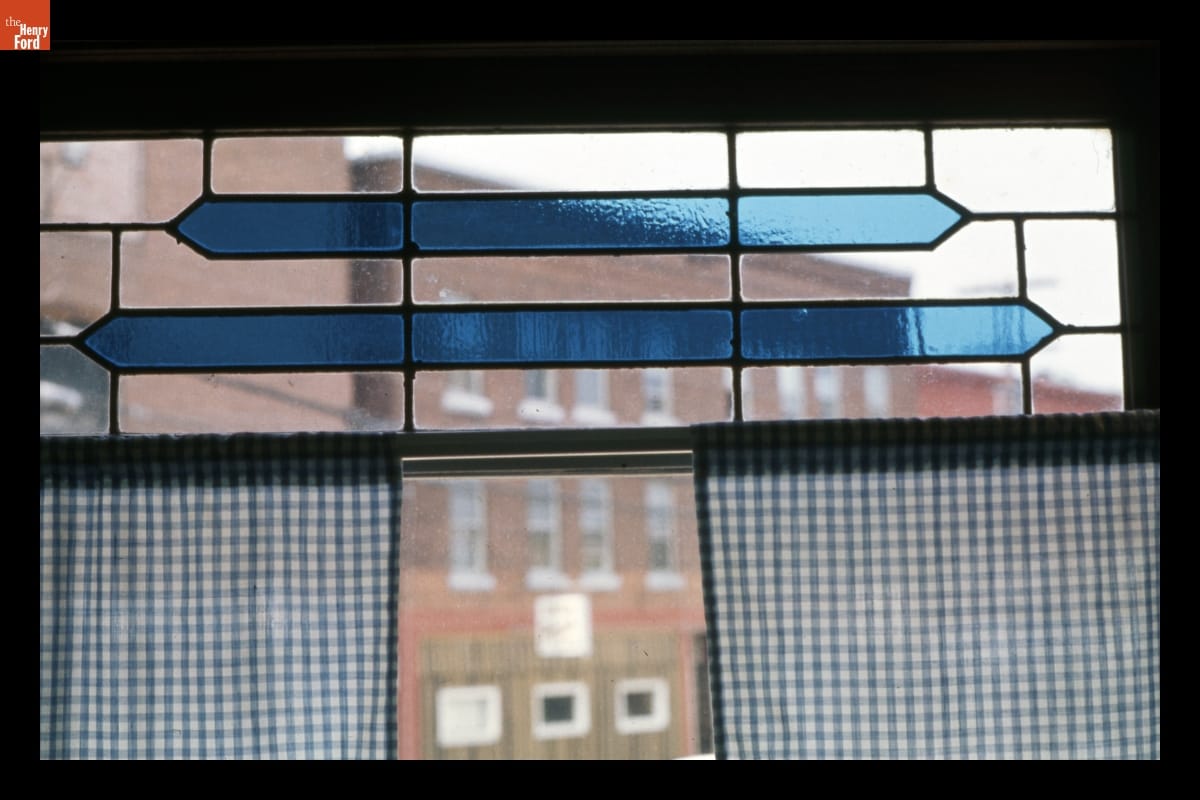
- Detail of Windows in Tumble Inn Diner, Claremont, New Hampshire -
- Collections - Artifact
Detail of Windows in Tumble Inn Diner, Claremont, New Hampshire
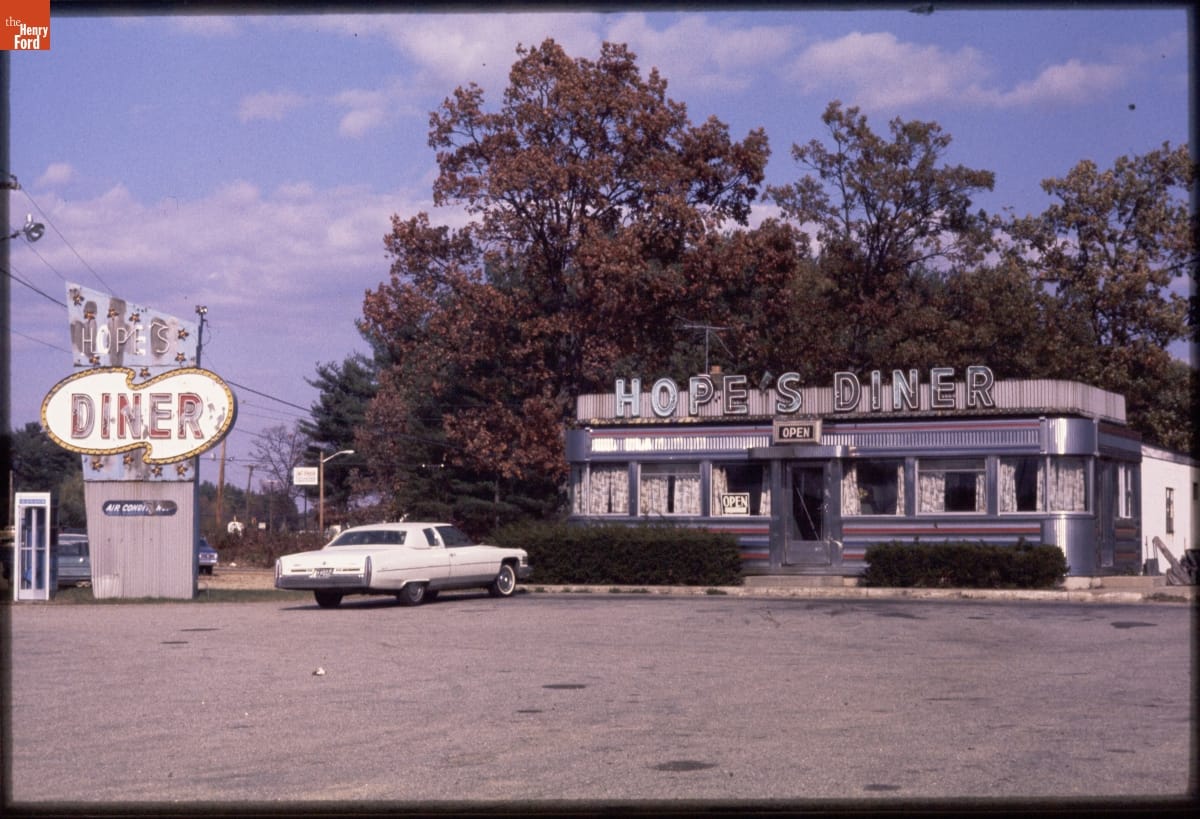
- Hope's Diner, Plaistow, New Hampshire, 1970-1980 -
- 1970-1980
- Collections - Artifact
Hope's Diner, Plaistow, New Hampshire, 1970-1980
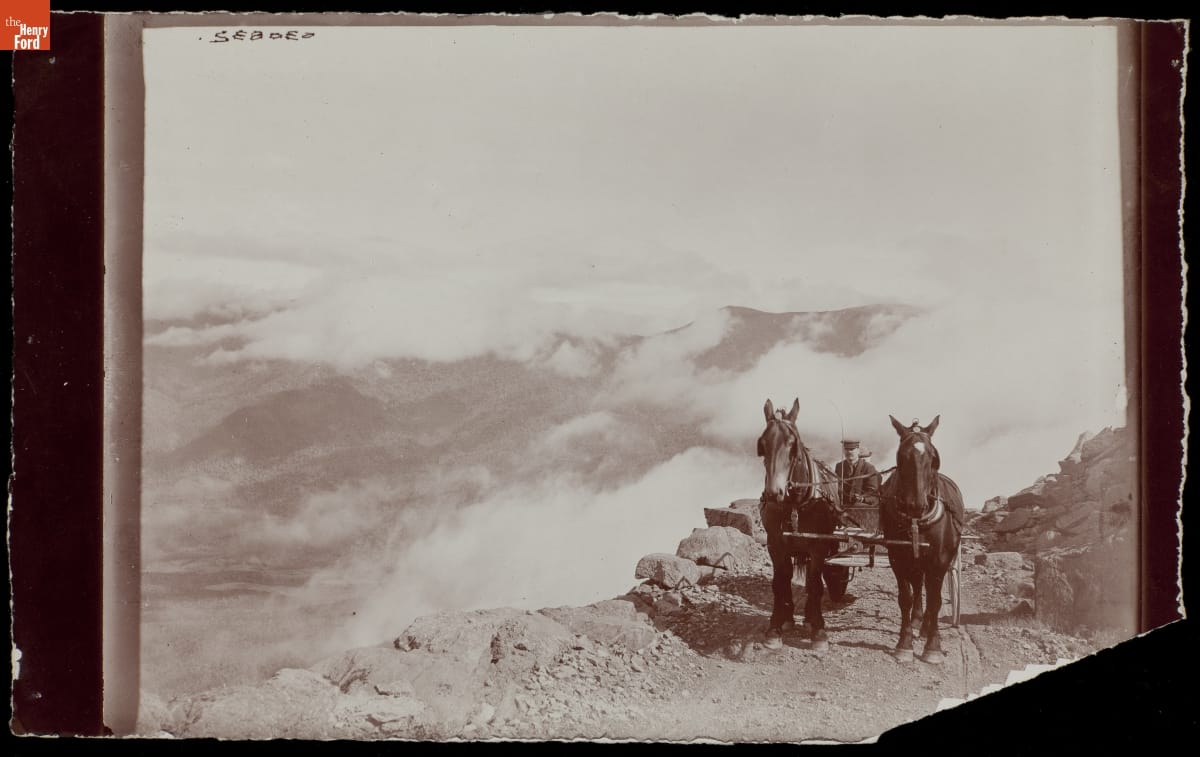
- Horse-Drawn Cart on Trail, Mount Washington, New Hampshire, circa 1905 - From 1895 to 1924, the Detroit Publishing Company was one of the major image publishers in the world. The company had a wide-ranging stock of original photographs, including many scenes from across North America. This horse-drawn cart was photographed on Mount Washington in the Presidential Range of the White Mountains -- the highest peak in the northeastern United States.
- circa 1905
- Collections - Artifact
Horse-Drawn Cart on Trail, Mount Washington, New Hampshire, circa 1905
From 1895 to 1924, the Detroit Publishing Company was one of the major image publishers in the world. The company had a wide-ranging stock of original photographs, including many scenes from across North America. This horse-drawn cart was photographed on Mount Washington in the Presidential Range of the White Mountains -- the highest peak in the northeastern United States.
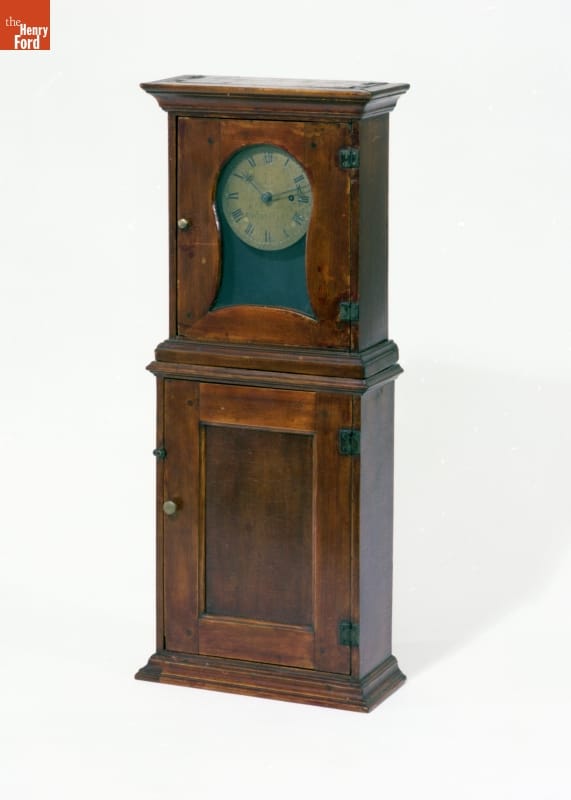
- Shelf Clock By John Winkley, 1787-1792 -
- 1787-1792
- Collections - Artifact
Shelf Clock By John Winkley, 1787-1792
- Shipping Box for Tobacco, 1880-1920 - Workers at Will Currier's shoe shop in Newton, New Hampshire, used a variety of tools, fasteners and bits of leather, wood, and metal to make shoes. Small wooden boxes, like this one, helped organize the shop and kept needed material close at hand.
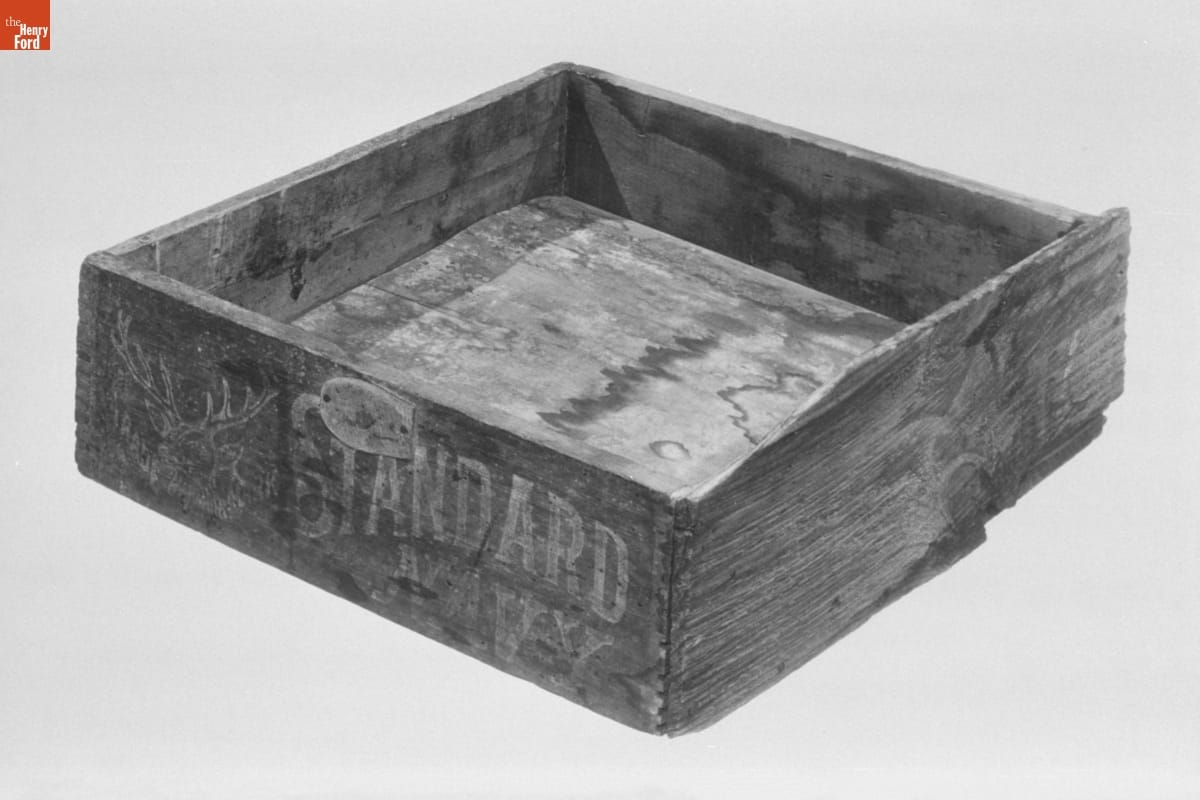
- 1880-1920
- Collections - Artifact
Shipping Box for Tobacco, 1880-1920
Workers at Will Currier's shoe shop in Newton, New Hampshire, used a variety of tools, fasteners and bits of leather, wood, and metal to make shoes. Small wooden boxes, like this one, helped organize the shop and kept needed material close at hand.
- "Will the Segway Ever Catch On?" Clip from Interview with Dean Kamen, 2008 - Inventor and entrepreneur Dean Kamen owns a private island in Long Island Sound. This self-proclaimed lord of North Dumpling Island has created a completely self-sufficient home powered by a combination of solar and wind technology. Dean Kamen has dedicated his life to improving humanity through technology and engineering. Inventing products since an early age, he has designed everything from medical devices to robots. Kamen is best known for his creation of the human transportation vehicle, the Segway.
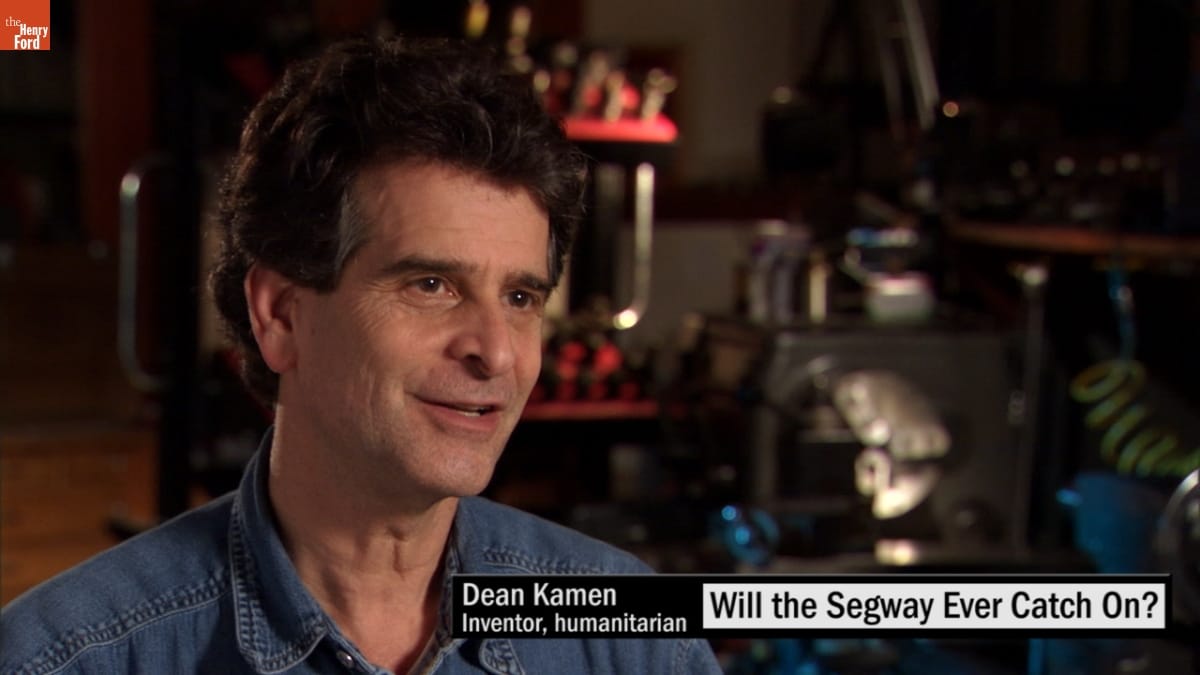
- December 03, 2008
- Collections - Artifact
"Will the Segway Ever Catch On?" Clip from Interview with Dean Kamen, 2008
Inventor and entrepreneur Dean Kamen owns a private island in Long Island Sound. This self-proclaimed lord of North Dumpling Island has created a completely self-sufficient home powered by a combination of solar and wind technology. Dean Kamen has dedicated his life to improving humanity through technology and engineering. Inventing products since an early age, he has designed everything from medical devices to robots. Kamen is best known for his creation of the human transportation vehicle, the Segway.
- Manchester Locomotive Works, Manchester, New Hampshire, circa 1860 - The 4-4-0 American-type locomotive <EM>A.M. Ramsdell</EM> was photographed fresh from the shops of the Manchester Locomotive Works. Lavish decorations were typical on mid-1800s locomotives. Manufacturers and operators took pride in their engines as symbols of industry and progress. The Manchester Locomotive Works merged into the American Locomotive Company in 1901.
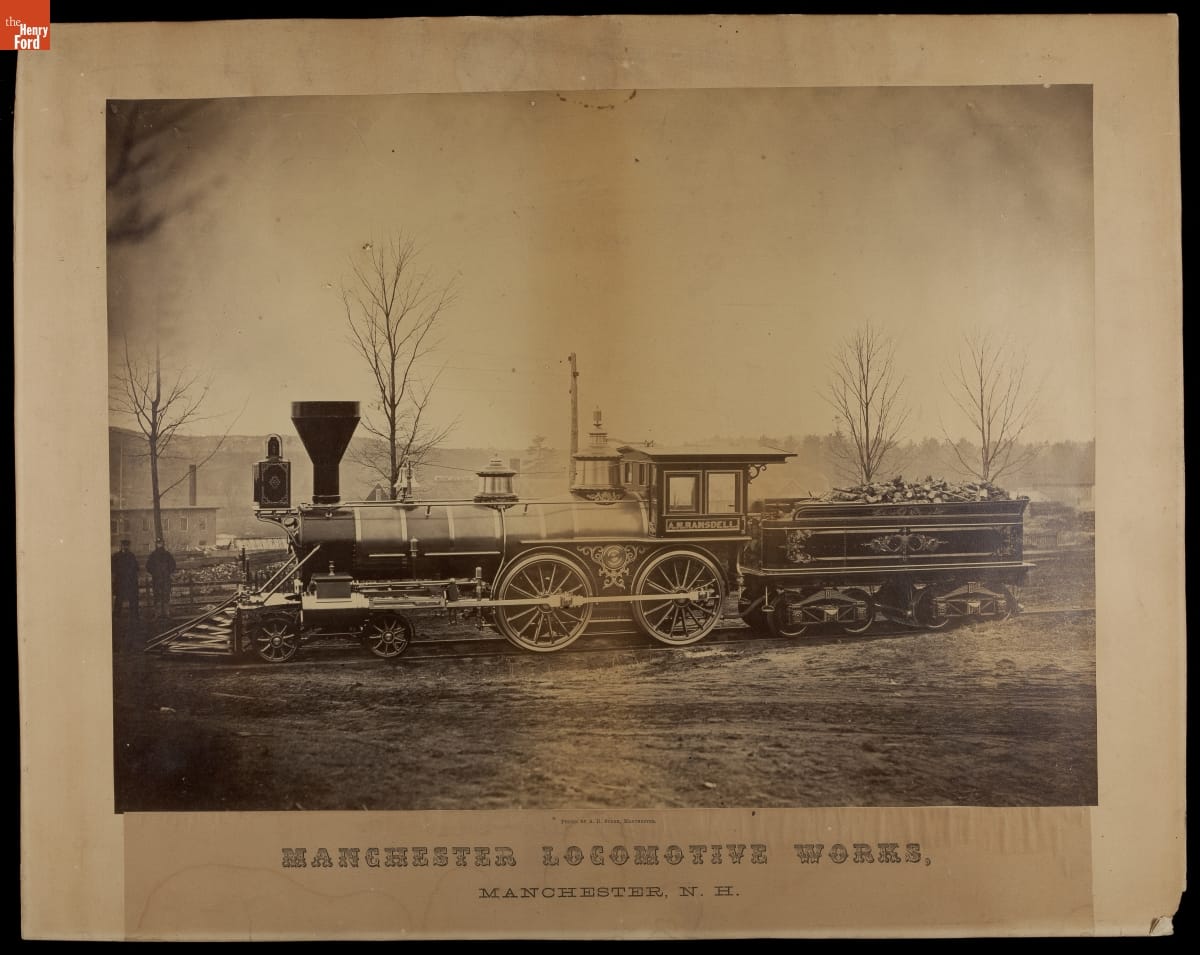
- circa 1860
- Collections - Artifact
Manchester Locomotive Works, Manchester, New Hampshire, circa 1860
The 4-4-0 American-type locomotive A.M. Ramsdell was photographed fresh from the shops of the Manchester Locomotive Works. Lavish decorations were typical on mid-1800s locomotives. Manufacturers and operators took pride in their engines as symbols of industry and progress. The Manchester Locomotive Works merged into the American Locomotive Company in 1901.
- United Shoe Machinery Corporation Fasteners in Box, 1880-1920 - Workers at Will Currier's shoe shop in Newton, New Hampshire, used a variety of tools, fasteners and bits of leather, wood, and metal to make shoes. Small wooden boxes, like this one, helped organize the shop and kept needed material close at hand.
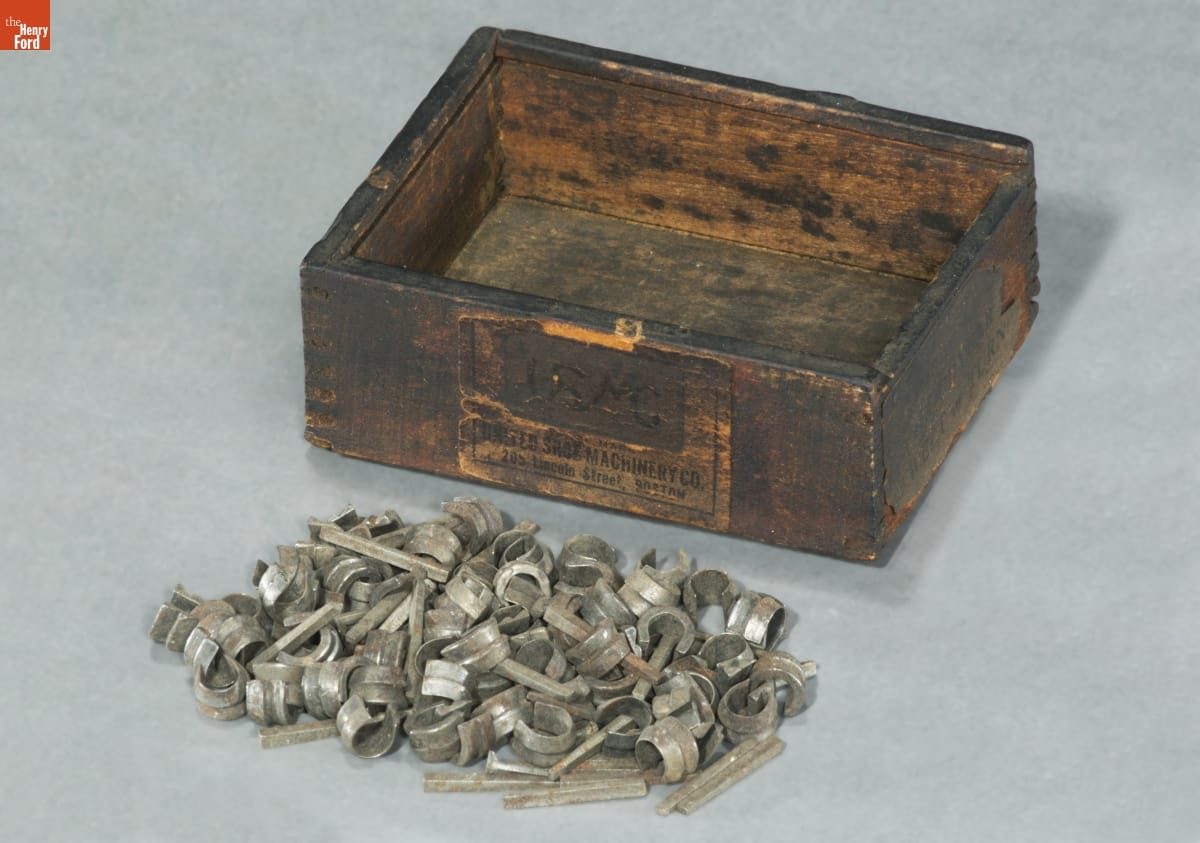
- 1899-1920
- Collections - Artifact
United Shoe Machinery Corporation Fasteners in Box, 1880-1920
Workers at Will Currier's shoe shop in Newton, New Hampshire, used a variety of tools, fasteners and bits of leather, wood, and metal to make shoes. Small wooden boxes, like this one, helped organize the shop and kept needed material close at hand.
- Cancelled Requisition Form for Hoyt Elec Inst Works, Concord, New Hampshire, November 15, 1919 - Though it operated some direct-sales offices in major cities, Ford Motor Company sold most of its Model T cars through franchise agreements with independent dealers. Each franchisee received the right to sell Ford cars within a specific territory. Ford encouraged dealers by offering discounts and rebates to high sellers. But low-selling dealers risked losing their territories.
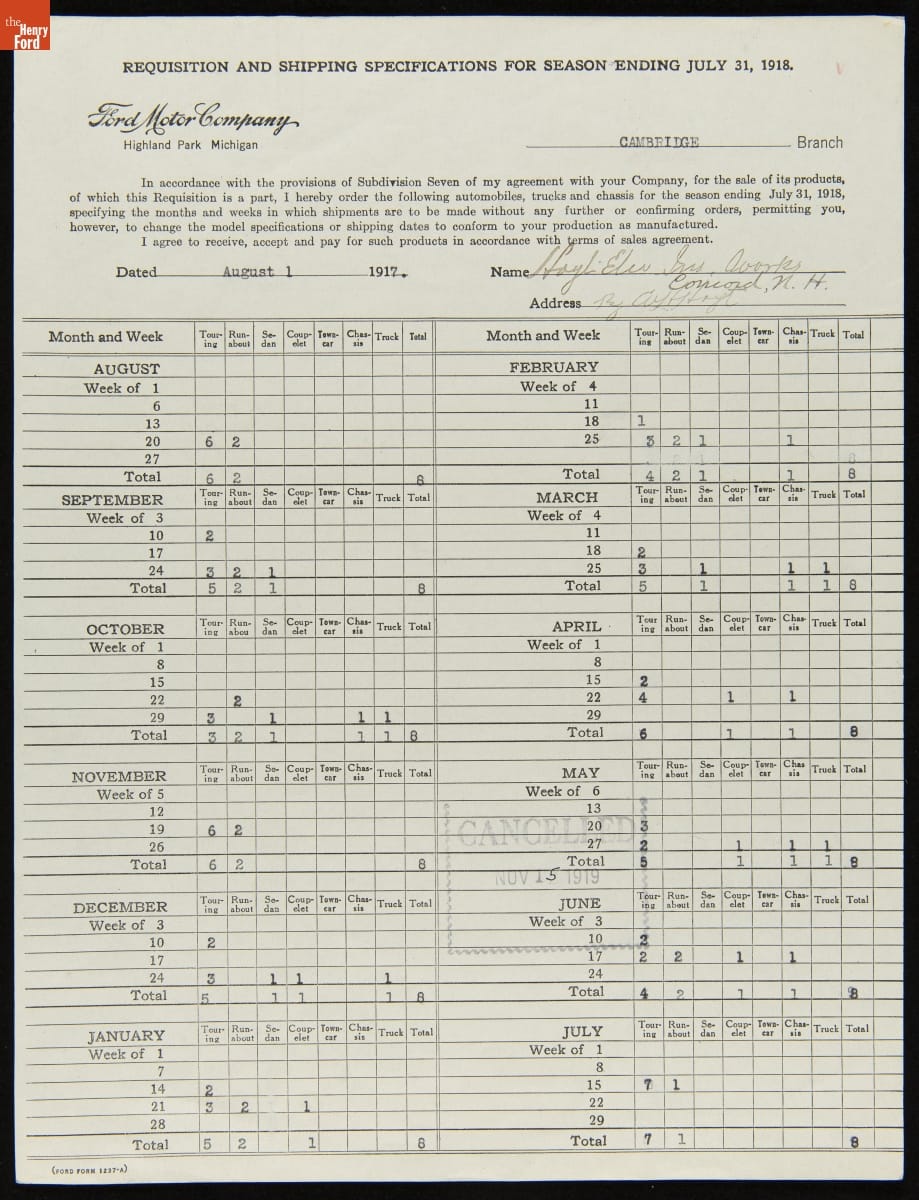
- November 15, 1919
- Collections - Artifact
Cancelled Requisition Form for Hoyt Elec Inst Works, Concord, New Hampshire, November 15, 1919
Though it operated some direct-sales offices in major cities, Ford Motor Company sold most of its Model T cars through franchise agreements with independent dealers. Each franchisee received the right to sell Ford cars within a specific territory. Ford encouraged dealers by offering discounts and rebates to high sellers. But low-selling dealers risked losing their territories.
- Cancelled Requisition Form for Chas A. Fox, Raymond, New Hampshire, August 1, 1917 - Though it operated some direct-sales offices in major cities, Ford Motor Company sold most of its Model T cars through franchise agreements with independent dealers. Each franchisee received the right to sell Ford cars within a specific territory. Ford encouraged dealers by offering discounts and rebates to high sellers. But low-selling dealers risked losing their territories.
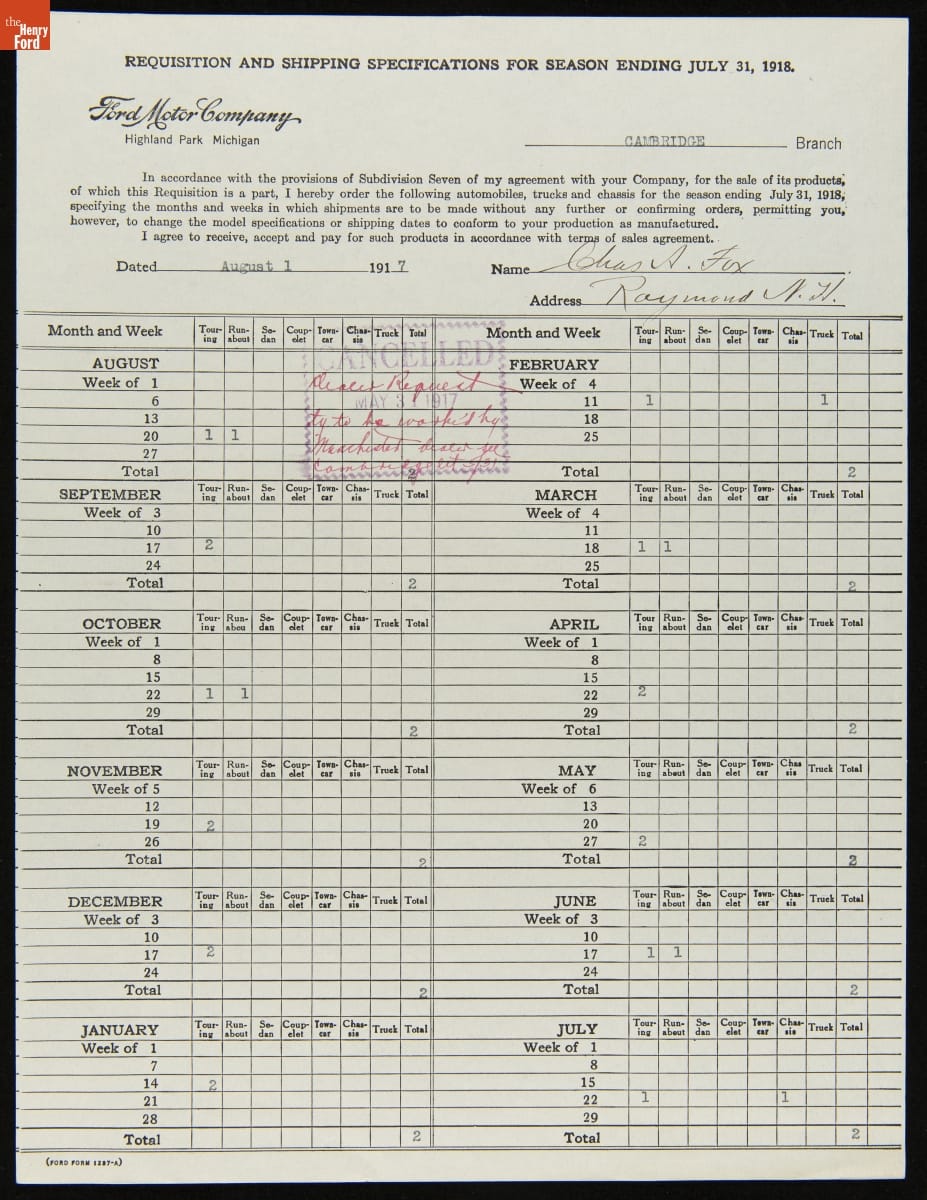
- August 01, 1917
- Collections - Artifact
Cancelled Requisition Form for Chas A. Fox, Raymond, New Hampshire, August 1, 1917
Though it operated some direct-sales offices in major cities, Ford Motor Company sold most of its Model T cars through franchise agreements with independent dealers. Each franchisee received the right to sell Ford cars within a specific territory. Ford encouraged dealers by offering discounts and rebates to high sellers. But low-selling dealers risked losing their territories.