
Search
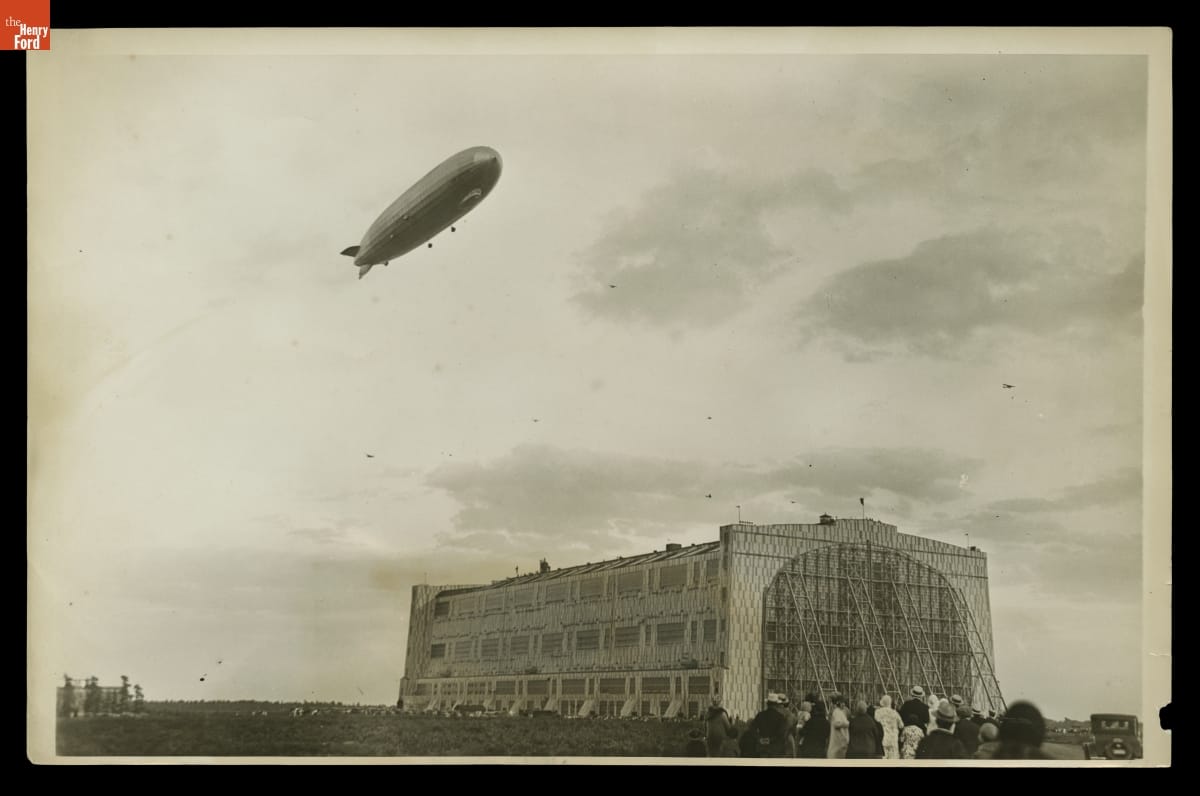
- Airship "Graf Zeppelin" Arriving at Lakehurst, New Jersey Naval Hangar, August 4, 1929 - Launched in 1928, Germany's <em>Graf Zeppelin</em> was the most successful of the passenger airships that provided intercontinental service during the 1930s. It made 590 flights and traveled more than a million miles in its nine-year career. Despite its exemplary safety record, <em>Graf Zeppelin</em> was retired following the loss of the airship <em>Hindenburg</em> in 1937.
- August 04, 1929
- Collections - Artifact
Airship "Graf Zeppelin" Arriving at Lakehurst, New Jersey Naval Hangar, August 4, 1929
Launched in 1928, Germany's Graf Zeppelin was the most successful of the passenger airships that provided intercontinental service during the 1930s. It made 590 flights and traveled more than a million miles in its nine-year career. Despite its exemplary safety record, Graf Zeppelin was retired following the loss of the airship Hindenburg in 1937.
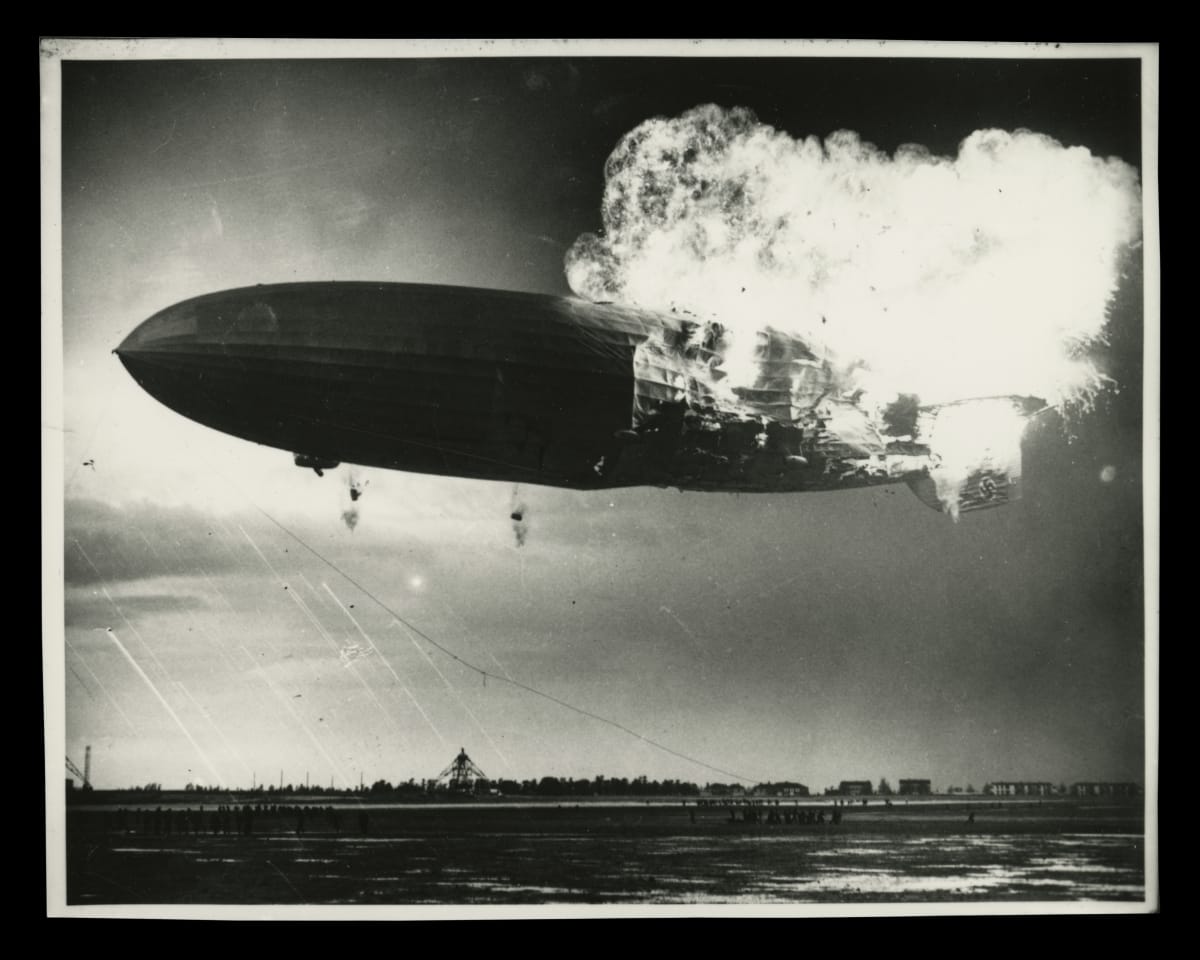
- Airship "Hindenburg" Disaster, Naval Air Station Lakehurst in Manchester Township, New Jersey, May 6, 1937 - The German airship <em>Hindenburg</em> was just minutes away from completing a transatlantic flight when it burst into flames at Lakehurst, New Jersey, on May 6, 1937. The fierce inferno, fueled by the airship's hydrogen lifting gas, claimed 36 lives. Debate continues about the fire's origin. Investigators considered everything from static electricity, to lightning, to deliberate sabotage.
- May 06, 1937
- Collections - Artifact
Airship "Hindenburg" Disaster, Naval Air Station Lakehurst in Manchester Township, New Jersey, May 6, 1937
The German airship Hindenburg was just minutes away from completing a transatlantic flight when it burst into flames at Lakehurst, New Jersey, on May 6, 1937. The fierce inferno, fueled by the airship's hydrogen lifting gas, claimed 36 lives. Debate continues about the fire's origin. Investigators considered everything from static electricity, to lightning, to deliberate sabotage.
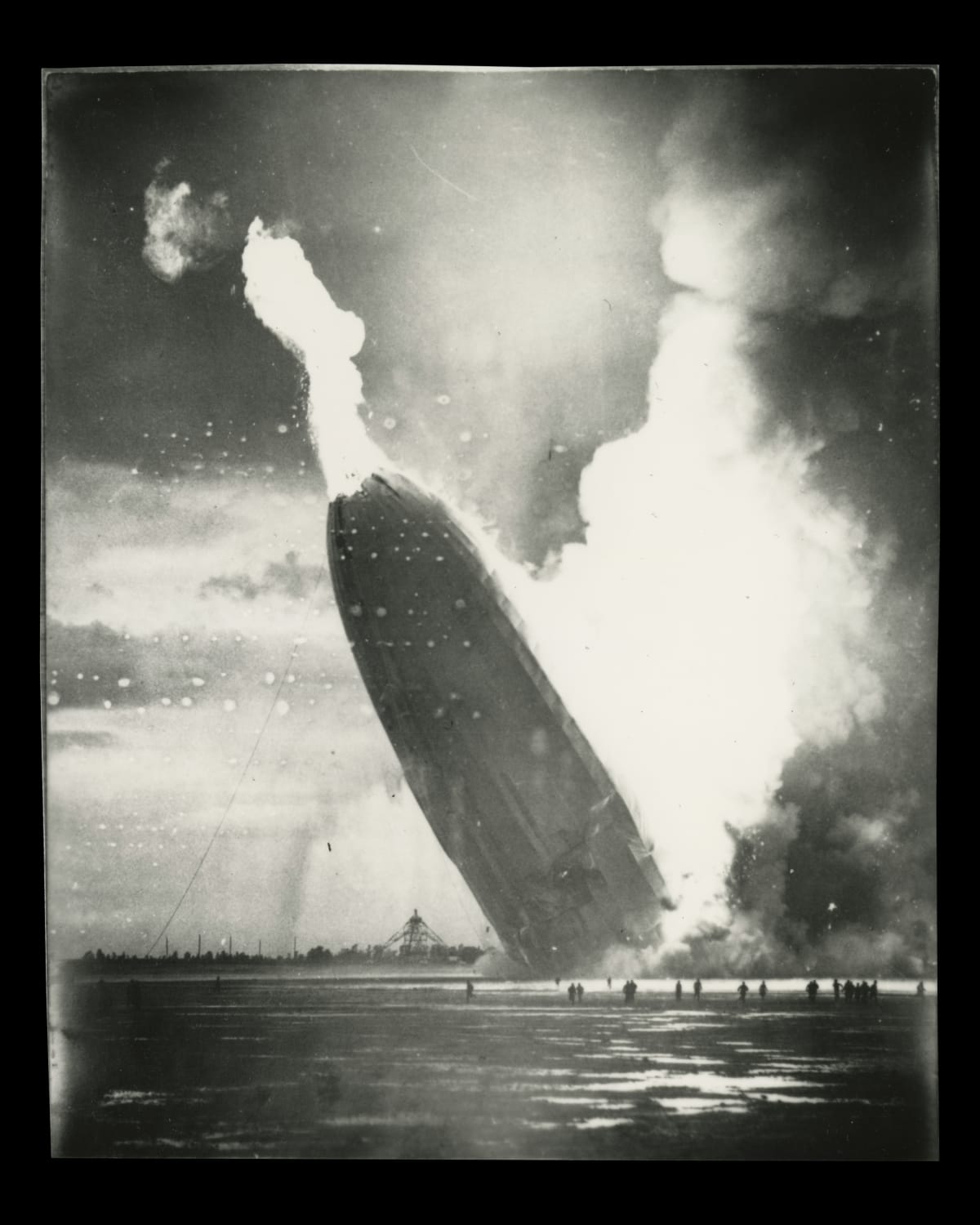
- Airship "Hindenburg" Disaster, Naval Air Station Lakehurst in Manchester Township, New Jersey, May 6, 1937 - The German airship <em>Hindenburg</em> was just minutes away from completing a transatlantic flight when it burst into flames at Lakehurst, New Jersey, on May 6, 1937. The fierce inferno, fueled by the airship's hydrogen lifting gas, claimed 36 lives. Debate continues about the fire's origin. Investigators considered everything from static electricity, to lightning, to deliberate sabotage.
- May 06, 1937
- Collections - Artifact
Airship "Hindenburg" Disaster, Naval Air Station Lakehurst in Manchester Township, New Jersey, May 6, 1937
The German airship Hindenburg was just minutes away from completing a transatlantic flight when it burst into flames at Lakehurst, New Jersey, on May 6, 1937. The fierce inferno, fueled by the airship's hydrogen lifting gas, claimed 36 lives. Debate continues about the fire's origin. Investigators considered everything from static electricity, to lightning, to deliberate sabotage.
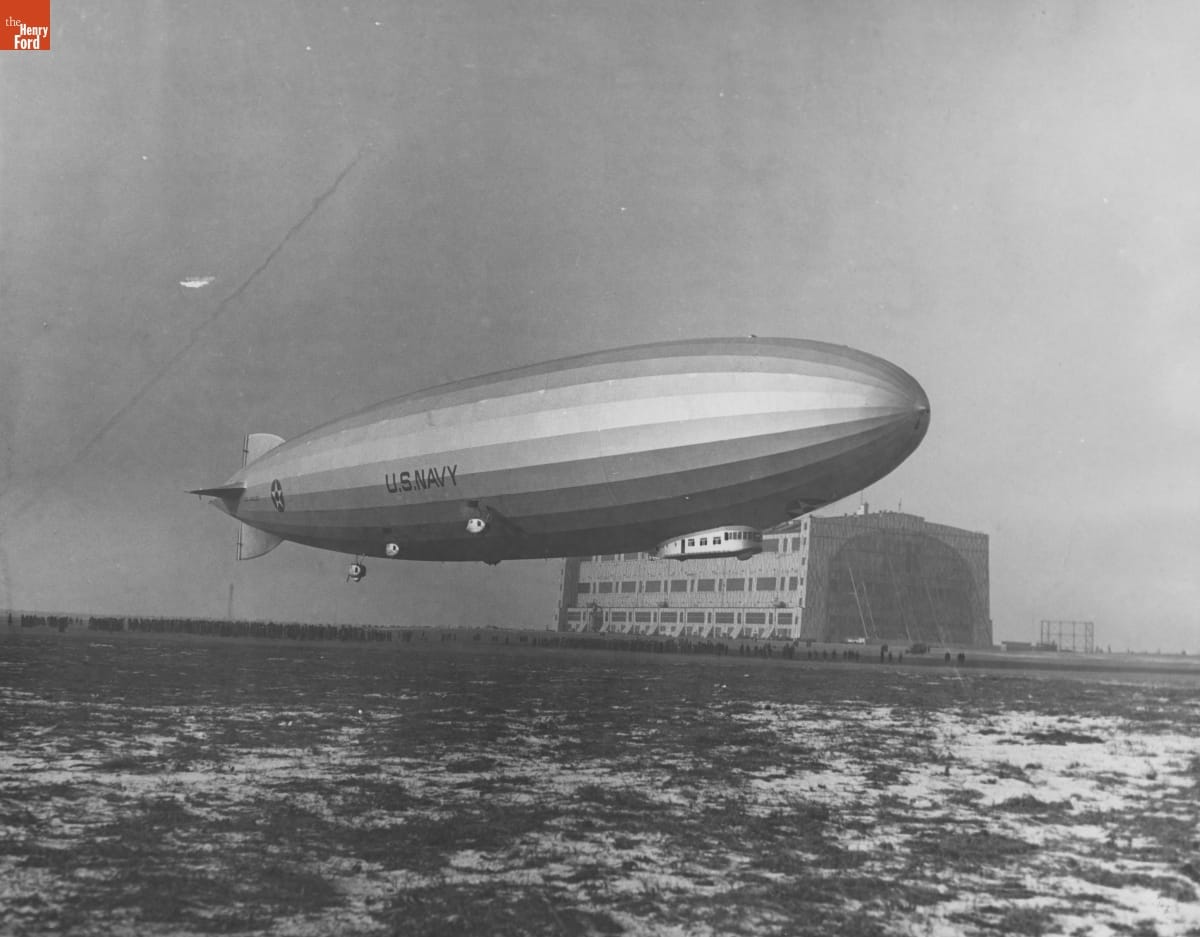
- Zeppelin "Los Angeles" Leaving Hangar at Lakehurst, New Jersey, 1926 - In the 1920s and 1930s, the U.S. Navy experimented with rigid airships both as reconnaissance craft and as flying aircraft carriers. The helium-lifted ships proved too fragile for military service as three of the four built were lost in storms. Only the USS <em>Los Angeles</em> avoided disaster. It was decommissioned and dismantled in 1939.
- 1926
- Collections - Artifact
Zeppelin "Los Angeles" Leaving Hangar at Lakehurst, New Jersey, 1926
In the 1920s and 1930s, the U.S. Navy experimented with rigid airships both as reconnaissance craft and as flying aircraft carriers. The helium-lifted ships proved too fragile for military service as three of the four built were lost in storms. Only the USS Los Angeles avoided disaster. It was decommissioned and dismantled in 1939.
- Airship "Hindenburg" Disaster, Naval Air Station Lakehurst in Manchester Township, New Jersey, May 6, 1937 - The German airship <em>Hindenburg</em> was just minutes away from completing a transatlantic flight when it burst into flames at Lakehurst, New Jersey, on May 6, 1937. The fierce inferno, fueled by the airship's hydrogen lifting gas, claimed 36 lives. Debate continues about the fire's origin. Investigators considered everything from static electricity, to lightning, to deliberate sabotage.
- May 06, 1937
- Collections - Artifact
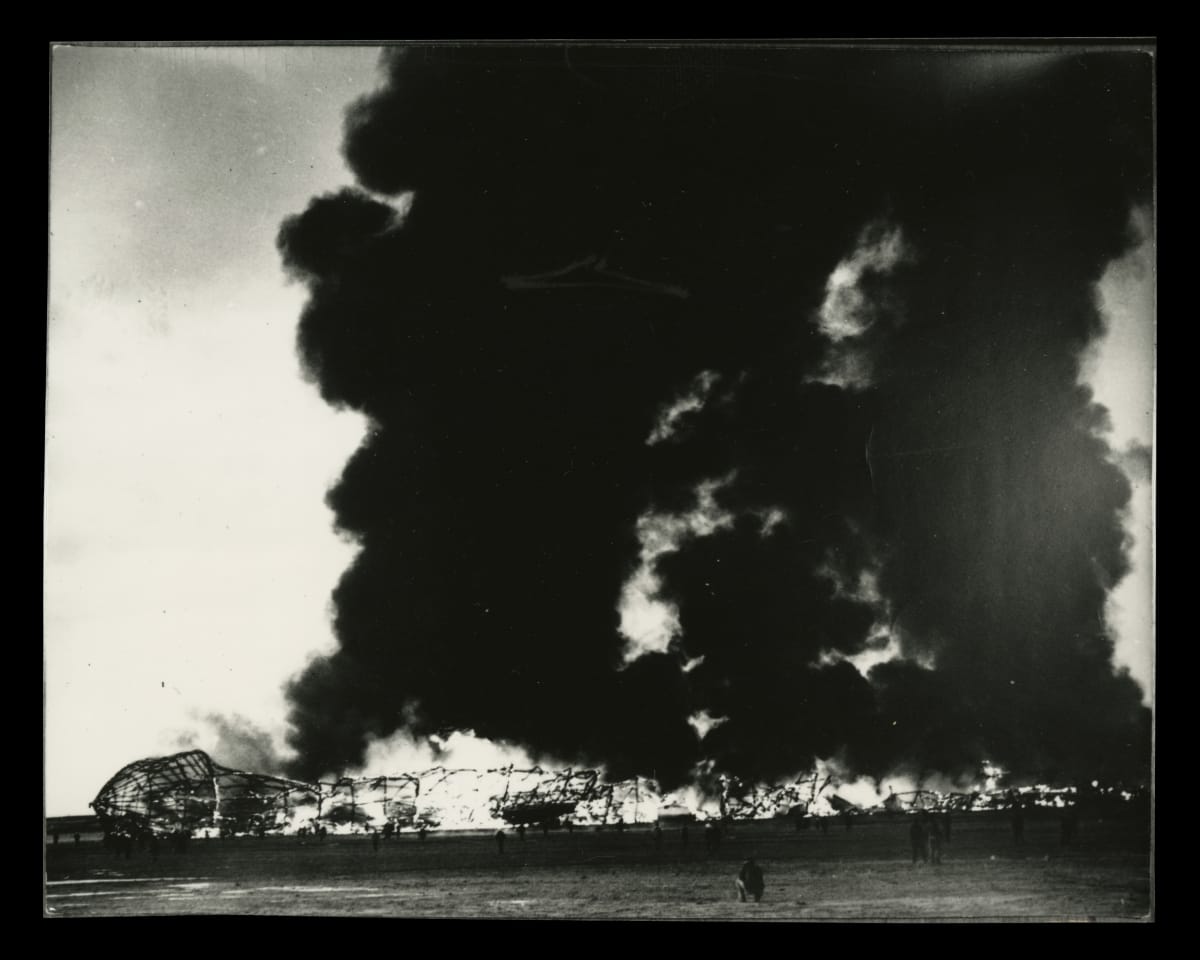
Airship "Hindenburg" Disaster, Naval Air Station Lakehurst in Manchester Township, New Jersey, May 6, 1937
The German airship Hindenburg was just minutes away from completing a transatlantic flight when it burst into flames at Lakehurst, New Jersey, on May 6, 1937. The fierce inferno, fueled by the airship's hydrogen lifting gas, claimed 36 lives. Debate continues about the fire's origin. Investigators considered everything from static electricity, to lightning, to deliberate sabotage.
- Airship "Hindenburg" Disaster, Naval Air Station Lakehurst in Manchester Township, New Jersey, May 6, 1937 - The German airship <em>Hindenburg</em> was just minutes away from completing a transatlantic flight when it burst into flames at Lakehurst, New Jersey, on May 6, 1937. The fierce inferno, fueled by the airship's hydrogen lifting gas, claimed 36 lives. Debate continues about the fire's origin. Investigators considered everything from static electricity, to lightning, to deliberate sabotage.
- May 06, 1937
- Collections - Artifact
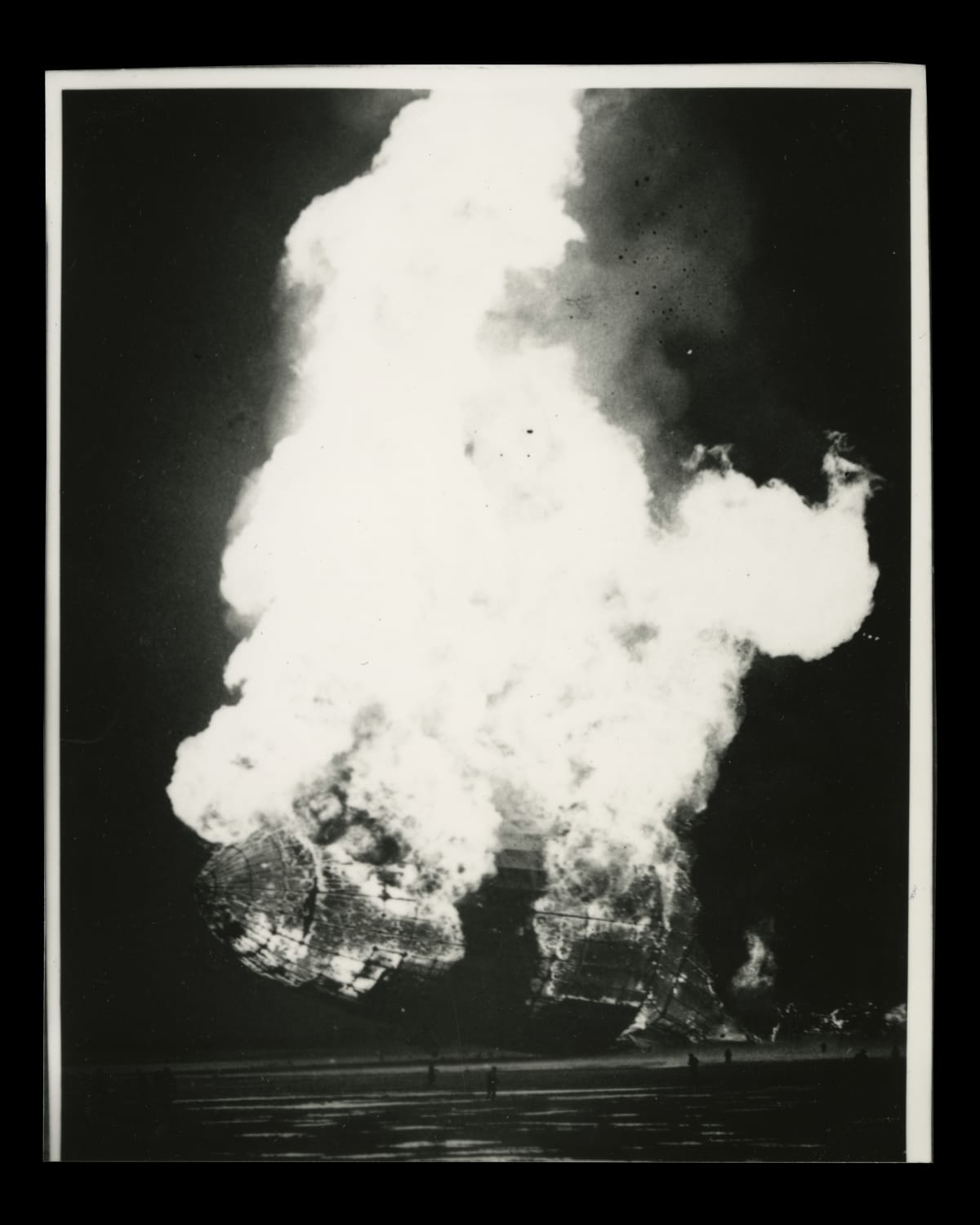
Airship "Hindenburg" Disaster, Naval Air Station Lakehurst in Manchester Township, New Jersey, May 6, 1937
The German airship Hindenburg was just minutes away from completing a transatlantic flight when it burst into flames at Lakehurst, New Jersey, on May 6, 1937. The fierce inferno, fueled by the airship's hydrogen lifting gas, claimed 36 lives. Debate continues about the fire's origin. Investigators considered everything from static electricity, to lightning, to deliberate sabotage.