
Search
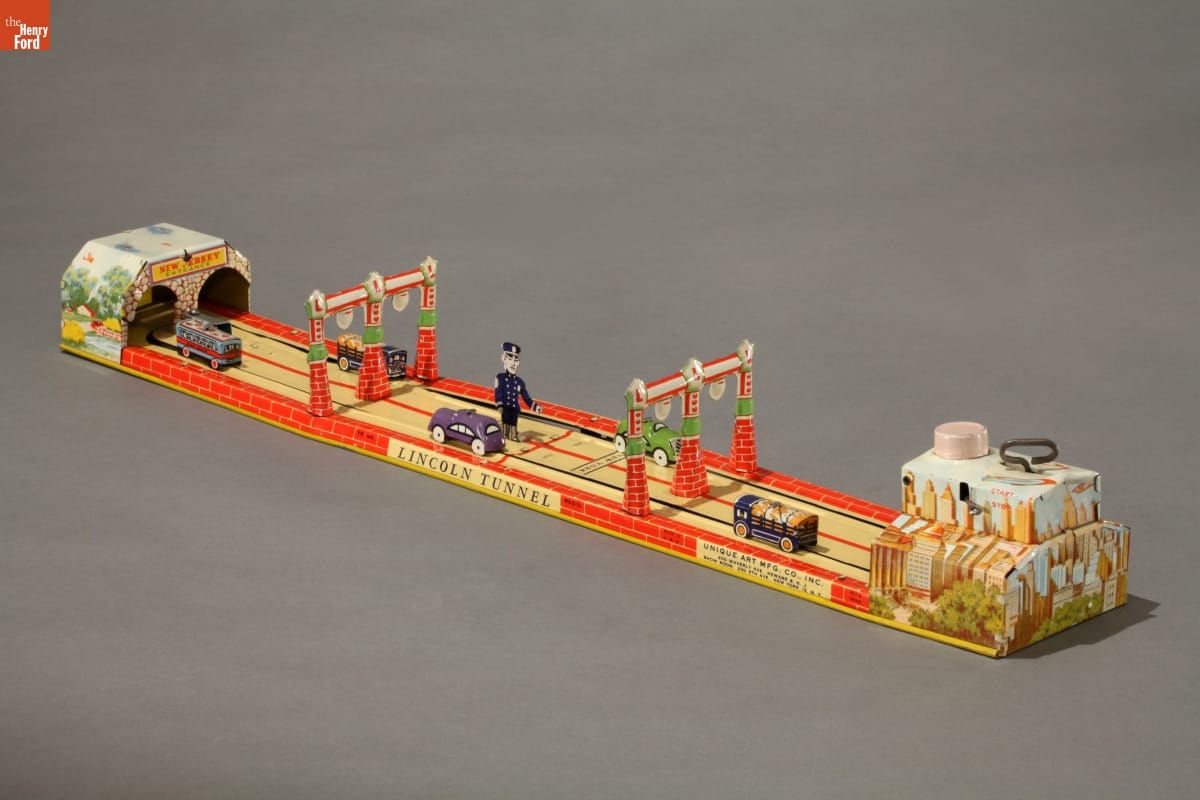
- Lincoln Tunnel Mechanical Toy, 1925-1940 - This lithographed, pressed metal toy by Unique Art Manufacturing Company, Inc., has vehicles traveling in and out of the Lincoln Tunnel. Cars enter either through rural New Jersey or urban New York. The Lincoln Tunnel opened in 1937 and runs under the Hudson River between New Jersey and Manhattan.
- 1925-1940
- Collections - Artifact
Lincoln Tunnel Mechanical Toy, 1925-1940
This lithographed, pressed metal toy by Unique Art Manufacturing Company, Inc., has vehicles traveling in and out of the Lincoln Tunnel. Cars enter either through rural New Jersey or urban New York. The Lincoln Tunnel opened in 1937 and runs under the Hudson River between New Jersey and Manhattan.
- Pennant, "Atlantic City," 1940-1965 -
- 1940-1965
- Collections - Artifact
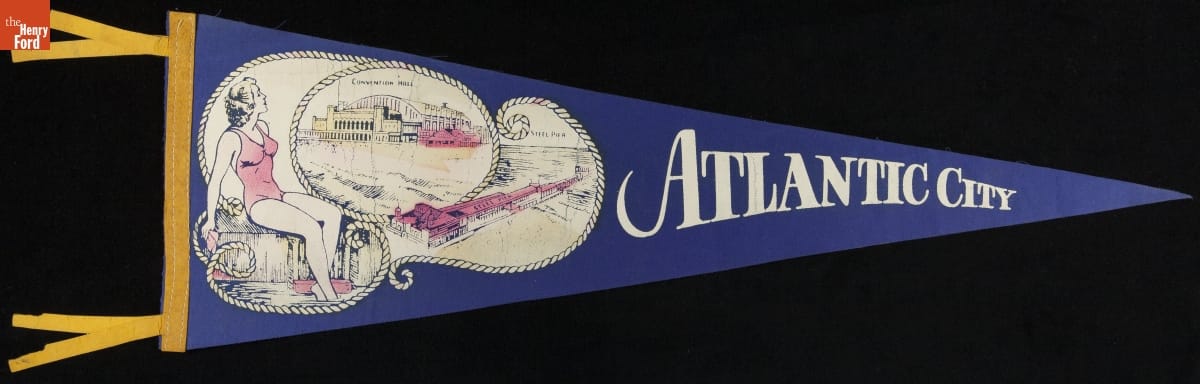
Pennant, "Atlantic City," 1940-1965
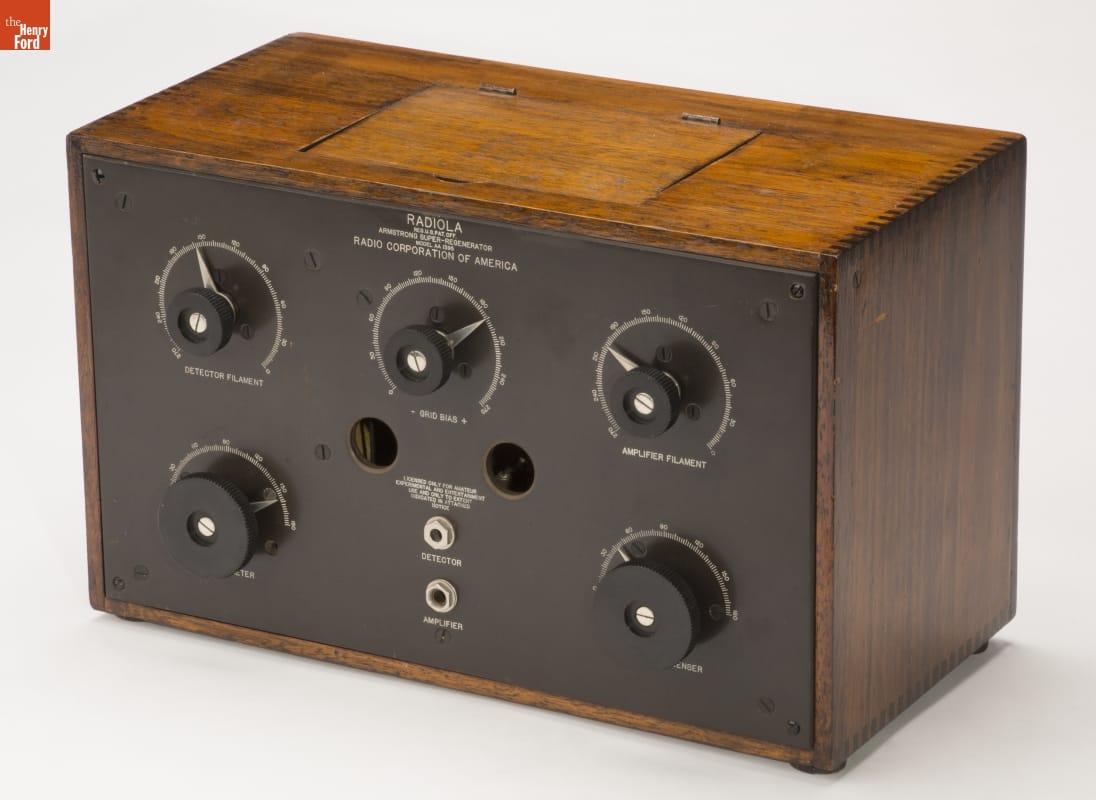
- Radiola Broadcast Receiver, Type 1375, Used at Tuckerton Wireless Station, 1922-1923 - This radio equipment was used at the German-built Tuckerton Wireless Station in New Jersey. A powerful 820-foot antenna communicated with an identical station in Germany. National security concerns during WWI led to the seizure of Tuckerton by the U.S. government in 1917. It is cited to be the origin of information leaks leading to the RMS <em>Lusitania</em> disaster through U-boat attack.
- 1922-1923
- Collections - Artifact
Radiola Broadcast Receiver, Type 1375, Used at Tuckerton Wireless Station, 1922-1923
This radio equipment was used at the German-built Tuckerton Wireless Station in New Jersey. A powerful 820-foot antenna communicated with an identical station in Germany. National security concerns during WWI led to the seizure of Tuckerton by the U.S. government in 1917. It is cited to be the origin of information leaks leading to the RMS Lusitania disaster through U-boat attack.
- Grand Opening of the Tower of Pizza, Green Brook, New Jersey, 1955-1970 -
- 1955-1970
- Collections - Artifact
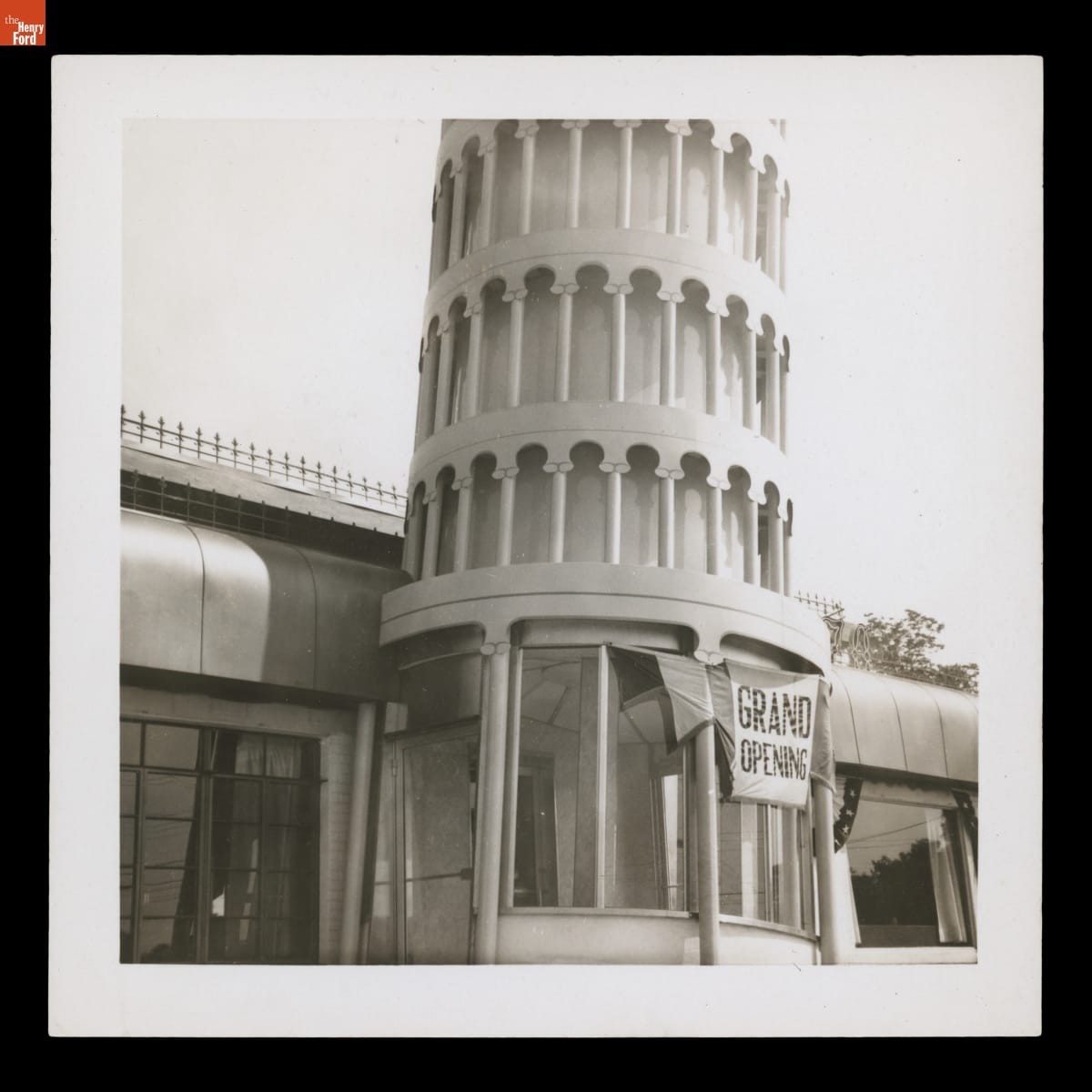
Grand Opening of the Tower of Pizza, Green Brook, New Jersey, 1955-1970
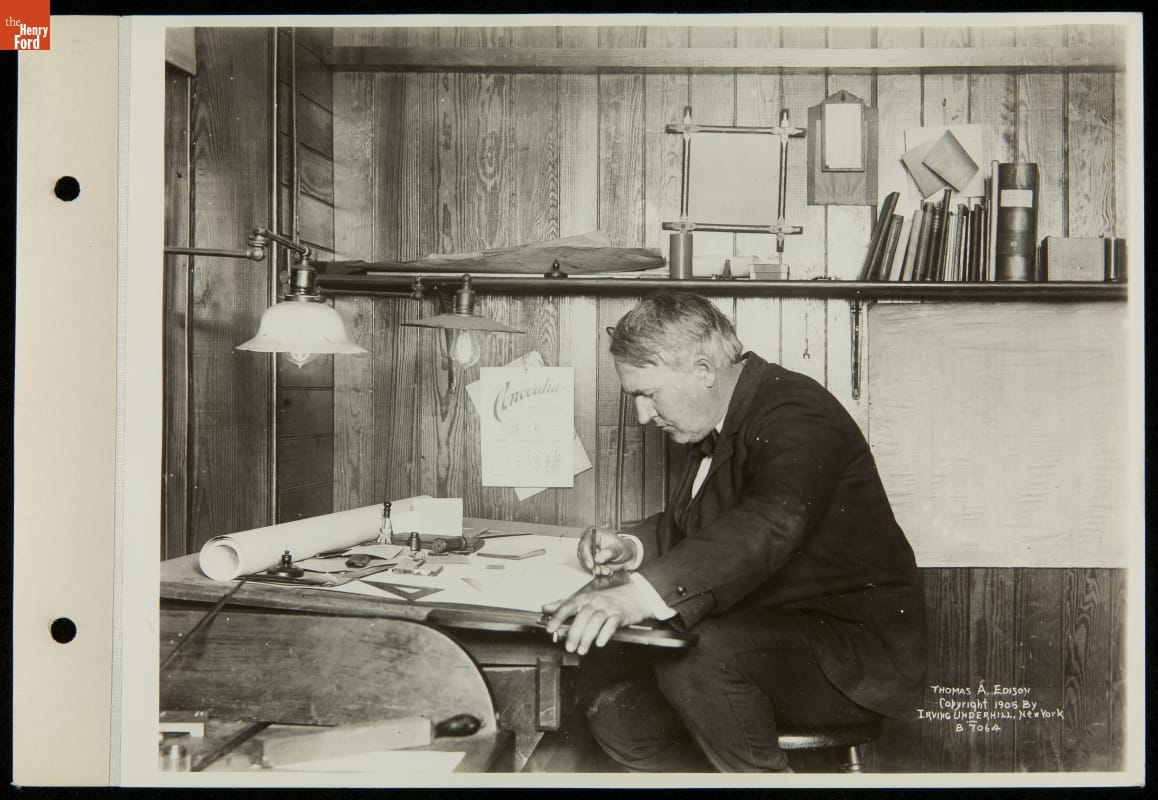
- Thomas Edison at His Laboratory in West Orange, New Jersey, 1898 - This photograph shows inventor Thomas Alva Edison at work in his West Orange, New Jersey, laboratory. Edison directed teams of research assistants here for nearly fifty years -- from 1887 until his death in 1931. More than half of Edison's 1,093 patents resulted from the collaborative work done in this complex, which became a model for modern research and development laboratories.
- November 05, 1929
- Collections - Artifact
Thomas Edison at His Laboratory in West Orange, New Jersey, 1898
This photograph shows inventor Thomas Alva Edison at work in his West Orange, New Jersey, laboratory. Edison directed teams of research assistants here for nearly fifty years -- from 1887 until his death in 1931. More than half of Edison's 1,093 patents resulted from the collaborative work done in this complex, which became a model for modern research and development laboratories.
- Thomas Edison Napping at His West Orange Laboratory, New Jersey, circa 1924 -
- circa 1924
- Collections - Artifact
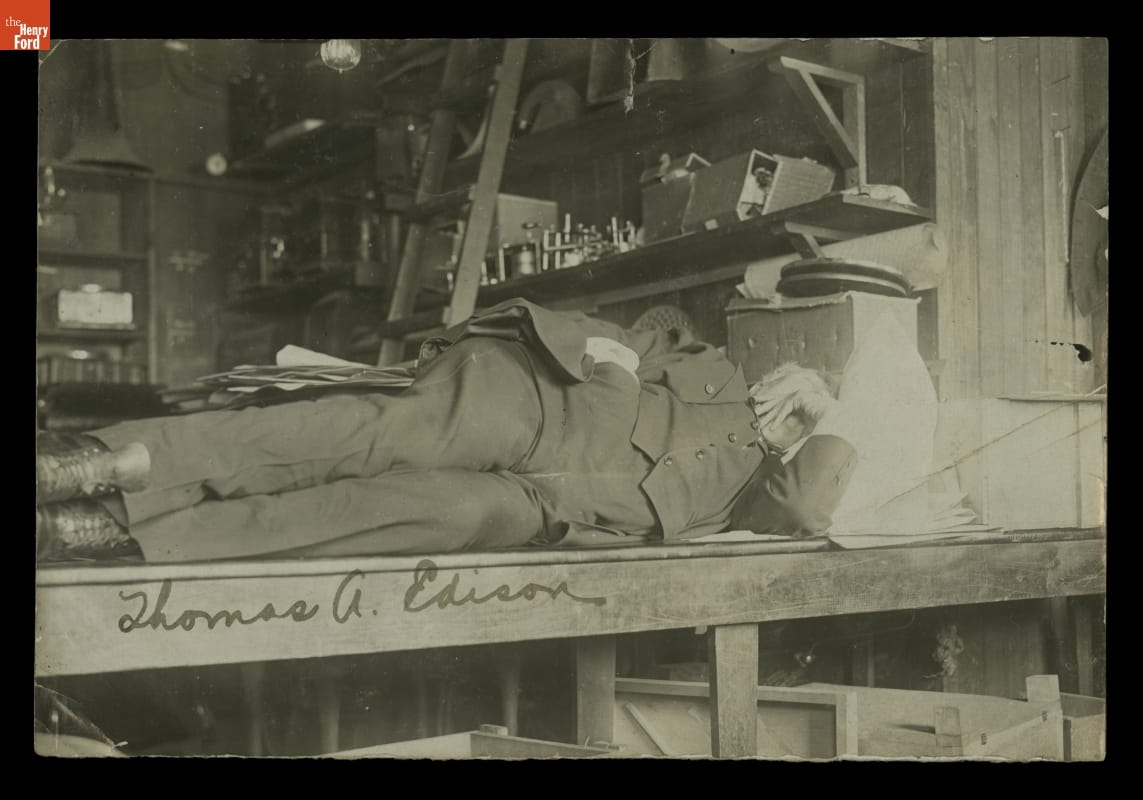
Thomas Edison Napping at His West Orange Laboratory, New Jersey, circa 1924
- Thomas Edison at West Orange Laboratory, New Jersey, 1887-1888 -
- 1887-1888
- Collections - Artifact
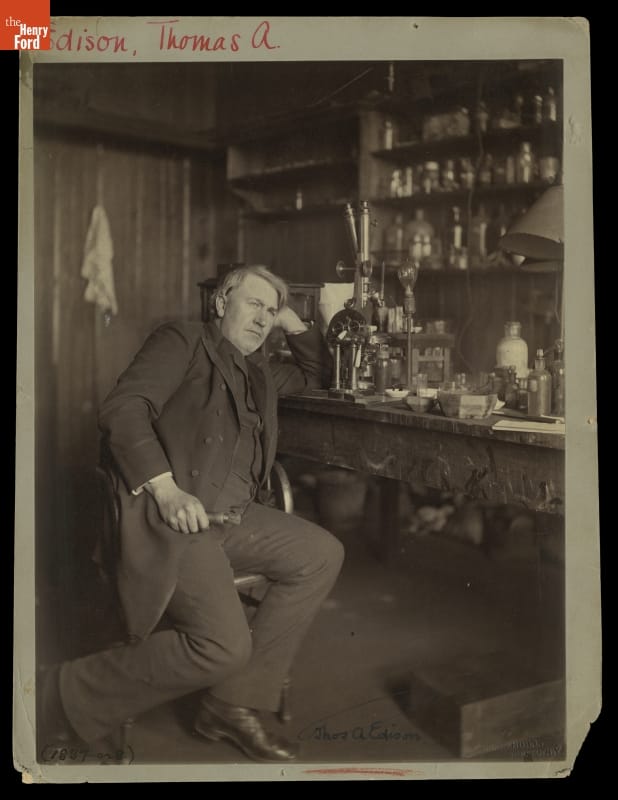
Thomas Edison at West Orange Laboratory, New Jersey, 1887-1888
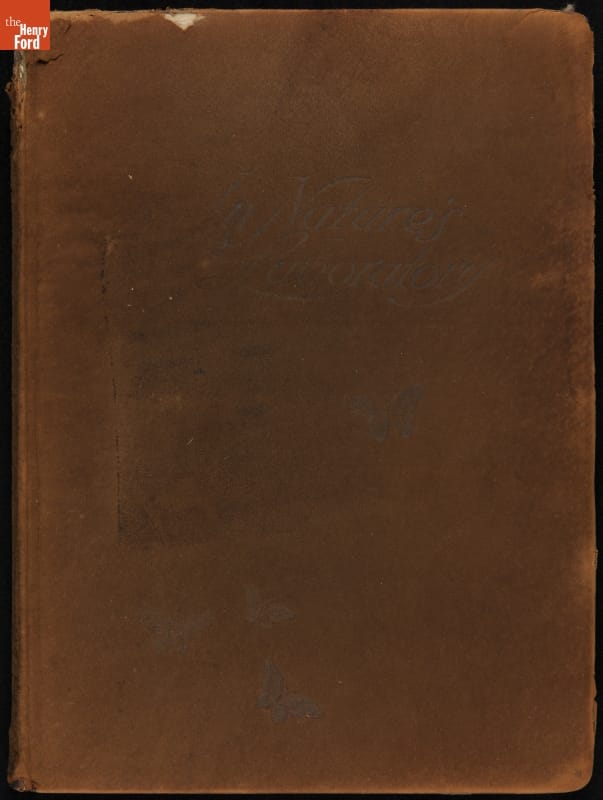
- "In Nature's Laboratory : Commemorating Our Vacation Trip of 1916, August 28th to September 9th" - The Vagabonds -- Henry Ford, Thomas Edison, Harvey Firestone, and John Burroughs -- enjoyed their annual camping trips taken from 1916 to 1924. Burroughs chronicled the group's 1916 journey in the elaborate scrapbook <em>In Nature's Laboratory</em>. Burroughs, Edison, and Firestone traveled through the Adirondack Mountains and Vermont. Ford couldn't make the trip that year.
- 28 August 1916-09 September 1916
- Collections - Artifact
"In Nature's Laboratory : Commemorating Our Vacation Trip of 1916, August 28th to September 9th"
The Vagabonds -- Henry Ford, Thomas Edison, Harvey Firestone, and John Burroughs -- enjoyed their annual camping trips taken from 1916 to 1924. Burroughs chronicled the group's 1916 journey in the elaborate scrapbook In Nature's Laboratory. Burroughs, Edison, and Firestone traveled through the Adirondack Mountains and Vermont. Ford couldn't make the trip that year.
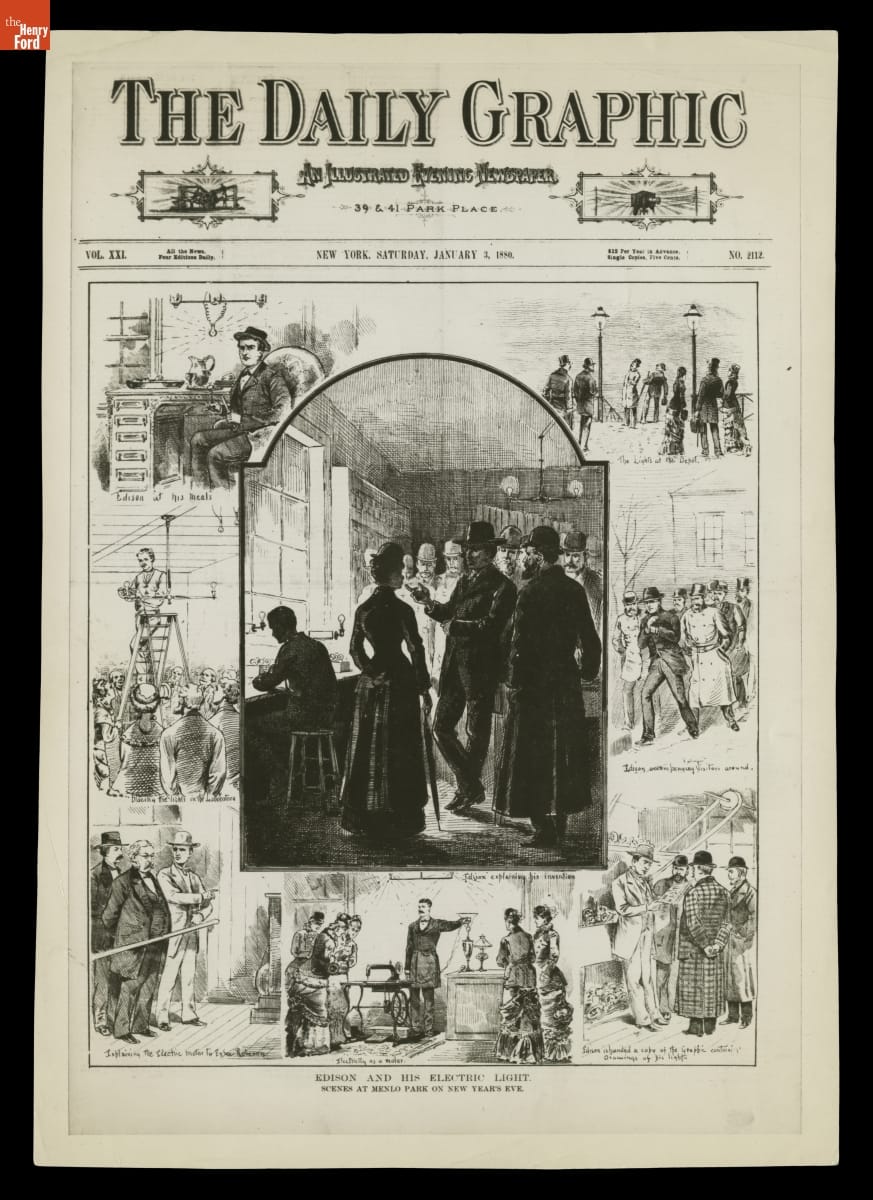
- Cover of The Daily Graphic Newspaper for January 3, 1880, "Edison and His Electric Light" -
- December 31, 1879
- Collections - Artifact
Cover of The Daily Graphic Newspaper for January 3, 1880, "Edison and His Electric Light"
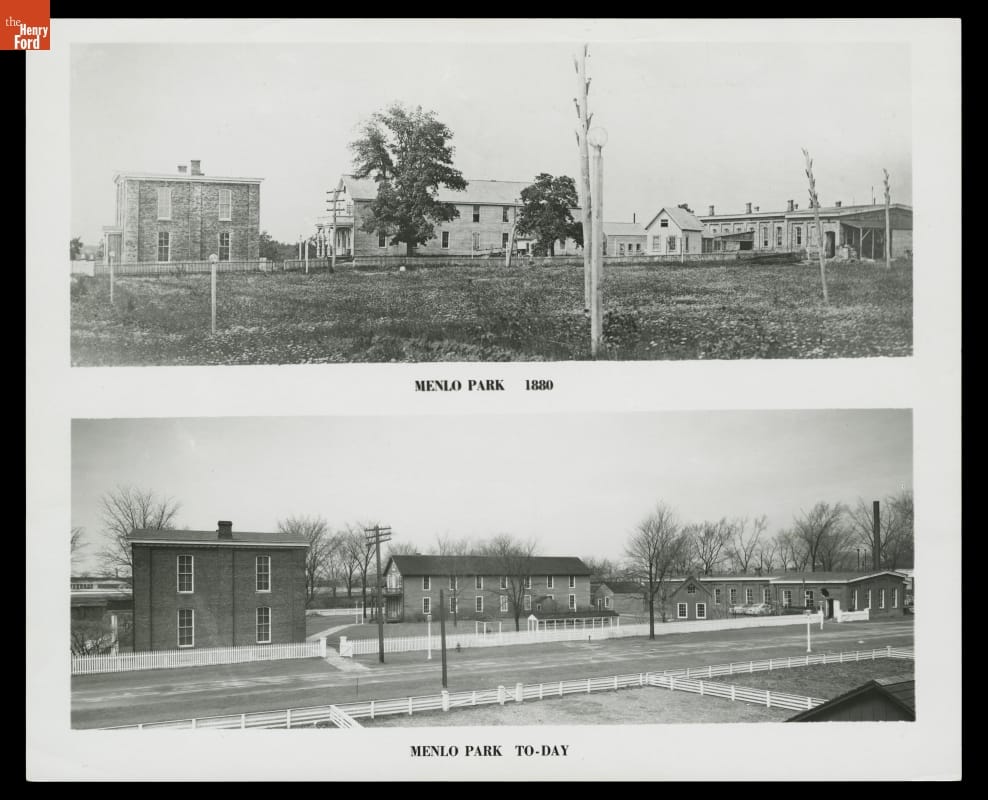
- Thomas Edison's Laboratory in 1880 in Menlo Park, New Jersey, and in 1984, Reconstructed in Greenfield Village -
- 1880 and 1954
- Collections - Artifact
Thomas Edison's Laboratory in 1880 in Menlo Park, New Jersey, and in 1984, Reconstructed in Greenfield Village