
Search
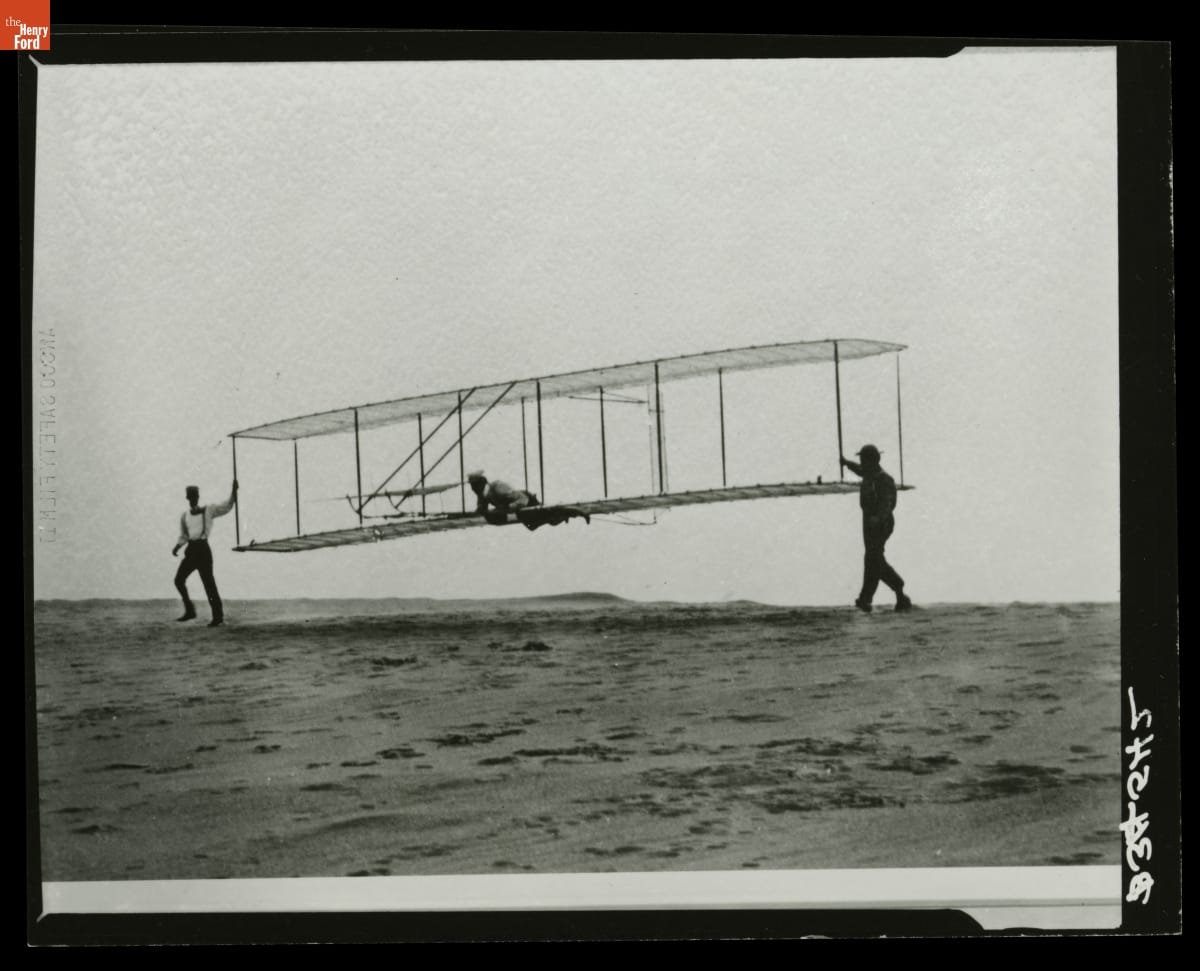
- Launching the 1902 Glider with Orville Wright Piloting, Kill Devil Hills, North Carolina - The Wright brothers' 1902 glider was their third aircraft tested at Kill Devil Hills in as many years. It was also the first built with aerodynamic calculations based on the Wrights' own wind tunnel tests. The improvements in performance were stunning. The brothers made more than 700 glides in 1902. Many were over 500 feet long, and some exceeded 600 feet.
- October 01, 1902
- Collections - Artifact
Launching the 1902 Glider with Orville Wright Piloting, Kill Devil Hills, North Carolina
The Wright brothers' 1902 glider was their third aircraft tested at Kill Devil Hills in as many years. It was also the first built with aerodynamic calculations based on the Wrights' own wind tunnel tests. The improvements in performance were stunning. The brothers made more than 700 glides in 1902. Many were over 500 feet long, and some exceeded 600 feet.
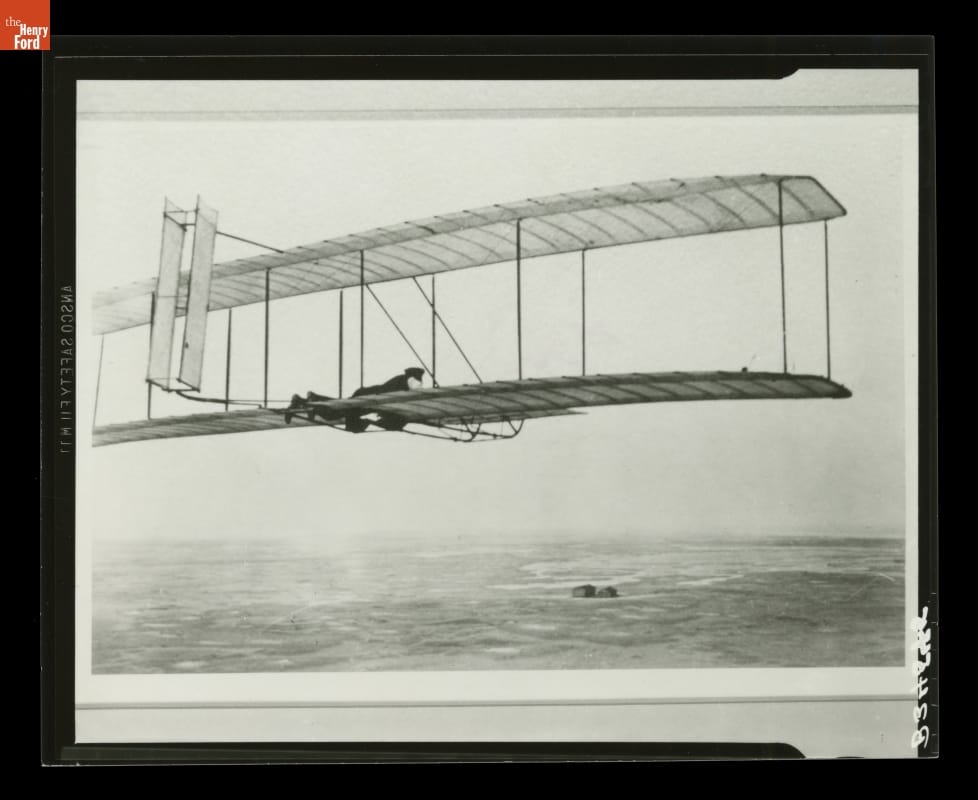
- Wright Brothers Piloting Their 1902 Glider in 1903, Kill Devil Hills, North Carolina - The Wright brothers' 1902 glider was their third aircraft tested at Kill Devil Hills in as many years. It was also the first built with aerodynamic calculations based on the Wrights' own wind tunnel tests. The improvements in performance were stunning. The brothers made more than 700 glides in 1902. Many were over 500 feet long, and some exceeded 600 feet.
- October 21, 1903
- Collections - Artifact
Wright Brothers Piloting Their 1902 Glider in 1903, Kill Devil Hills, North Carolina
The Wright brothers' 1902 glider was their third aircraft tested at Kill Devil Hills in as many years. It was also the first built with aerodynamic calculations based on the Wrights' own wind tunnel tests. The improvements in performance were stunning. The brothers made more than 700 glides in 1902. Many were over 500 feet long, and some exceeded 600 feet.
- Program, "Moogfest 2014: The Synthesis of Technology, Art & Music," Asheville, North Carolina, 2014 - Moogfest is an annual festival dedicated to "the synthesis of music, art, and technology," founded in 2004. The Moog synthesizer is an innovative electronic instrument that continues to influence music today. Moogfest pays homage to the instrument's legacy with live music programming as well as a roster of lectures, workshops, and art installations.

- 23 April 2014-27 April 2014
- Collections - Artifact
Program, "Moogfest 2014: The Synthesis of Technology, Art & Music," Asheville, North Carolina, 2014
Moogfest is an annual festival dedicated to "the synthesis of music, art, and technology," founded in 2004. The Moog synthesizer is an innovative electronic instrument that continues to influence music today. Moogfest pays homage to the instrument's legacy with live music programming as well as a roster of lectures, workshops, and art installations.
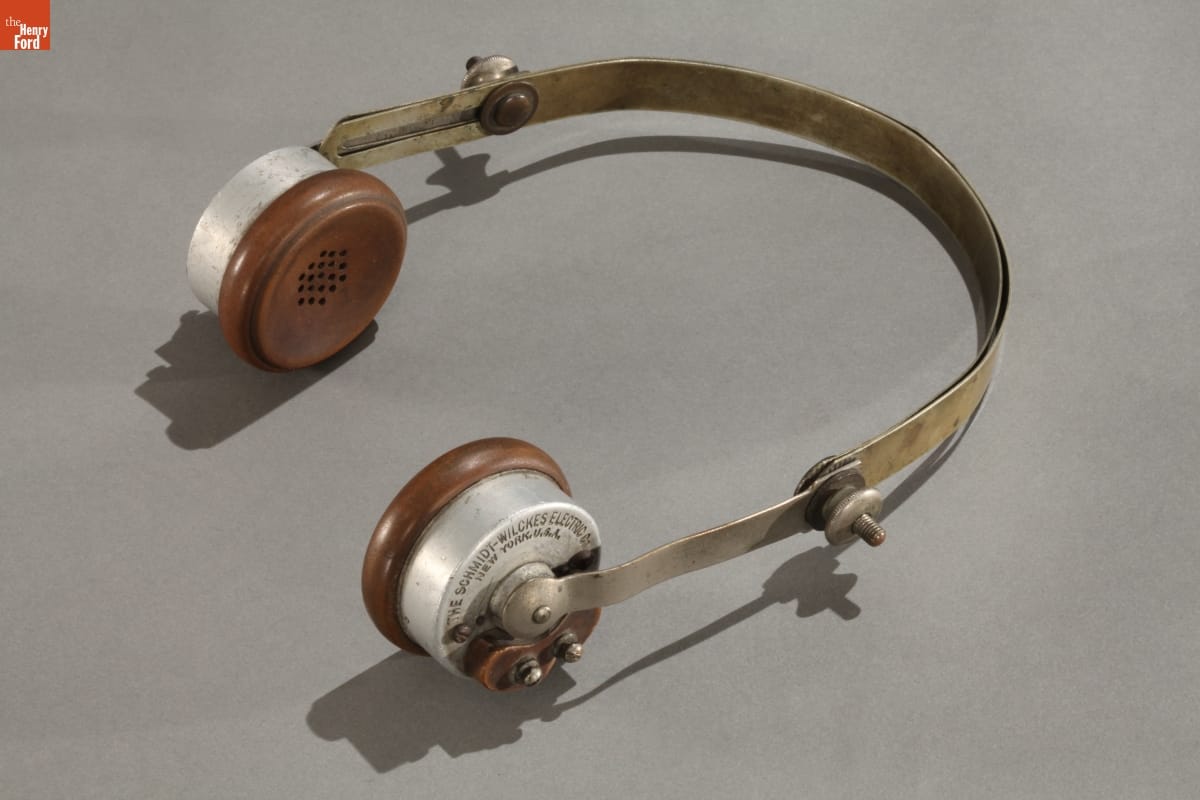
- Radio Headphones Used by Theodore Haubner While Transmitting the First "SOS" Distress Signal, August 11, 1909 - In 1909, telegraph operator Theodore Haubner sent the first American ship-to-shore wireless distress signal -- SOS. These headphones were part of his wireless equipment. Haubner was aboard the SS <EM>Arapahoe</EM> off Cape Hatteras, North Carolina, when it became disabled.
- August 11, 1909
- Collections - Artifact
Radio Headphones Used by Theodore Haubner While Transmitting the First "SOS" Distress Signal, August 11, 1909
In 1909, telegraph operator Theodore Haubner sent the first American ship-to-shore wireless distress signal -- SOS. These headphones were part of his wireless equipment. Haubner was aboard the SS Arapahoe off Cape Hatteras, North Carolina, when it became disabled.
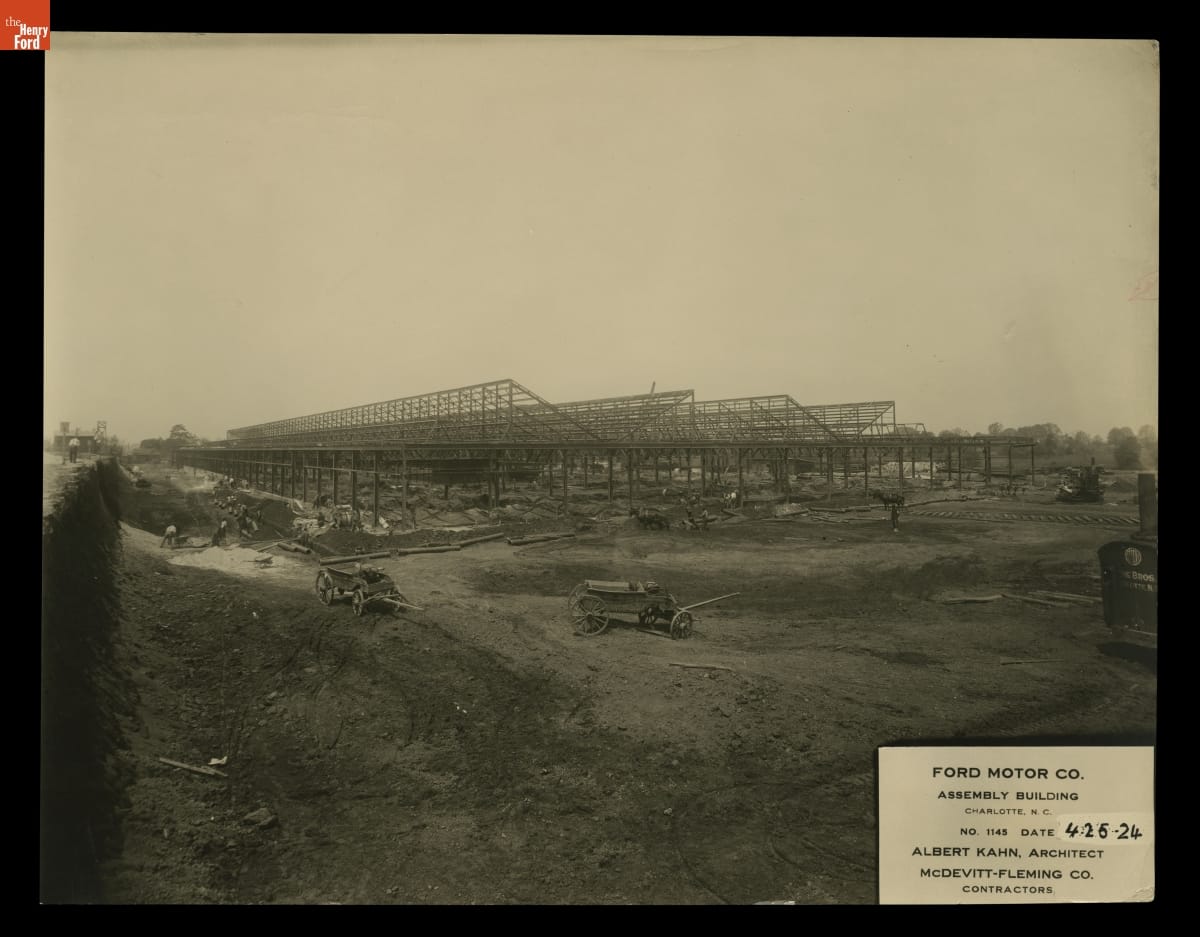
- Construction Progress, Ford Motor Company Assembly Plant, Charlotte, North Carolina, April 25, 1924 - Starting in the early 1910s, Ford Motor Company opened domestic assembly plants throughout the United States. Assembling automobiles closer to regional markets reduced shipping costs -- parts were cheaper to ship than completed automobiles. Ford established a branch in Charlotte, North Carolina, in 1914. Ten years later the company built a modern one-story assembly plant designed by Albert Kahn. Automobile assembly ceased at this plant in 1933.
- April 25, 1924
- Collections - Artifact
Construction Progress, Ford Motor Company Assembly Plant, Charlotte, North Carolina, April 25, 1924
Starting in the early 1910s, Ford Motor Company opened domestic assembly plants throughout the United States. Assembling automobiles closer to regional markets reduced shipping costs -- parts were cheaper to ship than completed automobiles. Ford established a branch in Charlotte, North Carolina, in 1914. Ten years later the company built a modern one-story assembly plant designed by Albert Kahn. Automobile assembly ceased at this plant in 1933.
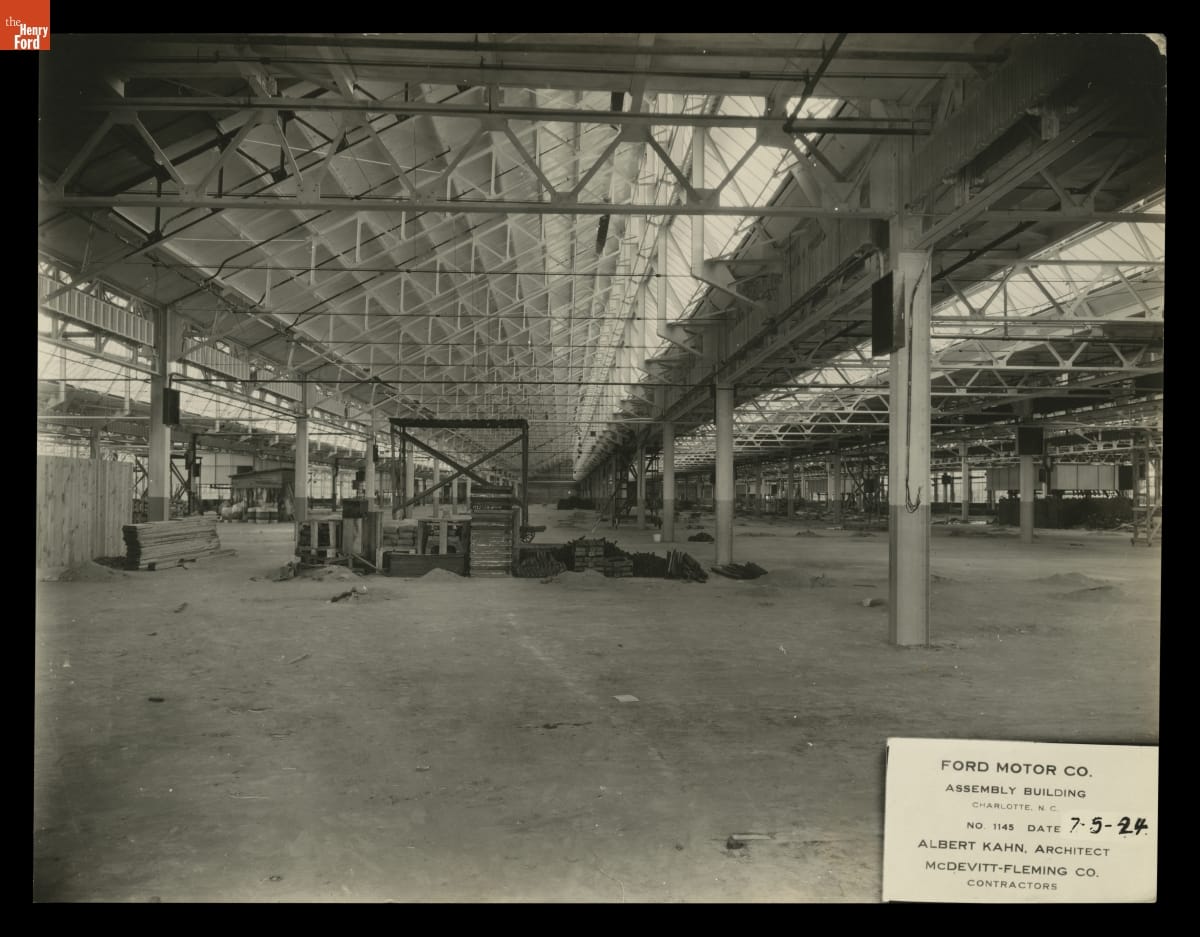
- Construction Progress, Ford Motor Company Assembly Plant, Charlotte, North Carolina, July 5, 1924 - Starting in the early 1910s, Ford Motor Company opened domestic assembly plants throughout the United States. Assembling automobiles closer to regional markets reduced shipping costs -- parts were cheaper to ship than completed automobiles. Ford established a branch in Charlotte, North Carolina, in 1914. Ten years later the company built a modern one-story assembly plant designed by Albert Kahn. Automobile assembly ceased at this plant in 1933.
- July 05, 1924
- Collections - Artifact
Construction Progress, Ford Motor Company Assembly Plant, Charlotte, North Carolina, July 5, 1924
Starting in the early 1910s, Ford Motor Company opened domestic assembly plants throughout the United States. Assembling automobiles closer to regional markets reduced shipping costs -- parts were cheaper to ship than completed automobiles. Ford established a branch in Charlotte, North Carolina, in 1914. Ten years later the company built a modern one-story assembly plant designed by Albert Kahn. Automobile assembly ceased at this plant in 1933.
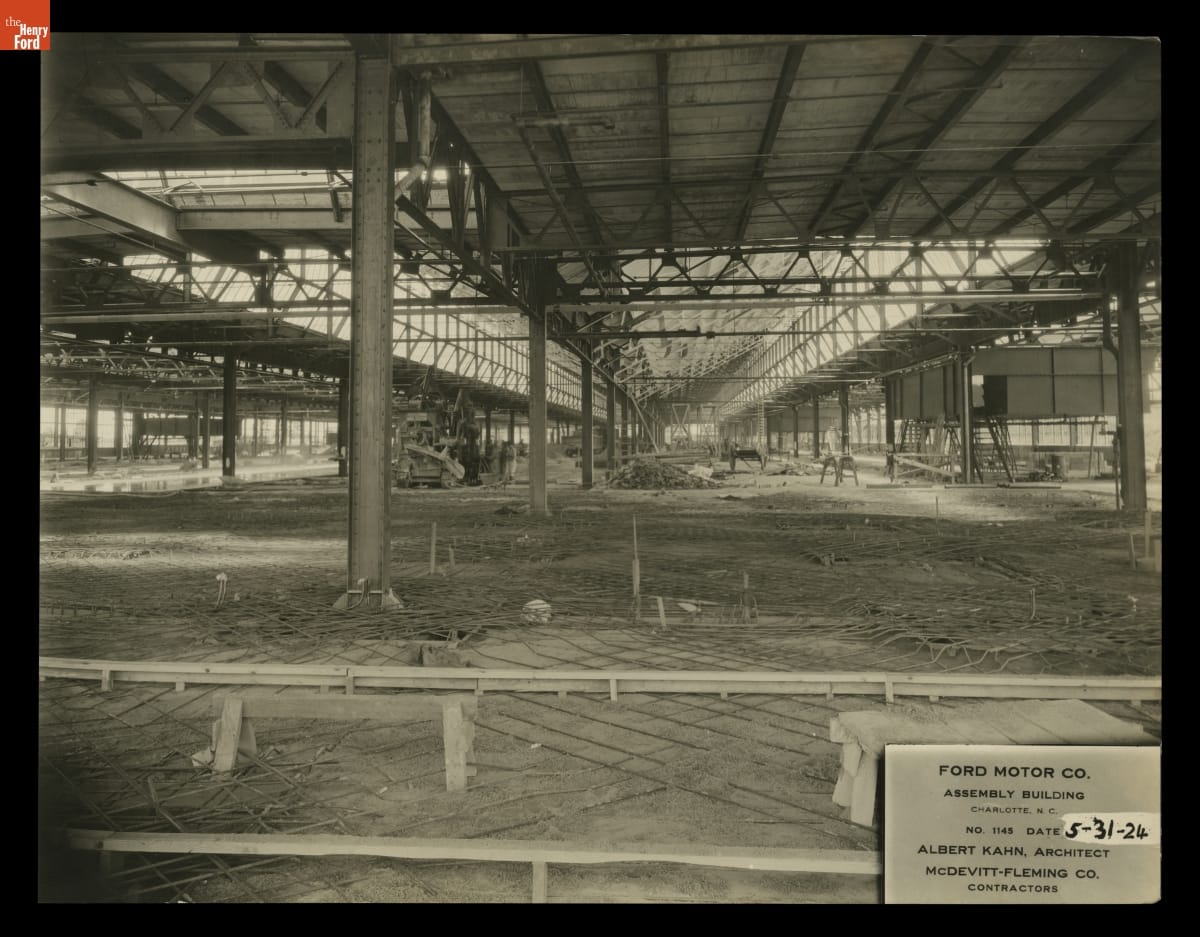
- Construction Progress, Ford Motor Company Assembly Plant, Charlotte, North Carolina, May 31, 1924 - Starting in the early 1910s, Ford Motor Company opened domestic assembly plants throughout the United States. Assembling automobiles closer to regional markets reduced shipping costs -- parts were cheaper to ship than completed automobiles. Ford established a branch in Charlotte, North Carolina, in 1914. Ten years later the company built a modern one-story assembly plant designed by Albert Kahn. Automobile assembly ceased at this plant in 1933.
- May 31, 1924
- Collections - Artifact
Construction Progress, Ford Motor Company Assembly Plant, Charlotte, North Carolina, May 31, 1924
Starting in the early 1910s, Ford Motor Company opened domestic assembly plants throughout the United States. Assembling automobiles closer to regional markets reduced shipping costs -- parts were cheaper to ship than completed automobiles. Ford established a branch in Charlotte, North Carolina, in 1914. Ten years later the company built a modern one-story assembly plant designed by Albert Kahn. Automobile assembly ceased at this plant in 1933.
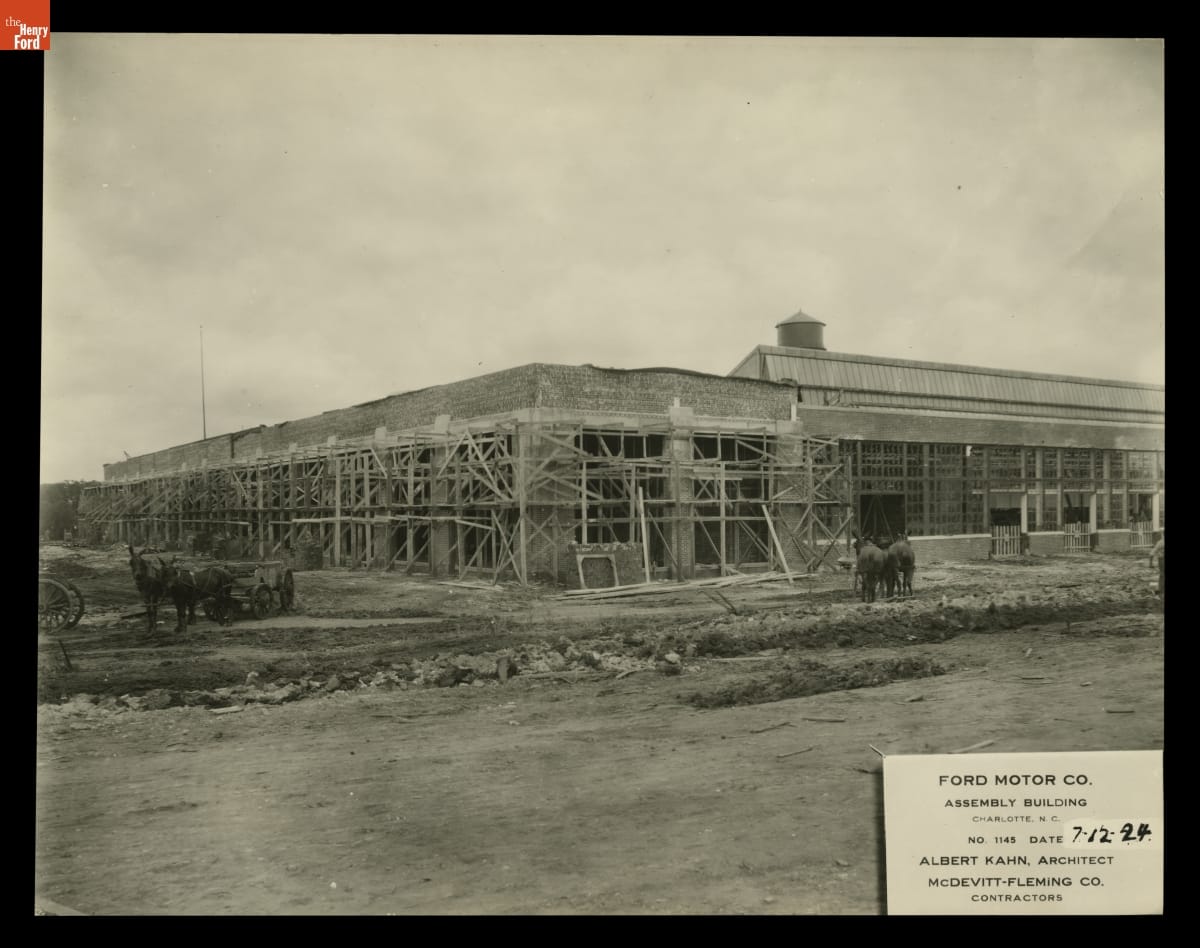
- Construction Progress, Ford Motor Company Assembly Plant, Charlotte, North Carolina, July 12, 1924 - Starting in the early 1910s, Ford Motor Company opened domestic assembly plants throughout the United States. Assembling automobiles closer to regional markets reduced shipping costs -- parts were cheaper to ship than completed automobiles. Ford established a branch in Charlotte, North Carolina, in 1914. Ten years later the company built a modern one-story assembly plant designed by Albert Kahn. Automobile assembly ceased at this plant in 1933.
- July 12, 1924
- Collections - Artifact
Construction Progress, Ford Motor Company Assembly Plant, Charlotte, North Carolina, July 12, 1924
Starting in the early 1910s, Ford Motor Company opened domestic assembly plants throughout the United States. Assembling automobiles closer to regional markets reduced shipping costs -- parts were cheaper to ship than completed automobiles. Ford established a branch in Charlotte, North Carolina, in 1914. Ten years later the company built a modern one-story assembly plant designed by Albert Kahn. Automobile assembly ceased at this plant in 1933.
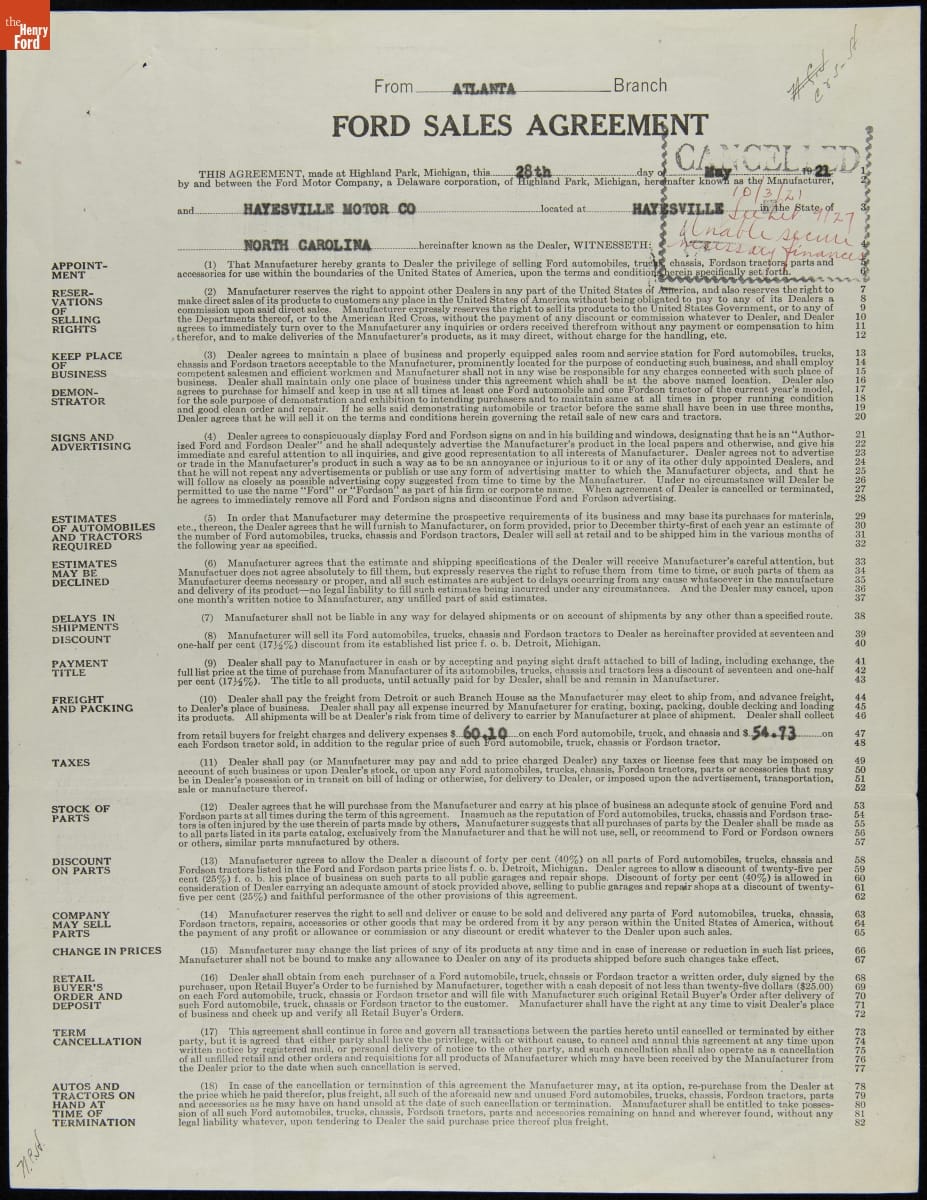
- Cancelled Ford Sales Agreement for Hayesville Motor Company, Hayesville, North Carolina, October 3, 1921 - Though it operated some direct-sales offices in major cities, Ford Motor Company sold most of its Model T cars through franchise agreements with independent dealers. Each franchisee received the right to sell Ford cars within a specific territory. Ford encouraged dealers by offering discounts and rebates to high sellers. But low-selling dealers risked losing their territories.
- October 03, 1921
- Collections - Artifact
Cancelled Ford Sales Agreement for Hayesville Motor Company, Hayesville, North Carolina, October 3, 1921
Though it operated some direct-sales offices in major cities, Ford Motor Company sold most of its Model T cars through franchise agreements with independent dealers. Each franchisee received the right to sell Ford cars within a specific territory. Ford encouraged dealers by offering discounts and rebates to high sellers. But low-selling dealers risked losing their territories.
- Construction Progress, Ford Motor Company Assembly Plant, Charlotte, North Carolina, February 15, 1924 - Starting in the early 1910s, Ford Motor Company opened domestic assembly plants throughout the United States. Assembling automobiles closer to regional markets reduced shipping costs -- parts were cheaper to ship than completed automobiles. Ford established a branch in Charlotte, North Carolina, in 1914. Ten years later the company built a modern one-story assembly plant designed by Albert Kahn. Automobile assembly ceased at this plant in 1933.
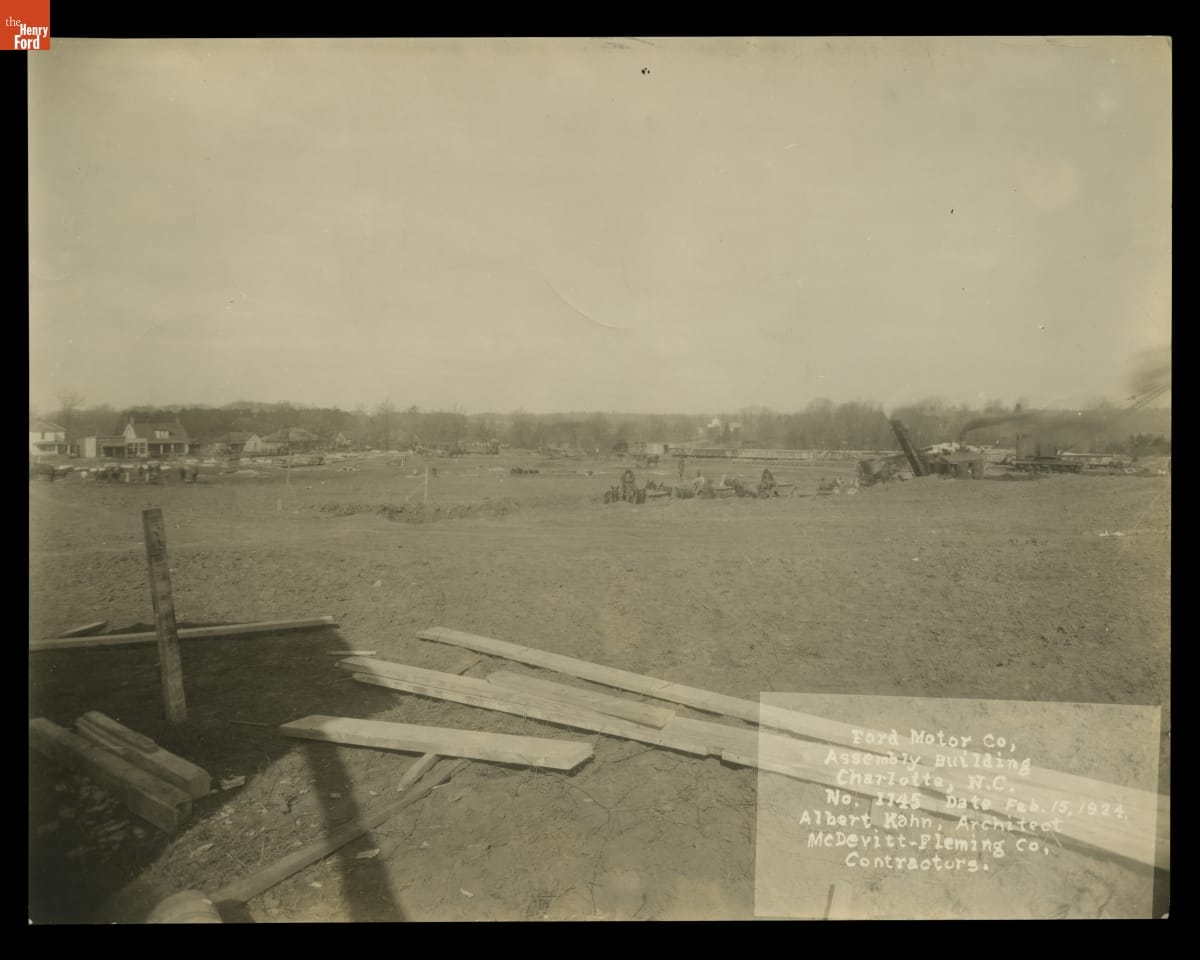
- February 15, 1924
- Collections - Artifact
Construction Progress, Ford Motor Company Assembly Plant, Charlotte, North Carolina, February 15, 1924
Starting in the early 1910s, Ford Motor Company opened domestic assembly plants throughout the United States. Assembling automobiles closer to regional markets reduced shipping costs -- parts were cheaper to ship than completed automobiles. Ford established a branch in Charlotte, North Carolina, in 1914. Ten years later the company built a modern one-story assembly plant designed by Albert Kahn. Automobile assembly ceased at this plant in 1933.