
Search
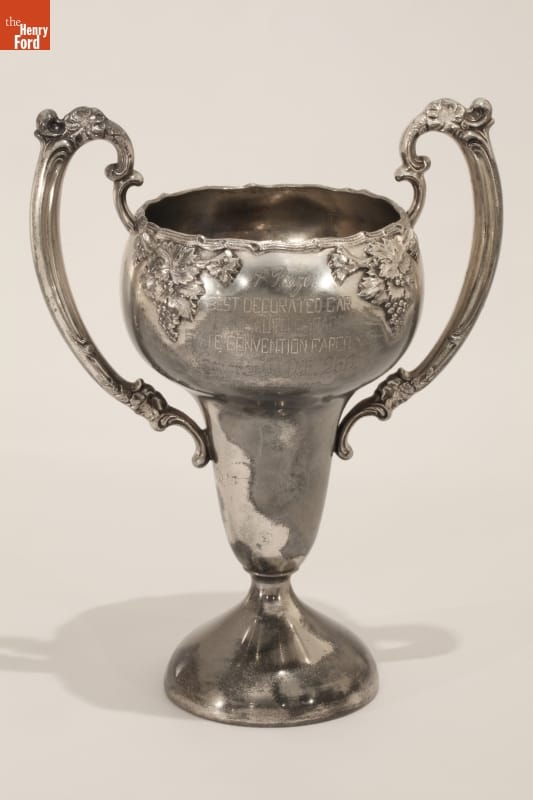
- Best Decorated Car Trophy From North Dakota State Convention, 1912 - Civic boosters in the early 20th century planned automobile parades for community celebrations, political rallies, company gatherings and other events. Decorated automobiles and floats motored down city streets thrilling onlookers. Entrants could receive prizes and trophies in a number of categories. In 1912, the best decorated car in the auto parade at the Elks' North Dakota State Convention won this silver cup.
- June 01, 1912
- Collections - Artifact
Best Decorated Car Trophy From North Dakota State Convention, 1912
Civic boosters in the early 20th century planned automobile parades for community celebrations, political rallies, company gatherings and other events. Decorated automobiles and floats motored down city streets thrilling onlookers. Entrants could receive prizes and trophies in a number of categories. In 1912, the best decorated car in the auto parade at the Elks' North Dakota State Convention won this silver cup.
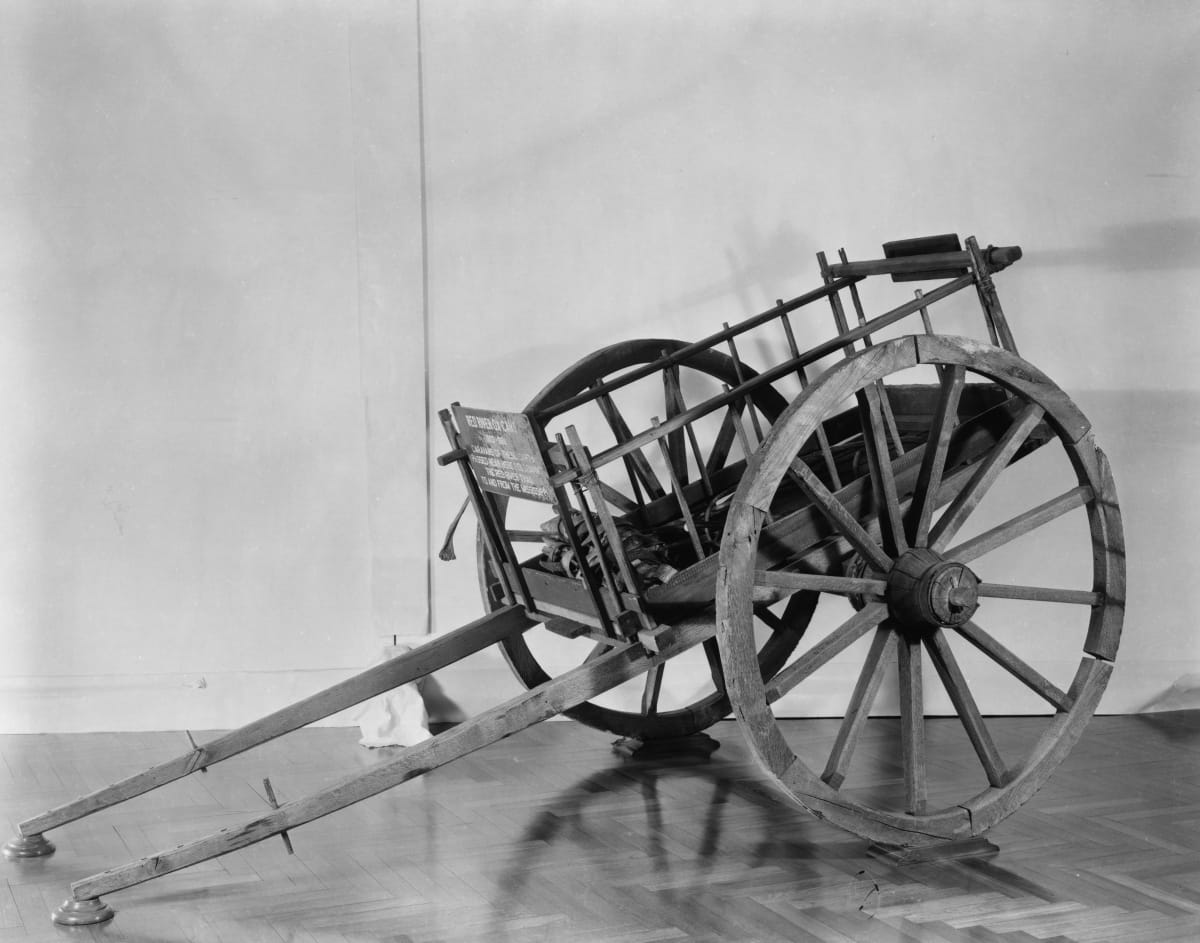
- Red River Cart Replica, circa 1925 - From the 1820s to the 1850s, hundreds of these simple, rugged carts transported annual supplies to the Red River Valley settlements of Minnesota and Manitoba, Canada. On return trips, the carts -- each drawn by a single ox -- carried meat, furs, and skins to St. Paul. This replica was probably built for exhibition by the Great Northern Railway.
- circa 1925
- Collections - Artifact
Red River Cart Replica, circa 1925
From the 1820s to the 1850s, hundreds of these simple, rugged carts transported annual supplies to the Red River Valley settlements of Minnesota and Manitoba, Canada. On return trips, the carts -- each drawn by a single ox -- carried meat, furs, and skins to St. Paul. This replica was probably built for exhibition by the Great Northern Railway.
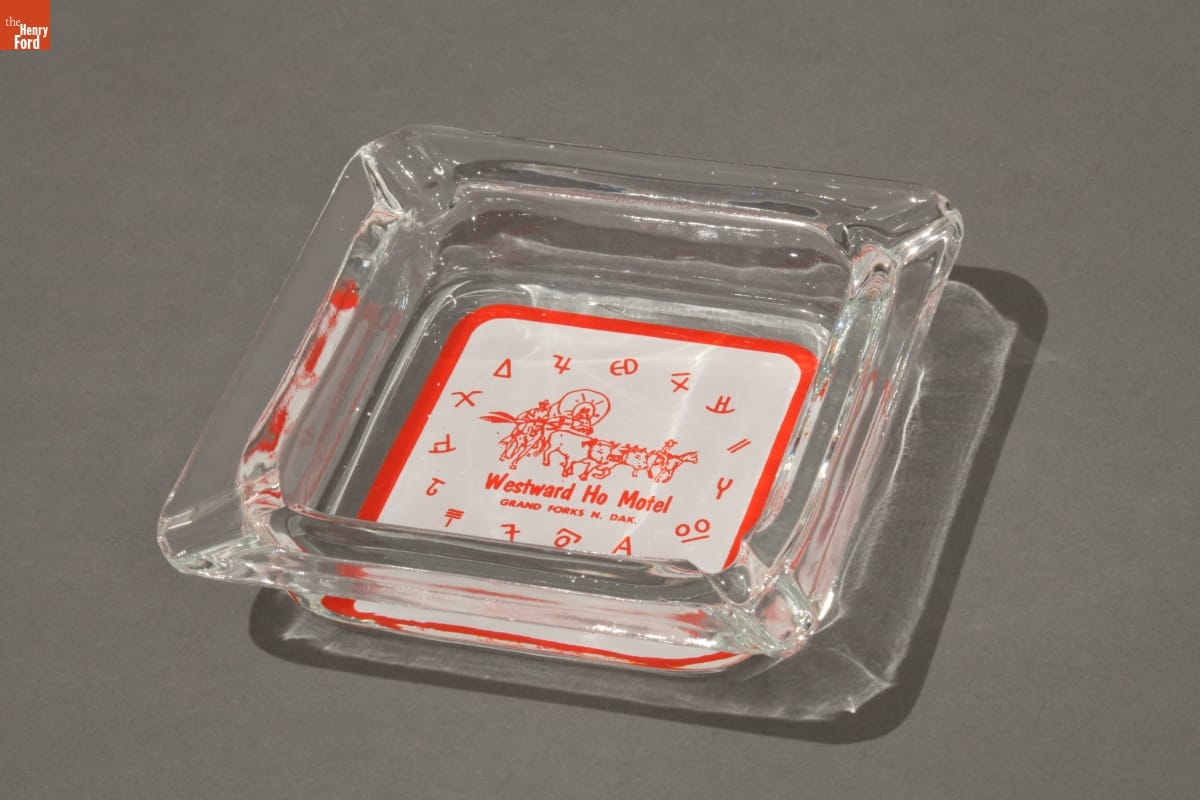
- Westward Ho Motel Ashtray, 1955-1970 - Local motels advertised on a variety of in-room, lobby, and restaurant furnishings. Ashtrays, such as this one from the Westward Ho Motel in Grand Forks, North Dakota, reminded travelers where to stay the next time they passed through town.
- 1955-1970
- Collections - Artifact
Westward Ho Motel Ashtray, 1955-1970
Local motels advertised on a variety of in-room, lobby, and restaurant furnishings. Ashtrays, such as this one from the Westward Ho Motel in Grand Forks, North Dakota, reminded travelers where to stay the next time they passed through town.
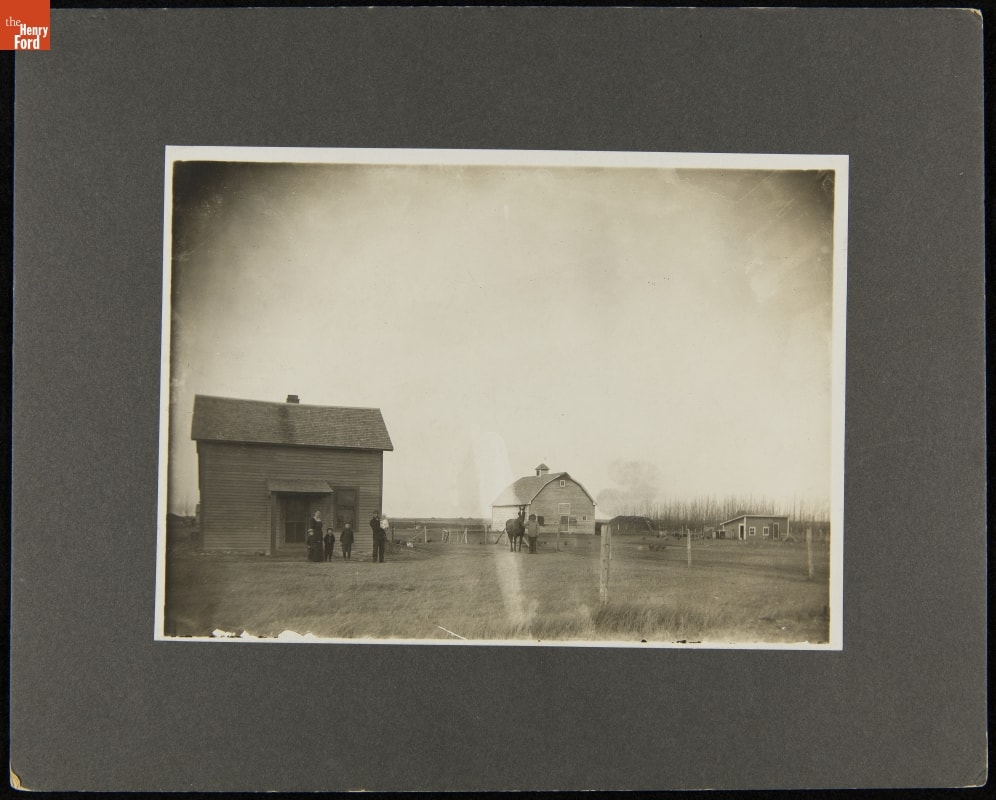
- Finger Family Farm, Berthold Township, North Dakota, 1916-1917 - This photograph shows the young Finger family on their 240-acre "bonanza" farm. They raised grain for market, but also grew feed for their poultry, pigs, horse, and dairy cow. Their farm, two miles east of the Great Northern Railroad depot in Berthold, N.D., gave them market access, while living on a Rural Federal Delivery mail route and telephone line right-of-way connected them beyond Berthold.
- 1916-1917
- Collections - Artifact
Finger Family Farm, Berthold Township, North Dakota, 1916-1917
This photograph shows the young Finger family on their 240-acre "bonanza" farm. They raised grain for market, but also grew feed for their poultry, pigs, horse, and dairy cow. Their farm, two miles east of the Great Northern Railroad depot in Berthold, N.D., gave them market access, while living on a Rural Federal Delivery mail route and telephone line right-of-way connected them beyond Berthold.
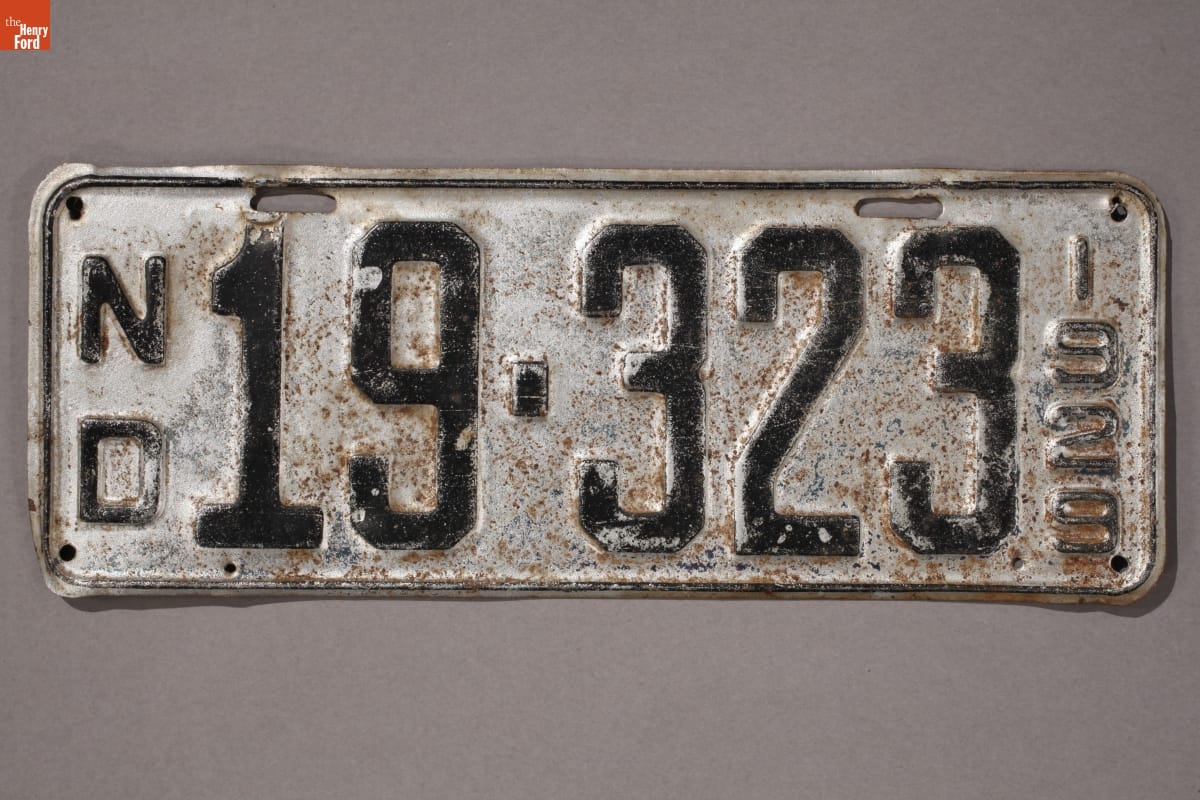
- North Dakota License Plate, 1929 - Early state-issued license plates were made of porcelain-coated iron. Later, states stamped tin, steel, or even copper to make plates. During the Second World War several states used fiberboard. Plate colors varied and some states added symbols, mottoes, or other design elements. Today, states use reflective sheeting to coat a standard-sized aluminum blank which is then stamped and decorated.
- 1929
- Collections - Artifact
North Dakota License Plate, 1929
Early state-issued license plates were made of porcelain-coated iron. Later, states stamped tin, steel, or even copper to make plates. During the Second World War several states used fiberboard. Plate colors varied and some states added symbols, mottoes, or other design elements. Today, states use reflective sheeting to coat a standard-sized aluminum blank which is then stamped and decorated.
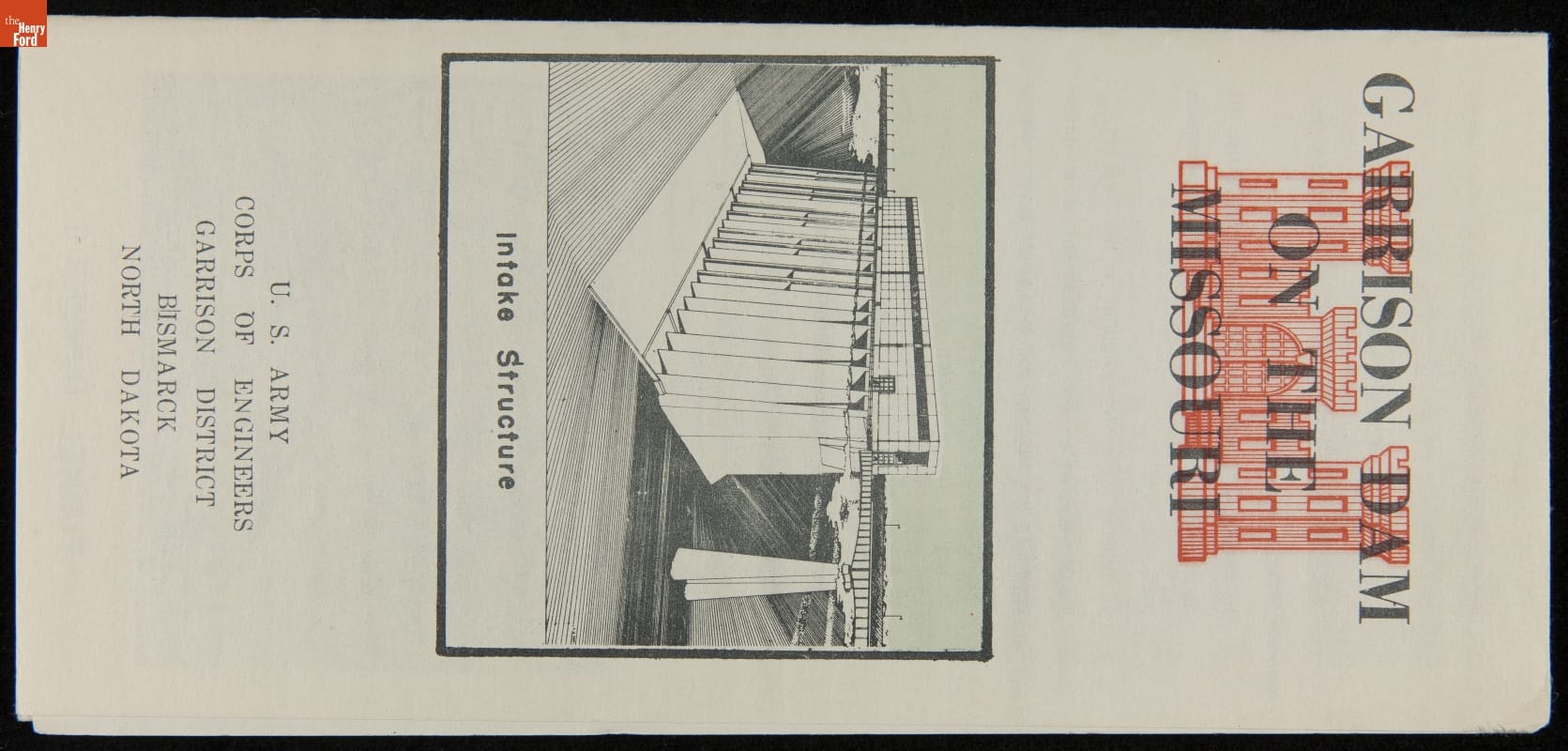
- Brochure, "Garrison Dam on the Missouri," circa 1950 -
- circa 1950
- Collections - Artifact
Brochure, "Garrison Dam on the Missouri," circa 1950
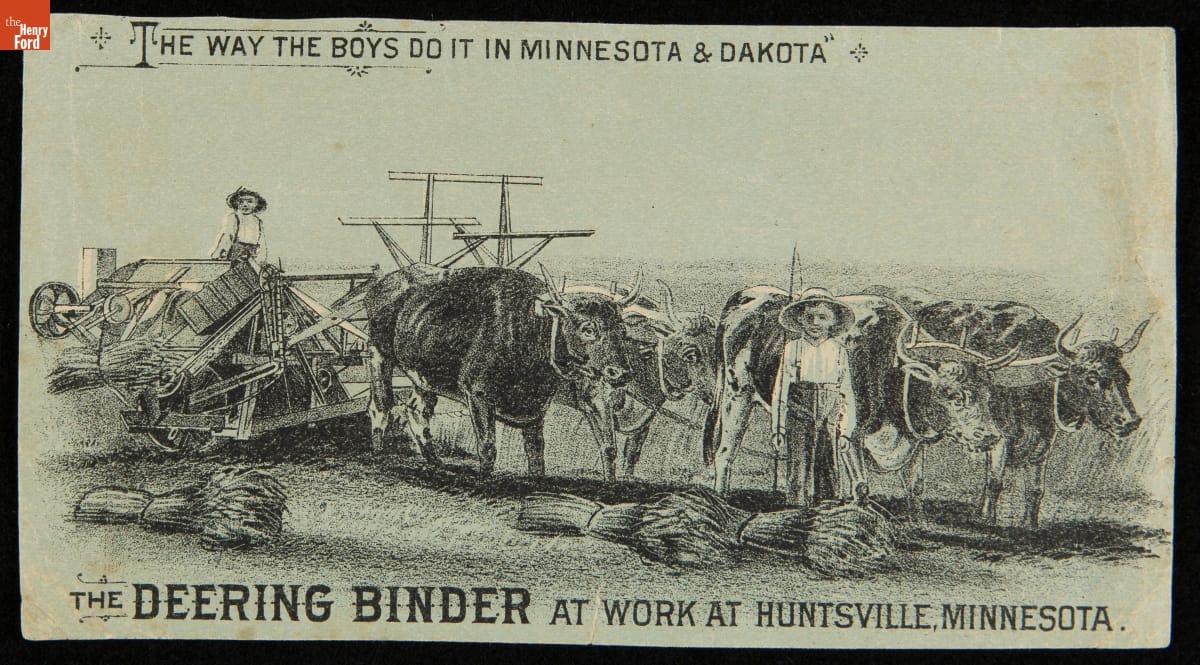
- Deering Twine Binder Trade Card, "The Way the Boys Do It in Minnesota & Dakota," 1881 - Oxen were the main source of power on many farms before the development of portable steam and internal combustion engines. Under yoke, as shown here, they could haul a wide range of heavy objects: logs and boulders; vehicles, like wagons; or agricultural equipment, like plows. Using specially designed treadmills, oxen could also power stationary machinery in barns or farmyards.
- 1881
- Collections - Artifact
Deering Twine Binder Trade Card, "The Way the Boys Do It in Minnesota & Dakota," 1881
Oxen were the main source of power on many farms before the development of portable steam and internal combustion engines. Under yoke, as shown here, they could haul a wide range of heavy objects: logs and boulders; vehicles, like wagons; or agricultural equipment, like plows. Using specially designed treadmills, oxen could also power stationary machinery in barns or farmyards.
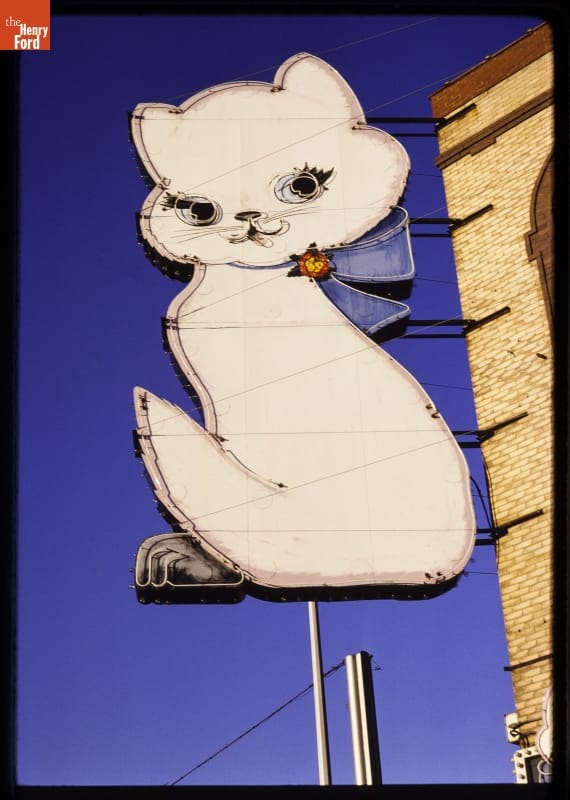
- Pussy Cat Lounge Sign, Fargo, North Dakota, 1980 - In the mid-1970s, John Margolies began to assemble a visual record of America's built roadside landscape. Over the following three decades, he traveled thousands of miles to photograph the overlooked and often quickly vanishing structures that had grown out of American automobile culture and main street commerce. His photographs of hotels, motels, diners, service stations, drive-ins and attractions celebrate and capture a unique chapter of American history.
- 1980
- Collections - Artifact
Pussy Cat Lounge Sign, Fargo, North Dakota, 1980
In the mid-1970s, John Margolies began to assemble a visual record of America's built roadside landscape. Over the following three decades, he traveled thousands of miles to photograph the overlooked and often quickly vanishing structures that had grown out of American automobile culture and main street commerce. His photographs of hotels, motels, diners, service stations, drive-ins and attractions celebrate and capture a unique chapter of American history.
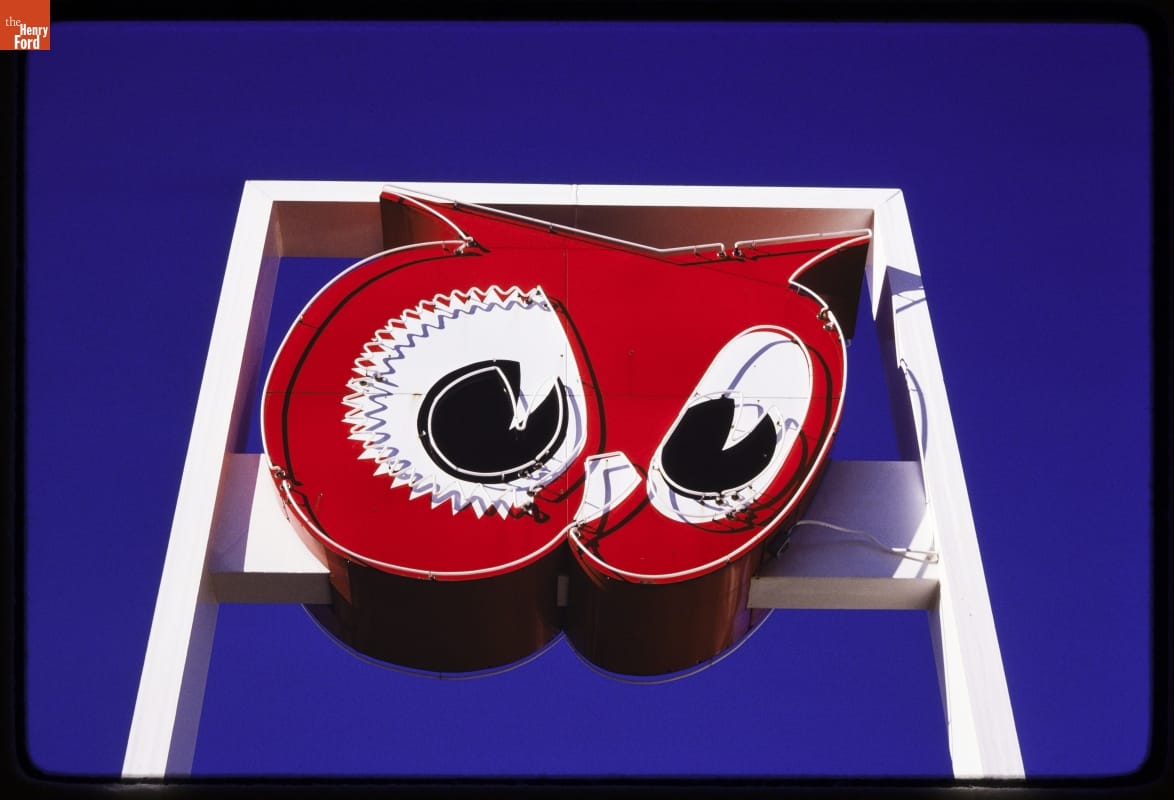
- Red Owl Super Market Sign, Jamestown, North Dakota, 1980 - In the mid-1970s, John Margolies began to assemble a visual record of America's built roadside landscape. Over the following three decades, he traveled thousands of miles to photograph the overlooked and often quickly vanishing structures that had grown out of American automobile culture and main street commerce. His photographs of hotels, motels, diners, service stations, drive-ins and attractions celebrate and capture a unique chapter of American history.
- 1980
- Collections - Artifact
Red Owl Super Market Sign, Jamestown, North Dakota, 1980
In the mid-1970s, John Margolies began to assemble a visual record of America's built roadside landscape. Over the following three decades, he traveled thousands of miles to photograph the overlooked and often quickly vanishing structures that had grown out of American automobile culture and main street commerce. His photographs of hotels, motels, diners, service stations, drive-ins and attractions celebrate and capture a unique chapter of American history.
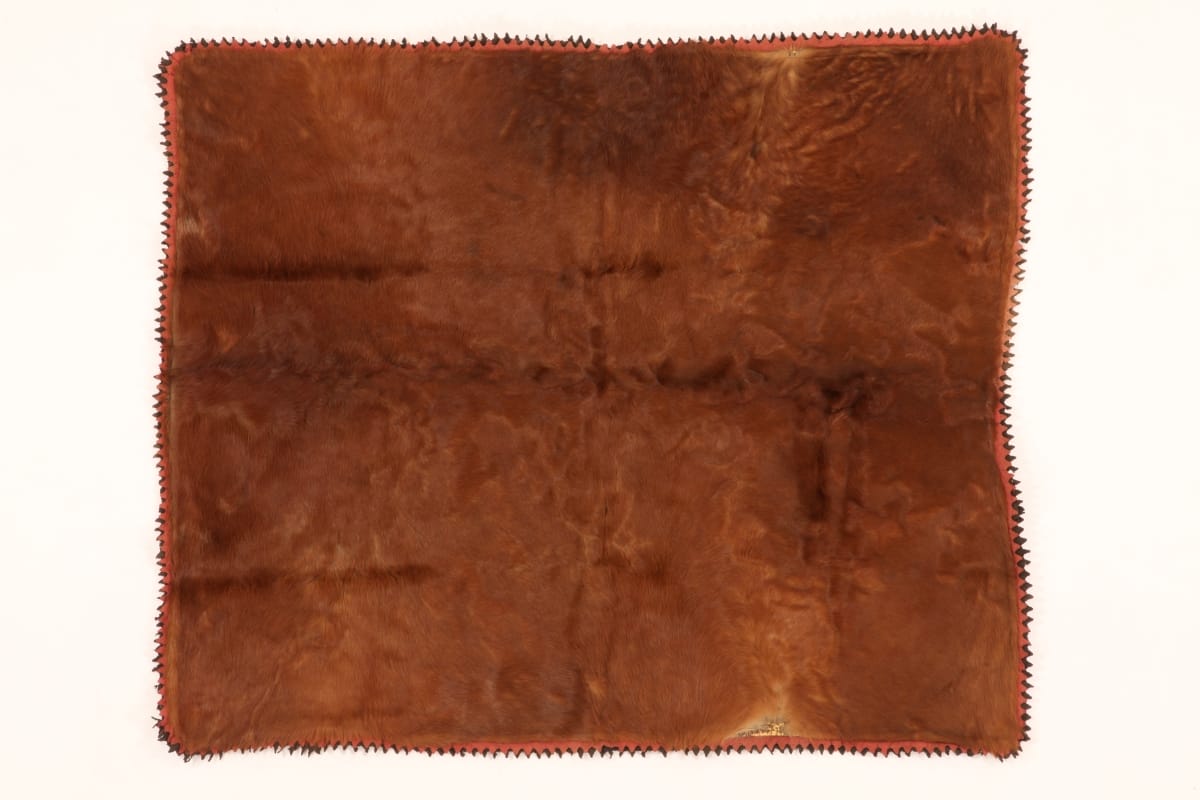
- Horsehide Lap Robe, 1919 - The open-air car bodies that prevailed into the 1920s gave little protection from cold. Automobile blankets, or lap robes, were popular accessories for cool-weather motoring. These heavy blankets, typically of wool, plush, or horsehide, and often waterproofed with a chemical treatment or a rubber backing, usually measured around 60 inches by 80 inches -- large enough for passengers to share.
- 1919
- Collections - Artifact
Horsehide Lap Robe, 1919
The open-air car bodies that prevailed into the 1920s gave little protection from cold. Automobile blankets, or lap robes, were popular accessories for cool-weather motoring. These heavy blankets, typically of wool, plush, or horsehide, and often waterproofed with a chemical treatment or a rubber backing, usually measured around 60 inches by 80 inches -- large enough for passengers to share.