
Search
- Letter from Richard Gutman Notifying Henry Ford Museum of a Diner Available for Purchase, September 7, 1982 -
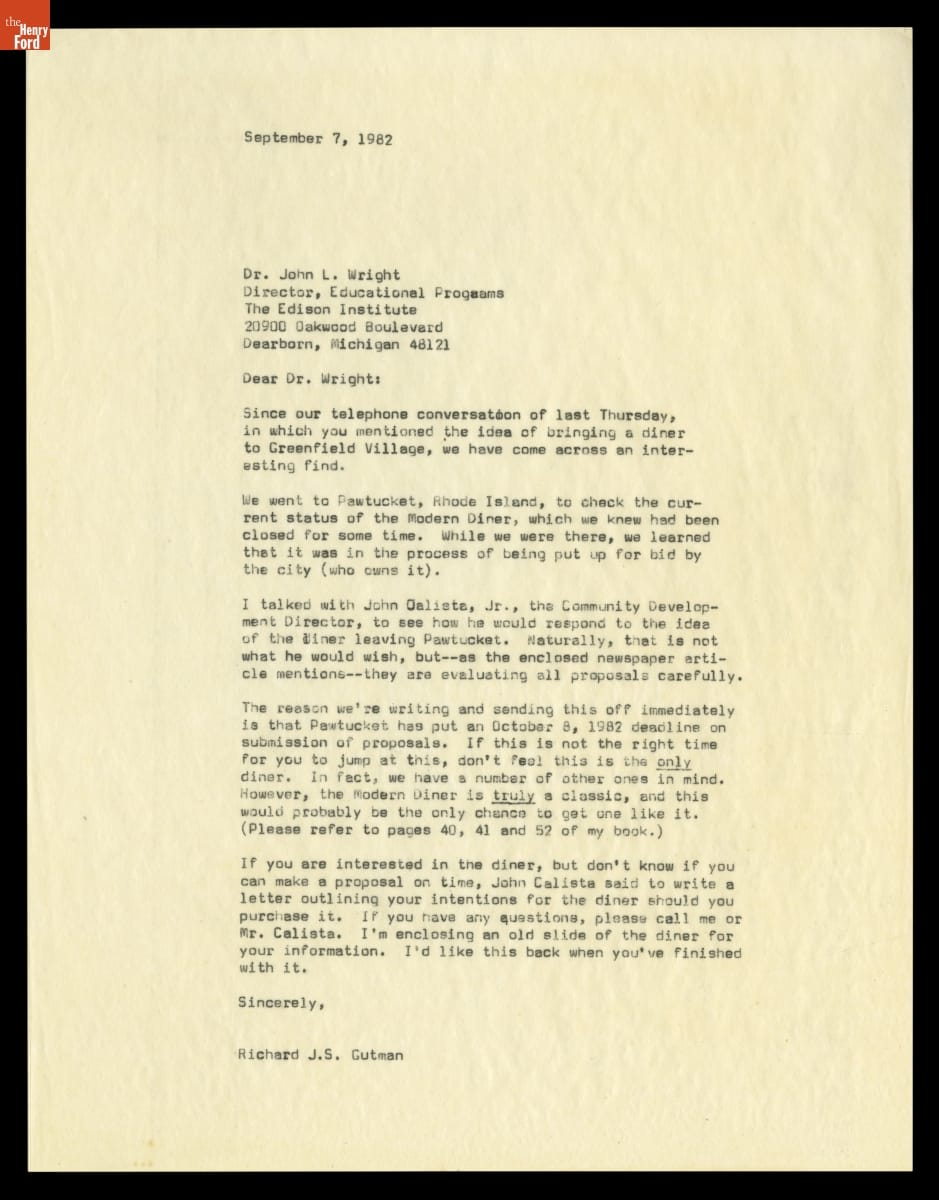
- September 07, 1982
- Collections - Artifact
Letter from Richard Gutman Notifying Henry Ford Museum of a Diner Available for Purchase, September 7, 1982
- Letter from William Talbot to George Appleton, July 16, 1877 -
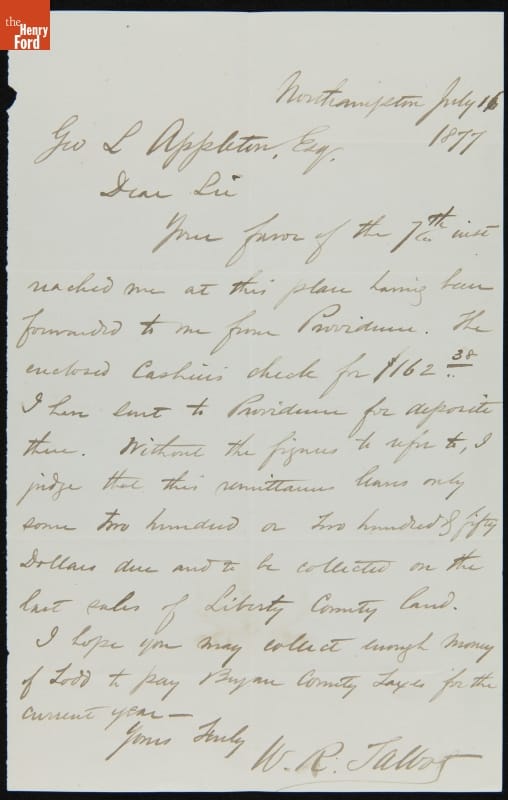
- July 16, 1877
- Collections - Artifact
Letter from William Talbot to George Appleton, July 16, 1877
- Anne Firestone at White Elephant Ball, September 1956 -
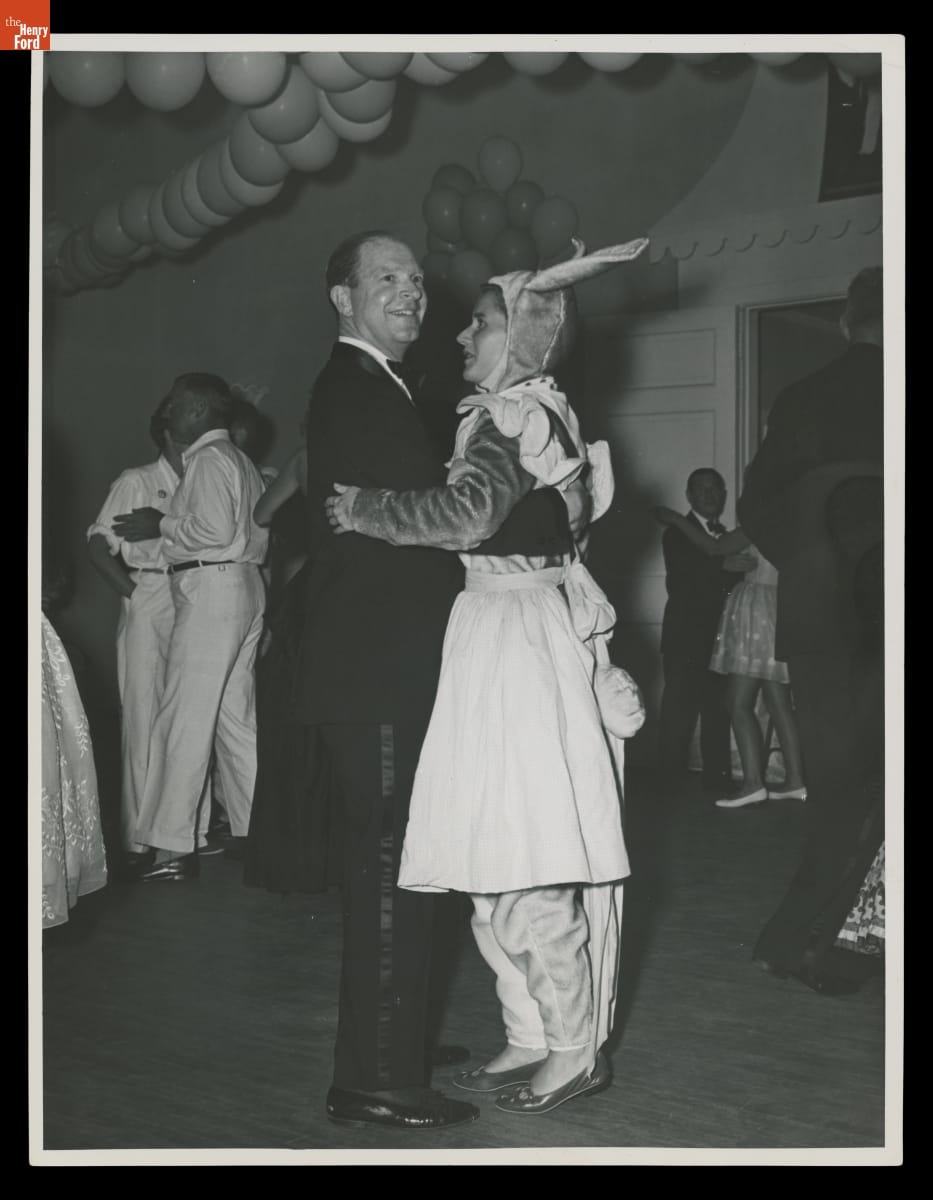
- September 01, 1956
- Collections - Artifact
Anne Firestone at White Elephant Ball, September 1956
- Letter from William Bailey to George Appleton, February 21, 1880 -
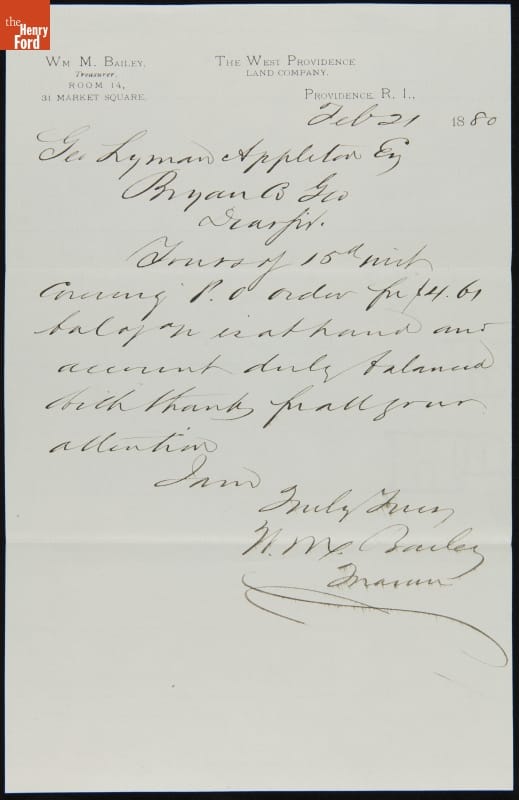
- February 21, 1880
- Collections - Artifact
Letter from William Bailey to George Appleton, February 21, 1880
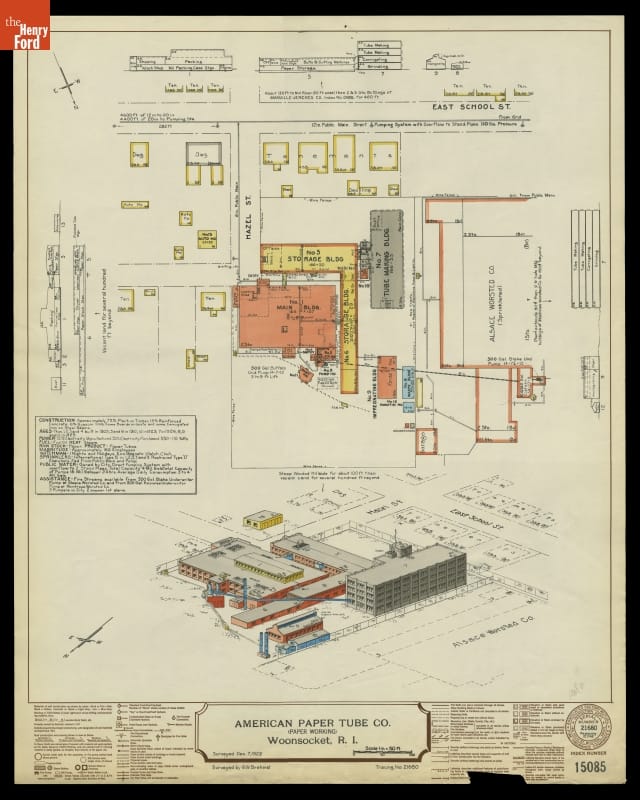
- Fire Insurance Map of the American Paper Tube Co., Woonsocket, Rhode Island, Surveyed December 7, 1929 - Fire insurance maps provided information to insurance companies about potential risks to homes, businesses, and factories. These maps -- with their easily identifiable symbols and color-coding -- depicted structural features, types of construction, and locations of fire hazards. Armed with this information, insurance underwriters could propose reasonable rates and offer protection against possible catastrophic financial loss in the event of a fire.
- December 07, 1929
- Collections - Artifact
Fire Insurance Map of the American Paper Tube Co., Woonsocket, Rhode Island, Surveyed December 7, 1929
Fire insurance maps provided information to insurance companies about potential risks to homes, businesses, and factories. These maps -- with their easily identifiable symbols and color-coding -- depicted structural features, types of construction, and locations of fire hazards. Armed with this information, insurance underwriters could propose reasonable rates and offer protection against possible catastrophic financial loss in the event of a fire.
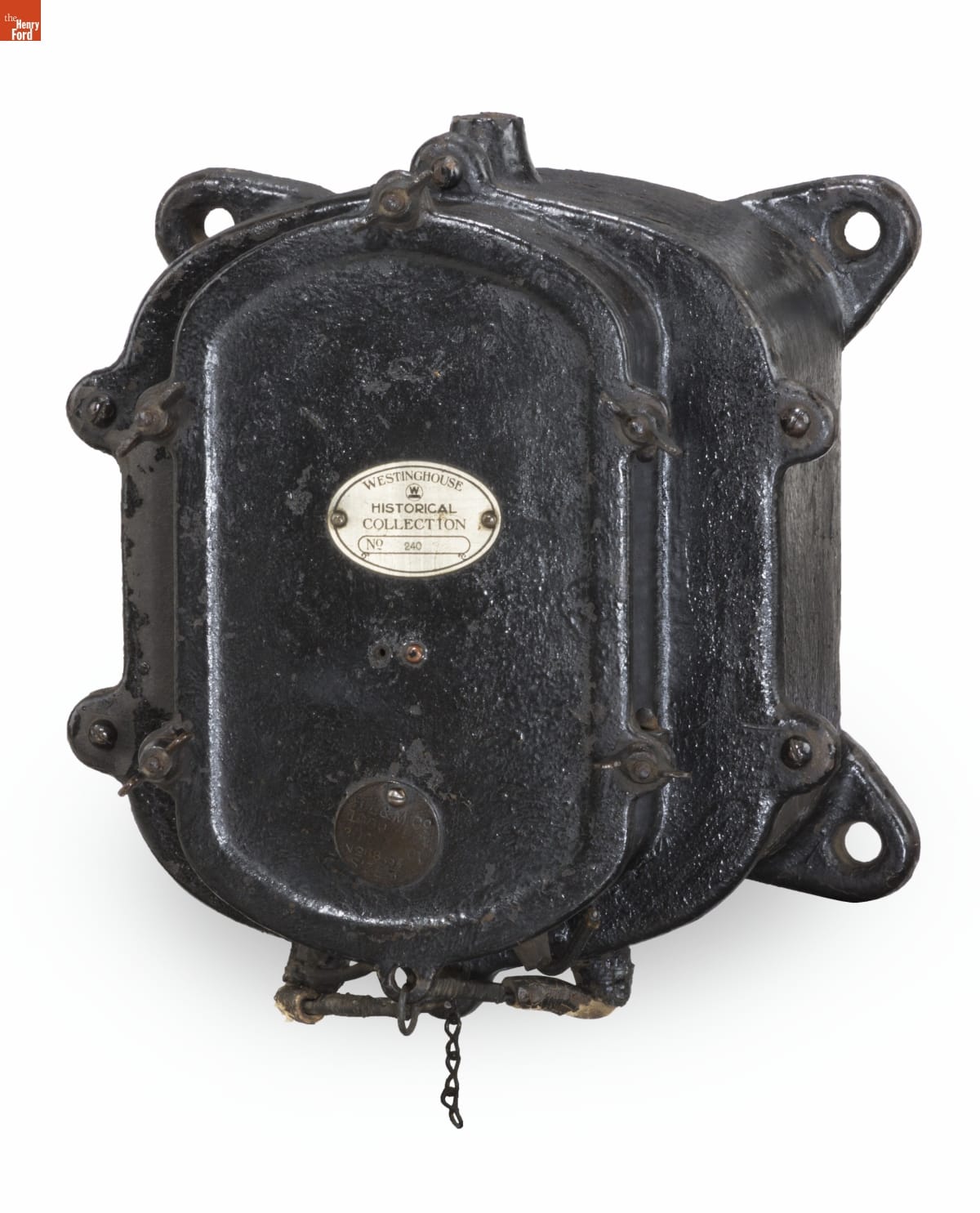
- Westinghouse Transformer, 1889-1900 - Transformers increase or decrease voltage and are essential to alternating current (AC) power systems. In the late 1800s, with the help of transformers, AC power systems proved more efficient and economical than their direct current competitors. Transformers helped convert electricity to high voltage for transmission across long distances, then reduced it to lower, safer voltages for use in homes and factories.
- 1889-1900
- Collections - Artifact
Westinghouse Transformer, 1889-1900
Transformers increase or decrease voltage and are essential to alternating current (AC) power systems. In the late 1800s, with the help of transformers, AC power systems proved more efficient and economical than their direct current competitors. Transformers helped convert electricity to high voltage for transmission across long distances, then reduced it to lower, safer voltages for use in homes and factories.
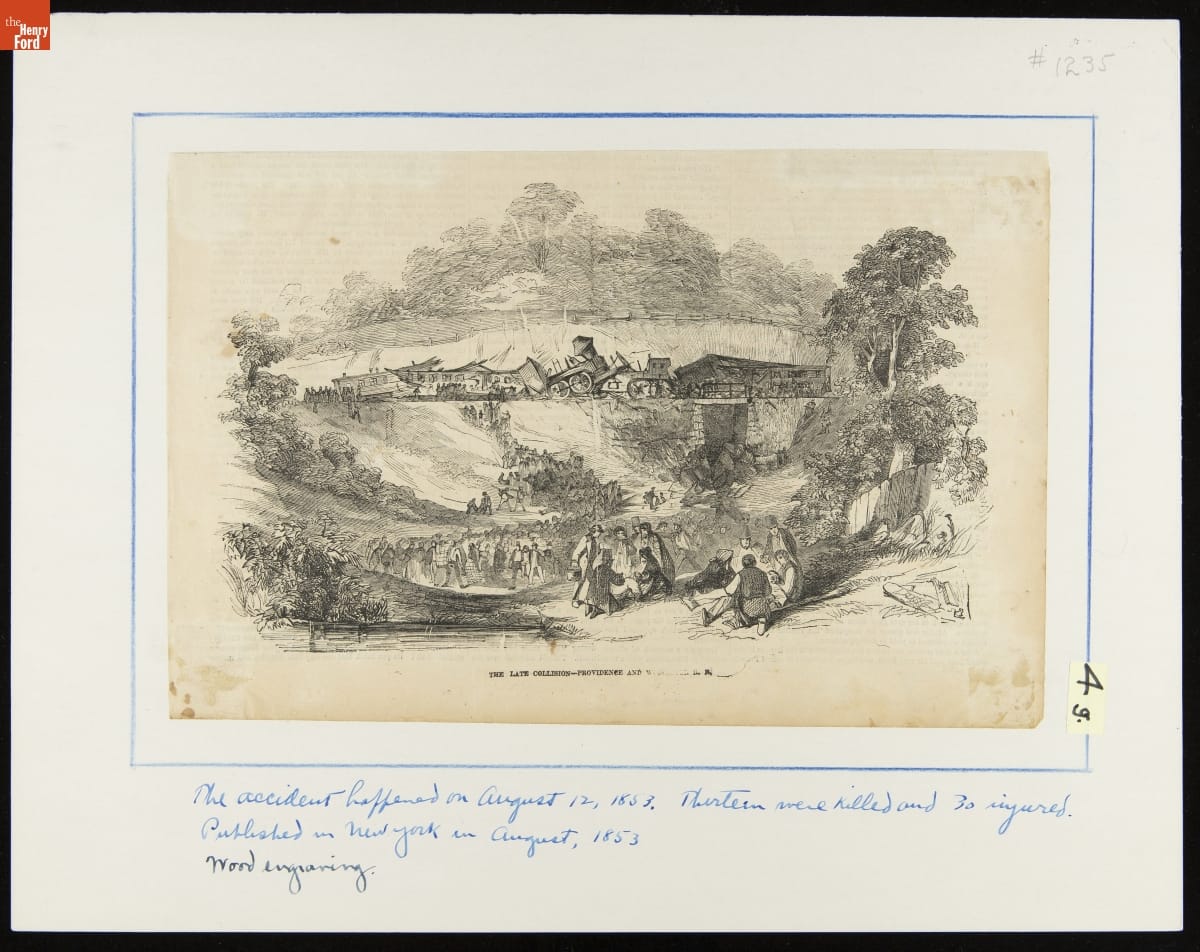
- The Late Collision - Providence & Worcester R.R., August 12, 1853 - Accidents were frightfully common on American railroads in the mid-19th century. Cheap construction, crude equipment, poor signaling, and uncoordinated timekeeping all contributed to the problem. This illustration shows a wreck on the Providence & Worcester Railroad in 1853. Two passenger trains failed to meet at a passing siding as scheduled. They collided head-on, killing 13 and seriously injuring 30 more.
- August 12, 1853
- Collections - Artifact
The Late Collision - Providence & Worcester R.R., August 12, 1853
Accidents were frightfully common on American railroads in the mid-19th century. Cheap construction, crude equipment, poor signaling, and uncoordinated timekeeping all contributed to the problem. This illustration shows a wreck on the Providence & Worcester Railroad in 1853. Two passenger trains failed to meet at a passing siding as scheduled. They collided head-on, killing 13 and seriously injuring 30 more.
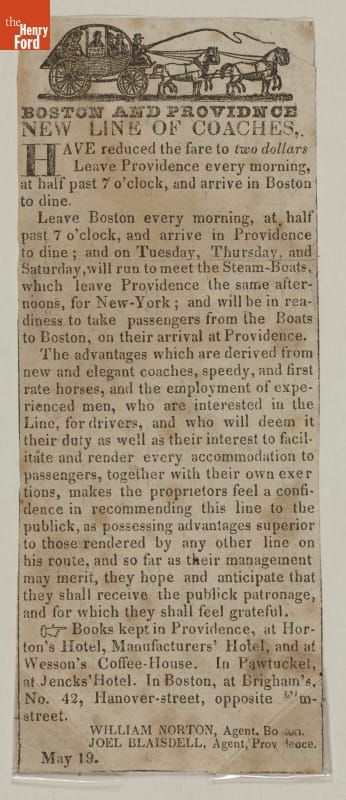
- Advertisement for a Stagecoach Line Running from Boston, Massachusetts to Providence, Rhode Island, 1825 - Before canals and railroads, stagecoach lines transported goods and people from town to town. Published in the <em>Manufacturers and Farmers Journal and Providence and Pawtucket Advertiser</em> on July 7, 1825, this clipping advertised a company of stage coaches between Boston, Massachusetts, and Providence, Rhode Island. The schedules were provided, along with this line's "advantages superior" to other lines on this route.
- July 07, 1825
- Collections - Artifact
Advertisement for a Stagecoach Line Running from Boston, Massachusetts to Providence, Rhode Island, 1825
Before canals and railroads, stagecoach lines transported goods and people from town to town. Published in the Manufacturers and Farmers Journal and Providence and Pawtucket Advertiser on July 7, 1825, this clipping advertised a company of stage coaches between Boston, Massachusetts, and Providence, Rhode Island. The schedules were provided, along with this line's "advantages superior" to other lines on this route.
- Rabbit Costume Worn by a Member of the Firestone Family at White Elephant Ball, 1956 -
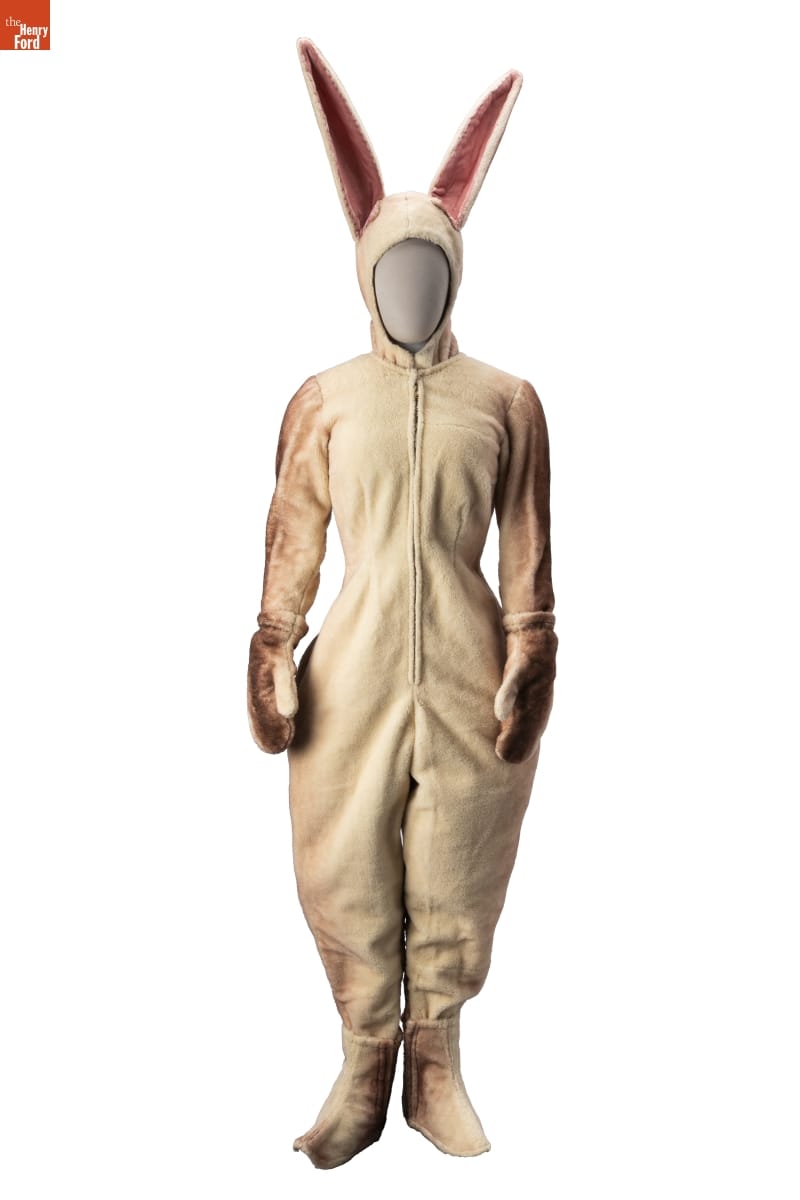
- 1956
- Collections - Artifact
Rabbit Costume Worn by a Member of the Firestone Family at White Elephant Ball, 1956
- Providence and Worcester Canal Boat Company Schedule from Newspaper, Rhode Island, 1829 - The first half of the 19th century was the heyday of canal construction and use in the United States, providing easier access to territories for settlement and commerce. This advertisement of the Providence and Worcester Canal Boat Company, from September 8, 1829, supplied dates and times of departure, along with freight and passenger rates between the two cities.
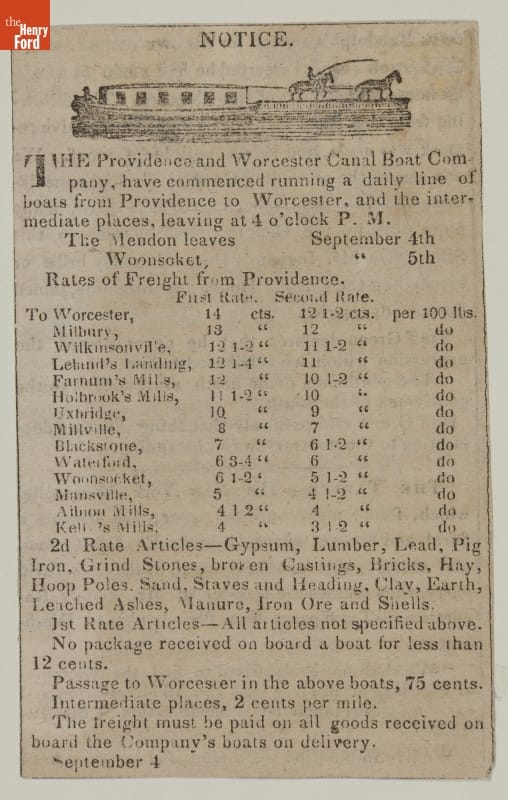
- September 08, 1829
- Collections - Artifact
Providence and Worcester Canal Boat Company Schedule from Newspaper, Rhode Island, 1829
The first half of the 19th century was the heyday of canal construction and use in the United States, providing easier access to territories for settlement and commerce. This advertisement of the Providence and Worcester Canal Boat Company, from September 8, 1829, supplied dates and times of departure, along with freight and passenger rates between the two cities.