
Search
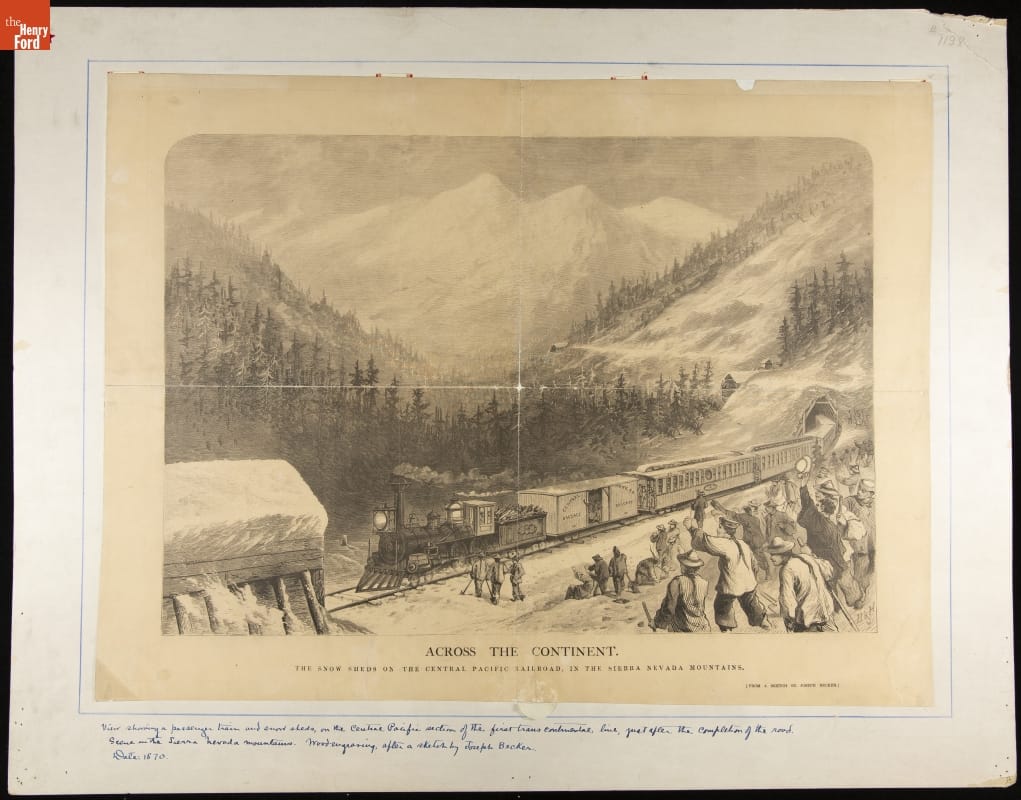
- Across the Continent. The Snow Sheds on the Central Pacific Railroad, 1870 - The Central Pacific Railroad crossed the Sierra Nevada Mountains through Donner Pass, some 7,000 feet above sea level. Winter snows -- up to 40 feet in a season -- were a menace, first to the railroad's construction and then to its operation. CP dealt with the problem by building some 40 miles of sheds to protect its track from snowfalls and snowslides.
- 1870
- Collections - Artifact
Across the Continent. The Snow Sheds on the Central Pacific Railroad, 1870
The Central Pacific Railroad crossed the Sierra Nevada Mountains through Donner Pass, some 7,000 feet above sea level. Winter snows -- up to 40 feet in a season -- were a menace, first to the railroad's construction and then to its operation. CP dealt with the problem by building some 40 miles of sheds to protect its track from snowfalls and snowslides.
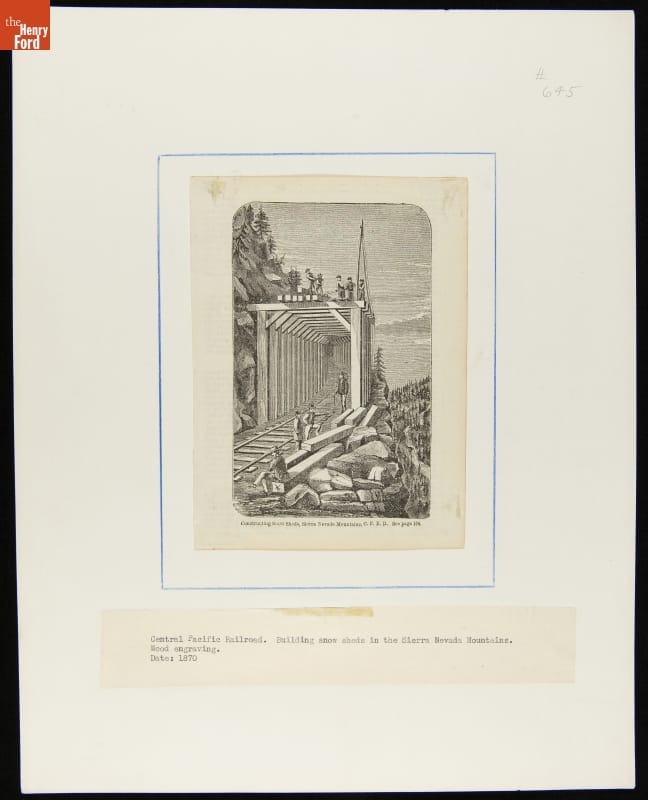
- Constructing Snow Sheds, Sierra Nevada Mountains, 1870 - The Central Pacific Railroad crossed the Sierra Nevada Mountains through Donner Pass, some 7,000 feet above sea level. Winter snows -- up to 40 feet in a season -- were a menace, first to the railroad's construction and then to its operation. CP dealt with the problem by building some 40 miles of sheds to protect its track from snowfalls and snowslides.
- 1870
- Collections - Artifact
Constructing Snow Sheds, Sierra Nevada Mountains, 1870
The Central Pacific Railroad crossed the Sierra Nevada Mountains through Donner Pass, some 7,000 feet above sea level. Winter snows -- up to 40 feet in a season -- were a menace, first to the railroad's construction and then to its operation. CP dealt with the problem by building some 40 miles of sheds to protect its track from snowfalls and snowslides.
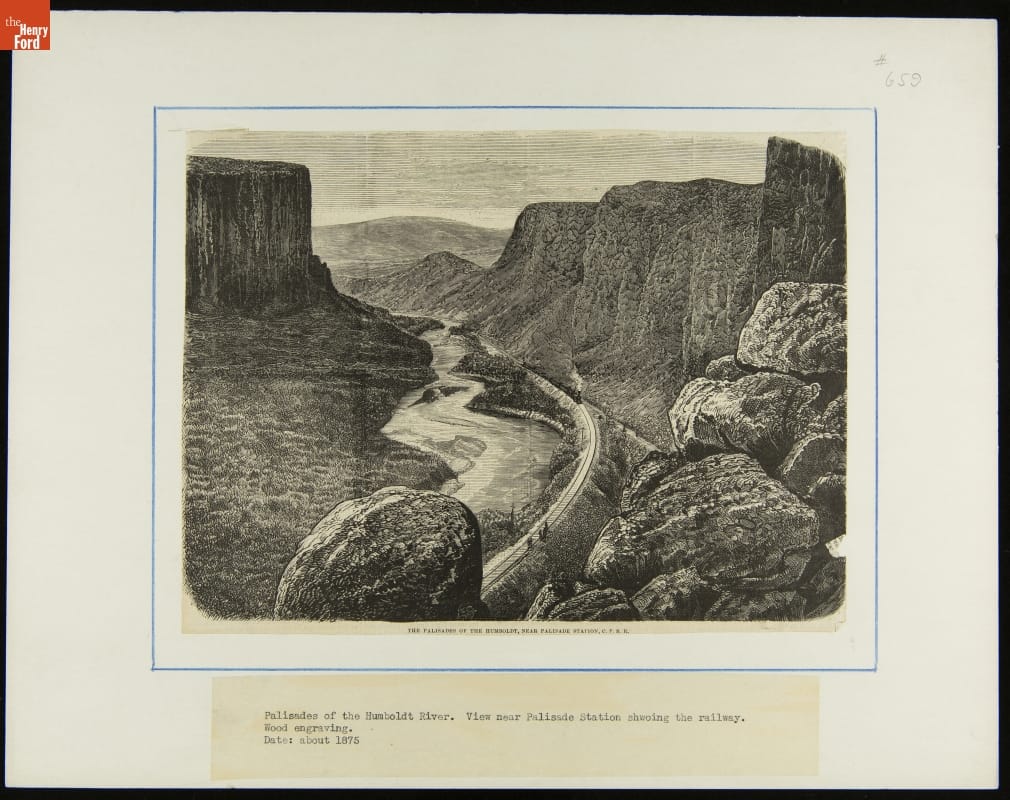
- Palisades of the Humboldt, Near Palisade Station, circa 1875 - Central Pacific Railroad construction crews reached Nevada's Palisade Canyon in 1868. The canyon, formed by the Humboldt River, provided a pathway for the railroad's eastward push to Utah. The community of Palisade, located within the canyon, became a busy transfer point between the Central Pacific and smaller railroads serving area mining camps.
- circa 1875
- Collections - Artifact
Palisades of the Humboldt, Near Palisade Station, circa 1875
Central Pacific Railroad construction crews reached Nevada's Palisade Canyon in 1868. The canyon, formed by the Humboldt River, provided a pathway for the railroad's eastward push to Utah. The community of Palisade, located within the canyon, became a busy transfer point between the Central Pacific and smaller railroads serving area mining camps.
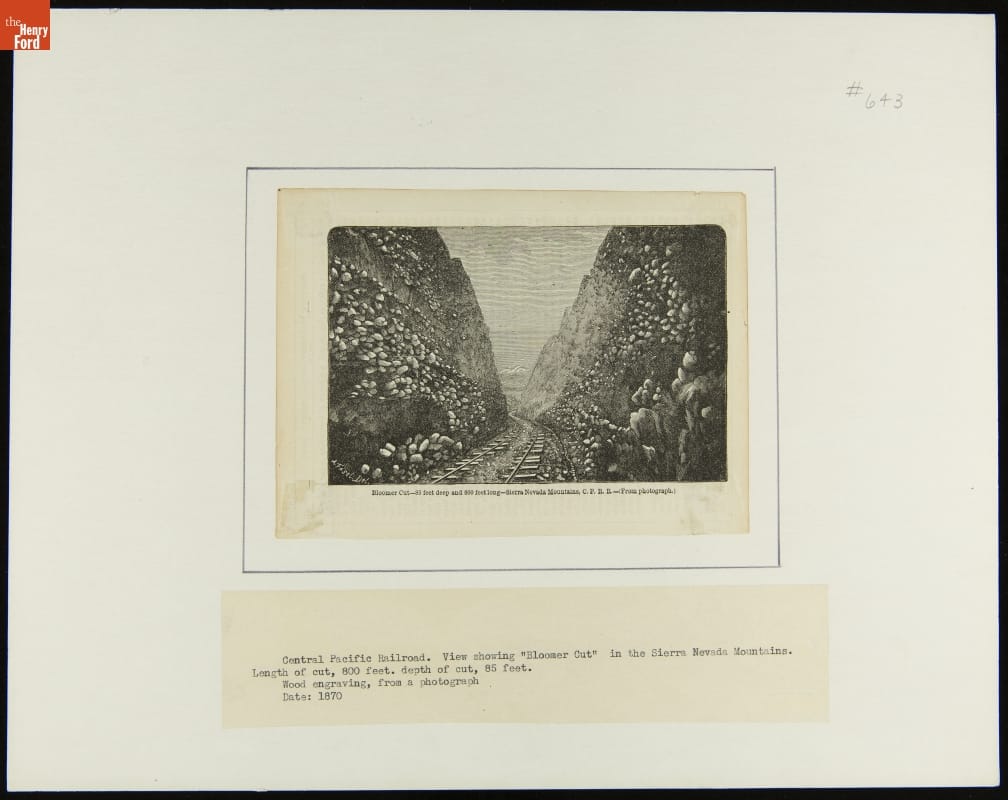
- Bloomer Cut in the Sierra Nevada Mountains, 1870 - Near Auburn, California, some 35 miles east of Sacramento, the Central Pacific Railroad faced its first major obstacle in the form of a rocky ridge. With picks, shovels, and black powder, construction crews made a cut 800 feet long and up to 63 feet deep through the ridge. Work started in February 1864, and the first train rolled through Bloomer Cut in May 1865.
- 1870
- Collections - Artifact
Bloomer Cut in the Sierra Nevada Mountains, 1870
Near Auburn, California, some 35 miles east of Sacramento, the Central Pacific Railroad faced its first major obstacle in the form of a rocky ridge. With picks, shovels, and black powder, construction crews made a cut 800 feet long and up to 63 feet deep through the ridge. Work started in February 1864, and the first train rolled through Bloomer Cut in May 1865.
- Interior View of Snow Sheds in the Sierra Nevada Mountains, 1870 - The Central Pacific Railroad crossed the Sierra Nevada Mountains through Donner Pass, some 7,000 feet above sea level. Winter snows -- up to 40 feet in a season -- were a menace, first to the railroad's construction and then to its operation. CP dealt with the problem by building some 40 miles of sheds to protect its track from snowfalls and snowslides.
- 1870
- Collections - Artifact
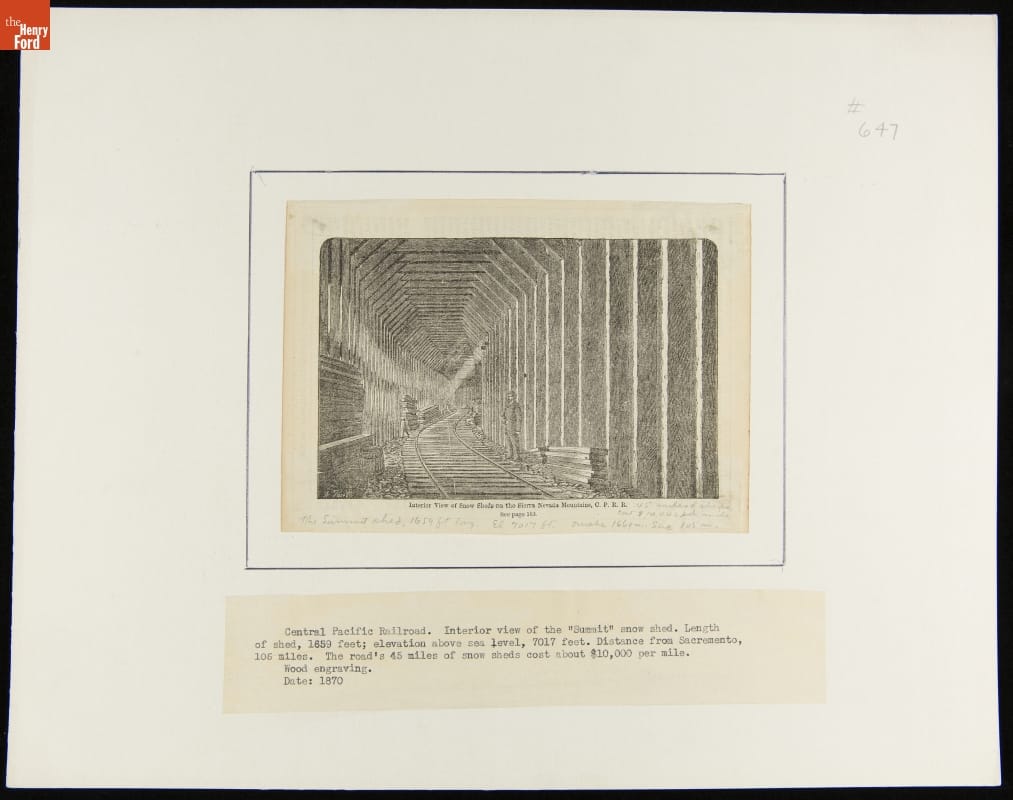
Interior View of Snow Sheds in the Sierra Nevada Mountains, 1870
The Central Pacific Railroad crossed the Sierra Nevada Mountains through Donner Pass, some 7,000 feet above sea level. Winter snows -- up to 40 feet in a season -- were a menace, first to the railroad's construction and then to its operation. CP dealt with the problem by building some 40 miles of sheds to protect its track from snowfalls and snowslides.