
Search
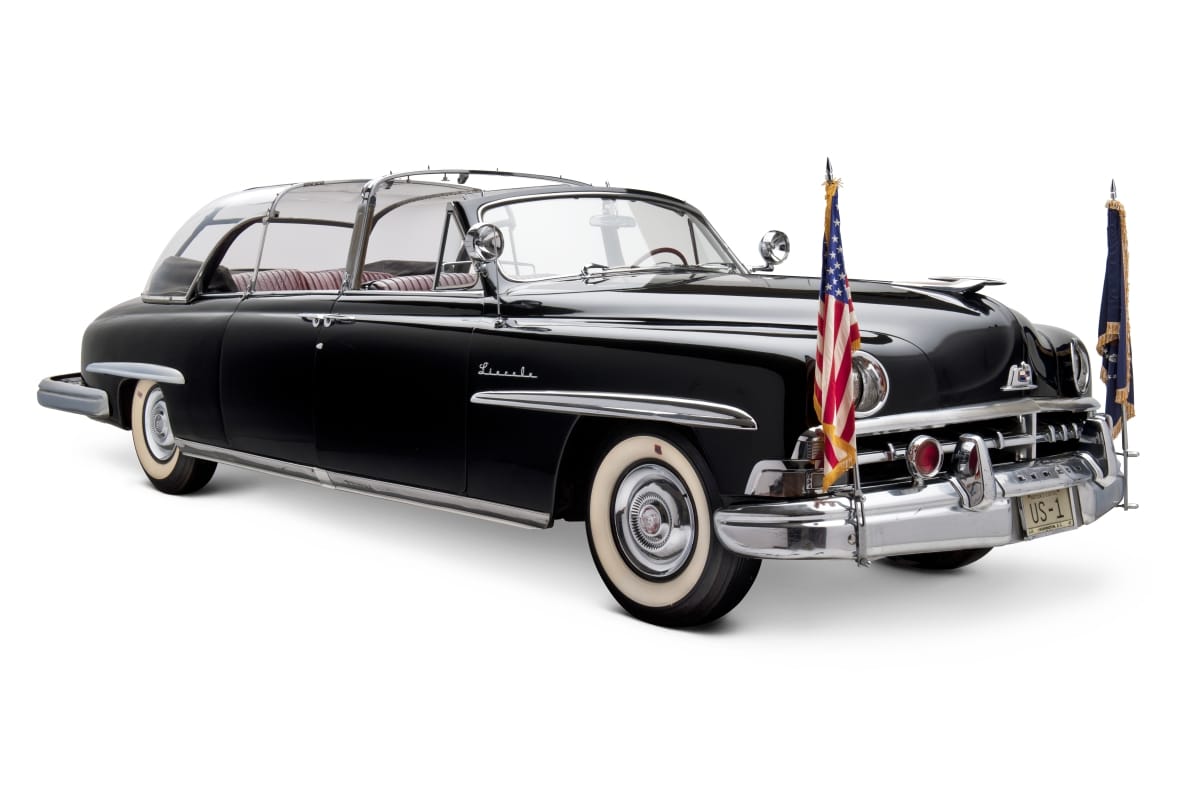
- 1950 Lincoln Presidential Limousine Used by Dwight D. Eisenhower - This massive convertible Lincoln was built for President Harry S Truman in 1950, but it is most associated with Truman's successor Dwight D. Eisenhower, who used the car from 1952 until 1960. Eisenhower added the distinctive plastic "bubble top." Presidents John F. Kennedy and Lyndon B. Johnson also used this car as a spare until its retirement in 1967.
- 1950-1967
- Collections - Artifact
1950 Lincoln Presidential Limousine Used by Dwight D. Eisenhower
This massive convertible Lincoln was built for President Harry S Truman in 1950, but it is most associated with Truman's successor Dwight D. Eisenhower, who used the car from 1952 until 1960. Eisenhower added the distinctive plastic "bubble top." Presidents John F. Kennedy and Lyndon B. Johnson also used this car as a spare until its retirement in 1967.
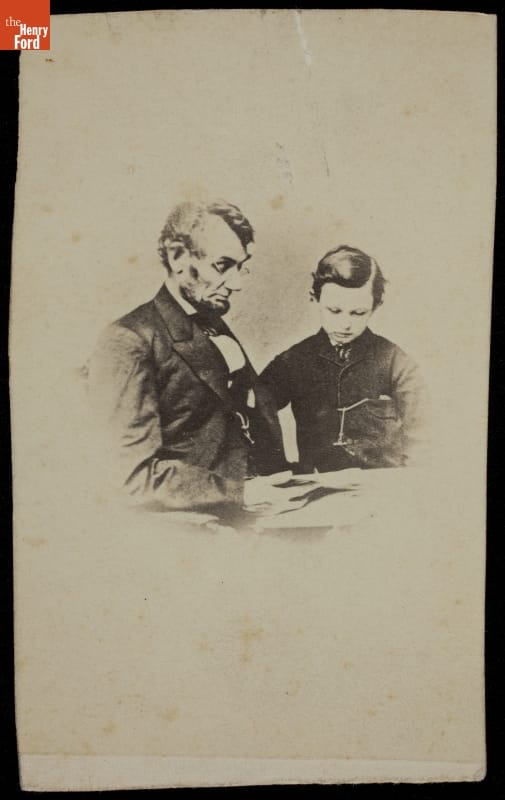
- Abraham Lincoln and His Son, Tad, 1864 - This portrait shows President Abraham Lincoln and his youngest son, Tad. The original photograph was taken by Anthony Berger in the Mathew Brady studio in Washington, D.C., on February 9, 1864. D.C. Burnite & Company of Harrisburg, Pennsylvania, made this carte-de-visite from a copy of Berger's photo. Because of its appealing subject of Abraham Lincoln as a father, it was a popular image to purchase and place in albums.
- February 09, 1864
- Collections - Artifact
Abraham Lincoln and His Son, Tad, 1864
This portrait shows President Abraham Lincoln and his youngest son, Tad. The original photograph was taken by Anthony Berger in the Mathew Brady studio in Washington, D.C., on February 9, 1864. D.C. Burnite & Company of Harrisburg, Pennsylvania, made this carte-de-visite from a copy of Berger's photo. Because of its appealing subject of Abraham Lincoln as a father, it was a popular image to purchase and place in albums.
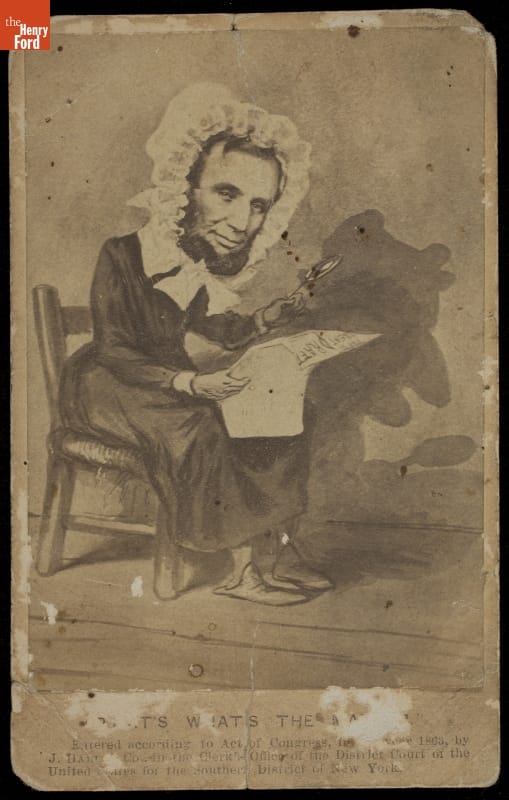
- Caricature of Abraham Lincoln, "That's What's the Matter," 1863 -
- 1863
- Collections - Artifact
Caricature of Abraham Lincoln, "That's What's the Matter," 1863
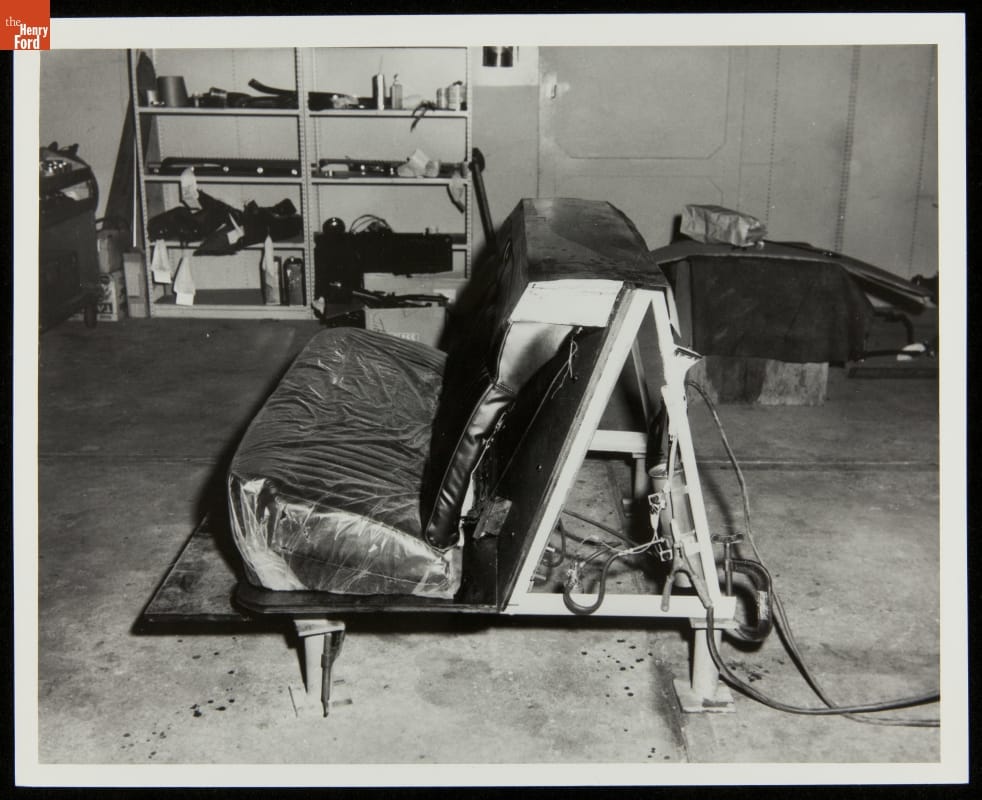
- Lincoln Continental Presidential Limousine Customization, Testing Adjustable Hydraulic Seat, 1961 - The Hess & Eisenhardt Company of Cincinnati, Ohio, transformed a stock 1961 Lincoln Continental convertible into the presidential limousine. Among the special modifications was a hydraulic lift installed on the rear seat. At the touch of a button, the president could raise the seat 10-1/2 inches to make himself and his passengers more visible to crowds watching the limousine pass.
- 1961
- Collections - Artifact
Lincoln Continental Presidential Limousine Customization, Testing Adjustable Hydraulic Seat, 1961
The Hess & Eisenhardt Company of Cincinnati, Ohio, transformed a stock 1961 Lincoln Continental convertible into the presidential limousine. Among the special modifications was a hydraulic lift installed on the rear seat. At the touch of a button, the president could raise the seat 10-1/2 inches to make himself and his passengers more visible to crowds watching the limousine pass.
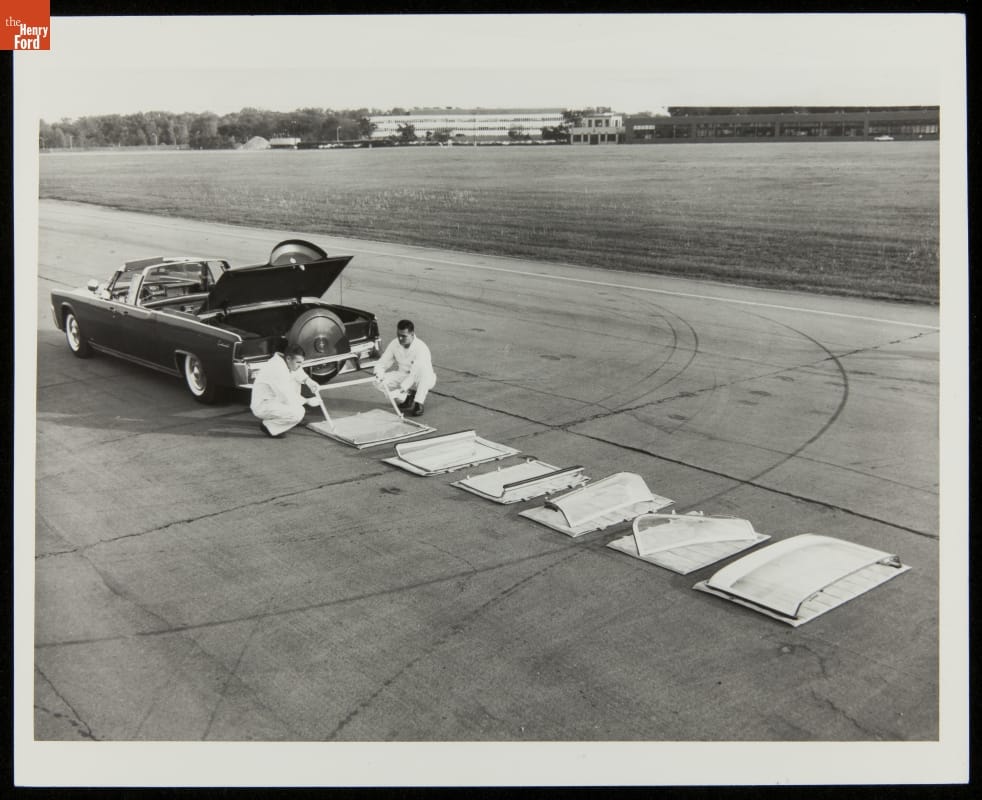
- Lincoln Continental Presidential Limousine Customization, Removable Transparent Top Sections Stored in Trunk, 1961 - As originally built, the 1961 Lincoln Continental Presidential Limousine had three different roof options. A removable steel section provided privacy, clear plastic sections provided weather protection, and a completely open top gave the president maximum visibility. The plastic panels fit neatly into the trunk and were available whenever needed. None of the removable tops was armored.
- 1961
- Collections - Artifact
Lincoln Continental Presidential Limousine Customization, Removable Transparent Top Sections Stored in Trunk, 1961
As originally built, the 1961 Lincoln Continental Presidential Limousine had three different roof options. A removable steel section provided privacy, clear plastic sections provided weather protection, and a completely open top gave the president maximum visibility. The plastic panels fit neatly into the trunk and were available whenever needed. None of the removable tops was armored.
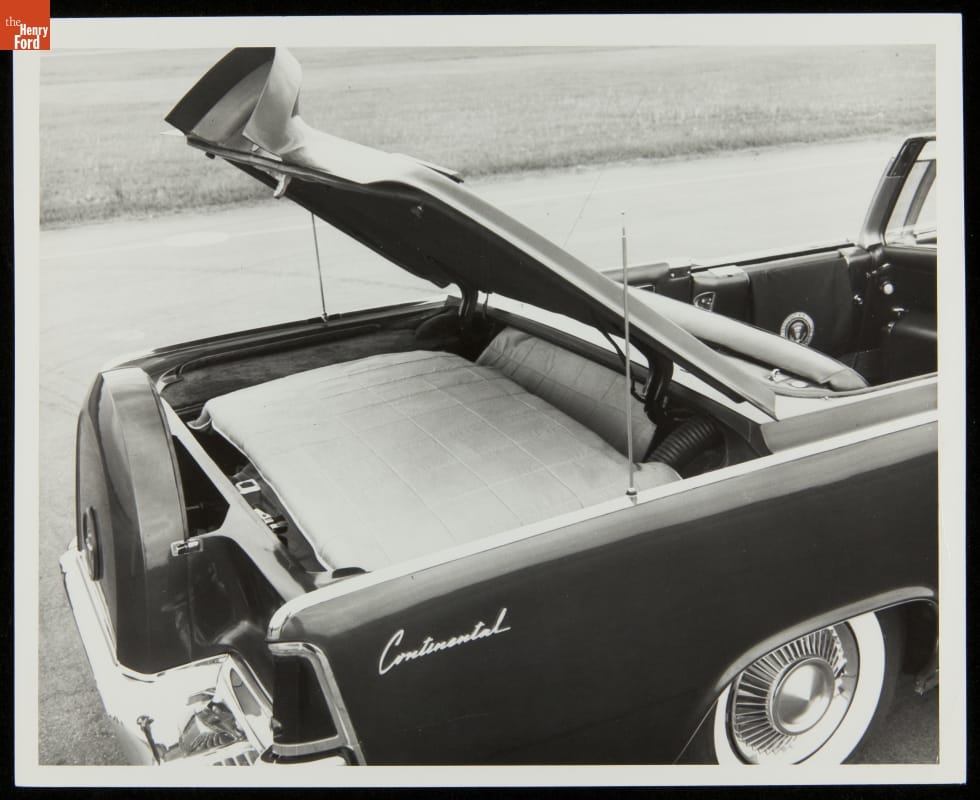
- Lincoln Continental Presidential Limousine, Showing Customized Removable Transparent Top Sections in Trunk, 1961 - As originally built, the 1961 Lincoln Continental Presidential Limousine had three different roof options. A removable steel section provided privacy, clear plastic sections provided weather protection, and a completely open top gave the president maximum visibility. The plastic panels fit neatly into the trunk and were available whenever needed. None of the removable tops was armored.
- 1961
- Collections - Artifact
Lincoln Continental Presidential Limousine, Showing Customized Removable Transparent Top Sections in Trunk, 1961
As originally built, the 1961 Lincoln Continental Presidential Limousine had three different roof options. A removable steel section provided privacy, clear plastic sections provided weather protection, and a completely open top gave the president maximum visibility. The plastic panels fit neatly into the trunk and were available whenever needed. None of the removable tops was armored.
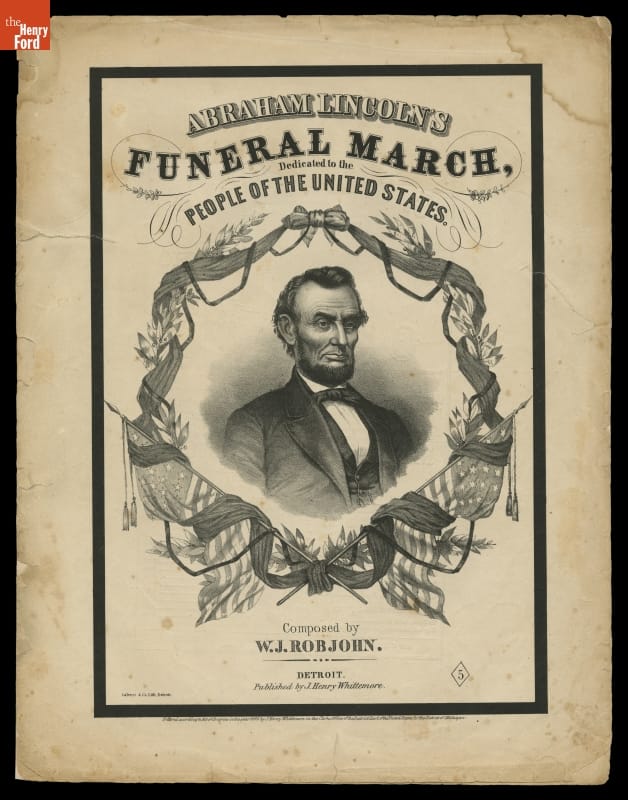
- Music Sheet, "Abraham Lincoln's Funeral March," 1865 - Abraham Lincoln's assassination on April 15, 1865 plunged Americans into deep mourning. This sheet music's somber composition and illustrated cover helped people to understand the tragic event. Printed in Detroit, it may have been used during that city's public mourning ceremony held April 25, 1865. The artist added a border depicting black cloth-draped U.S. flags and laurel leaves in the shape of a wreath around Lincoln's head.
- 1865
- Collections - Artifact
Music Sheet, "Abraham Lincoln's Funeral March," 1865
Abraham Lincoln's assassination on April 15, 1865 plunged Americans into deep mourning. This sheet music's somber composition and illustrated cover helped people to understand the tragic event. Printed in Detroit, it may have been used during that city's public mourning ceremony held April 25, 1865. The artist added a border depicting black cloth-draped U.S. flags and laurel leaves in the shape of a wreath around Lincoln's head.
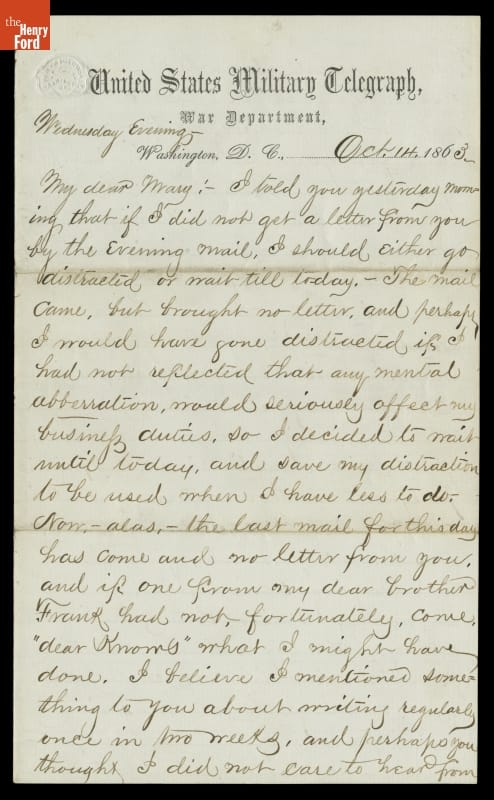
- Letter from Albert B. Chandler to Marilla Stedman, October 14, 1863 - Albert B. Chandler served as a cipher operator at the War Department office in Washington, D.C., during the Civil War. He transmitted coded messages to and decoded messages from Union military field commanders. While at this post, he became acquainted with President Abraham Lincoln. Chandler describes some of his wartime experiences in this letter to Marilla Stedman, his future bride.
- October 14, 1863
- Collections - Artifact
Letter from Albert B. Chandler to Marilla Stedman, October 14, 1863
Albert B. Chandler served as a cipher operator at the War Department office in Washington, D.C., during the Civil War. He transmitted coded messages to and decoded messages from Union military field commanders. While at this post, he became acquainted with President Abraham Lincoln. Chandler describes some of his wartime experiences in this letter to Marilla Stedman, his future bride.
- Print, Assassination of President LIncoln, 1865-1870 - Before the existence of newspaper photos and television, lithographs helped people to understand the tragic event of President Abraham Lincoln's death in April 1865. This shows the assassin escaping after shooting President Lincoln at Ford's Theatre in Washington, D.C., on April 14, 1865. Printmakers produced various versions of this event, based on verbal reports.
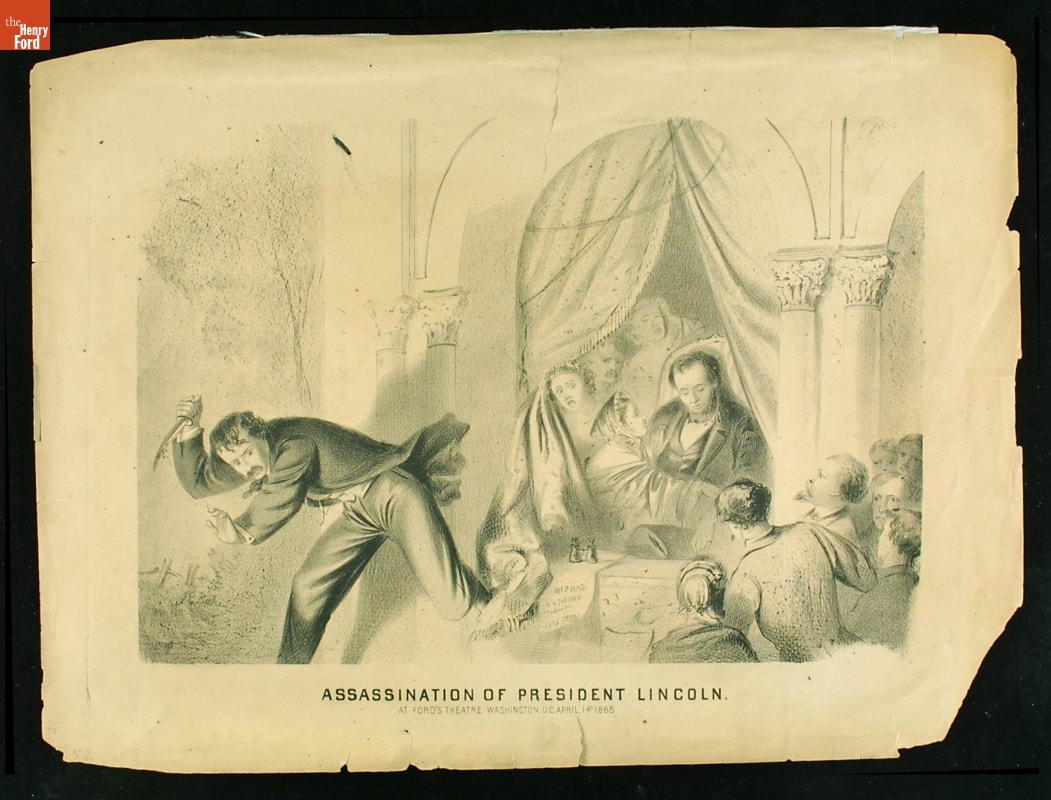
- April 14, 1865
- Collections - Artifact
Print, Assassination of President LIncoln, 1865-1870
Before the existence of newspaper photos and television, lithographs helped people to understand the tragic event of President Abraham Lincoln's death in April 1865. This shows the assassin escaping after shooting President Lincoln at Ford's Theatre in Washington, D.C., on April 14, 1865. Printmakers produced various versions of this event, based on verbal reports.
- Lithograph, "Last Moments of President LIncoln," 1865 - Abraham Lincoln's assassination in April 1865 plunged Americans into deep mourning. Before the existence of newspaper photos and television, lithographs helped people to understand the tragic event. This print depicts a room of the Petersen House, where the president died, across the street from Ford's Theatre in Washington, D.C. Not all of these people were actually in the room the morning Lincoln died.
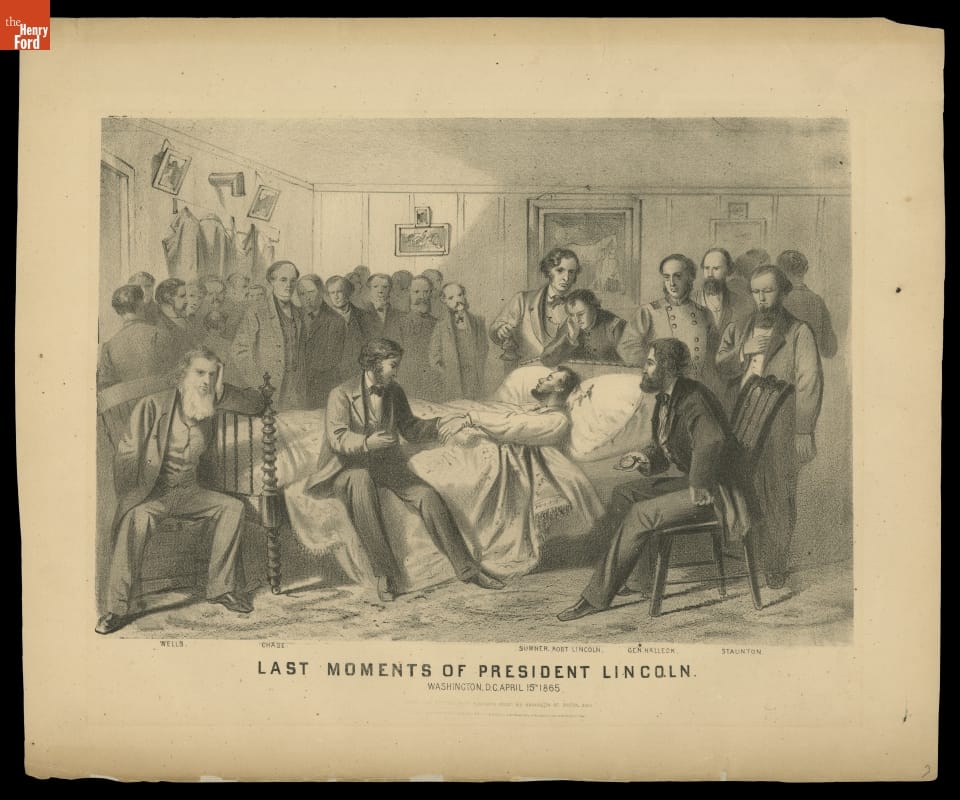
- April 15, 1865
- Collections - Artifact
Lithograph, "Last Moments of President LIncoln," 1865
Abraham Lincoln's assassination in April 1865 plunged Americans into deep mourning. Before the existence of newspaper photos and television, lithographs helped people to understand the tragic event. This print depicts a room of the Petersen House, where the president died, across the street from Ford's Theatre in Washington, D.C. Not all of these people were actually in the room the morning Lincoln died.