
Search
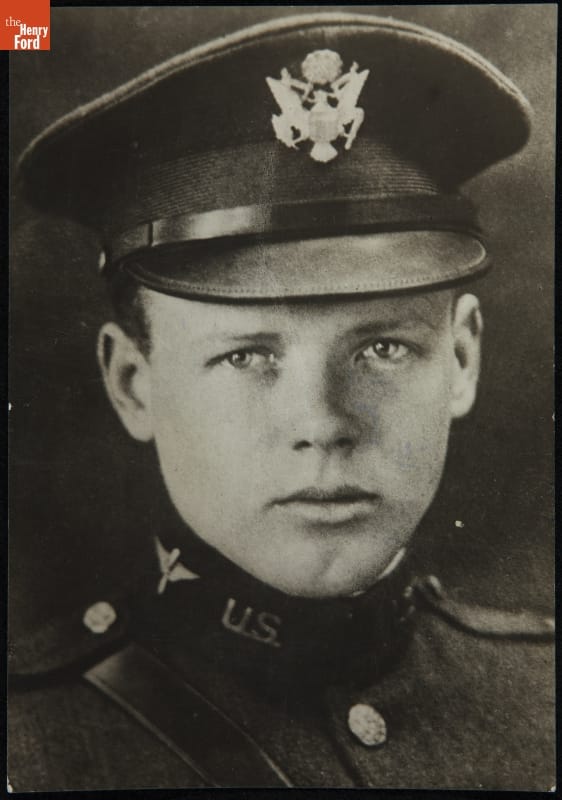
- Second Lieutenant Charles Lindbergh, March 1925 - Charles Lindbergh enlisted in the Army's Air Service Reserve Corps in 1924, partly for patriotic reasons and partly to access sophisticated aircraft. He graduated as a second lieutenant in 1925. After his historic 1927 solo transatlantic flight, Lindbergh was promoted to colonel and awarded the Medal of Honor. In 1954 he was elevated to brigadier general in the Air Force Reserve.
- March 01, 1925
- Collections - Artifact
Second Lieutenant Charles Lindbergh, March 1925
Charles Lindbergh enlisted in the Army's Air Service Reserve Corps in 1924, partly for patriotic reasons and partly to access sophisticated aircraft. He graduated as a second lieutenant in 1925. After his historic 1927 solo transatlantic flight, Lindbergh was promoted to colonel and awarded the Medal of Honor. In 1954 he was elevated to brigadier general in the Air Force Reserve.
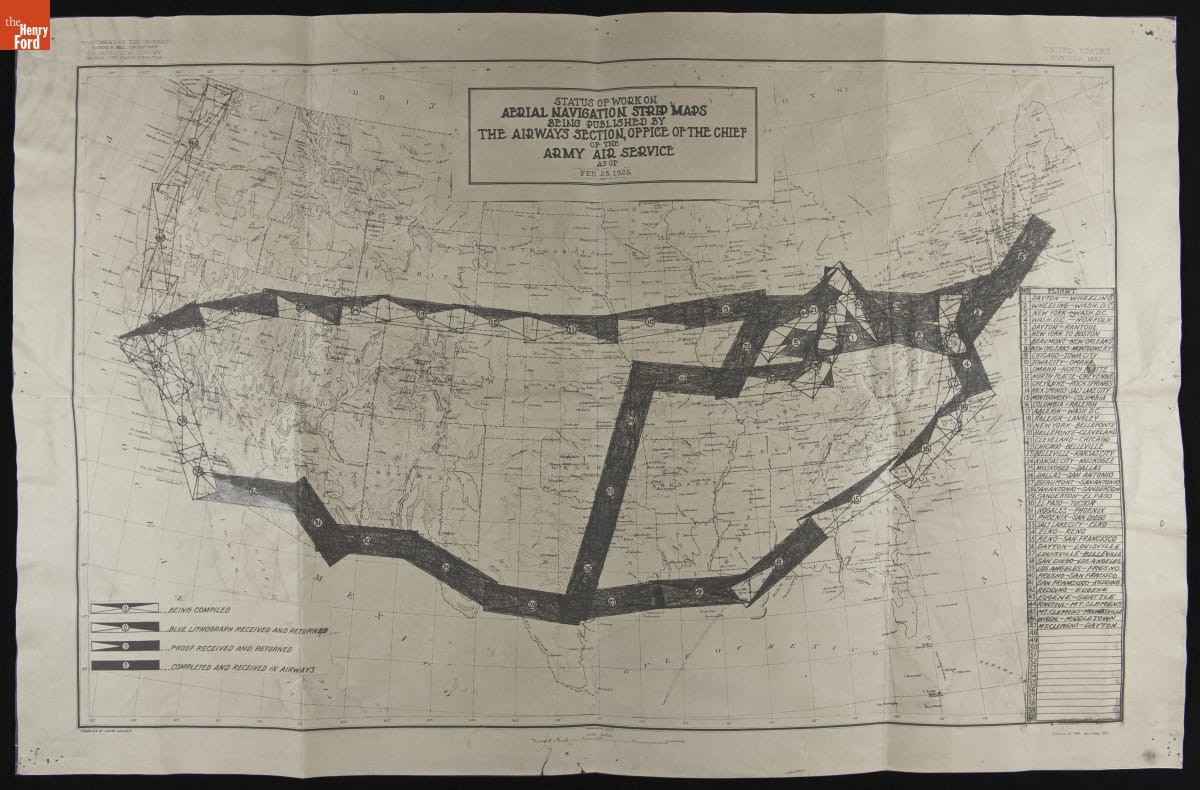
- Status of Work on Aerial Navigation Strip Maps Being Published by the Army Air Service as of February 25, 1925 - Navigating in an early airplane -- without the benefit of sophisticated cockpit instruments or radio communication -- wasn't easy. The U.S. Army, in cooperation with the U.S. Post Office, established a network of flyways across the country. These routes were marked with lighted beacons, creating reliable paths that pilots could follow day and night.
- February 25, 1925
- Collections - Artifact
Status of Work on Aerial Navigation Strip Maps Being Published by the Army Air Service as of February 25, 1925
Navigating in an early airplane -- without the benefit of sophisticated cockpit instruments or radio communication -- wasn't easy. The U.S. Army, in cooperation with the U.S. Post Office, established a network of flyways across the country. These routes were marked with lighted beacons, creating reliable paths that pilots could follow day and night.
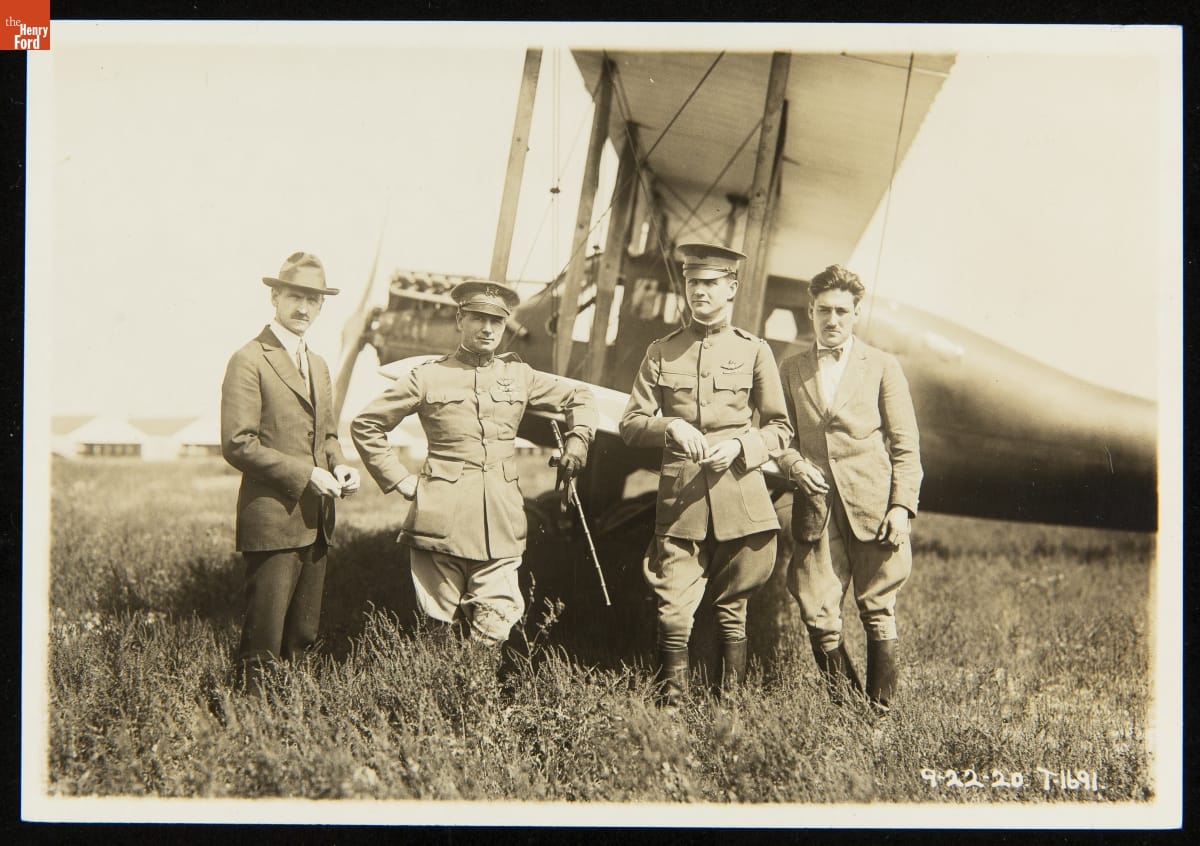
- Glenn Curtiss and General Billy Mitchell with a Curtiss "Eagle," September 22, 1920 - The Curtiss Eagle airplane appeared soon after World War I. Its fuselage, with a streamlined profile and monocoque construction, was advanced for its time. The fully enclosed cabin offered comfort for the pilot and up to seven passengers. Curtiss built Eagles in tri, twin, and single-motor versions, but overall production numbers were small.
- September 22, 1920
- Collections - Artifact
Glenn Curtiss and General Billy Mitchell with a Curtiss "Eagle," September 22, 1920
The Curtiss Eagle airplane appeared soon after World War I. Its fuselage, with a streamlined profile and monocoque construction, was advanced for its time. The fully enclosed cabin offered comfort for the pilot and up to seven passengers. Curtiss built Eagles in tri, twin, and single-motor versions, but overall production numbers were small.
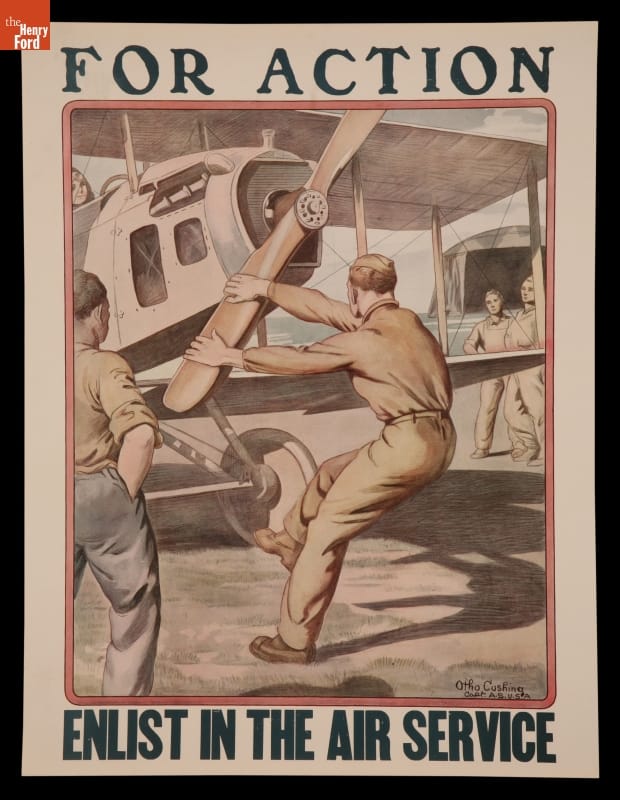
- World War I Poster, "For Action, Enlist in the Air Service," 1918-1920 -
- 1918-1920
- Collections - Artifact
World War I Poster, "For Action, Enlist in the Air Service," 1918-1920
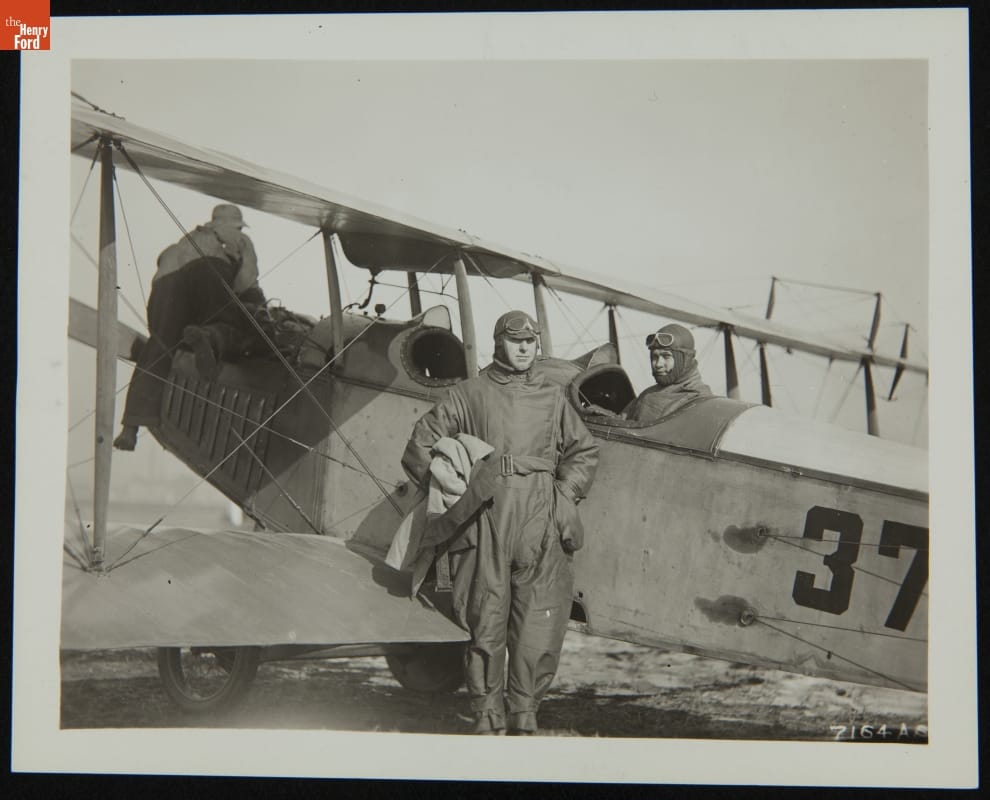
- Air Mail Route Mappers, 1919 - The United States Post Office began regularly scheduled air mail service in 1918, with initial flights between New York City and Washington, D.C. Expanding the service meant surveying and mapping routes to additional cities. Pilots first navigated by visible landmarks, flying only in daylight. Lighted beacons, installed along established flight paths, later enabled night flights.
- 1919
- Collections - Artifact
Air Mail Route Mappers, 1919
The United States Post Office began regularly scheduled air mail service in 1918, with initial flights between New York City and Washington, D.C. Expanding the service meant surveying and mapping routes to additional cities. Pilots first navigated by visible landmarks, flying only in daylight. Lighted beacons, installed along established flight paths, later enabled night flights.
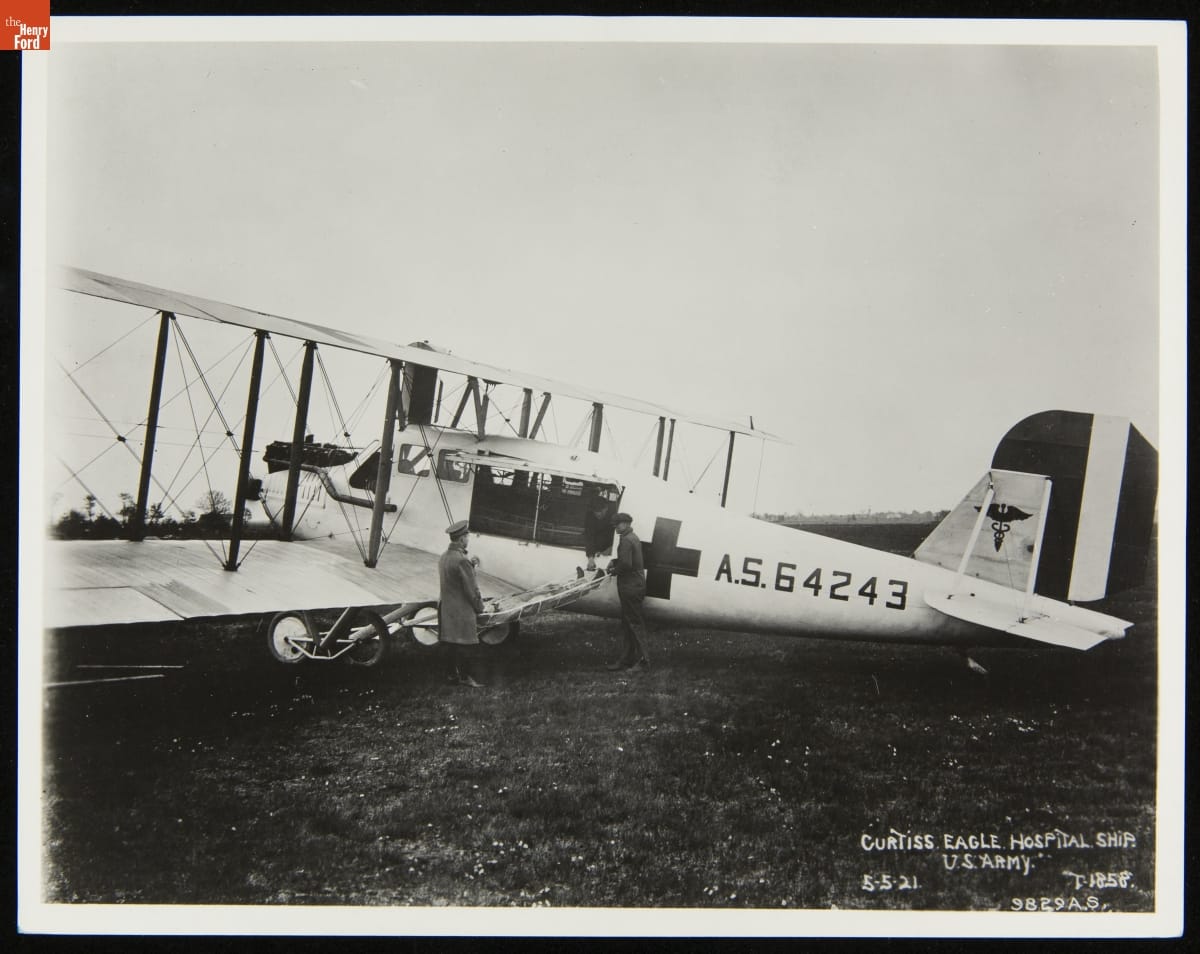
- Curtiss "Eagle" Hospital Ship, May 5, 1921 - The Curtiss Eagle airplane appeared soon after World War I. Its fuselage, with a streamlined profile and monocoque construction, was advanced for its time. The fully enclosed cabin offered comfort for the pilot and up to seven passengers. Curtiss built Eagles in tri, twin, and single-motor versions, but overall production numbers were small.
- May 05, 1921
- Collections - Artifact
Curtiss "Eagle" Hospital Ship, May 5, 1921
The Curtiss Eagle airplane appeared soon after World War I. Its fuselage, with a streamlined profile and monocoque construction, was advanced for its time. The fully enclosed cabin offered comfort for the pilot and up to seven passengers. Curtiss built Eagles in tri, twin, and single-motor versions, but overall production numbers were small.
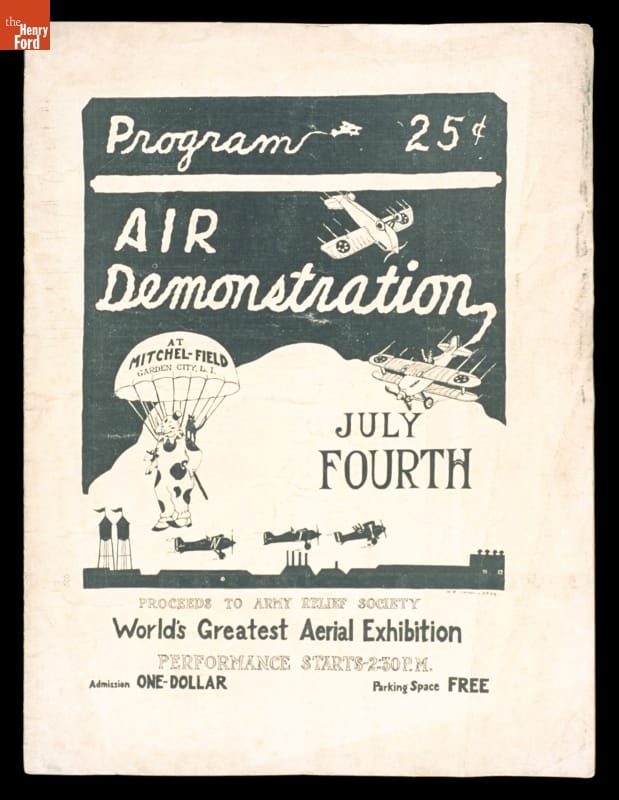
- Program for an Air Show, "Air Demonstration, July Fourth," circa 1921 - Buyers for early airplanes were few and far between, but there was no shortage of people willing to pay to watch "birdmen" fly. Many pioneering manufacturers formed exhibition teams. These teams traveled the country and staged elaborate shows, filled with daredevil stunts, for paying audiences. It was dangerous work, but it brought considerable publicity to the budding aviation industry.
- circa 1921
- Collections - Artifact
Program for an Air Show, "Air Demonstration, July Fourth," circa 1921
Buyers for early airplanes were few and far between, but there was no shortage of people willing to pay to watch "birdmen" fly. Many pioneering manufacturers formed exhibition teams. These teams traveled the country and staged elaborate shows, filled with daredevil stunts, for paying audiences. It was dangerous work, but it brought considerable publicity to the budding aviation industry.
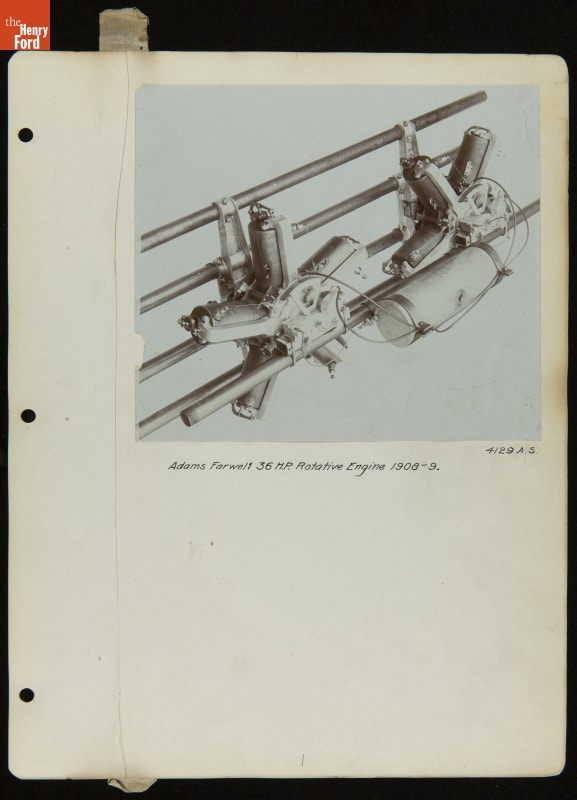
- Ernest L. Jones Early Aviation Scrapbook, vol. 1 of 7 (A-B) - Ernest L. Jones transformed his early interest in aeronautics into a lifelong career devoted to civil and military aviation. Jones edited and published several aeronautical magazines, promoted and improved air transportation operations, and served in military air services during both world wars. Jones's scrapbooks document the early development of aviation in the United States.
- 1863-1917
- Collections - Artifact
Ernest L. Jones Early Aviation Scrapbook, vol. 1 of 7 (A-B)
Ernest L. Jones transformed his early interest in aeronautics into a lifelong career devoted to civil and military aviation. Jones edited and published several aeronautical magazines, promoted and improved air transportation operations, and served in military air services during both world wars. Jones's scrapbooks document the early development of aviation in the United States.
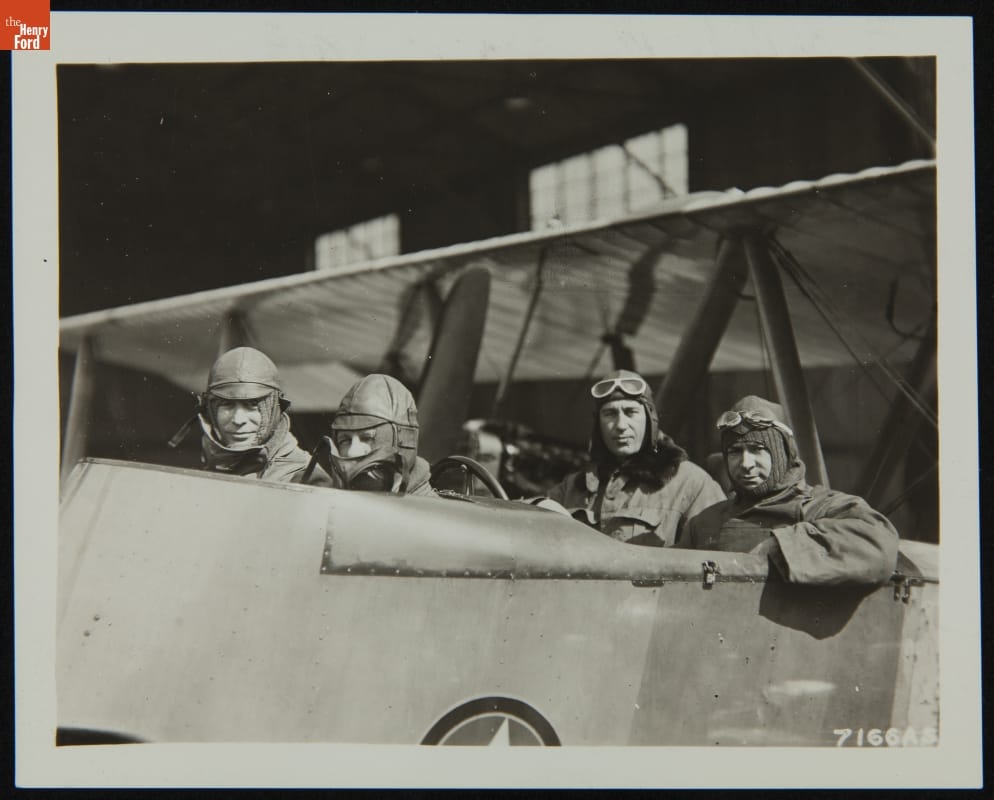
- Senator Key Pittman and Assistant Secretary of War Bernard Crowell with Air Mail Route Mappers, 1919 - The United States Post Office began regularly scheduled air mail service in 1918, with initial flights between New York City and Washington, D.C. Expanding the service meant surveying and mapping routes to additional cities. Pilots first navigated by visible landmarks, flying only in daylight. Lighted beacons, installed along established flight paths, later enabled night flights.
- 1919
- Collections - Artifact
Senator Key Pittman and Assistant Secretary of War Bernard Crowell with Air Mail Route Mappers, 1919
The United States Post Office began regularly scheduled air mail service in 1918, with initial flights between New York City and Washington, D.C. Expanding the service meant surveying and mapping routes to additional cities. Pilots first navigated by visible landmarks, flying only in daylight. Lighted beacons, installed along established flight paths, later enabled night flights.
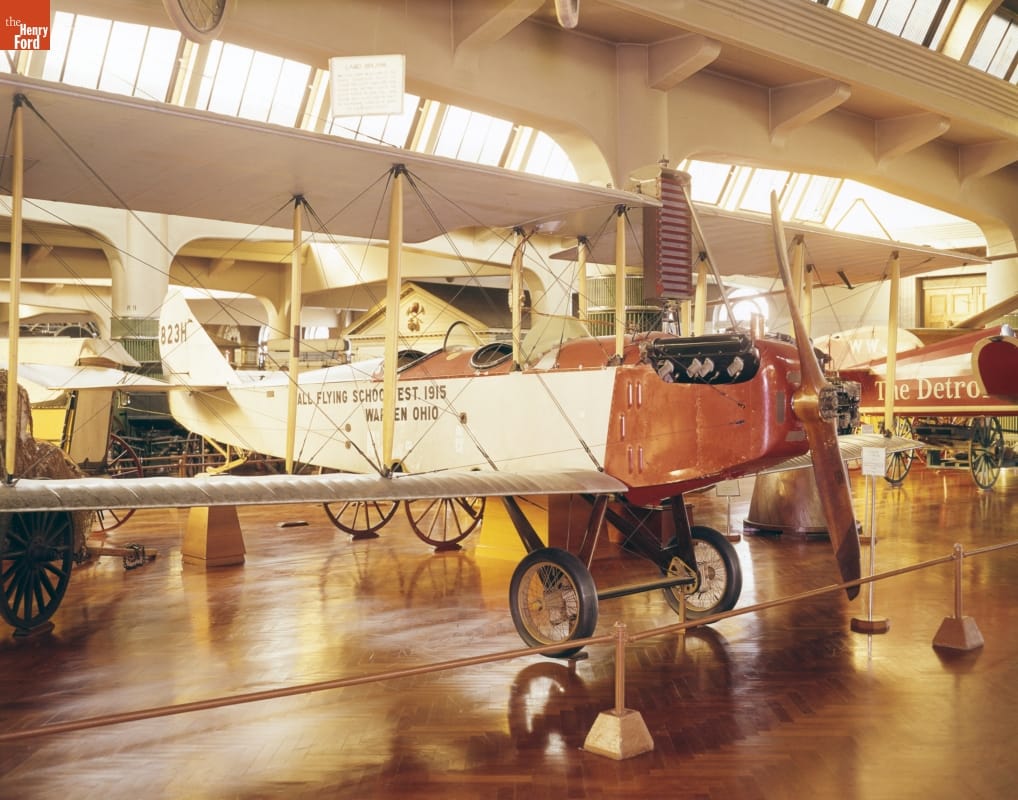
- 1916 Standard J-1 Biplane - The Standard J was one of the Army's basic trainer aircraft for military pilots. The J-1, with its fickle four-cylinder engine, was a less popular substitute for the Army's more widely used -- and more reliable -- Curtiss JN-4 "Jenny." Many surplus J-1s went on to second lives at flying schools and barnstorming air shows.
- 1916-1918
- Collections - Artifact
1916 Standard J-1 Biplane
The Standard J was one of the Army's basic trainer aircraft for military pilots. The J-1, with its fickle four-cylinder engine, was a less popular substitute for the Army's more widely used -- and more reliable -- Curtiss JN-4 "Jenny." Many surplus J-1s went on to second lives at flying schools and barnstorming air shows.