
Search
- Letter from Samuel Adams to Elbridge Gerry, 1775 -
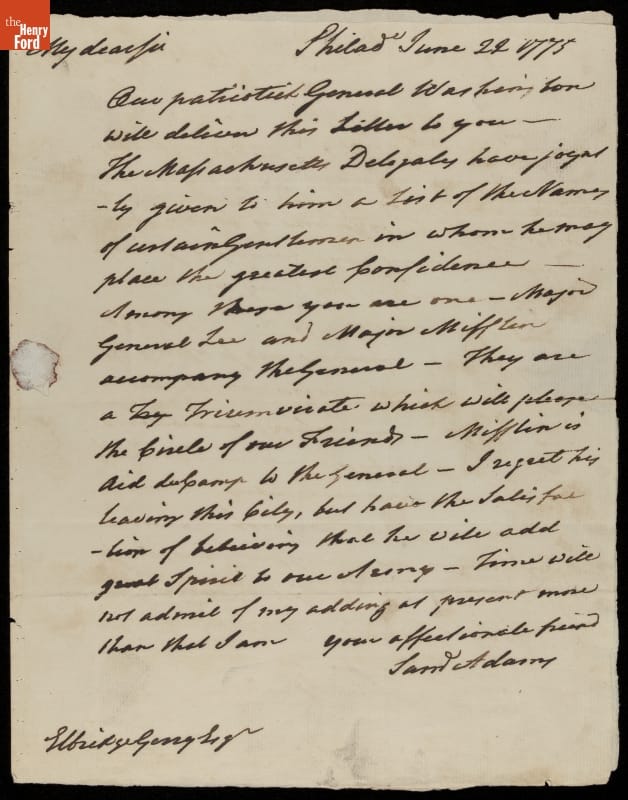
- June 02, 1775
- Collections - Artifact
Letter from Samuel Adams to Elbridge Gerry, 1775
- Engraving, "Washington at Trenton N.J. January 2d 1777," 1840-1870 -
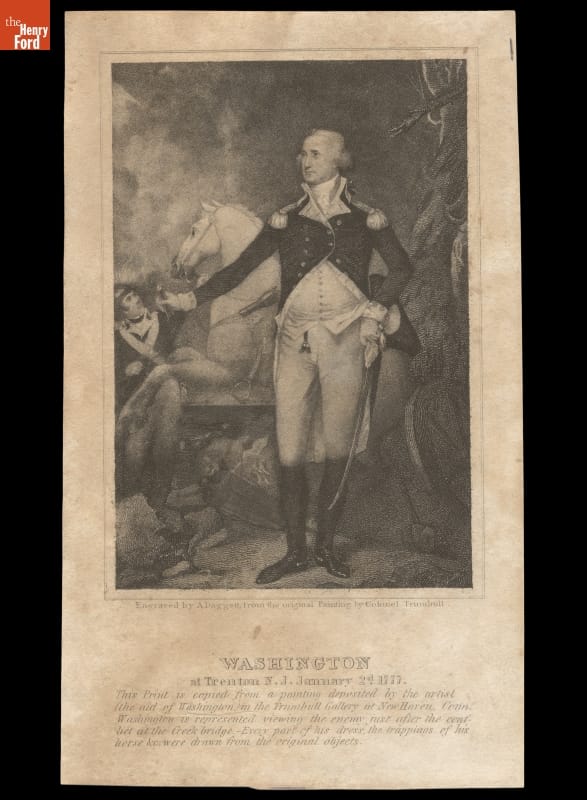
- January 02, 1777
- Collections - Artifact
Engraving, "Washington at Trenton N.J. January 2d 1777," 1840-1870
- Connecticut Militia Orderly Book, August-September 1778 - During August 1778, a regiment from the Connecticut militia joined other Continental forces at the Battle of Rhode Island as they attempted to retake the city of Newport from the British. The militia's time in Rhode Island was documented in this orderly book, a journal that kept track of general orders, muster rolls, and the day-to-day happenings of each military unit.
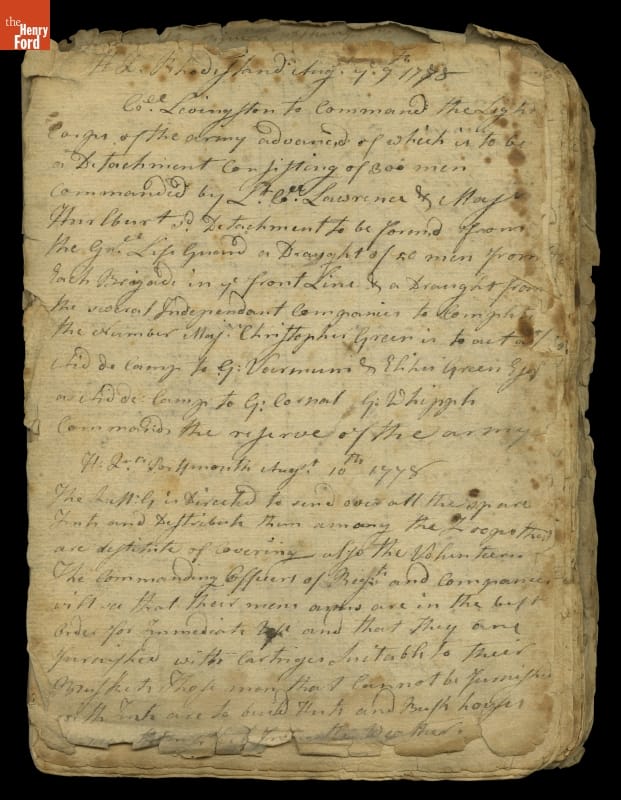
- August 1778-September 1778
- Collections - Artifact
Connecticut Militia Orderly Book, August-September 1778
During August 1778, a regiment from the Connecticut militia joined other Continental forces at the Battle of Rhode Island as they attempted to retake the city of Newport from the British. The militia's time in Rhode Island was documented in this orderly book, a journal that kept track of general orders, muster rolls, and the day-to-day happenings of each military unit.
- Letter from Gilbert du Motier Lafayette to George Washington, 1781 -
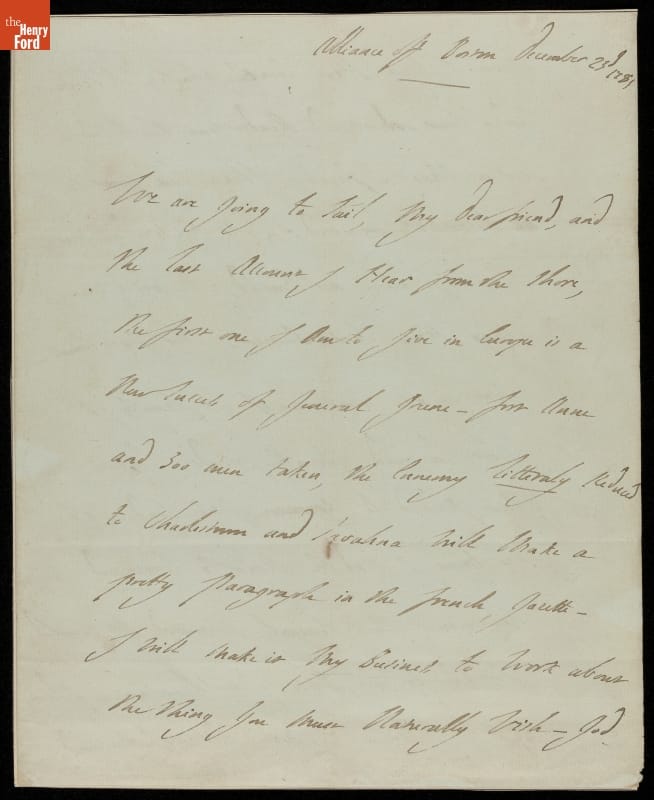
- December 23, 1781
- Collections - Artifact
Letter from Gilbert du Motier Lafayette to George Washington, 1781
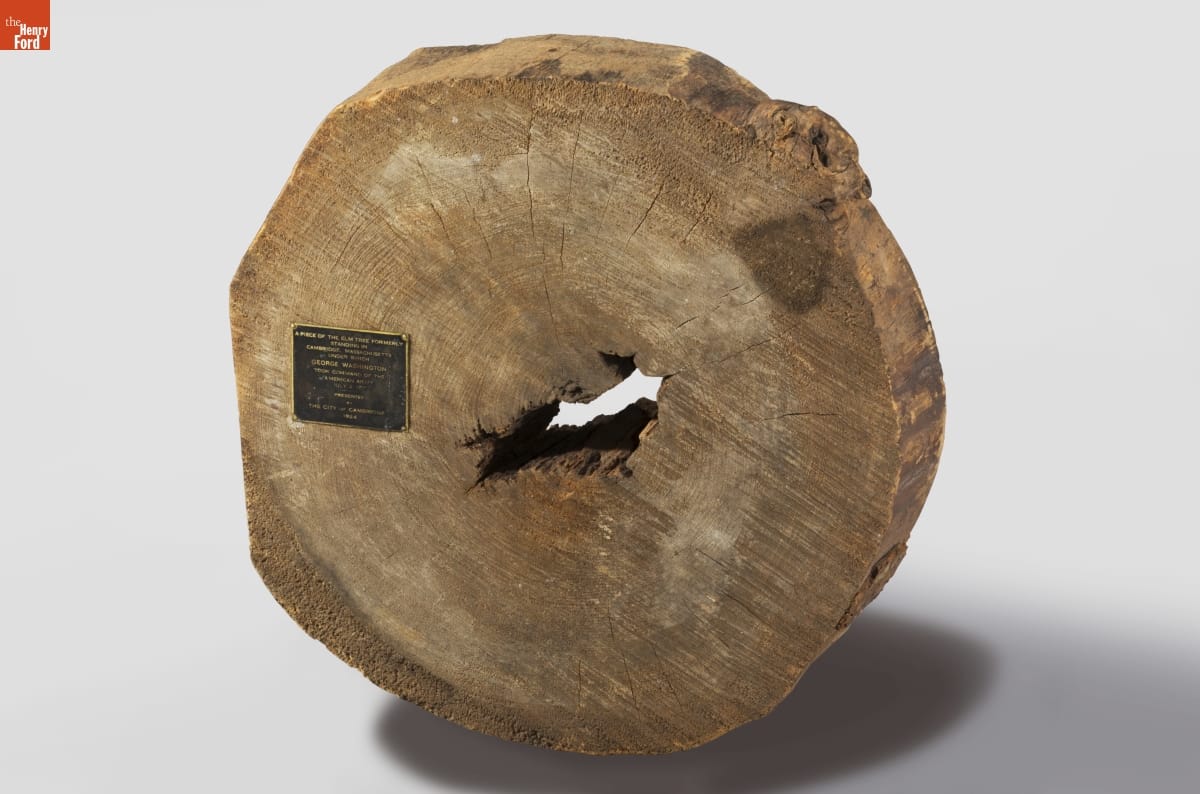
- Cross Section of the Washington Elm, 1924 - On July 3, 1775, George Washington took command of the Continental Army in Cambridge, Massachusetts. This act, according to legend, occurred under a stately elm. The story, whether true or fictitious, and the tree itself connected Americans with the Revolutionary-era principles that helped form our unique national identity. The 200-year-old tree fell in 1923 and its wood was cut into commemorative sections and carved into mementos.
- 1775
- Collections - Artifact
Cross Section of the Washington Elm, 1924
On July 3, 1775, George Washington took command of the Continental Army in Cambridge, Massachusetts. This act, according to legend, occurred under a stately elm. The story, whether true or fictitious, and the tree itself connected Americans with the Revolutionary-era principles that helped form our unique national identity. The 200-year-old tree fell in 1923 and its wood was cut into commemorative sections and carved into mementos.
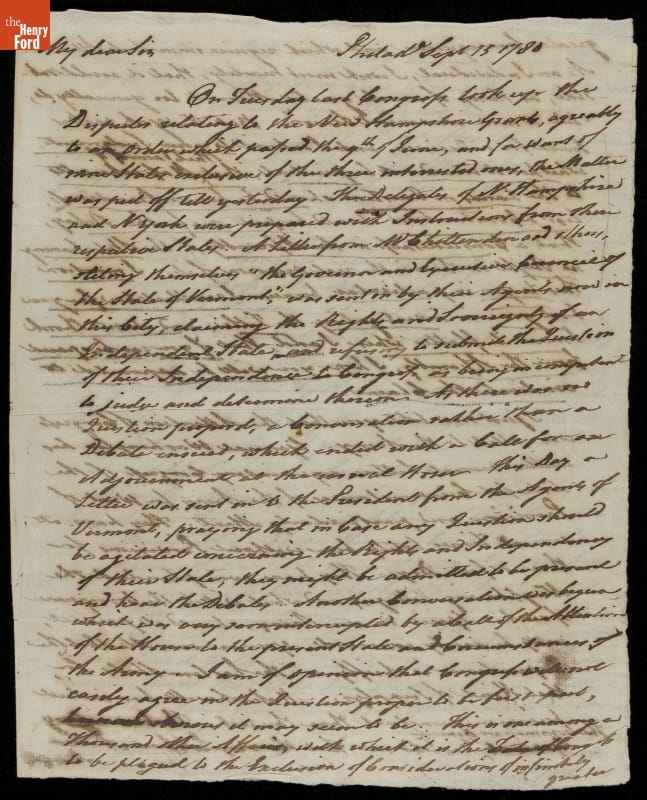
- Letter from Samuel Adams to John Lowell, 1780 -
- September 15, 1780
- Collections - Artifact
Letter from Samuel Adams to John Lowell, 1780
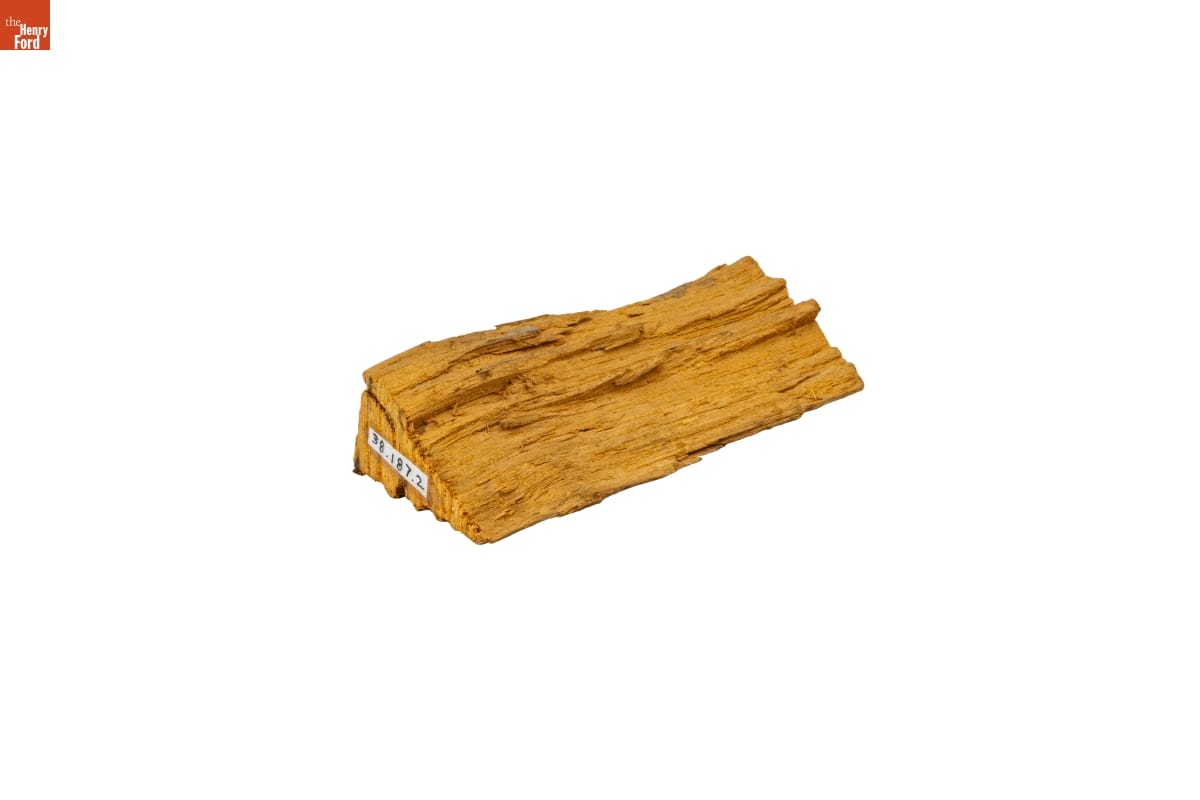
- Piece of Washington Elm - On July 3, 1775, George Washington took command of the Continental Army in Cambridge, Massachusetts. This act, according to legend, occurred under a stately elm. The story, whether true or fictitious, and the tree itself connected Americans with the Revolutionary-era principles that helped form our unique national identity. When the 200-year-old tree fell in 1923, people saved the wood as mementos.
- Collections - Artifact
Piece of Washington Elm
On July 3, 1775, George Washington took command of the Continental Army in Cambridge, Massachusetts. This act, according to legend, occurred under a stately elm. The story, whether true or fictitious, and the tree itself connected Americans with the Revolutionary-era principles that helped form our unique national identity. When the 200-year-old tree fell in 1923, people saved the wood as mementos.