
Search
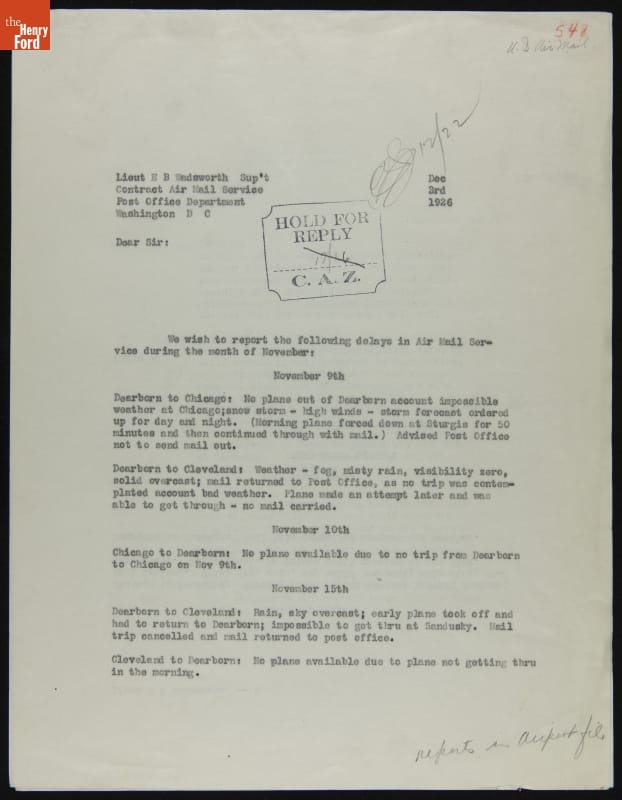
- Ford Motor Company Report on Contract Air Mail Service Flights during November 1926 - After operating air mail flights itself for eight years, the U.S. Post Office Department contracted with commercial air carriers in 1926. The first two contract routes, connecting Detroit with Cleveland and Chicago, were awarded to Ford Air Transport, Ford Motor Company's airline subsidiary. Ford planes carried more than 32,000 pounds of mail before the contract ended in July 1928.
- November 01, 1926
- Collections - Artifact
Ford Motor Company Report on Contract Air Mail Service Flights during November 1926
After operating air mail flights itself for eight years, the U.S. Post Office Department contracted with commercial air carriers in 1926. The first two contract routes, connecting Detroit with Cleveland and Chicago, were awarded to Ford Air Transport, Ford Motor Company's airline subsidiary. Ford planes carried more than 32,000 pounds of mail before the contract ended in July 1928.
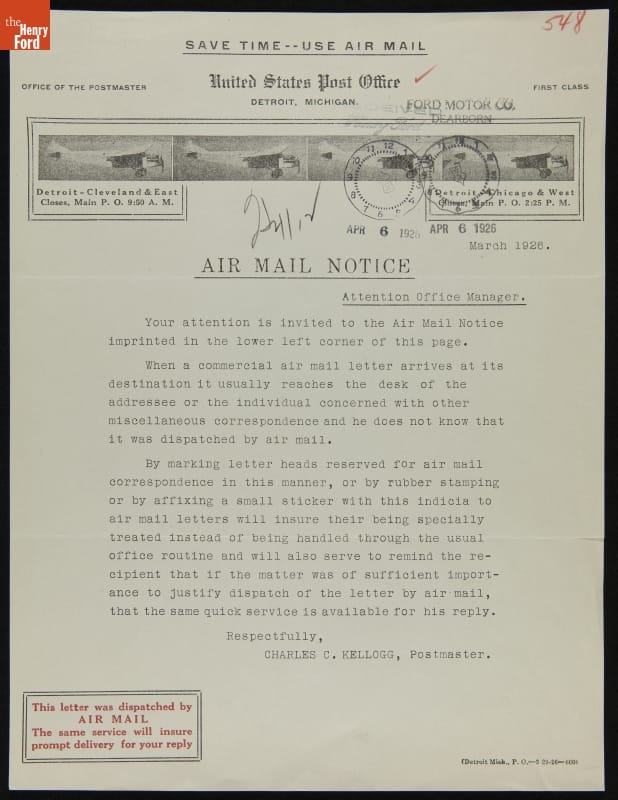
- Letter from Detroit Postmaster Charles Kellogg Promotes the Use of Air Mail Notice Letterheads, March 1926 -
- March 01, 1926
- Collections - Artifact
Letter from Detroit Postmaster Charles Kellogg Promotes the Use of Air Mail Notice Letterheads, March 1926
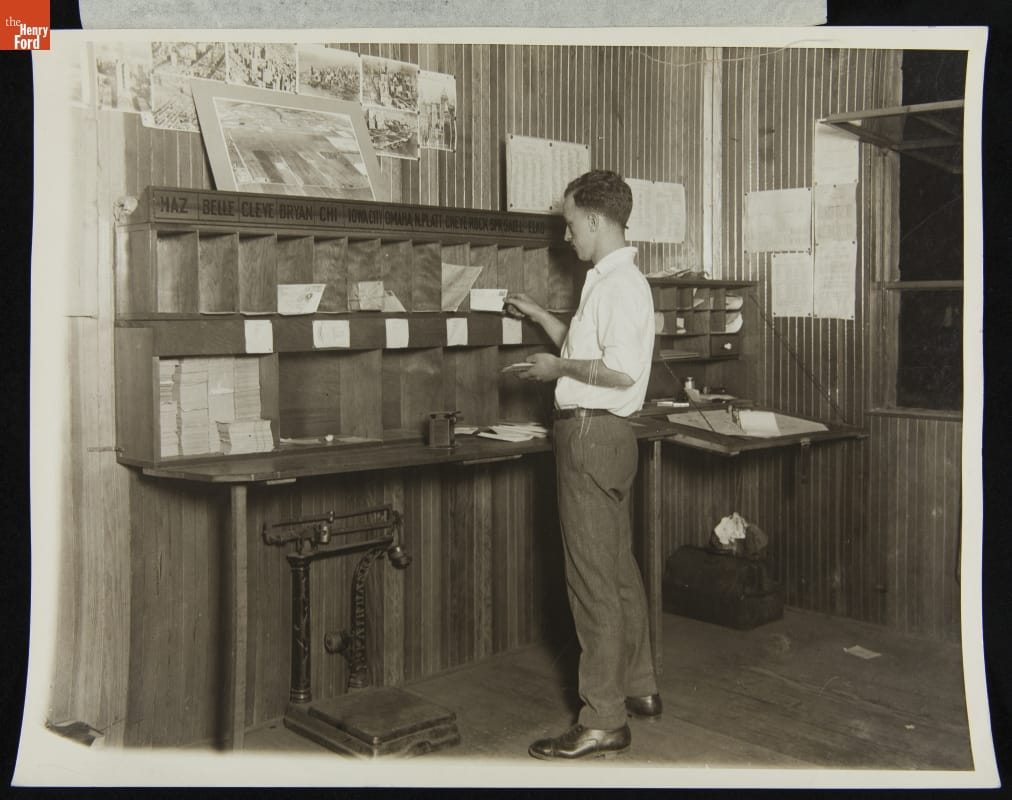
- Air Mail Sorting at Hadley Field, New York, 1925 - Regular air mail service in the United States started in 1918. Initial air mail stamps cost 24 cents -- eight times more than ground service. But those fees helped subsidize the development of America's airways. After operating air mail flights itself for eight years, the U.S. Post Office Department contracted with commercial air carriers in 1926.
- 1925
- Collections - Artifact
Air Mail Sorting at Hadley Field, New York, 1925
Regular air mail service in the United States started in 1918. Initial air mail stamps cost 24 cents -- eight times more than ground service. But those fees helped subsidize the development of America's airways. After operating air mail flights itself for eight years, the U.S. Post Office Department contracted with commercial air carriers in 1926.
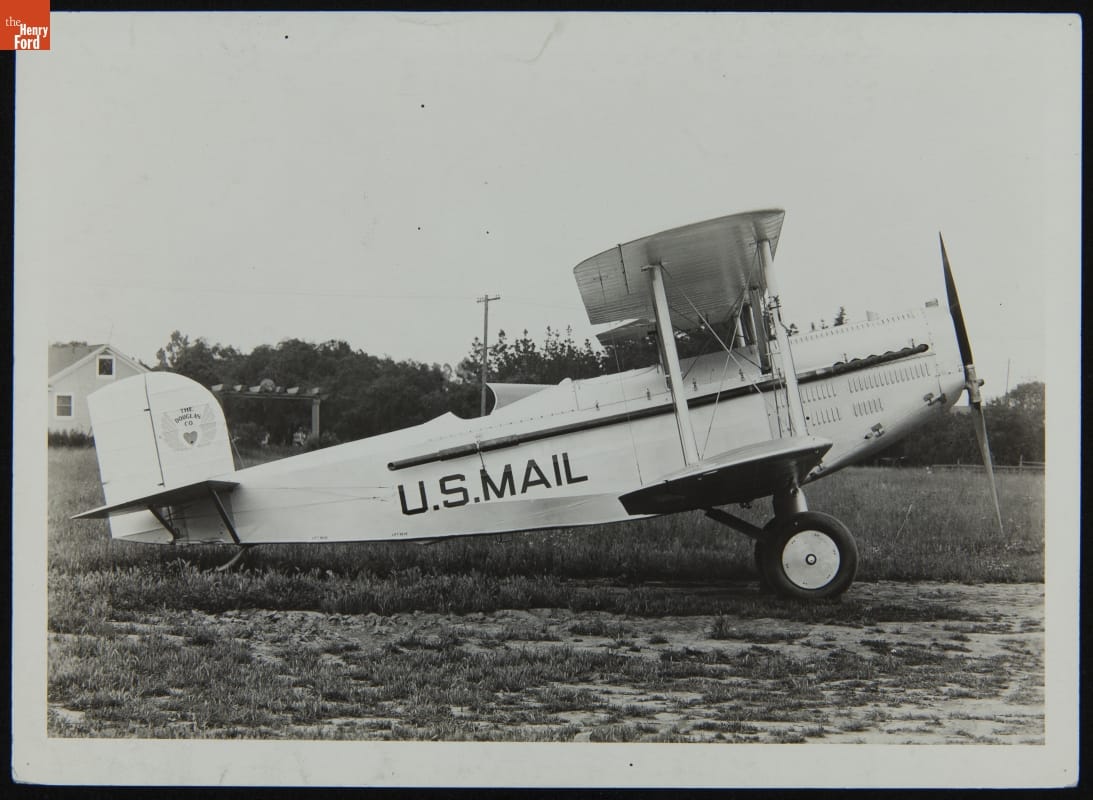
- U.S. Mail Airplane, circa 1925 - Regular air mail service in the United States started in 1918. Initial air mail stamps cost 24 cents -- eight times more than ground service. But those fees helped subsidize the development of America's airways. After operating air mail flights itself for eight years, the U.S. Post Office Department contracted with commercial air carriers in 1926.
- circa 1925
- Collections - Artifact
U.S. Mail Airplane, circa 1925
Regular air mail service in the United States started in 1918. Initial air mail stamps cost 24 cents -- eight times more than ground service. But those fees helped subsidize the development of America's airways. After operating air mail flights itself for eight years, the U.S. Post Office Department contracted with commercial air carriers in 1926.
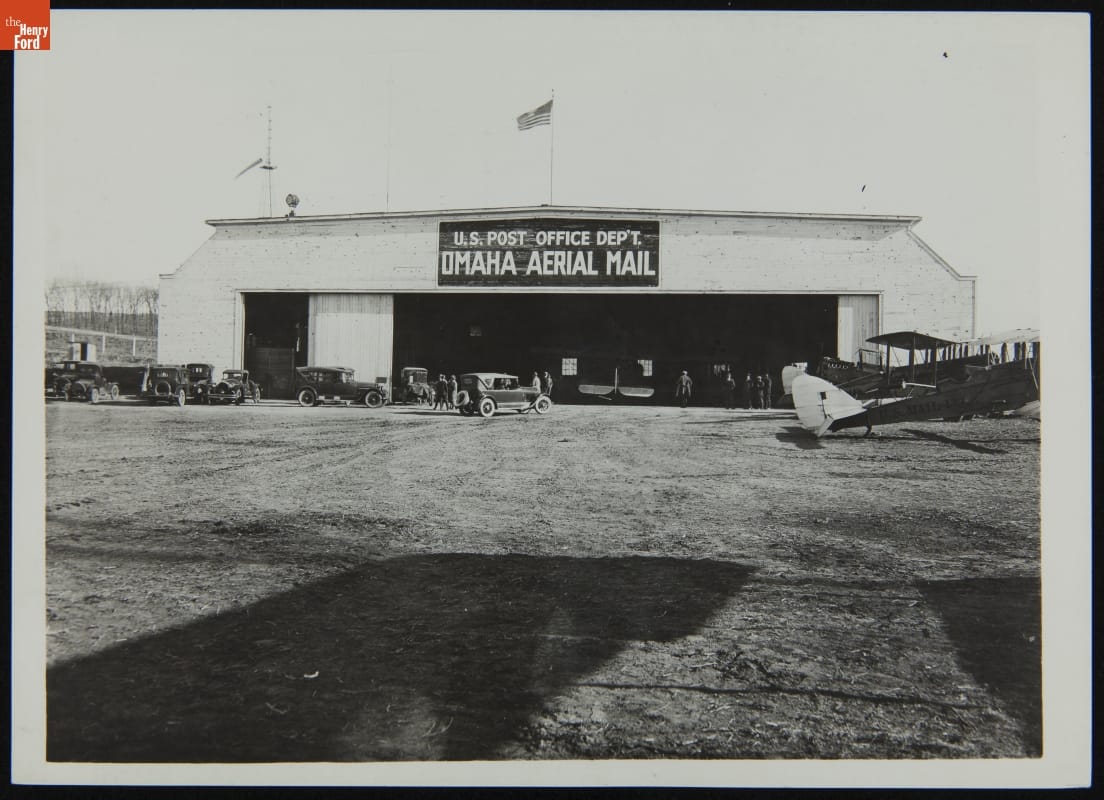
- U.S. Post Office Department "Omaha Aerial Mail" Hangar, circa 1925 - Regular air mail service in the United States started in 1918. Initial air mail stamps cost 24 cents -- eight times more than ground service. But those fees helped subsidize the development of America's airways. After operating air mail flights itself for eight years, the U.S. Post Office Department contracted with commercial air carriers in 1926.
- circa 1925
- Collections - Artifact
U.S. Post Office Department "Omaha Aerial Mail" Hangar, circa 1925
Regular air mail service in the United States started in 1918. Initial air mail stamps cost 24 cents -- eight times more than ground service. But those fees helped subsidize the development of America's airways. After operating air mail flights itself for eight years, the U.S. Post Office Department contracted with commercial air carriers in 1926.
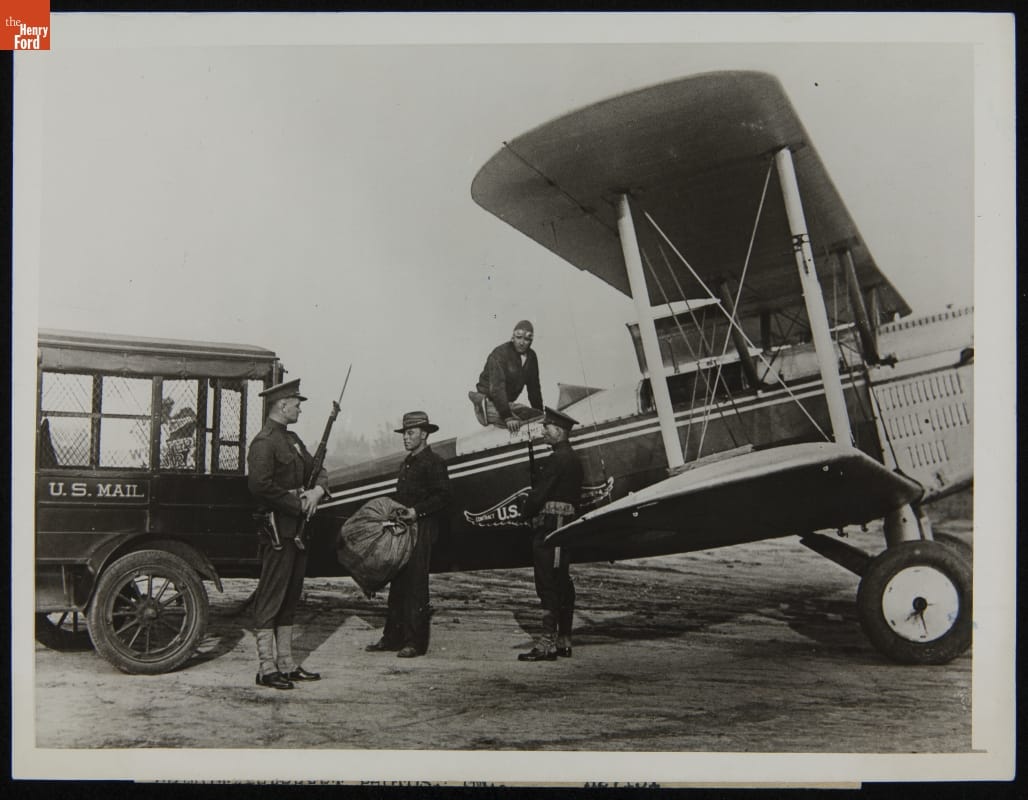
- U.S. Marines Guard Air Mail Delivery, Los Angeles, California, 1926 - Regular air mail service in the United States started in 1918. Initial air mail stamps cost 24 cents -- eight times more than ground service. But those fees helped subsidize the development of America's airways. After operating air mail flights itself for eight years, the U.S. Post Office Department contracted with commercial air carriers in 1926.
- 1926
- Collections - Artifact
U.S. Marines Guard Air Mail Delivery, Los Angeles, California, 1926
Regular air mail service in the United States started in 1918. Initial air mail stamps cost 24 cents -- eight times more than ground service. But those fees helped subsidize the development of America's airways. After operating air mail flights itself for eight years, the U.S. Post Office Department contracted with commercial air carriers in 1926.
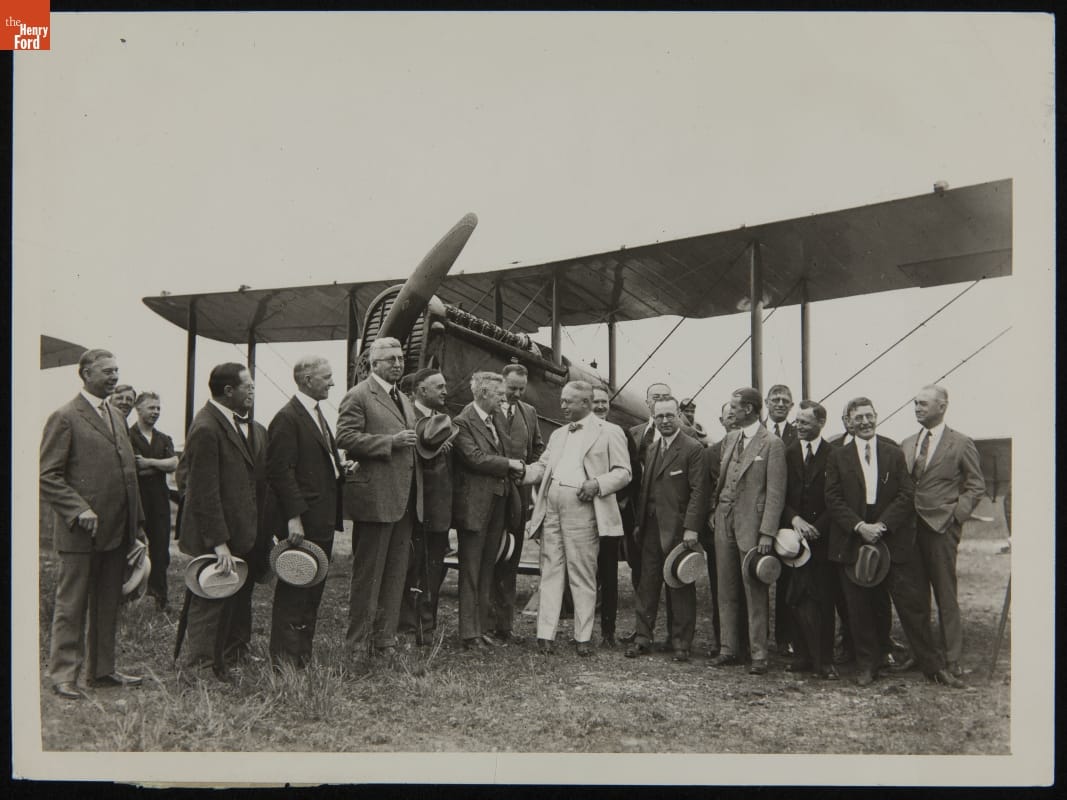
- Inauguration of Coast to Coast Air Mail Service by the U.S. Post Office Department, New York, July 1, 1924 - Regular air mail service in the United States started in 1918. Initial air mail stamps cost 24 cents -- eight times more than ground service. But those fees helped subsidize the development of America's airways. After operating air mail flights itself for eight years, the U.S. Post Office Department contracted with commercial air carriers in 1926.
- July 01, 1924
- Collections - Artifact
Inauguration of Coast to Coast Air Mail Service by the U.S. Post Office Department, New York, July 1, 1924
Regular air mail service in the United States started in 1918. Initial air mail stamps cost 24 cents -- eight times more than ground service. But those fees helped subsidize the development of America's airways. After operating air mail flights itself for eight years, the U.S. Post Office Department contracted with commercial air carriers in 1926.
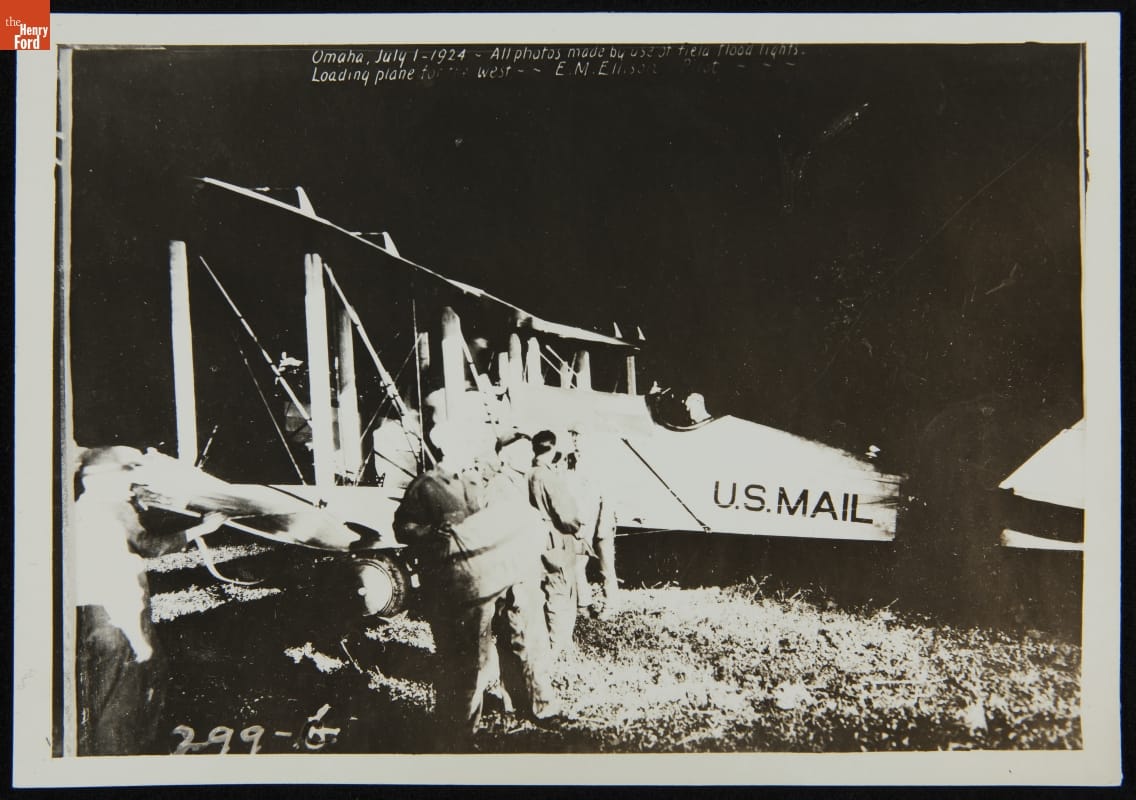
- Loading Air Mail Plane Using Floodlights, Fort Crook near Omaha, Nebraska, 1924 - Transcontinental air mail pilots relied on a string of powerful light beacons to navigate sections of the New York to San Francisco route at night. They flew night mail planes equipped with illuminated instrument panels, navigation lights, and landing lights. At airfields along the way, floodlights helped workers inspect the planes, refuel, and unload and load the mail.
- July 01, 1924
- Collections - Artifact
Loading Air Mail Plane Using Floodlights, Fort Crook near Omaha, Nebraska, 1924
Transcontinental air mail pilots relied on a string of powerful light beacons to navigate sections of the New York to San Francisco route at night. They flew night mail planes equipped with illuminated instrument panels, navigation lights, and landing lights. At airfields along the way, floodlights helped workers inspect the planes, refuel, and unload and load the mail.