
Search
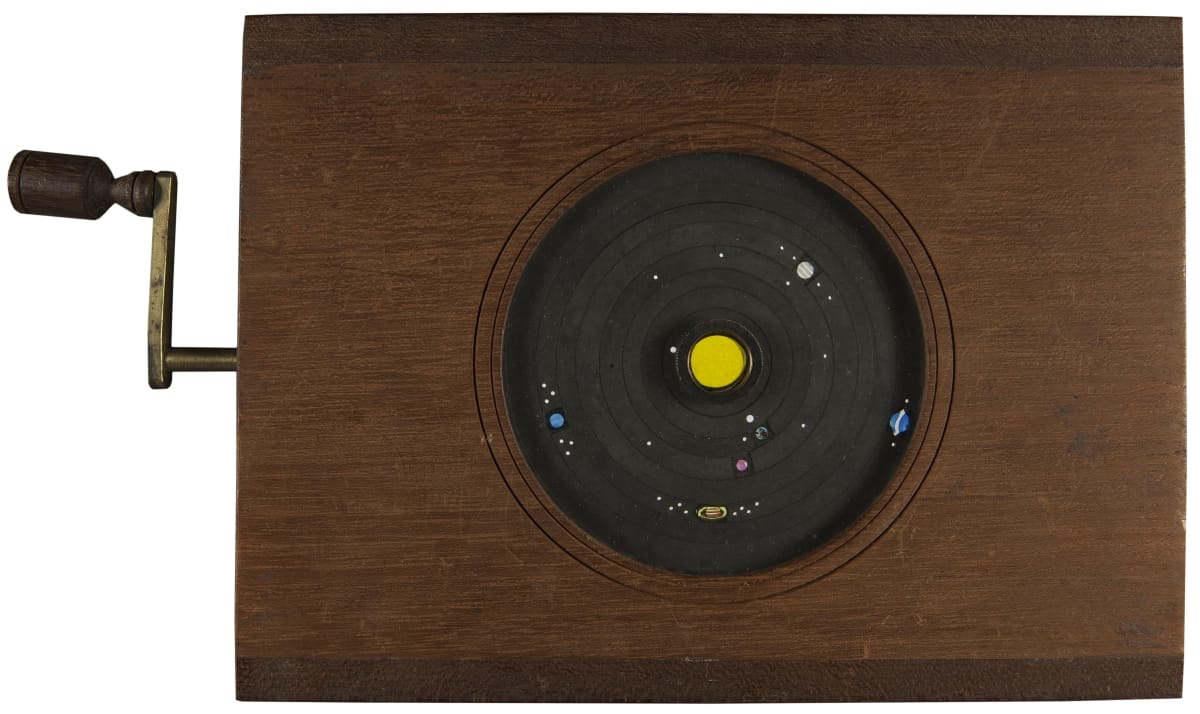
- Mechanical Lantern Slide, the Solar System, 1860-1900 - Magic lanterns use a concave mirror and light source to project images on glass slides with painted or photographic scenes. Developed in the 17th century, magic lanterns predate slide projectors and motion pictures. In the hands of magicians, they became "lanterns of fright," projecting wondrous images and apparitions. Slide themes ranged widely: exotic travel, folklore, advertising, history, science, and art.
- 1860-1900
- Collections - Artifact
Mechanical Lantern Slide, the Solar System, 1860-1900
Magic lanterns use a concave mirror and light source to project images on glass slides with painted or photographic scenes. Developed in the 17th century, magic lanterns predate slide projectors and motion pictures. In the hands of magicians, they became "lanterns of fright," projecting wondrous images and apparitions. Slide themes ranged widely: exotic travel, folklore, advertising, history, science, and art.
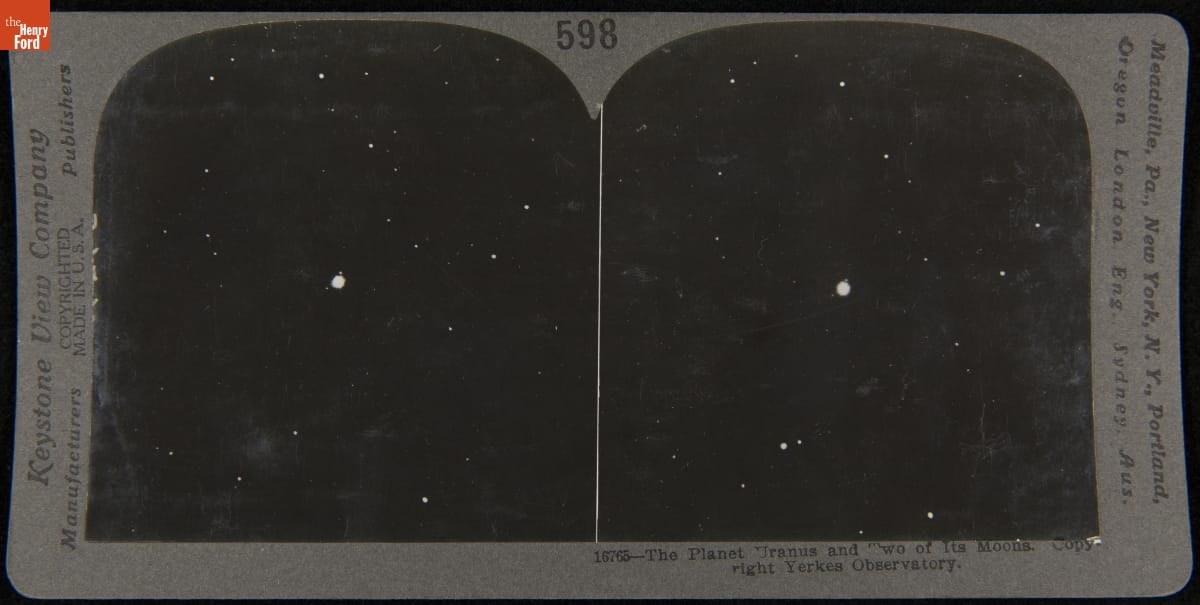
- Stereograph, "The Planet Uranus and Two of Its Moons," 1916 - Americans loved stereographs -- millions were made from the mid-1800s through the 1930s. A stereograph consists of two offset photos that appear to have three-dimensional depth when viewed through a stereoscope. These images entertained and educated. Stereographs could transport viewers to distant events, exotic places, and even worlds beyond, like this view of Uranus and two of its moons.
- 1916
- Collections - Artifact
Stereograph, "The Planet Uranus and Two of Its Moons," 1916
Americans loved stereographs -- millions were made from the mid-1800s through the 1930s. A stereograph consists of two offset photos that appear to have three-dimensional depth when viewed through a stereoscope. These images entertained and educated. Stereographs could transport viewers to distant events, exotic places, and even worlds beyond, like this view of Uranus and two of its moons.